Author: Margaret Kalekye

  • Kenya becomes first African country to secure Santiago climate funding

    Kenya becomes first African country to secure Santiago climate funding

    Kenya has achieved a major milestone in advancing climate resilience and addressing the impacts of climate change.

    Through the Ministry of Environment, Climate Change & Forestry, Directorate of Climate Change, Kenya has become the first country in Africa and only the second globally to secure technical assistance from the Santiago Network on Loss and Damage.

    Kenya became the first African nation to secure USD 700,000 in technical assistance from the Santiago Network on Loss and Damage to conduct a comprehensive national assessment of climate-related loss and damage experienced over the past decade. This landmark achievement was announced on the margins of the UNFCCC Subsidiary Bodies (SB64) Climate Meeting in Bonn, Germany.

    The support, valued at approximately USD 700,000, will facilitate a comprehensive assessment of climate-related loss and damage experienced in Kenya over the last ten years. The assessment will provide critical evidence to inform policy, planning, and resource mobilization aimed at strengthening the country’s resilience to climate impacts.

    The development was officially communicated to Principal Secretary for Environment and Climate Change, Festus Ng’eno, by Santiago Network’s Elizabeth Carabine during the climate negotiations in Bonn.

    “This achievement underscores Kenya’s leadership in climate action and its commitment to building resilience against the growing impacts of climate change”, he said.

    The PS was accompanied by Mamo Boru Mamo (NEMA DG), Samson Toniok (NETFUND CEO), Dr. Pacifica Ogola (Director CCD)

    among others.


  • Bodies of four men exhumed from mass grave in Mwingi

    Bodies of four men exhumed from mass grave in Mwingi

    Bodies of four men have been exhumed from a shallow mass grave in Mwingi Town, sparking concern among residents.

    The bodies were discovered after a report was made at Mwingi Police Station about a suspected shallow grave in a thicket within the town.

    The exhumation process, which began on Tuesday, was delayed until homicide detectives arrived at the scene. They recovered the naked bodies of four adult males.

    Mwingi OCPD Anthony Maina confirmed the incident and urged residents who may have lost male relatives to report to Mwingi Police Station to assist with identification.

    The bodies were moved to the Mwingi Level IV Hospital mortuary as investigations continue to establish the circumstances surrounding the deaths and the identities of the victims.

  • Basic Education PS Julius Bitok moved amid school unrest

    Basic Education PS Julius Bitok moved amid school unrest

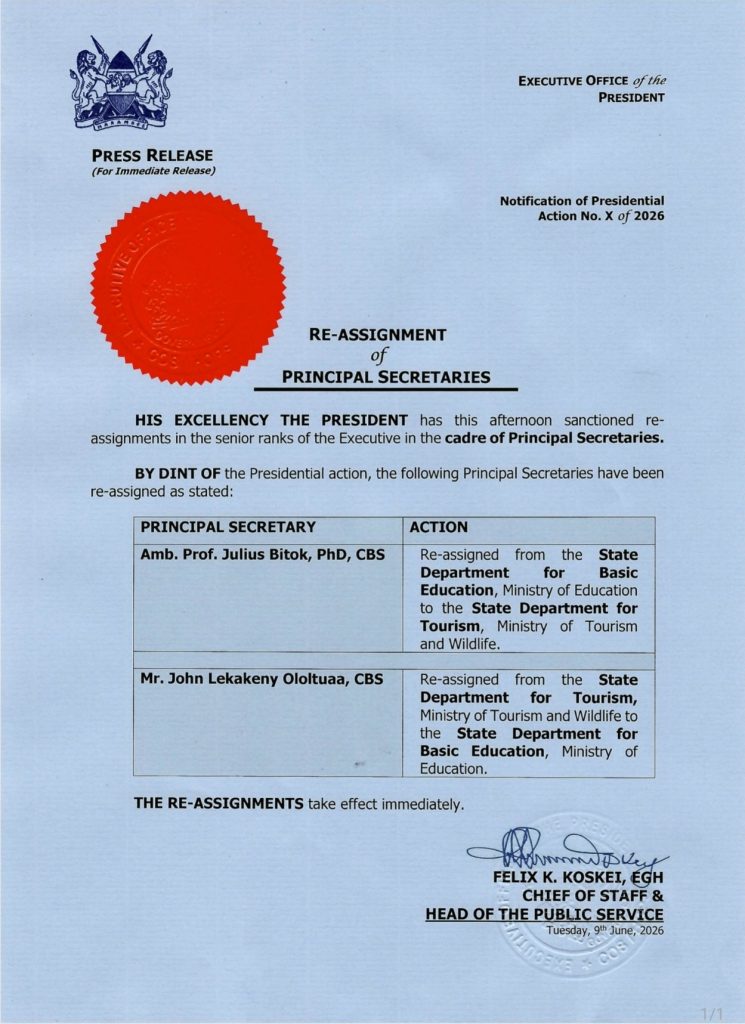
    Basic Education Principal Secretary Julius Bitok has been moved to the State Department for Tourism. Educationist John Lekakeny Ololtuaa, who has been serving as Principal Secretary for Tourism, will take over the Basic Education docket.

    The changes, announced by President William Ruto in a communication signed by Chief of Staff and Head of the Public Service Felix Koskei, come amid growing concern over rising cases of student unrest that have disrupted learning in several schools, some of which have been temporarily closed.

    The reassignments take effect immediately.

    Meanwhile, Deputy President Kithure Kindiki has warned against unruly behaviour in schools that has been linked to deadly unrest and disruption of learning, saying the government will not tolerate it.

    The DP said any criminal activity in the learning institutions is unacceptable in spite of the legitimacy of the grievances raised by the students.

    “We will not tolerate, for whatever reason, irrespective of grievances, any criminality that leads to the loss of lives, arson, destruction of property or any form of indiscipline,” DP said.

    The Second in Command on Tuesday met Ministry of Education officials led by Education Cabinet Secretary Julius Ogamba for a briefing on the school unrests at the Harambee House Annex Office, Nairobi.

    In reference to the torching of a dormitory in Utumishi Girls in Gilgil, Nakuru County where 16 students died, Prof. Kindiki said such loss of precious, innocent lives cannot be tolerated whatsoever.

    The Deputy President said the government is concerned with the current wave of indiscipline in some of our senior schools saying it is unfortunate precious lives have been lost and property destroyed.

    He said the affected schools are a tiny minority appreciating administrators and students in the majority of schools that are proceeding with learning uninterrupted.

    “We appreciate that 99 percent of the senior schools are going on well with learning. The overwhelming majority of schools are unaffected. Out of the 9500 schools, 3200 are boarding schools and those affected are a tiny minority of the boarding schools,” DP revealed.

    The DP said the Ministry of Education is engaging with various stakeholders in search for a lasting solution to the recurring unrests.

    “The Ministry of Education will make their assessment on what needs to be done and engage stakeholders on what policies that would help improve safety of learners and the needed administrative interventions to prevent school unrests,” he said.

    Further, Prof. Kindiki said the education reforms are being rolled out as envisaged, noting progress in the Curriculum Based Education that was bedeviled by poor implementation before the government took over power in 2022.

    The TVET has also reported progress with more students enrolling as well as streamlining of the University education to respond to modern funding needs.

    “We have made great progress in the implementation of education reforms. There were many complaints about the education sector ahead of the 2022 elections but the President took decisive actions that have helped stabilize it,” DP stated.

    Also present were Principal Secretaries Julius Bitok (Basic Education), Beatrice Inyangala (Higher Education), Esther Mworia (Technical, Vocational and Education Training) and senior Ministry officers.


    Additional reporting by DPCS


  • KMTC student murder: Nyeri court to rule on admissibility of forensic report

    KMTC student murder: Nyeri court to rule on admissibility of forensic report

    The High Court in Nyeri is set to rule on June 25, 2026, on whether a forensic report filed in the murder case of the late Sheila Chebet, a student at Kenya Medical Training College (KMTC) Nyeri Campus, will be admitted as evidence.

    Sheila’s body was found in Karatina on March 28, 2026, prompting investigations that led to the arrest and prosecution of a prime suspect.

    On Monday, the prosecution presented the forensic report before Magistrate Kizito Magare as part of its evidence. The accused, Vincent Bett, a fourth-year university student in Karatina, is facing murder charges in connection with Sheila’s death.

    The court will determine the admissibility of the forensic report when it delivers its ruling later this month.

    The substantive hearing of the murder case has been scheduled for October 27, 2026.

  • At least 15 dead and 129 injured in powerful Philippines quake

    At least 15 dead and 129 injured in powerful Philippines quake

    At least 15 people have died after a 7.8 magnitude earthquake hit the Philippines at 07:37 local time (23:37 GMT)

    The quake struck off the coast of General Santos City in Mindanao – the Philippines’ main southern island

    At least 129 people have also been injured in the quake, police say.

    Several countries in the region, including the Philippines, Indonesia and Japan, issued tsunami warnings but most have now been lifted.

    The quake had a depth of 10km, says the Philippine Institute of Volcanology and Seismology

    Philippines President Ferdinand Marcos Jr says he has “directed all relevant government agencies to act immediately”, urging people to move to higher ground

  • Police dismantle narcotics network in Kibra

    Police dismantle narcotics network in Kibra

    Police officers in Nairobi have dealt a major blow to illicit drug networks following a successful intelligence-led operation in the Laini area of Kibra.

    According to the National Police Service (NPS), undercover officers from Kibra Police Station conducted a sting operation after acting on actionable intelligence, leading to the arrest of several key suspects linked to the illegal drug trade.

    During the operation, officers recovered a significant consignment of assorted narcotics and drug-related items. The haul included syringes and needles, assorted liquid drugs and unidentified tablets, “Moody” tablets, multiple rolls of cannabis sativa (bhang), alcohol swabs, cotton wool, and packets of candles.

    The arrested suspects were escorted to Kibra Police Station, where they remain in custody pending further investigations and arraignment in court.

    Police said all confiscated narcotics and related exhibits have been securely stored in the station’s exhibits room as investigations continue.

    The National Police Service reaffirmed its commitment to combating drug trafficking and abuse, saying it will intensify intelligence-led crackdowns on illegal drug networks across the country.

    NPS also urged members of the public to remain vigilant and cooperate with law enforcement agencies by reporting suspicious activities through the nearest police station, emergency numbers 999 and 911, or toll-free line 0800 722 203 and WhatsApp number 0709 570 000.


  • KWS launches regional laboratory unit at Lewa Conservancy

    KWS launches regional laboratory unit at Lewa Conservancy

    The Kenya Wildlife Service (KWS) has launched a regional veterinary laboratory at Lewa Conservancy in Meru County to strengthen disease surveillance, research, and rapid response across Northern Kenya.

    The initiative is aimed at protecting wildlife, improving livestock health, and supporting the livelihoods of pastoralist communities that depend on healthy herds.

    The Northern Kenya Veterinary Laboratory, unveiled by KWS Director General Professor Erastus Kanga, is a collaborative initiative involving five organisations: Lewa Conservancy, Northern Rangelands Trust (NRT), Kenya Wildlife Service (KWS), the Wildlife Research and Training Institute (WRTI), and the San Diego Zoo Wildlife Alliance Kenya.

    The facility marks the establishment of a regional One Health platform designed to enhance the health of wildlife, livestock, and communities across Northern Kenya.

    The laboratory will serve as a strategic hub for disease surveillance, diagnostics, and emergency response in Laikipia, Samburu, Isiolo, and neighbouring ecosystems, where pastoralist livelihoods coexist with some of the world’s most significant wildlife populations.

    Speaking during the launch, Professor Kanga said the laboratory goes beyond routine diagnostics and will play a critical role in strengthening disease preparedness and response in a region increasingly exposed to emerging and transboundary animal diseases.

    He noted that the initiative is anchored in Northern Kenya’s unique ecological and economic landscape, where pastoralist communities share space with globally significant wildlife species, including black rhinos, Grevy’s zebras, and mountain bongos.

    San Diego Zoo Wildlife Alliance Kenya Director and veterinary doctor Stephen Chege said the facility will also support scientific research and biobanking, generating critical data to guide wildlife conservation and livestock health interventions.

    Dr. Chege added that, through collaboration with the Wildlife Research and Training Institute and other partners, the laboratory is expected to advance scientific knowledge and strengthen early disease detection and response across the region.

    He said the initiative reflects the One Health approach, which recognises the close links between wildlife health, livestock productivity, human well-being, and environmental sustainability.

    According to Dr. Chege, the laboratory will improve response times to disease outbreaks and strengthen the resilience of pastoralist communities whose livelihoods depend on healthy livestock, and also will create job and learning opportunities for upcoming veterinary doctors in the country.

    Lewa Conservancy Chief Programs and Partnerships Officer John Kinoti said the initiative demonstrates the commitment of KWS and its partners to integrated conservation systems that safeguard ecosystems, secure livelihoods, and strengthen national resilience to emerging health threats.

    The new facility is expected to become a critical resource in promoting ecosystem health and supporting conservation efforts across Northern Kenya’s vast and ecologically important landscapes.

  • China’s new UN initiative signals a different future for global order

    China’s new UN initiative signals a different future for global order

    On June 10, the United Nations headquarters in New York will host the inaugural commemoration of the International Day for Dialogue among Civilisations, a date that did not exist on the global calendar a year ago. Established by consensus at the 78th Session of the UN General Assembly through a resolution championed by China, the observance represents a noteworthy diplomatic achievement.

    The writer is an expert in China-Africa relations

    We are living through an era of renewed civilisational insecurity. Geopolitical conflicts are increasingly framed through cultural and historical lenses. Migration debates are recast as existential struggles over identity.

    Across continents, political movements invoke the language of civilisation not as a basis for engagement, but as a justification for exclusion. In such an environment, the significance of China’s Global Civilization Initiative (GCI) lies in its attempt to institutionalise an alternative framework for international relations.

    At its core, the initiative advances a proposition that is both ancient in origin and contemporary in relevance; that human civilisation is inherently plural. As President Xi Jinping has observed, “The world we live in is diverse and colourful. Diversity makes human civilisation what it is, and provides a constant source of vitality and driving force for world development.”

    This reflects a direct challenge to hierarchical conceptions of global development that have long shaped international discourse. For generations, the dominant assumption has been that societies advance along a singular path defined largely by Western historical experience. The GCI rejects that premise. It argues instead that civilisational diversity constitutes a strategic asset for humanity rather than an obstacle to be overcome.

    Viewed alongside the Global Development Initiative, the Global Security Initiative, and China’s broader proposals for reforming global governance, the GCI forms part of an increasingly coherent intellectual architecture underpinning Beijing’s international engagement. British scholar Martin Jacques has argued that these initiatives collectively represent the most comprehensive articulation of contemporary Chinese foreign policy.

    China is no longer engaging the world solely through the language of trade, investment and infrastructure. It is increasingly engaging through ideas, values and civilisational narratives, a far more ambitious undertaking with potentially far-reaching implications.

    This shift is particularly significant for countries across Africa, Asia, Latin America and the Middle East. For much of the modern era, global conversations about civilisation, modernity, and progress have been disproportionately shaped by institutions and intellectual traditions centred in Europe and North America. China’s approach seeks to widen that conversation. Through platforms such as the Ancient Civilizations Forum, the Conference on Dialogue of Asian Civilizations, and the Alliance for Cultural Heritage in Asia, Beijing is helping construct a wide-reaching infrastructure for cultural diplomacy.

    These initiatives reflect an emerging vision of a multipolar cultural order in which cities in the Global South are active participants in defining humanity’s shared future. The importance China attaches to this agenda was evident at the 2024 Forum on China-Africa Cooperation, where President Xi placed the “Partnership Action for Mutual Learning among Civilizations” at the forefront of ten major partnership actions for modernization — ahead of trade, industrial cooperation, infrastructure development and technological exchange. Sustainable partnerships, in this view, are built first upon mutual understanding and respect, rather than conditionality and prescription.

    None of this suggests that civilisational dialogue alone can resolve the profound fractures confronting the international system. The world’s historical grievances, cultural tensions, and geopolitical rivalries remain substantial. Yet the GCI contributes to the conviction that genuine dialogue across civilisational boundaries remains both possible and necessary. Its central principles — mutual respect, extensive consultation, joint contribution and shared benefit — offer a framework for addressing global challenges in a world where no single civilisation possesses a monopoly on wisdom.

    The inaugural International Day for Dialogue among Civilisations may ultimately be seen as an early marker of a broader transformation in global affairs; the gradual emergence of a more pluralistic conception of world order, one in which cultural confidence is balanced by cultural humility.

    The more consequential question is whether those who overlooked it understand the significance of the conversation now taking shape, or whether they will discover, too late, that a new vocabulary of international engagement has been developing beyond the boundaries of their attention.


    The writer is an expert in China-Africa relations

  • Ebola: Kenya screens 80,000 travelers, 56 suspected samples test negative

    Ebola: Kenya screens 80,000 travelers, 56 suspected samples test negative

    More than 80,000 travellers have been screened for Ebola Virus Disease (EVD) at Kenya’s points of entry, with 56 suspected samples testing negative.

    In the latest update, the Ministry of Health said 3,969 travellers were screened in the last 24 hours alone, while 347 rapid response personnel have been placed on standby as the country strengthens preparedness against an ongoing Ebola outbreak in neighbouring countries.

    “To date, more than 80,000 travellers have been screened for Ebola Virus Disease through various Points of Entry, including 3,969 travellers screened within the last 24 hours alone. In addition, a total of fifty-six (56) samples collected from alerts involving individuals with recent travel history to the DRC and Uganda have been tested, and all results have been negative”, Health Cabinet Secretary Aden Duale said.

    He said Kenya remains at elevated risk because of its close trade, transport and population links with countries in the region, prompting the government to intensify national preparedness and response measures to safeguard public health.

    “I wish to reassure all Kenyans that, as of 5 June 2026, Kenya has not reported any confirmed case of Ebola Virus Disease,” the ministry said in a statement.

    Measures already in place include activation of the National Incident Management System, intensified surveillance at points of entry, designation of laboratories for Ebola testing, and strengthened coordination mechanisms at both national and county levels.

    Preparedness and response activities continue to be enhanced in collaboration with county governments, regional institutions, and international partners.

    The ministry said simulation exercises are ongoing in 25 high-risk counties to assess the country’s capacity to detect and respond to outbreaks promptly and effectively.

    Kenya is also implementing enhanced risk-based screening, traveller assessment, monitoring and rapid response measures in line with guidance from the World Health Organization (WHO) and the International Health Regulations framework.

    Public awareness campaigns targeting border communities, transport operators, healthcare workers and other vulnerable groups have also been intensified.

    More than 1,759 national and county healthcare workers have been sensitised on Ebola preparedness and response.

    “The Ministry continues to undertake sustained public awareness and risk communication campaigns targeting border communities, healthcare workers, transport operators, and other vulnerable populations. Members of the public are advised to remain calm but vigilant and to seek immediate medical attention if they develop symptoms such as fever, chills, headache, joint pain, muscle pain, backache, nausea, vomiting, diarrhoea, fatigue, weakness, skin rash, sore throat, or signs of impaired kidney or liver function, particularly following recent travel to the DRC or Uganda”, Duale appealed.

    The ministry further advised the public to maintain proper hygiene, avoid contact with bodily fluids of sick individuals, refrain from handling sick or dead animals, and rely on information from official public health authorities.

    The CS also cautioned against the spread of misinformation, noting that unverified reports can cause unnecessary panic.

    “Members of the public are urged to refrain from spreading unverified information that may cause unnecessary panic. The Ministry continues to closely monitor the situation and will keep the public informed as developments emerge”, the Ministry said.

  • Konza Technopolis sets new standards in smart urban development, research innovation

    Konza Technopolis sets new standards in smart urban development, research innovation

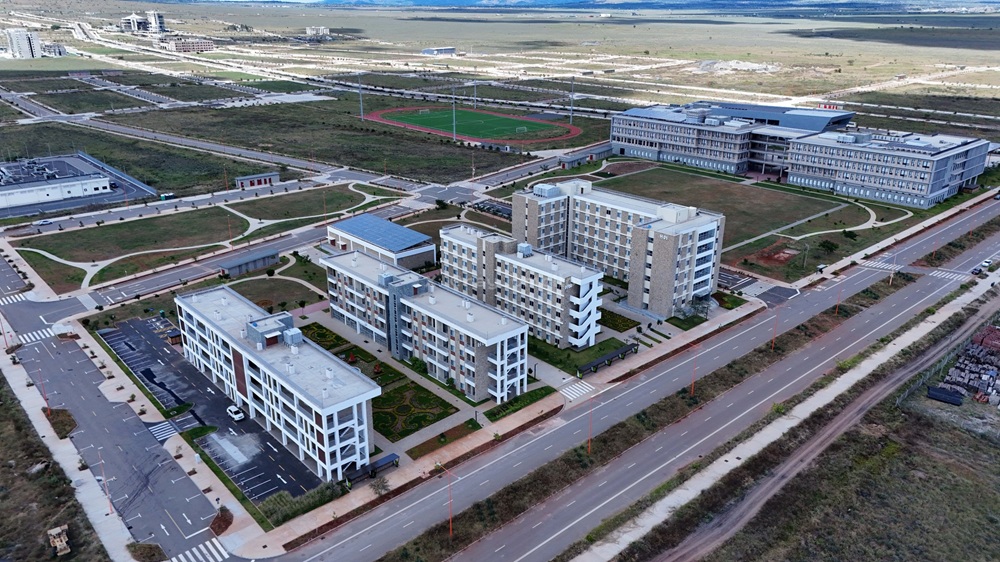
    Konza Technopolis, Africa’s leading smart city and one of Kenya’s flagship development projects, is strengthening its position as a centre of innovation through the deployment of the continent’s first automated pneumatic solid waste management system and the establishment of a world-class science and technology university.

    The automated waste management facility, officially commissioned by President William Ruto in October 2025, marks a significant milestone in sustainable urban infrastructure.

    The system replaces traditional waste collection methods with a fully automated underground network capable of processing up to 40 tonnes of waste daily, improving cleanliness, operational efficiency, and environmental sustainability across the city.
    Built on a 14.8-kilometre underground pipeline network, the system connects 25 collection stations and 100 disposal inlets distributed across East and West Konza. Residents and businesses separate waste into four categories; organic, paper, packaging, and mixed waste before disposal through strategically located collection points.

    The network is managed through a centralised Supervisory Control and Data Acquisition (SCADA) platform, which continuously monitors waste levels and automatically activates high-powered vacuum systems when collection is required.

    Waste is transported through underground pipelines at speeds of up to 70 kilometres per hour to a central processing terminal, where advanced cyclone separation technology facilitates waste compaction, recycling, and environmentally safe air filtration.

    Dr. Raymond Omollo, Principal Secretary (PS0 in the State Department for Internal Security and National Administration, said the Department plays a critical role in supporting the seamless operation of the smart-city infrastructure by coordinating compliance frameworks, protecting essential utility corridors, and strengthening emergency response readiness.

    The development reflects Kenya’s broader efforts to accelerate its transformation into a knowledge-driven industrial economy by drawing lessons from global innovation leaders, particularly South Korea.

    In a further boost to the country’s science and technology agenda, President Ruto awarded a Charter to the Kenya Advanced Institute of Science and Technology (Kenya-AIST) in May 2026.

    The Institution, modelled after the Korea Advanced Institute of Science and Technology (KAIST), is Kenya’s first public postgraduate-only university and is located within Konza Technopolis.

    Fully funded through scholarships, Kenya-AIST is focused on advanced research and training in seven disciplines: Mechanical Engineering, Nuclear Engineering, Electrical and Electronics Engineering, Information Technology Engineering, Civil and Environmental Engineering, Chemical Engineering, and Agricultural Biotechnology.

    The University is strategically integrated into Konza’s industrial ecosystem, placing researchers and students in close proximity to advanced manufacturing facilities, including the Lucky DJX Jeans Export Processing Zone hub and the National Data Centre.

    The Campus also features a robotics innovation center, modern utility infrastructure supporting water and fire safety systems, and residential accommodation for postgraduate students and their families.

    Officials say the institution’s “plugged-in” model is designed to accelerate the transition of research from laboratories to industry, enabling prototypes, patents, and innovations to be tested and scaled within neighbouring production facilities.

    Kenya-AIST is supported by Konza’s resilient 2N+1 power architecture, a 200kVA backup power system, and sustainable water reclamation infrastructure, ensuring uninterrupted research operations and high-performance computing capabilities.

    According to Dr. Omollo, the State Department for Internal Security and National Administration, also plays a strategic role in safeguarding the University as a critical national innovation asset.

    This includes securing sensitive research activities, facilitating the safe movement of research prototypes, and maintaining protected links between the University, data infrastructure, and industrial zones.

    As Konza Technopolis continues to expand, government officials view the City as a cornerstone of Kenya’s vision to become a regional hub for innovation, advanced manufacturing, scientific research, and digital transformation.