Author: Margaret Kalekye

  • Utumishi girls school fire: Nine students remanded for 21 days

    Utumishi girls school fire: Nine students remanded for 21 days

    Nine Utumishi Girls’ Senior School students suspected of causing the deadly dormitory fire that killed 16 of their schoolmates have been remanded for 21 days.

    The court directed that the minors be held at the Nakuru Children’s Home. They will have regular and unrestricted access to officers from the Children’s Department to ensure their rights and welfare are fully protected.

    In allowing the application, the court agreed with the DPP’s submissions that investigations into possible arson and murder charges remain ongoing and require additional time to be completed.

    The Prosecution informed the court that key forensic processes, including DNA analysis and other scientific examinations, are yet to be finalised.

    Naivasha Chief Magistrate Abdluqadir Lorot Ramathan denied them bond, citing fears that they could interfere with witnesses.

    Further, the prosecution argued that the continued detention of the minors is necessary not only to safeguard the integrity of investigations but also for their own protection and welfare, given the sensitivity and public interest surrounding the matter.

    Chief Magistrate Abdulqadir Ramadhan also barred members of the media and the public from taking, publishing, sharing, or disseminating images of the students. The order is intended to protect the children’s privacy and ensure compliance with legal provisions governing matters involving minors.

    Additionally, the court directed that the students be granted access to legal representation and other necessary support services throughout the proceedings.

    The matter will be mentioned on 24th June 2026 for further directions and an update on the progress of investigations.

    SOURCE:ODPP


  • Heavy security as 9 students arraigned over Utumishi Fire

    Heavy security as 9 students arraigned over Utumishi Fire

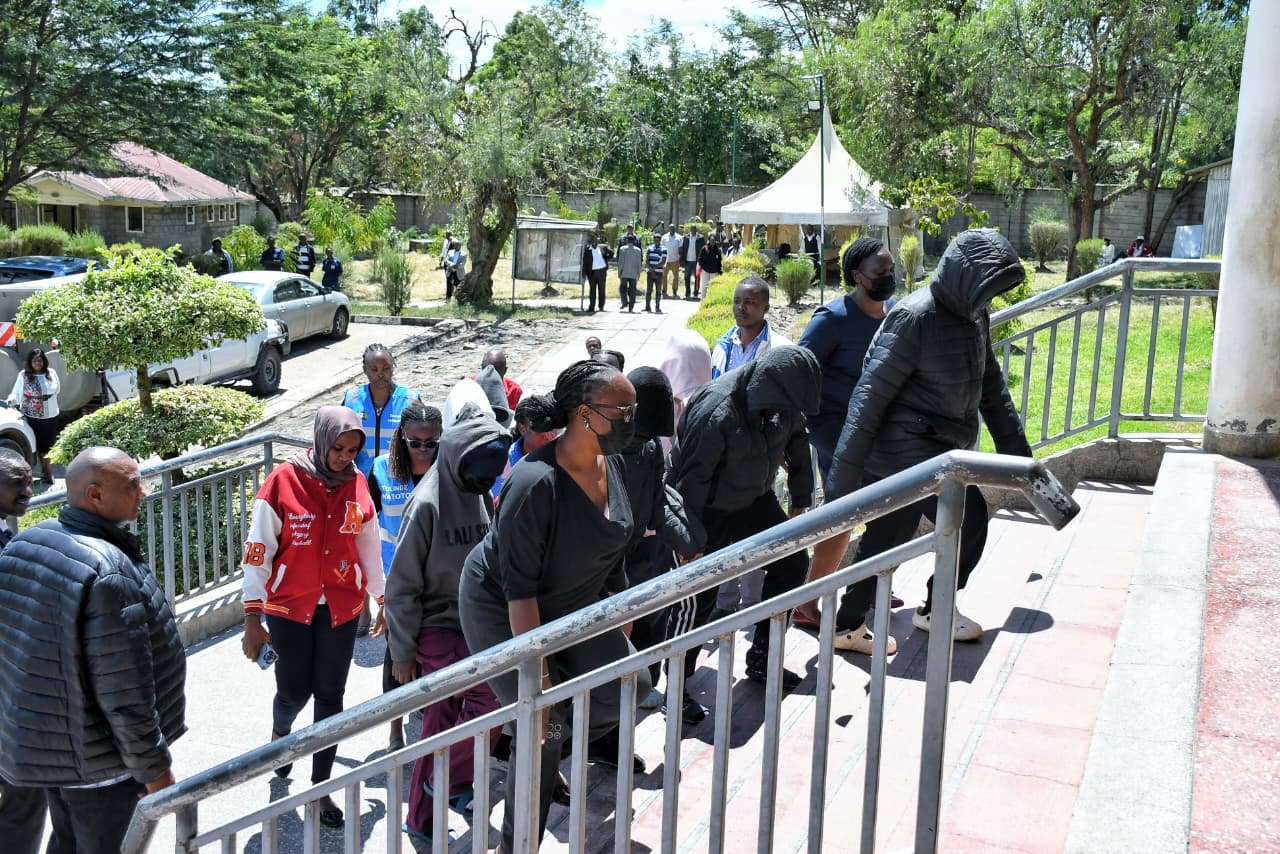
    There was heavy security at the Naivasha Law Courts on Tuesday as nine students linked to the deadly Utumishi Girls Academy dormitory fire were arraigned.

    The fire, which broke out on May 28, 2026, at the school in Gilgil, Nakuru County, claimed the lives of 16 students, while seven others remain admitted to Kenyatta National Hospital with burn injuries.

    The prosecution is seeking to detain the students for 30 days pending the completion of investigations.

    The court is expected to deliver its ruling on the application on June 3.

    The students arrive at the court
    Photos by Antony Gitonga

    Detectives investigating the incident have positively identified seven students suspected of involvement in the arson attack through forensic analysis of CCTV footage, which has since circulated widely online.

    In an update over the weekend, the Directorate of Criminal Investigations (DCI) said it had made significant progress in the probe and was pursuing an eighth student who had initially been released.

    “After conducting a thorough, detailed forensic analysis of the CCTV footage recovered from the school, coupled with enhanced review at the Forensic Imaging and Acoustic Laboratory at DCI National Police Service Forensics Laboratory, a positive identification of the students who lit the fire has been realised”, the DCI said in a statement Sunday.

    “ Further analysis of the CCTV footage, conducted in collaboration with the teachers, has enabled the investigation team to confirm the identity of seven students who participated in the arson before escaping the scene. Of the eight suspects previously arrested, six have been positively identified and confirmed through the footage”, it added.


  • Mudavadi urges shift from aid to trade as Africa deepens ties with South Korea

    Mudavadi urges shift from aid to trade as Africa deepens ties with South Korea

    Prime Cabinet Secretary and Cabinet Secretary for Foreign and Diaspora Affairs Musalia Mudavadi has called on African countries to move away from aid dependency and embrace trade, investment, industrialisation, and value addition as the continent seeks deeper economic cooperation with South Korea.

    Speaking at the Korea-Africa Ministerial Meeting in Seoul on June 1, Mudavadi said Africa must leverage strategic partnerships to drive sustainable growth, create jobs, and strengthen its position in global value chains.

    Addressing foreign ministers and senior officials from Africa and South Korea, Mudavadi described the meeting as a critical platform for strengthening cooperation and promoting shared prosperity at a time of growing geopolitical uncertainty and economic disruption.

    “Our meeting takes place amid growing geopolitical turbulence that has disrupted economic cooperation and development,” Mudavadi said, citing concerns over weakening multilateral institutions and increasing threats to global cooperation.

    He urged countries in the Global South to rethink their economic strategies and diversify partnerships in preparation for what he termed a changing global order.

    “In this context, the Global South must begin to strategically prepare for the world beyond the current order. This is an opportune moment for us to rethink and recalibrate our trade pathways, as well as diversify and consolidate strategic partnerships,” he said.

    Mudavadi emphasised that Africa’s relationship with South Korea should be anchored on trade and investment rather than aid, arguing that stronger private-sector collaboration would accelerate industrialisation and create employment opportunities for the continent’s rapidly growing youth population.

    “Certainly, African states must adopt a forward-looking and people-centred approach driven by diversified partnerships such as the Korea-Africa relations, trade and investment rather than aid dependency, and a focus on manufacturing and value addition to their vast natural resources, including critical minerals,” he said.

    The Foreign Affairs Cabinet Secretary noted that the African Continental Free Trade Area (AfCFTA) provides a major opportunity for Africa to strengthen intra-African commerce while enhancing its bargaining power in global markets.

    He commended South Korea for supporting the objectives of the AfCFTA and called for increased collaboration in mineral and agricultural value chains to help Africa move up the industrial ladder. Such investments, he said, would support job creation, promote value addition, and enhance the continent’s ability to supply competitive products to Korean and international markets.

    Mudavadi also encouraged South Korea to expand its institutional presence in Africa, saying this would help build confidence among Korean investors and provide direct access to information on business opportunities across the continent.

    “Being on the ground makes a significant difference, as it enables institutions to engage directly with our peoples and respective private sectors,” he said.

    Kenya, he noted, has benefited from South Korea’s development partnership through investments in technology, education, infrastructure, and innovation.

    He highlighted South Korea’s support for Konza Technopolis, Kenya’s flagship smart city project, as well as the recently commissioned Kenya Advanced Institute of Science and Technology (Kenya-AIST), which is modelled after the Korea Advanced Institute of Science and Technology (KAIST).

    “The Korean government remains Kenya’s leading partner in technology and the digital economy,” Mudavadi said.

    He added that other ongoing and planned projects include the Nairobi Intelligent Transport System (NITS), the K-Rice Belt Initiative aimed at boosting food security, scholarship programmes for students and civil servants, and cultural and tourism exchanges.

    Mudavadi pointed to South Korea’s remarkable economic transformation as an example for African nations seeking rapid development.

    “The Republic of Korea has undergone an impressive economic transformation, lifting its people out of poverty in less than a century,” he said, adding that Kenya hopes to draw lessons from that experience as it pursues its own development agenda.

    The Cabinet Secretary stressed that youth empowerment should remain central to Korea-Africa cooperation, noting that more than 70 per cent of Kenya’s population is made up of young people. He said investments that generate jobs, encourage technology transfer, and promote entrepreneurship are essential for long-term stability and prosperity.

    Beyond trade and investment, Mudavadi called for closer cooperation in addressing global challenges, including climate change, health emergencies, and supply chain disruptions caused by conflicts in different parts of the world. He also urged South Korea to support African countries facing the threat of Ebola resurgence in Eastern and Central Africa through international mechanisms such as the World Health Organization.

    He further appealed to South Korea to support Africa’s push for reforms of global governance institutions and the international financial architecture to ensure they are more equitable and inclusive.

    Mudavadi reaffirmed Kenya’s commitment to strengthening relations between Africa and South Korea and called for the implementation of practical, time-bound programmes that deliver tangible benefits to citizens.

    “Together, we should defend multilateralism and advocate for reforms of the United Nations and the international financial architecture to be fair, equitable and inclusive. We should prioritise trade and investment, strengthen domestic manufacturing and enhance value addition within our countries, rather than exporting raw materials in their unprocessed form,” he said.

    He reiterated Kenya’s readiness to work with fellow African countries and South Korea to deepen economic ties and advance mutually beneficial partnerships built on shared prosperity and sustainable growth.

    The summit discussed the current geopolitical instability, the current situations in Ukraine and the Middle East and the impact on the global economy, and the global food security situation.

    The foreign ministers noted the growing strategic importance of Africa, especially with regard to maritime routes and resources, including minerals.

    “We further viewed this as a valuable opportunity to deepen and strengthen relations between Korea and Africa. We note the importance of reinforcing institutional frameworks and improving mutual access through key agreements, as appropriate in due consideration of having comprehensive economic partnerships for the achievement of shared prosperity and sustainable growth.” read part of the communique from the deliberations of the meeting.

    The meeting also welcomed continued effort to promote Korean investment in Africa’s key infrastructure areas, strengthening industrial collaboration, capacity building, And mutually beneficial economic growth across the continent.

  • Court orders disclosure of Kenya–US Ebola facility deal

    Court orders disclosure of Kenya–US Ebola facility deal

    The High Court has ordered the government to disclose within seven days all agreements, negotiations, approvals, risk assessments and operational protocols related to the proposed Kenya–US Ebola quarantine facility.

    Justice Patricia Mande issued the directive on Tuesday while allowing the consolidation of a petition filed by the Law Society of Kenya (LSK) with an earlier case lodged by the Katiba Institute.

    The judge also issued conservatory orders barring the government from establishing, operationalising, facilitating, approving or permitting any Ebola quarantine, isolation, exposure or treatment facility in Kenya pending the hearing and determination of the case.

    Katiba Institute is challenging the planned isolation centre, which is being set up with support from the United States.

    Further, the court prohibited the admission, transfer, receipt or facilitation of entry into Kenya of persons exposed to or infected with Ebola under the challenged arrangement.

    Last week, the Law Society of Kenya (LSK) filed an urgent constitutional petition and successfully obtained interim orders halting the proposed US-backed Ebola quarantine and treatment facility in Laikipia County.

    “These orders maintain the current state of affairs, prevent irreversible actions from being taken before constitutional scrutiny, and ensure transparency and public accountability in a matter raising significant concerns about public health, sovereignty, and constitutional governance”, Katiba Institute said.


  • Eight students to take plea over deadly Utumishi girls dormitory fire

    Eight students to take plea over deadly Utumishi girls dormitory fire

    Eight students linked to the deadly Utumishi Girls Academy dormitory fire are set to take plea at the Naivasha Law Courts.

    The fire, which broke out on May 28, 2026, at the school in Gilgil, Nakuru County, claimed the lives of 16 students, while seven others remain admitted at Kenyatta National Hospital with burns.

    Detectives investigating the incident have positively identified seven students suspected of involvement in the arson attack through forensic analysis of CCTV footage, which has since circulated widely online.

    In an update over the weekend, the Directorate of Criminal Investigations (DCI) said it had made significant progress in the probe and was pursuing an eighth student who had initially been released.

    “After conducting a thorough, detailed forensic analysis of the CCTV footage recovered from the school, coupled with enhanced review at the Forensic Imaging and Acoustic Laboratory at DCI National Police Service Forensics Laboratory, a positive identification of the students who lit the fire has been realised”, the DCI said in a statement Sunday.

    “ Further analysis of the CCTV footage, conducted in collaboration with the teachers, has enabled the investigation team to confirm the identity of seven students who participated in the arson before escaping the scene. Of the eight suspects previously arrested, six have been positively identified and confirmed through the footage”, it added.


  • Three Ebola vaccines in development amid growing outbreak fears

    Three Ebola vaccines in development amid growing outbreak fears

    Three new vaccines are being developed to tackle the rare species of Ebola that has already killed nearly 250 people.

    The International Aids Vaccine Initiative (IAVI), which is working on one vaccine, said the outbreak was threatening to be the worst ever.

    The University of Oxford and the pharma company Moderna are also researching vaccines against the Bundibugyo species.

    The Coalition for Epidemic Preparedness Innovations (Cepi), which is providing funding to each group, said “every day counts”.

    There are now more than 1,000 suspected cases in the DR Congo with nine confirmed cases in neighbouring Uganda.

    There is growing concern this outbreak – which was detected only after it had spread in a conflict zone with limited healthcare resources – could reach the size of the largest ever Ebola outbreak in West Africa in 2014-16. Then, nearly 29,000 people were infected and more than 11,000 died.

    Dr Mark Feinberg, head of IAVI, said: “I think this is clearly threatening to be as severe an outbreak as that, if not even worse, and development of a vaccine, and other countermeasures, is clearly a priority.”

    Meanwhile, the pharmaceutical company Moderna has announced it is using its mRNA technology – which was deployed to rapidly develop vaccines in the Covid pandemic – to work on Bundibugyo.

    “We will move with urgency and scientific rigor to support the response and help bring a potential vaccine closer to the communities that need it most,” said Stéphane Bancel, chief executive officer of Moderna.

    And the University of Oxford has already said it is working on its own vaccine technology, which also saved lives in Covid, to develop a fresh Ebola vaccine.

    This should be ready for clinical trials in two to three months.

  • President Ruto defends Laikipia Ebola quarantine centre

    President Ruto defends Laikipia Ebola quarantine centre

    President William Ruto has defended the establishment of a quarantine Ebola centre at the Laikipia Air Base.

    Ruto said the facility, being set up with support from the United States, is intended to safeguard public health and enhance the country’s capacity to respond effectively to health emergencies.

    He likened the project to measures taken during the Covid-19 pandemic, when a similar isolation facility for all was established at Nairobi Hospital to manage and contain infections.

    His remarks come days after the High Court suspended the establishment of the facility and barred the arrival of any foreign patients pending the determination of a case filed by the Law Society of Kenya and Katiba Institute.

    Speaking at a media roundtable at Wajir State Lodge,  he urged leaders and stakeholders not to politicise public health interventions and reaffirmed the Government’s commitment to protecting the health and well-being of all Kenyans.

    “The quarantine facilities being established at Laikipia Air Base with the support of the United States are intended to safeguard public health and strengthen our capacity to respond effectively to health emergencies”. He said.

    “This has happened before during the COVID-19 pandemic when we established a special facility at The Nairobi Hospital”, he added.

    He said his administration was taking all necessary steps to prevent, detect, and manage any potential cases, while strengthening the public health response capabilities with the support of our international partners.

    “Kenya’s partnership with the United States spans decades and has played an important role in supporting our response to major public health challenges, including HIV/Aids, COVID-19, and Ebola”, he revealed.

    Meanwhile, Nanyuki residents staged protests against the project, vowing to sustain the demonstrations until its implementation is stopped.

    Marlin Ndegwa, a resident, said that the agreement between the Kenyan Government and the US to have the centre established in Nanyuki for Americans exposed to the virus was reached without public participation, questioning why it could not be done in the affected countries.

    “This will expose our people to Ebola,” he said, adding that many locals work inside the air base and could be exposed.

    Kenya has not recorded any Ebola cases, but neighbouring Uganda has reported nine and closed its border with the Democratic Republic of the Congo (DRC).

  • Only legitimate Kenyans will get IDs, Ruto clarifies

    Only legitimate Kenyans will get IDs, Ruto clarifies

    President William Ruto has clarified that national identity cards will only be issued to legitimate citizens in the North Eastern region, which has for decades suffered discrimination.

    Speaking during the 2026 Madaraka Day celebrations in Wajir County, where the national event was held for the first time, the President revisited his decree on the issuance of national IDs. He spoke emotionally about how the move had eliminated unnecessary bureaucratic hurdles and scrutiny that had denied many deserving residents access to identification documents and the rights that come with them.

    However, the President set the record straight that the vetting process had not been abolished. Instead, he said, the reforms were aimed at ending discrimination against specific communities based on their ethnicity or place of birth.

    While highlighting the significant development milestones in Wajir, which he attributed to his administration’s commitment to justice and inclusivity, Ruto said his government remains committed to ensuring equity and equality for all Kenyans.

    “Today, we make history. For the first time in 63 years of self-rule, a national celebration, Madaraka Day, is being hosted in Wajir, in the heart of Northern Kenya. This is what we meant when we said we will leave no one behind,” he said.

    The President went on to share the lived experience of Bakaja Ibrahim Osman, a resident born in Wajir in the early 1960s and how he had to endure a frustrating journey in pursuit of a national identity card.

    “His parents were born here, but for years, every time Osman went to apply for an identity card, the most basic document of citizenship, he was treated not as a Kenyan, but as a suspect, an illegal alien. Every time, he was asked for extra documents, subjected to additional vetting, and sent from office to office, year after year,” Ruto recounted.

    “For more than six decades, this was the lived experience of hundreds of thousands of Kenyans in Northern Kenya. Citizens were forced to prove they belonged through a system built on suspicion, ethnic profiling and bureaucratic humiliation,” he added.

    Although Osman may have been denied opportunities for much of his life, the shared encounters had a happy ending.

    Ruto cited the example of Mariam, born in 2007, and many other young people who recently turned 18 and were able to obtain their national identity cards without unnecessary obstacles.

    Beneficiaries of the presidential proclamation signed in March 2025, they walked away with IDs in their hands, unlocking opportunities they rightfully deserve, just like their peers in other parts of the country.

    Ruto maintained that his administration is determined to reverse decades of marginalisation in the region.

    “For too long, some said Northern Kenya was too difficult, too remote, too dry and too insecure to deserve development. That was wrong. We are dismantling that legacy of exclusion,” he assured.

    Wajir Governor Ahmed Abdullahi thanked the President for the bold move, saying it had given the people of the region a renewed sense of belonging and inclusion in the nation’s development agenda.

    “Lifting of discriminatory vetting in the issuance of IDs was a profound act of political courage. You did more than issue IDs to deserving Kenyans, you restored our dignity and gave us a sense of belonging”, he said.

  • How Bungoma County is bridging donor funding gap to sustain NTD interventions

    How Bungoma County is bridging donor funding gap to sustain NTD interventions

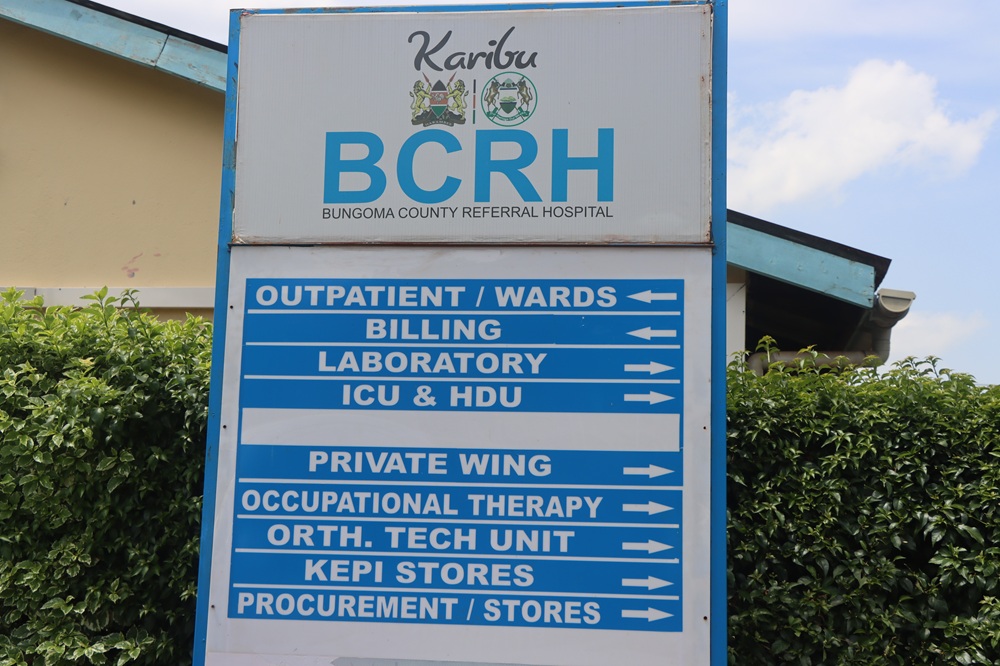
    Kenya continues to grapple with the burden of Neglected Tropical Diseases (NTDs) even as it races against time to meet the World Health Organization’s 2030 elimination target.

    The diseases targeted for elimination amid dwindling donor funding include Schistosomiasis (Bilharzia), Soil-Transmitted Helminths (intestinal worms), Lymphatic Filariasis (Elephantiasis), Onchocerciasis (River Blindness), Visceral Leishmaniasis (Kala-azar), and Trachoma, which affect vulnerable communities.

    Western Kenya counties endemic for Bilharzia and intestinal worms, are already feeling the effects of the global health funding cuts, which have led to the gradual withdrawal of key development partners.

    Despite these challenges, Bungoma county government is determined to ensure that last-mile interventions remain uninterrupted as part of sustained efforts to achieve zero infections by 2027.

    Since 2021, mass drug administration, community education on social and behavioural change, water, sanitation and hygiene (WASH) initiatives have reduced Bilharzia prevalence from 7pc to zero cases. However, there has been a resurgence of intestinal worms in West Sang’alo, a hotspot, with reported cases now standing at 5pc.

    While the latest endline survey raises concerns over the comeback, County Director of Health and Sanitation Dr. Caleb Watta maintains the findings will not derail national efforts to eliminate the diseases, adding that the drug stockout has been addressed including increasing pit latrine coverage in the area following a drop caused by the heavy rains.

    Speaking to journalists, Dr. Watta acknowledged existing funding gaps but said the county government had stepped in through increased budgetary allocations.

    He revealed that NTD programmes had been allocated Ksh15M in this 2026/2027 financial year. In addition, key interventions have been integrated into the broader healthcare system to sustain disease control and treatment efforts.

    He described the funding cuts as a wake-up call for counties that have long relied on international donors to finance mass drug administration, disease surveillance, and community outreach programmes aimed at curbing the spread of NTDs.

    “These were diseases that had not been prioritised, with development partners largely supporting the interventions. Through continuous sensitisation, we came to the realisation that we need to take the lead, and that is exactly what we are doing. There is now ownership at both levels of government and within communities. We now know and recognise that NTDs are our problem and one that we must address. NTD interventions are now incorporated into our planning just like any other disease,” he said.

    Dr. Watta expressed optimism that the shift achieved through enhanced sensitisation and multisectoral collaboration would result in more resources being allocated to the fight against NTDs.

    He commended development partners for their continued support, noting that they have played a critical role in the progress Kenya has made over the years.

    Kenya has already eliminated Guinea worm disease and more recently, sleeping sickness. These achievements have been built on years of sustained mass drug administration, strong community health networks, and consistent investment from both the government and development partners.

    “Part of our success comes from local champions, including community leaders who have a deep understanding of these diseases. Resource mobilisation remains a key pillar of healthcare financing, and continued support from partners is essential if we are to sustain gains in the health sector,” he said.

    “The donors have left a lasting imprint on these programmes. There is also strong goodwill from the political leadership. For instance, the County Assembly, through its Health Committee, has consistently approved our budget proposals because members have seen the empowerment that comes with an NTD-free community. The County Executive, led by the Governor, has also been very supportive,” he added.

    Currently, the department is working closely with water, environment, and education ministries to strengthen the three pillars of NTD elimination: expanding mass drug administration (MDA) coverage, enhancing water, sanitation and hygiene (WASH) interventions, and promoting social and behavioural change.

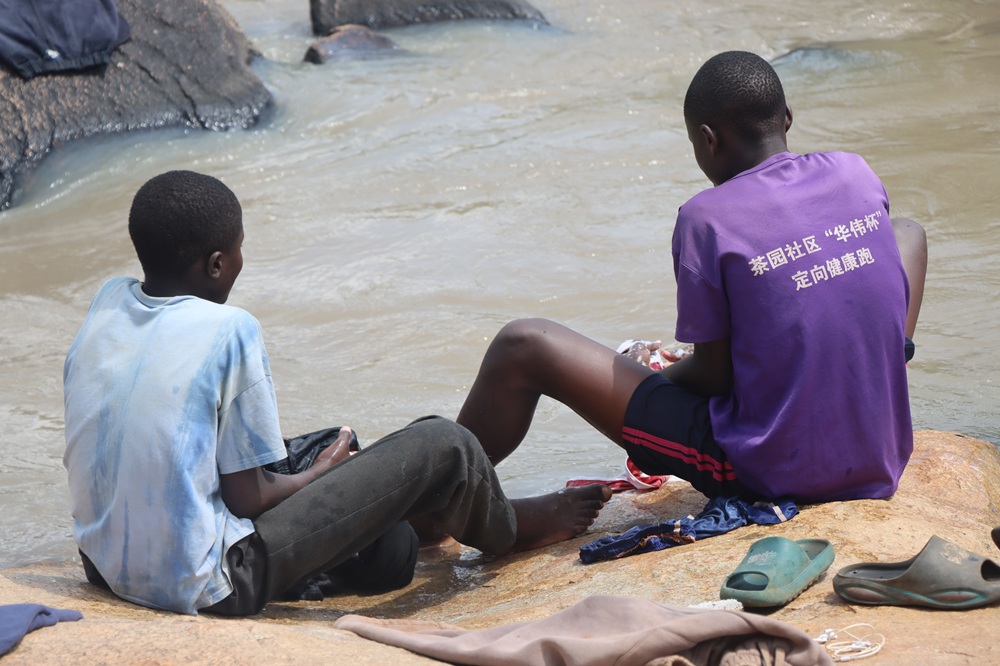
    Schistosomiasis (bilharzia) is a disease linked to unsafe water

    Other strategies include disease surveillance, trengthened monitoring and evaluation systems.

    “We are nearing elimination. We have moved away from treating these as neglected diseases and have integrated them into the mainstream healthcare system. Our focus is now on the test and treat strategy, strengthening all interventions, and enhancing surveillance. The war against NTDs must be won,” Dr. Watta concluded.

    Apart from Bilharzia and intestinal worms, other NTDs affecting communities in Western Kenya include jiggers, rabies, scabies, sleeping sickness in Bumula, snake bites, and river blindness.

  • President Ruto begins three day tour of Wajir County

    President Ruto begins three day tour of Wajir County

    President William Ruto began a three-day tour of development projects in northern Kenya on Sunday ahead of Madakara Day celebrations to be marked in Wajir town on Monday.

    The President commenced his tour in Wajir South Constituency, where he commissioned the Habaswein Solar PV-BESS-Diesel Hybrid Power Plant, a Ksh639M investment by Kenya Power and Lighting Company that will provide electricity to 8,565 households.

    “Northern Kenya enjoys the least access to electricity in the country. That is why I have directed the Ministry of Energy to implement affirmative action measures to speed up connections in the region,” he said while addressing residents of Habaswein town.

    Present were Wajir Governor Ahmed Jiir, Cabinet Secretaries Aden Duale (Health), Davis Chirchir (Roads and Transport) and Opiyo Wandayi (Energy), Principal Secretaries, MPs, and MCAs, among others.

    Overall, the President pointed out that the Government is investing Ksh8.4B this year to connect more than 53,300 households to electricity in the three Northern Kenya counties of Wajir, Mandera, and Garissa to ensure inclusive development.

    He also inspected the progress of the upgrading of 7.5km of roads within Habaswein town, a Ksh557M project that he said will enhance mobility and improve access to essential services for residents.

    He also inspected the tarmacking of 10km of roads within Griftu town, Wajir West Constituency, which he said are being upgraded at a cost of Ksh1B.

    President Ruto welcomed Northern Eastern residents and other Kenyans to attend Monday’s Madaraka Day celebrations, the first-ever national holiday to be marked in Northern Kenya.

    On education, the President said the Government has adopted affirmative action by employing an extra 100 teachers in each constituency in Northern Kenya in an effort to raise teaching and learning standards.

    “Previously, most teachers in this region came from other parts of the country. Often, learning activities were interrupted for long whenever the teachers left for one reason or the other. But we want to nurture teachers from the local community to take charge of the schools here,” he explained.

    For this reason, President Ruto said the Government has established four teacher training colleges in Wajir, Garissa and Mandera whose current enrolment is over 4,800 teacher trainees.

    On roads, he assured the residents that the 740km road network in the region, being implemented under the Horn of Africa Gateway Development Project, will be completed on time.

    “Many times, these roads have been promised, but we are building them today because it is your right as citizens of this nation,” he said.

    Earlier, President Ruto presided over the prize-giving ceremony at the 37th Rhino Ark Charge at Ngilai Community Conservancy in Wamba, Samburu County.

    During the event, the President launched the Rhino Ark Endowment Fund, and said the Government would double Ksh100 seed capital raised by the board.

    “Conservation sits at the heart of our sustainable development agenda,” President Ruto told the participants.

    On family values, the President urged parents to actively raise their children and avoid apportioning blame when things take a wrong turn.

    “I am proud to see children here at this event. This is how we should bring them up. They get mentored because they can see what is happening. This is the true spirit of family,” the President noted, adding: “Your child is first and foremost your responsibility.”

    The event was attended Cabinet Secretaries Rebecca Miano (Tourism) and Mr Duale (Health), Samburu Governor Jonathan Lelelit, and Rhino Ark Board Chairman Peter Kinyua, among others.