Author: Margaret Kalekye

  • Junior starlets on verge of 2nd World Cup appearance after South Africa win

    Junior starlets on verge of 2nd World Cup appearance after South Africa win

    Kenya’s Junior Starlets moved to the brink of a second FIFA U17 Women’s World Cup appearance after a commanding 2-0 away victory over hosts South Africa in the first leg of their final qualification round tie on Saturday.

    Playing in front of a hostile crowd at the Lucas Masterpieces Moripe Stadium in Pretoria, Kenya took control early through Faith Boke, who broke the deadlock inside the first 20 minutes.

    South Africa pushed for an immediate response and were handed a golden opportunity when they won a penalty, but Kenyan goalkeeper Mishel Okoyo Ngono produced a crucial save to keep her side’s advantage intact.

    Brenda Achieng doubled Kenya’s lead in the second half, rounding off a disciplined and composed performance on the road.

    The result hands coach Mildred Cheche’s side a significant cushion heading into the return leg at Nyayo National Stadium in Nairobi on July 12.

    Kenya now need only avoid a heavy defeat to book their ticket to Morocco, where the 2026 tournament will be staged from October 17 to November 7.

    For Cheche, the achievement would mark a second World Cup qualification as head coach, having previously guided the Junior Starlets to their tournament debut in 2024 in the Dominican Republic.

    That experience of navigating young players through the pressures of a qualification campaign could prove valuable as Kenya look to close out the tie on home soil.

    South Africa, who eliminated Tanzania in the previous round, now face a difficult task of overturning the two-goal deficit in front of a Kenyan crowd.

    The Junior Starlets’ defensive discipline throughout the qualifying campaign, including narrow away-goal progressions past Uganda and Namibia, has been a hallmark of their run to this stage.

    A positive result in Nairobi would confirm Kenya’s return to the global stage and continue the momentum built under Cheche’s guidance since the team’s historic first appearance two years ago.

  • WITIA launches smart library in Machakos,targets to bridge Kenya’s digital gap

    WITIA launches smart library in Machakos,targets to bridge Kenya’s digital gap

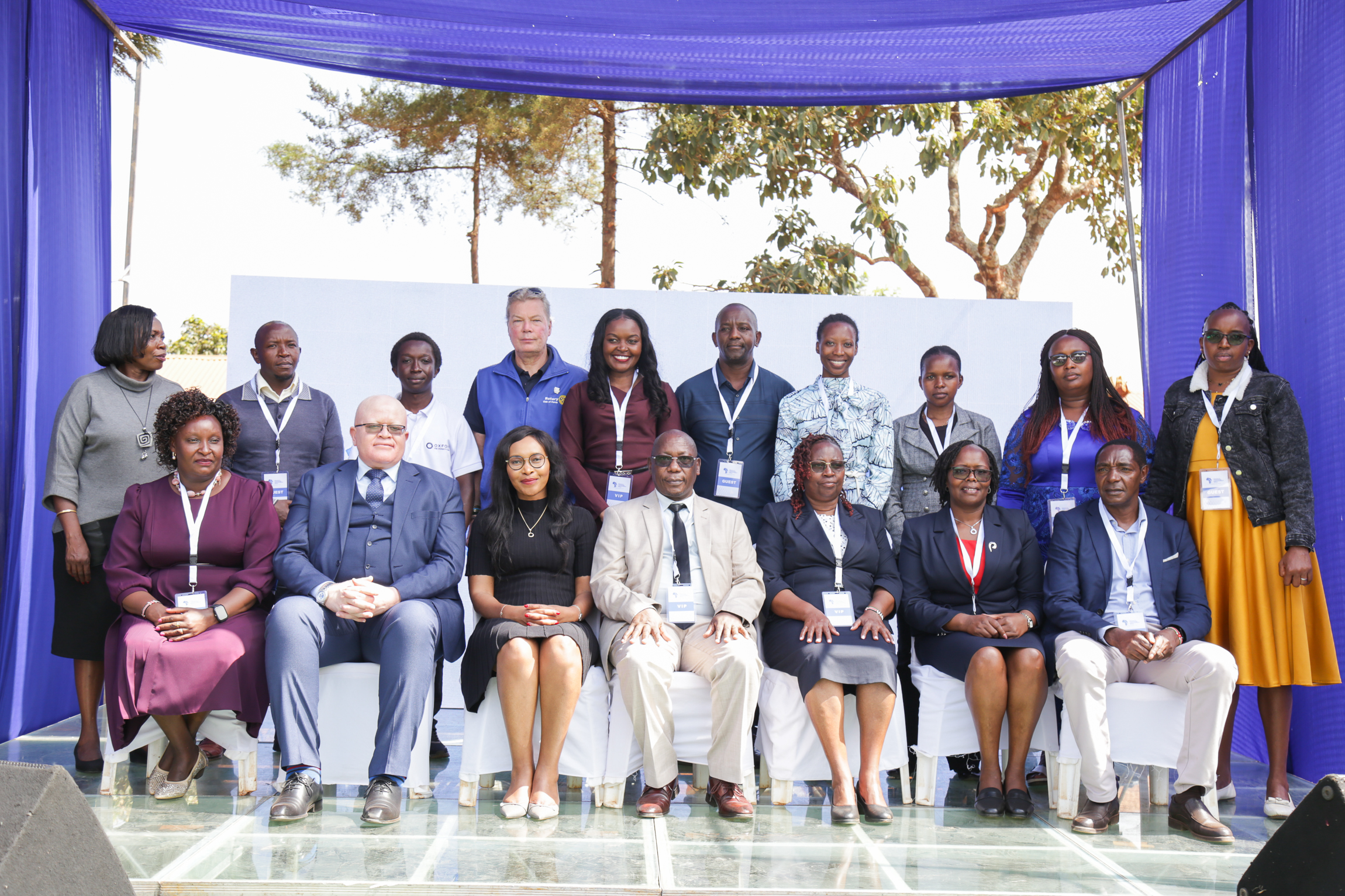
    Women in Technology and Innovation Africa (WITIA) has inaugurated the WITIA Smart Library at Mbukoni Comprehensive School in Machakos County, a milestone achievement in its effort to close Kenya’s digital gap and enhance access to high-quality, technology-driven education for students in underprivileged areas.

    The Mbukoni Smart Library represents the second digital learning center created as part of the WITIA flagship Smart Libraries for a Smart Nation Initiative.

    This initiative builds upon the achievements of the initial WITIA Smart Library at Nkaimurunya Comprehensive School in Kajiado County, which has set a standard for technology-driven education and digital inclusion.

    Drawing on lessons learned from the Nkaimurunya project, the Mbukoni Smart Library incorporates enhanced design, improved learning spaces, and stronger accessibility features to ensure that every learner benefits from a safe, inclusive, and modern learning environment.

    The organization has donated more than 2,300 curriculum aligned books to enhance literacy and learning, renovated and modernized three classrooms into learner-friendly spaces, and constructed a modern ablution block for teachers, improving staff welfare and creating a more conducive teaching environment.

    Speaking during the launch, Eunice Pohlmann, Founder and Chairperson of Women in Technology and Innovation Africa, said the initiative reflects WITIA’s belief that access to technology should never depend on where a child is born.

    “Education is the greatest equalizer, but in today’s world it must be accompanied by digital access. Through the Smart Library Initiative, we are ensuring that learners in every part of Kenya can access the same opportunities to learn, innovate, and compete globally.
    The launch of the Mbukoni Smart Library is another step towards building an inclusive digital future where no child is left behind.”she said

    The Cabinet Secretary for Education, Julius Migos who was the chief guest, welcomed the initiative, noting that partnerships such as WITIA’s complement the Government’s commitment to improving learning outcomes through technology.

    “The Government remains committed to ensuring that every Kenyan learner has access to quality education supported by modern technology.The WITIA Smart Library exemplifies the kind of collaboration that strengthens our education system by creating environments where learners can develop digital skills, critical thinking, and innovation. Together, we are preparing our young people for the opportunities and challenges of the twenty-first century.” Stated the CS

    Wesa Sitati, Program Manager at WITIA, said the initiative is positioning learners to participate meaningfully in Kenya’s digital transformation.

    “Digital skills are becoming fundamental to education, employment, and innovation. By establishing Smart Libraries in underserved schools, we are creating environments where learners gain confidence in using technology, develop problem-solving skills, and prepare themselves for participation in the global knowledge economy.”

  • Westlands MP wanyonyi  supports over 200 Githogoro fire victims

    Westlands MP wanyonyi supports over 200 Githogoro fire victims

    Westlands MP Tim Wanyonyi extended humanitarian assistance to families affected by the devastating fire that destroyed more than 200 homes in Astrol in Githogoro, Karura Ward.

    The exercise was attended by Westlands Deputy County Commissioner Mayabi Buxton, Karura Ward MCA Fiu Nifiu, Kitisuru Ward MCA Alvin Olando Palapala, Karura Assistant Chief Barabas Masakhalia, local administrators, and community leaders.

    Wanyonyi conveyed his sympathies to the affected families, reaffirming his commitment to supporting Westlands residents during times of crisis and calling on well-wishers and humanitarian organisations to continue assisting the victims as they rebuild their lives.

    The relief exercise was conducted by the MP’s office, led by his Manager Centrine Simuli, with each affected family receiving maize flour, rice, cooking oil, sugar, green grams, tea leaves, salt, soap, and blankets to help meet their immediate needs.

    The fire broke out at approximately 12 noon on Friday, 26th June 2026, leaving hundreds of residents homeless after their houses and belongings were reduced to ashes.

  • France sets up Morocco rematch of 2022 semi-final in last 8 contest

    France sets up Morocco rematch of 2022 semi-final in last 8 contest

    France booked their place in the World Cup quarter-finals on Saturday, edging past a determined Paraguay side 1-0 in Philadelphia to set up a repeat of their 2022 semi-final against Morocco but this time round it will be in the quarter final stage.

    Kylian Mbappe settled the tie with a 70th-minute penalty after substitute Desire Doue was fouled inside the box, a decision confirmed following a video review.

    The spot kick took Mbappe’s tournament tally to seven goals, drawing him level with Lionel Messi atop the golden boot standings, and extended his record for World Cup knockout-stage goals to eleven.

    Paraguay, who had eliminated Germany on penalties in the previous round, set up defensively with a five-man backline and largely nullified France’s attacking threat for long stretches.

    Les Bleus dominated possession throughout but were limited mostly to long-range efforts before finally breaking through in the second half.

    The closing stages grew heated, with several confrontations between players continuing after the final whistle, though the match produced no bookings.

    France will now face Morocco on Thursday, July 9, in Boston, four years after beating the Atlas Lions 2-0 in Qatar, en route to the 2022 final.

    Morocco advanced to the quarter-finals earlier Saturday with a 3-0 win over co-hosts Canada.

  • Its David vs Goliath as Cape Verde tackles defending champions Argentina

    Its David vs Goliath as Cape Verde tackles defending champions Argentina

    Cape Verde’s remarkable World Cup debut runs headlong into its biggest challenge yet on Friday, as the smallest nation ever to reach the knockout stages, takes on defending champions Argentina in Miami.

    The Blue Sharks have been one of the tournament’s great stories, becoming the first World Cup debutants to advance from the group stage since Slovakia in 2010.

    They did so without winning a single match, drawing all three of their Group H games, including a stunning 0-0 result against Spain in their tournament opener.

    Kevin Pina’s long-range free-kick against Uruguay made history as the country’s first-ever World Cup goal, and the team’s disciplined, resilient style has drawn admirers well beyond the islands’ roughly half a million people.

    Now stands the sport’s biggest test: Lionel Messi and the Argentina side chasing another deep run. Messi, still adding to his career goal tally, will look to break down a Cape Verde defense that has conceded just twice all tournament.

    Goalkeeper Vozinha, a breakout star of the group stage, will be central to any hopes of another surprise.

    On paper, the gap between world champions and World Cup debutants could hardly be wider despite being 66 places apart in the FIFA rankings as they face off from 1am on Saturday.

    However, Cape Verde has already defied the odds once in this tournament, and few would bet against them making Argentina work for their place in the last 16.

    Seven-time African Champions Egypt will open the final day of the round of 32 fixtures against the Socceroos of Australia in Dallas at 9pm on Friday, with the winner set to play the winner between Argentina and Cape Verde in the round of 16 set for 7th July.

    The Black Stars of Ghana will conclude the round of 32 ties as they come head-to-head against South American giants Los Cafeteros from Colombia at 4 30am on Saturday.

    However, Cape Verde has already defied the odds once in this tournament, and few would bet against them making Argentina work for their place in the last 16.

    Seven-time African Champions Egypt will open the final day of the round of 32 fixtures against the Socceroos of Australia in Dallas at 9pm on Friday, with the winner set to play the winner between Argentina and Cape Verde in the round of 16 set for 7th July.

    The Black Stars of Ghana will conclude the round of 32 ties as they come head-to-head against South American giants Los Cafeteros of Colombia at 4:30am on Saturday.

  • Spain sweep aside Austria to set up mouthwatering Portugal clash

    Spain sweep aside Austria to set up mouthwatering Portugal clash

    Dorminant Spain saw off Austria 3-0 in the Round of 32 on Thursday night, booking their place in the last 16 and a blockbuster meeting with Portugal.

    Mikel Oyarzabal opened the scoring in the first half after sustaining pressure on the Austrian defence.

    The lead was doubled shortly after the break when Pedro Porro, rose highest at the back post to head home from a pinpoint delivery.

    Oyarzabal completed his brace for Spain’s third in the closing stages, turning a comfortable win into a statement performance.

    The victory marked Spain’s first World Cup knockout-round win since 2010, a stat that will only add to the growing belief around this squad.

    Attention now turns to Monday’s last-16 tie in Dallas, where Spain will face a Portugal side inspired by Cristiano Ronaldo and Gonçalo Ramos.

    The two Iberian neighbours have a storied recent rivalry, headlined by last year’s tense Nations League final, and their latest meeting promises to be one of the standout ties of the knockout stage.

  • How Africa can learn from planning, development of China’s industrial parks

    How Africa can learn from planning, development of China’s industrial parks

    Forty years ago, Shenzhen was a fishing town of 30,000 people. Today, it is a city of more than 17 million and one of the world’s great manufacturing hubs, built in large part on the back of a simple but radical idea; the industrial park. China has since exported that idea more aggressively than almost any other piece of its development model, planting parks from the forests outside Minsk to the Red Sea coast of Egypt.

    Two of its better-known successes, in Belarus and in Egypt, got there by rather different routes, and the gap between them is exactly what African governments now courting Chinese investment under Beijing’s Global Development Initiative (GDI) should study. But the lesson is not to copy and paste China’s parks wholesale, but to understand what each one had to do differently to succeed.

    Consider Great Stone, the China-Belarus industrial park outside Minsk. A decade ago it was, in the words of one official, “a piece of white paper” — forest and swampland. Today it hosts more than 150 resident companies making everything from unmanned aerial vehicles to pharmaceuticals, drawing roughly $1 billion in investment, with the Belarusian state contributing less than five per cent of the total. What made it work was sequencing – roads, water, gas and customs infrastructure went in before a single factory was built, and a one-stop administrative office, modelled on China’s Suzhou Industrial Park, cut approval times that elsewhere can take a month down to under two hours.

    Now consider Egypt. The China-Egypt TEDA Suez Economic and Trade Cooperation Zone began in 2008 on a stretch of desert sand south of the Suez Canal. Today it hosts more than 170 companies, has generated close to $5 billion in cumulative sales and directly employs nearly 10,000 Egyptians, in a fibreglass and heavy-engineering cluster President Sisi has called the most successful project on the Suez Canal corridor. The zone thrived because it was redesigned around Egypt’s own labour market and supply chains rather than China’s blueprint.

    Amongst the clearest illustrations of these dynamics was a recent seminar organised for African countries on the construction and management of industrial parks, convened at Suzhou University of Science and Technology and sponsored by China’s Ministry of Commerce. Visits to operating zones and exchanges with the planners and developers, including Hangzhou and Shanghai, gave concrete shape to these lessons.

    Africa already has experience of Chinese-linked parks, from Ethiopia’s industrial zones to TEDA itself, and the lesson from both Belarus and Egypt is that technology and cash are the easy part. What determines whether a park becomes a genuine cluster or an expensive shell is the governance underneath it, and the willingness to adapt it to local conditions rather than impose it.

    China’s own model rests on a layered division of labour. The state sets direction and incentives, an enterprise-led development company manages the park day to day, and once it reaches critical mass, the market takes over. African governments need a functioning equivalent – a single authority with real power, rather than a park caught between ministries that each claim partial ownership and none take responsibility.

    The second lesson is about capability, not just capacity. China’s GDI has backed thousands of vocational training places through schemes such as the Luban Workshops. TEDA now employs nearly 10,000 Egyptians, over 97 per cent of staff in some resident firms. But training bolted on after a park opens is no substitute for designing local skills transfer in from day one. A park that encourages joint ventures, local equity and management training from the outset stands a far better chance of sustainability.

    The third lesson is fit. Great Stone succeeded partly because Belarus already had skilled engineers and a useful position on Eurasian trade routes. TEDA succeeded only once its developers stopped trying to recreate Tianjin in the desert and built instead around Egyptian labour costs and export markets. Too many parks have been cited for political symbolism — a presidential ribbon-cutting, a flagship for a state visit — with too little regard for whether the surrounding economy can absorb what the park produces.

    None of this requires Africa to replicate China’s political system or its scale of state capital. What is transferable is the discipline, infrastructure, a governance structure with real authority, skills and equity, and match the park to the economy that already exists. China spent four decades learning these lessons. Fortunately, African governments have the advantage of studying China’s successes and mistakes from the outside.

    The writer is an expert in China-Africa relations


  • Why banks must stop biases against Africa’s women entrepreneurs

    Why banks must stop biases against Africa’s women entrepreneurs

    Every day across Africa, millions of women are trading and running businesses—in markets, shops, factories and farms—creating jobs, supporting families, communities and countries. Yet despite owning promising enterprises, millions continue to encounter barriers to capital, an age-old challenge that has limited their ability to expand their ventures, create jobs and contribute fully to economic transformation.

    It is noteworthy, however, that something transformational is beginning to happen, and it should be sustained. A growing number of financial institutions are challenging long-held assumptions about women-owned businesses and designing products that respond to their realities. Recent recognition of a banking programme in DRC, dedicated to supporting women entrepreneurs, demonstrates that change is possible when institutions deliberately choose to address financing barriers rather than reinforce them.

    Such initiatives are worth paying attention to because they challenge one of the most persistent myths in finance: that lending to women entrepreneurs is inherently risky. If programmes focused on women-owned businesses can be sustained for years and continue to grow, then perhaps the perceived risk has been overstated all along.

    So, what are other banks still waiting for?

    I have witnessed first-hand that when financial institutions intentionally invest in women-led businesses, they help build more inclusive, resilient and prosperous economies. For too long, women entrepreneurs have been constrained not by a lack of capability, but by assumptions that have shaped lending decisions and excluded them from opportunities to grow.

    Consider the experience of Agnes Maina, a Kenyan entrepreneur whose bakery business struggled for years to access credit. Like many women business owners, she was repeatedly told she lacked sufficient collateral. Everything changed when she obtained financing and technical support through a programme aimed at expanding access to capital for women entrepreneurs.

    The investment enabled her to acquire essential equipment and scale production. Today, her business employs 27 people and produces more than 10,000 pieces of bread and buns daily. Beyond direct employment, it supports a wider ecosystem of transporters, suppliers and smaller businesses that depend on its success.

    This is just one example of what becomes possible when women entrepreneurs gain access to finance and business support. Across the continent, similar stories demonstrate that the challenge is not a lack of ambition, innovation or business acumen. Rather, it is the persistent financing gap that continues to stifle potential.

    In Africa, the financing gap facing women-owned small and medium-sized enterprises is estimated at $42 billion. Despite Sub-Saharan Africa having one of the highest rates of female entrepreneurship in the world, deep-rooted disparities in collateral ownership, digital access and systemic biases continue to prevent many women from scaling their enterprises.

    Yet evidence increasingly shows that when financial institutions design products that respond to the realities of women-owned businesses, and back them with technical support, the results can be transformative. Businesses grow. Jobs are created. Communities prosper.

    The challenge now is to move beyond isolated success stories and make such approaches the norm rather than the exception. Financial institutions should be intentional in designing products that meet the needs and priorities of women entrepreneurs and innovative enough to serve different categories of businesses at different stages of growth.

    By doing so, banks will help Africa unlock a vast reservoir of entrepreneurial talent that only needs to be kickstarted to thrive.

    During the recent Africa Forward Summit hosted in Nairobi, a clear consensus emerged: that the continent’s growth story will depend on empowering those who are building businesses and creating solutions on the ground. The continent can no longer afford to exclude women entrepreneurs from that vision. We must all sail forward together if the continent is to realize its full economic potential.


    The author is the Director for Gender and Civil Society at the African Development Bank Group.


  • ACA calls for partnership in fight against counterfeits

    ACA calls for partnership in fight against counterfeits

    The Anti-Counterfeit Authority has called on Kenya’s innovators, researchers and technology developers to actively partner with them in building next-generation tools to combat counterfeiting and protect intellectual property.

    Speaking at the Open University of Kenya Innovation Week, State Department of Science, Research and Innovation Principal Secretary Prof. Shaukat Abdulrazak painted an ambitious picture of Kenya’s innovation potential, challenging stakeholders to build synergies that would position the country on the global stage.

    “Kenya, through innovation, can reach that global status and compete with first-world countries. Innovation creates entrepreneurship, entrepreneurship creates jobs and thus grows our economy. Innovators need to think outside the box and challenge conventional thinking,” he said.

    ACA Executive Director Dr. Robi King’a encouraged innovators, entrepreneurs and students that the Authority cannot fight 21st-century counterfeiting alone.

    “The Anti-Counterfeit Authority does not have a monopoly on good ideas. We need you,” he said.

    Dr. King’a outlined two flagship ACA initiatives: the Anti-Counterfeit Integrated Management System (AIMS), a digital platform for real-time intelligence and coordinated enforcement, and the Anti-Counterfeit Security Device being operationalised under Section 34B of the Anti-Counterfeit Act.

    The device introduces a digitally verifiable certification mark affixed to designated goods before they enter the Kenyan market. Consumers verify it with a smartphone with enforcement officers scanning it at the border, warehouse or shelf. Every genuine product becomes self-declaring. Every scan generates actionable intelligence.

    He called on AI developers, blockchain specialists, Internet of Things (IoT) builders and data scientists to help strengthen these systems, noting that the Authority is open for partnership through joint research, hackathons, pilot deployments and internships.

    “The protector of innovation must itself be a consumer of innovation,” Dr King’a said. The OUK Innovation Week runs from 29th to 30th June 2026.

  • South African leader warns anti-migrant protesters ahead of unofficial deadline

    South African leader warns anti-migrant protesters ahead of unofficial deadline

    People intending to protest against migrants should do so without “intimidation, threats or ultimatums”, President Cyril Ramaphosa has warned on the eve of an unofficial deadline for undocumented foreigners to leave South Africa.

    Several thousand citizens of other African countries have already left the country in recent weeks fearing violence.

    One undocumented Malawian told the BBC he was “happy to be going back” but “heartbroken” to be leaving behind four young children.

    As protests have ramped up in recent months, Ramaphosa has repeatedly warned demonstrators to act peacefully and responsibly, while also accepting the need for immigration reforms.

    “Some foreign nationals who live in South Africa are here lawfully,” he reminded citizens in his weekly newsletter.

    “They work, study, raise families, invest in our economy and contribute positively to our society. They too are entitled to the protection of our laws and our Constitution.

    “The right to protest and freedom of expression does not allow people to threaten or intimidate others, or to engage in acts of vandalism or violence,” he wrote.

    There are more than three million documented foreign nationals in South Africa, according to official figures.

    Ahead of the deadline, thousands of migrants have been awaiting processing in temporary camps for several weeks out of fear for their safety.