Author: Jared Ombui

  • The hidden economics of your value in the market share

    The hidden economics of your value in the market share

    Imagine walking into a corner shop and picking up a cold bottle of Coke for $1. Later that day, you sit in a fancy restaurant and see the same bottle on the menu for $3. At the airport, the very same drink suddenly costs $4, and once you’re in the air, cruising above the clouds, it’s $7. The bottle never changed, but the environment did and with it, the perceived value.

    We live our lives like that bottle far more often than we realize. We blame ourselves for being “too ordinary,” “not talented enough,” or “not impressive,” when the real problem is not our worth, but where we’ve placed ourselves. A software engineer in Silicon Valley might earn $300,000 a year, while the same engineer in Ohio earns $90,000. Same skills, same work, completely different outcome just because the surrounding landscape changed.

    Location is not just geography; it is the company you work for, the industry you’re in, and the people you surround yourself with. It is the culture that either amplifies your strengths or smothers them. A brilliant mind in a stagnant organization will feel like that $1 Coke on a dusty shelf, collecting doubt instead of dust. The very same person, placed in a thriving, appreciative environment, suddenly becomes the $7 bottle at 30,000 feet desired, valued, and paid for accordingly.

    Here is the quiet trap: when we feel undervalued, our first instinct is to turn inward and question our worth. We work longer hours, accept lower offers, and say yes when we should say no, hoping someone will eventually notice. But the message of the Coke bottle is simple and powerful: don’t question your worth, question where you are. The environment is the lens through which the world decides how much you are “worth,” but it is not the truth of your value.

    Smart people do not stay where their value is consistently discounted. They move. They shift industries when one is dying and pivot into spaces that are growing. They leave rooms where their ideas are ignored and walk into rooms where their voice is not just heard, but sought after. They understand that loyalty to the wrong environment is just a slow form of self-sabotage.

    This isn’t only about money, titles, or promotions. It’s about respect, growth, and alignment. A supportive team, a visionary leader, a community that challenges you to become better that is the “first-class cabin” for your potential. In that setting, you don’t need to shout about your worth; it’s obvious in the way you are treated.

    So if you feel small right now, pause before you shrink yourself any further. Ask: is it me, or is it the room I’m in? Are my skills truly lacking, or are they simply invisible to people who don’t know how to recognize them? Are my dreams unrealistic, or is my environment too limited to hold them?

    The bottle doesn’t change. Its contents remain the same whether it’s in a supermarket fridge or on a silver tray in business class. In the same way, your core your character, your talents, your hard-earned experience does not evaporate just because someone fails to see it. Their inability to recognize your value is not a reflection of your reality; it’s a reflection of their perspective.

    Stop spending your life trying to convince people who are determined not to see you. Instead, start exploring the places, industries, companies, and circles where people are already searching for what you carry naturally. Move from rooms that dim your light to spaces built to magnify it. You do not owe anyone an apology for outgrowing an environment that refuses to grow with you.

    You are not the price tag on the shelf to determine your value in the market share. You are the bottle unchanged, complete, and capable of commanding a different value the moment you choose a different environment. The question is not, “Am I worth more?” The real question is, “Where must I go for my worth to be obvious?” When you answer that honestly and act on it your life will no longer be defined by where you started, but by where you decided to place yourself.

    Dr. Yusuf Muchelule is a Senior Lecturer & a Consultant.

  • Bandari Maritime Academy strengthens TVET partnerships

    Bandari Maritime Academy strengthens TVET partnerships

    As the global maritime industry experiences increasing demand for qualified seafarers, Bandari Maritime Academy Chief Executive Officer Dr. Eric Katana says the academy is strengthening collaboration with TVET institutions to equip graduates with internationally recognized STCW certifications, thereby expanding Kenya’s maritime workforce and blue economy opportunities.

    Dr. Katana said the initiative aims to bridge the gap between technical training and employment in the blue economy by equipping graduates with internationally recognized Standards of Training, Certification and Watchkeeping (STCW) qualifications, enabling them to compete in the global maritime labour market.

    He noted that Bandari Maritime Academy (BMA) has entered into collaborations with several TVET institutions and universities across the country, including Ahero Vocational Training Centre in Kisumu County, Kenya Coast National Polytechnic, Kenya Utalii College, Technical University of Mombasa, Tinderet Integrated Technical Training College, Bumbe National Polytechnic , and St. Joseph Technical Institute for the Deaf Nyang’oma.

    According to Dr. Katana, the partnerships are designed to ensure that graduates from diverse technical and vocational backgrounds are introduced to maritime training opportunities. Beneficiaries include graduates in mechanical engineering, electrical engineering, marine engineering, welding and fabrication, hospitality, tourism, and catering, among other fields.

    Dr. Katana said the initiative has already yielded positive results, with hundreds of TVET graduates successfully completing STCW certification.

    He added that the programme is not only improving employability but also contributing to the development of a skilled maritime workforce in Kenya. The inclusion of institutions such as St. Joseph Technical Institute for the Deaf, Nyang’oma, he said, further demonstrates BMA’s commitment to inclusivity and equal access to opportunities in the blue economy.


    Dr. Katana emphasized that strengthening collaboration between industry and training institutions is key to building a competitive maritime workforce.

    “The maritime industry offers immense opportunities for skilled young people. Through our collaboration with TVET institutions, we are creating a clear pathway for graduates to acquire internationally recognized STCW certifications and compete effectively in the global maritime labour market,” he said.

    He added that the initiative is also positioning Kenya as a growing source of maritime talent in the region, while supporting national efforts to expand participation in the blue economy.

  • Achani issues Kshs. 19M bursary to Vocational Training Centres

    Achani issues Kshs. 19M bursary to Vocational Training Centres

    Kwale County Governor Fatuma Achani and her Deputy Governor, Chirema Kombo, issued a Ksh.19 million bursary cheque to 43 Vocational Training Centres (VTCs) across the county at Babla Grounds in Ukunda Ward, Msambweni Sub-county.

    Kwale County has so far employed 134 instructors offering courses such as carpentry and joinery, computer operations, dressmaking, hospitality, plumbing and pipe fitting, secretarial studies, among others.

    Speaking during the graduation ceremony of 250 graduands from nine Vocational Training Centres in Msambweni Sub-county, Governor Achani said her administration has prioritized education, adding that Ksh. 156 million has been allocated to the VTC sector in the current financial year.

    “Apart from that, the Office of the Controller of Budget, under Dr. Margaret Nyakang’o, has approved a Ksh.36 million grant for VTCs to help run the centres,” said Governor Achani.

    She promised that her government will continue supporting the centres through the provision of equipment and tools, as well as infrastructure development, to ensure learning is not interrupted.

    Deputy Governor Chirema Kombo encouraged the graduands to utilize the skills they have acquired to create opportunities for themselves and contribute to the development of their communities.

    “The skills you have gained are valuable assets. Use them to build successful careers, establish businesses, and inspire others to pursue technical education,” noted Deputy Governor Kombo.

    County Executive Committee Member for Education Mishi Kaole called upon the graduands to use the practical skills they had acquired to become self-reliant and create employment opportunities.

  • Governor Achani launches Wayzata FC’s new jersey

    Governor Achani launches Wayzata FC’s new jersey

    Kwale County Governor Fatuma Achani and her Deputy Governor, Chirema Kombo, presided over the unveiling of Wayzata FC’s new jerseys at Gazi in Msambweni Sub-county.

    The two leaders unveiled two sets of jerseys: one to be used for home matches and the other for away fixtures.

    Speaking during the event, Governor Achani congratulated Wayzata FC for the remarkable progress the club has made in empowering its members and creating opportunities for personal growth and development through sports.

    “I commend Wayzata FC for their dedication, teamwork, and determination. Sports have the power to transform lives, nurture talent, and create opportunities for our youth to achieve their dreams,” said Governor Achani.

    The Governor reaffirmed her administration’s commitment to supporting sports development across the county as a means of promoting talent, social cohesion, and economic empowerment among young people.

    Deputy Governor Chirema Kombo lauded the club’s leadership and players for their discipline and commitment to nurturing football talent in the region. He noted that sports play a vital role in keeping young people engaged in productive activities while fostering unity within communities.


    “The unveiling of these jerseys symbolizes the growth and ambition of Wayzata FC. We encourage our youth to embrace sports as a pathway to success and a tool for building stronger communities,” said Deputy Governor Kombo.

    Wayzata FC Head Coach Salim Kisasi expressed gratitude to the County Government for its support and encouragement. He stated that the new jerseys represent a new chapter for the club and will inspire players to work harder, remain disciplined, and strive for greater achievements both on and off the field.

  • Kenyan youth urged to pursue maritime training

    Kenyan youth urged to pursue maritime training

    Bandari Maritime Academy (BMA) Chief Executive Officer Dr. Eric Katana has challenged Kenyan youth to enrol for maritime courses in order to tap the vast and largely untapped employment opportunities in the Blue Economy.

    Dr. Katana said maritime training offers a practical solution to youth unemployment, noting that the Blue Economy presents diverse career opportunities beyond the traditional perception that it is limited to fishing.

    “The Blue Economy ecosystem is vast and encompasses various sectors, including fisheries, aquaculture, maritime transport, renewable energy, tourism, and offshore resource exploration,” he said.

    He emphasized that oceans and seas contain valuable resources such as oil and natural gas that require skilled professionals for exploration and extraction.

    “The ocean and seas have oil and gas resources that need to be exploited. However, this is only possible through proper maritime training. Without qualified experts, these valuable resources will remain unutilized,” Dr. Katana noted.

    The CEO further highlighted the significance of the maritime industry to global trade and economic development, noting that more than 80 percent of the world’s trade is transported by sea.

    “Shipping remains one of the most important industries globally due to its critical role in facilitating international trade,” he said.

    Dr. Katana also clarified that the Blue Economy is not limited to coastal regions but also encompasses inland water bodies, such as lakes and rivers.

    “The Blue Economy sector encompasses both marine and inland waters. It includes economic activities related to oceans, seas, coastal regions, as well as inland bodies of water such as lakes and rivers. This creates opportunities not only for coastal communities but also for those living around lakes and rivers,” he explained.

    The BMA CEO noted that the growth of the cruise ship industry has further expanded employment opportunities within the Blue Economy sector. He urged young people to acquire the mandatory Basic Safety Training certification, commonly known as the Standards of Training, Certification and Watchkeeping (STCW) certificate.

    According to Dr. Katana, the certificate opens doors for professionals from various fields, including hairdressing, photography, welding, hospitality, and other technical trades, enabling them to secure employment and earn income while working at sea.

    “Cruise ships provide a wide range of services and require personnel from different professional backgrounds. With an STCW certificate, many young people can access employment opportunities aboard these vessels,” he said.

  • Calls for review of Basic Education Act amid school arson crisis

    Calls for review of Basic Education Act amid school arson crisis

    The growing wave of school arson attacks in Taita Taveta County has prompted calls for urgent reforms to the Basic Education Act, with administrators seeking greater powers to intervene during emergencies in schools without having to wait for approval.

    Speaking during the 63rd Madaraka Day celebrations in Mwatate, Deputy County Commissioner Kennedy Lwenyi urged lawmakers to review the law and provide security agencies and local administrators with a clearer mandate to respond swiftly whenever crises occur in learning institutions.

    Lwenyi said the current legal framework limits the ability of administrators to act quickly when incidents such as fires break out in schools, even when lives and property are at risk.

    The call comes against the backdrop of a worrying trend of school unrest in Taita Taveta County, where at least 13 secondary schools have experienced fires or attempted arson attacks during the second term of this year.

    Among the affected institutions are Mahoo Girls, Eldoro Girls Secondary, Chala Secondary, Timbila Boys High School, Dr Aggrey High School, St Mary’s Boys High School-Tusunboyi, Mwasere Girls High School and Kenyatta High School. The incidents have destroyed dormitories and other facilities, disrupting learning for more than eight thousand students across the county.

    According to the DCC, investigations indicate that the fires were not acts of spontaneous rebellion by students but carefully planned operations.

    Lwenyi questioned how schools in different parts of the county could experience similar incidents almost simultaneously, saying the pattern points to organised planning behind the destruction.

    He revealed that investigations into the recent fire at Mwasere Girls High School uncovered a chilling plot that could have led to one of the country’s worst school tragedies.

    According to investigators, a group of fewer than ten students had allegedly planned to set a dormitory ablaze while Grade Ten students were asleep inside. However, the plan failed after the intended targets had already left for morning preps before the fire was started.

    The administrator warned that authorities are treating the incidents with utmost seriousness, noting that several suspects have already been arrested and arraigned in court.

    He also urged parents to take a more active role in monitoring their children, saying many learners display completely different behaviour at school from what they show at home.

    His sentiments were echoed by Mwatate Secondary School Principal Florence Mwang’ombe, who said parents should not assume that good behaviour at home automatically translates to good conduct in school.

    Mwang’ombe said student often presented different personalities depending on their environment. She called on parents to work closely with teachers and respond promptly whenever schools raise concerns about their children.

    Also speaking during the celebrations, Kenya Medical Research Institute Scientist Dr Charles Mwandawiro condemned the destruction of school property, saying the trend threatens the future of education in the county.

    The Kenyatta High School alumnus expressed disappointment that one of the region’s most respected schools had become a victim of the unrest, and challenged students to focus on learning instead of destroying facilities meant to support their education.

  • How Ebola Could Turn Kenya into Africa’s Health Innovation Lighthouse

    How Ebola Could Turn Kenya into Africa’s Health Innovation Lighthouse

    When the word “Ebola” meets the name “Laikipia,” fear is often the first visitor at the door. Yet behind the headlines about court orders, protests and diplomatic tension lies a deeper possibility: that the debate over an Ebola quarantine facility in Kenya could spark a leap into a future where the country becomes a true global health epicentre for solutions, not just crises.

    The proposed US‑supported quarantine and isolation complex at Laikipia Air Base has been framed as a holding pen for exposed Americans, a risky experiment on Kenyan soil. But imagine it instead as the anchor of a new “One Health Innovation Corridor” stretching from Nanyuki’s skies to Nairobi’s research campuses a living laboratory where cutting‑edge science, public trust, and African leadership converge. With robust safeguards, the same infrastructure built to contain Ebola could power a new era of pathogen discovery, vaccine trials, digital surveillance and rapid response for the entire region.

    Kenya already sits on a quiet gold mine of scientific capacity. Genomic platforms at institutions such as ILRI and KEMRI are helping Africa join global efforts to monitor emerging pathogens in real time, using low‑cost sequencing to track how viruses and bacteria evolve and spread. A forthcoming Kenya National Integrated Genomic Surveillance Strategy aims to plug these capabilities into routine public health, turning every outbreak signal cholera in a village, a strange fever at a border crossing, an unusual animal die‑off into actionable data within days rather than months. Layer on top of that AI‑driven analytics, mobile reporting from community health volunteers, and cross‑border data‑sharing with neighbours in the Great Lakes region, and you have the backbone of a continental early‑warning system.

    An Ebola quarantine hub, if designed transparently and ethically, could act as the “front door” to this ecosystem rather than an isolated bunker. It would train Kenyan clinicians, epidemiologists and lab scientists in high‑containment care, advanced diagnostics and biocontainment engineering skills that remain rare globally and are desperately needed in Africa. It could host simulation exercises for multi‑hazard responses, from hemorrhagic fevers to antimicrobial‑resistant superbugs, while giving young Kenyan researcher’s access to global networks, technology transfer and joint studies that put their names on seminal papers instead of the acknowledgements section.

    But technology alone cannot build a health epicentre; legitimacy must rise with it. The High Court’s suspension of the initial quarantine plan, after petitions from the Law Society of Kenya and Katiba Institute, was more than a legal hurdle it was a democratic checkpoint forcing a conversation about consent, risk, and sovereignty. For Kenya to lead, agreements on such facilities must be negotiated in daylight: debated in Parliament, scrutinized by professional bodies, and co‑created with county governments and communities. Benefit‑sharing must be explicit: permanent upgrades to local hospitals, scholarships for local students, open data policies, and guarantees that facilities will serve Kenyans in any emergency, not only foreign nationals.

    If Kenya gets this right, Laikipia could become the place the world looks to when the next “Disease X” appears on a grainy scan from a remote forest. Planes would land not only with exposed workers needing monitoring, but with teams of global scientists coming to collaborate; data from Kenyan sequencers would guide vaccine tweaks in real time; and citizens, informed rather than afraid, would see themselves not as guinea pigs, but as guardians of a safer planet.
    In that future, the story is no longer “Why is Ebola coming to Kenya?” It is “How did Kenya become the crossroads where outbreaks stop, and breakthroughs start?”

    Dr. Yusuf Muchelule is a Senior Lecturer & a Consultant.

  • The Nexus between Administrative Units and National Development: The Case of Northern Kenya

    The Nexus between Administrative Units and National Development: The Case of Northern Kenya

    The geography of northern Kenya has been one of the greatest adversaries in the quest of successive governments to adequately serve the people of the region. Distances of hundreds of kilometres, sparse populations spread across borderland terrain, inadequate infrastructure and decades of historical marginalisation conspired to make service delivery a persistent challenge.

    To address this challenge, the Kenya Kwanza administration, upon coming to power in 2022, began the journey towards consequential transformation by accelerating the reach of national government administrative units to underserved regions. Through the creation and operationalisation of new sub-counties, divisions, locations and sub-locations, and the deployment of National Government Administration Officers (NGAOs) to serve in such stations, President William Ruto has been deliberate in systematically taking the government to citizens living in Wajir, Mandera and Garissa counties. These efforts have had tangible effects in governance, security, service delivery and national unity.

    The three northern Kenya counties cover approximately 120,000 square kilometres, with a combined population of about 2.5 million people. This translates into one of the lowest population densities in the country, worsening the logistical challenge in service delivery. Many roads are often impassable during rainy seasons. Health centres, schools and government offices are separated from communities by distances that take hours, sometimes days, to traverse. The government’s approach in confronting this challenge is informed by the need to take development to all parts of the country and provide security to every citizen in whatever corner of the country they live in.

    Scope of administrative expansion
    Since 2022, the government has significantly increased the number of administrative units across northern Kenya. In Wajir County alone, the administrative network now comprises 15 sub-counties, 35 divisions, 228 locations and 264 sub-locations, representing one of the highest administrative spreads of any county in the country. New sub-counties such as Eldas South, Korondille and Kotulo-Wajir have been carved out of previously larger units, bringing administration closer to communities in remote pastoral zones.

    In Mandera County, new administrative units, including Ashabito, Dandu and Khallalio, have been established, targeting areas that previously suffered inadequate government service due to their distance from divisional or sub-county headquarters. Similarly, in Garissa County, new units such as Shanta-Abaq, Sankuri and Bothai have been created to address longstanding service gaps, particularly in the volatile and sparsely settled northern and eastern stretches of the county.

    Each of these new units comes with a corresponding deployment of NGAO officers, including Deputy County Commissioners (DCCs), Assistant County Commissioners (ACCs), Chiefs and Assistant Chiefs. It is no argument that NGAO officers form the frontline and backbone of the presence and operations of the national government in any part of the country. In the language of the Ministry for Interior and National Administration, NGAO officers are the eyes, ears and hands of the government in the field. Accelerated appointment and deployment of NGAO officers to newly created administrative units is a decisive shift from the previous model of managing vast administrative areas from distant headquarters. It is a welcome shift in taking resources, services and decision making closer to the people.

    Closing the distance and gap of service delivery
    One of the most direct benefits of increased administrative units is the improvement in service delivery. When a sub-county or division is created, it typically comes with a government office, an administrator and a range of associated officers from line Ministries. Communities that previously had to travel several kilometres to access government services such as processing ID cards and birth certificates, bursary applications or land title deeds can now do so closer to their localities, freeing their time and energy for other important activities towards nationbuilding.

    For instance, the creation of Eldas South Sub-County in Wajir County, further divided into Elnur and Tula Tula divisions, has brought government services closer to communities that previously depended entirely on Eldas Sub-County headquarters. Similarly, the establishment of Korondille Sub-County, with its own divisional structure, has reduced the governance gap in one of Wajir’s most remote border areas.

    Beyond administrative access, NGAO officers facilitate coordination with other government agencies. Chiefs and Assistant Chiefs, for instance, serve as the critical link between communities and government initiatives such as the Inua Jamii cash transfer programme and the Hunger Safety Net Programme (HSNP) to drought response and school-feeding initiatives. These officers actualise the government’s resolve towards ‘last-mile’ service delivery.

    NGAO as the first line of defence in border security
    Northern Kenya shares international borders with Somalia, Ethiopia and South Sudan. These borders are long, porous and historically difficult to police. They are conduits for terrorism-related activities, arms trafficking, counterfeit goods, human smuggling and the illegal movement of livestock. Sub-counties and divisions in border areas—such as Diff, Kotulo, Buna and Tarbaj in Wajir; Liboi, Dadaab, Hulugho, Fafi and Ijara in Garissa; and Arabia, Lafey, Mandera North, Elwak and Takaba in Mandera—are strategically located along or near the Somalia border and are the country’s first administrative line of defence.

    NGAO officers in these border areas perform a security function that goes far beyond routine administration. Chiefs and Assistant Chiefs are typically embedded within their communities, speak local languages and dialects, and maintain networks of community informants. They are central to early warning systems that detect the movement of suspicious individuals, the radicalisation of youth, or the stockpiling of illicit goods. Their intelligence flows upward to DCCs and County Commissioners, and ultimately to security agencies at the national level.

    The elevation of Dadaab and Liboi into prominent administrative entities in Garissa County is particularly noteworthy. Dadaab hosts one of the world’s largest refugee camps, with a population that at its peak exceeded 400,000 people. Managing such an area requires not only humanitarian coordination but also robust border surveillance, counterterrorism vigilance and tight control over movement and trade. The deployment of dedicated NGAO structures and officers to this area reflects government’s acknowledgement that administrative presence is inseparable from security management, which is the mainstay of peace, development and prosperity.

    Beyond terrorism, NGAO officers in border areas also play a critical role in conflict management and mediation between pastoral communities, both within Kenya and across international boundaries. Inter-clan and cross-border conflicts over pasture, water and livestock are perennial challenges in northern Kenya. Local administrators are best placed to mediate disputes before they escalate, thereby maintaining the peace and social stability essential for economic activity and community wellbeing.

    Engraving a sense of belonging and national unity
    The psychological and political significance of expanding administrative units northern Kenya cannot be overemphasised. For much of Kenya’s post-independence history, communities in the north—predominantly the Somali, Borana, Gabra and Rendille—have experienced a sense of exclusion from the rest of Kenya. When the government creates a new sub-location in a remote village and deploys an Assistant Chief who speaks the community’s language and lives among them, it sends a powerful message that these communities are part of Kenya and that the government respects its obligations towards them. This sense of belonging is not a peripheral goal but a foundational and fundamental requirement for national cohesion and long-term political stability. NGAO officers also serve as facilitators of civic education, electoral registration and public participation in national processes. Their presence ensures that even the most remote communities are not avoided or forgotten during such crucial processes.

    Consolidating holistic development
    Beyond functioning as governance structures, administrative units are centres of economic stimulation. The establishment of a new sub-county headquarters typically triggers investment in physical infrastructure, including offices, roads, water supply and communications. It attracts traders and service providers who set up businesses to serve officers and surrounding population. It creates employment, directly through government appointments and indirectly through socio-economic activities that ensue. Wajir, Garissa and Mandera counties have enormous economic potential. The region has vast rangelands that support a significant livestock economy, emerging mineral resources, potential for solar and wind energy generation and strategic importance as a trade corridor to Ethiopia and Somalia. Such great potential can only be unlocked if governance is functional, security is assured and services are easily accessible. In any case, investors and development partners are more likely to put their resources in areas where governance structures are functional and security systems are reliable. Expansion of administrative units in norther Kenya is, therefore, an investment in the region’s economic future and the stability of the country.

    Part of the northern Kenya story is written in the statistics achieved so far: 15 sub-counties, 35 divisions, 228 locations and 264 sub-locations in Wajir alone; new units in Mandera and Garissa; NGAO officers deployed from the borders of Somalia to the remotest pastoral villages. But the fuller story is that of a government committed to honouring its responsibility to all its citizens, regardless of where they live. And that is the promise of this government, not only to northern Kenya but to all parts of the country.

    As northern Kenya continues to evolve economically and socially, the role of administrative units and NGAO officers will remain central to sustaining peace, improving livelihoods and accelerating development. presence ensures that government services reach even the most remote communities, fostering harmonious living, enhancing business growth and reinforcing the idea that every part of Kenya matters equally in the country’s existence and development journey. Backed by dedicated NGAO officers who serve as reliable guardians of peace and efficiency, Wajir, Mandera and Garissa are rapidly transforming into safe, prosperous and fully integrated components of the nation. This model of governance and service delivery provides a clear blueprint for sustainable development. It is enough proof that with strategic focus and political goodwill, the region can become a vibrant engine of national growth, enviable stability and enduring unity.

    Dr. Raymond Omollo is the Principal Secretary for Internal Security and National Administration.

  • Seven boundaries every 50+ adult needs to guard peace &  grow power

    Seven boundaries every 50+ adult needs to guard peace & grow power

    Turning fifty is not the beginning of the end; it is the beginning of a more intentional life. At this stage, every choice you make has a louder echo, shaping whether you age with quiet dignity or with heavy regret. The seven rules below are not just advice; they are a new operating system for your next chapter. Embrace them, and your fifties can become your power years strong, peaceful, and deeply fulfilling.

    First, guard your health like it is inherited gold you must pass on to yourself tomorrow. After fifty, your body starts charging “interest” on every late-night, skipped checkup, or careless meal. Clean eating, regular walks, and quality sleep are no longer optional wellness trends, they are your daily insurance policy for mobility, clarity, and independence. When you invest in your health, everything else in life becomes easier to enjoy.

    Second, become ruthless about protecting your peace from stressful people and situations. At this age, you have nothing to prove to anyone who drains your energy or disrespects your boundaries. Letting go of toxic relationships is not cruelty, it is self-respect and emotional hygiene. Your remaining years are too precious to be spent carrying the emotional luggage of others.

    Third, stop overspending to impress people who are not paying your bills or living your life. The goal after fifty is not to look rich, but to be stable, secure, and free. Saving aggressively and investing consistently turns your money into a quiet bodyguard for your future. Financial strength protects you from the humiliation of dependency in old age and allows you to make decisions from a place of choice, not desperation.

    Fourth, learn the art of saying “no” without guilt, paragraphs, or apologies. You are no longer a people-pleasing teenager; you are an adult guarding time, energy, and health. If you do not want to attend, you simply do not go; if you do not want to do something, you simply do not do it. Real peace does not come from universal approval but from living a life aligned with your values.

    Fifth, step away from unnecessary drama and the chaos of every trending argument. Not every fight deserves your wisdom, and not every opinion requires your response. Your energy is sacred fuel; spending it on gossip and conflict leaves little for what really matters, like purpose, family, health, and joy. Choosing silence in the face of noise is not weakness, it is strategic maturity.

    Sixth, keep your circle small and your trust even smaller. Betrayal cuts deeper after fifty because the time to heal and rebuild is shorter. Prioritize quality over quantity friends who are honest, supportive, and reliable rather than numerous and shallow. Love people, but do not lean your entire life on them; balance warmth with wisdom.

    Finally, build a life that can stand firmly even if everyone walked away. That means cultivating your own income, your own peaceful routines, your own hobbies, and your own sense of inner calm. Independence at this stage is not loneliness; it is the freedom to enjoy relationships without fear of collapse if they change. When you can stand alone, no one—not life, not loss—can easily shake you.

    Your fifties and beyond are not about chasing what you missed; they are about protecting what truly matters now. With these seven rules as your daily compass, you do not just grow older you grow stronger, clearer, and more unshakably yourself.

    Dr. Yusuf Muchelule is a Senior Lecturer & a Consultant.

  • Asia’s premier defense and security summit kicks off

    Asia’s premier defense and security summit kicks off

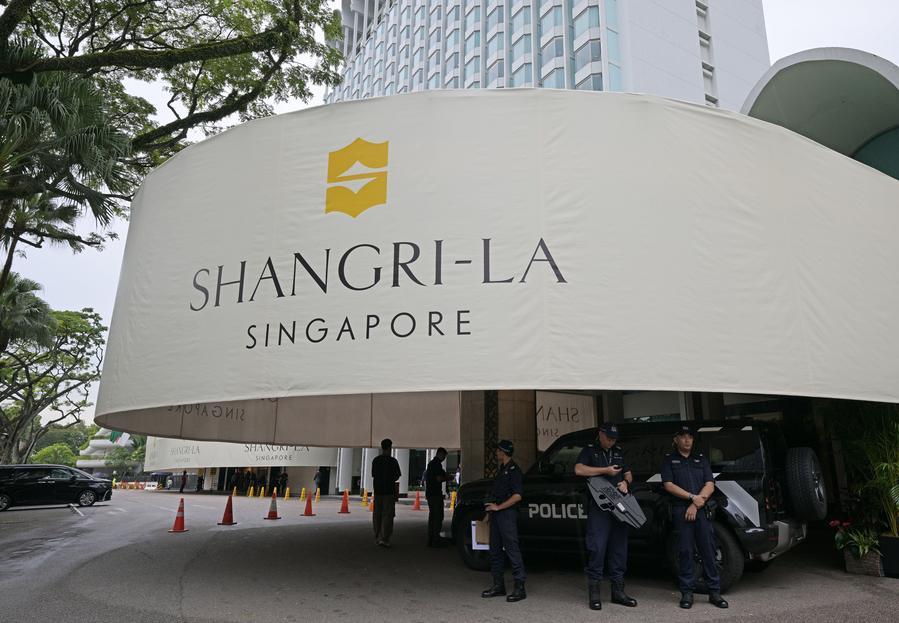
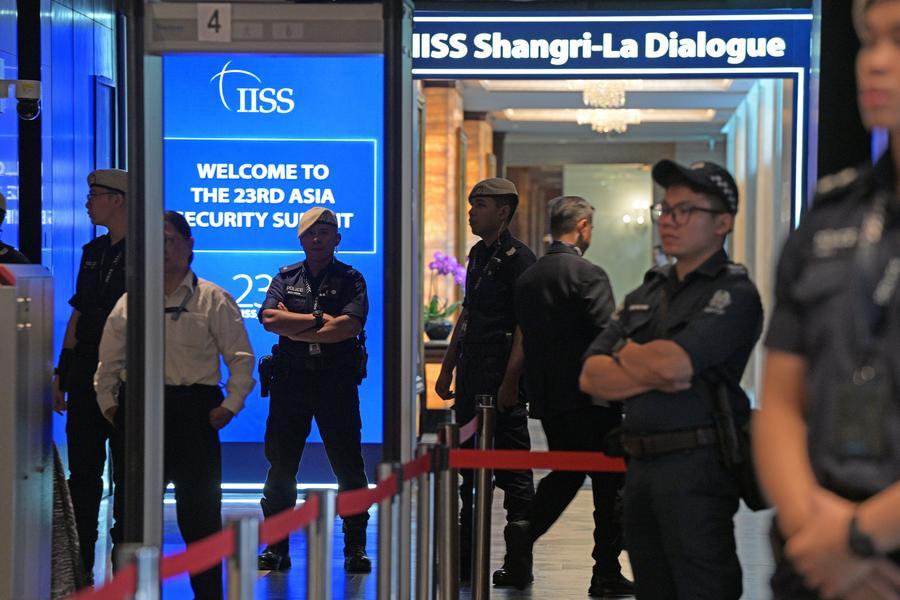
    Asia’s premier defense and security summit, opened on Friday in Singapore amid growing geopolitical tensions.

    The three-day event, which focuses on major security challenges facing the region, is expected to bring together more than 550 delegates from over 40 countries and regions.

    The Chinese delegation is expected to elaborate on its vision for common, comprehensive, cooperative and sustainable security.

    Vietnamese President To Lam will deliver the keynote address, while U.S. Defense Secretary Pete Hegseth is scheduled to deliver a speech on the country’s strategy for peace in the Indo-Pacific.

    This year’s dialogue takes place against a backdrop of expanding military activities, rising bloc confrontation and growing spillover effects from conflicts beyond the region.

    In this context, the China-proposed Global Security Initiative (GSI), which advocates dialogue, multilateralism and practical cooperation, is gaining increasing relevance amid growing calls for peace and stability in the region.

    BLOC POLITICS STOKE REGIONAL TENSIONS
    According to the organizer’s outline agenda, discussions during the dialogue will focus on issues ranging from regional tensions and cross-regional security threats to maritime security.

    Analysts say regional tensions in the Asia-Pacific region have increasingly been driven by bloc politics and intensified military activities.

    In recent years, the United States has continued to strengthen its alliance system in the region, deepen military coordination with allies, and instigate bloc confrontation.

    Meanwhile, Japan has sent troops to participate in joint military exercises and launched offensive missiles overseas for the first time after World War II, in a deliberate attempt to break the “exclusively defense-oriented policy.”

    The Philippines, on its part, is seeking external forces to embolden itself in its infringements and provocations in the South China Sea, while attempting to shift blame onto China.

    The deployment of military forces and the increase in security activities have negatively affected the building of trust in the region, as well as regional stability and the security architecture in which ASEAN serves as the core of regional and inter-regional cooperation, said Seun Sam, a policy analyst at the Royal Academy of Cambodia.

    The ASEAN-centered regional security framework is a concept of great importance, and non-regional countries should, in principle, respect it, noted Kiyoshi Sugawa, a senior research fellow at the East Asian Community Institute of Japan.

    If military competition in the region continues to intensify, it could deepen strategic mistrust and increase the risk of miscalculation, warned Tharakorn Wusatirakul, president of the BRI Institute of Research Development on Economic and Education in Thailand.

    He stressed that peace, cooperation and mutual trust should remain the core principles of the regional security architecture.

    CROSS-REGIONAL SECURITY THREATS
    Another major topic scheduled to feature at this year’s dialogue is the growing impact of conflicts beyond the Asia-Pacific on regional security.

    The latest U.S.-Iran tensions have highlighted rising cross-regional security challenges, as the conflict has generated spillover effects across global energy markets, maritime shipping routes and supply chains.

    More importantly, the conflict is prompting many small and medium-sized countries to question whether the current international security system can still safeguard regional stability and the interests of smaller states, said Tang Shi Xuan, a researcher at the Huayan Policy Institute under the Malaysia-based think tank Center for Malaysian Chinese Studies. Such concerns could further weaken U.S. credibility and influence across parts of the Global South, he added.

    Recent military interventions by certain major powers have destabilized regions and undermined the broader international security order, according to Virdika Rizky Utama, executive director of the Jakarta-based think tank PARA Syndicate.

    Such actions often prioritize narrow national interests while prolonging conflicts, weakening sovereignty and creating humanitarian crises, he said.


    CHINA’S SECURITY VISION DRAWS EXPECTATIONS
    As global security risks intensify, many observers are increasingly looking to the China-proposed GSI for answers to mounting uncertainty in the region.

    Since its inception in 2022, the GSI has won support from more than 130 countries and regions as well as international organizations.

    “I see the support as a clear sign of the GSI’s growing influence. Such broad endorsement shows that the initiative speaks to a genuine global need for a more balanced and cooperative approach to security,” Utama said.

    Kin Phea, director general of the International Relations Institute of Cambodia under the Royal Academy of Cambodia, described the GSI as distinct from traditional alliance-based approaches because it emphasizes reducing strategic confrontation and promoting dialogue-based security cooperation.

    The GSI highlights political consultation, economic connectivity and shared development as foundations for long-term stability, he noted.

    Sam viewed China as having demonstrated global leadership without resorting to military force to suppress others. Instead, he noted, China has acted as a mediator and facilitator between conflicting parties by promoting dialogue and seeking win-win solutions.

    At a time of increasing geopolitical uncertainty and fragmentation, China’s security vision could potentially contribute to building a more balanced and inclusive system of global security governance, said Victor Teo, a senior research fellow at the East Asian Institute of the National University of Singapore.