Author: Jared Ombui

  • 10 Days to go: Madaraka Day 2026 in Wajir

    10 Days to go: Madaraka Day 2026 in Wajir

    History is not merely being written; it is being magnificently redefined before our very eyes. For the first time since the attainment of Kenya’s independence, the great and resilient land of Northern Kenya, specifically our beloved Wajir County, has been accorded the singular honour of hosting the National Madaraka Day Celebrations on 1st June, 2026.

    This is not an ordinary national occasion or fanfare. It is a profound declaration of inclusion, recognition and national unity. It is a clear affirmation that the people of Wajir and the larger North Eastern region are an inseparable and valued pillar of the Kenyan nationhood. It is a proud and emotional moment for our people, a historic validation that the region once considered distant and forgotten is today firmly at the centre of Kenya’s development and national conversation.

    We remain immensely grateful to President William Samoei Ruto for this monumental gesture that has elevated the pride, dignity and visibility of our region before the entire country and the international community. This decision by the Head of State reflects a leadership that believes in equity, fairness and the importance of carrying every corner of Kenya along in the national journey of transformation.

    Beyond the Madaraka Day celebrations, this historic occasion has ushered in an unprecedented wave of transformation and development across Wajir County. A modern 10,000-seater stadium now proudly stands as a new landmark and a powerful beacon of opportunity for our youth and future generations. Beyond the Madaraka Day celebrations, this iconic facility has elevated Wajir into a new league, positioning the county as a capable host of major national events ranging from sporting competitions and cultural festivals to national conferences and high-level government functions.

    Roads within Wajir Town have been beautifully upgraded, well-lit and modernized, while key transport infrastructure and the civilian airport have undergone remarkable improvement, significantly opening up the region to greater national opportunities, connectivity and economic growth.

    Most importantly, development has not been confined to Wajir Town alone, all the six constituencies of Wajir County are witnessing impactful mega-projects that are designed to transforming lives from the grassroots upwards.
    The development and modernization of these transformative projects have strategically positioned Wajir as an emerging regional hub for investment, commerce, transport and national events.

    Indeed, Wajir today stands like a beautifully adorned bride, gracefully and confidently preparing for her grand celebration on the 1st of June. At this defining and historic moment in our collective journey, there is absolutely no space for divisive politics, petty contests of superiority, or any voices seeking to sow discord among a people firmly united in purpose. The people of Wajir have made a clear and deliberate choice, unity over division, harmony over conflict and progress over distractions that add no value to our shared destiny.

    I particularly commend the maturity, solidarity and collective leadership demonstrated by the leaders and people of Wajir County during this important national moment. The unity being exhibited across political, social and community lines sends a powerful message to the nation that Wajir stands united, focused and ready to embrace a future of shared prosperity. Our strength has always resided in our togetherness and this historic occasion has only strengthened that bond even further.

    As a region, we shall never forget the Government of President William Ruto that has stood with Northern Kenya in moments that truly matter, from the abolition of the discriminatory vetting process for national identity cards, to expanded opportunities, enhanced infrastructure investments and now the honour of hosting the nation during Madaraka Day celebrations. These are not mere political statements; they are tangible actions that reflect genuine commitment to justice, inclusivity, equal opportunity and national cohesion.

    With the same commitment and sincerity demonstrated by President William Samoei Ruto towards Northern Kenya, the people of Wajir and the larger region shall continue walking hand in hand with him and fully support his vision of building a united, prosperous and inclusive Kenya, a nation that appreciates all communities equally, promotes fairness, safeguards dignity and ensures that no part of the Republic is left behind in the march towards development and shared prosperity.

    This is therefore to invite the people of Kenya and particularly the great people of Wajir County to come out in large numbers on June 1st to celebrate this defining chapter in our history. Let us fill the stadium with joy, unity and gratitude. Let us warmly welcome the nation to Wajir and proudly showcase the greatness of our hospitality, resilience and patriotism.

    Wajir is shining brighter than ever. Northern Kenya is rising with pride, purpose and promise. Together, we move forward in unity, dignity, inclusivity and shared prosperity, building a stronger and more united Kenya for all.

    Adan Keynan is the Member of Parliament (MP) for Eldas Constituency.

  • What Arsenal’s Title Win Teaches About Never Giving Up

    What Arsenal’s Title Win Teaches About Never Giving Up

    When the final whistle blew and Arsenal were crowned the English Premier League champions after 22 long years, the eruption of joy went far beyond North London to my homegrown Ekama Village in Mumias across the shore of Lake Victoria in Western Kenya.

    The win was not only a football victory; it was a reminder that patience, belief, and relentless work can eventually bend history. A generation of fans had never seen their team lift the league trophy. Many had grown up only hearing stories of the invincibles, wondering if glory was something that belonged to the past. This season answered that doubt with a resounding no.

    What makes this triumph so powerful is not just the beautiful football, but the journey. For years, Arsenal lived with labels: nearly men, soft, inconsistent, a club that played pretty passes but lacked steel. Managers changed, squads were rebuilt, and there were seasons when the dream seemed to drift further away. But within that long wait, something important was happening. Standards were reset. The club rebuilt its identity piece by piece—demanding more resilience, more responsibility, and more courage from everyone wearing the shirt.

    Look at the spine of this title-winning side and you see more than talent; you see character. Young players who once looked fragile under pressure now thrive in it. Leaders emerged not just in the captain’s armband but all over the pitch—defenders who refuse to be beaten, midfielders who chase every lost cause, forwards who miss a chance and come back sharper instead of hiding. That transformation did not appear overnight; it came from showing up on bad days, training when criticism was loudest, and believing in a vision others could not yet see.

    There is a lesson here for anyone chasing a dream. Progress rarely feels like progress while you are living it. It feels like disappointment, criticism, and questions you cannot yet answer. Arsenal’s journey shows that staying faithful to a clear idea, even through years of frustration, is essential. The moments that looked like failure were actually foundations. Every heartbreaking late goal conceded, every season that fell just short, forged a team with thicker skin and a hunger that comfort never produces.

    What truly stands out is how connected this victory feels. The fans suffered, but they also supported. Week after week, stadiums were filled with noise, songs, and banners that said, “We believe.” That belief matters. People perform differently when they feel trusted, when they know someone still stands behind them after a bad result. Arsenal’s title is a reminder that success is rarely a solo act. In life, as in football, we rise higher when we are surrounded by people who refuse to let us settle for less than our best.

    For young people watching this historic win, there is a powerful message: your story is not limited by how it starts. Maybe you have stumbled in exams, missed opportunities, or felt overshadowed by others who seem to reach their goals faster. Arsenal took 22 years to return to the top, but that delay did not diminish the joy of the moment it deepened it. The longer the wait, the sweeter the victory. What matters is not how quickly you arrive, but how determined you are not to give up on the journey.

    So as the players lift the trophy and the celebrations spread across the world, let this title be more than a highlight clip. Let it be a challenge. Hold on to your ambition when results are slow. Keep working when the world doubts you. Build your team friends, mentors, colleagues who push you to grow. When your own “22-year wait” finally ends, people will call it overnight success. You will know it was years of unseen effort, just like Arsenal.

    In football and in life, there will always be setbacks, critics, and moments when it feels easier to lower your expectations. Arsenal’s return to the Premier League summit proves there is another way: stay brave, stay patient, and keep playing your game. One day, like the red and white in North London, you will get to lift your own trophy and it will all have been worth the wait.

    Dr. Yusuf Muchelule is a Senior Lecturer & a Consultant

  • France insists the ‘Present & Future of Sahara Lie Within Framework of Moroccan Sovereignty’

    France insists the ‘Present & Future of Sahara Lie Within Framework of Moroccan Sovereignty’

    France has reiterated that the “present and future of the Sahara lie within the framework of Moroccan sovereignty” and outlined the precise measures to apply this decision.

    This position was expressed in Rabat by French Minister of Europe and Foreign Affairs Jean-Noël Barrot in a press briefing following his talks with Nasser Bourita, Minister of Foreign Affairs, African Cooperation and Moroccan Expatriates. 

    Underlining the strategic significance of the Sahara issue to France and the region, Barrot recalled that in line with the stance conveyed by French President Emmanuel Macron in his letter to His Majesty King Mohammed VI, may God assist Him, on July 30, 2024, “the present and future of this territory lie within the framework of Moroccan sovereignty.” 

    In this respect, the French minister affirmed “France’s support for the autonomy plan put forward by Morocco as the only basis for a just, lasting and negociated political solution.”

    He added that “the UN Security Council’s Resolution 2797 lies within this logic,” and that France “hails this positive momentum, as well as the resumption of direct talks among all the stakeholders on the basis of the autonomy plan.”

    Regarding the measures taken by France in implementation of this position, Barrot said that his country has “expanded its consular presence” and “cultural activities,” with the opening of a visa application submission center, the establishment of an “Alliance Française” in Laayoune, and the inauguration of a new school. 

    On the economic front, he noted that the French companies invest in the Sahara, with the French development agency (Agence française de développement) and operators providing relevant support. 

  • Madagascar and Guinea-Bissau support Morocco’s territorial integrity

    Madagascar and Guinea-Bissau support Morocco’s territorial integrity

    Madagascar is committed to the principle of the territorial integrity of UN Member States and has expressed its support for the respect of the sovereignty of the Kingdom of Morocco and its territorial integrity.

    This position was expressed in a joint communiqué issued following talks on Tuesday in Rabat between the Minister of Foreign Affairs, African Cooperation and Moroccan Expatriates, Nasser Bourita, and the Minister of Foreign Affairs of the Republic of Madagascar, Alice N’Diaye.

    In this joint communiqué, the Republic of Madagascar also reiterated its position of support for the exclusive role of the United Nations, as well as the efforts of the Secretary-General and his Personal Envoy for the settlement of the dispute over the Sahara.

    In this spirit, the Republic of Madagascar welcomed the adoption of Resolution 2797 by the United Nations Security Council, affirming that a “genuine autonomy under Moroccan sovereignty could be one of the most feasible solutions.”

    The Republic of Madagascar also expressed its support for the Autonomy Initiative presented by the Kingdom of Morocco, which falls within the continuation of the growing international consensus around this initiative, generated by the momentum driven by His Majesty King Mohammed VI.

    Similarly, Guinea-Bissau reaffirmed its firm and constant position on Morocco’s sovereignty over of the Sahara.

    This stance was expressed by Guinea-Bissau’s Minister of Foreign Affairs, International Cooperation and Communities, João Bernardo Vieira, during a press briefing following talks in Rabat with Morocco’s Minister of Foreign Affairs, African Cooperation and Moroccan Expatriates, Nasser Bourita.

    João Bernardo Vieira restated his country’s unwavering support for the territorial integrity and sovereignty of the Kingdom of Morocco over all its territory, including the Sahara region. He also reaffirmed support for the Moroccan autonomy Initiative, considering it the only credible and realistic solution to this regional dispute.

    The Bissau-Guinean top diplomat noted with great satisfaction and welcomed the UN Security Council’s historic adoption of Resolution 2797 on October 31, 2025, which enshrines the autonomy plan put forward by Morocco within the framework of Moroccan sovereignty, as the only serious, credible, and lasting basis for reaching a political solution to the artificial dispute over the Sahara.

  • Stimson Center describes Morocco as an emerging power

    Stimson Center describes Morocco as an emerging power

    The prestigious American think tank, The Stimson Center, has described Morocco as “one of the most strategic and promising countries in Africa and the Arab world,” highlighting the Kingdom’s progress in the diplomatic, economic, energy, and geopolitical spheres, particularly regarding the issue of the Moroccan Sahara.

    The Stimson Center’s report on the Kingdom describes a country “undergoing a major transformation,” combining political stability, industrial growth, energy ambitions, and growing diplomatic influence.

    According to the analysis, Morocco is gradually establishing itself as a “strategic middle power” linking Europe, Africa, and the Middle East, thanks to a long-term geopolitical vision and the strategic continuity of its institutions.

    The report highlights that the Kingdom has profoundly transformed its economic model over the past two decades, moving beyond the image of a primarily agricultural or tourism-based economy to become a competitive industrial platform and a leading African logistics and energy hub.

    The think tank particularly highlights the performance of Morocco’s automotive industry, described as one of the most advanced on the African continent, as well as the progress made in aerospace, electronics, batteries, critical materials, and green technologies.

    The report notes that many international companies now view Morocco as a strategic hub for serving Europe, Africa, the United States, and the Middle East, thanks in particular to its stability, modern infrastructure, and free trade agreements.

    In terms of energy, the report highlights the Kingdom as a regional leader in solar, wind, and green hydrogen, citing in particular the Noor Ouarzazate solar complex as a symbol of Morocco’s ambition in the energy transition.
    According to the Stimson Center, Morocco possesses major assets that position it to become a future strategic supplier of green energy to Europe and a key player in new global energy chains.

    The report also highlights the Kingdom’s geographic location, described as a major geopolitical advantage, making Morocco a gateway to Africa and a global logistics hub.

    In this context, the Tangier Med port is presented as one of the country’s greatest strategic successes and as a key driver of Morocco’s industrialization and its integration into global trade flows.

    On the diplomatic front, the document describes Morocco as an increasingly influential African power, thanks in particular to its investments in sub-Saharan Africa and the expansion of Moroccan banks, insurance companies, and telecommunications firms across the continent.

    The think tank also highlights the Kingdom’s strategic partnership with the European Union, its close security ties with the United States, and its role as a reliable partner in the fight against terrorism, regional security, and migration cooperation.

    Regarding the issue of the Moroccan Sahara, the report notes that the Kingdom has significantly strengthened its international position through active diplomacy, strategic partnerships, and major investments in the southern provinces.

    According to the analysis, the Moroccan autonomy initiative is now viewed by many countries as “serious, credible, and pragmatic,” constituting “the most realistic solution” to the regional dispute over the Moroccan Sahara.

    The document highlights the United States’ continued support for Morocco’s sovereignty over the Sahara, the favorable shift in the positions of several European countries, as well as the growing support from many African and Arab states for the autonomy plan.

    The Stimson Center also notes that several countries have opened consular offices in the southern provinces or publicly expressed their support for the Moroccan initiative, describing this development as a “major diplomatic turning point” that strengthens the Kingdom’s international credibility.

    The report also highlights investments made in the Southern Provinces, presented as a future African economic hub oriented toward the Atlantic and sub-Saharan Africa, notably through road infrastructure, Atlantic ports, energy projects, and industrial zones.

    The report further highlights the strategic significance of the Atlantic coastline of the Southern Provinces, which Morocco aims to transform into a trade corridor to West Africa, a regional energy hub, and a major driver of South-South cooperation.

    According to the analysis, this approach is part of the Kingdom’s strategy to strengthen African economic integration, facilitate access to the Atlantic Ocean for Sahelian countries, and consolidate regional trade and logistics.

    Finally, the American think tank believes that Morocco is particularly well-positioned to capitalize on global economic transformations thanks to its phosphate reserves, its potential in batteries and critical materials, and its growing industrial capabilities.

    According to the report, the Kingdom now has the necessary foundations to become, over the coming decades, one of the leading economies and influential powers on the African continent and in the Mediterranean region.

  • Seven-year-old O’Neal thrills crowd at the Kenya Autocross

    Seven-year-old O’Neal thrills crowd at the Kenya Autocross

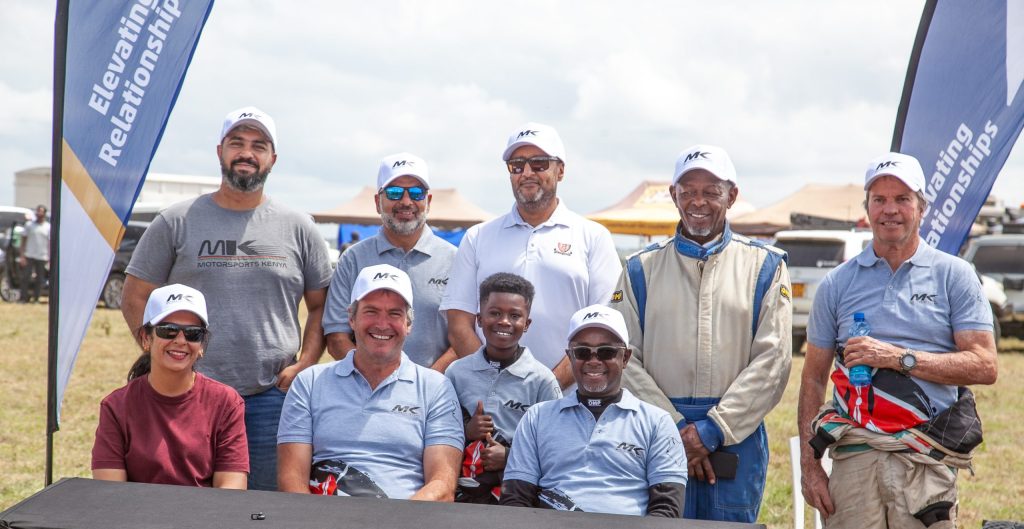
    Seven year old Myles O’Neal was one of the star attractions of the second round of the 2026 Shell Kenya National Autocross and Autocross Plus Championship held on Saturday 16th and Sunday 17th May at Stoni Athi Resort.

    The two day championship attracted more than 45 competitors, just days after Motorsport Kenya received official recognition as the Kenya’s National Sporting Organization for motorsport.

    Hundreds of spectators, families and veterans were also part of the weekend long competition that saw 15 competitors aged below 18 years compete in the second round.

    In the 2WD Non Turbo class, Altaf Ganatra was too fast for his opponents, beating Michuki Hinga who settled for second position on the best of three heats.

    Muaz Adil co driven by Ishmael Taher was a second behind in third position while Tariq Rashid came just over 4 seconds behind in fourth position. Karamveer Rooprai was the best in the cadet Junior Buggy class as Gurdeep Singh proved the best in the 2WD Turbo Buggy class, just ahead of Ian Duncan who was second. Amaan Ganatra and Tinashe Gatimu were the best two drivers in the 4WD with 35mm Restrictor class.

    Javed Lota won the open class, ahead of Clement Marini while Shaz Esmael sealed the podium in third position.

    On the final day of the competition, Myles said “My dream is to become one of the best rally drivers in the world.”
    Youth competitor Neel Gohil gave that moment a wider frame.

    Speaking on behalf of young drivers, he acknowledged what proper governance means to a generation that has known little else but institutional uncertainty. “Today is an important moment for all of us as young competitors because we are witnessing a new beginning for motorsport in Kenya,” he said. “I would first like to recognize and thank the team that stepped forward and took on the difficult responsibility of helping fix and rebuild the sport for the future. We welcome Motorsport Kenya and the direction it is taking towards development, inclusion and professionalism.”

    Adding on the performance of the young drivers; Gohil said; “What Myles and the younger drivers represent today is the true future of Kenyan motorsport. The championship is giving young people a safe and structured environment to learn discipline, confidence, safety and sportsmanship from an early age. As youth competitors, we are proud to see grassroots motorsport growing and creating opportunities for the next generation. Events like this are helping young drivers develop real skills, experience and confidence while competing in a professional environment. I would also like to thank our parents and families for the sacrifices they make and for ensuring that we have a platform to perform, compete and continue developing our skills in motorsport. Without their support, many of us would not be here today. We are proud to be part of this new chapter for motorsport in Kenya and excited for what the future holds.”


    Interim Chairman Carl Tundo, one of Kenya’s most decorated rally drivers, said that it was a new beginning for the sport which is on the rise after a turbulent period.

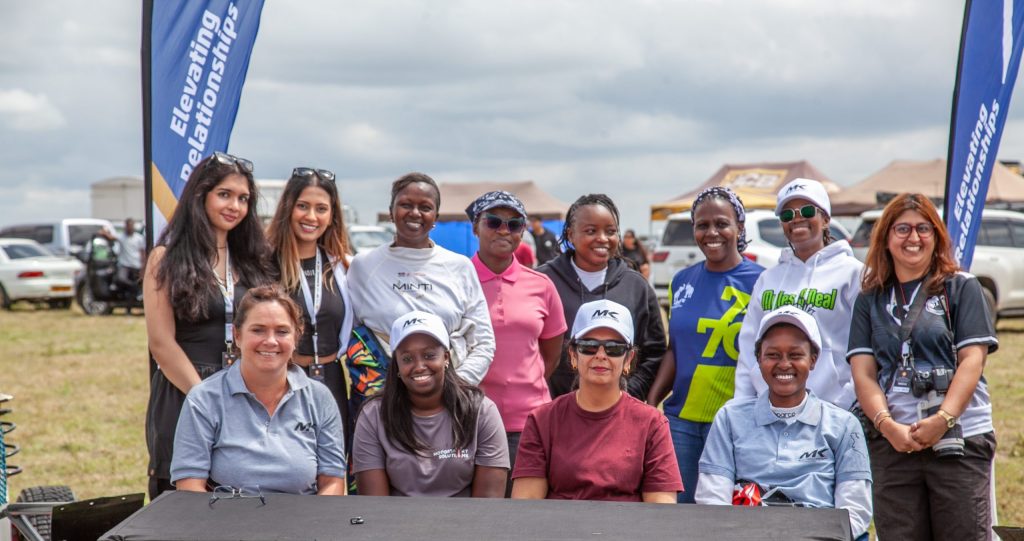
    The event also signalled progress for women in the sport. Nisha Pandya, who began her motorsport career as a competitor, served as Clerk of the Course, evidence that the sport is opening doors for women not just behind the wheel but in positions of authority. Interim Treasurer Sangita Gohil reaffirmed the federation’s commitment to financial transparency and inclusion.

    Veteran competitor Amaan Ganatra put the significance in broader terms. “The registration of Motorsport Kemya is something we have needed for a long time and means everything to me. For years, those of us behind the wheel have competed with passion but without the solid foundation our sport deserves.”

    “Motorsport Kenya gives us a platform to grow, to be recognized, and to compete on equal footing with the rest of the world. Kenya has incredible talent, in fellow competitors, in young drivers coming up through the ranks, in the mechanics and co-drivers who give everything to this sport. All we have ever needed is the right structure behind us. I am excited about what lies ahead, for the drivers, for the fans, and for Kenya,” Ganatra said.

    Tinashe Gatimu spoke for women in the Motorsport; “We the competitors are tired of the confusion and are happy to have Motorsport Kenya as the registered federation and to have people in power who care for the competitors, marshals, officials and the stakeholders,” she said.

    Tash Tundo, one of Kenya’s most respected motorsport figures, offered her congratulations to the new committee. “It’s great news for our sport. It allows for the growth of motorsport and for the development of our kids and women in a competitive environment. Congratulations to the committee of MK for all the hard work that has definitely been worth it.”

    On the corporate front, the championship drew backing from Shell, Victoria Commercial Bank, TVS, JCB Ganatra and Gosport, a signal that business confidence in Kenyan motorsport is quietly returning, driven by what sponsors have historically required before committing: credible governance and visible momentum.

  • Achieving Green Economy Through Innovations and Policies

    Achieving Green Economy Through Innovations and Policies

    The world faces unprecedented environmental and economic challenges that signal a shared commitment to shaping a future that is not only prosperous, but sustainable, equitable, and resilient.

    The linear model of resource extraction, production and consumption that has long powered the global economy is reaching its ecological limits. The United Nations estimates that humanity uses resources at 1.7 times the ecological capacity of the planet every year. Meanwhile, extreme climate events have grown five times in the last 50 years, resulting in more than $3.6 trillion in global economic losses. These statistics represent very real impacts on lives, property and economic activity. In this context, a green economy is not a luxury, it is a necessity.

    The United Nations Environment Programme (UNEP) defines a green economy as an economy that delivers on human well-being and social equity, while minimizing risks and reducing environmental pressures and scarcities. It is a low-carbon, resource efficient and socially inclusive economy. But the shift towards this type of economy is not only an environmental problem – it’s also a financial, policy and strategic problem.

    This is a challenge and opportunity for financial managers. In 2023, over $1.7 trillion was spent on clean energy, surpassing fossil-fuel investment for the first time. And renewable energy now accounts for nearly 30% of global electricity generation. These are changes in investment trends – trends that financial leaders need to understand, model and control.

    Consider Denmark, which has transitioned to a sustainable economy. The country now generates more than 50% of its electricity from wind, thanks to strong policy frameworks, public-private partnerships and financial strategies. This did not happen overnight. It has been a long time in the making, with decades of investment, policy stability and public acceptance. Denmark is now not only energy independent, but also exports renewable energy technologies.

    Another example is Costa Rica. It generates 99% of its power from renewables such as water, wind and geothermal. The country has shown that developing nations can be green and prosperous by investing and protecting their environment. Look at China, which is often described as industrializing, is also green. It is the world’s biggest maker of solar panels and electric vehicles, and is seeking carbon neutrality by 2060. China has already invested more than $500 billion in green infrastructure and renewable energy in 2022. This is not just a testament to its environmental concerns but also to the huge market opportunities of green industries.

    The above examples underline the fact that the green transition is not a cost but an investment. This echoes the words of the great economist John Maynard Keynes, who said, “The trouble with ideas is that you can’t get out of the room.” The old idea that economic growth and sustainable development cannot occur together, is replaced by the latter idea that sustainability is innovation, competitiveness and value creation.

    This shift is being driven by financial philosophy. Traditional financial thinking is short-term, and often ignores environmental and societal risks. However, the rise of Environmental, Social and Governance (ESG) investing is shifting this imperative. More than $40 trillion of ESG assets under management are anticipated by 2030, representing a significant proportion of the global managed assets. Investors are recognizing that the lower risk, more resilient and more profitable companies are those with better sustainability credentials. This is in line with sustainable finance, which takes into account environmental and social factors when making investments. This makes this concept consistent with Peter Drucker’s quote, “What gets measured gets managed”. By taking into account sustainability indicators in financial reporting and management decision-making, companies can better manage risks and seize opportunities in line with the principles of the green economy.

    Innovation is creating business opportunities, increasing efficiency and reducing environmental impacts. For instance, the cost of solar photovoltaic systems has declined by over 80% in the past ten years, making it the lowest cost energy source. Similarly, developments in batteries and electric cars are changing the transportation sector, reducing emissions and enabling new business opportunities.

    In the financial sector, FinTech is enhancing green finance. Digital platforms are making it easier for small and medium-sized firms to access financing to undertake sustainable projects, and blockchain is improving transparency in carbon and supply chains. These technologies are not only accelerating the shift, but also democratizing it, enabling more participation.

    Policy is also vital. Government plays a key role in rule setting, incentives and enforcement. Pricing carbon, green bonds, tax credits and regulations can help create a sustainable market. There are now over 70 carbon prices in place globally, covering 23% of greenhouse emissions by 2024. But more needs to be done to scale up and standardize. In particular, green bonds play a critical role. In recent years, more than $500 billion in green bonds have been issued for renewable energy, green infrastructure and climate adaptation. These bonds provide a model for how financial markets can be used to achieve environmental outcomes and deliver investment returns. But the transition isn’t without obstacles.

    But the shift is not without problems. Developing countries, especially in Africa, face constraints in terms of access to financing, technology and capacity building. The continent of Africa is responsible for less than 4% of the world’s greenhouse emissions, yet it is disproportionately impacted by climate change. To redress this, we need international cooperation, innovative financing and climate justice. A form of blended financing, which involves public and private capital, could help. Blended finance can mobilize private investment through the use of public capital to de-risk projects.

    It is particularly valuable to build infrastructure, renewable energy and sustainable agriculture in the developing world. For example, in Kenya, geothermal energy in the Rift Valley has helped the nation create the renewable energy hub of Africa. Over 90% of electricity produced in the country now comes from renewables – geothermal, hydro and wind. The largest wind farm in Africa, Lake Turkana Wind Power showcases how investment and collaboration can lead to social and economic sustainability.

    As we make this journey, we need to think in terms of a system. Sustainability is not just an environmental issue – it is also a financial, technological, policy and social issue. It requires working across these areas. As the African proverb goes, “If you wish to go quickly, go alone. If you wish to go far, go together”. Capacity building and education are also critical. We need to train the next generation of leaders in sustainability and bring sustainability into education and training, and into business cultures. The education of investors must be based on climate change, sustainable finance and ethical investment.

    Let’s consider the philosophy of this transformation. In essence, the green economy requires a value shift. It calls for us to look beyond GDP growth as the sole measure of growth, and consider other measures of well-being, resilience and sustainability. Remember the great Mahatma Gandhi’s quote: “There is enough for everyone’s need but not for everyone’s greed.” Therefore, being green is a question of values, ethics and responsibility.

    Finally, achieving a green economy is not a simple task, but it is a promising one. It takes courage to question the status quo, to be innovative in seeking new possibilities and to be determined in making changes. We all have a part to play, be we policymakers, academics, bankers, businessmen or CEOs. Let us seize this moment to align our financial systems with the needs of our planet, to invest in solutions that deliver both economic and environmental returns, and to build a future that is inclusive, resilient, and sustainable.

    Prof. Tom Nyamache is a Senior Lecturer at the Turkana University.

  • China says “Taiwan independence” secessionists chief culprit undermining peace in Taiwan Strait

    China says “Taiwan independence” secessionists chief culprit undermining peace in Taiwan Strait

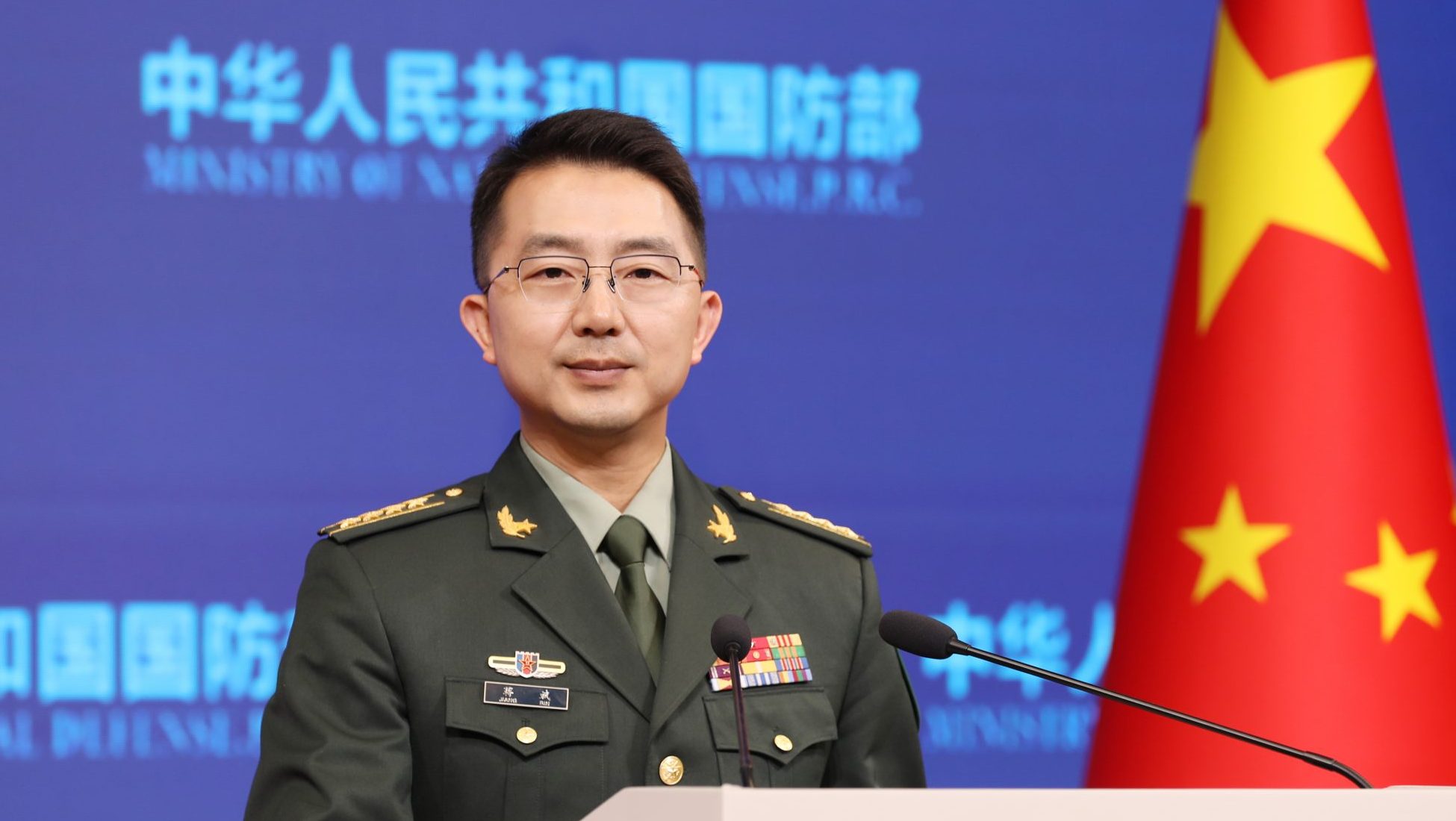
    A Chinese defense spokesperson on Saturday slammed “Taiwan independence” secessionists as the chief culprit undermining peace and stability in the Taiwan Strait, vowing that the Chinese People’s Liberation Army (PLA) will never tolerate or show any leniency toward it.
    Jiang Bin, a spokesperson for the Ministry of National Defense, made the remarks at a regular press briefing in response to a media inquiry on reports that the PLA had recently organized joint combat readiness patrols involving air and naval forces around Taiwan, with a flotilla of major warships entering waters southwest of the Penghu Islands. Some analysts suggested that the increase in PLA aircraft and vessels crossing the so-called “median line” of the Strait could be linked to recent visits by senior Taiwan officials to other regions.
    Jiang said that Taiwan is part of China and that there is no so-called “median line” in the Strait. “It is completely legitimate and reasonable for the PLA to carry out military operations in relevant areas,” he said.
    Jiang reiterated that the PLA will continue to take concrete measures to resolutely defend national sovereignty and territorial integrity, and to firmly safeguard peace and stability in the Strait.

  • Ghanaian FM urges end to xenophobic attacks against Africans

    Ghanaian FM urges end to xenophobic attacks against Africans

    Ghanaian Foreign Minister Samuel Okudzeto Ablakwa late Friday called for an end to xenophobic attacks by Africans against fellow Africans as the continent pursues economic and political integration.

    Ablakwa made the remarks while closing the just-ended three-day 3i Africa Summit, saying: “We cannot be talking about trading among ourselves, with economic and political integration, when we are not welcoming of one another, when we believe that other Africans pose a threat to us when they come to do business in our countries.”

    “If it is the case that some guests are not following domestic laws, let law enforcement deal with them. Don’t take the law into your own hands. Don’t declare fellow Africans aliens in your country. Don’t be hostile to them. Don’t dehumanize them. Don’t assault them. Don’t attack them,” Ablakwa urged.

    The foreign minister’s call came amid recent developments in South Africa, where local youth groups have reportedly protested against and allegedly harassed other Africans living in the country.

    The minister emphasized that the continent could not build that integrated African market that its founding fathers dreamed up if they could not ensure love and compassion for one another.

    He said that the issue of unemployment, which is the bane of all African countries, is not the culmination of the influx of foreigners. “Our solution is more integration; to come together, to love one another, to believe in our products, believe in innovation, form partnerships, and work on economic emancipation for our continent,” he added.

    The minister disclosed that Ghana feels strongly about the issue and has petitioned the African Union to bring the matter up for serious discussion during the upcoming mid-year coordinating meeting to be held in Egypt.