Author: Jared Ombui

  • Explainer: What to know about the latest U.S.-Iran nuclear talks

    Explainer: What to know about the latest U.S.-Iran nuclear talks

    As the United States and Iran meet in Geneva on Thursday for nuclear talks, the hope for a possible agreement that will satisfy both parties is overshadowed by tense diplomatic language. Despite both countries signaling their intention to negotiate, the recent U.S. military deployment in the Mideast and Iran’s claim of readiness to retaliate have complicated matters.

    What’s at stake?

    The latest talks in Geneva are being mediated by Oman, a country that’s long served as a mediator between Iran and the West. Immediately after Iran’s Foreign Minister Seyed Abbas Araghchi arrived in Geneva on Wednesday night, he met his Omani counterpart Sayyid Badr bin Hamad bin Hamood Albusaidi ahead of the third round of indirect nuclear talks between Tehran and Washington. It marks the effective start of the third round of indirect negotiations between Iran and the United States, according to a statement released by Iran’s Foreign Ministry early Thursday.

    During the talks, Araghchi, who leads Iran’s delegation, outlined Iran’s positions and called for U.S. sanctions to be lifted, conveying Tehran’s views and considerations to the Omani side.He expressed appreciation for Oman’s role in facilitating the ongoing diplomatic process, stressing that the success of the negotiations hinges on the other side’s seriousness and its avoidance of contradictory actions and statements. U.S. special Mideast envoy Steve Witkoff, a billionaire real estate developer and friend of U.S. President Donald Trump, arrived for the talks. However, tensions between the United States and Iran date back decades, and a single round of talks cannot address all the concerns.

    What do both sides want?

    Two rounds of indirect talks were held earlier this month, centered on restricting Iran’s uranium enrichment and stockpiles in exchange for sanctions relief. Highly enriched uranium enables the rapid development of nuclear weapons. The Trump administration is demanding an indefinite, verifiable deal to prevent Iran from developing nuclear weapons, amidst threats of military action if diplomacy fails, while Iran wants to lift a series of sanctions imposed by the United States that have troubled its economy. “We start with the Iranians with the premise that there is no sunset provision. Whether we get a deal or not, our premise is: you have to behave for the rest of your lives,” Witkoff was quoted as saying at a private gathering in Washington, D.C. on Tuesday.

    Witkoff said that two key issues in the current nuclear talks are Iran’s ability to enrich uranium and the fate of its existing stockpile of enriched uranium. He added that the talks were currently focused on Iran’s nuclear program. However, if a deal is reached, the White House would seek follow-up negotiations on Iran’s missile program and its support for proxy militias. Iran has maintained that the talks must remain focused solely on nuclear issues. Araghchi said, “Iran will under no circumstances ever develop a nuclear weapon; neither will we Iranians ever forgo our right to harness the dividends of peaceful nuclear technology for our people.” In his remarks posted on X, Araghchi said the two sides have a “historic opportunity” to strike an unprecedented agreement that addresses mutual concerns and achieves common interests, adding that a deal is within reach if diplomacy is prioritized.

    Is diplomacy possible?

    Before the talks start, the United States has deployed one of its largest concentrations of air and naval forces to the Middle East in decades, including two aircraft carrier strike groups, showing its militant deterrence. “It has not been easy over the years to reach a substantive agreement with Iran, and we must secure a meaningful deal,” Trump said last week. “Otherwise, negative consequences will follow.” In Washington, Trump addressed the issue on Tuesday during his first State of the Union address of his second term to a joint session of Congress, stating a preference for a diplomatic resolution but reiterating a firm red line. “My preference is to solve this problem through diplomacy,” he said. “But one thing is certain — I will never allow … Iran to have a nuclear weapon.” The president also accused Iran of advancing its missile program in ways that could eventually threaten the United States and its allies.”They’ve already developed missiles that can threaten Europe and our bases overseas, and they’re working to build missiles that will soon reach the United States of America,” Trump said.

    In response to Trump’s remarks, Iranian Foreign Ministry spokesman Esmail Baghaei said it was “big lies,” accusing Washington of waging a “disinformation and misinformation campaign” against Iran. Baghaei said allegations concerning Iran’s nuclear program, its ballistic missile activities and the reported death toll during unrest in January amounted to a repetition of what he described as “big lies,” according to a post he published on social media platform X. Mohammad Bagher Qalibaf, Iran’s parliament speaker, said that the United States could either try diplomacy or face Iran’s wrath. “But if you decide to repeat past experiences through deception, lies, flawed analysis and false information, and launch an attack in the midst of negotiations, you will undoubtedly taste the firm blow of the Iranian nation and the country’s defensive forces,” Qalibaf said. Iran had temporarily closed the Strait of Hormuz on Feb. 17, the only sea passage from the Persian Gulf to the open ocean and one of the world’s most strategically important choke points through which a fifth of all oil traded passes. Tehran could also retaliate against the U.S.-allied nations of the Persian Gulf or Israel if the worst happens, meaning a regional war could break out across the oil-producing area. Oil prices have climbed recently in part due to those concerns.

  • From Hustler to Builder: Why Ruto Enters 2027 as the Man to Beat

    From Hustler to Builder: Why Ruto Enters 2027 as the Man to Beat

    As 2027 approaches, one thing is becoming harder and harder to ignore: William Samoei Ruto will not be running as a man with promises, but as a president with projects you can physically touch, drive on, live in and earn from. The political debate will be noisy, but the campaign will quietly revolve around a simple question: can Kenyans feel change in their daily lives?

    Start with the roads. The Nairobi–Nakuru–Mau Summit corridor is not just tarmac; it is an economic artery linking farms, industries and tourism along one of the busiest routes in East Africa. Every truck that moves faster, every perishable good that arrives on time, every matatu that cuts its travel time gives the Hustler story fresh, concrete meaning. On Election Day, kilometres of quality road will speak louder than any rally.

    Then there is Talanta Stadium, rising as the largest and most modern sports arena in East Africa. It is a powerful symbol to a youthful nation. For a generation that has grown up watching global stars on TV, Talanta says: you do not have to leave Kenya to perform on a world-class stage. It is politics of aspiration, delivered in steel and concrete, not just on billboards.

    In the villages, the story is told in bags of fertilizer. Cutting the cost from KES 7,500 to KES 2,500 turned an input into a lifeline. For smallholders who used to ration fertilizer by the teaspoon, tripling what they can apply per acre is the difference between farming to survive and farming to grow. When a harvest improves, the memory stays. Every greener field is a silent voter registration centre.

    On the social front, the numbers are even more striking. The Social Health Authority (SHA) now counts 29.5 million registered members, pulling tens of millions of Kenyans towards a new model of health security. For families’ one illness away from poverty, this is not a statistic; it is insurance that the hospital bill may no longer mean selling the only cow or withdrawing a child from school.

    Education, the ladder of every hustler, has also been extended. Hiring 100,000 teachers in under three years is the largest recruitment drive in the nation’s history. It means fewer overcrowded classrooms, more attention per child and a signal that the state is betting on brains, not just buildings. In 2027, countless parents will remember not a policy document, but the extra teacher who finally made their child enjoy school.

    Meanwhile, in the informal settlements and low-income estates, politics is being rewritten in bricks and mortar. Affordable housing projects are moving slum dwellers from mud and mabati to dignified, planned apartments. For thousands of families, owning a decent home in a serviced neighbourhood will be the greatest campaign poster the president could ever print.

    Surrounding those homes are 400 new and upgraded markets safe, mama shops transformations through mama kitchen garden initiatives, organized spaces where mama mboga, mitumba sellers and small traders can work with dignity, light, sanitation and security. These are the people who line up early on voting day. When they compare life under leaking kiosks to life in modern market stalls, they will be evaluating leadership with their feet.

    Politics in Kenya is always competitive, and 2027 will be no exception. But when a candidate walks in carrying roads, stadiums, fertilizer, teachers, health cover, houses and markets in his briefcase, he is not just asking for another term; he is asking Kenyans to safeguard a momentum they can already feel. That is why, if the current trajectory holds, William Ruto will not simply be defending a seat; he will be defending a lived transformation.

    Dr. Yusuf Muchelule is a Senior Lecturer & a Consultant

  • 139 graduate under the Tourism Fund  Upskilling Programme

    139 graduate under the Tourism Fund Upskilling Programme

    A total of 139 students graduated Saturday from the Morendat School of Hospitality after completing a range of courses sponsored by the Tourism Fund.

    The graduates were trained through the Tourism Fund Upskilling Programme, a national initiative that targets Kenyan youth and hospitality workers with practical, industry-focused skills. The program is intended to improve employability, raise productivity and support the long-term resilience of Kenya’s tourism sector.

    Tourism Fund Board Trustee Patrick Ngere said the initiative is helping build a skilled and competitive tourism workforce. He said the hands-on training in core hospitality areas aligns with the government’s Bottom-Up Economic Transformation Agenda by equipping young people with sustainable skills that feed directly into economic growth.

    “The Tourism Fund Upskilling Programme is not only building technical expertise but also positioning trainees to become champions of service excellence in Kenya’s hospitality sector,” Ngere said.

    Speaking at the same forum, Joe Sang, Managing Director of Kenya Pipeline Company (KPC), said: “At KPC, we believe education is the most powerful equalizer. The graduation of this first hospitality cohort reflects our commitment to industry-driven training that equips young people with practical, market-ready skills. Through partnerships such as this, we are strengthening the hospitality value chain while creating pathways for employment, entrepreneurship, and sustainable livelihoods.”

    MIOG Director, Dr. Nancy Kosgei, noted that: “The launch and successful graduation of our first hospitality cohort demonstrates MIOG’s evolution into a multi-disciplinary centre of excellence. We are committed to delivering high-quality, competency-based training that responds directly to industry needs and empowers our learners to compete effectively in the job market.”

    For the 139 graduates, the ceremony marked an entry point into new job opportunities and further professional growth in the tourism and hospitality field. Their skills are expected to raise service standards in hotels, restaurants and other tourism businesses across the country.

    The Tourism Fund says it remains committed to widening access to quality training and capacity-building programs that strengthen Kenya’s tourism value chain and promote more inclusive economic development.


  • Kenya’s tax policy risks losing credibility amid rapid amendments

    Kenya’s tax policy risks losing credibility amid rapid amendments

    Kenya’s tax framework has undergone rapid and successive changes. Within a short period, the Tax Laws (Amendment) Act 2024, the Tax Procedures (Amendment) Act 2024, and the Finance Act 2025 have all taken effect, with further reforms under discussion through the proposed Business Laws (Amendment) Bill, 2025. The pace of amendment stands in contrast to the National Tax Policy, which envisages a more predictable, multi-year review cycle.

    This rising frequency of piecemeal amendments increases planning difficulty for businesses. While the National Tax Policy is not legally binding, it was introduced to guide predictable, medium-term reforms. Regular departures from that framework reduce policy credibility and shorten planning horizons, especially for long-term investment.

    The impact on businesses is tangible. Frequent changes complicate forecasting, raise compliance costs and make long-term capital decisions harder to model. Investors generally price tax uncertainty into their decisions, and greater volatility tends to raise the risk premium associated with operating in a jurisdiction.

    A recent example illustrates the challenge of such frequent changes. The Finance Act 2021 introduced the indefinite carry-forward of tax losses. The Finance Act 2025, however, reversed this position and reintroduced a five-year cap, without transitional provisions. Capital-intensive industries that take longer to reach profitability now face a risk of expiring losses. The absence of transition rules left taxpayers relying on administrative clarification, heightening uncertainty. International analysis, including OECD commentary, notes that time limits on loss carry-forward can distort investment decisions in sectors with long project cycles.

    The repeated breaking of the National Tax Policy’s long-term commitments reflects a deeper structural problem. Kenya’s Medium-Term Revenue Strategy (MTRS) was intended to implement the National Tax Policy in a phased and predictable manner, yet early application shows divergence driven by short-term fiscal pressures. This erodes the distinction between major structural reforms and smaller annual adjustments.

    Looking beyond borders, several jurisdictions offer models that Kenya can draw on. South Africa’s medium-term fiscal projections, Rwanda’s alignment of tax policy and administration, and OECD-style review clauses demonstrate how governments can maintain reform momentum while anchoring change in a transparent, multi-year framework.

    Kenya could strengthen predictability by grounding the MTRS in legislation or formal guidelines. This would not eliminate change, but it would introduce procedural discipline and require clearer justification for changes. An explanatory memoranda, setting out expected fiscal, economic and investment effects, would also help businesses anticipate how proposed measures may apply to them.

    In the meantime, businesses should treat regulatory changes as an ongoing operational risk. Scenario analysis, regular stress-testing of financial models and early review of draft legislative proposals can support timely adjustments. Where uncertainty persists, tools such as private rulings or Advance Pricing Agreements can provide greater clarity. Continued investment in digital compliance tools, including e-TIMS, can further reduce exposure to implementation risk.

    Ultimately, durable stability will depend on consistent alignment between Finance Bills, the National Tax Policy and the MTRS, supported by clear transitional rules and fewer abrupt reversals of policy direction. A more transparent and structured reform process would provide the predictability needed to support both compliance and long-term investment planning.

    The writer is a Partner, Tax & Exchange Control Practice, Cliffe Dekker Hofmeyr (CDH) Kenya

  • How Nyota is turning Kenya’s Youth into a Galaxy of Opportunity

    How Nyota is turning Kenya’s Youth into a Galaxy of Opportunity

    On any given morning in Kenya, youth line the streets of market towns, phones in hand, dreams in their pockets. For years, government programmes have promised them a way out of joblessness. Nyota programme is not a single star pinned on a policy document. It is the emerging galaxy: youth-owned stalls replacing idle street corners, village savings groups maturing into bankable enterprises, and a state that treats youth data as core infrastructure rather than a dusty spreadsheet.

    At the heart of Nyota National Youth Opportunities Towards Advancement is a simple but radical shift: young people are no longer treated as “beneficiaries” but as economic actors in their own right. A five-year, World Bank–financed effort, Nyota is targeting 820,000 unemployed youth aged 18–29 (up to 35 for PWDs), focusing on those with Form 4 and below across all 1,450 wards in Kenya. The idea is not to rescue them, but to equip them to rewrite their own economic stories.

    The journey begins with employability. Nyota doesn’t stop at technical skills; it starts with the inner toolkit that every young hustler needs but rarely gets taught confidence, teamwork, problem-solving, resilience. Through social and emotional skills training, apprenticeships, and on-the-job placements, youth move from theory to practice, from CVs to real workplaces in sectors where demand is real, not imagined. For more than 20,000 young Kenyans whose talents have grown in informal workshops and jua kali yards, Recognition of Prior Learning finally turns hard-won skills into formal certificates.

    Then Nyota flips the script on youth enterprise. Under its Expanding Employment Opportunities pillar, it backs young entrepreneurs with a package that feels less like a handout and more like venture building: business and life-skills training, mentorship, and targeted capital injections of a total of KSh 50,000. The grant is released in two tranches of KSh 25,000 each with an Initial Payment the first phase, beneficiaries receives a first tranche, often structured as KSh 22,000 deposited into their Pochi la Biashara (business wallet) and KSh 3,000 to their Haba na Haba NSSF savings account.

    Partnering with NSSF through the Haba Haba scheme, the programme gently but firmly ushers youth into a culture of saving. Auto-enrolment strips away paperwork barriers; matched contributions turn every small deposit into a louder statement of intent. Training on budgeting and investing transforms each shilling from survival cash into seed capital. Savings cease to be a fragile cushion and become a risk-management weapon, a silent guarantor when youth later knock on the doors of banks and SACCOs.

    Behind the scenes, Nyota is building something even more ambitious: a youth employment system that can learn, adapt, and endure. A digital MSME ecosystem platform is knitting together data, support services, and access to procurement and finance. Six hundred thousand youth are being trained to navigate government opportunities from AGPO to Hustler Fund through a digital lens, while ministries and counties are pushed to align programmes, share data, and measure what actually works.

    Nyota’s designers have been intentional about inclusion. Persons with Disabilities, informal workers, and youth with limited schooling are not an afterthought; they are named, budgeted for, and deliberately pulled into training and enterprise support. Billions of shillings across multiple phases signal that youth empowerment is no longer a side project it is core economic policy.

    If Nyota stays faithful to its design, the story of Kenya’s youth will no longer be told in statistics of unemployment, but in constellations of small businesses, dignified work, and bank accounts that finally reflect the size of their dreams.

    Dr. Yusuf Muchelule is a Senior Lecturer & a Consultant

  • IFAD Grants Kenya $54 Million to Boost Drought Resilience, Livestock Sector

    IFAD Grants Kenya $54 Million to Boost Drought Resilience, Livestock Sector

    The International Fund for Agricultural Development (IFAD) has approved an additional $54 million (about KES 6 billion) to strengthen Kenya’s livestock sector under the Kenya Livestock Commercialization Project (KeLCoP).

    The new financing aims to scale up climate-smart livestock production in Marsabit, Samburu, Nakuru, Baringo, and six other counties. It will support installation of solar-powered water systems, improve animal feed supply chains, and expand market access for pastoral communities.

    According to project officials, the investment will benefit nearly 70,000 more households, helping communities shift from emergency drought relief to sustainable livestock production, higher incomes, and stronger climate resilience.

    The project is being implemented by the State Department for Livestock Development in partnership with county governments.

    KeLCoP focuses on value chains such as sheep, goats, poultry, and beekeeping, positioning livestock as a key driver of food security and inclusive economic growth in Kenya’s arid and semi-arid lands.

  • Leveraging Valentine’s Day to Promote Kenyan Flowers

    Leveraging Valentine’s Day to Promote Kenyan Flowers

    Valentine’s Day is synonymous with love, romance and, of course, flowers. For Kenya, however, the season represents far more than expressions of affection- it is a billion-shilling opportunity that reinforces our position as a global leader in floriculture exports. Valentine’s Day represents the single most important peak season in the global floriculture calendar. Demand during this period far exceeds normal trading volumes, placing exceptional pressure on production planning, logistics, quality control and regulatory compliance. Reliability in this peak season is built months in advance through coordinated planning between growers, exporters, logistics providers, regulators and government agencies. Production cycles, certification processes, freight scheduling and cold-chain arrangements are aligned well ahead of time to ensure seamless market supply.

    Each February, local flower sales surge significantly. Vendors set up temporary high-volume stalls across urban centres such as Nairobi to meet rising demand. While the majority of Kenya’s premium roses are exported -with the European Union accounting for approximately 38 percent of our market -the domestic market remains a critical, high-value segment during the Valentine’s period. The Kenyan floriculture sector remains a key pillar of the country’s agricultural export economy, contributing approximately 1.6 percent of national GDP and ranking among Kenya’s leading foreign exchange earners alongside tea, tourism, coffee and diaspora remittances.

    Globally, Kenya is recognized as a major producer and exporter of cut flowers -particularly roses, carnations and alstroemeria – the European Union remains the dominant destination, with the Netherlands serving as the primary distribution hub across Europe. Beyond Europe, the United Arab Emirates continues to be an important Middle Eastern market, while emerging Asian markets – notably China, Japan and Malaysia – are helping diversify Kenya’s export base. The sector’s sustained performance is underpinned by favourable climatic conditions, strong government support, substantial private sector investment, a skilled workforce and well-developed export linkages that ensure global reach. Data from the International Trade Centre shows that in 2024 the sector generated Sh92 billion (USD 722.9 million) in cut flower export earnings, ranking fourth globally and accounting for 6.4 percent of total world flower exports.

    Between 2020 and 2024, Kenya recorded steady growth in cut flower and flower bud exports, with export value increasing by 4 percent and volumes rising by 5 percent over the period – a clear demonstration of resilience amid a shifting global economic landscape. As we celebrate the 2026 Valentine’s season, this trajectory underscores not only historical strength but also the sector’s competitive edge and potential for accelerated expansion.

    There is significant potential to deepen Kenya’s presence in high-growth regions including the UAE, Saudi Arabia, Kuwait, Qatar, Bahrain and Oman. Saudi Arabia and the UAE are already registering increased direct imports of Kenyan roses. The United States also presents substantial growth prospects, driven by high consumer spending during peak floral seasons such as Valentine’s Day and Mother’s Day. Kenya takes pride in her ability to deliver millions of stems within narrow delivery windows. Strong demand during the 2025 Valentine’s season reflected high levels of buyer confidence in Kenya’s production systems and supply chains. Valentine’s Day therefore serves as one of the clearest indicators of global market trust in Kenya’s floriculture sector.

    Beyond its commercial importance, the Valentine’s season carries significant economic and social impact. The industry directly supports over 200,000 jobs – many held by women- and indirectly sustains up to 2 million livelihoods across rural and peri-urban communities. Regions such as Naivasha, Nakuru, Thika and the Mt. Kenya area continue to benefit from employment creation, infrastructure development and expanded economic opportunities.

    Sustainability is no longer optional in global flower markets – it is a market expectation. Kenya’s floriculture sector has earned international recognition for its environmental, social and labour standards. The Kenya Flower Council’s sustainability standard is recognised under the Sustainable Supply Chain Initiative, reinforcing Kenya’s reputation as a responsible global supplier. Government and industry continue to work closely to ensure that environmental stewardship and social compliance are treated as competitive advantages rather than regulatory burdens. Sustainability is embedded in Kenya’s flower value proposition and is inseparable from long-term competitiveness.

    Duty-free access to EU markets under the EU–Kenya Economic Partnership Agreement (EPA) further strengthens Kenya’s position in global trade. At the same time, evolving consumer preferences for sustainably certified flowers are driving higher unit values worldwide. Market projections indicate that Kenya’s floriculture industry could grow from an estimated USD 1.15 billion in 2026 to approximately USD 1.46 billion by 2031, at a compound annual growth rate of 4.84 percent, according to Mordor Intelligence.
    Expansion opportunities lie in sea freight logistics, improved cold-chain infrastructure, alternative export airports and continued market diversification into Asia and the Middle East.

    The Ministry of Investments, Trade and Industry through the State Department for Trade, working closely with national and county governments, remains committed to securing market access, strengthening compliance and traceability systems, optimising logistics from farm to global buyers and fostering sustainable sector growth. For us in the Trade Sector, this Valentine’s season reminds us that Kenya’s floriculture industry is not only a symbol of beauty and celebration, but also a strategic national asset. With strong fundamentals, expanding markets and targeted policy support, Kenya is well positioned to deepen global market penetration, boost export earnings and secure sustained growth for years to come.

    The writer is the Principal Secretary for Trade, Kenya.

  • The Hidden Human Cost of Social Media Scams in Kenya

    The Hidden Human Cost of Social Media Scams in Kenya

    In Kenya today, social media is our new public square. Facebook, X, Instagram, TikTok and WhatsApp groups carry everything from family updates and breaking news to job leads and business deals. But beneath the filters and hashtags, a darker economy is thriving one built on deception, stolen identities and broken trust.

    Scammers no longer lurk only in anonymous emails. They now wear familiar faces: cloned profiles of pastors, CEOs, influencers, even relatives, complete with stolen photos and recycled “success stories.” One day it is a fake Facebook page promising instant loans after a “small activation fee”; the next, a TikTok livestream pushing crypto “investments” that vanish once the money hits a mobile wallet. WhatsApp broadcast lists circulate fake fundraising appeals, using real tragedy to harvest cash and contacts.

    The financial hit is painful, but the social price is worse. Every con chips away at something fragile: our willingness to trust one another online. When an aunt loses her chama savings to a bogus Instagram boutique, the family does not just lose money; it loses confidence in digital business. When a youth group is duped by a forged scholarship advert on X, their hope curdles into cynicism. Over time, whole communities begin to treat every genuine opportunity online jobs, e-commerce, crowdfunding with suspicion.

    Scams also distort public conversation. Fake giveaways and bot-driven campaigns drown out real voices, pushing misinformation and manufactured outrage into our timelines. The result is a noisy, polluted information environment where it becomes harder to separate genuine civic action from coordinated manipulation.

    Yet, this story does not have to end in fear. Across Kenya, a quiet counter movement is rising. Fact-checkers, digital rights groups and cybercrime units are naming and exposing scams, teaching users how to spot recycled images, suspicious URLs and emotional blackmail tactics. Platforms are slowly improving verification badges, reporting tools and security prompts but these tools only work when users actually use them.

    The most powerful defence is not an app; it is a habit. Pause before you click. Verify before you pay. Call before you forward. Ask three simple questions: Do I know this person? Can I confirm this offer offline? Who benefits if I rush? In a landscape where screenshots can be forged and followers can be bought, healthy doubt is an act of self defence, not negativity.

    Social media should be a force multiplier for Kenyan creativity, enterprise and solidarity not a hunting ground for digital predators. If each of us treats our timelines like our neighbourhoods worth cleaning up, worth protecting then the same networks that scammers exploit can become the strongest shield against them.

  • How Mama Kitchen Gardens are cultivating a healthier generation

    How Mama Kitchen Gardens are cultivating a healthier generation

    In a world where food insecurity and child malnutrition continue to challenge communities, a quiet revolution is taking root in Kenya one school garden at a time.

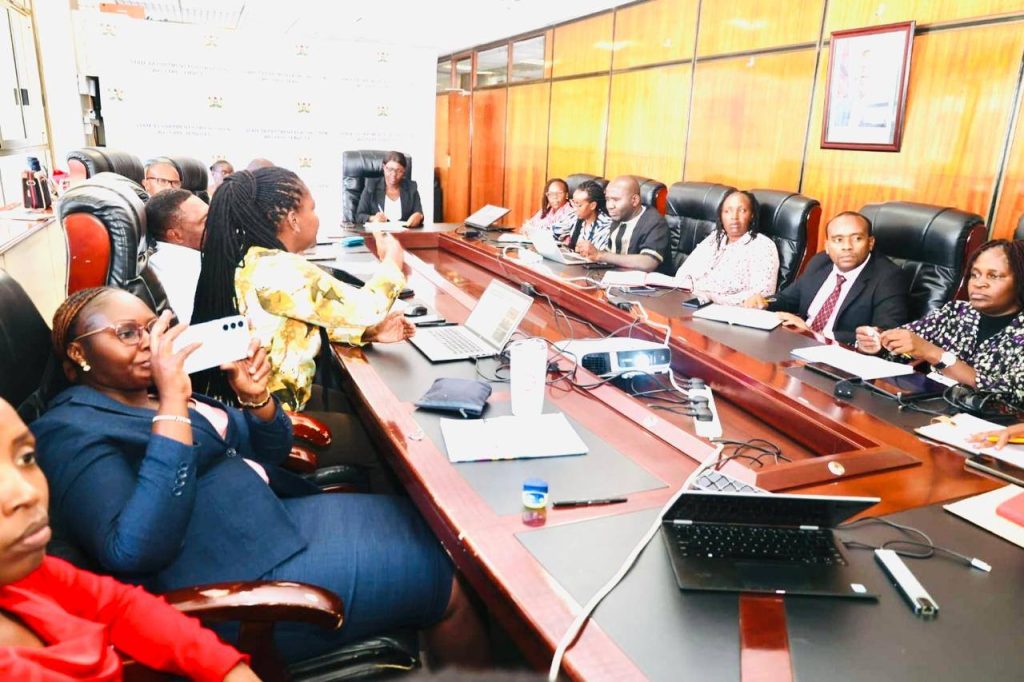
    This week, the Steering Committee of the Mama Kitchen Gardens Initiative convened a high-level consultative meeting with the  the Principal Secretary for State Department for Children Services Carren Ageng’o to assess progress and strengthen collaboration towards scaling the programme nationwide.

    What emerged was more than a policy discussion it was a reaffirmation of Kenya’s collective commitment to nourishing both the bodies and futures of its children in line with the first lady Mama Rachel Ruto vision on enhancing food and nutrition security, income generation while ensuring environmental resilience sustainability.

    At the heart of the discussions through multi-sectoral approach was a shared vision: accelerating the registration of schools into the Mama Kitchen Gardens, 4k-Clubs and children well-being through the Kenya Children Assembly and strengthening engagement with statutory children institutions. The goal is clear to ensure that more children across the country benefit from hands-on nutrition education, sustainable food production skills, and life-skills training that extends beyond the classroom.

    Ageng’o said that Mama Kitchen Gardens Initiative is not merely about planting vegetables; it is about planting our society values. It teaches children how to grow indigenous crops, understand balanced diets, conserve water, and appreciate sustainable agricultural practices. It transforms school compounds into living classrooms where theory meets practice. A spinach patch becomes a science lab. A tomato vine becomes a lesson in responsibility. A shared harvest becomes a celebration of teamwork.

    Beyond improving access to nutritious food, the programme empowers children as “young champions” of food security. By involving learners in every stage from soil preparation to harvest the initiative fosters ownership and pride. Children do not just eat healthier; they understand why it matters. They take those lessons home, influencing household practices and strengthening community resilience.

    The consultative meeting also underscored the importance of collaboration with County Governments, whose grassroots presence is vital in expanding the initiative’s reach. Counties play a critical role in mobilising schools, supporting extension services, and integrating the programme into broader local nutrition strategies. When national leadership and county implementation work hand in hand, sustainable change becomes achievable.

    Importantly, the involvement of the Ministry of Health ensures that the initiative aligns with national nutrition standards and child wellness goals, while the Ministry of Education anchors the programme within the school system for long-term sustainability. Together, these partnerships represent more than coordination they symbolize shared accountability for the well-being of Kenya’s children.


    PS Children Services Carren Ageng’o hosting a multisectoral team
    PS Children Services Carren Ageng’o hosting a multisectoral team

    As the Mama Kitchen Gardens Initiative scales up nationwide, it carries a powerful message: solutions to complex challenges often begin with simple, intentional actions. A seed planted today can nourish a child tomorrow. A garden nurtured in school can cultivate a lifetime of healthy habits.

    Through strengthened collaboration, strategic engagement, and unwavering commitment, Kenya is not only growing vegetables it is growing hope, resilience, and a generation equipped with the knowledge and skills to build a food-secure future.

    Under the stewardship of her Excellency the first lady Mama Rachel Ruto, PS Agriculture Dr. Kipronoh Ronoh with the dedication of leaders such as Ps. Carren Ageng’o, the nation moves forward cultivating healthier communities, one garden at a time for transformative future generation.

    Going into the future, the initiative intends to explore accessible technologies to enhance outputs as well as capacity build more youths in order to reach every corner of the country.