Author: Jared Ombui

  • Iran says no agreement finalized with US

    Iran says no agreement finalized with US

    Iranian Foreign Ministry spokesman Esmaeil Baghaei said on Friday that no agreement has been finalized with the United States yet and the exchange of messages between the two sides is continuing.

    Baghaei made the remarks in a telephone interview with state-run IRIB TV, after U.S. President Donald Trump outlined conditions for a deal with Iran and said he would soon make a decision.

    Baghaei reiterated that Iran’s current focus in the negotiations “is on ending the war.”

    “We have no talk on details of the issues pertaining to Iran’s uranium enrichment or enriched uranium at this stage,” he said.

    Speaking about the possible re-opening of the Strait of Hormuz, Baghaei said future management of the strait “concerns only Iran and Oman.”

    Earlier in the day, in a social media post, Trump outlined his demands, saying, “Iran must agree that they will never have a Nuclear Weapon or Bomb.”

    “The Hormuz Strait must be immediately open, no tolls, for unrestricted shipping traffic, in both directions. All water mines (bombs), if any, will be terminated,” Trump said, noting that the U.S. naval blockade “will now be lifted.”

    He also said Iran’s enriched uranium stockpiles will be unearthed by the United States in coordination with Iran and the International Atomic Energy Agency and destroyed.

    Trump added that “no money will be exchanged, until further notice,” apparently referring to Iran’s frozen assets and the financial compensation demanded by Iran.

    Iran, the United States, and Israel reached a ceasefire on April 8 after 40 days of fighting triggered by U.S.-Israeli strikes on Iran.

    Over the past weeks, the United States and Iran have exchanged several proposed plans outlining conditions for ending the conflict through Pakistani mediation. The two sides are reportedly working to finalize a memorandum of understanding.

  • Kenyan investors urged to tap into the Blue Economy

    Kenyan investors urged to tap into the Blue Economy

    As the construction of the Maritime Survival Training and Certification Centre gains momentum at Bandari Maritime Academy (BMA), Kenyan investors have been urged to grab emerging opportunities within the shipping and Blue Economy sectors.

    This call was made by Kenya School of Revenue Administration (KESRA) Commissioner, Dr. Mugambi Mwirigi, during a visit to the Academy. Dr. Mugambi emphasized the untapped potential within Kenya’s maritime space, noting that increased investment in sea transport could significantly boost the Country’s economy.

    He challenged local investors to rethink transportation along the Coast, questioning why viable sea routes such as Mombasa to Lamu or Diani to Kilifi remain underutilized. According to him, these routes present a lucrative opportunity that could generate billions of shillings annually if properly developed and supported.

    “This is a goldmine that Kenya is sitting on. With the right investment and infrastructure, sea transport can transform coastal economies and create thousands of jobs,” said Dr. Mugambi.

    He further encouraged innovation within the sector, proposing ventures such as floating restaurants and maritime tourism experiences, which would not only diversify the Blue Economy but also create employment opportunities for youth in both the maritime and hospitality industries.

    Dr. Mugambi commended Bandari Maritime Academy for its critical role in training and producing competent seafarers, noting that the availability of skilled manpower is a key enabler in the growth of the maritime industry.

    On his part, BMA Chief Executive Officer, Dr. Eric Katana, reaffirmed the Academy’s commitment to advancing maritime education and training in the region. He noted that the ongoing development of the Maritime Survival Training and Certification Centre will position the institution as a regional hub for world-class maritime safety and survival training.

    Dr. Katana added that the facility will enhance the preparedness of seafarers to meet international standards while supporting the broader growth of Kenya’s Blue Economy agenda.

    The Maritime Survival Training and Certification Centre is expected to play a pivotal role in equipping maritime professionals with critical safety skills, further strengthening Kenya’s competitiveness in the global shipping industry.

  • Morocco Leads Africa in Industrial Growth and Output, AfDB Reports

    Morocco Leads Africa in Industrial Growth and Output, AfDB Reports

    Industrialization: Morocco is the leading industrial economy on the African continent, according to the African Development Bank

    Morocco now ranks first among Africa’s industrial nations. This is according to the Africa Industrialization Index (AII) 2025, published by the African Development Bank (AfDB) on the sidelines of its Annual Meetings.

    For the first time since the index was launched in 2010, the Kingdom has overtaken South Africa. This achievement is driven by sustained industrial upgrading, export diversification, and a robust industrial policy.

    The automotive, aerospace, agribusiness, renewable energy, and phosphate sectors were the main drivers of this growth. This outcome reflects years of massive investment in infrastructure, training, and industrial zones—notably Tangier Med and Kenitra—as well as increasing integration into global value chains.

    The AII 2025, which assessed 54 African countries over the 2010–2024 period, notes that 41 countries improved their industrialization scores, bringing the continent’s overall progress to 6%. The most significant gains were seen in the least developed economies, a sign of ongoing convergence.

    However, structural disparities persist. Africa still accounts for only 2% of global manufacturing output and 1.4% of manufacturing exports. Per capita manufacturing value added remains below pre-2014 levels. The continent’s industrial integration remains weak: intra-African trade accounts for only 14.4% of total trade.

    Published alongside the first African Industrial Investment Barometer (AfIIB), developed by WITBA Invest SA and Trendeo, the report highlights that North Africa dominates investment across the continent. The region attracted 56% of cumulative investment flows between 2020 and 2025, with Morocco and Egypt leading the way.

    Both studies highlight key drivers: access to reliable and competitive energy, cross-border infrastructure, long-term financing in local currency, technical training, and harmonization of standards. The AfIIB also calls on African industry to commit to decarbonization now, lest it face penalties from the carbon border adjustment mechanisms being prepared by the EU and the United States.

    It should be noted that the 61st Annual Meetings of the AfDB Group and the 52nd Annual Meetings of the African Development Fund are being held through May 29 in Abidjan, under the theme “Mobilizing Large-Scale Resources for Africa’s Development Financing in a Fragmented World.”

    Further the report ranks Kenya as the most industrialized economy in East Africa, ahead of its neighbors in the region, including Uganda, Tanzania, and Rwanda.

  • In DR Congo’s Ebola hotspot, each burial becomes test of trust

    In DR Congo’s Ebola hotspot, each burial becomes test of trust

    Mongbwalu, a gold-mining town in the eastern Democratic Republic of the Congo (DRC), has now become one of the hardest-hit areas in the country’s latest Ebola outbreak.

    In Shuni 1, a neighborhood of Mongbwalu, the fatal virus has entered homes, funerals, and daily conversations, spreading not only through fragile health systems and crowded neighborhoods but also through fear, rumors, and mistrust. Behind half-open doors, people watched the burial team in silence, looking either frightened or irritated, as another resident that they knew had succumbed to the disease. In a community where rumors travel faster than official health messages, some residents whispered that health workers had come to take the body away, while others feared that the body bags, coffins, or burial procedures themselves were killing people. According to the latest figures released by the DRC health authorities, the Mongbwalu health zone has reported 339 suspected cases and 88 suspected deaths, placing it among the worst-affected health zones in the current outbreak.

    Moreover, the eastern DRC is already strained by armed violence, population movements, and limited access to basic health services. John Tumudjibe, supervisor of the burial team, did not rush toward the body but first looked for the dead man’s relatives and asked one family member to accompany the team into the house. Before touching the body, he had to calm the living. “We have come to help you and to protect you,” he told the relatives. “We must secure the body so that you are not infected again. The disease exists.” He explained, step by step, what would happen next: respectful handling of the body, safe wrapping in line with Ebola response protocols, disinfection, transport to a burial site, and a final farewell under controlled safety measures. Traditional burial practices often involve washing, touching, or staying close to the body. However, the virus can spread through contact with bodily fluids, making unsafe burials a major driver of new transmission chains.

    Kundingeda, a relative of the deceased, expressed his concern that other family members might have been exposed. “Before, I was ignorant. But today, I understand that this (Ebola) is real,” he said. “If a doctor tells you that you are sick, you must believe him. I saw with my own eyes how my brother ended up in a bag.” Gradually, some residents who had initially threatened to resist the burial team began to understand that their responsibility is to take the body without respect, but to protect the household and the wider community. The scene in Shuni 1 reflected a wider challenge facing Ebola responders in Mongbwalu and other affected areas. They have to battle not only the spread of the outbreak, but also fear, rumor, and distrust. Since May 21, at least three reported incidents have targeted Ebola treatment or isolation facilities in Ituri Province.

    In Rwampara, a town near the provincial capital Bunia, protesters set fire to Ebola treatment tents after authorities refused to release the body of a suspected Ebola victim for a traditional burial. Two days later, in Mongbwalu, residents attacked and burned a tent set up with support from Doctors Without Borders for suspected and confirmed Ebola cases. On Sunday evening, young men stormed Mongbwalu General Hospital, demanding the release of two relatives’ bodies, forcing medical staff to scramble to evacuate patients as gunfire rang out nearby. Jean-Jacques Muyembe, head of the National Institute of Biomedical Research and one of the world’s leading Ebola experts who discovered the virus in the 1970s, told Xinhua that distrust of outsiders could weaken the response. “When people see that instructions and measures are announced by people from their own area, they believe them. If it is someone from Kinshasa, they doubt,” Muyembe said, stressing that building trust is the priority.”At first, we believed rumors saying there were coffins that killed people,” said Iza Banga, a Congolese whose neighbor died in the Ebola outbreak. “But now we see that people are dying almost every day here in our neighborhood… We are really afraid for our lives, and we want the authorities to find a solution.” The burial teams are also working under harsh conditions.

    According to Tumudjibe, Ebola response workers in Mongbwalu, especially those handling safe burials, lack even basic support. They worked “free of charge,” but out of a sense of responsibility. After securing a body, he said, each worker is supposed to drink at least 1.5 liters of water. “Sometimes we cannot even buy water for the team. But we continue because we want to save the community of Mongbwalu,” he added.

  • Kenya’s small steps, but steps nevertheless

    Kenya’s small steps, but steps nevertheless

    Kenya’s public discourse is often consumed by political drama. There are often loud debates, personality clashes and manufactured controversies that generate heat but little light.

    In this environment, it is easy to overlook the quiet, practical work being done to address the real challenges Kenyans face every day. Programmes like the National Youth Opportunities Towards Advancement (NYOTA) and the Kenya Informal Settlements Improvement Project Phase 2 (KISIP 2) will never trend on social media the way a political spat does. But these programmes are responding to real issues on the ground.

    They may be small steps but they are steps nevertheless.

    Kenya has made significant progress in recent decades. Infrastructure has expanded, human capital outcomes have improved and the services sector has grown. Yet one central challenge persists. The country is not creating enough quality jobs for its rapidly growing young population.

    Each year, more than 800,000 young Kenyans enter the labour market, yet fewer than 100,000 formal jobs are created. Many youth remain trapped in low-productivity work with limited income security. When economic growth does not translate into jobs, it cannot deliver broad-based prosperity.

    NYOTA, a Government programmed financially supported by the World Bank Group, is designed to address this reality. The programme supports young people through skills development, apprenticeships, entrepreneurship support and income protection. Its focus is practical. It helps youth gain relevant capabilities, connect to labour market opportunities and grow enterprises.

    Consider Esther Karisa from Kilifi County, who once survived on irregular casual jobs. After receiving welding training through a preceding youth employment programme, she built a stable livelihood and now employs others. No drama. No headlines. Just a life transformed through targeted support.

    NYOTA tackles the persistent mismatch between skills and labour market demand. Many employers struggle to find job-ready workers despite high unemployment. By strengthening technical and soft skills, supporting apprenticeships and aligning training with market needs, the programme bridges this gap. It also supports enterprise growth among micro, small and medium-sized businesses that employ the vast majority of Kenyan workers but are often held back by limited access to finance and restricted market linkages.

    Through entrepreneurship support and business development services, NYOTA strengthens the capacity of youth-led businesses to expand. The programme further promotes inclusion by targeting women, low-income youth and those in underserved regions who are routinely excluded from economic opportunity.
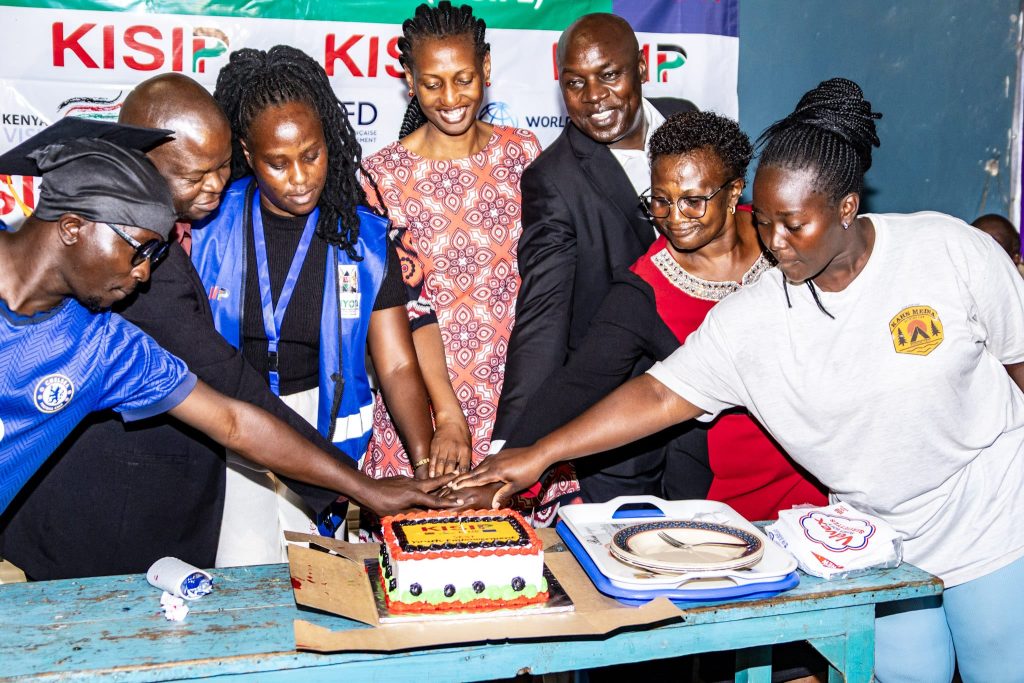
    Separately, Kenya Informal Sector Improvement Programme (KISIP 2) responds to a different but equally pressing reality. Rapid urbanization has outpaced the capacity of Kenyan cities to provide adequate housing and services. Millions of residents in informal settlements lack access to clean water, sanitation, reliable electricity and secure land tenure. These are not abstract policy concerns but the daily lived experience of working Kenyans.

    KISIP 2 is a $165 million World Bank-funded initiative designed to improve living conditions, tenure security and basic infrastructure for residents in urban informal settlements across all 47 Kenyan counties. By upgrading roads, drainage, water supply and sanitation, and by formalizing land rights, the programme gives families a foundation on which to build. Secure tenure means a household can invest in its home. Functioning infrastructure means children can attend school without walking through sewage.

    These are not glamorous interventions but they change lives.

    What connects NYOTA and KISIP 2 is not a shared budget line or institutional framework. What connects them is a shared logic, that development happens through practical, ground-level action that responds to what Kenyans actually need.

    One addresses the lack of jobs and skills. The other addresses the lack of basic services and security in the places people live. Both reject the notion that progress requires spectacle.

    International experience confirms this approach. Jobs expand when firms invest, innovate and connect to larger markets. Communities stabilize when residents have secure tenure and functioning services.
    Neither outcome is achieved through political theatre. Both require sustained, patient investment in people and places.

    Kenya’s longer-term priorities reinforce the case. As the country advances digital transformation, expands value addition in agriculture and pursues green growth in renewable energy and climate-smart production, demand for skilled workers and functional urban spaces will only increase. Programmes like NYOTA and KISIP 2 lay the groundwork for that future. They do so quietly, incrementally but meaningfully.

    These are not perfect programmes. No intervention at scale ever is. But they represent a commitment to addressing real constraints rather than chasing political applause. They are evidence that, beneath the noise, serious work is and can be done.

    Kenya’s youth are its greatest asset. With the right skills, opportunities and living conditions, they can drive innovation, enterprise and transformation. That will not happen through drama or sloganeering. It will happen through programmes that show up where the problems are and do the work.

    Small steps but steps nevertheless. That is the Kenya we strive for—a Kenya where growth works for all.

    The author is a commentator on social enterprise.

  • Token Nation: How Digital Shillings Can Power Kenya’s Future

    Token Nation: How Digital Shillings Can Power Kenya’s Future

    Imagine a Kenya where a farmer in Kitale, a fintech developer in Nairobi, and an investor in Singapore can all participate in the same project using digital tokens backed by real Kenyan assets. That is the promise of tokenization: converting value currency, land, infrastructure, commodities into secure digital units that can be traded instantly across borders. It is not science fiction; it is the next frontier of global finance. And if Kenya moves boldly and wisely, it can turn this frontier into a powerful engine for inclusive growth.

    Tokenizing the Kenya shilling and key national assets could fundamentally change how the country attracts and uses investment. Today, many promising projects stall because capital is slow, fragmented, or trapped behind complex intermediaries. With tokenization, a road project, a green energy plant, or a social housing scheme can be represented as digital tokens, each one reflecting a small share of the underlying value. Investors from around the world could buy these tokens in minutes, not months, lowering entry barriers and increasing the pool of potential financiers. For Kenya, that means more affordable capital and deeper global partnerships.

    For ordinary citizens, tokenization could be a great equalizer. Instead of investment opportunities being reserved for a few large institutions, a tokenized system can allow smaller investors to participate with modest amounts. A teacher, a boda-boda rider, or a small business owner could own a fraction of a government bond, a solar farm, or a tourism venture through digital tokens. Ownership becomes divisible, tradeable, and transparent. This is how financial inclusion stops being a slogan and becomes part of everyday life.

    At the same time, tokenizing the national currency can strengthen Kenya’s position in the global digital economy. A well-designed digital token version of the shilling, built on strong regulation and robust technology, can make cross border payments faster, cheaper, and more secure. Diaspora remittances could settle in seconds. Exporters and importers could manage their cash flows more efficiently. Fintech innovators could build new products smart contracts, programmable payments, digital wallets that ride on top of this infrastructure and create jobs for a generation of young Kenyan technologists.

    Of course, tokenization is not a magic wand. It must be grounded in trust. That means clear laws, strong consumer protection, and uncompromising cybersecurity. It means educating citizens so they understand both the opportunities and the risks. It means building systems that protect against fraud, speculation, and misuse, and that respect privacy while maintaining necessary transparency. The technology is powerful, but the real transformation will come from how leaders design the rules, and how responsibly everyone chooses to use these new tools.

    For young Kenyans, this moment is an invitation. The world of global investments is being rewritten in code, data, and digital value. Those who learn how tokenization works its technology, its economics, its ethics will be the architects of tomorrow’s financial systems. They will design platforms, launch start-ups, advise governments, and build the rails on which future trade and investment will run. Kenya’s decision to tokenize currency and assets could be the spark that motivates a new wave of learning in blockchain, digital finance, and regulatory innovation.

    Kenya has a history of leading Africa in financial innovation. M-Pesa changed how money moves. A thoughtful tokenization agenda can change how value is created, shared, and grown. If the country combines visionary policy, disciplined regulation, and bold entrepreneurship, it can turn digital tokens into real-world progress: more investment, more jobs, more inclusion, and more confidence in the future. The question is no longer whether the world is going digital. The question is whether Kenyans will step forward to own, shape, and benefit from that future. The opportunity is on the table—now is the time to turn it into tokens of trust.

    Dr. Yusuf Muchelule is a Senior Lecturer & a Consultant

  • Moroccan Sahara: The autonomy plan presented in Verona

    Moroccan Sahara: The autonomy plan presented in Verona

    In Verona, officials and academics highlighted the relevance of Morocco’s autonomy plan, which was presented as a political framework capable of supporting regional stability in a Sahel-Saharan environment marked by security challenges.

    The preeminence of the autonomy plan proposed by Morocco for the resolution of the dispute over the Moroccan Sahara was underscored on Saturday in Verona, in northern Italy, during a meeting bringing together Italian and Moroccan experts, academics, and officials.

    under the topic “Autonomy and Regionalized Governance: Comparative Perspectives on the Italian Experience and the Moroccan Approach,” this meeting highlighted the institutional and regional dimensions of the Moroccan initiative, against a backdrop of persistent security challenges in the Sahel-Saharan region.

    Speakers noted that the autonomy plan presented by Morocco in 2007 constitutes “the only pragmatic framework” capable of fostering a lasting political solution while consolidating regional stability. Several participants also drew parallels with certain Italian experiences of regional autonomy.

    Luigi Spagnolli, the Italian senator from the Trentino-Alto Adige region, noted that United Nations Security Council Resolution 2797, adopted on October 31, 2025, enshrined the Moroccan autonomy initiative as the basis for the political process conducted under the auspices of the UN.

    The Italian senator also referred to the preamble of the Moroccan Constitution, highlighting the Kingdom’s “plural identity” and the diversity of its cultural and historical components. In his view, this plurality is a factor in national cohesion.

    For his part, Italian political scientist Marco Baratto argued that autonomy under Moroccan sovereignty offers “a sustainable political perspective,” linking institutional dynamics to investments made in the southern provinces. He compared the Moroccan plan to the Special Statute granted to Sicily in 1946, presenting them as “two models serving national unity and regional stability.”

    This interpretation was expanded upon by Yasmine El Hassnaoui, a professor of international relations, who argued that the autonomy plan allows for the reconciliation of “unity and diversity, sovereignty and self-governance.” The scholar also highlighted the investments made in the southern provinces, particularly in infrastructure, renewable energy, transportation, and logistics.

    The meeting brought together several Italian regional officials as well as members of the Moroccan community living in Italy.

  • Morocco pardons Senegal fans jailed after AFCON final unrest

    Morocco pardons Senegal fans jailed after AFCON final unrest

    Morocco’s King Mohammed VI has pardoned Senegalese supporters jailed after violence and disturbances surrounding the chaotic 2025 Africa Cup of Nations final.

    The royal cabinet said the pardon, announced ahead of Eid al Adha, concerned Senegalese fans convicted over offenses committed during the tournament Morocco hosted between Dec. 21, 2025 and Jan. 18, 2026.

    “This gracious royal gesture reflects the depth of the bonds of brotherhood, friendship and cooperation that have always linked the Kingdom of Morocco and the Republic of Senegal,” the statement said.

    “ It also embodies the values and deeply rooted traditions on which Morocco’s authentic identity is founded, foremost among them the values of compassion, mercy, kindness, generosity and the spirit of tolerance.”

    The final between Morocco and Senegal spiraled into controversy after Senegal’s players briefly walked off the pitch protesting a late VAR penalty decision despite leading 1 0.

    The Confederation of African Football later overturned the result and awarded Morocco a 3 0 forfeit victory, ruling that Senegal’s walk off breached competition rules.

    Clashes and vandalism linked to the match led Moroccan authorities to arrest several Senegalese supporters, triggering criticism in Senegal and appeals for clemency from politicians, football officials and civil society groups.

    Senegalese President Bassirou Diomaye Faye commended Morocco for the release, “Our compatriots who were detained in Morocco following the incidents that occurred on the sidelines of the Africa Cup of Nations have been released. They will soon be reunited with their families, thanks to the royal pardon that His Majesty King Mohammed VI graciously granted them on the occasion of Eid al-Adha.”

    He added “I extend my most sincere thanks to His Majesty for this decision, marked by clemency and humanity. Senegal and Morocco share a long-standing bond of brotherhood, which this gesture, once again, honors. Eid Mubarak to His Majesty the King and to all the Moroccan people”

  • China unveils Shenzhou-23 crew for space station mission

    China unveils Shenzhou-23 crew for space station mission

    Chinese astronauts Zhu Yangzhu, Zhang Zhiyuan and Li Jiaying, or Lai Ka-ying in Cantonese, will carry out the Shenzhou-23 crewed spaceflight mission, with Zhu serving as the commander, the China Manned Space Agency announced on Saturday.

    The Shenzhou-23 crewed spaceship is scheduled to be launched at 11:08 p.m. Sunday (Beijing Time) from the Jiuquan Satellite Launch Center in northwest China, said Zhang Jingbo, spokesperson of the agency at a press conference.

    The three astronauts are respectively a flight engineer, a spacecraft pilot and a payload specialist. Zhu previously participated in the Shenzhou-16 space mission. Zhang and Li come from the third and fourth batches of astronauts respectively, and will embark on their first spaceflight missions. Before being selected, Zhang was an air force pilot, while Li worked in the Hong Kong Police Force.

    Zhu, China’s first flight engineer to serve as a commander, described his crew as three different pieces of a puzzle that fit perfectly together.

    “We think with one mind and pull in the same direction,” Zhu said.

    “From having a dream to realizing it is a long journey paved with faith and perseverance,” Zhang said.

    Zhang offered three pieces of advice: rooting dreams in solid ground, turning passion into resilience against difficulties, and closely linking personal dreams with the needs of the motherland.

    Li, the first astronaut selected from China’s Hong Kong Special Administrative Region, expressed deep gratitude for this opportunity.

    “As an ordinary person from Hong Kong, being able to join the astronaut team and be selected for this mission is an opportunity I never dared to dream of. My heart is full of gratitude and honor,” she said.

    “Every astronaut around me is outstanding,” Li noted. “I feel truly fortunate to have learned, trained and become friends with them. Their companionship, encouragement and shared progress have meant so much to me.”

  • Panama reiterates support for Moroccan sovereignty over Sahara

    Panama reiterates support for Moroccan sovereignty over Sahara

    The Republic of Panama reaffirmed, Friday in Rabat, its constant position of support for the autonomy plan, under Moroccan sovereignty, as the only solution to the Moroccan Sahara issue, while expressing its support for United Nations Security Council Resolution 2797.

    This position was expressed by the Panamanian Vice Minister of Foreign Affairs, Carlos Arturo Hoyos Boyd, on a working visit to Morocco, following his meeting with the Minister of Foreign Affairs, African Cooperation and Moroccan Expatriates, Nasser Bourita.

    The Panamanian official stated that Panama considers the autonomy initiative under Moroccan sovereignty, presented by the Kingdom, as the only serious, credible, and realistic basis for achieving a lasting solution to this regional dispute, within the framework of the process conducted under the auspices of the United Nations and in full respect of the sovereignty and territorial integrity of the Kingdom of Morocco.

    In this context, he emphasized that the Embassy of the Republic of Panama in Morocco fully exercises its consular powers over the entire Moroccan territory, including the Southern Provinces.

    The Panamanian vice minister reaffirmed his country’s support for the Moroccan proposal of the Autonomy Plan under Moroccan sovereignty, presented in 2007 and enshrined in United Nations Security Council Resolution 2797.

    The Panamanian official also expressed Panama’s full support for the UN Secretary-General and his Personal Envoy in facilitating and leading negotiations, based on the Moroccan Autonomy Proposal, with a view to achieving a just, lasting, and acceptable solution for all parties