Author: Jared Ombui

  • Bandari and KMFRI seal deal for Cadets to gain sea-time training

    Bandari and KMFRI seal deal for Cadets to gain sea-time training

    Bandari Maritime Academy (BMA) and the Kenya Marine and Fisheries Research Institute (KMFRI) have signed a landmark partnership that will allow maritime cadets to gain mandatory sea-time experience aboard research vessels, a move expected to strengthen Kenya’s maritime workforce and accelerate the country’s Blue Economy agenda.

    The Memorandum of Understanding (MoU), signed by BMA Chief Executive Officer Dr. Eric Katana and KMFRI Director General Dr. Paul Orina, will provide cadets with the practical sea experience required for professional certification while enhancing collaboration in maritime education, research and capacity building.

    The agreement addresses one of the key requirements in maritime training by enabling BMA students to undertake mandatory sea-time training aboard KMFRI research vessels, giving them hands-on exposure that complements classroom learning and prepares them for careers in the maritime industry.

    Speaking during the signing ceremony, Dr. Katana described the partnership as a major milestone in improving the quality of maritime education in Kenya.

    “This Memorandum of Understanding is a major step towards strengthening practical maritime training in Kenya. By providing our cadets with sea time aboard KMFRI vessels, we are ensuring they gain the hands-on experience required to become competent maritime professionals,” he said.

    Dr. Katana noted that the partnership demonstrates the close relationship between research and training, emphasizing that practical exposure is essential in developing a highly skilled maritime workforce.

    “Research and training are inseparable. This partnership will enhance the quality of our maritime programmes and contribute significantly to developing the skilled workforce needed to support the growth of Kenya’s Blue Economy,” he added.

    KMFRI Director General Dr. Paul Orina welcomed the collaboration, saying the two institutions share a common vision of advancing Kenya’s maritime sector through research, innovation and human capital development.

    “KMFRI and Bandari Maritime Academy operate within the same maritime ecosystem, and this partnership demonstrates our shared commitment to complementing each other’s mandates in research, training and capacity building,” he said.

    Dr. Orina added that the partnership would create meaningful opportunities for aspiring seafarers while strengthening the country’s maritime sector.

    “Bandari Maritime Academy has a critical role in producing the skilled human resource required to drive the Blue Economy. Through this collaboration, we are creating meaningful opportunities for cadets to gain practical sea experience while strengthening Kenya’s maritime sector,” he said.

    The two institutions said the partnership reinforces their commitment to excellence in maritime education and research by combining KMFRI’s marine research expertise and resources with BMA’s mandate to train world-class seafarers and maritime professionals.

    The collaboration is expected to play a significant role in supporting Kenya’s Blue Economy agenda through skills development, innovation and strengthened institutional cooperation.

  • China to establish security pact with Cambodia

    China to establish security pact with Cambodia

    Chinese President Xi Jinping on Friday said China is willing to establish a security partnership with Cambodia, and work with Cambodia to make sustained efforts to root out the chronic problem of telecom fraud.

    Xi made the remarks when meeting with Cambodian People’s Party (CPP) President and Senate President Samdech Techo Hun Sen in Beijing, adding China highly commends Cambodia’s determination and actions to crack down on telecom and online fraud.

  • Summer Davos turns spotlight on China’s innovation-led path amid global uncertainties

    Summer Davos turns spotlight on China’s innovation-led path amid global uncertainties

    In an era defined by rapid technological advancement and mounting uncertainties, the question facing policymakers and executives is shifting: it is less about simply fostering innovation but more about how to ensure that it translates into tangible economic gains.

    Against this backdrop, the World Economic Forum (WEF)’s 17th Annual Meeting of the New Champions in the northeastern Chinese city of Dalian has become a key platform for such discussions. China, with its ongoing efforts to integrate innovation into the real economy, is providing important insights into this transition.

    The event, also known as the Summer Davos, is being held under the theme of “Innovating at Scale” from June 23 to 25, bringing together over 1,700 participants from more than 90 countries and regions to discuss ways to scale innovation into better jobs, stronger economies and new growth opportunities.

    Innovation-driven development is the key to China’s long-term economic resilience and steady growth, said Chinese Premier Li Qiang when addressing the opening plenary of the forum on Wednesday in this coastal city in Liaoning Province.

    “Over the course of long-term innovation, China has forged a path where technological innovation leads industrial upgrading, which in turn drives further technological iteration,” the premier said.

    INNOVATING AT SCALE
    “In many cases, the biggest hurdle to innovation is not invention in the laboratory, but crossing the ‘Darwinian Sea’ between the laboratory and the marketplace,” Li told the forum, echoing this year’s theme.

    While China’s tech advances provide the wellspring for industrial development, its massive application scenarios are able to support the development of new technologies, he said.

    For instance, the swift growth of China’s new energy and intelligent connected vehicle industries has been underpinned by breakthroughs in areas such as new materials, power batteries and communications technologies. “This is what gives Chinese products their competitive edge, not government subsidies as some have speculated,” the premier explained.

    The country’s innovation prowess is earned through years of strengthening its own capabilities and relentless hard work, and cultivated via a robust ecosystem, he added.

    Just ahead of this year’s Summer Davos, the WEF announced 16 new additions to its Global Lighthouse Network, which recognizes manufacturers that excel in deploying advanced technologies. Over half of them are located in China, spanning sectors from ship-making to smart logistics.

    In the outline of its 15th Five-Year Plan (2026-2030) adopted earlier this year, China has placed emphasis not only on developing frontier technologies but also on creating the industrial ecosystems and application scenarios needed to turn them into tangible output.

    For Jonas Prising, CEO of workforce solutions company Manpower Group, the tech advancement and innovation environments are equally impressive in China.

    “Attitudes to AI are much more positive in China. Chinese people are very used to applying applications like WeChat and Alipay, and all kinds of technologies, for the benefit of their daily life, and you are now seeing that translate into professional lives as well,” said the senior executive.

    A SOLID START
    Amid global uncertainties and geopolitical conflicts, the Chinese economy has maintained strong resilience and positive momentum in kicking off the new five-year plan period.

    China’s gross domestic product grew 5 percent year on year in the first quarter of 2026, and has maintained stable growth momentum in the second quarter with increasing enterprise profits and a moderate recovery in consumer prices.

    The country’s stable growth is particularly significant given the sheer size of its 140-trillion-yuan (about 20.5 trillion U.S. dollars) economy and amid global energy shortages and severe supply chain disruptions, providing much-needed certainty and serving as a “safe harbor” in an increasingly uncertain world, Li said.

    “While the world is marked by turbulence and uncertainty, China stands out as one of the few places characterized by a unified domestic market and a high degree of stability,” said Yu Feng, president of Honeywell China.

    “We see clear opportunities across several sectors from the 15th Five-Year Plan,” he said, pointing to domains that have already demonstrated strong growth momentum, including semiconductors, data centers, shipbuilding and energy transition.

    Years of sustained investment in innovation have fueled the rapid emergence of new technologies, products and business models in China. The country’s artificial intelligence (AI) sector has experienced “explosive growth,” the premier said, noting that daily token consumption of Chinese large language models had surpassed 100 trillion by the end of May this year, ranking among the highest in the world.

    “There are strong advantages in hardware experimentation and innovation in China,” Andrew D. Maynard, professor at Arizona State University, told Xinhua, while adding that innovation in China is advancing at a much faster pace than in Europe and North America.

    CHINA OPPORTUNITY 2.0
    Amid the rapid rise in China’s innovation capabilities, some observers have voiced concerns over China’s technological and industrial progress, even promoting the narrative of a so-called “China Shock 2.0” that frames China’s development as a shock to the global economy.

    Yet a growing number of voices instead point to a “China Opportunity 2.0,” aptly used to summarize China’s more open, inclusive and tech-powered economic interaction with the rest of the world, which comes after its integration into the global economy following 40-plus years of reform and opening up.

    For enterprises worldwide, “China Opportunity 2.0” represents comprehensive innovation-driven empowerment and high-return investment prospects, Premier Li stressed.

    Official data showed that in 2025, a total of 14,000 new foreign-invested enterprises were established in China’s technology research and technical services sector, up 27.2 percent year on year.

    “What China’s technologies and products in emerging areas bring to the world are not shocks or threats, but opportunities and empowerment,” Li added.

    The premier also pledged deeper international collaboration on AI governance, voicing concern over the swift advance of AI that has significantly improved the efficiency of innovation but at the same time amplified risks ranging from technological runaway to ethical lapses.

    “China will continue to participate in global governance of AI and other sectors responsibly and constructively, work with all parties to improve institutional rules, strengthen oversight and effectively manage potential risks,” he added.

    (Reporting by Mu Xuyao, Hui Peipei, Hong Jing, Yang Qing, Jiang Zhaochen, Zhao Yong, Liu Bin and Ma Haoran; Video editors: Zhang Mocheng, Li Qin, Liang Wanshan and Zhao Tianlin) ■

  • From railway to avocado: A single ripe fruit chronicles China-Kenya’s path of shared prosperity

    From railway to avocado: A single ripe fruit chronicles China-Kenya’s path of shared prosperity

    Each year, from May to June, the peak harvesting and processing season for avocados begins across Kenya. As Africa’s top avocado producer and the continent’s second-largest exporter, Kenya made remarkable history in 2022 as the first African country to supply fresh avocados to the Chinese market, opening a new chapter for Kenya’s agricultural exports to this Asian country.

    On the outskirts of Nairobi, a Chinese-invested avocado oil processing plant bustles with vitality. Local workers deftly sort high-quality avocados designated for oil extraction, while advanced processing and testing equipment ensure that every batch of fruit undergoes standardized, rigorous production procedures. The processed avocados are crushed into crude oil before being exported to China and global markets. When I read about this lively scene of a bumper harvest in the newspaper, my mind goes back to 2016, when I conducted an on-the-ground reporting tour in Kenya and witnessed the full-scale construction of the landmark Mombasa-Nairobi Standard Gauge Railway.

    Nearly a decade later, the fully operational railway has evolved into a vital and efficient logistics backbone for Kenya’s economic development. It has created a stable export corridor for Kenya’s premium agricultural products, transporting fresh avocados from local packing houses and refined crude avocado oil from processing plants to global markets. Beyond cargo connectivity, this infrastructure project has strengthened trade exchanges and fostered people-to-people friendships between China and Kenya.

    Built with Chinese support, the Mombasa-Nairobi Railway has comprehensively upgraded Kenya’s national transportation infrastructure. The project has created tens of thousands of local jobs, nurtured professional technical talents for Kenya’s construction and logistics sectors, and delivered tangible, inclusive development benefits to grassroots communities.

    Over the past decade, the dividends of China-Kenya pragmatic cooperation have extended far beyond railway transportation, penetrating deeply into Kenya’s agricultural fields and industrial processing sectors. For a long time, Kenya’s high-quality agricultural products faced a major “first-mile” logistics bottleneck: insufficient transportation capacity hindered the export of seasonal farm produce and restricted the development of local agricultural industrialization. The Mombasa-Nairobi Railway has significantly resolved this long-standing dilemma.

    Today, freshly harvested avocados from Kenyan orchards and processed crude avocado oil are transported by rail to Mombasa Port, before being shipped to China via seamless sea-rail combined transportation. This efficient cross-border logistics system greatly shortens transportation cycles, guarantees the freshness and quality of Kenyan avocado products, and significantly enhances the global competitiveness of Kenya’s agricultural exports.

    A landmark policy boost further energized bilateral agricultural trade this year. China fully rolled out zero-tariff treatment for all 53 African countries with diplomatic ties on May 1, 2026. That same day, 24 tons of Kenyan avocados cleared customs in Shanghai, enjoying a tariff exemption of 26,000 yuan—a new record for the largest single-batch tariff reduction for this product.

    This preferential zero-tariff policy brings comprehensive benefits to every link of Kenya’s avocado industrial chain, covering fruit farmers, bulk purchasers, processing enterprises and export traders. It effectively reduces export costs, expands profit margins, and greatly stimulates the enthusiasm of all market participants, injecting sustainable impetus for the upgrading and expansion of Kenya’s characteristic agricultural industry.

    Thanks to the dual support of efficient logistics connectivity and favorable Chinese trade policies, Kenyan avocado products have achieved steady growth in exports to China. From small-scale pilot exports in 2022 to stable large-scale market supply today, Kenyan avocados have firmly secured a solid foothold in China’s consumer market, winning wide recognition among Chinese consumers for their superior taste and quality.

    One railway connects the development aspirations of two nations; one avocado bridges the friendship between two peoples. China-Kenya cooperation is not one-sided aid but an equal partnership featuring mutual benefit and resource complementarity. Riding on China’s vast market, advanced technology, and inclusive policies, Kenya’s unique agricultural sector has embraced opportunities, with its industrial chain expanding steadily and local workers reaping real benefits. Meanwhile, the avocado commodities that have crossed the oceans have enriched the dining tables of the Chinese people, offering consumers greater variety.

    2026 marks the 70th anniversary of diplomatic relations between China and Africa. Since May, a wide array of premium African specialties — crisp South African apples, full-bodied local wines, buttery Kenyan avocados, and zesty fresh Egyptian oranges — have graced supermarket shelves across China at more affordable prices, becoming a regular part of daily life.

    China’s proactive opening up of its 1.4-billion-strong market and zero-tariff measures turn its market strengths into new momentum for industrial revitalization across Africa, marking a key milestone in carrying forward China-Africa friendship and deepening mutually beneficial cooperation.

    From the steel rails of the Mombasa-Nairobi Railway to the thriving avocado trade linking Kenyan orchards to Chinese tables, it is a living snapshot of China and Africa moving forward side by side and a microcosm of the deep, pragmatic cooperation taking shape across the Global South.

    Stretching railway tracks carry hopes of development, while fine African agricultural products traverse mountains and oceans to embrace new markets. The journey of every single avocado commodity mirrors the journey of China-Africa ties: pragmatic, people-centered, and paved with endless miles of promise ahead.

    The author is a reporter with the Global Times. zhangao@globaltimes.com.cn

  • 250 Coxswains assessed in Kisumu

    250 Coxswains assessed in Kisumu

    More than 250 coxswains operating in Kenya’s Lake Region are set to benefit from a certification programme aimed at improving safety standards and professionalism in inland water transport.

    Bandari Maritime Academy (BMA) is conducting Recognition of Prior Learning (RPL) assessments and training in Kisumu County under a pilot project sponsored by the Kenya Maritime Authority (KMA). The initiative seeks to formally recognize the skills of experienced coxswains and pave the way for their certification as Coxswain Class III operators.

    The exercise, which brings together coxswains from across the Lake Region, is expected to inform a larger certification programme targeting maritime operators in the Greater Lake Region.

    BMA is implementing the programme in collaboration with Kisumu Maritime Centre (KMC) and Kenya Coast National Polytechnic (KCNP), highlighting a joint effort by maritime institutions to enhance safety and competency standards in Kenya’s growing blue economy.

    Representing Bandari Maritime Academy Chief Executive Officer Dr. Eric Katana, BMA Senior Principal 1 Nautical Science, Maj .(Rtd ) Franklyne Toniok , expressed confidence in the Academy’s ability to meet and surpass its target.

    “By the end of the second day, we had assessed more than 150 coxswains against a target of 250. This demonstrates the strong response from industry players and places us on course to achieve our target by Friday,” said Toniok.

    He noted that many coxswains operating on Lake Victoria possess valuable practical experience but lack formal certification, making the RPL framework a critical pathway for career progression.

    “Recognition of Prior Learning gives practitioners an opportunity to have their skills formally assessed and recognized. This not only improves their employability but also contributes to safer navigation and better service delivery within the maritime sector,” he said.

    According to Toniok, successful candidates will be recommended to the Kenya Maritime Authority for certification, enabling them to meet industry requirements and access wider employment opportunities within Kenya’s maritime and blue economy sectors.

    The programme comes at a time when the government is intensifying efforts to enhance safety on inland waterways and unlock the economic potential of Lake Victoria through a skilled and certified maritime workforce.

    Industry stakeholders have welcomed the initiative, describing it as a major step towards professionalizing coxswain operations while improving compliance with maritime safety regulations.

    As the assessments continue in Kisumu, the exercise is expected to provide a model for future large-scale certification programmes targeting maritime personnel across the country’s inland water transport network.

  • Parenting: When love becomes a curse

    Parenting: When love becomes a curse

    The child was only sixteen, but his rage burned like a wildfire. Desks lay overturned, windows shattered, and the staffroom still smelled of smoke from the burned exercise books. Hours earlier, he had been part of a “small protest” that turned into a school-wide rampage. Now he sat in a police station, shoulders slumped, staring blankly at the floor. His parents arrived furious not at their son, but at the school. “How could you traumatize our child like this?” they demanded. That “child” had just thrown stones at his teachers. Yet in his parents’ eyes, he was still the innocent victim of a harsh world that needed to be softened on his behalf.

    We are slowly discovering a painful truth: when you remove every thorn from a child’s path, you do not grow a rose you grow a plant that cannot survive a single dry season. Many modern parents confuse love with constant rescue, protection with over control, and care with endless indulgence. They cushion every fall, polish away every scratch, and negotiate away every consequence. The result is a generation that feels powerful on social media, but powerless in real life; loud in anger, but weak in endurance. These are children who have never been allowed to be bored, never allowed to fail, never allowed to sit with uncomfortable feelings. So when life finally says “no” through a strict teacher, low grade, or denied privilege they do not bend. They break. Or worse, they break things.

    A child who never hears “you are wrong” at home will interpret any correction at school as an insult. A child who never has to wait will treat every delay as injustice. A child who never does chores will see work as punishment, not preparation. We are raising sons and daughters who can argue for hours online but cannot wake up early for class. They can demand “rights” fluently but stumble when asked about “responsibilities.” They know how to threaten a strike but not how to start a study group. In trying to protect them from discomfort, we have accidentally stolen from them the very tools they need to handle life: patience, resilience, respect, and emotional control.

    True love does not mean placing your child in a glass box; it means equipping them to walk through a world full of glass and not be cut by every shard. Small tasks at home sweeping, washing dishes, caring for younger siblings are not punishment. They are training grounds for adulthood. Disappointment is not cruelty. It is a classroom where humility, empathy, and persistence are taught. A low grade is not the end of the world; it is the world saying, “Try again, but differently.” When we rush to fight every battle for our children, we teach them that shouting is more powerful than thinking, that blaming is easier than changing, and that someone else will always clean up their mess.

    If schools are burning, it is often because homes are avoiding fire drills. Parents cannot delegate character formation to teachers, principals, or police officers. By the time a psychologist meets a student in crisis, that child has already walked a long road of small, uncorrected choices. The solution is not simply harsher discipline or more security guards in schools. It is courage in living rooms. It is parents who can say “no” and hold that line. It is guardians who can love their children enough to let them face the natural weight of their actions. It is families that model apology, self-control, and respect long before a child ever signs a school admission form.

    We do not need more children who are experts at avoiding difficulty. We need children who can carry the weight of their own decisions, who can feel anger without exploding, who can disagree without destroying, who can fail without giving up. That kind of child does not emerge by accident. They are shaped, slowly and deliberately, by adults who understand that a comfortable childhood without responsibility is a debt that adulthood will collect with interest. The real question for every parent is simple: are you raising a child who can survive without you, or a child who will collapse the moment life refuses to move out of their way?

    Dr. Yusuf Muchelule is a Senior Lecturer & a Consultant.

  • Bandari Maritime Academy signs partnership to boost French training

    Bandari Maritime Academy signs partnership to boost French training

    Bandari Maritime Academy (BMA) has signed a strategic partnership agreement with Alliance Française de Mombasa aimed at enhancing French language training for maritime cadets and expanding their access to international employment opportunities.

    The Memorandum of Understanding (MoU) was signed on Thursday at the Academy in a ceremony attended by the French Ambassador to Kenya Arnaud Suquet, and Mombasa Governor Abdulswamad Sheriff Nassir.

    BMA Chief Executive Officer Dr. Eric Katana and Alliance Française de Mombasa representative Muhammed Ramazan formally signed the agreement, marking a significant step in strengthening international collaboration in maritime education and training.

    Speaking during the event, Katana described the partnership as a milestone for the Academy, noting that proficiency in French would equip cadets with a competitive edge in the global maritime industry, particularly in Francophone countries and regions.

    “This partnership will enhance the competitiveness of our trainees and open up broader career opportunities in the international maritime sector,” he said.

    Ambassador Suquet reaffirmed France’s commitment to supporting education and skills development in Kenya, emphasizing the role of language and cultural exchange in promoting professional mobility and international cooperation.

    Governor Nassir welcomed the partnership and thanked the French Embassy for its continued support of initiatives that empower Kenyan youth. He said such collaborations are critical in advancing skills development and creating economic opportunities, especially within the coastal region.

    Also present at the ceremony was CMA CGM East Africa Cluster Chief Executive Officer Naveen Prabhu, who praised the initiative and reiterated the company’s commitment to working closely with BMA.

    Prabhu noted that strengthening foreign language skills among maritime trainees would align them more closely with global industry standards and improve their employability in the international job market.

    The partnership is expected to provide BMA cadets with access to structured French language training, enhancing their preparedness for careers in the increasingly globalized maritime industry.

  • PS Maalim visits flooded Tana River villages, evaluates El Niño preparedness

    PS Maalim visits flooded Tana River villages, evaluates El Niño preparedness

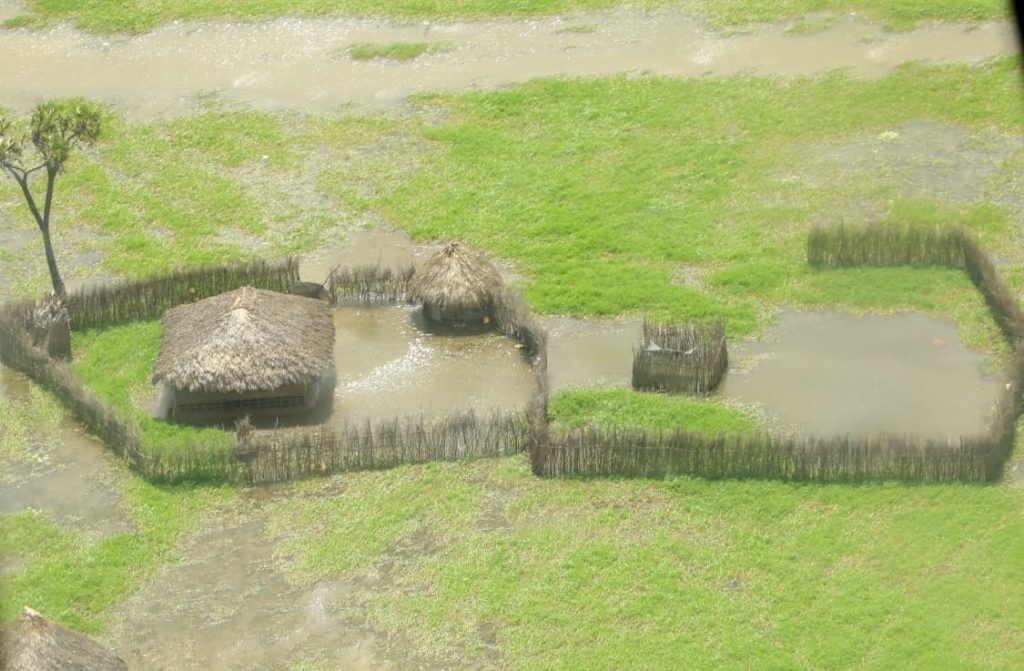
    Principal Secretary for the State Department for Special Programmes, Ismail Maalim Madey, today visited Kitere and Samicha villages in Garsen Constituency, Tana River County, where he led the distribution of relief supplies to families affected by recent flooding and assessed the communities’ preparedness ahead of the anticipated El Niño rains.

    The visit comes as the Government intensifies efforts to support vulnerable households and strengthen disaster preparedness measures in areas prone to flooding. The PS met residents, listened to their concerns, and inspected sections affected by floodwaters, which have disrupted livelihoods and left many families in need of humanitarian assistance.

    Addressing residents during the visit, Hon. Maalim reaffirmed the Government’s commitment to ensuring that affected communities receive timely support while putting in place measures to mitigate the impact of future weather-related disasters.

    “We have delivered iron sheets to support 750 of the 3,000 affected families, and we will continue supplying the remaining households in phases, as directed by the President. We have also brought relief assistance, including both food and non-food items, to help address the immediate needs of the affected families as longer-term interventions are put in place.”

    He urged residents living in flood-prone areas to remain vigilant and heed advisories from relevant authorities, noting that preparedness remains key to safeguarding lives and property as the country braces for the possibility of enhanced rainfall.

    Flooded houses in Tana River

    “Preparedness begins with each one of us. I urge all of you to take weather advisories seriously, protect your families, move away from high-risk areas where necessary, and cooperate with local authorities,” he said.

    The relief exercise saw vulnerable families receive food and other essential supplies aimed at cushioning them from the effects of the floods and supporting their recovery efforts.

    The PS said the State Department for Special Programmes will continue working closely with county governments, local leaders, and humanitarian partners to strengthen response mechanisms and ensure communities are better prepared for any emergencies that may arise during the upcoming rainy season.

    He was accompanied by area MP Hon. Ali Wario as well as other government and county leadership.

  • Artificial Intelligence (AI) key in maritime training, says Katana

    Artificial Intelligence (AI) key in maritime training, says Katana

    Bandari Maritime Academy (BMA) Chief Executive Officer Dr. Eric Katana has called for the adoption of Artificial Intelligence (AI) in maritime education and training, emphasizing its growing importance in shaping the future of the maritime sector and the Blue Economy.

    Speaking during a panel discussion on Blue Economy technologies and Artificial Intelligence at the Our Ocean Conference 2026, Dr. Katana noted that AI-driven solutions are transforming maritime industries by enhancing operational efficiency, improving safety at sea, and equipping future maritime professionals with skills that meet evolving global industry demands.

    “Artificial Intelligence is no longer a futuristic concept; it is a present-day tool that is redefining how we train, operate and innovate within the maritime space. Institutions must embrace these technologies to remain relevant and competitive,” Dr. Katana said.

    He further underscored Bandari Maritime Academy’s commitment to integrating modern technologies into its training programmes, positioning the institution as a Centre of Excellence in Maritime and Blue Economy education within the region.

    His remarks came as the much-anticipated Our Ocean Conference 2026 kicked off at PrideInn Paradise Beach Resort in Mombasa, bringing together global leaders, policymakers, researchers and industry experts to discuss innovative solutions for ocean conservation and the sustainable utilization of marine resources.

    The conference marks a significant milestone in global efforts to advance sustainable ocean management and strengthen the Blue Economy. Participants are engaging in high-level discussions on emerging technologies, environmental stewardship and strategies for safeguarding marine ecosystems while promoting economic growth.

    The conference is expected to generate actionable commitments and strategic partnerships that will accelerate sustainable ocean practices and enhance global cooperation in protecting the world’s oceans for future generations.

  • HIV prevention: Over 1,000 girls and young women reached in Turkana South

    HIV prevention: Over 1,000 girls and young women reached in Turkana South

    More than 1,000 Adolescent Girls and Young Women (AGYWs) aged 15-24 in Turkana South have benefited from a five-day HIV outreach rolled out by Kenya Red Cross and the Africa Inland Church Health Ministries (AICHM) as part of the HIV prevention and control program supported by the Global Fund.

    Services, including HIV counselling and testing, behaviour change communication, and distribution of sanitary pads, were jointly offered by the recently trained peer educators and the area’s health workers at Lokichar, Katilu, and Kalemgorok sites.

    Abel Murei, the program’s Monitoring and Evaluation officer, said that Turkana South was one of three identified hotspots, alongside Turkana West, Turkana North and Central, where the AGYWs also happened to be the most at-risk population.

    “Beyond the outreach, the peer educators have also been deployed at the village level and allocated households. They remain responsible for ensuring that adolescents girls and young women in those households continuously access HIV/AIDS services,” he said.

    According to Geoffrey Ekiru, an HIV/AIDS service provider at Kalemgorok, the area has been reporting new cases among the 15-24 age group in recent months, calling for concerted efforts to cut the spread.

    “It is true that our facilities have reported new cases among the youth in recent months. The Global Fund program now makes it possible for us to extend services to adolescent and young women, to tell them that HIV is real, and encourage them to adopt behaviours that keep them out of risk,” he said.

    Damaris Lokoel, a 20-year-old peer educator during the outreach, attributed the success of the outreach to the training they recently received from AICHM.

    “We were able to talk to our peers about practical methods of HIV prevention, STI prevention, condom use, menstrual hygiene, such as use of sanitary pads, and ways of reducing risky behaviours that expose one to either gender-based violence or HIV/STIs infection. It was not difficult because the AGYWs saw us as their age mates,” she said.

    Another peer educator, 21 year-old Faith Ekale, shared that the girls she had talked to over the outreach period stopped or minimized frequenting bars and highways to exchange sex for favours.

    “I am confident that the peers we mobilized to access services during the outreach and those we personally visited for one-on-one private sessions are fully empowered to take control of their lives,” she said.

    Despite the county’s overall HIV prevalence rate standing at 2.19%, which is lower than the national average estimated at 5.4% to 5.9%, reports at the county and national levels say that the region faces a worrying surge in infection of the adolescent and young persons aged 15-24 years.

    According to Abel Murei, the ongoing Global Fund HIV program intends to run more outreaches in the identified hotspots over the next two months alongside other programs targeting boys, young men and the fisher folk community.

    “Now that we have sufficiently trained and equipped peer educators, the primary goal is to make a contribution to the national objective, which is to cut new infections by up to 75%, reduce HIV-related deaths by 50%, address teenage pregnancies, and keep the 15-24-year age group safe from potential exposure to sexual and gender-based violence (SGBV).”