Author: Jared Ombui

  • Mombasa youth eye global cruise ship careers

    Mombasa youth eye global cruise ship careers

    Bandari Maritime Academy continues to position Kenyan youth for opportunities in the global maritime industry, with growing numbers enrolling for the mandatory Standards of Training, Certification, and Watchkeeping for seafarers (STCW) basic course as they prepare for careers at sea.

    Among the latest trainees is Omar Said from Mtongwe, Mombasa County, who has enrolled at the Academy with ambitions of securing employment on international cruise ships.

    Armed with a certificate in computer packages, Said believes the STCW Basic Safety Training course is the crucial next step towards realising his maritime career goals.

    He says the growing employment opportunities in the maritime sector, including the Government’s initiative to expand seafaring jobs for Kenyans, motivated him to seek internationally recognised training at Bandari Maritime Academy.
    “The President signed a deal with Norwegian shipping lines to hire 1,000 seafarers, and that’s why I came to Bandari Maritime Academy to get the relevant certification,” he said.

    Said is encouraging fellow youth to seize the available opportunities by enrolling in maritime training programmes that equip them with the qualifications required by the global shipping industry.

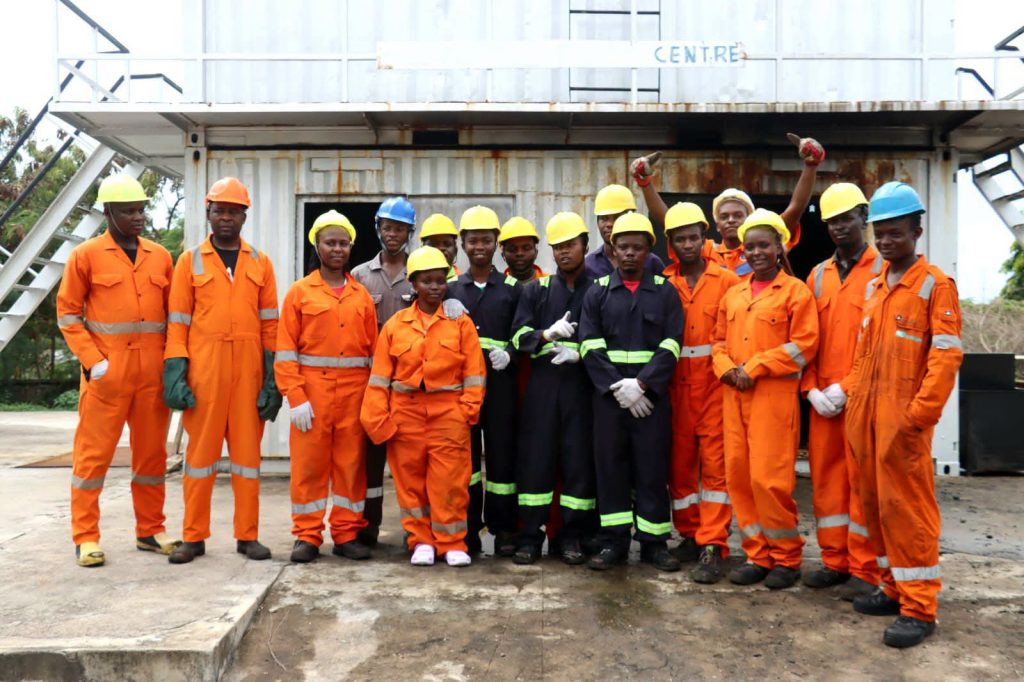
    Students at Bandari Maritime Academy, Mombasa
    Students at Bandari Maritime Academy, Mombasa

    “The only way to secure these jobs is by getting the right certificates. I encourage my fellow youth to register for maritime courses so they can benefit from these employment opportunities. Jobs are available, but you must have the required certification,” he added.

    As Kenya continues to strengthen its presence in the international maritime labour market, Bandari Maritime Academy remains committed to producing competent, safety-conscious and globally competitive seafarers through internationally recognised training programmes that meet industry standards.

  • Tana River: Water harvesting projects transforming lives

    Tana River: Water harvesting projects transforming lives

    For decades, the people of Tana River County have lived with a painful paradox. Despite being home to Kenya’s longest river, thousands of households and livestock compete for dwindling water sources.

    Water scarcity has not only affected livelihoods but has also contributed to poor sanitation, interrupted education and recurring drought-related hardships.

    Today, that narrative is steadily changing. Through the Coast Water Works Development Agency (CWWDA), the Government is investing Sh 185 million in strategic water harvesting projects that promise to transform lives across the County.

    The Agency is implementing a series of water infrastructure projects; from Bangale 1 and 2 water pans to Sheli water supply project and Chirifa water pans in Garsen constituency, which will significantly improve water security, enhancing climate resilience and providing sustainable access to water for communities that have long endured chronic shortages.

    The launch of the Sheli Water Supply Project brings forth a tangible hope for the local residents marking the beginning of a long-waited solution foe the villages’ water challenges.

    The project involves the construction of a four-kilometre pipeline linking Konkona Borehole to Sheli Village, the development of an extensive water distribution network and the installation of two water kiosks alongside communal water points.

    Once completed, the project is expected to serve more than 300 households with clean and safe drinking water. Beyond improving access to water, the initiative will reduce the burden on women and children who spend hours fetching water, allowing children to remain in school while creating opportunities for women to engage in income-generating activities.

    The locals lauded the project noting that it would improve access to safe water and also enhance public health by reducing the prevalence of waterborne diseases.

    “For many years, families here have struggled to access clean water. This project gives us hope that our children will spend more time in school instead of walking long distances in search of water. It is an investment that will improve our health and livelihoods,” said Ari Bodole, a local resident in Sheli village.

    In the arid landscapes of Bura Constituency, where livestock-keeping remains the backbone of the local economy, water availability determines the survival of both families and animals.

    The official handing over of the Bangale 1 Water Pan project to the contractor marked the beginning of construction aimed at providing a dependable water source for domestic use and livestock. The project includes excavation of a large water reservoir, rehabilitation of draw-off structures, fencing of the site to protect the infrastructure and installation of a solar-powered pumping system.

    Complementing this investment is the Bangale 2 Water Pan project, which further expands water harvesting capacity in the area. Together, the two projects are expected to enhance water storage during rainy seasons, reduce vulnerability during drought periods and strengthen the resilience of pastoral communities whose livelihoods depend on reliable water supplies.

    The adoption of solar-powered technology reflects CWWDA’s commitment to environmentally sustainable, cost-effective and climate-smart water infrastructure.

    Abdullrahim kheir, an engineer at CWWDA noted that the projects are designed to provide long-term solutions to water scarcity.

    “These investments are not only about constructing infrastructure; they are about building resilient communities. By integrating water harvesting with renewable energy, we are ensuring sustainable access to water while reducing operational costs and supporting climate adaptation,” Kheir said.

    Beyond Sheli, Bangale and Chirifa, CWWDA is implementing several additional water harvesting projects designed to improve water accessibility across Tana River County.

    The Biskder Village Water Pan in Bura, alongside the Chariadende, Gafuru and Minjila Water Pan projects, will further strengthen water storage capacity and improve resilience against climate variability.

    Collectively, these projects demonstrate a comprehensive strategy to increase water availability across both Garsen and Bura constituencies, ensuring more communities benefit from sustainable water infrastructure.

    Kulisa Dube, another community representative in Bura constituency expressed optimism about the ongoing investments. “Reliable water will change many aspects of our lives. It will support our livestock, improve farming opportunities and give families greater confidence during dry seasons. These projects bring hope for a better future,”

    These initiatives are being implemented in line with the Water Act, 2016, which mandates Water Works Development Agencies to develop and manage national public water infrastructure while supporting the constitutional right of every Kenyan to access clean and safe water.

    By prioritizing underserved communities, CWWDA is advancing national goals on climate resilience, improved public health, food security and inclusive socio-economic development.

    While pipelines, reservoirs and water pans may appear to be engineering projects, their true impact lies in the lives they transform. Every completed water project means healthier families, children spending more time in school instead of searching for water, stronger livestock production and communities better prepared to withstand the effects of climate change.

    Across Sheli, Bangale, Chirifa, Biskder, Chariadende, Gafuru and Minjila, the Coast Water Works Development Agency is doing more than constructing water infrastructure; it is laying the foundation for healthier communities, sustainable livelihoods and a more resilient future for Tana River County.

    Through these investments, CWWDA is ensuring that the people of Tana River can look to the future with renewed hope, knowing that sustainable access to water is becoming a reality rather than a distant dream.

  • NYOTA Project: 1,680 Marsabit youth receive business support grants

    NYOTA Project: 1,680 Marsabit youth receive business support grants

    The Government has intensified its efforts to empower young people through entrepreneurship, skills development and job creation following the launch of the second phase of the National Youth Opportunities Towards Advancement (NYOTA) Programme in Marsabit County.

    Speaking during the national launch presided over by His Excellency President William Samoei Ruto, the Principal Secretary for Internal Security and National Administration, Dr. Raymond Omollo, said the programme is transforming the lives of thousands of young Kenyans by equipping them with capital, skills and opportunities to participate meaningfully in the economy.

    Dr. Omollo noted that the NYOTA Programme targets youth aged between 18 and 29 years, and up to 35 years for Persons with Disabilities, with implementation taking place across all 1,450 wards in the country.

    In Marsabit County, 1,570 beneficiaries received the first KSh25,000 business support grant under the programme, while 1,680 youth are benefiting in the current phase, including new entrants joining the initiative for the first time.

    “The success stories we are witnessing across Marsabit and the country demonstrate that when young people are given opportunities, they can transform their lives, support their families and contribute to national development. We are proud that more than 90 percent of beneficiaries have successfully invested the first grant in productive business ventures,” said Dr. Omollo.

    Under the second phase, beneficiaries will receive an additional KSh25,000 business support grant, with KSh3,000 committed to the NSSF Haba Haba Savings Scheme to promote a culture of saving and financial resilience among young entrepreneurs.

    The Principal Secretary commended the Marsabit County Government for creating a supportive business environment for youth enterprises and particularly lauded the county administration for making business licences freely accessible to young entrepreneurs.

    He called on other county governments to emulate Marsabit’s example by working closely with the National Government to create an enabling environment for youth-led enterprises.

    “When our young people prosper, our counties prosper, and ultimately the entire country prospers. The partnership between the National Government and County Governments is critical in ensuring that young entrepreneurs succeed,” he said.

    Dr. Omollo further highlighted other components of the NYOTA Programme, including on-the-job experience placements that provide practical workplace skills and the Recognition of Prior Learning (RPL) initiative, which enables skilled artisans such as mechanics, plumbers and technicians to receive formal certification for competencies acquired through experience.

    He noted that the programme forms part of the Government’s broader strategy to address youth unemployment by connecting young people to skills development, entrepreneurship opportunities and employment pathways.

    The PS also encouraged beneficiaries to leverage other Government empowerment programmes, including the Hustler Fund, Youth Enterprise Development Fund and Women Enterprise Fund, as well as procurement opportunities available through both National and County Governments.

    He challenged the beneficiaries to build sustainable enterprises that create jobs for others, describing entrepreneurship as a key pillar in accelerating economic growth and expanding opportunities for Kenya’s youth.

    The nationwide rollout of the second phase of the NYOTA Programme marks another significant milestone in the Government’s commitment to youth empowerment, enterprise development and inclusive economic transformation.

    Present was Principal Secretary for Petroleum Kello Harsama and Marsabit Deputy Governor Solomon Gubo.

  • Turkana flags off two-months nutrition supplies to five sub counties

    Turkana flags off two-months nutrition supplies to five sub counties

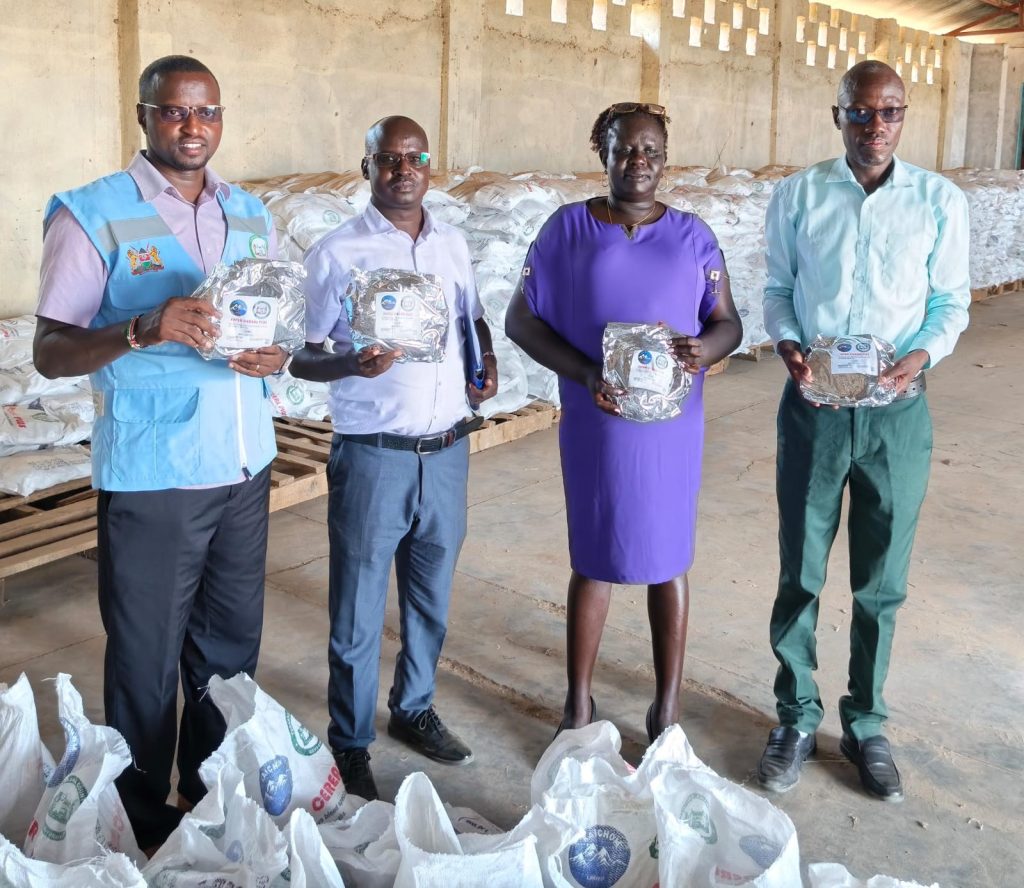
    Turkana County Government has flagged off a two-month consignment of nutrition supplies to treat cases of Moderate Acute Malnutrition (MAM) among children aged 6 to 59 months in five sub-counties, including the hard-to-reach areas of Suguta and Kibish.

    County Executive Member for Health and Sanitation Dr. Joseph Epem oversaw the dispatch of 10,133 bags of Corn-Soy Blend (CSB++) to Loima, Lokiriama, Lokichoggio, Kibish and Suguta this Thursday.

    “The commodities will be delivered using the last mile approach just like drugs and other health commodities distributed by the county. We have instructed facility in-charges, nutrition officers and hospital board members to receive and properly account for each piece,” Dr. Epem said.

    He warned unscrupulous persons planning to divert the commodities that action will be taken against them in accordance with the law, urging targeted recipients, the mothers, to desist from selling the supplies and to use them strictly for the intended purpose of treating malnutrition in children.

    CSB++ is a corn-soya blend fortified with vitamins and minerals used in the treatment of Moderate Acute Malnutrition among children aged between 6-59 months.

    Dr. Epem said the quantities dispatched were informed by the latest measure of vulnerability to malnutrition, which indicated the situation was deteriorating due to prolonged drought. The most recent surveys and reports from mass screening indicate that the cases of Malnutrition have increased from the previous 21% in 2024 to high levels of more than 35% in some locations.

    “The five sub-counties were prioritized because of high caseloads and access challenges,” he said.

    The CECM also confirmed that the entire County is covered in partnership with other players including World Food Program, Save the Children, World Vision, Kenya Red Cross and other partners handling distribution of both CSB++, Ready To Use Therapeutic Food (RUTF) and Ready To Use Supplementary Food (RUSF) in the remaining six sub-counties to ensure no child is left out.

    “Suguta and Kibish have often been cited as neglected due to distance. This flag-off is proof that we are taking services closer to the people,” he added.

    Additionally, Dr. Epem clarified that the County and health program partners had adopted a multi-approach systems that included cash transfer and behaviour change communication.

    It is expected that the consignment will land in the respective facilities over the next three days so as to cushion the local population against the devastating effects of the ongoing drought situation.

    Chief officer for Preventive and Promotive Health Agnes Mana, Deputy Director for Nutrition Carlis Elemach and other senior officers from the department of health and sanitation were present.

  • Why African scholars must tell their own stories

    Why African scholars must tell their own stories

    Scientific publishing is more than a race to add another line on a CV; it is the heartbeat of how humanity remembers, questions, and refines knowledge. In Africa, where stories have long travelled through song, proverb, and fireside narratives, publishing is the modern drumbeat that carries our discoveries beyond the laboratory and into the village, the parliament, and the marketplace. When Scholars write, they are not just filling journals; they are shaping how our continent is seen, how policy is made, and how young minds imagine their future.

    Across the world, scientific publishing emerged to solve a simple but profound problem: how can knowledge be shared, tested, and trusted? Formal journals arose as a way to move from private letters and rumours of discovery to public, verifiable records. In Africa, this question remains urgent. Too often our data leaves our soil, is analysed elsewhere, and returns to us as imported wisdom. By publishing, African Scholars reclaim their voices, showing that the continent is not only a consumer of global science but also a producer of ideas, methods, and breakthroughs born from its own realities.

    Publishing also acts as a shield and a mirror. It shields knowledge from being lost when a researcher retires, migrates, or passes on, because the record remains open to the next generation. At the same time, it mirrors our strengths and gaps, revealing which questions we are asking and which communities we are neglecting. For example, when climate researchers in Kenya publish on drought patterns or flooding, they do more than report numbers; they provide evidence that can shape water policy, crop insurance, and emergency response systems that directly affect pastoralists, farmers, and informal settlements.

    Yet scientific publishing is not without its traps. In many universities, papers become a currency for promotion, grants, and rankings. When the counting of articles matters more than their content, Scholars may chase “publishable” topics that fit international fashions instead of tackling local problems hiding in plain sight. A researcher might choose to model traffic patterns in a foreign city because it is trendy, while ignoring the boda boda chaos and matatu data that could help decongest Nairobi, Dare Salam, Lagos, Kinshasa , Khartoum or Cairo. The danger is that publishing becomes a game of numbers rather than a mission of service.

    To resist this, African Scholars can adopt a more purposeful philosophy: every paper should answer a question that someone on the continent is actually asking. Imagine a health worker in Kisumu, a teacher in Lagos, or a fisher in Lake Victoria as part of your audience. When research on malaria, digital learning, or sustainable fishing is published, it should be written in a way that policymakers, NGOs, and community leaders can translate into action. Publishing, then, is not the end of research; it is the bridge between the lab and the field, between the spreadsheet and the shamba.

    The digital era has opened new paths for this bridge. Open-access journals, institutional repositories, and preprint servers allow African researchers to share findings without waiting for expensive print issues or paywalled platforms. This is crucial on a continent where library budgets are limited and many universities cannot afford subscriptions to major journals. When a Kenyan student in a public university can download a Nigerian engineering paper freely, we witness Pan-African collaboration powered not by conferences alone but by accessible knowledge.

    However, technology also introduces new challenges. The flood of online journals, some reputable and others predatory, makes it harder for early-career Scholars to know where to submit. Article processing charges can be as high as a lecturer’s monthly salary, pushing many towards low-quality outlets that promise quick acceptance. Here, mentorship and institutional support become vital. Senior scholars, research offices, and professional societies can guide younger colleagues towards ethical journals, negotiate waivers, or pool resources so that the cost of visibility does not fall on individuals alone.

    An African perspective on publishing must also honour the continent’s storytelling heritage. Good scientific writing is not only a list of equations and tables; it is a narrative about a puzzle, a method, and a lesson. Our elders taught through proverbs like “A child who is not embraced by the village will burn it down to feel its warmth.” In the same spirit, a paper on youth unemployment or digital radicalisation should not treat statistics as cold numbers but as signals of lives at the margins. When Scholars weave context, history, and ethics into their articles, they produce work that speaks beyond academia to citizens, leaders, and future generations.

    To make publishing more interactive and innovative, African researchers can experiment with new formats. Alongside traditional articles, they can release datasets, code, short policy briefs, infographics, and even community-facing summaries in local languages. A climate study in Kiswahili, a policy brief in Amharic, or a podcast explaining AI ethics in isiZulu can complement the English-language journal article, ensuring that research does not only impress reviewers abroad but also empower communities at home. In this way, publishing becomes a conversation rather than a monologue.

    Ultimately, the question “Why publish?” is similar to a question our grandparents might ask: “Why tell this story?” We publish so that knowledge does not die with us, so that mistakes are not repeated, and so that solutions born on African soil can inspire the world. Scientific publishing, when rooted in integrity and relevance, turns laboratories into lighthouses. It allows a young girl in Nairobi, Kigali, Cape Town, Rabat, or Accra to read, dream, and one day add her own voice to the ever-growing chorus of African science.

    Dr. Yusuf Muchelule is a Senior Lecturer & a Consultant.

  • Rift Valley: The rising coffee power in Kenya

    Rift Valley: The rising coffee power in Kenya

    Kenya’s coffee map is shifting, one auction at a time thanks to this transformation in line with the State Department of Agriculture leadership under Principal Secretary Dr. Kipronoh Ronoh.

    On the buzzing floor of the Nairobi Coffee Exchange (NCE), the 2025/2026 season has already outpaced the whole of 2024/2025 in both volume and earnings, even though the season is still underway. More coffee is moving, more money is flowing, and a new cast of county “kings” is emerging to challenge the old guard.

    At the heart of this transformation is a simple but powerful story: volume is doing the heavy lifting. The NCE has sold 36.36 million kilograms of clean coffee worth about USD 247.6 million, comfortably ahead of last season’s 31.33 million kilograms valued at USD 216.4 million. Yet the average price per kilogram has slipped from USD 6.91 to USD 6.81, a softening of roughly 1.4 percent. Kenya, in other words, is winning through scale, not price spikes a sign of a market where buyers remain keen, but where the competition is getting sharper and more geographically diverse.

    Nothing captures that diversity better than the rise of Kericho. Long known more for tea than coffee in the public imagination, Kericho has executed a stunning pivot to become the country’s top coffee performer at the Exchange. In just one season, its volumes have almost doubled from 3.03 million to 6.00 million kilograms, propelling it to number one in both volume and value. Behind those numbers lie coordinated cooperatives, better extension services, and a growing confidence among farmers that coffee is worth their bet again.

    Kirinyaga, for years the undisputed reference point for premium Kenyan beans, finds itself in an unusual position: displaced from the top but still commanding respect. Its volumes have fallen by about 32 percent to 4.61 million kilograms, yet it retains the strongest average price among major producers at roughly USD 7.25 per kilogram, well above the national mean. Buyers are still willing to pay a premium for Kirinyaga’s reputation for quality and consistency, proving that brand equity in coffee is as real as in any consumer market. Nyeri, another Central giant, has seen volumes drop by 15 percent, while Murang’a and Kiambu have moved against the tide with robust gains of 28 and 29 percent respectively, cushioning Central Kenya’s overall performance.

    The most dramatic energy, however, is radiating from the west. Counties that for years played supporting roles are now stepping into the spotlight. Nandi’s deliveries have surged by 92 percent, Bungoma’s by 97 percent, Kisii’s more than fourfold, and Nyamira’s nearly sixfold. Together with Trans Nzoia and Kericho, these western and Rift Valley counties now contribute 12.44 million kilograms 34 percent of national NCE volume, up from just 19 percent a season earlier. In the same period, the once‑dominant Central bloc of Murang’a, Nyeri, Kirinyaga and Kiambu has seen its combined share shrink from 62 percent to 51 percent. The centre of gravity of Kenyan coffee is quite literally tilting westward.

    There are also quiet but telling subplots. Narok has recorded its first sales at the Exchange, hinting at new frontiers for expansion and diversification. Machakos, by contrast, has experienced a steep 58 percent fall in volume, and five registered counties Busia, Vihiga, Kajiado, Taita Taveta and Siaya have posted no auction sales in either of the two seasons. These “silent” counties invite tough questions: is there real potential that remains untapped, or are resources better focused on areas already demonstrating clear upward momentum?

    For policymakers and sector leaders, this evolving chessboard demands agile responses. Counties that are surging especially Kericho, Nandi, Bungoma, Kisii and Nyamira need targeted support to reinforce good governance in cooperatives, strengthen extension services, and help farmers climb the value ladder rather than drown in raw‑volume competition. Meanwhile, the declines in Kirinyaga, Nyeri and Machakos must be unpacked carefully: are we seeing lower production, delayed deliveries, or a strategic move toward direct sales that are invisible to NCE statistics? Misreading these signals risks crafting policy for shadows rather than substance.

    Equally important is a hard‑headed review of dormant or nil‑sales counties before pouring more money into promotional campaigns. A realistic assessment of agronomic conditions, infrastructure, and farmer interest can ensure that public and private investments are channelled where they will generate lasting impact. And as national volumes climb while prices soften, the surest insurance policy for farmer incomes remains unwavering focus on quality: modern pulping and processing technologies, rigorous factory‑level quality control, and reward mechanisms that signal to farmers that excellence, not just volume, pays.

    The NCE figures for 2025/2026 read like the opening chapter of a new era: a Kenyan coffee sector that is broader, bolder, and more regionally inclusive, yet still balanced on the knife‑edge between volume growth and price pressure. Whether this becomes a story of shared prosperity or squeezed margins will depend on how quickly policy, investment, and farmer support can catch up with the reality already playing out under the auction hammer.

  • As China’s economy grows, so does its global reach

    As China’s economy grows, so does its global reach

    China’s expanding global influence has become increasingly evident through its economic growth, development initiatives and contribution to international stability, experts say.

    According to China Daily, China’s modernisation has not only transformed its own fortunes but also provided valuable lessons for developing nations pursuing their own paths to progress.

    The observations come as the Communist Party of China (CPC) marks its 105th anniversary, a milestone that has prompted renewed reflection on the Party’s role in shaping modern China through resilience, innovation and long-term leadership.

    Analysists say the country’s remarkable rise has been driven by the CPC’s stewardship over the past century, turning a nation once weighed down by poverty and instability into one of the world’s leading economic powers.

    The Party was founded in 1921 at a time when China was grappling with foreign aggression, widespread poverty and unsuccessful attempts to reverse national decline. From its inception, the CPC declared its mission as securing the wellbeing of the Chinese people and achieving the rejuvenation of the Chinese nation.

    More than a century later, China has emerged as the world’s second-largest economy. It has recorded major advances in science and technology, dramatically improved living standards for its population and established itself as an important anchor of stability and certainty during a period of increasing global turbulence.

    Michael Borchmann, former head of the European and International Affairs Department of the German state of Hesse, said the CPC’s consistent commitment to a people-centred development philosophy has been central to China’s achievements.

    “A defining feature of this transformation has been that the Chinese people took their destiny back into their own hands. They cast off foreign humiliation and oppression, successfully lifted hundreds of millions out of poverty, and regained their national confidence,” Borchmann said.

    He added that China’s development experience provides valuable insights for Africa and other countries across the Global South.

    “China offers lessons and inspiration to Africa and the Global South. Its growth is an inspiration for Africa,” he said.

    Peter Kagwanja, president and chief executive officer of the Africa Policy Institute, a Nairobi-based think tank, said China’s economic rise ranks among the most remarkable development stories of the modern era.

    According to Kagwanja, the country has progressed from being one of the world’s poorest developing nations in the 1980s to becoming the world’s second-largest economy.

    He said China has further strengthened its international standing through the Belt and Road Initiative and four major global proposals: the Global Development Initiative, the Global Security Initiative, the Global Civilisation Initiative and the Global Governance Initiative.

    “Through its Belt and Road Initiative as well as its four global initiatives… China has amassed immense global influence, becoming a major player in international trade and diplomacy,” Kagwanja said.

    He believes Africa can draw confidence from China’s development journey.

    “China offers lessons and inspiration to Africa and the Global South. Its growth is an inspiration for Africa. Poverty is not a curse for any civilisation. Africa can also rise and lift its people out of poverty,” he said.

    For Mafa Kwanisai Mafa, a Zimbabwean Pan-Africanist researcher and political commentator, the CPC’s 105-year history demonstrates the importance of disciplined leadership, institutional capacity, accountability and continuous reform in building an effective state.

    “As nations of the Global South carve out their own sovereign paths to modernisation, the CPC’s century of self-improvement and decades of governance practice will remain an indispensable touchstone for scholarly inquiry, high-level policy deliberation and thoughtful localised adaptation for generations to come,” Mafa said.

  • China’s tech giants deepen AI footprint in Africa

    China’s tech giants deepen AI footprint in Africa

    Chinese technology companies are steadily expanding their influence in Africa’s artificial intelligence sector, with experts citing their growing support for open-source AI models as a major factor in widening access to advanced digital tools across the continent.

    According to an article published in China Daily, Chinese technology firms are becoming increasingly influential in Africa’s artificial intelligence landscape.

    Wu Chenglin, founder and chief executive of DeepWisdom in Xiamen, Fujian province, said open-source AI is helping reduce the barriers to adopting advanced technologies while widening access to sophisticated digital tools in emerging markets such as Africa.

    He explained that these models enable developers and businesses to download model weights, deploy systems on local infrastructure, adjust model architectures and retrain them using their own datasets. This flexibility, he said, makes AI significantly more accessible than conventional closed-source alternatives.

    Wu noted that Chinese technology companies have increasingly embraced open-source strategies in recent years to accelerate innovation and foster international collaboration.

    Major firms including Alibaba, Baidu and ByteDance have released or supported open-source large language models, drawing developers from around the world.

    According to Wu, the open-source approach significantly lowers the cost of developing AI solutions while removing many of the obstacles associated with building them. This has created opportunities for entrepreneurs, small businesses and independent developers to experiment with AI technologies, with some innovators in Africa already applying Chinese open-source models to address local challenges.

    In Kenya, one company has used DeepWisdom’s Atoms model to create Yotu Health, a mobile AI copilot that assists users in monitoring blood sugar levels, managing medication schedules and supporting their day-to-day healthcare needs.

    Harun Katusya, a Kenyan data scientist, said United States companies such as OpenAI and Anthropic, together with Chinese developers behind models like DeepSeek, are engaged in a wider race to shape the future of artificial intelligence.

    “Africa sits at the centre of this emerging contest because it is a massive untapped digital market, and many institutions are rapidly digitising without strong AI governance frameworks,” he said.

    Lawrence Nderu, a research fellow in the Department of Computing at Jomo Kenyatta University of Agriculture and Technology (JKUAT), said one of the greatest strengths of Chinese open-weight AI models compared with many closed systems is the level of control they provide.

    “With open-weight models, African teams can host systems locally, reduce dependency, protect sensitive data, fine-tune domain-specific datasets, and build solutions that reflect African priorities rather than simply consuming AI products designed for other markets.”

    Nderu said this level of control is especially important in sectors such as healthcare, education, finance, agriculture and public administration, where trust, regulatory compliance and long-term sustainability are essential.

    “We are now talking about AI sovereignty, which is part of our AI strategy in Kenya.”

    He said African countries should leverage open-weight models as the foundation for developing their own artificial intelligence capabilities.

    “We should use these models as scaffolding to train our researchers, build our datasets, develop African language benchmarks, create domain-specific models, and ultimately produce AI systems that are owned, governed and sustained by African institutions.”

    Nderu added that the greatest opportunity is not simply adopting Chinese AI technologies but using them as a springboard for creating AI solutions that are built in Africa, governed by African institutions and designed to address African priorities.

    He, however, cautioned that governments and institutions must carefully evaluate open-source technologies to minimise potential risks, particularly those relating to data protection.

    According to the African Development Bank Group, if developed and deployed in an inclusive manner, artificial intelligence could contribute as much as $1 trillion to the combined GDP of African economies by 2035, representing nearly one-third of the continent’s current economic output.

  • Rwandan diplomat warns of rising genocide ideology in Great Lakes Region

    Rwandan diplomat warns of rising genocide ideology in Great Lakes Region

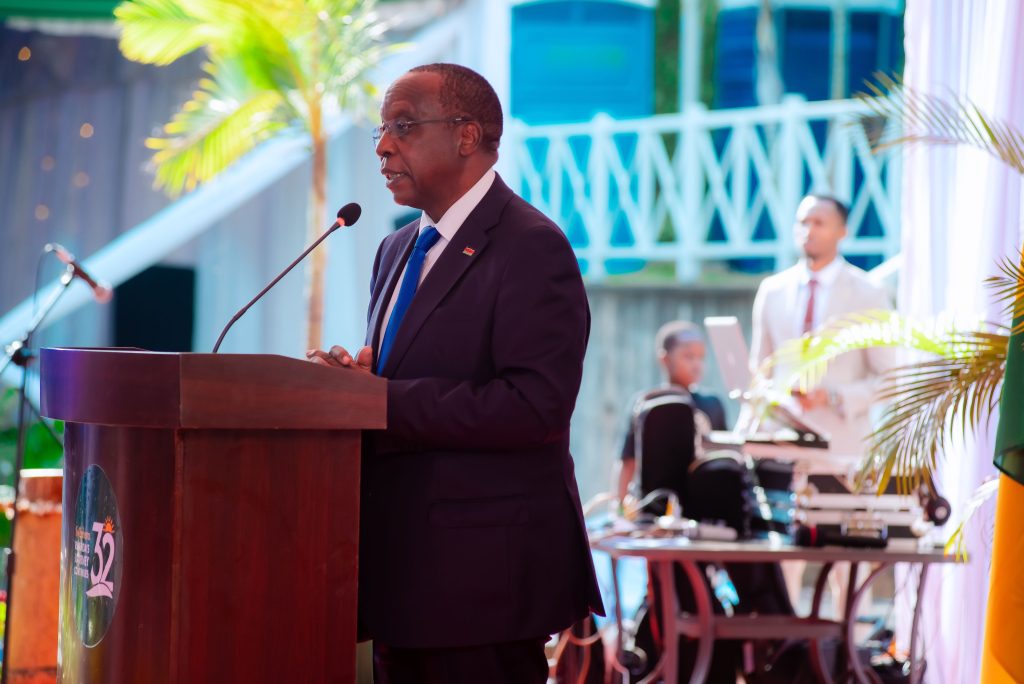
    Rwandan Ambassador to Kenya Ernest Rwamucyo has warned that genocide ideology continues to pose a serious threat in the Great Lakes region, singling out eastern Democratic Republic of Congo as a flashpoint for ethnic hatred and extremist rhetoric.

    Rwamucyo made the remarks during a reception in Nairobi marking the 32nd anniversary of Rwanda’s Liberation Day, known in Kinyarwanda as “Kwibohora.”

    “Genocide ideology is not merely a painful reminder of history. It remains a real and present danger,” Rwamucyo told guests at the event. “Across our region, particularly in eastern Democratic Republic of the Congo, extremist groups continue to propagate ethnic hatred, denial, and narratives that dehumanize Congolese Tutsi.”

    He said such ideologies “threaten innocent civilians, fuel cycles of violence, destabilize the Great Lakes Region, and undermine efforts toward lasting peace.”

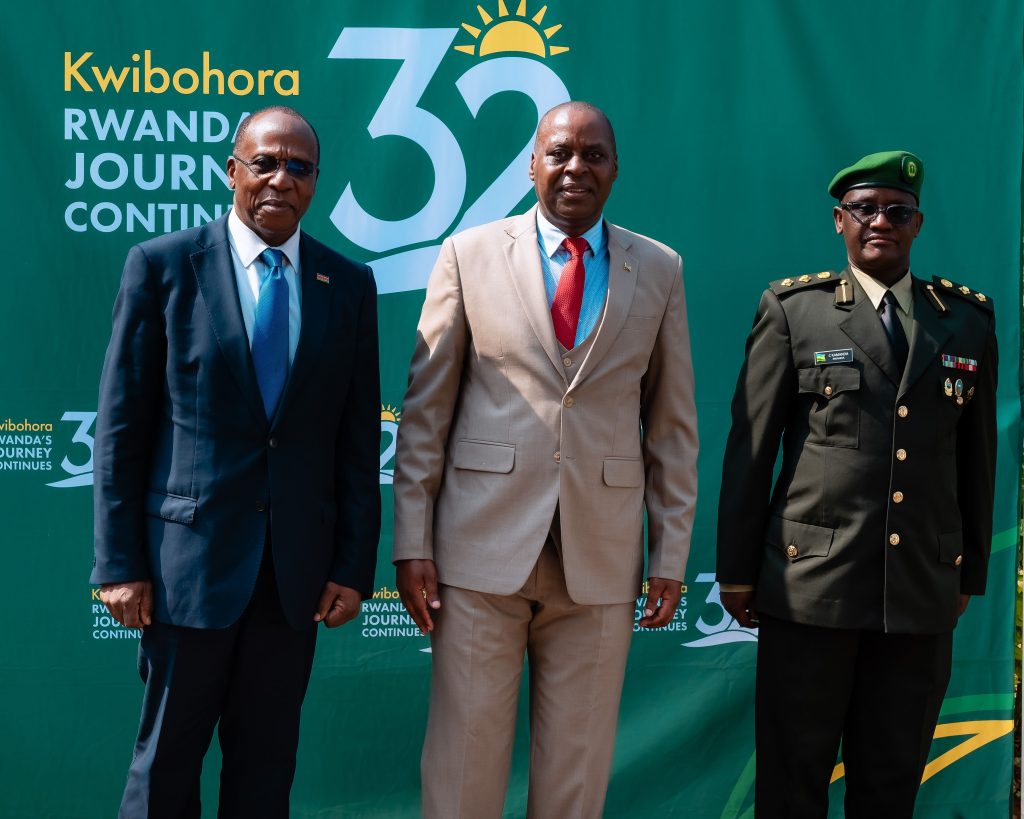
    L-R: Kenya's Foreign Service Academy’s Director General Ambassador Patrick Wamoto, Rwandan Ambassador to Kenya Ernest Rwamucyo and Rwandan Militray Attache.
    L-R: Kenya’s Foreign Service Academy’s Director General Ambassador Patrick Wamoto, Rwandan Ambassador to Kenya Ernest Rwamucyo and Rwandan Militray Attache.

    The ambassador invoked lessons from Rwanda’s own history, noting that mass atrocities do not begin with violence but with rhetoric.

    “The international community has repeatedly affirmed that genocide begins not with weapons but with words, with hatred, incitement, discrimination, and the systematic dehumanization of others,” he said.

    Rwamucyo called for coordinated regional and international efforts to confront hate speech and extremism before they escalate.
    “This is why Rwanda continues to call for collective regional and international action against all forms of hate speech, violent extremism, and genocide ideology,” he said. “Silence in the face of such threats has never protected humanity. History teaches us that prevention requires courage, honesty, and timely action.”

    R-L: Rwandan Ambassador to Kenya Ernest Rwamucyo and Kenya's Foreign Service Academy’s Director General Ambassador Patrick Wamoto clicking their glasses.
    R-L: Rwandan Ambassador to Kenya Ernest Rwamucyo and Kenya’s Foreign Service Academy’s Director General Ambassador Patrick Wamoto clinking their glasses.

    He urged nations in the region to pursue unity over division. “As mankind sharing a common destiny, we must reject narratives that divide our peoples and instead invest in dialogue, cooperation, justice, and sustainable peace,” Rwamucyo said.

    Liberation Day commemorates July 4, 1994, when forces of the Rwandan Patriotic Front/Army halted the genocide against the Tutsi, which had claimed more than 1 million lives in roughly 100 days. The date is observed annually as the moment Rwanda began its recovery from what is widely regarded as one of the darkest chapters in modern history.

    Kenya's Foreign Service Academy Director General Ambassador Patrick Wamoto
    Kenya’s Foreign Service Academy Director General Ambassador Patrick Wamoto

    Representing the Kenyan government at the event, Foreign Service Academy’s Director General Ambassador Patrick Wamoto, said the genocide’s lessons must not fade with time. “The Rwanda genocide remains one of the darkest chapters in the history of humanity, and the world must never forget its lessons,” Wamoto said.

    He also praised Rwanda’s post-genocide recovery, describing it as evidence of what determined governance can accomplish. “Rwanda stands as a testament to what visionary leadership, national unity, resilience, and an unwavering commitment to the welfare of its people can achieve,” he said.

    Wamoto used the occasion to highlight the broader relationship between Nairobi and Kigali, describing ties between the two East African nations as strong and rooted in shared regional goals.

    “Kenya greatly values its close friendship with Rwanda, a relationship anchored in mutual respect, shared aspirations,” he said.

    He added that the two countries remain aligned in their broader vision for the continent. “Kenya and Rwanda remain united in the pursuit of an Africa that is peaceful, integrated, and driven by the aspirations of its people,” Wamoto said.

  • At 105, the CPC embodies a mission of resilience, innovation and leadership

    At 105, the CPC embodies a mission of resilience, innovation and leadership

    As the Communist Party of China (CPC) marks its 105th anniversary, its journey represents a mission of resilience, innovation and strong leadership. Staying true to its founding aspiration, the CPC has led one of the most far-reaching modernization transformations in human history.

    Against the backdrop of a weak country that suffered from foreign humiliation, poverty, and failed attempts to save the nation, the CPC was founded in 1921 with a mission to seek happiness for the Chinese people and rejuvenation for the Chinese nation. The CPC united and led the Chinese people of all ethnic groups in working tirelessly to achieve national independence and the people’s liberation. In the following decades, the CPC has continued to lead China’s journey toward prosperity, strength and a better life for its people.

    Under the leadership of the CPC, China has grown into the world’s second-largest economy, made major advances in science and technology, significantly improved people’s living standards, and become an important force of stability and certainty in a turbulent world. As the world’s largest developing country, China is pushing ahead on all fronts toward basically achieving socialist modernization by 2035.

    What makes the CPC capable of leading the nation to achieve sustained development outcomes? The answer lies in its defining qualities, namely its people-centered mission, its organizational, mobilization and executive capacities, its learning and innovation ability, its openness and vitality, and its commitment to self-reform. Together, these qualities help explain the underlying logic of China’s rise.

    Unlike parties that primarily represent particular groups or interests, the CPC has always put the people first, responded to their concerns and needs, and worked to improve their well-being. These deep-rooted, inseparable flesh-and-blood ties with the masses provide the CPC with an inexhaustible source of strength. As a service-oriented political party, the CPC makes decisions and sets policies based on the fundamental interests of the people.

    Through decades of continuous efforts, especially eight years of targeted poverty alleviation, China has achieved the historic feat of eradicating absolute poverty and building a moderately prosperous society in all respects. Public well-being is also reflected in the establishment of the world’s largest education, social security and healthcare systems. Both urban and rural residents in China enjoy a life much more convenient than ever before, thanks to remarkable infrastructural improvements in transport, power and telecommunications.

    Unlike Western political systems that are often plagued by partisan gridlock and the pursuit of electoral gains, the CPC maintains a long-term perspective and carries a blueprint through to the end. The five-year plans, which have guided national development since 1953, stand as a testament to this strategic consistency — a key reason for China’s rapid development and a sharp contrast to the policy volatility often observed in Western democracies.

    The CPC’s strength lies in its institutional architecture, which features the centralized, unified leadership of the CPC Central Committee, its local committees, over 5.43 million primary-level organizations, and over 101 million members nationwide. This system gives the Party a formidable capacity to mobilize and unite the 1.4 billion Chinese people to work toward a common goal. It also ensures an effective mechanism for cultivating high-caliber cadres through local and grassroots work experience, so as to advance the cause of the CPC.

    The CPC is a dynamic organization that constantly adapts to changing times. It is not bound by rigid dogma, but has developed as a learning and innovative party that integrates the basic tenets of Marxism with China’s specific realities and fine traditional culture. Scientific political theories enable the CPC to grasp the overarching trends of human development and always stand at the forefront of the times. The CPC’s innovation-driven strategy has accelerated the country’s industrial upgrade and fostered new growth drivers for the high-quality development of the Chinese economy.

    Just as it requires a skilled blacksmith to forge good steel, the CPC’s leadership ability is inextricably tied to its continuous self-reform. The CPC is clear-minded about the dangers and risks it faces, such as detachment from the people and corruption. With a zero-tolerance approach to corruption, the CPC has pursued full and rigorous self-governance. In 2025 alone, disciplinary watchdogs launched investigations into 181 officials registered at and supervised by the CPC Central Committee. Nationwide, they handed disciplinary or administrative penalties to 983,000 individuals involved in corruption. Since the 18th National Congress of the CPC in late 2012, the Party has carried out a series of study and education campaigns to maintain its advanced nature and purity.

    The CPC is open-minded and has a global vision, making China’s development increasingly integrated with the rest of the world. The Party has championed the building of a community with a shared future for humanity. In an era marked by geopolitical tensions and global challenges, China firmly pursues true multilateralism and adheres to the path of peaceful development. Through its global initiatives on development, security, civilization and governance, the CPC has contributed significantly to global peace, stability and prosperity.

    The CPC’s 105th anniversary coincides with the 90th anniversary of the victory of the Long March of the CPC-led Red Army. The spirit demonstrated by that epic military maneuver, including a firm belief that a just cause will surely prevail, fearlessness in the face of any difficulties, a commitment to seeking truth from facts, and a steadfast reliance on the masses, will continue to empower the CPC to march forward and navigate any challenges.

    With a clear sense of mission, a strong executive capacity and a commitment to shared development, the CPC is certainly capable of leading China to achieve new victories on today’s Long March: advancing the great rejuvenation of the Chinese nation on all fronts through a Chinese path to modernization, and working with the rest of the world for a better future.