Author: Claire Wanja

  • Makueni MCAs pass KSh12.4B county budget

    Makueni MCAs pass KSh12.4B county budget

    Members of County Assembly (MCAs) at Makueni County Assembly have approved a budget of KSh12.4 billion for the 2026/2027 Financial Year.

    The Budget Committee Chair and the MCA for Kako/Waia Ward, Denis Mutinda Musyoka read the budget statement in the assembly that was presided over by the county Speaker Douglas Mbilu.

    While reading the budget, Musyoka disclosed that the monies will be raised through equitable share amounting to KSh9 billion, own source revenue-KSh1.6 billion and conditional grants and other loans -KSh1.3 billion respectively.

    The Health Department received the lion’s share of KSh4.9 billion whereby the monies will be distributed to many of the dispensaries, health centres and hospitals across the county.

    “As you are aware, we have many dispensaries, health centres, sub county hospitals and a referral County hospital that need money to operate. So far we are doing well in this sector,” he said, while reading the budget statement in the assembly on Tuesday.

    Other departments that got substantial funds include ICT, Education and Internship- KSh1.1 billion, water and Sanitation- KSh876 million and Devolution Public Participation and County Administration and Special Programmes- KSh440 million.

    “In ICT, Education and Internship the government intends to construct more classrooms for Early Childhood Development Education learners besides other needs,” he said.

    “As you are aware, we have to allocate more funds to Devolution and Special Programmes. We have been told there will be El Nino, that is why we have allocated money for emergencies and other needs,” Musyoka noted.

    At the same time, the Department of Agriculture received KSh472 million, Kalamba Fruit Processing Plant Sh132 million and another Sh50 million to purchase mangoes from farmers.

    The County Assembly of Makueni was also allocated KSh854 million, besides other departments in the county government.

  • Court grants family right to bury gospel star Racheal Wandeto

    Court grants family right to bury gospel star Racheal Wandeto

    The High Court in Kerugoya has cleared the way for the burial of Racheal Muthoni Wandeto after ruling in favor of her family in a dispute over the custody of her remains.

    On 28th May 2026, mourners were left in a state of confusion when the funeral of the late gospel artist was halted due to a court order.

    Delivering the ruling, Kerugoya High Court Resident Magistrate Harisson Mwangi said the court was faced with two competing claims: a proven parent-child relationship and an alleged customary marriage that had not been substantiated before the court.

    “The court is therefore confronted with a proven parent-child relationship on one hand, and an alleged customary marriage which remains an unproven reality. In the court’s view, the proven relationship must prevail over the unproven one,” ruled Mwangi.

    The magistrate noted that the balance of convenience favored preserving the deceased’s body and releasing it to the person who had demonstrated the strongest legal claim.

    The court consequently dismissed a preliminary objection dated May 28, 2026, and allowed an application filed on May 25, 2026.

    Among the orders issued was a temporary injunction restraining the respondent, his agents, servants, or anyone acting under his authority from accessing, collecting, removing, or burying the remains of the deceased pending the determination of the suit.

    The court further directed Montezuma Funeral Home Ltd to release the remains of Racheal Wandeto to the applicant for burial arrangements. The applicant was also authorized to proceed with burial plans pending the final determination of the case.

    Speaking after the ruling, family lawyer John Kahiga welcomed the decision, saying it had finally paved the way for the deceased’s burial.

    “The court has clearly given us the go-ahead to bury Rachel Wandeto and directed Montezuma Funeral Home to release her remains to my client so that burial arrangements can proceed,” said Kahiga.

    He noted that while the court acknowledged that Peter Jaramba was the father of the two children left behind by the deceased, that fact alone was insufficient to grant him rights over the remains.

    “The court was categorical that although Mr. Peter Jaramba was the father of the two children, that itself is not enough to prove that he should be given the body. Our evidence showed that there was no marriage and no customary marriage was conducted. Therefore, my client remains the person entitled to bury Rachel Wandeto,” he added.

    The ruling brings to an end a protracted family dispute that had delayed the burial of the deceased as rival parties sought legal determination over who had the right to inter her remains.

    Ms. Wandeto became a subject of national discussion when she publicly displayed a tattoo of President William Ruto, an act that attracted widespread attention on social media and in mainstream media.

    She died on May 18, 2026, after succumbing to severe burn injuries following a brutal petrol attack by assailants in the Mwiki area of Nairobi County.

  • Kenya commits to permanent digital access for all citizens

    Kenya commits to permanent digital access for all citizens

    The government has reiterated its commitment to bridging the digital divide through aggressive infrastructure investment and targeted policy interventions, emphasizing a strategic transition from short-term digital pilots towards permanent national systems, aimed at sustaining rural communities and youth-led innovation

    Broadcasting and Telecommunications Principal Secretary Stephen Isaboke affirmed this strategy on Tuesday during a panel session at the Global Growth and Opportunities Leadership Team mid-year retreat, hosted by the Gates Foundation in Nairobi.

    Addressing directors from the Foundation’s Global Growth & Opportunity Division, who are evaluating frameworks ahead of the organization’s 2045 end date, amid declines in Official Development Assistance,  Isaboke positioned Kenya as an infrastructure-enabling hub transitioning from aid dependency to transactional economic autonomy.

    “In Kenya digital connectivity is treated as a baseline public right, exactly like roads, water, or electricity rather than an urban or high-income commercial commodity,” he said.

    The PS added that the national government directly funds the primary physical infrastructure, handling the heavy upfront financial burden that private telecom operators avoid due to low rural returns.

    “Beyond physical connectivity, long-term sustainability relies heavily on human capital, community-driven solutions, and forward-looking governance frameworks, there is a need for sustained capacity building and AI readiness. We must be deliberate with pathways that grant the younger generation greater opportunities to lead, innovate, and shape the digital economy,” he stated.

    Digital transformation remains one of the greatest opportunities of our time, he noted, adding that through collaboration and inclusive policies, the state will ensure no one is left behind.

    The PS acknowledged existing village-level bottlenecks, noting that local cash-liquidity shortages and long transit distances frequently force rural women into steep transaction fees and travel costs, turning digital transfers into a manual chore.

    To bypass these barriers, he explained, “Kenya’s approach is based on the principle that digital public infrastructure becomes transformative, when combined with inclusion measures,” adding that the state is deploying “shared access points through Huduma Centres and county facilities,” alongside thousands of market-based Wi-Fi hotspots to bring the digital economy directly to the village center.

    The complexity of this divide was highlighted during the retreat’s legal and advocacy frontier discussions by Maria Mbeneka, a pan-African digital rights and data governance lawyer, who urged development partners to examine how regional laws are operationalized.

    “For the Gates Foundation, jurisdiction is key, as you have to check how laws are operationalized in different regions,” Mbeneka pointed out, adding: “When you think about women farmers, digital tools have been known to have excluded them and that we wanted a government that is responsive and takes up technology.”

    In essence, the government has now become so technologically savvy citing SHA, eCitizen, ArdhiSasa platforms, but the citizens have been left behind, she added.

    Mbeneka called on the government to make it easier for all populations to access these innovations, while warning that “the government is perceived to be following money (tax) when they talk about digital transactions.

    This has made citizens shy away from them, as they believe their own efforts and investments (phones, internet, etc.) are not being considered in any digital tax policy discussions,” noted the legal expert.

    To bridge these gaps under the Bottom-Up Economic Transformation Agenda (BETA), the Ministry of Information, Communications and the Digital Economy has accelerated an extensive infrastructure rollout.

    For instance, the National Fiber Backbone Infrastructure has laid 80,633 km of a targeted 100,000 km of fiber-optic cabling, with public sector fiber accounting for 30,454 km. To bypass delays, the state partnered with Kenya Power to run fiber along existing electricity grids to reach rural public facilities.

    Additionally, through the JiConnect Program, the government is targeting 25,000 free community hotspots to eliminate data costs for micro-traders, with 1,563 hotspots already operational inside open-air fresh produce markets like Githurai, Sikhendu, Kiminini, and Diani.

    Highlighting the direct impact of these interventions, Iasboke stated this allows women entrepreneurs to access e-commerce and price-discovery tools at zero cost.

    The state has also built the National Farmers Register to map millions of smallholders, ensure accurate subsidy distribution, and eliminate middle-tier leakage by dropping input e-vouchers and financial support directly into verified profiles, added the PS.

    On organic technology adoption by farmers using WhatsApp and USSD shortcodes, Isaboke noted that the paradigm has completely flipped from “happening despite the system to happening because of it.”

    At the same time, under the Kenya Agricultural Data, Information, and Digital Policy, the government is transforming state-held agricultural, mapping, and meteorological databases into secure, open APIs via national data governance initiatives, allowing private sector agritech startups to legally plug into state data rails, verify user identities against the National Farmers Register, and scale safely at a national volume.

    When challenged on how the state ensures the financial sustainability of platforms beyond donor cycles, the PS cited the eCitizen portal as the country’s premier benchmark, noting that the platform has scaled from 350 services in 2022 to over 23,000 digitized services today.

    Crucially, the system is funded entirely by an integrated transaction fee that covers operational, hosting, and security upgrades without relying on donor funds or the exchequer.

    Furthermore, Kenya is pioneering public sector asset commercialization through the proposed National Data Governance Policy, which treats public data as a strategic national asset and a factor of production.

    This framework commercializes anonymized, aggregated non-personal datasets through a state-run, council-managed data marketplace, using tiered subscription models, where regional crop production data is sold to fintechs and insurers to price micro-insurance for smallholders, while aggregated transport and corporate data help developers spot economic growth hubs and fuel domestic artificial intelligence training models.

    Recognizing that digital transformation fails without citizen buy-in, the panel focused on data governance and privacy as the bedrock of civic trust.

    Mbeneka said meaningful compliance must transcend rigid regulatory checklists and be treated as a fundamental social responsibility.

    “Data protection has a core element of trust. When you start talking about compliance, we have to talk about trust,” she said.

    She urged those charged with unpacking of trust to “ensure meaningful compliance to guarantee that it becomes a social responsibility, working based on values.

    For compliance in the agricultural space, Data Commissioner Immaculate Kassait outlined three pillars: trust built through transparency and accountability, lawful processing and consent managed through “clear information, when onboarding farmers/entrepreneurs, while addressing the issue of what the information being collected is going to be used for.

    Reaffirming this regulatory synergy, Isaboke explained that the ministry works hand-in-hand with the Office of the Data Protection Commissioner (ODPC) to take privacy directly into the code of the Maisha Namba biometric framework via a privacy-by-design model.

    “The ODPC actively audits public identity tracks, enforces access controls, minimizes data retention, and provides localized consent logs,” said PS .

    He warned that “trust is lost if personal data is harvested without consent, or if automated systems expose citizens to unregulated risks like predatory lending.

    Isaboke emphasized that “any private platform tapping into national agricultural or financial data rails must prove compliance with the Data Protection Act (2019) before receiving API clearance.

    Meanwhile, by transitioning digital platforms into core, revenue-generating government functions protected by robust legislative guardrails, Kenya is establishing a blueprint for developing nations to achieve permanent, trusted digital inclusivity.

    The high-level session brought together prominent continental and global figures in data governance, digital rights and the private sector.

    Also present was Hari Menon, the president of the Global Growth and Opportunity division at the Gates Foundation and Ory Okolloh, a partner at Verod-Kepple Africa Ventures, alongside other senior officials from the Foundation.

  • Ministry of Health: Free teen maternity care ‘damage control’

    Ministry of Health: Free teen maternity care ‘damage control’

    Head of the Family Health Department at the Ministry of Health, has said that the country’s flagship policy of free maternity care for teenage mothers, while necessary, amounts to “damage control.”

    Speaking at the just concluded 9th Pan-African Adolescent and Youth Sexual and Reproductive Health and Rights (AYSRHR) Scientific Conference in Mombasa, Dr Bashir Issak told delegates: “Any young woman who walks into a public health facility in Kenya to give birth does so free of charge. No bill, no deposit, no turning away. But this is damage control. Could we have prevented that at a lower cost?”

    The question, posed to more than 1,500 delegates from over 40 countries, set the tone for a four-day conference convened by the Reproductive Health Network Kenya (RHNK) in partnership with the Ministry of Health, the National Council for Population and Development, and for the first time, the Government of Uganda as an official partner.

    Dr Issak laid out the scale of the challenge in unusually direct terms. Nationally, 15 percent of girls aged 15 to 19 are either pregnant or already mothers. In Samburu County, the figure reaches 50 percent. In 2025, 41 percent of new HIV infections in Kenya were among adolescents and young people aged 15 to 24, while mother-to-child HIV transmission rose from 7.3 to 9.3 percent.

    “These are not gaps in statistics. They are gaps in survival,” he said.

    Dr Issak also catalogued what the government has done saying that more than 30 million Kenyans are now covered under the Social Health Authority (SHA), accessing primary healthcare free of charge. He noted Kenya has formalised 107,000 community health promoters, many of them women who serve as the first trusted healthcare contact for young people in remote communities. The country has launched a Digital Health Superhighway and the EWENE initiative (Every Woman, Every Newborn, Everywhere), tracking deliveries and maternal outcomes in real time.

    “These are not small things,” he said. “But I will not stand here and pretend they are enough. They are not.”

    At the heart of Dr Issak’s address was a challenge to the assumption that barriers to adolescent healthcare are inevitable. “Distance. Cost. Stigma. The judgemental healthcare worker. The facility with no youth-friendly service space. And the community norm that tells a young woman that seeking contraception is shameful,” he said. “These barriers are not natural. They were built. And what was built can be dismantled. But not by the Ministry of Health alone.”

    He called for action from community and religious leaders, the private sector, and young people themselves, warning that excluding youth from the policy process produces imposition, not progress. “Policy change without youth participation is not policy change. It is policy imposition. And we have had enough of that.”

    The conference’s organising framework – the “triple threat” of sexual and gender-based violence, HIV infection, and adolescent pregnancy – was reinforced across every address. Dr Issak argued the three are inseparable: “A girl who experiences gender-based violence is more vulnerable to HIV. A girl who becomes pregnant as an adolescent is more likely to drop out of school and less likely to access reproductive health services for her next pregnancy. A girl who has never received accurate, age-appropriate information about her own body is poorly equipped to protect herself from any of the three.”

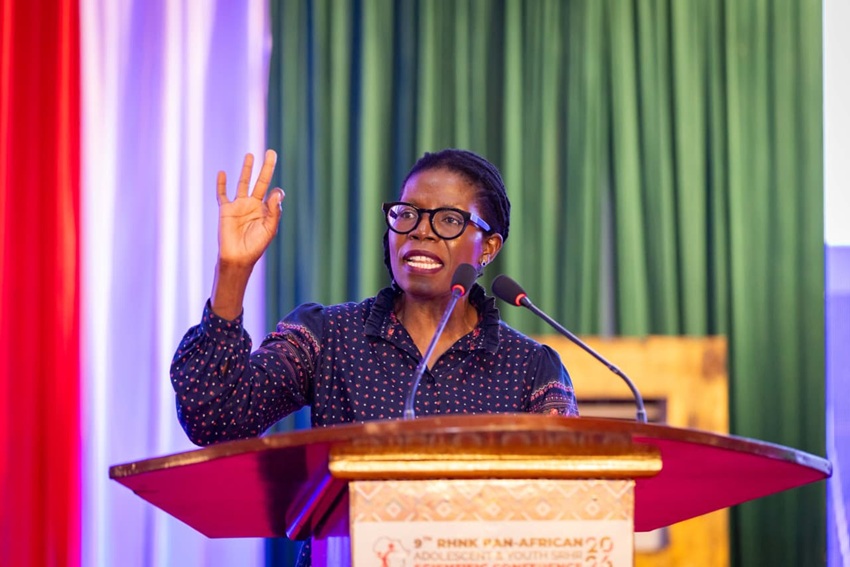
    Dr Samukeliso Dube, the FP2030 Executive Director, underlined the point with continental data, noting that teenage pregnancy rates range from 39 per thousand in Rwanda to 180 per thousand in Mozambique.

    FP 2030 Executive Director Dr Samukeliso Dube speaking at the 9th Pan-African AYSRHR Scientific Conference

    “We are running a continent on luck and hope,” she said. “We have, for many years, hidden behind ‘it’s just maternal health, maternal mortality,’ when we don’t fund reproductive health services for adolescents. Yet we know the very numbers that we see in maternal mortality are driven by these unintended pregnancies.”

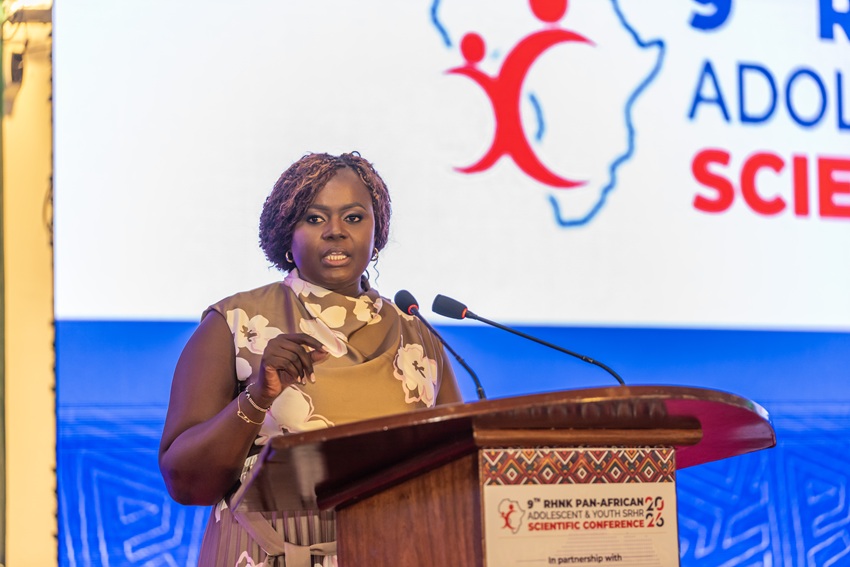
    RHNK Executive Director Nelly Munyasia announced the launch of a referral document on adolescent consent, developed with the Kenya Judiciary Academy, healthcare providers, and young people from across Africa. The framework is designed to give health workers and courts a shared reference point on when and how adolescents can access reproductive health services — a question that remains among the most contested legal and clinical barriers on the continent.

    Munyasia said the judiciary’s engagement had been transformative: “The judiciary told us, if only they knew better, they would not have made the kind of decisions they’ve made in courts.” Justices from Kenya, Zambia, Malawi, and other countries are attending the conference to engage directly with the evidence.

    Nelly Munyasia speaking at the 9th Pan-African AYSRHR Scientific Conference

    Munyasia grounded the urgency through the story of “Amina”, a composite figure representing hundreds of thousands of girls across Africa each year. “She was afraid of the clinic, because she’d be asked, ‘Where is the guardian?’ She was also scared to go to school, because the teachers were going to send her away,” she said. “Amina is not one girl. She’s hundreds of thousands of girls, across our continent, every single year.”

    Across every address, speakers insisted that young people must be treated as architects of policy, not its objects. Dr Shilumani told young delegates directly: “You are not a problem to be managed. You are not a demographic to be monitored. You are an asset, a force, a movement in motion.” She pledged that IPPF Africa would fund youth-led movements and embed young people’s participation in governance “beyond tokenism toward genuine, sustained power sharing.”

    Dr Issak echoed the commitment from a government perspective: “This government wants you in the room when decisions are made. Not consulted after the fact. Not represented by adults who speak on your behalf without asking what you think.”

    That demand was embodied by Esther, a young tech student speaking from the conference’s live studio, who described growing up in a household where reproductive health information was virtually absent. “Instead of just being told, ‘don’t have sex,’ I wish to learn the different ways how you can have safe sex instead,” she said.

  • NBA tells court it is fully capable of regulating GMOs in Kenya

    NBA tells court it is fully capable of regulating GMOs in Kenya

    The National Biosafety Authority (NBA) says that it is fully capable of regulating Genetically Modified Organisms (GMOs) in Kenya, as the hearing of a case challenging the open field cultivation, and placing on the market of genetically modified maize (Zea mays) commonly known as Bt maize (MON 89034) came to an end.

    The case, filed by activists against the NBA, Ministry of Agriculture, Kenya Plant Health Inspectorate Service, and the Council of Governors, was heard over two days at the Kisumu High Court. Parties are now expected to file written submissions by July.

    During the hearing on Thursday, NBA acting Director Biosafety Awareness, Education and Collaborations Josphat Muchiri, told the Court the Country has strong legal framework to regulated GMOs and therefore, Kenyans not worried.

    “The use of biotechnology to promote food security, nutrition and health is in fact consistent with the State’s duty to promote the dignity of its people, by ensuring access to safe food, improving public health and enhancing national resilience in the face of climate change and population growth,” Mr. Muchiri told the Court during cross examination of Mr. Matunda Montari from the Attorney General’s office.

    He insisted that adoption of Bt maize will help address the issue of food security as well as pest control which affects the plant in the country.

    “We have the required regulatory framework in place and that has been affirmed by the High Court in Nairobi that the Authority is up to the task,” said Muchiri.

    He also emphasized that the Authority has conducted public awareness across the Country on GM maize.

    Muchiri told the Court that all GMOs undergo a rigorous assessment at laboratory, green house and field trials to generate biosafety data focusing on safety, including food, feed and environment of the GMs under evaluation.

    “These assessments are conducted under strict environment until the GMOs are approved for environmental release,” said Muchiri.

    He went on : “It is noteworthy that before GMOs are released where the initial summary risks assessment are indicative that there are environmental or safety concern that requires further test, NBA allows the pre-trail tests to be conducted in the contained environment as a precautionary measure.

    He maintained that the Country has put in place robust frameworks with inbuilt structures which must be met before the various agencies can consider and determine applications for approval of the transfer, handling and use of genetically modified organisms.

    “The existing legal and institutional framework has been set up for the rigorous evaluation of GM organisms and GM foods relative to both human health and environment. The evidence before the Court shows that the National Biosafety Authority and other agencies have the capacity in the identification of foods that should be subject to risk assessment and recommend appropriate approaches to safety assessment,” Muchiri told the Court.

    He went on: “With all the institutions, we should be confident that our health and environment is in safe hands. It cannot be true that they all have conspired to expose the rest of the population to the calamities alluded in the petition.”

    Muchiri explained that GMOs constitute a form of biotechnology with broad applications, not only limited in agriculture but also in medicine, environmental management, industrial process and scientific research.

    “For instance, the production of life-saving medications like insulin, and the development of COVID-19 vaccines, rely heavily on GMOs,” said Muchiri adding that any biotechnology product coming to or made in Kenya, must first be approved by the Authority.

    He told the Court that the Biosafety Act, Cap 320 assigns the Authority a clear and wide-ranging mandate to ensure the safe development, transfer, handling and use of GMOs across a variety of sectors including health, medicine, wildlife, and industrial biotechnology.

    “The Authority’s regulatory role is therefore not limited to agricultural GMOs but extend to innovations such as research on pharmaceuticals, bioremediation technologies and forensic. This broad jurisdiction demonstrates that its functions transcendent beyond any single sector or devolved function,” Muchiri told the Court.

    He also explained that reputable bodies including World Health organization (WHO), the Food and Agriculture Organization (FAO) and European Food safety Authority (EFSA) have consistently maintained that GMOs currently approved for human consumption are safe.

    He added that in countries like South Africa, China, India, Colombia, Brazil, cultivation of GMOs has helped farmers grow more food and feed using fewer resources and reduced cost of pest and weed control.

    The Bt maize which was approved by the National Biosafety Authority in 2025 was developed using modern biotechnology methods to protect itself against specific pests such as the maize stem borers and fall armyworms, which are devastating pests in maize fields.

    National Biosafety Authority is mandated to exercise general supervision and control over the transfer, handling and use of Genetically Modified Organisms (GMOs) with a view to ensuring safety of human and animal health and provision of adequate protection of the environment.

    As a result, farmers were to expect less damage to their maize crop, leading to increased harvests and better-quality grains. This could also lower production costs and reduce risks to health and the environment by using fewer insecticides used for pest management.

  • Kenya prisons to adopt clean energy by 2028

    Kenya prisons to adopt clean energy by 2028

    The State Department for Correctional Services has set 2028 as the deadline for transitioning all correctional institutions from wood fuel to clean energy, with a multi-agency consultative process now underway to drive implementation.

    Principal Secretary Dr. Salome Beacco revealed that the department is among the country’s largest consumers of wood fuel, with each inmate consuming an average of 2.5 kilograms of wood fuel daily. She directed that the shift be implemented under a Rapid Results Initiative (RRI) framework to ensure the 2028 deadline is met.

    Speaking during the meeting, Special Envoy for Climate Change in the Executive Office of the President, Ambassador Ali Daud Mohamed, pledged technical support towards the initiative. He emphasized the importance of capacity building, noting that training inmates in clean energy technologies such as biogas would enhance rehabilitation and improve their prospects upon reintegration into society.

    Participants agreed that a mapping exercise be undertaken to identify the most suitable clean energy solution for each institution based on available resources, infrastructure and location. Options discussed included Liquefied Petroleum Gas (LPG), biogas, solar-powered systems and induction cooking technologies.

    The meeting also identified carbon financing as a potential mechanism to sustain and expand clean energy systems across correctional facilities. The implementing team was directed to revise the concept note to incorporate the guidance issued, develop a data collection tool and commence field data collection within the next two weeks.

    Further, the department has planned stakeholder engagements as it works towards broadening a coalition of partners supporting the initiative. The initiative aligns with the Kenya National Cooking Transition Strategy (2024–2028) and the Government’s National Tree Growing and Restoration Campaign, which targets the growing of 15 billion trees by 2032.

    The meeting brought together representatives from the Office of the Special Envoy for Climate Change, the State Departments for Petroleum and Arid and Semi-Arid Lands, Kenya Bureau of Standards, Kenya Power, KenInvest, the Clean Cooking Association of Kenya, Ignis Innovation Limited, and Leive Industrial Monitoring.

  • Oceana at Kenya Summit: Put Coastal People First

    Oceana at Kenya Summit: Put Coastal People First

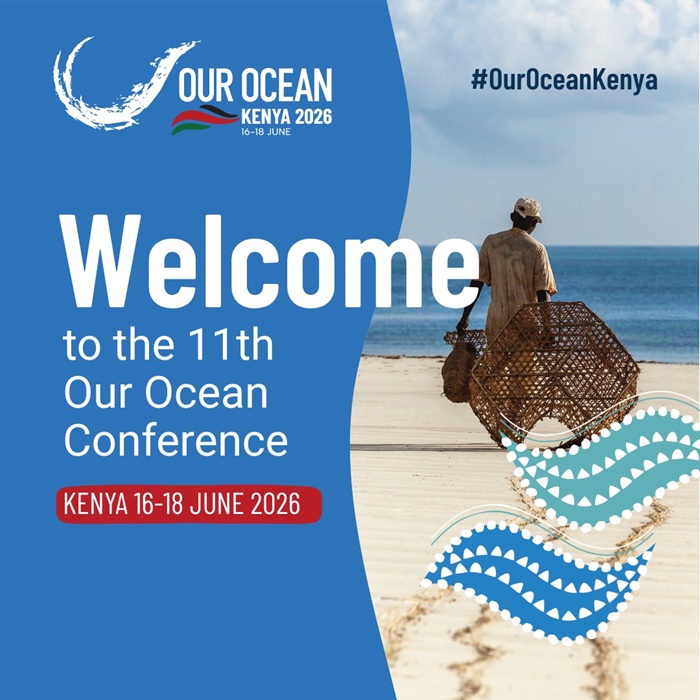
    Ahead of the 11th annual Our Ocean Conference taking place June 16-18 in Mombasa, Oceana — the world’s largest ocean conservation organization — is calling on governments to strengthen protections for critical marine habitats, increase transparency in global fisheries, and put small-scale fishers and coastal communities at the center of ocean decision making.

    This year marks the first time the Our Ocean Conference will be held on the African continent. Since its launch in 2014, the conference has generated more than 2,900 commitments worth over $169 billion in support of ocean action.

    Betsy Njagi, Principal Secretary State Department for the Blue Economy and Fisheries has noted that marine ecosystems face growing threats depsite the ocean beig essential to food security.

    “For millions across Africa, the ocean is essential to food security, livelihoods, economic opportunity, and climate resilience. Yet marine ecosystems face growing threats. As the conference convenes in Africa for the first time, it marks an important milestone for ocean governance, marine conservation, and the sustainable blue economy. It is also an opportunity to strengthen international cooperation and accelerate action to protect the ocean for future generations.” She said.

    Actor and ocean advocate Kate Walsh will join Oceana’s experts in Mombasa to meet with local fishers and community leaders to help amplify their perspectives on the importance of sustainable fisheries and healthy oceans for food security and livelihoods across Africa.

    “I’m honored to meet with local fishers here in Kenya and hear directly from the people whose lives and livelihoods depend on healthy oceans,” said Walsh. “Their voices must be included as leaders make decisions that will shape the future of our oceans.”

    Across Africa, hundreds of millions of people rely on the ocean for food and income, yet marine ecosystems are under increasing pressure from overfishing, pollution, and climate change.

    “On research trips over the years, I see the same patterns repeated from one coastline to another: marine ecosystems are facing greater pressures, fishing is becoming more dangerous, and fish are scarcer and more expensive,” said Dr. Christina Chemtai Hicks, a Kenyan British Professor at Lancaster University, Pew Marine Fellow, and Oceana Board Member.

    “Across Africa’s coastlines and around the world, fishing communities are exposed to declining fish populations, rising costs, and climate impacts. This conference is an opportunity for leaders to advance ocean policies that protect food security, livelihoods, and marine ecosystems together.” She added.

    Industrial fishing activity in African waters, including by foreign-owned fleets, continues to raise concerns about transparency, accountability, and equitable access to marine resources. Much of that catch is exported to wealthier nations, reducing what is available for local communities that depend on seafood for nutrition and livelihoods.

    Improving transparency in global fisheries, including stronger monitoring of fishing activity and vessel ownership, public access to information, and stronger enforcement of existing regulations can help curb illegal and destructive fishing, provide data to rebuild fish populations, and support advocacy by small-scale fishers and coastal communities.


    The conference also comes as Oceana expands its campaigns to Africa following the opening of its new office in Ghana earlier this year, strengthening the organization’s work to protect marine ecosystems, rebuild local fisheries, and ensure local fish support local communities.

    “Oceans are a vital source of food, jobs, and economic security for millions of people across Africa,” said Sonia Kwami, Oceana’s Vice President in Ghana. “As leaders gather in Kenya, there is a real opportunity to advance practical solutions that protect marine ecosystems, rebuild fish populations, and ensure coastal communities and small-scale fishers can continue to thrive. After all, small-scale fishers should have priority access to fish in their own waters.”

  • COTU demands PAYE relief for workers earning KSh60,000

    COTU demands PAYE relief for workers earning KSh60,000

    The Central Organization of Trade Unions (Kenya) [COTU (K)] is urging Parliament to prioritise comprehensive PAYE reforms targeting workers earning up to Ksh 60,000 per month, warning that delayed relief continues to erode household incomes.

    In its submission on the Finance Bill 2026, COTU (K) Secretary General Francis Atwoli noted with concern that anticipated PAYE reforms were excluded despite government acknowledgment that workers’ disposable income has been severely eroded by inflation, rising fuel and food costs, and multiple statutory deductions including the Affordable Housing Levy, SHA contributions, and enhanced NSSF deductions.

    ” The issue of workers’ disposable income can no longer be postponed considering the severe economic pressure currently facing Kenyan workers. Over the last several years, workers’ purchasing power has significantly declined due to rising inflation, increased fuel prices, high food and transport costs, multiple statutory deductions, and the growing overall cost of living,” he said.

    “ Salaried workers today shoulder numerous deductions, including PAYE, the Affordable Housing Levy, SHA contributions, and enhanced NSSF deductions, all of which have substantially reduced net earnings and weakened household financial stability, he added.

    ” As COTU (K) we note with concern that despite broad public acknowledgment by Government, Treasury, and economic stakeholders regarding the erosion of workers’ incomes, the anticipated PAYE reforms aimed at cushioning workers were not included in the Finance Bill, 2026. This omission continues to place disproportionate pressure on formal sector workers who remain among the most taxed segments of the Kenyan economy,” Atwoli stated.

    According to COTU (K) research, the proposed relief would release over Ksh 31 billion back into the economy as usable household income, stimulating consumption and supporting economic recovery.

    The proposed PAYE relief targeting workers earning up to Kshs. 60,000 would release over Kshs. 31 billion back into the economy as usable household income,” he said, adding that this “would significantly stimulate consumption, improve household welfare, support local businesses, and contribute to broader economic growth.”

    Atwoli said Kenyan workers cannot continue financing national development at the expense of their survival, welfare, and economic dignity.

    The union proposes revision of PAYE bands, upward adjustment of the tax-free threshold, and automatic annual inflation adjustment to prevent bracket creep, urging Parliament to adopt worker-sensitive fiscal policies.

  • First lady calls for nationwide prayers and reconciliation

    First lady calls for nationwide prayers and reconciliation

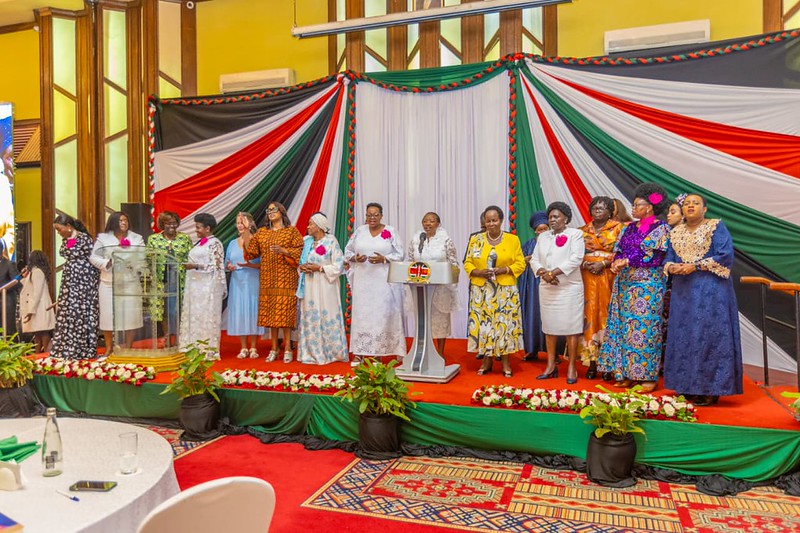
    First Lady Rachel Ruto Wednesday joined women parliamentarians for the National Prayer Breakfast Women Convocation held ahead of Thursday’s National Prayer Breakfast at the Safari Park Hotel, Nairobi.

    Leaders from the Senate and National Assembly who attended the prayer gathering called for national forgiveness, healing and reconciliation.

    Urging Kenyans to embrace prayer and unity, Mrs Ruto said leaders often face misunderstanding even when their intentions are genuine.

    “There are moments when you give your best and still find yourself criticized, excluded, or unfairly judged. And perhaps the hardest part is not what happened around you, but what started happening within you — the questions, the disappointment, the temptation to withdraw, to become guarded, to stop trusting people, and to harden your heart just enough so that no one can hurt you again,” she said.

    The First Lady commended women leaders for remaining steadfast at a time when divisions have increasingly become normalized across society and politics.

    She noted that the future of reconciliation in Kenya would not only be shaped in Parliament or boardrooms, but also through ordinary conversations led by women who choose understanding over hostility.

    “Women who can correct without humiliating. Women who can rise without pulling others down. Women who understand that leadership is not proven by how many people fear you, but by how many people become better because you led them,” she said.

    Mrs Ruto further observed that society has become increasingly polarized politically, socially and even within families, warning against a culture of quick judgment and condemnation.

    “We are living in a time where division has become easy. People are divided politically, socially and generationally. Even within families. We have become quicker to cancel than to listen, quicker to respond than to understand, and quicker to judge than to reconcile. Yet reconciliation is not merely a spiritual principle — it is leadership, and we as women understand this deeply,” she added.

    The First Lady said President William Ruto deeply values the role women play not only in leadership across different sectors, but also in praying for the nation.

    Delegations from several countries attended the prayers, including Peru, Sri Lanka, Costa Rica, the United States, Hungary, Indonesia, Brazil, the United Kingdom, Uganda and Tanzania.

    The intercessory session was led by Joyce Kikafunda alongside Women Convocation co-chairs Beatrice Elachi and Veronica Maina.

    Senator Veronica Maina revealed that there had been attempts to stop the National Prayer Breakfast through the courts, but said the event prevailed.

    “The Lord’s prayers are unstoppable. Someone attempted to go to court, but through God’s grace the court upheld the prayers as constitutional,” she said.

    Vihiga Woman Representative Beatrice Adagala said there is a misconception that all parliamentarians are morally compromised.

    “At Parliament we are born again, and we will be going to heaven. Kenya will change because we are prayerful women,” she said.

    Senator Beth Syengo called on Kenyans to pray for peace and for wisdom among the country’s leaders.

    She also urged an end to what she described as the spirit of hatred and division being spread through online platforms and public discourse, while condemning the growing culture of rejecting every government initiative, including the upcoming Finance Bill.

    Cabinet Secretary for East African Community Affairs Beatrice Askul urged young people, especially Gen Z, not to allow themselves to be manipulated by self-serving politicians into causing chaos and destruction.

    Delegations from several countries attended the prayers, including Peru, Sri Lanka, Costa Rica, the United States, Hungary, Indonesia, Brazil, the United Kingdom, Uganda and Tanzania.

  • Kenya, Angola sign Defence Cooperation Agreement in Nairobi

    Kenya, Angola sign Defence Cooperation Agreement in Nairobi

    Kenya and Angola have signed a Defence Cooperation Agreement (DCA) at the Defence Headquarters in Nairobi.

    The agreement was signed by Kenya’s Cabinet Secretary Ministry of Defence  Soipan Tuya and Angola’s Minister of National Defence, Former Combatants and Homeland Veterans Gen (Rtd) Lúcio Gonçalves Amaral.

    According to the CS, the agreement marks a significant milestone in the deepening of bilateral ties and reflects a shared commitment to enhancing regional peace, security, stability, and broader defence cooperation in the face of evolving global and regional security dynamics.

    “The DCA establishes a framework for practical collaboration in areas including military training, defence diplomacy, peace support operations, capacity building, and strategic engagement, among other mutually agreed areas of cooperation.” she said. 

    Present during the signing ceremony was the Ambassador of Angola to Kenya, Mario Azevedo Constantino, the Assistant Chief of the Kenya Defence Forces in charge of Operations, Doctrine and Training (ACDF OPD&T), Major General Fredrick Leuria, together with other senior military and government officials from both Kenya and Angola.