Author: Christine Muchira

  • DRC Ebola cases surge to 515, death toll hits 91

    DRC Ebola cases surge to 515, death toll hits 91

    The number of confirmed Ebola cases in the Democratic Republic of Congo has risen to 515 after 27 new infections were recorded in the past 24 hours.


    In a statement on X, health officials noted that 91 deaths have been recorded as at June 6th, with 283 patients hospitalized or in isolation. A further 12 patients have recovered from the disease.


    The case fatality rate stands at 17.7pc


    The outbreak has affected 25 health zones across three provinces, that include; Ituri, Nord-Kivu and Sud-Kivu, with Ituri remaining as the epicenter of the outbreak.


    “Ituri remains the main outbreak hotspot, while the hotspots in Nord-Kivu and Sud-Kivu remain under close surveillance,” the statement read.


    Health officials stated that care, prevention, and community awareness activities are ongoing in the affected areas with response teams strengthening their interventions by prioritising a risk analysis-based approach.


    Additionally, prevention actions in health facilities and operational support continue to be intensified.


    Officials have advised anyone experiencing symptoms or suspecting an Ebola infection to call the toll-free emergency number 151 for assistance and guidance.


    Common signs and symptoms of Ebola infection


    Some of the common symptoms include sudden fever, weakness, headache, muscle pain and sore throat.


    As the disease progresses, patients may develop vomiting, diarrhea, rash, stomach pain and, in some cases, bleeding. Symptoms can appear between 2 and 21 days after exposure to the virus.

  • 34 counties sign education funding deals as MPs question legal basis of bursaries

    34 counties sign education funding deals as MPs question legal basis of bursaries

    The future of county-funded bursaries and scholarships has come under fresh scrutiny after Members of Parliament questioned the legal and constitutional basis of education financing by county governments.

    This comes even as the Intergovernmental Relations Technical Committee revealed that 34 counties have already signed agreements with the Ministry of Education to continue supporting needy students through bursary and scholarship programmes.

    Appearing before the National Assembly Committee on Regional Development, chaired by Sigor MP Peter Lokachapong, IGRTC officials led by Chairperson CPA Kithinji Kiragu and Director of Legal Services Sophy Amutavy briefed lawmakers on the status of implementation of the agreements.

    The agreements were introduced following a January 2025 directive by the Office of the Controller of Budget requiring county governments to formalize education support programmes through structured intergovernmental frameworks before funds could be released.

    According to IGRTC, agreements have been prepared for 36 counties, with 34 already signed and operational. The Committee was informed that the Controller of Budget has received funding requisitions from 31 counties and approved disbursements for 30 counties.

    IGRTC further noted that the 12th Intergovernmental Summit directed the agency to conclude all outstanding agreements within two weeks.

    The Committee heard that counties including Nairobi, Mombasa, Nakuru, Kisumu, Mandera, Kwale and Kilifi are among those that have already signed the agreements, allowing them to proceed with bursary and scholarship programmes for needy learners.

    IGRTC also clarified that concerns arising from earlier references to the “limited transfer” of functions in some agreements had since been addressed.

    The agency emphasized that the current arrangements are anchored on Article 189 of the Constitution, which promotes cooperation between the national and county governments, rather than Article 187, which deals with the transfer of functions.

    Members of Parliament raised concerns over the legal and constitutional foundation of the agreements, questioning whether counties were being permitted to spend public resources on functions not expressly assigned to them under the Constitution.

    Committee Chairperson Peter Lokachapong challenged IGRTC to clearly define the nature of education support, arguing that bursaries and scholarships have traditionally been treated as social protection interventions rather than devolved functions.

    “If education support is indeed a function, then resources must follow that function. Counties were allocated funds for devolved functions, yet support for secondary school and university education is not among them. Are we therefore legitimising expenditure on functions that are not constitutionally assigned to county governments?” he posed.

    The Chairperson further questioned whether the absence of a specific legal framework governing the agreements could expose them to constitutional challenges, noting that even IGRTC’s legal advisers had acknowledged the lack of an explicit enabling law.

    Kabuchai MP Majimbo Kalasinga called on IGRTC to provide a comprehensive list of all participating counties and questioned the continued reliance on Article 189 as the principal legal basis for the arrangements.

    He also raised concerns about national government development projects undertaken within county jurisdictions, including market construction initiatives, and questioned whether similar intergovernmental agreements should be mandatory in such cases.

    In response, IGRTC Chairperson CPA Kithinji Kiragu acknowledged the existence of policy and legal gaps, particularly the absence of a comprehensive framework for operationalising Article 189 of the Constitution.

    He informed the Committee that a Legal Sector Working Group comprising representatives from Parliament, the Office of the Attorney General, the National Treasury, the Office of the Controller of Budget and the Kenya Law Reform Commission had been established to develop a more structured framework for intergovernmental cooperation.

    CPA Kithinji maintained that while there is no specific legislation dedicated to Article 189 agreements, both the Constitution and the Intergovernmental Relations Act provide sufficient legal grounding for collaboration between the two levels of government.

    The discussions highlighted the growing national debate over the role of county governments in education financing, even as thousands of learners across the country continue to depend on bursaries and scholarships to access and remain in school.

  • 27 evacuated to hospital after major Salama road accident

    27 evacuated to hospital after major Salama road accident

    27 critically injured casualties were evacuated to Sultan Hamud Sub-County Hospital following a major road traffic accident along Nairobi-Mombasa Highway.

    The accident that occured Sunday evening at Salama involved a truck, a bus, two private vehicles and a motorcycle.

    The Kenya Red Cross working alongside county emergency services, the National Police Service and other partners supported the rescue and evaluation efforts at the scene.


    More to follow……

  • Man arrested with pistol at Migori Football Match

    Man arrested with pistol at Migori Football Match

    Detectives have arrested a man found in illegal possession of a firearm during a football showdown between Migori Youth FC and Equity Bank FC at Sony Green Stadium in Awendo, in Migori County.

    The suspect identified as Godfrey Otieno, aka “Daddy,” allegedly attempted to force his way into the VIP section while the match was underway.

    According to a statement, security officers intercepted him, and during the confrontation, he reportedly drew a CZ pistol.

    Officers swiftly disarmed and arrested him, recovering a CZ pistol loaded with 10 rounds of ammunition. Investigations revealed he had been posing as a member of the Kenya Defence Forces.

    Detectives revealed that the firearm belonged to one Peter Jobando, a civilian firearm holder who also showed up at the scene.

    Jobando who claimed he had handed the weapon to Dady, was arrest for allowing an unauthorised person to possess a firearm.

    Both suspects remain in police custody, pending arraignment, while the firearm has been secured as an exhibit in the ongoing investigation.


  • Waiguru urges Ol Kalou voters to back UDA candidate

    Waiguru urges Ol Kalou voters to back UDA candidate

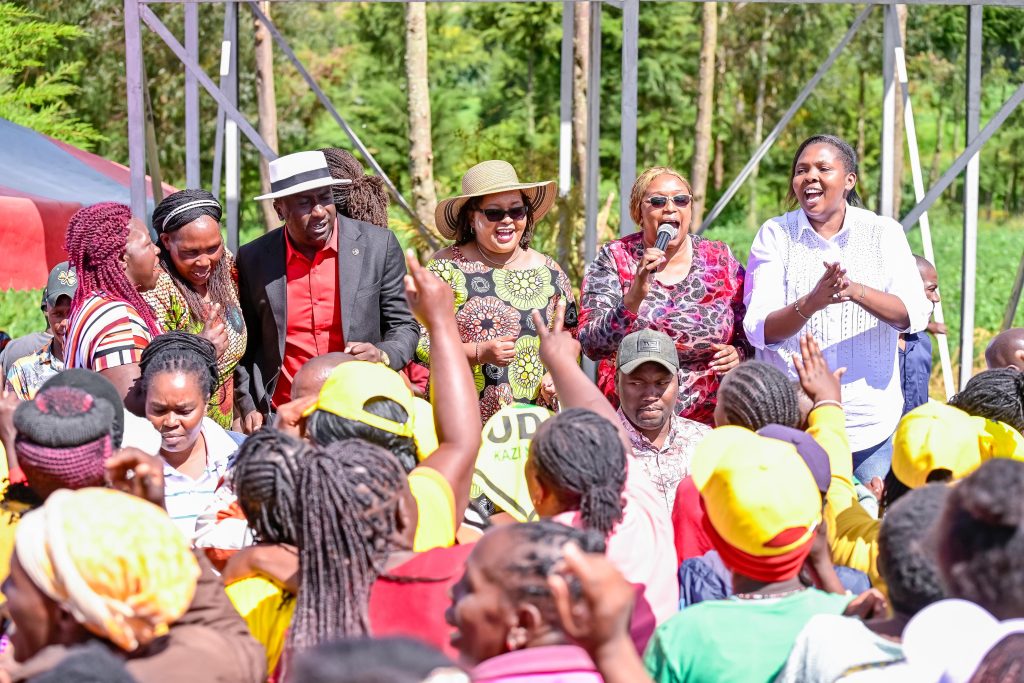
    Kirinyaga Governor Anne Waiguru has asked voters in Ol Kalou to elect United Democratic Alliance (UDA) candidate Sammy Muchina Nyaga in the coming by-election to continue with development legacy of late Member of Parliament David Kiaraho. 

    Speaking during campaigns for Muchina, Waiguru said candidate had worked with the late Kiaraho and therefore was privy to the constituency’s development plan and therefore was best placed to work with national government to complete on-going projects.

    She said Ol Kalou stands to benefit more by electing someone who can work closely with the government.

    “We are not in government because of love but because of our people’s interest. Our interest is good roads, water supply, electricity, hospitals for our people. Ol Kalou needs someone like Muchina who knows all projects and who can work with government,” she said.

    Waiguru who was accompanied by former Cabinet Secretary Moses Kuria, MPs; Jane Kagiri (Laikipia), Michael Muchira (Ol Jororok), James Githua (Kabete) and Kwenya Thuku (Kinangop) spoke at two separate rallies at Bosnia and Rutara villages.

    She told voters to put their development interest first and reject empty talk from the opposition.

    “Muchina is very popular with the people and in him we have a leader who knows what is best for the people of Ol Kalou,” she added.

    The Governor further asked residents to reject and attempt by some leaders to mix the by-election campaigns with the 2027 polls as this would disadvantage them.

    “I will be returning here to talk to you about 2027 but for now we have the July 16th by-election and I want to ask you to elect Muchina because he the best suited candidate to work for you in the next one year,” Waiguru reiterated.

    On his part, Kuria said government was committed to completing all development projects initiated by the late Kiaraho and Muchina would be the best to push them through because he knew each of the project.

    MPs; Kagiri, Kwenya, Muchira and Githua said despite efforts by former MP, Ol Kalou was still differing from under development and therefore requires an MP who can work with government.

    Muchina said for the last 13 years, he had worked with Kiaraho and therefore was not new to problems facing the people.

    He said the people of Ol Kalou deserves the best and he had offered himself for election through UDA because he had learnt the importance of being in Government from the former MP who was elected on Jubilee ticket but supported the government side throughout.

  • World Environment Day 2026: We must invest in young people to save our planet  

    World Environment Day 2026: We must invest in young people to save our planet  

    The establishment of World Environment Day in 1972 by the United Nations General Assembly and its first celebration in 1973 under the slogan Only One Earth set an annual reminder that we do not have a spare Earth to migrate to when temperatures become unbearable.

    Future generations would judge us harshly if we give up on halting global warming.

    Though heavy emitters of greenhouse gases bear the greatest responsibility for global warming, climate action calls for the concerted effort of every human being to halt and reverse rising temperatures.

    The effects of climate change have caused catastrophic damage across the globe.

    It really does not matter whether you live in the Global South or the Global North; the effects of climate change are universal.

    As we celebrate today’s World Environment Day, Africa Harvest contributes immensely to mobilizing grassroots communities in the development of agroforestry systems that seek to integrate trees, crops, and livestock for food production, soil health, and carbon sequestration.

    Over the last 22 years, we have progressively advocated for sustainable food production and care for the environment.

    The youth-led climate action would change the narrative of climate change to actionable and deliverable targets by 2050.

    Governments need to review their national policies on forest restoration and management for the youth to spearhead operations.

    Incentivizing tree growing would hasten the achievement of national and international targets.

    Structured training on youth involvement in the domestication and commercialization of high-value trees would not only achieve economic stability but would also accelerate the attainment of the Paris Agreement toward Net Zero by 2050.

    Payment for ecosystem services is a strategy that would attract young people as well as older people towards caring for our environment.

    The majority of the population is made up of young people who have the energy and brains required to move the climate agenda to the next level.

    Modern technologies to harness and monitor best practices for managing the environment could only be handled by the youth.

    The world should gear up to bring these young brains into high-level environmental management, from waste management, which is a hazard in most counties, to forest development.

    Waste management ought not to be perceived as an area that should be managed by undervalued people or lunatics.

    Policies that guide better working conditions and remuneration would attract young people to venture into it. Conversion of waste into biofuel through modern technologies would create more jobs while removing hazardous gases and waste from the environment.

    In conclusion, youth are the panacea to the global challenges of climate change. Their energy, ambitions, and brains could unlock great potential in the attainment of most climate targets.


    Written by Eliud Mutahi, a Forest Expert & Project Manager, Africa Harvest

    Disclaimer: Views expressed in this article do not represent the position of the Kenya Broadcasting Corporation.

  • PS Oluga seeks stronger Novartis partnership for NCDs, cancer care

    PS Oluga seeks stronger Novartis partnership for NCDs, cancer care

    The Ministry of Health has called for enhanced collaboration with Novartis to accelerate efforts aimed at addressing non-communicable diseases, cancer, sickle cell disease, and palliative care in Kenya.

    Speaking during a consultative meeting with a Novartis delegation at Afya House, Principal Secretary for Medical Services Dr. Ouma Oluga commended the company’s ongoing support to the health sector through initiatives such as the Afya Dhabiti Project for Sickle Cell Disease and the Cancer Path to Care Programme, which continue to improve access to care and support Kenya’s Universal Health Coverage agenda.

    Dr. Oluga emphasised that all partnerships must be aligned with national health priorities and contribute to strengthening health systems through sustainable, high-impact interventions.

    He noted that the Government’s health reforms are anchored on four key pillars: health financing, healthcare workforce development, commodity security, and digital transformation.

    The PS highlighted the need for affordable medicines, stronger health financing mechanisms, enhanced workforce training, reliable access to essential health products, and robust digital health systems to improve service delivery and health outcomes.

    He also underscored the importance of research and innovation in developing locally relevant healthcare solutions and supporting scientific advancement.

    The Principal Secretary further revealed that the Ministry is developing a consolidated partner engagement framework to enhance coordination, improve accountability, and ensure all collaborations are aligned with national priorities.

    Dr. Oluga reaffirmed the Government’s commitment to working with the private sector, development partners, and other stakeholders to strengthen healthcare delivery and expand access to quality, affordable healthcare services for all Kenyans.

    The meeting was attended by Dr. Johansen Oduor, representing the Director of Curative and Nursing Services, Dr. Andrew Toro, and Dr. Joan Paula Bor while the Novartis delegation was led by Michael Oduor, Country Head for Kenya and Rwanda.

  • Kenya, South Africa sign six deals as Ruto calls for united Africa

    Kenya, South Africa sign six deals as Ruto calls for united Africa

    President William Ruto has pledged to deepen economic, diplomatic, and strategic ties with South Africa, saying the two nations are key players in elevating Africa’s voice on the global stage.

    The President said stronger relations between the two countries will position them as key drivers of Africa’s transformation and influence in the emerging global order.

    Speaking in Pretoria at a joint press conference with President Cyril Ramaphosa of South Africa on his last day of a two-day State Visit on Thursday, President Ruto commended the longstanding relationship between Kenya and South Africa and called for greater African unity amid shifting global dynamics.

    Accompanying the President are First Lady Rachel Ruto, Cabinet Secretaries Hassan Joho (Mining and Blue Economy), Lee Kinyanjui (Trade), Hannah Cheptumo (Gender), Foreign Affairs Principal Secretary Korir Sing’oei, and other senior government officials.

    “Today, Kenya and South Africa stand together in advocating a re-imagined global order, one built not without Africa, but with Africa fully present, fully engaged, and central to it,” he said.

    He commended South Africa’s historic struggle against Apartheid and its role in championing African interests globally, particularly during its G20 Presidency.

    President Ruto said the continent must move beyond being a spectator in international affairs and instead become an architect of global solutions.

    The two Heads of State held bilateral talks focused on strengthening cooperation in trade, investment, education, health, aviation, maritime affairs, and cultural exchange.
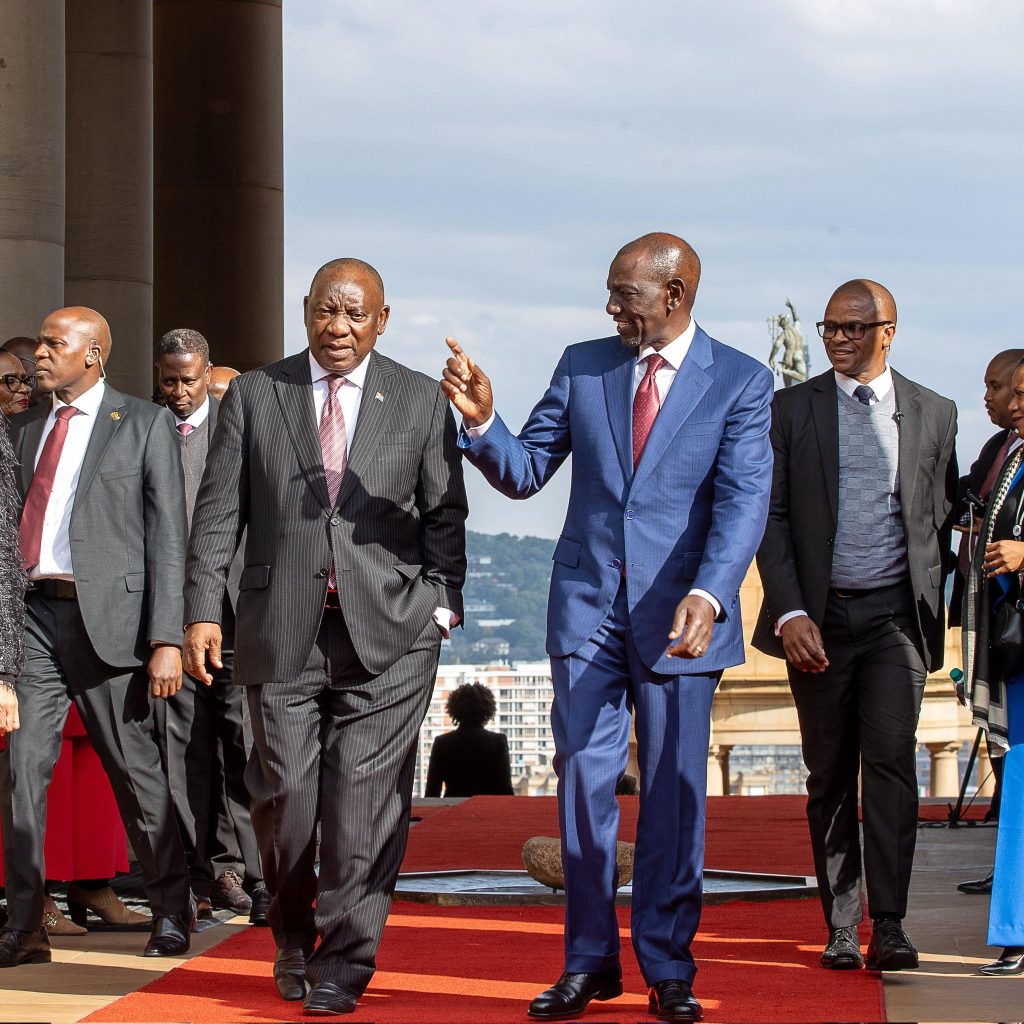
    Their discussions culminated in the signing of six agreements to enhance collaboration in trade facilitation, shipping and maritime cooperation, gender equality, technical and vocational training, arts and heritage, and sports development.

    A major focus of the visit was boosting trade between the two largest economies in Eastern and Southern Africa.

    President Ruto noted that bilateral trade between Kenya and South Africa rose from $590 million in 2024 to $650 million in 2025, reflecting growing commercial ties.

    However, he acknowledged that significant barriers remain.

    “We have directed our Trade ministers to dismantle tariff and non-tariff barriers that continue to hinder business and investment,” he said.

    The leaders also committed to leveraging the African Continental Free Trade Area and regional trade frameworks to unlock new opportunities for businesses, investors, and manufacturers across the continent.

    He welcomed plans to establish a Kenya-South Africa Business Council, describing it as a critical platform for translating political goodwill into tangible economic opportunities.

    He also said growing investment flows between the two countries demonstrate increasing private sector confidence, with companies operating in banking, telecommunications, fintech, logistics, education, aviation and retail.

    On health, the President said Kenya has not recorded a single case of Ebola, noting that the country has taken necessary precautions.

    “We have set up 23 testing and quarantine centres to ensure we are well prepared to deal with any outbreak,” he explained.

    He added that one isolation facility established on the request of the United States has been politicised unnecessarily, noting that it is part of broader preparedness against Ebola.

    “The questions we are being asked right now are far simpler than the ones we will face if the pandemic enters our country and we are not prepared,” President Ruto said, noting that the US has supported Kenya’s health system for 30 years.

    President Ruto’s visit to South Africa also highlighted the benefits of people-to-people connections.

    He commended the visa-free travel arrangement introduced in 2023, pointing out that the number of Kenyans visiting South Africa has increased by 18.7 per cent.

    According to South African authorities, 58,376 Kenyans visited the country in 2025, the highest number ever recorded in a single year.

    “This is proof that when managed effectively, the movement of people across borders creates shared prosperity and strengthens bonds between nations,” President Ruto said.

    On peace and security, Kenya and South Africa reaffirmed their commitment to working together through the African Union and the United Nations to promote stability across the continent.

    The two leaders emphasised that Africa’s future prosperity depends on stronger cooperation and a collective voice in addressing global challenges.

    President Ruto said the true measure of diplomacy lies not in communiqués or ceremonies, but in tangible benefits for citizens.

    He expressed confidence that Kenya and South Africa can accelerate economic growth, create opportunities for young people, and help Africa realise its full potential on the world stage.

    The State Visit is expected to further cement one of Africa’s most significant bilateral partnerships as both countries seek to champion continental integration, expand trade, and strengthen Africa’s voice in global affairs.

    On his part, President Ramaphosa said Kenya and South Africa are working in solidarity to push for more responsive multilateral institutions.

    He described Kenya as one of South Africa’s most important partners, noting that the two countries enjoy relations spanning three decades.

    “The six bilateral agreements we have signed provide the legal framework to deepen cooperation between our two countries,” he said.

    He added: “We have reflected on the bilateral relationship and we are satisfied with where we stand.”

    President Ramaphosa noted the rising number of Kenyan businesses in South Africa and pointed out that AfCFTA acts as a catalyst for inclusive growth, job creation, and manufacturing.

    He echoed President Ruto’s call for stronger African Union reforms to better address the continent’s challenges.

    President Ruto also said Africa must be more assertive in pushing for clarity, solidarity, and unity.

    In his discussions with President Ramaphosa, President Ruto provided an opportunity to review the state of cooperation between Kenya and South Africa and explore ways to strengthen it.

    “Africa must be at the centre of pushing for change in the global order,” he said.

  • Waiguru constructs 11 modern social halls, restoring dignity to community gatherings

    Waiguru constructs 11 modern social halls, restoring dignity to community gatherings

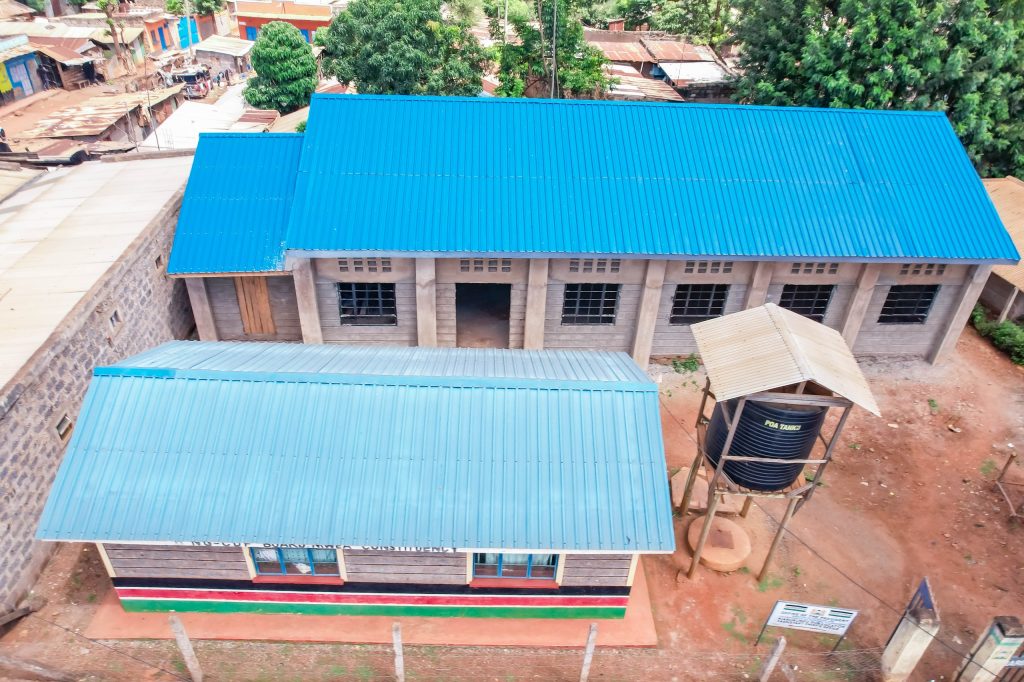
    County Government of Kirinyaga has constructed 11 modern social halls where local communities are gathering to discuss civic issues, trade knowledge and celebrate cultural traditions.

    The initiative by Governor Anne Waiguru is meant to provide residents with decent spaces for social gatherings like funerals, weddings, public meetings among others that were previously held by the roadside and in overcrowded homes.

    Waiguru says the community centers remains some of the most under-recognized yet powerful forms of social infrastructure that have over the years been critical in empowerment and bringing people together.

    She said investment in the facilities which are spread across the county was also helping strengthen community engagements like public participation.

    “Beyond sports, we have strengthened social infrastructure through the construction of social halls and boda boda sheds that support community gatherings, public participation and provide conducive environments for residents,” said Waiguru.

    The Governor noted that the halls are part of a broader county programme aimed at improving social and youth development infrastructure while creating organized spaces for community functions, particularly in densely populated areas in Mwea where land is limited.

    “Through public participation forums, resident have asked us to construct community centers for them. These centers are providing accessible spaces for community empowerment, civic engagements. learning and other cultural activities,” Waiguru added.

    County Executive Committee Member for Sports, Culture and Social Services Dennis Musyimi said the completed social halls had already transformed the social lives of residents by providing organized and dignified venues for gatherings.

    Speaking during an inspection tour of development projects, Musyimi said five social halls in Mathangauta, Kiandegwa, Kiriko, Kiorugari and Ndindiruku had already been completed and operationalized, while six others in Githogondo, Matandara, Kangu, Kimunye, Mwietheri and Kirimara were nearing completion.

    The facilities are also being used to offer mental health support in our communities, digital literacy trainings, crisis response and cross-cultural dialogue.

    “These social halls have restored dignity to our people because they now have proper places to hold weddings, funerals, self-help group meetings and other public forums,” said Musyimi.

    He added that in addition to the social halls the facilities are fitted with modern ablution blocks that are helping to serve the community.

    Musyimi said the remaining projects are expected to be completed in the coming months.

    At Githogondo social hall, residents narrated how the facility had transformed community life and eased the burden of organizing meetings and ceremonies.

    Josephine Wanjiku Kariuki, an elder and caretaker at the hall, said residents had for years struggled to find suitable places for gatherings because of limited land space within the trading center.

    “For many years we had nowhere to meet. People stood along roadsides during funerals and meetings, and sometimes we were rained on. This hall has completely changed things for us,” she said.

    Florence Murage, a trader at the center, said the social hall had become a reliable venue for women group meetings, community forums and funeral meetings, easing the burden residents previously faced while organizing gatherings.

    “Our plots are very small and it has always been difficult to host people for meetings. We thank our Governor for providing this space for the community,” said Murage.

    Susan Wangari said the facility has created a secure and accessible space for youth and women to conduct their social development activities and trainings on economic empowerment.

    “Most groups meet here, even those that are far. This project has helped us save money that we would have used on hiring of halls for meetings, we are using these savings to undertake other income generating activities,” she said.


  • KNPHI intensifies Ebola preparedness through Integrated Rapid Response Team training 

    KNPHI intensifies Ebola preparedness through Integrated Rapid Response Team training 

    The Kenya National Public Health Institute (KNPHI) has heightened its emergency preparedness and response efforts through a week-long Integrated Rapid Response Team (RRT) training programme in Trans Nzoia County.

    The training was aimed at strengthening county-level capacity to prevent, detect and respond to Ebola Virus Disease (EVD) outbreaks.

    The training also concurrently underway in Turkana County courtesy of the support of the U.S. Department of State-funded Strengthening Infectious Disease Detection Systems (STRIDES) forms part of a broader national preparedness initiative targeting high-risk counties across the country to enhance readiness against potential Ebola threats.

    The programme brings together a multidisciplinary team of epidemiologists, clinicians, laboratory personnel, logisticians, risk communication specialists and psychosocial support experts.

    It seeks to build and sustain a pool of highly skilled Rapid Response Team members capable of effectively detecting, investigating and responding to EVD alerts and outbreaks.

    Key objectives of the training include updating participants on the ongoing Ebola outbreak situation in the region, enhancing knowledge and skills on Ebola preparedness and response, strengthening early detection and surveillance systems, improving screening and timely reporting of suspected cases, and building capacity for active case finding, contact tracing and safe case management.

    The initiative also focuses on strengthening Infection Prevention and Control (IPC) measures, coordination mechanisms and community engagement strategies to prevent the importation and local transmission of Ebola cases.

    Part of the training featured sessions on the epidemiology and history of Ebola Virus Disease, modes of transmission, clinical presentation, treatment and prevention measures.

    Participants were also taken through surveillance at Points of Entry (PoE), the composition and functions of Rapid Response Teams, pre-deployment preparedness requirements, outbreak investigation and response, active case finding, and contact tracing.

    To ensure frontline healthcare workers are fully prepared for emergency deployment, the training incorporates intensive practical simulation exercises.

    These include step-by-step demonstrations on the safe donning and doffing of Personal Protective Equipment (PPE), simulated patient triage, blood sample collection, waste management, safe and dignified burial procedures, isolation unit operations, and the transportation of suspected Ebola cases.

    Speaking during the training, Trans Nzoia County CEC for Health and Sanitation, Christopher Kerio Lorot affirmed unwavering commitment by county leadership led by Governor George Natembeya to enhance local workforce capacity involving targeted investments in localized training, rapid response team deployment, and the establishment of sustainable resource networks.

    The County Director of Health on his part, Dr. Babu Kisiangani, commended KNPHI’s leadership under Acting Director General Dr. Kamene Kimenye for spearheading a proactive preparedness campaign that aligns with global best practices in epidemic control.

    He noted that the approach reflects a strategic shift championed by the World Health Organization (WHO), Africa CDC and other international partners, placing local communities at the centre of disease prevention and response efforts.

    The strategy emphasizes localized contact tracing, decentralized treatment services, safe burial practices and behaviour-focused community engagement to curb disease transmission.

    Trans Nzoia County has been classified by the Ministry of Health as a very high-risk county for Ebola Virus Disease due to its proximity to Uganda and the high volume of cross-border movement.

    Although Kenya remains free of Ebola, authorities have stepped up surveillance and preparedness measures nationwide to guard against possible importation of the disease.

    The current preparedness efforts come amid ongoing regional concerns following outbreaks of Ebola disease caused by the Bundibugyo virus strain in Uganda and the Democratic Republic of the Congo.

    The World Health Organization, after consultations with affected States Parties, determined that the outbreak constitutes a Public Health Emergency of International Concern (PHEIC), underscoring the need for enhanced preparedness and vigilance across the region.

    KNPHI has reaffirmed its commitment to supporting counties in strengthening public health emergency preparedness and ensuring rapid, coordinated responses to emerging disease threats in line with its mandate to consolidate and coordinate key activities in public health, including prevention, early detection of public health emergencies, and events of Public Health concern.