Author: Christine Muchira

  • President Ruto launches revised MSME Policy 2026 during World MSME Day celebrations

    President Ruto launches revised MSME Policy 2026 during World MSME Day celebrations

    President William Ruto Saturday launched the Revised Micro, Small and Medium Enterprises (MSME) Policy 2026 during the World MSME Day 2026 celebrations held at the Kenyatta International Convention Centre (KICC), marking a significant milestone in strengthening Kenya’s MSME ecosystem.

    The revised policy provides a comprehensive framework for creating an integrated and enabling business environment that will support a productive, competitive, resilient and sustainable MSME sector. It is designed to accelerate enterprise growth, create jobs, generate wealth and drive inclusive economic transformation across the country.

    Speaking during the launch, President Ruto called on the private sector to partner with the Government in developing innovative and inclusive financing solutions to bridge the estimated Ksh 3 trillion MSME financing gap, noting that improved access to affordable finance is critical to unlocking the full potential of Kenya’s entrepreneurs.

    Cabinet Secretary for Cooperatives and MSMEs Development, Wycliffe Oparanya, reaffirmed the Ministry’s commitment to delivering the Government’s Pesa Mfukoni agenda through policies and programmes that empower entrepreneurs, strengthen enterprises, create jobs and expand access to local, regional and global markets.

    Principal Secretary for the State Department for MSMEs Development, Susan Auma Mang’eni, CBS, reaffirmed the State Department’s commitment to working collaboratively across Government and with the private sector and development partners to implement progressive policies and programmes that enable MSMEs to start, grow and scale their businesses.

    She added that the revised policy will strengthen Kenya’s entrepreneurial ecosystem and enhance the sector’s contribution to economic growth, employment creation and shared prosperity.

  • Kirinyaga nears Ksh.1B Own Source Revenue milestone after 44pc growth

    Kirinyaga nears Ksh.1B Own Source Revenue milestone after 44pc growth

    Kirinyaga County is on course to join the counties that annually collect over a billion shillings in Own Source Revenue (OSR) after posting 44 percent increase.

    Latest County Governments Budget Implementation Review Report by the Office of the Controller of Budget (COB) ranks Kirinyaga among the country’s top performers in local revenue collection after the county realized Ksh.779.54 million during the first nine months of the 2025/26 financial year.

    The figure represents a 44 per cent increase from the Ksh.542.66 million collected during the same period in the previous financial year and surpassed the county’s annual revenue target by attaining 102 per cent performance.

    The County had collected Ksh.850 million at the beginning June with weeks still remaining before the close of the 2025/26 financial year. This represents one of Kenya’s most remarkable growth in OSR. Kirinyaga is one of Kenya’s smallest counties and among the least funded through the equitable share from the National Government.

    According to the COB report, health services remained the county’s largest revenue source, generating Ksh.445.8 million, or 58 per cent of total Own Source Revenue during the first nine months of the financial year.

    Other major revenue streams included Ksh.86.59 million from other sources, Ksh.69.24 million from Single Business Permits, Ksh.35.42 million from Alcoholic Drinks Licensing, Ksh.34.45 million from Public Health Services, Ksh.28.43 million from Property Rates, Ksh.26.50 million from Bus Parks, Ksh.22.75 million from Building Plan Approvals and Ksh.21.31 million from Market Gate Fees.

    The report attributes the growth to the county’s continued improvement of health services, which has increased patient numbers, the ripple effect boosting collections under the Facility Improvement Fund (FIF). It also credits the county’s automation of all revenue streams with enhancing efficiency and accountability.

    The COB report can be further be attested by latest figures from the County Department of Finance which indicate that by June 9, Kirinyaga had already collected Ksh.850,156,307. This projections show Kirinyaga is on track to surpass the Ksh.1 billion mark by the end of the financial year and enter the exclusive league of counties generating over a billion shillings annually in own-source revenue.

    Of the amount collected by June 9, Ksh.431.52 million was generated from county health facilities, including reimbursements from the Social Health Authority (SHA), while Ksh.418.64 million came from other revenue streams such as business permits, market fees, parking charges, property rates, building plan approvals and other county levies.

    Governor Anne Waiguru attributed the sustained growth to sweeping financial and digital reforms undertaken since her administration assumed office in 2017.

    “When this administration took office, revenue collection was largely manual, prone to leakages and weak accountability mechanisms. We deliberately strengthened fiscal discipline, institutionalized sound economic planning and embraced digital transformation to improve efficiency, eliminate revenue leakages and widen the revenue base,” the governor has said.

    The governor said the county’s Own Source Revenue has grown steadily from Ksh.344.4 million in 2017/18 to Ksh.430.96 million in 2018/19, Ksh.374.7 million in 2019/20, Ksh.373.6 million in 2020/21, Ksh.388.5 million in 2021/22, Ksh.596.7 million in 2022/23, Ksh.619.1 million in 2023/24 and Ksh.800 million in 2024/25.

    She attributed the growth to robust reforms in the Revenue Directorate, particularly the digitization of revenue collection through the Kiripay system, which has sealed revenue leakages, improved accountability and made it easier for residents to pay for county services.

    Waiguru also said the Facility Improvement Fund (FIF) has transformed service delivery in public hospitals by enabling facilities to retain and utilize revenue generated from patients, thereby cushioning them against delays in exchequer disbursements.

    “Running of our hospitals has now been more efficient for the last three years that the FIF Act and Regulations have been in place,” she said, noting that the improved revenue collection has had great impact on overall delivery of services in the county, giving the tax payers value for their money.

  • Standard Chartered backed Ksh 6.47B green bond to light up Kenyan households 

    Standard Chartered backed Ksh 6.47B green bond to light up Kenyan households 

    Millions of Kenyan households not yet connected to the national grid could soon have access to affordable solar power, following a USD 50 million (Ksh 6.47 billion) green bond announced today by Standard Chartered and African Frontier Capital a transaction expected to bring clean energy to around 4.3 million people across the region.

    Kenya sits at the heart of this transaction. d.light, which has operated in the country since 2011, is one of East Africa’s best-known providers of solar home systems and pay-as-you-go (PayGo) energy finance.

    African Frontier Capital, a social impact investment company previously arranged a landmark USD 110 million (Ksh14.24 billion) securitization facility for d.light in Kenya known as Brighter Life Kenya 1 which became the first in the off-grid solar sector to fully repay its senior debt ahead of schedule.

    This new transaction builds on that proven track record, positioning Kenya as a cornerstone market for the next phase of d.light’s growth.

    The timing is significant. Kenya accounts for nearly three-quarters of all solar home system sales in East Africa, yet a Kenya National Bureau of Statistics survey found that 62.7 per cent of rural households remain off the national grid and the country has set a target of universal electricity access by 2030.

    d.light’s PayGo model which allows households to pay for solar systems in small instalments via mobile money has proven especially effective in rural areas where grid coverage remains a challenge.

    Beyond the immediate impact on energy access, the transaction signals the maturation of the financing structures available to Kenyan and African clean energy companies.

    By combining a green bond private placement with an investment grade financial guarantee, the deal opened access to UK and US institutional investors capital pools that have historically been difficult for Sub-Saharan African issuers to tap.

    The bond, which has a four-year maturity and will be listed on the International Securities Market of the London Stock Exchange, also benefited from technical assistance from the Global Green Growth Institute and the UK Foreign, Commonwealth and Development Office’s MOBILIST programme.

    Eric De Moudt, CEO of African Frontier Capital, said: “This transaction is a significant step forward in demonstrating how private capital can be mobilised at scale to support distributed renewable energy across Africa. By combining AFC’s operating track record with GGC’s guarantee and Standard Chartered’s capital markets expertise, we connected international institutional investors with a proven portfolio of African assets. We believe this transaction establishes an important blueprint for future capital markets financing in the sector.”

    Lasitha Perera, Chief Executive Officer of the Development Guarantee Group, said: “We are proud to have closed the Green Guarantee Company’s second transaction, a major milestone in mobilising climate finance and accelerating sustainable investment.”

    Rob Mason, Senior Originator, Debt Capital Markets Africa, Standard Chartered, said: “By combining a green bond private placement with an investment-grade third-party financial guarantee, we are supporting the expansion of distributed solar energy and helping improve access to clean power across Sub-Saharan Africa.”

  • Waiguru, Mbadi root for President Ruto’s re-election for economic stability

    Waiguru, Mbadi root for President Ruto’s re-election for economic stability

    Kirinyaga Governor Anne Waiguru and Treasury Cabinet Secretary (CS) John Mbadi have asked Kenyans to support the re-election of President William Ruto, saying his administration has continued to deliver development despite facing multiple global and domestic economic challenges.

    The two leaders who spoke in Kuria West, Migori County during a Women Economic Empowerment Programme hosted by area Member of Parliament (MP) Mathias Robi, emphasized the importance of political continuity, arguing that sustained leadership was necessary for long-term national transformation.

    They said President Ruto’s development record continues to demonstrate tangible progress across the country.

    The leaders pointed out ongoing investments in infrastructure, education, markets, housing, and empowerment programmes, noting that the President has remained focused on service delivery amid global shocks such as rising global fuel and food prices, war, drought, floods among others.

    “When you look at Kenya’s political history, President Kibaki served two terms, President Uhuru also served two terms, and in the same spirit of democratic continuity and performance, President Ruto should also be supported to serve two terms because of the work he is doing for this country,” Waiguru said.

    Waiguru dismissed as misleading, claims suggesting that Mt Kenya region had shifted its political allegiance, insisting that the region remains firmly aligned in its support for President Ruto.

    Kirinyaga County Governor Anne Waiguru

    “There is a lot of noise and political theatrics being circulated that the people of Mt Kenya have changed their position on supporting President Ruto, but I want to make it very clear that this is not true at all,” she said.

    “As the Governor of Kirinyaga, I must state that when it comes to serious political direction from the Mountain, Kirinyaga remains the reference point. If I, Anne Waiguru, have not spoken, then the Mountain has not spoken, because our conversations are deliberate, structured, and rooted in the development priorities of our people,” she added.

    The Governor said the Mountain owes President Ruto a second term in recognition of the development work that is already visible on the ground.

    CS Mbadi said the government had maintained economic stability while continuing to implement development programmes that directly benefit citizens, particularly women and vulnerable groups.

    “Despite the heavy burden of debt, the effects of COVID-19, the Russia-Ukraine war, and other global shocks, President Ruto’s administration has still managed to keep the economy moving and delivering. If you go to different parts of the country, including Migori, you will find roads, affordable housing, markets, school classrooms under construction in almost every constituency,” Mbadi said.

    He said the government has allocated about Ksh.784 billion to support learning. “The employment of over 100,000 teachers, with plans to reach 116,000 next year, is unprecedented, and no other government has consistently employed over 22,000 teachers annually like this one,” Mbadi said.

    “The opposition unfortunately has no clear direction for Kenyans, and even when given time to engage with policies like the Finance Bill, they often lack constructive alternatives,” he added.

    On his part, MP Robi said the government’s fiscal and development agenda remained focused on improving livelihoods and ensuring equitable growth across all regions.

    “When we support policies like the Finance Bill, it is because we understand that they are designed to strengthen service delivery and ensure government continue working for the people effectively,” Robi said.

    Kirinyaga Central MP Gachoki Gitari praised Governor Waiguru’s leadership credentials, saying she was well positioned for higher national responsibility while also supporting continuity in local leadership.

    “If the country is thinking about future leadership transitions, then Governor Waiguru is someone who should be considered for a higher office. In my view, leadership should be about capacity and experience,” Gitari added.

    The Women Economic Empowerment Programme saw the distribution of tents, water tanks, wheelchairs, trolleys among other items to women groups and households across the constituency, aimed at strengthening livelihoods.

  • NLP condemns Martha Karua detention, demands immediate release

    NLP condemns Martha Karua detention, demands immediate release

    The National Liberal Party (NLP) has strongly condemned the detention of People’s Liberation Party leader and Senior Counsel Martha Karua by Ugandan authorities at Entebbe International Airport, terming the incident a political provocation and an attack on regional integration within the East African Community.

    In a statement issued on Monday, NLP Secretary General Omondi K’Oyoo expressed grave concern over Karua’s detention, saying the senior lawyer and former Deputy Presidential Candidate was held upon arrival in Uganda despite her standing as one of Kenya’s most prominent political figures.

    According to the party, Karua was detained after arriving aboard a Kenya Airways flight while Charles Kanjama, the President of the Law Society of Kenya, was allowed entry into the country.

    The party further claimed that Karua was being held incommunicado despite being scheduled to return to Nairobi on the same day.

    NLP argued that Karua’s detention transcends an ordinary immigration matter, describing it as a serious political issue with implications for the East African Community’s commitment to democracy, free movement and respect for political leaders across member states.

    The party demanded an immediate explanation from the Government of Uganda regarding Karua’s whereabouts, condition and the legal basis for her detention. It also called on the Government of Kenya to urgently intervene through diplomatic channels to secure her release and safe return home.

    Further, NLP urged the East African Community Secretariat to guarantee the free movement of political leaders, legal practitioners and public figures within the region without political harassment.

    “We stand in full solidarity with the People’s Liberation Party, the Law Society of Kenya and the family of Martha Karua,” the statement said.

    The party described the detention of a sitting party leader and former deputy presidential candidate without due process as an affront to the rule of law, political pluralism and the ideals upon which the East African Community is founded.

    NLP also called on the East African Community, the African Union and the Government of Kenya to take swift action, insisting that silence would only weaken confidence in regional institutions charged with protecting democratic values and fundamental freedoms.

    The party concluded by reaffirming its commitment to defending the political rights and dignity of leaders across East Africa as pressure mounted on Ugandan authorities to clarify Karua’s status and facilitate her immediate release.

  • Waiguru intensifies support for ECDE learners with supply of additional learning materials, furniture 

    Waiguru intensifies support for ECDE learners with supply of additional learning materials, furniture 

    Kirinyaga Governor Anne Waiguru has intensified support for Early Childhood Development Education (ECDE) learners across the county through provision of free learning materials, furniture and uniforms aimed at easing the financial burden on parents.

    The initiative targets all 201 ECDE centres in the county, with learners receiving exercise books, pencils, crayons, plasticine, building blocks, curriculum design books and chalks.

    The last mile distribution also includes delivery of classroom furniture including tables, chairs, storage units and teacher desks to improve learning conditions.

    The programme forms part of a wider education infrastructure upgrade under the Department of Education and Public Service, which has also all dilapidated ECDE structures replaced with modern, child-friendly classrooms designed to support early learning. In 2024, Waiguru rolled out a countywide free ECDE uniform programme, becoming the first Governor in the country to implement such an initiative.

    The programme has been widely credited by teachers and parents for improving enrollment, retention and reducing household costs.

    In addition, the county government has also strengthened ECDE staffing by employing trained teachers and absorbing them into the permanent and pensionable scheme.

    The County has constructed about 40 new ECDE classrooms and renovated 45 others, significantly improving infrastructure and access to quality learning.

    So far, about 15,000 learners have benefited from free uniforms, alongside the distribution of 45,000 exercise books, 15,000 pencils and curriculum design books.

    The programme has also extended support to learners in special needs institutions, including the school for the deaf. Acting County Executive Committee Member for Education and Public Service, Millicent Ngari, said the move is designed to support vulnerable families while motivating young learners at the foundation stage of education.

    “Apart helping reduce the burden of buying uniforms and save the money for other necessities, the program has helped parents get an extra uniform so as to reduce the wash and wear tendencies,” she said.

    Many of parents especially those from less privileged families ‘wash and wear’ wet uniforms because the only pair could not dry while others cannot. “When a child sees a new uniform, they become excited, and that motivation helps them work harder, stay clean and remain in school,” she said.

    Ngari added that ECDE remains a key priority for the county government, noting that it forms the foundation of future education outcomes.

    She further noted that improved classrooms and learning materials are helping create a more conducive environment while easing pressure on parents.

    At Kiandieri Primary School, where three ECDE classrooms have been renovated, 77 learners benefited from tables, chairs and learning materials.

    Head teacher Jacinta Nyambura said the intervention has significantly improved learning conditions, expressing appreciation for the county’s support.

    “All my children now have uniforms, furniture and learning materials. This has made learning easier and more organized,” she said, “Earlier, learners would sometimes lack books, but now there is enough. Parents have also been relieved, especially because many could not afford multiple sets of uniforms.”

    She added that the uniforms have improved cleanliness, comfort during cold weather and strengthened school identity among learners.
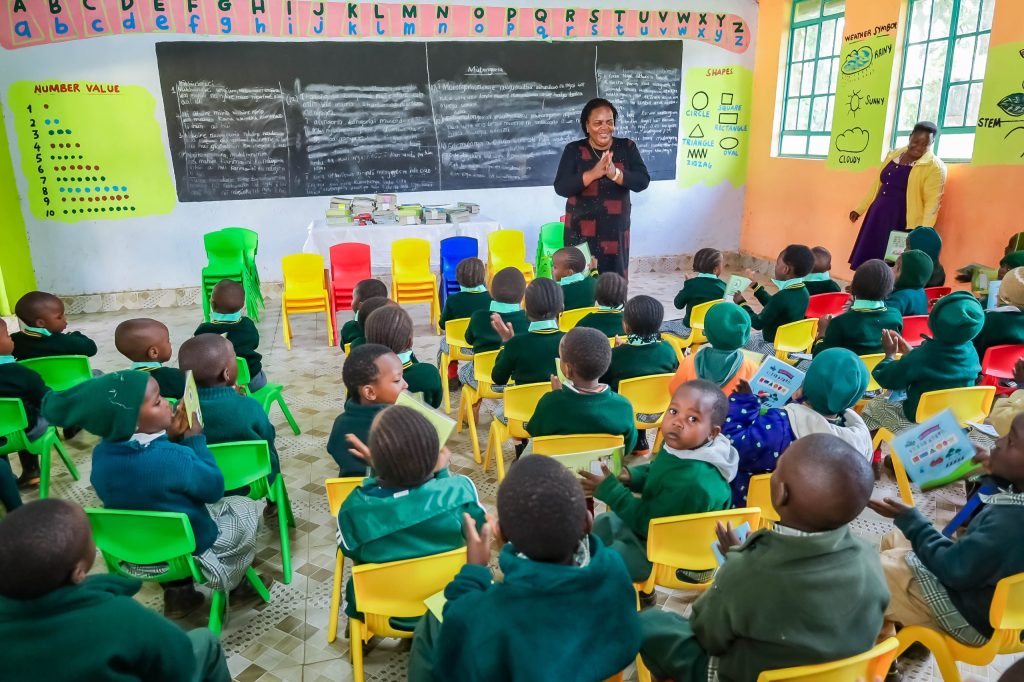
    At Kaitheri Primary School, 105 ECDE learners have benefited from the programme. Head teacher Nyaga Rowland said the school has seen major improvements in learning materials and infrastructure.

    “We now have a proper ECDE classroom and an ablution block. The books are now in a 1:1 ratio, meaning no sharing,” he said.

    “Previously, parents had to supplement learning materials, but that burden has now been lifted.” He added that the uniform programme has improved discipline, cleanliness and equality among learners.

    At Gathuthuma Primary School in Mutira Ward, where 53 ECDE learners have benefited, parent Evans Kinyua said the initiative has eased household pressure. “When ECDE learners are well taken care of, the future is bright,” he said.

    “It is tough at the moment for parents. Buying uniforms every term is not easy. But now, with learning materials, uniforms and teachers in place, our work is just to bring children to school.”

    He added that the programme has promoted equality among learners regardless of background, allowing children to focus on education.

  • Malombe under fire as Muli blasts silence over Kitui killings

    Malombe under fire as Muli blasts silence over Kitui killings

    Kitui Governor Dr. Julius Malombe is facing mounting pressure after National Liberal Party (NLP) leader Dr. Augustus Muli accused him of silence, inaction and insensitivity amid a wave of killings and insecurity that has gripped parts of the county.

    Speaking a day after leading peaceful demonstrations in Kitui Town, Dr. Muli launched a blistering attack on the governor, faulting him for failing to publicly address the killings, comfort bereaved families or engage residents demanding answers over the deteriorating security situation.

    The opposition leader particularly criticized the decision to deny him and other demonstrators access to the governor’s office during Thursday’s protests, describing the move as undemocratic and evidence of a leadership increasingly detached from the suffering of ordinary citizens.

    “Residents who gathered peacefully to seek answers over the killings deserved to be heard, not locked out by leaders elected to serve them,” said Dr. Muli.

    In a strongly-worded open letter addressed to Governor Malombe, the NLP leader escalated pressure on the county boss by issuing a series of demands and deadlines aimed at addressing insecurity and gender-based violence in the county.

    Among the demands, Dr. Muli wants Governor Malombe to issue a public apology to him, the National Liberal Party and families affected by gender-based violence, rape, killings and other injustices by June 20.

    He also wants the county government to operationalise a policy requiring the governor to hold at least two public barazas every month beginning July, where residents can directly raise concerns and seek accountability from county leadership.

    The NLP leader further called for the convening of an emergency Gender-Based Violence Summit by June 27, bringing together the County Commissioner, the Directorate of Criminal Investigations (DCI), FIDA, women leaders and other stakeholders to formulate urgent interventions.

    The summit, he said, should also address concerns over safe housing, free sanitary towels for vulnerable girls and the installation of 200 street lights to enhance security.

    Dr. Muli additionally demanded a joint statement between Governor Malombe and the County Commissioner within seven days outlining concrete measures being taken to end the killings in Kitui Central and violence linked to conflicts involving herders.

    The opposition leader accused the governor of ignoring a worsening crisis while residents continue to live in fear.

    “Kitui women can’t walk at 7pm. Farmers are being killed, and when citizens organize peacefully and come to your office, you call it politics and lock the door,” reads part of the open letter.

    The letter further states that refusing to meet demonstrators had diminished the office of the governor and reinforced perceptions that county leadership was out of touch with public concerns.

    Dr. Muli warned that failure to meet the demands would trigger a new phase of political action.

    He threatened to push for a motion of censure at the County Assembly if no public apology is issued by June 20 and vowed that the NLP and other stakeholders would convene the proposed GBV summit independently if the county government fails to do so by June 27.

    He also warned of fresh demonstrations outside the governor’s office, invoking constitutional provisions guaranteeing the right to peaceful assembly.

    The demonstrations in Kitui Town were sparked by growing public outrage over a series of killings that have heightened insecurity concerns across the county and renewed calls for intervention by both county and national government authorities.

  • Kenya dismisses reports of new Kuwait ban on domestic workers

    Kenya dismisses reports of new Kuwait ban on domestic workers

    The government has moved to allay fears over the employment of Kenyans in Kuwait, clarifying that there is no new ban on Kenyan workers despite recent reports suggesting that Kuwait had barred the recruitment of domestic workers from Kenya.

    In a statement, Principal Secretary for Labour and Skills Development Shadrack Mwadime said the reports had misinterpreted a recent communication issued by Kuwaiti authorities updating procedures and regulations governing the recruitment of domestic workers.

    The clarification follows widespread media reports indicating that Kenya had been added to a list of countries from which domestic workers cannot be recruited into Kuwait.

    According to the government, Kenya voluntarily suspended the deployment of domestic workers to Kuwait about a decade ago, and that position remains unchanged.

    “The recent communication by the Kuwaiti authorities does not constitute a new restriction on Kenya. Rather, it reflects the existing operational and regulatory framework governing domestic worker recruitment in Kuwait,” the statement said.

    The Labour Ministry noted that the development should not be viewed as a fresh policy action targeting Kenya or Kenyan workers but as a continuation of the long-standing status quo in the domestic labour sector.

    The government further disclosed that Kenya and Kuwait are currently engaged in consultations aimed at developing a bilateral framework to govern the domestic labour sector. The discussions are expected to establish mutually agreed procedures, safeguards and mechanisms to facilitate future cooperation.

    At the same time, the ministry emphasized that the restrictions apply only to the domestic worker category and do not affect other Kenyan professionals seeking employment opportunities in Kuwait.

    “All other categories of Kenyan workers remain eligible to pursue employment opportunities in Kuwait in accordance with the laws and regulations of both countries,” the statement said.

    The government described Kuwait as an important and growing destination for Kenyan migrant labour, noting that increasing numbers of Kenyans have secured jobs across various sectors in recent years.

    Officials said the ongoing engagements between Nairobi and Kuwait City are aimed at strengthening safe, orderly and mutually beneficial labour mobility arrangements while safeguarding the welfare of Kenyan workers abroad.

    The clarification comes amid growing public concern over overseas job opportunities for Kenyans, particularly in the Gulf region, which remains a major destination for migrant workers seeking employment.

  • CS Murkomen calls for stronger maritime security to safeguard trade

    CS Murkomen calls for stronger maritime security to safeguard trade

    Government has underscored the importance of open, safe and secure seas in promoting regional and international trade, boosting global and national economies, and supporting the livelihoods of millions of people worldwide.

    Speaking in Mombasa Interior Cabinet Secretary Kipchumba Murkomen said maritime security remains critical to safeguarding trade routes and enhancing economic growth, noting that secure waters are essential for sustainable development and prosperity.

    The CS spoke Tuesday morning when he presided over the opening of the 4th Indo-Pacific Regional Information Sharing (IORIS) Platform Steering Committee Meeting aimed at strengthening maritime safety and security jointly hosted by the Kenya Coast Guard Service (KCGS) and EU-CRIMARIO (Critical Maritime Routes Indo-Pacific).

    He said the flagship initiative, IORIS, is a secure, neutral, web-based platform that brings together over 150 agencies from 70 countries to coordinate maritime operations in real time.

    Murkomen further lauded Kenya Coast Guard Service for partnering with CRIMARIO, developed a mobile app named USALAMA BAHARINI (Safety at Sea) which is embedded in IORIS.

    “Through this integration of technologies, KCGS will leverage the fisher-folk in accessing critical security and safety information, enabling timely response to threats,” the CS said.

    Among those present were EU-CRIMARIO Director Martin Cauchi Inglott, KCGS Director General Bruno Shioso, and Deputy Head of Delegation, Delegation of the European Union to Kenya, Ondrej Simek, among other dignitaries.

  • From risk to resilience: Why East Africa must rethink insurance

    From risk to resilience: Why East Africa must rethink insurance

    Across East Africa, insurance remains one of the most misunderstood financial tools despite its growing importance in everyday life and business. Insurance penetration across the region remains low roughly 2.4% of GDP in Kenya, about 2.1% in Tanzania, and under 1% in Uganda underscoring both the scale of under protection and the opportunity for growth.

    For many people, insurance is something considered only after a crisis unfolds after a hospital admission, a vehicle accident, a fire, or an unexpected business disruption. That reactive mindset is understandable, but it reflects a broader challenge facing our region: insurance is still widely viewed as complicated, costly, or inaccessible.

    Yet, the environment in which we live and work is changing rapidly. Healthcare costs are rising. Businesses face increasingly complex risks. Families are navigating economic uncertainty alongside growing expectations for quality medical care, education, and financial stability. In this environment, insurance should no longer be viewed as optional.

    At its core, insurance is simple. It is a structured way of managing uncertainty. By pooling risk, individuals and organisations create a financial safety net that allows them to absorb shocks that would otherwise be devastating.

    Still, basic concepts remain unfamiliar to many consumers. Terms such as premiums, deductibles, exclusions, and coverage limits can feel technical or intimidating. That knowledge gap matters because informed consumers make better decisions about protecting their health, livelihoods, and enterprises.

    Health insurance illustrates this shift particularly well. In Kenya, Uganda, and Tanzania, we are witnessing growing demand for healthcare solutions that go beyond traditional reimbursement models. Patients increasingly want faster access to specialists, stronger provider networks, preventive care options, and confidence that they can receive quality treatment when they need it.

    In Kenya, this has contributed to increased interest in International Private Medical Insurance (IPMI), especially among multinational companies, internationally mobile professionals, and families seeking broader healthcare access. The appeal is not simply international treatment, but flexibility, continuity, and access to trusted systems of care.

    Meanwhile, Uganda and Tanzania continue to demonstrate the importance of locally responsive medical insurance models. Medical Insurance Companies and regional healthcare financing mechanisms remain essential in developing solutions aligned with local realities, affordability considerations, and employer needs.

    But healthcare is only one part of the story. Insurance is equally important for business resilience. Small and medium enterprises (SMEs) form the backbone of East African economies, yet many operate with little protection against unexpected setbacks. A shopkeeper who loses stock to a fire, for example, may have no financial cushion to restock, reopen, or continue paying employees. When shocks like these occur, the consequences often ripple beyond one business to families, suppliers, and communities.

    Insurance cannot eliminate risk. It can, however, make risk manageable. One of the persistent barriers to wider adoption across our markets remains perception. Too often, insurance is framed as a reluctant expense rather than a strategic planning tool. This is where the entire industry insurers, intermediaries, regulators, employers, and advisors alike carries responsibility.

    We must invest more deliberately in education, transparency, and product simplicity. Consumers should not need specialist knowledge to understand what they are buying. Trust grows when products are clear, claims processes are efficient, and providers communicate honestly about both benefits and limitations.

    Technology will also shape the next chapter of insurance growth in East Africa. Digital onboarding, mobile payments, telemedicine integration, and data-enabled services are already expanding access and convenience. These developments create opportunities to reach populations historically underserved by traditional insurance models.

    But technology alone is not enough. The broader shift required is cultural. We need to move away from thinking about insurance as a purchase driven by fear and toward seeing it as a tool for resilience, preparedness, and long-term planning.

    As East Africa’s economies expand and healthcare systems evolve, insurance will play an increasingly central role in protecting individuals, families, and businesses from financial vulnerability.

    The question is no longer whether risk exists. It is whether we are prepared for it.


    Article by Aly S. Maherali, Chief Executive Officer, Executive Healthcare Solutions (EHS)

    Disclaimer! Views published in this article do not represent the position of the Kenya Broadcasting Corporation