Author: Christine Muchira

  • Ruto apologises for Northern Kenya marginalisation

    Ruto apologises for Northern Kenya marginalisation

    President William Ruto has issued a formal apology to the people of Northern Kenya for decades of State-sanctioned marginalisation and neglect that have resulted in the reaion severely lagging behind in national development.

    The President said the Cabinet Sessional Paper No. 10 of 1965 on economic planning unfairly concentrated development on the so called “high potential” areas at the expense of the vast northern frontier, which was deemed too remote and dry to warrant any meaningful development.

    Consequently, he said, the region has suffered for decades without adequate roads, water, healthcare or schools.

    “That was wrong then, it is wrong now and it will forever remain wrong,” he said when he presided over the 63rd Madaraka Day celebrations at Wajir Stadium on Monday, the first ever national holiday to be marked in Northern Kenya.

    President Ruto said: “On behalf of the people and the Republic of Kenya, I offer my sincere apology for the marginalisation you have endured over the years. Poleni sana ndugu zetu. It was never meant to be this way.”

    Present were First Lady Mama Rachel Ruto, Deputy President Kithure Kindiki, Chief of Kenya Defence Forces General Charles Kahariri, Parliamentary Speakers Moses Wetang’ula (National Assembly) and Amason Kingi (Senate), Cabinet Secretaries Kipchumba Murkomen (Interior), Soipan Tuya (Defence) and Aden Duale (Health).

    Also in attendance were Wajir Governor Ahmed Abdullahi, Vice Chief of Kenya Defence Forces Lieutenant-General John Omenda, and Service Commanders Lieutenant-General David Ketter (Army), Major-General Benard Waliaula (Airforce), Major-General Paul Otieno (Navy), and the diplomatic corps.

    However, the President explained that his administration is dismantling the legacy of exclusion in Northern Kenya through affirmative action initiatives.

    One of these measures, he noted, was his decision in February 2025 to abolish the discrimination that residents of the region had endured over the issuance of national identity cards and birth certificates.

    “Every Kenyan deserves equal protection, equal dignity and equal treatment under the law,” he said.

    The President clarified that the measure did not abolish verification of citizenship, and in no way invited foreigners to acquire Kenyan documents illegally.

    On education, he said the government has established Wajir, Kotulo, and Mandera teacher training colleges to complement Garissa Teacher Training College.

    As a result, more than 4,600 young teacher trainees from the region are currently enrolled in the colleges, building the human capital necessary to transform the future of Northern Kenya.

    He also stated that he has directed the Ministry of Education to develop a framework for integrating Duksi, Madrassa, and the Programme for Pastoral Instruction into the national education system, ensuring that learning pathways reflect the realities and aspirations of local communities.

    President Ruto also directed concerned government entities to fast-track the establishment of Wajir University, thus bringing higher education closer to the people.

    On universal healthcare, he said more than 800,000 residents across the region have registered with the Social Health Authority (SHA), which has already paid KSh8.1 billion in claims to hospitals in Wajir, Garissa and Mandera, expanding access to quality and affordable healthcare services.

    President Ruto said the Government is investing KSh38.5 billion in affordable housing across the three counties, creating job opportunities for thousands of youth while stimulating local economic growth.

    “Our message to the youth of Northern Kenya is simple: Your future will not be defined by your geography. It will be defined by your talent, your skills, and your determination,” he said.

    On infrastructure, the President said the 750km Northern Kenya Gateway Corridor linking Isiolo, Wajir, and Mandera counties is progressing well, connecting communities that were once isolated.

    Moreover, the President announced the establishment of a KSh5 billion County Livestock Investment Company, which will support more than 350,000 pastoralists in 21 arid and semi-arid counties to establish and own livestock enterprises.

    In turn, this will enable communities to derive greater value from livestock and participate more meaningfully in the economy.

    President Ruto acceded to a request from local leaders to rename the newly-refurbished Wajir Stadium after the late Wajir West MP and former President Mwai Kibaki-era minister Ahmed Khalif, who perished in a 2003 plane crash.

    Later, President Ruto commissioned the ultra-modern Accident and Emergency Wing at the Wajir County Teaching and Referral Hospital.

    Also present at the Madraka Day fete were Inspector-General of Police Douglas Kanja, Deputy Inspectors-General Eliud Lagat (Kenya Police Service) and Gilbert Masengeli (Administration Police Service) and Directorate of Criminal Investigations Director-General Mohammed Amin.

    Others were Kenya Prisons Service Commissioner-General Patrick Aranduh, Kenya Wildlife Service Director-General Erastus Kanga, Principal Secretaries, MPs and MCAs, among others.


  • Wajir set for new University as Ruto says Kenya’s future lies in classrooms

    Wajir set for new University as Ruto says Kenya’s future lies in classrooms

    President William Ruto has underscored the importance of education as the most critical investment in Northern Kenya, announcing plans to construct a university in Wajir County.

    Speaking Monday in Wajir during the Madaraka Day celebrations, President Ruto said education remains the powerful tool in tackling poverty and tackling inequality, noting, “of all the tools a nation possesses, education is the most potent. It is the bridge between promise and possibility. Between poverty and prosperity. Between exclusion and belonging.”

    The Head of State noted that Kenya’s liberation will not be fought on conventional battlefields, but will be won in the classrooms, laboratories, workshops, and innovation hubs.

    He highlighted how nation’s leading the world today earned their position citing South Korea, which  invested in science, technology, engineering, and mathematics (STEM) education and became a technology powerhouse.

    Similarly, Ruto highlighted Singapore’s investment in human capital saying the country turned its people into the greatest national resource while Finland built a knowledge economy through sustained investment in learning.

    He remarked that Kenya is moving in the same direction through the Competency Based Education (CBC) and Training system which he says is transforming what learning means in Kenya.

    “It is equipping our children not merely to pass examinations, but to think critically, solve problems, innovate, and compete on the global stage. It is designed around a simple but powerful belief: every child has unique abilities and talents worth discovering, nurturing, and unleashing, ” said Ruto.

    Ruto expressed optimism in the uptake of science and technology related subjects noting that : “What particularly encourages me is that 52% of learners in the first-ever Grade 10 cohort have chosen the STEM pathway. This tells us that a new generation is rising, one that will drive Kenya’s industrial transformation, power our technological advancement, and build the innovation economy that will define our nation’s next chapter.”

    Inclusion in education

    In a move aimed at enhancing inclusivity in education, President Ruto directed the Cabinet Secretary for Education Julius Ogamba to engage all relevant stakeholders and take the necessary measures under the Basic Education Act, to consult widely and recommend appropriate measures for the formal integration of alternative learning pathways like Duksi, Madrassa.

    This he said will ensure that every child, regardless of background or circumstance, has a recognised pathway into learning, skills, and opportunity.

    “Every child deserves a door into learning. It is our duty to open every door. Yet opening the door to opportunity is only part of the journey. Inclusion must also mean access to quality healthcare, dignity, and well-being for every citizen,” Ruto noted.

    Further, he directed local leaders and the county government to identify a large parcel of land for the construction of a university in the county.

  • WHO hands over Ebola treatment centre in Bunia as DRC intensifies outbreak response

    WHO hands over Ebola treatment centre in Bunia as DRC intensifies outbreak response

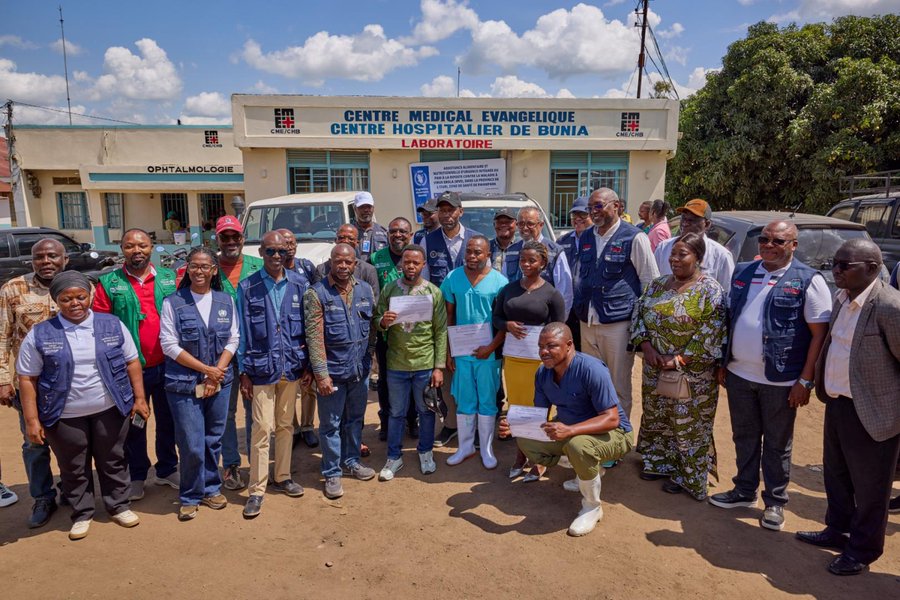
    The World Health Organization (WHO) has handed over a refurbished Ebola Treatment Centre in Bunia to the health authorities strengthening efforts to contain the ongoing Ebola outbreak.

    According to a statement, the facility has an initial capacity of 24 beds but can be expanded to 60 beds. The Organisation is also setting up an annex to the facility with up to 42 beds to be ready in two weeks.

    As of 31 May, there were 210 confirmed cases reported in the country, with 17 confirmed deaths. 349 suspected cases are under investigations. In total, 16 health workers have been reported sick with Ebola during this outbreak.

    The WHO Director-General, Dr Tedros Adhanom Ghebreyesus noted that once fully operational, the centre will be capable of caring for 65 to 80 patients confirmed or suspected of suffering from Ebola.

    “The centre represents not just a centre for acute and critical care. It also serves as a testament to the fact people can survive Ebola when symptoms are detected early and optimized supportive and holistic care is provided immediately,” the DG said.

    Speaking during a visit to Bunia on Saturday, Dr. Tedros pointed out that although there were currently no licensed vaccine or treatment for Bundibugyo virus “it is not without hope. Ebola caused by the Bundibugyo virus can be survived with good medical care, and some people here in Ituri have already recovered. Seeking care early makes a real difference.”

    WHO reported that four nurses were discharged Saturday in Bunia, after recovering from Ebola. “In total, five people have now recovered in this outbreak,” WHO said.

    Adding that: “As efforts intensify to halt the spread of the virus, further recoveries are expected, especially when people are diagnosed early and able to access care.”

    In a statement, the Government of the DRC said that it was firmly leading a comprehensive national response, working closely with provincial authorities in Ituri and neighbouring provinces.

    WHO, alongside the broader United Nations system and health and humanitarian partners, is fully committed to supporting these efforts. The partners are working to strengthen coordination, mobilize additional resources, and ensure that life-saving interventions reach affected communities quickly and equitably.


  • Kenya launches EWENE acceleration plan to improve maternal healthcare

    Kenya launches EWENE acceleration plan to improve maternal healthcare

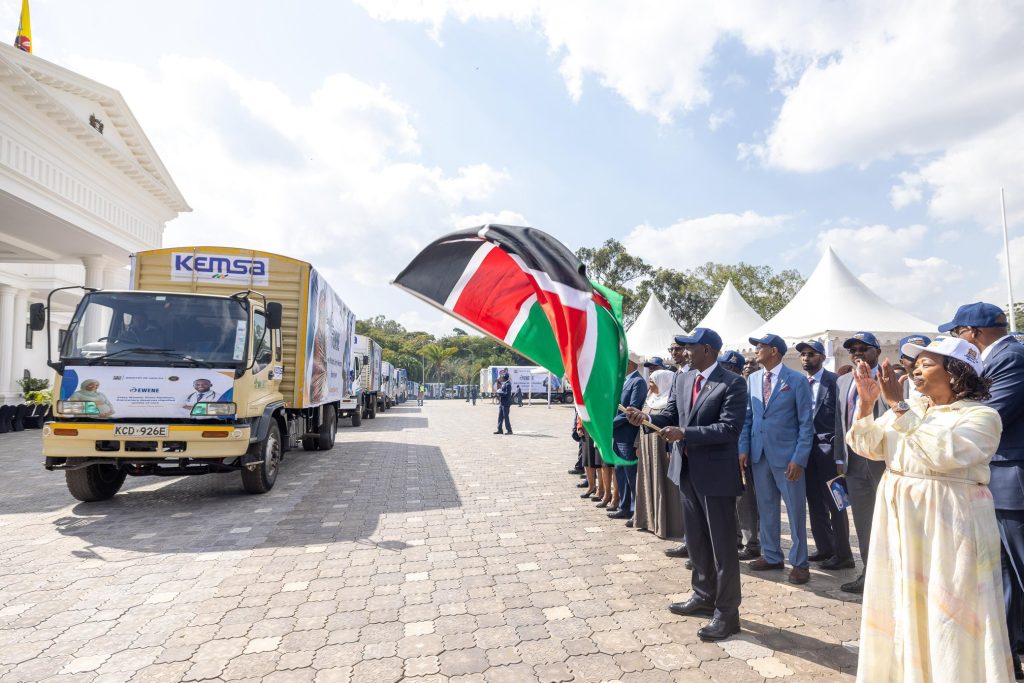
    President William Ruto has launched the Every Woman Every Newborn Everywhere (EWENE) Acceleration Plan 2026-2028, Kenya’s national roadmap to end preventable maternal and newborn deaths.

    Speaking during the launch, the President said the plan includes an immediate six-month Maternal and Newborn Health Rapid Results Initiative, running from now until November 2026.

    To support maternal healthcare, Ruto announced that the National Treasury will allocate an additional Ksh4 billion to the Social Health Authority (SHA) to cover premiums for pregnant women.

    The President further revealed that Kenya Medical Supply Agency (KEMSA) will receive an additional Ksh1 billion for the procurement of life-saving maternal and newborn health commodities alongside Ksh2.5 billion for family planning commodities.

    Additionally, Ruto announced that government will recruit 5000 nurses and midwives across the country to strengthen frontline healthcare services.

    “We shall also recruit and deploy 5,000 nurses and midwives across the country to strengthen frontline healthcare services and ensure more mothers and newborns receive the quality healthcare they deserve,” President Ruto noted.

  • Jitume Digital Hubs transform youth livelihoods in Bungoma through jobs, skills training

    Jitume Digital Hubs transform youth livelihoods in Bungoma through jobs, skills training

    Hundreds of young people in Bungoma County are accessing online jobs, digital skills training, and new income opportunities through the Government’s Jitume Digital Enablement Programme, as Kenya accelerates efforts to build a globally competitive digital workforce.

    The Jitume Digital Enablement Programme, spearheaded by the Ministry of Information, Communications and the Digital Economy and implemented by the Technopolis Development Authority (formerly Konza Technopolis Development Authority), continues to expand access to digital infrastructure, digital literacy, and online work opportunities for youth across the country, through the establishment of Jitume Digital Hubs.

    Bungoma County currently hosts nine Jitume Digital Hubs located in Kabuchai, Webuye West, Kimilili, Chemoge, Tongaren, and Kanduyi.

    The hubs are equipping young people with practical digital skills, internet access, mentorship, and digital devices, enabling them to participate meaningfully in the growing digital economy and access online employment opportunities.

    Youth beneficiaries at the Bungoma National Polytechnic Jitume Hub shared testimonies on how the initiative has transformed their lives by improving their employability, opening pathways to digital work, and enabling them to generate income through online opportunities and digital skills training.

    Speaking during an engagement session with youth at the institution, Ruth Muriithi, Manager, Knowledge Economy and Innovation, said the programme is strengthening Kenya’s position in the global digital economy by ensuring young people are not left behind in the digital revolution.

    “Kenya continues to rank among Africa’s leading countries in internet connectivity and digital innovation. Initiatives such as Jitume are critical in ensuring that young people at the grassroots level can access digital skills, online jobs, and technology infrastructure that empower them economically and position Kenya competitively in the global digital economy,” she said.

    The Jitume Digital Literacy Initiative forms part of Kenya’s broader digital transformation agenda under the National Digital Masterplan 2022–2032, which seeks to position Kenya as a leading digital economy in Africa while supporting the Government’s target of creating one million digital jobs for Kenyans by 2032.

    Since the programme was launched in 2023, nearly 350 Jitume Digital Hubs have been established across the country, with the National Government targeting the rollout of 1,450 hubs across all wards in the 47 counties.

    To date, more than 240,000 young people have undergone digital skills training through the programme, while close to 92,000 digital job linkages have been created for Kenyan youth.

    The initiative is playing a critical role in expanding access to technology in underserved communities, bridging the digital divide, and equipping youth with market-driven digital competencies required in a rapidly evolving global economy increasingly driven by Artificial Intelligence, automation, and online work platforms.

    Jitume Digital Hubs are designed as community centres for digital empowerment, providing access to computers, reliable internet connectivity, digital literacy programmes, mentorship, innovation spaces, and online work opportunities.

    The construction of Jitume Centres of Excellence in each county is currently underway, with an expanded scope to also accommodate innovators, creatives, and digital workers.

    The Jitume Digital Enablement Programme is implemented collaboratively by the Technopolis Development Authority, the Communications Authority of Kenya, and the ICT Authority under the Ministry of Information, Communications and the Digital Economy, in partnership with the National Government Constituencies Development Fund (NG-CDF).


  • Ulwazi Place targets Kenya conference tourism growth

    Ulwazi Place targets Kenya conference tourism growth

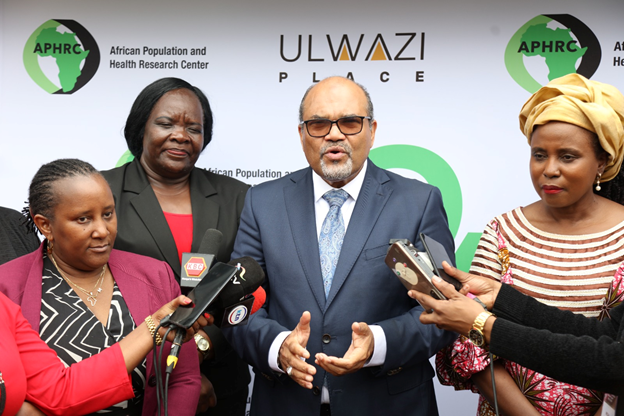
    The African Population and Health Research Center (APHRC) has launched a new meetings and conference wing at Ulwazi Place in Nairobi, expanding the facility into a larger hospitality and events destination aimed at supporting Kenya’s growing Meetings, Incentives, Conferences and Exhibitions (MICE) sector.

    Located within the APHRC campus in Kitisuru and managed by Trianum Hospitality, the expanded facility increases Ulwazi Place’s capacity to host international conferences, institutional events and professional gatherings.

    Ulwazi Place targets growth in MICE tourism

    The expansion comes as Kenya seeks to strengthen its position as a regional hub for business tourism and international conferences. According to the Economic Survey 2026, Kenya recorded 2.5 million tourist arrivals in 2025, with 25 percent visiting for business purposes.

    The upgraded Ulwazi Place facility now has capacity to host more than 1,000 guests across multiple meeting and hospitality spaces, including a ballroom, rooftop event venue, conference rooms, boardrooms, accommodation facilities, restaurant areas and outdoor event spaces.

    Principal Secretary, State Department for Science, Research and Innovation, Prof. Shaukat Abdulrazak

    Prof. Shaukat Abdulrazak, Principal Secretary, State Department for Science, Research and Innovation: “Ulwazi Place is therefore not simply a physical structure; it is a platform for ideas. It is a meeting point for scholars, innovators, policymakers, and young leaders. It is a space where research will inform action, where collaboration will inspire innovation, and where African solutions will emerge to address African challenges.”

    Trianum expands hospitality operations at APHRC

    Trianum Hospitality manages the facility and has overseen the transition of Ulwazi Place from a small meeting venue accommodating around 60 people into a larger international conference destination.

    Mutheu Muna-Mwaniki, Director-Compliance, Trianum Hospitality: “The Ulwazi Place was originally established by APHRC and has transitioned from a small meeting site that could accommodate about 60 pax to a major international conference hub capable of hosting 1,000+ guests. The facility distinguishes itself through specialized collaboration spaces designed to foster scientific innovation and research within a peaceful, landscaped environment.”

    The design of the facility incorporates themes inspired by African landscapes and cultures under a concept titled Tembea Africa, meaning “Travel across Africa” in Swahili. The interiors reference the continent’s savanna, tropical, desert and coastal environments.

    Expansion supports research collaboration

    APHRC said the larger facility will strengthen its ability to host researchers, policymakers and international development stakeholders on-site without relying on external accommodation and meeting venues.

    Dr. Joseph Gichuru, Deputy Executive Director, APHRC: “The APHRC convening facility, Ulwazi Place is a place of knowledge; serving as a hub for global stakeholders to address African development. The strategic expansion of the hotel will now enable us to have more convenings here and to shape the agenda for development in Africa directly from this facility.”

    Kenya targets increased international tourism

    The launch aligns with Kenya’s broader tourism growth strategy, Experience Wonder, which aims to attract 5.5 million international visitors annually by 2027 through increased investment in conference tourism, wellness travel, sports tourism and digital nomad infrastructure.

    Liza Uku, Chief Executive Officer, Trianum Hospitality: “We are excited to be launching the new wing of Ulwazi Place, which is located at one of the upmarket suburbs in Nairobi, with proximity to the United Nations and other diplomatic organisations. Trianum Hospitality management leverages operational efficiency by enhancing the value of the properties we manage.”

  • Ruto reassigns Kello Harsama to petroleum PS role

    Ruto reassigns Kello Harsama to petroleum PS role

    President William Ruto has reassigned the Principal Secretary (PS) Kello Harsama as the new PS for the State Department for Petroleum following recent changes within the Principal Secretary ranks under Article 155(4) of the Constitution.

    In a statement, Ruto noted that the re-assignments are aimed at filling the vacancy from arising from resignition of the immediate former Principal Secretary for the State Department  for Petroleum and to ensure continuity in the administration and coordination of government functions within the affected State Departments.

    Principal Secretary for Petroleum Mohamed Liban resigned in April following his arrest and two other officials by detectives from the Directorate of Criminal Investigations over the alleged importation of substandard fuel in breach of existing supply arrangements.

    The others were Kenya Pipeline Company (KPC) Managing Director Joe Sang and Energy and Petroleum Regulatory Authority (EPRA) Director General Daniel Kiptoo Bargoria.

    Also read http://PS Liban, KPC MD Joe Sang, EPRA CEO Kiptoo resign as fuel supply probe intensifies https://share.google/AFVTkQDd0BopqE493

    At the same time, Dr. Caroline Karugu has been appointed as the Acting PS for State Department for the ASALs and Regional Development, in addition to her substantive portfolio as the PS for East African Community (EAC) Affairs.

    The government says the changes are aimed at strengthening coordination and maintaining stability across key State Departments.

  • Utumishi Dorm Fire: Government vows justice for victims

    Utumishi Dorm Fire: Government vows justice for victims

    Anyone found responsible for the tragic Utumishi Academy dormitory fire will be brought to justice, government has assured.

    This following an early morning dormitory fire that broke out at Utumishi Academy that claimed 16 students and injured 79.

    Speaking when he visited the injured students in hospital, Interior Cabinet Secretary Kipchumba Murkomen appealed for calm as investigator work to establish the cause of fire.

    “We will do everything possible to ensure that if anyone was involved in this fire, justice will be served, so that the lives lost and the injuries suffered by your colleagues will not have been in vain,” CS Murkomen said.

    According to Murkomen, 71 students have been released from hospital with seven still admitted. One student has been picked up by their parent.

    Utumishi Academy has a total population of 815 students, the CS said that at the time of the incident 808 girls were present in school with seven being away due to various reasons.

    He reaffirmed the government’s commitment to ensuring the safety of children across the country.

  • Ruto proposes tax exemption for Kenyans earning up to Ksh30,000

    Ruto proposes tax exemption for Kenyans earning up to Ksh30,000

    President William Ruto has announced that the Government is taking a proposal to Parliament to exempt Kenyans earning up to Ksh30,000 from paying income tax.

    Speaking on Thursday at the National Prayer Breakfast in Nairobi, the President acknowledged that while the tax exemption will create a Ksh40 billion hole in revenue, it is a necessary and innovative measure to cushion low-income earners from economic hardships.

    “We can even find a way so that all those earning Ksh30,000 and less are left out of the tax bracket,” he said.

    The annual prayer event was attended by First Lady Rachel Ruto, Deputy President Kithure Kindiki, the spouse of the Deputy President Joyce Kindiki, senior government officials and foreign dignitaries.

    President Ruto anchored his address on national faith, citing the preamble of the Constitution which acknowledges that God is the “God of all creation”.

    “As we believe in God, we must believe in ourselves and our country. This is a great nation and we must believe in it,” the President urged.

    Reflecting on the severe 2022 drought, the President recalled how the nation gathered at Nyayo Stadium, Nairobi, to pray. He noted that the abundant rainfall over the past three years has since revitalised agriculture, boosting maize, tea and coffee sectors.

    On development, the President explained his administration’s record, saying negative media headlines should not hoodwink Kenyans.

    “A journalist friend told me newspaper headlines are mainly negative because bad news sells. Newspapers are in business,” he said, assuring citizens that the headlines do not reflect the country’s reality.

    He went on: “Kenya is not, and will never be, a failed State. This country is great and we have a duty to make it greater.”

    Keynote speaker Chris Rwakasisi, a senior advisor to Ugandan President Yoweri Museveni, shared a moving testimony about his political journey, his time on death row, and his transformation through scripture.

    President Ruto commended Rwakasisi’s powerful message, which aligned perfectly with the event’s theme of “forgiveness and reconciliation”.

    Echoing the theme, ODM leader Oburu Oginga commended the current Broad-Based Government as a living example of national reconciliation. He noted that despite the fierce 2022 political contest between President Ruto and the late Raila Odinga, the leaders chose to put their differences aside for the country.

    “I never imagined I would sit with President Ruto at the same table because we thought our victory had been stolen,”  Oburu said. “Political competition should not descend into enmity.”

    Oginga warned Kenyans not to take peace for granted, pointing out that “you don’t value peace until you lose it”.

    Looking ahead, President Ruto reassured the nation that the 2027 General Election will be peaceful, free, and fair, cautioning those preaching division that they would not succeed.

    Shifting to the continental stage, the President urged African nations to aggressively mobilise domestic resources and stop relying on external debt. He said Africa holds $4 trillion in pension funds and insurance schemes that could be unlocked for development.

    “We must make our savings work for us instead of looking for the savings of others. We have to think outside the box,” the President pointed out.

    He cited Kenya’s recent successes as proof that Africa can be self-reliant, noting that the government has mobilised Ksh650 billion locally to fund affordable housing.

    Further, he noted, no external funding has been borrowed to build Talanta Stadium or the Bomas International Convention Centre.

    Additionally, the universal healthcare programme has been funded through local financing, including the Ksh150 billion in locally that has been disbursed to health facilities across the country in the past 18 months.

    Addressing the recent transport strike, the President disclosed that the meeting he held last week with public transport stakeholders lasted three and a half hours in Mombasa.

    He explained to them that the administration had inherited a broken system, with nearly Ksh160 billion debt of unsustainable fuel subsidies.

    The government, he said, has cushioned consumers against recent price increases, spending KSh28 billion in price stabilisation financing and foregone Value Added Tax in the past two months.

    “Without these interventions, diesel would be selling at Ksh273 and not Ksh232,” President Ruto explained, adding that transport leaders understood the factual situation and voluntarily called off their suspended strike.

    “People said they were influenced to call off the strike. Yes, maybe they were influenced by the facts,” he pointed out.

    On sustainable ways of reducing the impact of global fuel shocks, the President pointed out that he and other leaders in the region were determined to build a local oil refinery.

    He announced that construction of the refinery will commence next year and will, among others, process crude oil from Turkana County whose extraction has already begun.

    President Ruto disclosed that he has held talks regarding the project with Uganda’s President Yoweri Museveni and Nigerian billionaire Aliko Dangote.

  • U.S. Senate presses for African ambassadors as diplomatic void imperils Kenya security ties

    U.S. Senate presses for African ambassadors as diplomatic void imperils Kenya security ties

    The United States Senate Foreign Relations Committee has sounded a sharp alarm over Washington’s thinning diplomatic presence across Africa, calling for the urgent appointment of ambassadors to dozens of African nations that have operated under acting charges d’affaires for months.

    The warning comes as the Committee grapples with a worsening security landscape on the continent, noting that terrorist groups linked to al-Qaeda and ISIS are expanding, adversaries including China and Russia are deepening their influence and the absence of confirmed U.S. envoys is leaving American interests dangerously exposed.

    At the heart of the Committee’s concern, which emerged during the sub-committee on Africa hearing held on 21st April 2026, is a striking gap: 36 African countries, including Kenya, currently lack a substantive U.S. ambassador.

    The problem has been compounded by reports that the Trump administration is weighing the closure of an additional 10 embassies across Africa, a move lawmakers and former diplomats warn could further erode U.S. standing at a time when it can least afford to retreat.

    For Kenya, the absence of a confirmed U.S. ambassador is more than a procedural inconvenience. It represents a potential liability at the intersection of security, commerce, and geopolitics.

    Since former Ambassador Meg Whitman departed in late 2024 following Donald Trump’s election victory, Kenya’s U.S. mission has been managed by Chargé d’Affaires Susan M. Burns, who has maintained trade, health and security cooperation in the absence of a Senate-confirmed envoy.

    Observers note that the delay is at least partly political.

    President Trump has shown a documented reluctance to appoint ambassadors to governments perceived as having cultivated close ties with the Biden administration and Kenya’s relationship with Biden-era Washington, cemented during President William Ruto’s landmark state visit in May 2024, was notably warm.

    That visit produced Kenya’s designation as the first Major Non-NATO Ally (MNNA) in sub-Saharan Africa, a status that unlocked expanded military cooperation, priority access to U.S. defence equipment and joint counterterrorism frameworks.

    However, even that hard-won designation has come under pressure.

    A congressional amendment to the National Defense Authorization Act for Fiscal Year 2026, spearheaded by Senate Foreign Relations Committee Chairman James Risch, ordered Secretary of State Marco Rubio to conduct a sweeping review of Kenya’s MNNA status, driven by growing unease in Washington over Nairobi’s deepening economic ties with China.

    The review added a layer of uncertainty to a bilateral relationship that both sides have publicly described as a cornerstone of U.S. engagement with Africa.

    Some analysts have attributed the delay in naming a U.S. ambassador to Kenya to the broader pattern of Washington’s post-transition diplomatic slowdown, noting that President Trump has shown an aversion to leaders and governments that worked closely with his predecessor, Joe Biden, an approach that has slowed several diplomatic postings across Africa, with Kenya among the nations affected.

    Notwithstanding those dynamics, the two governments have maintained active high-level engagement. In May 2025, U.S. Secretary of State Marco Rubio met with Prime Cabinet Secretary Musalia Mudavadi to reaffirm the importance of the bilateral relationship and discuss how the U.S.-Kenya partnership advances shared economic interests. Rubio also thanked Kenya for its longstanding role in promoting peace and security in Somalia, Sudan, South Sudan and the DRC.

    A further milestone followed in December 2025, when Rubio met with President Ruto and Mudavadi in Nairobi to sign a bilateral agreement on global health cooperation, commending Kenya’s contributions to regional stability and counterterrorism.

    Nairobi, on the other hand, has taken a measured and deliberately non-confrontational posture on the absence of a confirmed U.S. ambassador.

    Prime Cabinet Secretary and Cabinet Secretary for Foreign and Diaspora Affairs Musalia Mudavadi publicly dismissed suggestions of strained U.S.-Kenya relations, telling the National Assembly Committee on Regional Integration that the proposal to review Kenya’s Major Non-NATO Ally status originated from a private member’s (Senator Jim Risch) bill in the U.S. Senate, not from the U.S. government. Mudavadi also stressed that Kenya is “working closely with the US on bilateral, regional, and security programs”, further noting that Kenya currently enjoys one of the lowest U.S. tariff rates at 10%.

    The Kenya Ministry of Foreign Affairs has similarly maintained an active diplomatic posture: its official account of the May 2025 bilateral talks records that Mudavadi was accompanied by Principal Secretary Dr. Korir Sing’Oei, then National Security Advisor Amb. Monica Juma and Kenya’s Ambassador to the United States, Ambassador David Kerich, reflecting the full weight of Kenya’s diplomatic apparatus being deployed to sustain the relationship despite the vacancy on the American side.

    For its part, the U.S. mission in Nairobi has acknowledged the gap candidly with Chargé d’Affaires Susan Burns confirming in late 2025 that while ambassadorial appointments were initially expected before year-end, they were delayed by the U.S. government shutdown in October adding that Kenya’s cooperation with the mission has remained strong despite the acting status of its leadership.

    Despite the political turbulence, U.S. Africa Command (AFRICOM) Commander General Michael Langley reaffirmed Kenya’s indispensability as a security partner during testimony to the Senate Armed Services Committee in which he described Nairobi as an essential ally in counterterrorism operations across East Africa.

    The U.S.-Kenya security relationship spans decades, deepened significantly after the 1998 al-Qaeda bombing of the U.S. Embassy in Nairobi that killed more than 200 people. Since then, the two countries have built extensive counterterrorism architecture.

    The U.S. maintains a military installation at Manda Bay in Lamu County, a facility that has served as a launchpad for operations targeting al-Shabaab in neighboring Somalia. Kenya, in turn, has kept troops deployed inside Somalia as part of the African Union mission since 2011.

    The Senate hearing specifically highlighted the U.S. Counter Terrorism Bureau’s ongoing partnership with Kenya to strengthen aviation security programmes designed to prevent terrorist travel into the United States, a function that takes on added significance given al-Shabaab’s documented interest in international targeting.

    Kenya is also part of the U.S. government’s Project on International Security, Commerce and Economic Statecraft (PISCES), a diplomatic framework that effectively extends U.S. borders by enhancing partner countries’ border security capabilities and enabling the sharing of terrorist data across international partners.

    U.S. government officials who made presentations before the Senate characterised al-Shabaab as a direct threat to U.S. citizens and interests, noting the group’s symbiotic relationship with Iran-backed Houthi militants in Yemen, a regional threat network that uses the Horn of Africa as a corridor.

    The Senate hearings unfolded against the backdrop of a broader U.S. policy recalibration toward Africa, one that the Committee acknowledged has historically underperformed. U.S. officials noted that Washington has spent approximately $200 billion in foreign assistance to Africa since 1991, with limited structural transformation to show for it: industrial development has remained narrow, export bases have not diversified, and infrastructure gaps persist across the continent.

    In response, the administration has signalled a shift away from aid-centric approaches toward what officials describe as realism-based partnerships, engaging African governments as they are, not as Washington would wish them to be, including countries that maintain ties with U.S. competitors, provided those relationships advance core U.S. interests.

    The Counter Terrorism Bureau is expected to focus on identifying threats before they reach American shores, deploying tools such as visa restrictions, financial sanctions and intelligence-sharing.

    The Senate also approved $355 million in funding for conflict prevention as part of a broader counterterrorism strategy, an acknowledgment that military solutions alone are insufficient. Senators on both sides of the aisle warned that groups like al-Shabaab, the Islamic State in the Greater Sahara, and al-Qaeda affiliates in the Sahel thrive on weak governance, economic despair, and the democratic exclusions that create fertile ground for recruitment.

    Africa’s strategic importance, the Committee stressed, is not solely a security matter. The continent represents an estimated $16 trillion market for U.S. investments, with particular concentration in critical mineral extraction and refinement sectors currently dominated by China. As Washington recalibrates its industrial and supply chain strategy, Africa’s rare earth deposits and energy resources have taken on new urgency.

    What most animated the Senate hearing, however, was the contrast between the United States’ retreating diplomatic footprint and the aggressive expansion of its rivals.

    Russia, through its Africa Corps rebranding of the former Wagner Group, is pitching itself as an essential security provider to coup-affected governments across the Sahel.

    China continues to invest heavily across the continent through infrastructure, trade, and political engagement.

    Iran, meanwhile, is maintaining ties with militant networks from Somalia to West Africa.

    Former U.S. Africa officials and diplomatic experts have warned that the ambassador vacuum compounds this disadvantage. Without confirmed, Senate-approved envoys, the institutional memory, access to senior government officials, and the authority to negotiate substantive agreements are all diminished.

    Charges d’affaires manage the day-to-day, but they cannot fully substitute for the political weight and representational authority of a confirmed ambassador, particularly in countries where personal relationships and high-level access define the diplomatic landscape.

    For Kenya specifically, the stakes are acute. The country serves as a financial and logistics hub for East Africa, hosts the UN Environment Programme and UN-Habitat headquarters, and is a key interlocutor on regional crises from Sudan to Somalia.

    The bilateral relationship encompasses not only security and counterterrorism, but also trade, health through major programmes combating HIV/AIDS and malaria and economic development.

    Managing all of this through an acting representative, however capable, is a structural risk that Senate members have now formally flagged.

    The Senate’s intervention reflects a bipartisan recognition that diplomacy and security are inseparable and that the current configuration is unsustainable. The Foreign Relations Committee has pressed the administration to accelerate nominations, warning that the window for influence in Africa is narrowing as adversaries consolidate their positions.

    For Kenya, the resolution of the ambassadorial vacancy would carry both practical and symbolic weight. A confirmed U.S. ambassador in Nairobi would signal Washington’s sustained commitment to the bilateral relationship, anchor the counterterrorism cooperation that both governments regard as essential, and provide the diplomatic bandwidth needed to navigate the complex geopolitical pressures, from Beijing’s economic courtship to Nairobi’s regional leadership ambitions, that define the relationship in 2026.

    Whether the Trump administration moves swiftly to fill the gap remains to be seen. But with senators on both sides warning that the absence of ambassadors is enabling U.S. adversaries and emboldening extremist groups, the political cost of continued inaction is rising.


    Disclaimer! The views expressed in this article do not represent the position of Kenya Broadcasting Corporation.