Author: Christine Muchira

  • PS Oluga calls for innovation driven health solutions

    PS Oluga calls for innovation driven health solutions

    Principal Secretary for Medical Services Dr. Ouma Oluga has called on institutions of higher learning to play a more active role in advancing local manufacturing by translating research, innovation, and training into practical solutions that address Kenya’s healthcare needs.

    Speaking during a Public Lecture and Stakeholder Engagement Forum on Academia, Industry and the Trigger for Local Manufacturing at the University of Nairobi’s Faculty of Health Sciences, Dr. Oluga said the country is benefiting from strong political commitment to health sector transformation, creating an opportunity for closer collaboration between academia, industry, and government in the production of vaccines, pharmaceuticals, diagnostics, and other essential health products.

    The forum, organised by Kenya BioVax Institute in partnership with the University of Nairobi, brought together representatives from academia, industry, government, research institutions, and development partners to discuss strategies for accelerating local manufacturing through research, skills development, technology transfer, and strategic partnerships.

    Dr. Oluga identified commodity security, healthcare financing, health workforce development, and domestic resource mobilisation as key priorities in the Government’s health transformation agenda.

    He urged universities to strengthen their contribution to evidence generation, innovation, and workforce development, noting that local manufacturing depends on a highly skilled workforce and commercially viable innovations.

    The Principal Secretary challenged researchers to focus on generating intellectual property, patents, and market-ready technologies that can support industrial growth and strengthen Kenya’s healthcare system.

    He also highlighted the importance of leveraging the country’s expanding digital health data systems to inform policy, improve service delivery, and develop locally driven solutions to emerging health threats, including antimicrobial resistance.

    Dr. Oluga commended Kenya BioVax Institute for advancing vaccine and biotherapeutics manufacturing and described the University of Nairobi as a critical partner in research, innovation, vaccine development, and clinical trials.

    He reaffirmed the Government’s commitment to creating an enabling environment for local manufacturing through supportive policies, technology transfer, human capital development, regulatory strengthening, infrastructure investment, and strategic partnerships.

    The forum also featured a public lecture by Prof. Stephen Gacheru on the potential for biopharmaceutical manufacturing in Kenya.

    Other participants included Prof. Daniel Ojuka, Dean of the Faculty of Health Sciences at the University of Nairobi; Dr. Charles Githinji, Chairperson of Kenya BioVax Institute; Dr. Wesley Ronoh, Chief Executive Officer of Kenya BioVax Institute; and Dr. Emmanuel Kombe Nzae, Chairperson of the Kenya Vision 2030 Delivery Board.

  • AU calls for stronger coordination, sustainable financing amid growing continental challenges

    AU calls for stronger coordination, sustainable financing amid growing continental challenges

    The African Union has underscored the need for stronger coordination, resilience, and sustainable financing to address the continent’s growing development and security challenges.

    Speaking at the opening session of the 52nd Ordinary Session of the Permanent Representatives’ Committee (PRC), the African Union Commission Chairperson Mahmoud Ali Youssouf highlighted the Committee’s critical role in advancing the Union’s agenda and laying the groundwork for the forthcoming Mid-Year Coordination Meeting (MYCM) between the AU, Regional Economic Communities (RECs) and Regional Mechanisms (RMs), to be held in Egypt later this month.

    He noted that ongoing crises, geopolitical tensions, and economic pressures continue to impact Africa’s development and security priorities, underscoring the need for greater coordination and more effective collective responses.

    The Chairperson stressed that strengthening the resilience of the African Union and ensuring sustainable financing for continental priorities remain essential to enabling the Union to respond to growing challenges and the expectations of African citizens.

    He reaffirmed the Commission’s readiness to support the proposals and guidance of Member States, emphasizing its continued commitment to advancing the Union’s priorities and effectively delivering its mandate.

    Further, the Chairperson commended the Permanent Representatives for their sustained engagement in advancing the Union’s priorities and wished for the Committee for every success in its work.

  • Ruto begins South Africa State Visit

    Ruto begins South Africa State Visit

    President William Ruto arrived in Pretoria Wednesday evening for a two-day State Visit to South Africa.

    In a statement Ruto noted that Kenya and South Africa have maintained close ties for more than 30 years.

    “That bond has grown into a strategic partnership anchored on trade and investment, pharmaceuticals and vaccine development and a shared belief in Africa’s massive potential,” Ruto noted.

    The visit comes as both countries seek to deepen their strategic partnership, expand trade opportunities and strengthen people-to-people connections.

    President Ruto highlighted that South Africa’s thriving economy, particularly the manufacturing sector, is a strong pointer to Africa’s immense industrial potential.

    “Our trade ties continue to flourish, highlighted by the many South African companies that have invested in Kenya, creating jobs and making an important contribution to our economic growth,” said President Ruto.

    Adding that: “We take pride in this robust partnership and are committed to consolidating these valuable gains as we explore more avenues to advance our trade and people-to-people connections.”


  • Kindiki calls for investment in better data systems for Kenya, Africa development

    Kindiki calls for investment in better data systems for Kenya, Africa development

    Deputy President Kithure Kindiki has said Kenya is investing heavily in the handling and use of local data to ensure its security and reliability in the nation’s development transformation.

    Prof. Kindiki noted that reliable data is crucial for any nation seeking faster development stating that Kenya has not been left behind in the quest to put in place advanced data handling and processing systems.

    “Data is the epicentre of sustainable development. Even in this era of Artificial Intelligence (AI), it carries added weight, because it is the foundation on which the new intelligence will be built. A weak data system, or one that leaves people out, will hand those same weaknesses and exclusions to everything constructed on top of it,” DP said.

    The Deputy President spoke on Tuesday when he officially opened the Global Data Festival, 2026 in Nairobi.

    He said data is an integral part of the socio-economic transformation agenda which makes the core of the government’s development objectives.

    “We have to stop seeing data as merely useful and start treating national data systems as core development infrastructure. Roads, power lines, hospitals, and schools are visible in a way data systems are not, yet data systems determine whether every one of those other investments is properly planned, targeted, and improved,” DP noted.

    Prof. Kindiki highlighted Kenya’s digital transformation that includes digitisation of government services, expansion of public digital infrastructure, investment in better connectivity, digital skills, artificial intelligence, cybersecurity and data governance among others as key initiatives that have anchored the quest for reliable, interoperable, secure and trusted data.

    He urged African countries to invest in their own data capabilities to ensure that the continent develops intelligence rooted in its realities and priorities, rather than merely consuming intelligence produced elsewhere from data that does not reflect its context.

    “Otherwise, we risk creating a new form of dependency one that wears a more sophisticated and technologically advanced face,” he noted.

    The Deputy President further called for increased financial investment in the sector to ensure it remains at the centre of service delivery and national development and advancement.

    “We have to strengthen county and local data systems so that national planning reflects the actual realities of our communities. We have to align partner support to country-owned systems so that the burden of fragmented reporting is lifted and we have to advance our data ecosystems for inclusivity and posterity while protecting privacy, trust and the sovereignty that holds them together,” DP reiterated.

  • Uganda confirms six new Ebola cases, total infections rise to 15

    Uganda confirms six new Ebola cases, total infections rise to 15

    Uganda has confirmed six new cases of Ebola Virus Disease (EVD), bringing the total confirmed infections in the current outbreak to 15.

    According to health authorities, 12 patients are currently receiving treatment while two have been discharged.

    One person has died from the disease.

    The Ministry of Health said all new cases were identified among individual who had been listed as contacts of previously confirmed patients.

    A total of 668 contacts are currently under follow-up as the government of Uganda continues active surveillance and contact tracing.

    Ebola

    Ebola disease is a severe, often fatal illness affecting humans and other primates.

    The virus is transmitted to people from wild animals (such as fruit bats, porcupines and non-human primates) and then spreads in the human population through direct contact with the blood, secretions, organs or other bodily fluids of infected people, and with surfaces and materials (e.g. bedding, clothing) contaminated with these fluids.

    According to the World Health Organisation (WHO), the average Ebola disease case fatality rate is around 50pc. Case fatality rates have varied from 25–90pc in past outbreaks.

    The first Ebola disease outbreaks occurred in remote villages in Central Africa, near tropical rainforests.

    The 2014–2016 Ebola virus disease outbreak in West Africa was the largest and most complex Ebola outbreak since the virus was first discovered in 1976. There were more cases and deaths in this outbreak than all others combined.

    It also spread between countries, starting in Guinea then moving across land borders to Sierra Leone and Liberia.

    It is thought that fruit bats of the Pteropodidae family are natural hosts of the orthoebolavirus.

  • Ruto pledges more resources for Northern Kenya as three-day tour ends

    Ruto pledges more resources for Northern Kenya as three-day tour ends

    President William Ruto wound up his three-day tour of Northern Kenya with a pledge to further push more resources to a region long neglected from national development.

    Only by fully integrating and mainstreaming the North into Kenya’s development agenda, the President pointed out, can the country benefit from the vast untapped potential of the region.

    “Northern Kenya is not peripheral; it is central to the development of Kenya,” he said at Maalimin in Lagdera Constituency, Garissa County, on Tuesday.

    He added: “I am on a mission to correct the historical injustices and marginalisation suffered by fellow Kenyans from this region for far too long.”

    He explained that his administration has doubled efforts to take essential services, including water, electricity, schools and roads, among others, to the region.

    The President broke ground for the construction of the Ksh72.2 million Maalimin Mini-Grid, which will light up more than 500 households in the area.

    Overall, President Ruto said, the Government is investing Ksh4.1 billion to connect 26,000 households in Wajir County, Ksh2.5 billion to power 18,600 homes in Mandera, and Ksh1.6 billion to connect 8,300 households in Garissa County.

    Earlier at Kotulo in Tarbaj Constituency, Wajir, he inspected the construction of the 64km Tarbaj-Kotulo stretch of the 750km Isiolo-Mandera road, which is being built at a cost of Ksh100 billion.

    He said the government, through a multi-agency team, has neutralised the threat posed by Al Shabab militants, thus bringing peace to villages and allowing the project to proceed with minimal interruption.

    Present were Health Cabinet Secretary Aden Duale, Governors Ahmed Abdullahi (Wajir) and Nathif Jama (Garissa), MPs and MCAs, among other leaders.

    Later, President Ruto commissioned the Ksh460 million Eldas Water Supply Project and laid the foundation stone for the 580-bed capacity Eldas Teachers Training College, both in Eldas Constituency, Wajir.

    Addressing residents of Eldas town, he urged parents across Northern Kenya to take advantage of the Government’s heavy investment in education by taking their children to school.

    “It would be foolish, after such investment in education, to force your children to stay home and take care of cattle instead of taking them to school,” he said.

    The President directed security officials in the region to be vigilant and ensure that all children go to school, and take firm action against offending parents.

    Across Wajir County, President Ruto said the Government is investing Ksh15 billion to build 18 modern markets, hostels for 2,000 students, and 4,600 affordable housing units, thus improving living standards and creating employment for local people.

    Additionally, he called on residents to register with the Social Health Authority (SHA) to benefit from Government medical insurance.

    He lamented the low enrollment numbers in the region, pointing out that registration in Wajir only stands at a lowly 35 per cent.

    President Ruto explained to residents that SHA membership will enable the Government to access accurate data for proper planning.

    “You must all register with SHA for Government to take care of your medical bills. Without doing this, we cannot help you in times of need,” he said.

    The President pointed out that this week, the Government has disbursed KSh12.7 billion to pay claims to hospitals nationwide, including health facilities in Northern Kenya.

    Last week, he added, the Government had dispatched medical equipment to hospitals in the region, enabling them to offer more specialised services.

    President Ruto urged residents of the region to ignore his political opponents, whom he said have little to offer in national transformation.

    “Some of them have held top leadership positions in this country, yet they have little to show. So far, their only achievement is giving me nicknames,” he said.

    Later, President Ruto inspected the Garissa-Ijara road stretch, part of the larger Lamu-Garissa-Ijara road.


  • IFTEX 2026 opens in Nairobi as Kenya’s flower industry pushes for growth, sustainability

    IFTEX 2026 opens in Nairobi as Kenya’s flower industry pushes for growth, sustainability

    Kenya reinforced its position as one of the world’s leading floriculture exporters as industry leaders, government officials, regulators and international trade partners gathered in Nairobi for the opening of the 13th International Flower Trade Exhibition (IFTEX 2026), the continent’s largest flower industry trade show.

    The event, held under the theme “Shaping the Future of Floriculture,” brought together a record 210 exhibitors and hundreds of buyers from across Europe, the Middle East, Asia, Africa and the Americas.

    The exhibition comes at a pivotal moment for Kenya’s floriculture industry, which has evolved into one of the country’s most important economic sectors. Today, Kenya is Africa’s largest flower exporter, the world’s leading exporter of rose cut flowers to the European Union, and the third-largest exporter of cut flowers globally. The sector generates approximately KES 110 billion in annual export earnings, supports more than 200,000 direct jobs and sustains millions of livelihoods, particularly among women and young people.

    Kenya’s flowers have become a global success story, reaching major markets across Europe, the United Kingdom, the Middle East and Asia within hours of harvesting. The industry has also emerged as a model for sustainable production, investing heavily in renewable energy, water conservation, traceability systems and internationally recognised environmental standards.

    Opening the exhibition, Cabinet Secretary for Investments, Trade and Industry Lee Kinyanjui described floriculture as one of Kenya’s most significant economic achievements.

    “When many people think about flowers, they think about beauty, colour and celebration. Yet for us as Kenyans, flowers represent something much deeper. They represent jobs and livelihoods, enterprise and innovation, foreign exchange earnings, community development, women empowerment and economic opportunity,” said Kinyanjui.

    He noted that despite rising freight costs, regulatory pressures and global economic uncertainty, the government remains committed to improving the business environment through better logistics infrastructure, faster VAT refunds and expanded market access opportunities.

    “Our objective is simple: to ensure that Kenya remains one of the most competitive destinations for floriculture investment and trade,” he said.

    Representing the European Union, Filippo Amato highlighted the growing trade relationship between Kenya and Europe, which remains the largest market for Kenyan flowers.

    “Kenya’s floriculture industry is an excellent example of this partnership in action. Kenya is the world’s third-largest exporter of cut flowers and supplies more than 40 percent of the flowers imported into the European Union,” said Amato.

    He noted that Kenyan flower exports to the EU are valued at more than €500 million annually and said the bloc would continue supporting the industry through the Kenya-EU Economic Partnership Agreement, export competitiveness programmes and investments in logistics infrastructure, including cold-chain facilities.

    For exhibition organiser HPP International, the record turnout at IFTEX demonstrates continued confidence in Kenya’s flower industry despite global headwinds.

    Dick van Raamsdonk, the CEO OF HPP, said the exhibition had reached a new milestone, attracting the largest number of exhibitors in its history.

    “This year, we break every previous record with 210 exhibitors under one roof. Whether you have travelled from across the oceans or across the continent, you are standing at the absolute centre of the floral world,” he said.

    Van Raamsdonk said Kenyan growers were responding to changing market dynamics through sustainable farming practices, carbon-conscious operations and market diversification.

    “The Kenyan flower industry is actively innovating. Our growers are adopting smarter logistics, sustainable farming practices and carbon-conscious operations. We are not just meeting global standards; we are defining them.”

    Meanwhile, Kenya Flower Council CEO Clement Tulezi emphasized the broader social and economic impact of the industry, describing floriculture as one of Kenya’s most transformative sectors.

    “Flowers are jobs. Flowers are school fees. Flowers are healthcare. Flowers are empowerment,” said Tulezi.

    While acknowledging the industry’s resilience, he called for greater collaboration across the global supply chain as growers face increasing production, freight and compliance costs.

    “If the industry is to remain viable, there must be a shared recognition that value must be fairly distributed along the supply chain,” he said, urging international buyers and retailers to engage in transparent discussions on sustainable pricing.

    Industry stakeholders also highlighted the role of regulation and plant health in safeguarding Kenya’s export competitiveness. The Kenya Plant Health Inspectorate Service (KEPHIS) reported continued progress in strengthening compliance systems, digitising certification processes and reducing interceptions related to the False Codling Moth, a key phytosanitary concern in European markets.

    As global demand for sustainably produced flowers continues to grow, industry leaders said Kenya is well positioned to capture new opportunities in North America, the Middle East, Eastern Europe and Southeast Asia while maintaining its dominance in traditional markets.

    Over the next three days, IFTEX 2026 is expected to facilitate new business partnerships, showcase emerging flower varieties and technologies, and drive conversations around sustainability, logistics, innovation and the future of global floriculture.


  • Kirinyaga assures uninterrupted hospital services, plans health workers’ promotions

    Kirinyaga assures uninterrupted hospital services, plans health workers’ promotions

    Kirinyaga County Government says it is addressing all labour issues raised by health workers and has availed a budget for promotions.

    Addressing media at the Kerugoya County Referral Hospital, Chief Officer for Medical Services, Public Health and Sanitation Dr. Muriithi Nyaga said budget proposal for the promotion and re-designations has already been forwarded to the county assembly for approval.

    Muriithi further dispel fear of interruption of services due to a planned work go-slow by a section of the health workers.

    “The County Government of Kirinyaga has noted the intended go-slow by a section of health workers. It wishes to address the concerns raised, while assuring the public that health service delivery across the county will remain uninterrupted,” Muriithi said.

    Further, the Chief Officer said the County Government had onboarded 237 casual employees into the integrated county payroll system, issued personal numbers and their salary arrears paid in full. He said 138 casuals are at different stages of verification for issuance of personal numbers.

    He regretted the delay in payment of salaries for the casuals due to the long process of getting them into Human Resource Information System (HRIS) and errors contained in identification documents submitted by some of the workers.

    “The County Government of Kirinyaga deeply values the contributions of healthcare workers and remains committed to constructive engagement to address workplace concerns. Such engagement must follow due process and utilise legally recognised representative structures,” he reiteriated.

    Muriithi said the exercise to streamline the management of casual wages has been ongoing for the last three months.

    “In line with a national directive to streamline the County Government has initiated the process of onboarding casual workers into the integrated county payroll system, which has now replaced the manual payment of wages,” he added.

    The Chief Officer said all public medical facilities in Kirinyaga have adequate supplies of medical supplies to support effective service delivery.

    “In April, the County Government placed a major order for medicines and medical supplies through KEMSA, supplemented by procurement from local suppliers for items unavailable through KEMSA. As a result, public health facilities across the county are currently well stocked with essential medicines and supplies,” Muriithi said.

    Kirinyaga County Assembly Health Committee Chairman Bosco Gichangi asked a section of politicians to stop politicizing and inciting health issues and inciting workers against their employer.

    Gichangi who was accompanied by some members of the committee said the issue of promotion of health workers was in the final stage of being resolved with the committee already having received budget proposals from the executive.

    “I can confirm that we received the budget proposal from the executive two weeks ago and we are in the process of looking at it before it is tabled for approval by the whole house,” he said.


  • Polls open in Ethiopia as Uhuru leads AU election observers

    Polls open in Ethiopia as Uhuru leads AU election observers

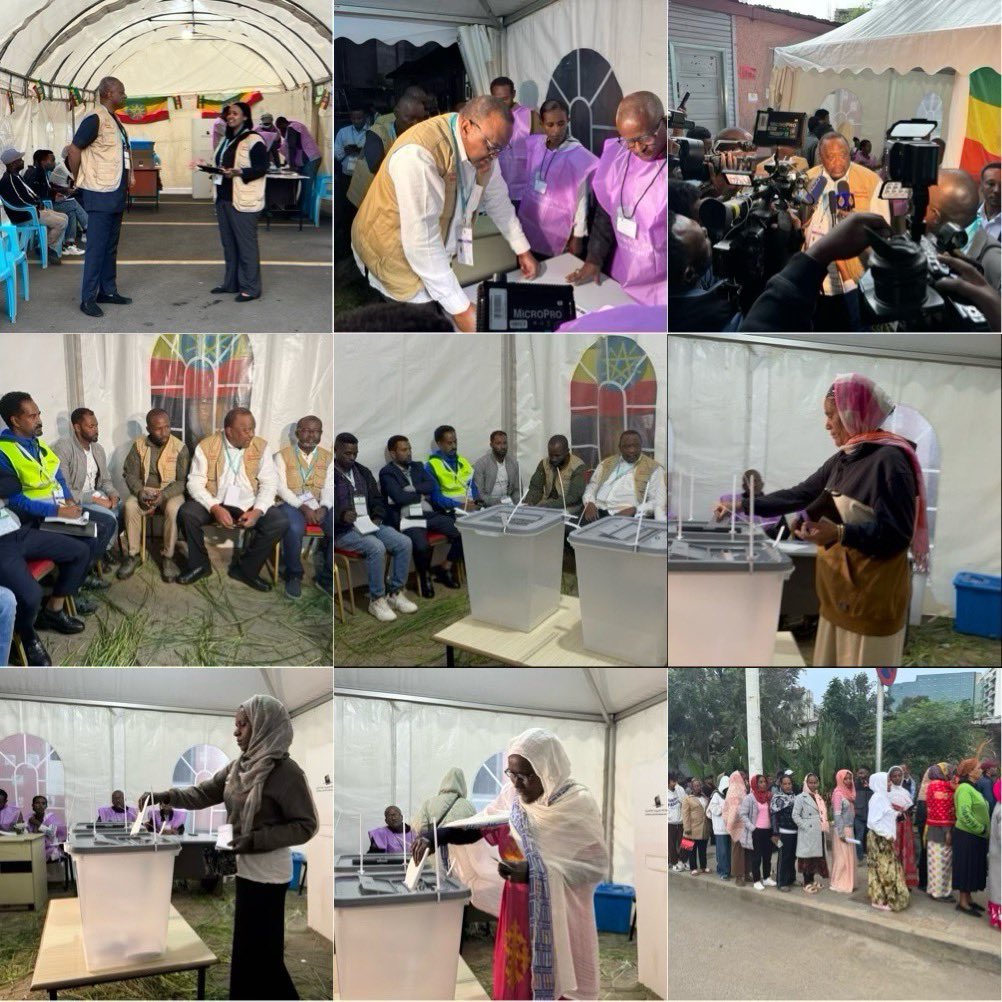
    Polls have opened in Ethiopia’s general election, marking a key moment in the country’s democratic process as voting gets underway across the nation.

    Retired President Uhuru Kenyatta is leading the African Union Election Observers (AUEOM) to the 1 June 2026 General Elections.

    He is being deputised by former Nigerian MFA Geoffrey Onyeama.

    The observer mission commenced on Monday morning before 6:00 am ahead of the official opening of polling stations nationwide.

    According to a statement, throughout the day, the AUEOM teams deployed across the country will be observing the opening, voting, closing, and vote counting to ensure transparency, credibility and overall conduct of the elections. The polls are expected to close at 6:00 pm Monday.

    The Mission comprises 73 Short-Term Observers (STOs), 61pc of whom are women, drawn from 37 African countries, including ambassadors accredited to the African Union, officials of election management bodies, members of civil society organisations, election experts, human rights specialists, gender and media experts, and representatives of youth organisations.

    “The AUEOM will base its assessment on the legal framework governing elections in Ethiopia, the OAU/AU Declaration on the Principles Governing Democratic Elections in Africa, the African Charter on Democracy, Elections and Governance (ACDEG), and other relevant regional and international instruments and standards for democratic elections,” the statement read.

    Further the statement noted that the mission shall engage with state authorities, including the National Election Board of Ethiopia (NEBE), political parties, candidates, civil society organisations, the media, representatives of the international community based in Ethiopia, and other election observation missions.

    The Mission will release a Preliminary Statement on its findings and assessment of the conduct of the elections at a press conference in Addis Ababa, Ethiopia, on 3 June 2026. A final and comprehensive report will be published within two months after the elections.


  • Kenya urges stronger Africa–Korea cooperation in technology, growth

    Kenya urges stronger Africa–Korea cooperation in technology, growth

    Kenya has called for stronger Africa-Korea collaboration to advance shared prosperity, sustainable growth and joint responses to emerging global challenges.

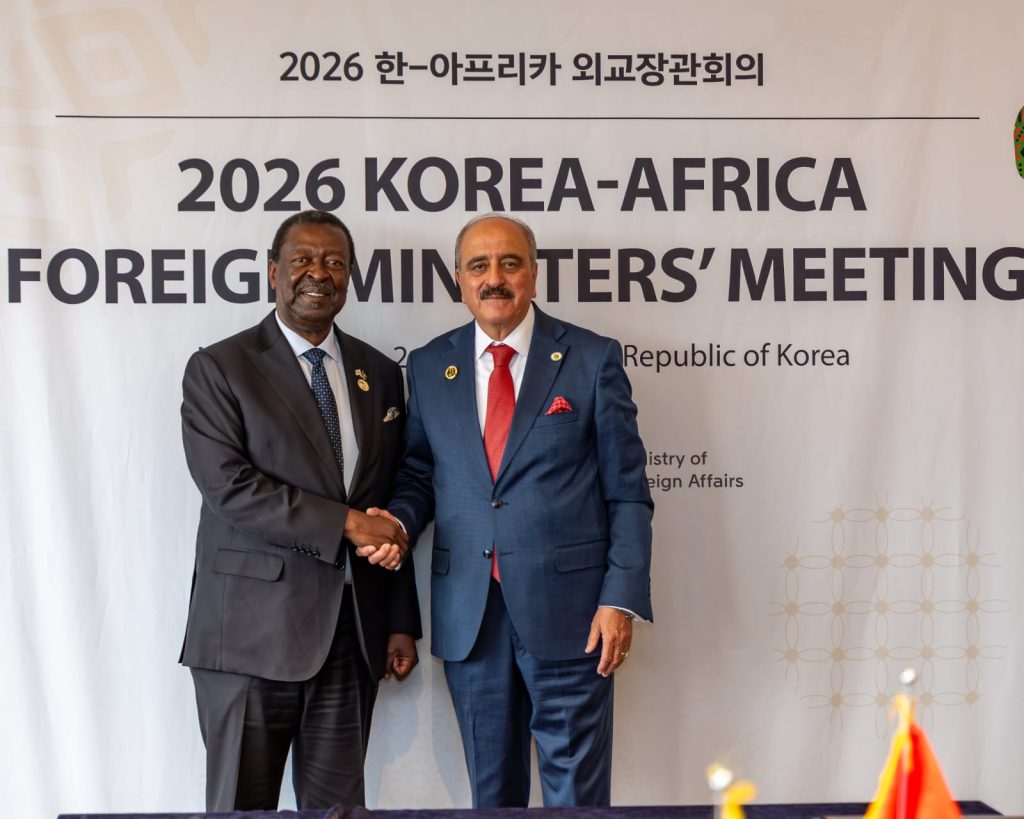
    Speaking at the Korea–Africa Ministers’ Meeting in Seoul, Prime Cabinet Secretary Musalia Mudavadi noted that deeper partnerships between Africa and the Korea is key to accelerating development, in areas such as technology transfer, skills development and industrialisation.

    PCS Mudavadi highlighted the role of institutions such as the Korea International Cooperation Agency (KOICA) and the Korea Exim Bank in supporting Kenya’s economic transformation, technology transfer, skills development and private sector growth.

    “Africa and Korea must continue strengthening partnerships that advance shared prosperity, sustainable growth and joint responses to emerging global challenges,’ Mudavadi noted.

    He spoke as he presented Kenya’s development priorities noting that Korea’s continued investment in projects such as Konza Technopolis and the newly commissioned Kenya Advanced Institute of Science and Technology (Kenya-AIST) reflects the growing strength of Kenya–Korea cooperation in technology, innovation and industrialisation.

    “These partnerships continue to position Kenya as a regional hub for value addition, innovation and sustainable economic growth,” Mudavadi noted.

    On the on the sidelines of the Korea–Africa Foreign Ministers’ Meeting, Mudavadi held discussions with Tunisia’s Minister of Foreign Affairs Mohamed Ali Nafti, to explore practical pathways to strengthen mutually beneficial partnerships in areas including education, energy, technological innovation, climate change, peace and security, and people-to-people exchanges.

    During their meeting they agreed to accelerate key legal frameworks and pending arrangements aimed at strengthening cooperation between our two nations.

    The discussions further focused on enhancing collaboration within the framework of the African Continental Free Trade Area (AfCFTA) as Africa continues to push for increased intra-African trade, industrialisation and economic integration.