Author: Christine Muchira

  • Kaptagat Forest model driving conservation, livelihoods, says Kindiki

    Kaptagat Forest model driving conservation, livelihoods, says Kindiki

    What began a decade ago as an effort to restore the degraded Kaptagat Forest has evolved into a national model demonstrating how conservation can improve livelihoods, strengthen food security and create sustainable economic opportunities for communities living around forests.

    Deputy President Prof. Kithure Kindiki said the Kaptagat Integrated Conservation Programme (KICP) had shown that environmental restoration succeeds when communities are placed at the centre of conservation efforts and are allowed to directly benefit from protecting natural resources.

    Speaking during the programme’s 10th anniversary celebrations in Elgeyo Marakwet County on Saturday, the Deputy President commended KICP Patron and National Treasury Principal Secretary Dr. Chris Kiptoo for championing a model that integrates ecosystem restoration with livelihood empowerment.

    “A good and sound healthy environment is good for the community. Environmental conservation will give us rain and enough water so that our country can have food security and development,” said Prof. Kindiki.

    He noted that involving communities living adjacent to forests had transformed conservation from a government responsibility into a shared community mission.

    “This project ensures forest-adjacent communities are involved in environmental conservation. It is very important to involve the local community in the conservation of the environment,” he said.

    Prof. Kindiki highlighted initiatives such as the distribution of grade dairy cows, access to clean cooking energy and other income-generating projects that have improved household incomes while reducing dependence on forest resources.

    “I have seen that the programme gives farmers grade cows so they can get more milk compared to what they are getting. I have seen others are getting cooking gas and many livelihoods that will help them put money in their pockets, pesa mfukoni,” he said.

    Forestry Principal Secretary Gitonga Mugambi said the Kaptagat model had already been replicated in 31 sites across the country in line with Kenya’s ambitious target of growing 15 billion trees by 2032.

    “To date, more than 231,000 hectares are under rehabilitation and over 31 million trees have been planted in these sections through community participation and partnerships,” said Mugambi, adding that Kaptagat had become a benchmark for community-led restoration efforts.

    Reflecting on the programme’s ten-year journey, Dr. Kiptoo said KICP had demonstrated the power of building an economy around conservation.

    “Never underestimate an economy powered by the forest. Today, I am proud of what those ten years have given birth to: Mazingira Safi, Maji Safi Nyumbani, Kawi Safi na Pesa Mfukoni. These are community-driven solutions born from listening to the very needs that once pushed people into the forest,” he said.

    As KICP embarks on its next decade under the theme “10 to 20: Restore. Sustain. Transform.”, leaders expressed confidence that the Kaptagat model will continue to shape the future of conservation and community development in Kenya.


  • Peace, security are key to national development, Mudavadi reaffirms

    Peace, security are key to national development, Mudavadi reaffirms

    Prime Cabinet Secretary and Cabinet Secretary for Foreign and Diaspora Affairs, Musalia Mudavadi, has reaffirmed that peace, security and an efficient public service remain the bedrock of national development, economic growth and social cohesion.

    Speaking during an engagement with security officers and National Government Administration Officers (NGAO) drawn from Tiriki East and Tiriki West sub-counties in Kaimosi, and later when he met elders from Tiriki in Hamisi Constituency, Vihiga County, Mudavadi emphasized the importance of strengthening service delivery, enhancing public integrity and improving coordination in the implementation of Government programmes.

    The Prime Cabinet Secretary commended the NGAO officers for their dedication and professionalism, describing them as the frontline custodians of peace, law and order whose work is essential in safeguarding national unity, protecting communities and creating a stable environment that attracts investment and supports development.

    Mudavadi also listened to concerns relating to resource allocation, operational capacity and staff welfare, assuring the officers that their views would be escalated to the relevant Government agencies for consideration.

    He noted that a well-equipped, motivated and accountable public service is critical to delivering quality services and meeting the expectations of wananchi.

    At the consultative enegagement with more then 1,000 elders and stakeholders from Tiriki land in Vihiga County at the Kaimosi Friends University grounds Mudavadi dismissed the calls by the opposition to reverse the gains made by President William Ruto’s administration.

    He noted that the opposition is now disorganised, disjointed and it can not offer any agenda on the table for Kenyans.

    The Prime CS said this is part of his regular meetings being conducting to foster regional unity, build political support, and prepare for the campaign and electioneering period ahead of the 2027 polls.

    Leveraging on cultural diplomacy, the Tiriki people presented their requests to the national government in relation to equal resource distribution, infrastructure and development, health, education, security, and community well-being.

    “This meeting signifies a new journey that we will walk together in supporting the government’s agenda and looking forward to President William Ruto’s re-election as a pathway for the Luhya Presidency come 2032.” said Mudavadi.

    Present were area MP Charles Gimose, Principal Secretary Jane Imbunya, MCAs, national and regional leaders.

    Earlier Mudavadi toured the Mudete Tea factory in his Sabatia backyard for a fact finding mission.

    “Tea remains one of Kenya’s most valuable cash crops, sustaining hundreds of thousands of families, generating foreign exchange and driving rural economic growth.” said Mudavadi

    “I have toured this facility to gain firsthand insight into the journey of tea from the farm to the cup. Since its establishment in 1997, the factory has played a transformative role in improving the livelihoods of more than 12,000 tea farmers across Vihiga and Kakamega counties.” he added.

    He encouraged farmers to continue investing in tea production and challenged the young people to view agriculture, particularly tea farming, as a modern, profitable enterprise by embracing technology, innovation and value addition to enhance productivity and competitiveness.

    “The Government remains committed to implementing reforms in the tea sector aimed at increasing farmers’ earnings, improving bonus payments, expanding Kenya’s tea export markets and ensuring sustainable incomes for tea-growing communities. These efforts will strengthen one of our country’s leading export industries while creating more jobs and driving inclusive economic growth.” Mudavadi said.

  • Government strengthens community health through data verification

    Government strengthens community health through data verification

    Government has reaffirmed its commitment to strengthening community health systems through reliable data and collaboration with county governments.

    Speaking during the Community Health Assessment Data Verification exercise in Karau Ward, Ol Kalou Sub-County, Principal Secretary for Public Health and Professional Standards Mary Muthoni underscored the importance of accurate community health information in guiding service planning, resource allocation and targeted interventions for vulnerable populations.

    The Ministry of Health is undertaking the exercise with Community Health Promoters to review assessment findings and validate household health data for evidence-based planning and stronger primary healthcare services.

    Muthoni said the assessment findings indicate progress in Karau Ward, with 59 pc of households registered under the Social Health Authority and more than half of respondents reporting improved access to healthcare over the past three years.

    She noted that residents identified the availability of medicines, improved medical equipment and additional health workers as key priorities for strengthening service delivery.

    Further, the PS said that the findings will guide targeted interventions and strengthen preventive and promotive healthcare at the community level.

  • Government moves to strengthen school health through SHA

    Government moves to strengthen school health through SHA

    The Government has underscored the importance of strengthening school health systems as a key pillar in safeguarding learners’ wellbeing, improving education outcomes and building healthier communities.

    Speaking Friday at Kerugoya Boys High School community during the launch of the school’s Strategic Plan 2026–2030, Principal Secretary for Public Health and Professional Standards Mary Muthoni reaffirmed the Government’s commitment to strengthening school health systems across the country.

    The Principal Secretary announced that the State Department for Public Health and Professional Standards is working with relevant agencies towards accrediting the Kerugoya Boys High School health clinic under the Social Health Authority (SHA), a move that will enable students to access quality healthcare services conveniently within the school.

    She also called for intensified efforts to protect learners from drug and substance abuse, warning that modern nicotine products are increasingly being marketed to young people through attractive packaging and flavours that expose them to addiction and long-term health risks.

    The PS encouraged all Kenyans to register with SHA to benefit from the Primary Healthcare Fund, the Social Health Insurance Fund and the Emergency, Chronic and Critical Illness Fund.

    She further cautioned against self-medication and the misuse of antibiotics, noting that these practices fuel antimicrobial resistance while delaying the diagnosis and treatment of non-communicable diseases.

    Muthoni emphasized the importance of maintaining high standards of hygiene and sanitation through regular handwashing, proper waste disposal and clean environments to prevent the spread of infectious diseases, including Ebola and Mpox.

    The Principal Secretary called on schools, parents, community leaders and all Kenyans to work together in promoting healthy behaviours, protecting children from harmful substances and advancing preventive healthcare to build a healthier nation.

  • Waiguru boosts NYOTA youth grants, waives permits

    Waiguru boosts NYOTA youth grants, waives permits

    Kirinyaga Governor Anne Waiguru has pledged an additional Ksh.10,000 to every NYOTA programme beneficiary from Kirinyaga County, becoming one of the first governors to enhance the National Government’s youth empowerment initiative with county resources.

    Speaking on Friday during the disbursement of the second tranche of NYOTA funds at Ihura Stadium in Murang’a County, Waiguru announced that beneficiaries from Kirinyaga who received their final Ksh.25,000 installment will each receive an extra Ksh.10,000 from the county government, raising their total capital from Ksh.50,000 to Ksh.60,000.

    The event brought together thousands of youth beneficiaries from Murang’a, Kirinyaga and Nyeri counties and was held concurrently with the national launch presided over by President William Ruto in Nairobi, while Cabinet Secretaries and other senior government officials led similar events across the country.

    Beyond the cash top-up, Waiguru announced that all NYOTA beneficiaries from Kirinyaga will be exempted from paying county business permit fees, giving the young entrepreneurs a head start as they establish their enterprises.

    “We have directed that all NYOTA beneficiaries from Kirinyaga will not pay for business permits. In addition, those receiving their second tranche today will each get an extra Ksh.10,000 from the County Government. We shall obtain the list of beneficiaries from the National Government to facilitate the top-up,” she said.

    The Governor said the county’s support complements the National Government’s efforts to empower young people and reflects her administration’s commitment to creating an enabling environment for youth-owned businesses to thrive.

    She further revealed that the County Government has set aside Ksh.90 million under its empowerment programme to support more youth and women to venture into various enterprises, noting that the county remains committed to expanding economic opportunities for young people.

    Waiguru hailed the NYOTA programme as a transformative initiative whose impact is already being felt across the country.

    “This is a brilliant programme by President William Ruto, and its fruits can already be seen. I encourage our young people to embrace humble beginnings and use this support as a springboard to prosperity. One day you will look back and realize how far you have come because you worked hard and remained focused,” she said.

    The Governor reminded the youth that the Mt. Kenya region has historically earned national respect for its entrepreneurial culture, urging beneficiaries to revive that legacy through hard work and enterprise.

    “Our community has always been known for its business acumen. Across Kenya, small businesses that sustained local economies were largely run by people from this region. Let us restore that glory by embracing entrepreneurship and building successful enterprises that create wealth and jobs,” she added.

    Cabinet Secretary for Lands and Housing Alice Wahome said the programme continues to expand, revealing that while 5,294 beneficiaries received the first tranche of funding, the latest disbursement covered 7,055 beneficiaries across the three counties.

    She lauded Governor Waiguru for strengthening the programme through the waiver of business permits and the additional financial support, saying the move would significantly improve the chances of success for the young entrepreneurs.

    “Wakati serikali ya kitaifa na serikali za kaunti zinafanya kazi pamoja, wananchi ndio wanaonufaika. Governor Waiguru has shown leadership by topping up the funds and waiving business licences, and I encourage other governors to support the NYOTA programme in the same way,” Wahome said.

    Cabinet Secretary for Trade, Investment and Industry Lee Kinyanjui said a total of Ksh.176 million had been disbursed to beneficiaries across Murang’a, Kirinyaga and Nyeri counties.

    He observed that many of the country’s most successful entrepreneurs started with very little capital, urging the youth not to underestimate the value of the seed funding.

    “The biggest businesses we admire today started as small ideas. This programme offers young people a real opportunity to build sustainable enterprises. What makes NYOTA unique is that it not only provides capital but also equips beneficiaries with entrepreneurship training, giving them a better chance of succeeding,” he said.

    Meanwhile, President William Ruto, speaking during the Nairobi event, announced that the government will establish a national database of NYOTA beneficiaries to enable them to access future government incentives and business support.

    He directed government agencies to enroll beneficiaries who have not undergone technical or vocational training in on-the-job skills programmes and announced that about 20,000 youth will receive government-sponsored trade certification after undertaking free competency assessments.

    The President also challenged county governments to develop supportive frameworks for small businesses, including waiving business permits for newly established enterprises during their first two years of operation.

    Further, he directed the Youth Enterprise Development Fund, Women Enterprise Fund, Uwezo Fund and Kenya Industrial Estates to develop tailored financial products that will provide affordable financing and business support to NYOTA beneficiaries, ensuring that the seed capital grows into sustainable enterprises.

    The NYOTA programme targets over 90,000 young Kenyans with seed capital, business training and mentorship, and is expected to play a key role in tackling youth unemployment while fostering entrepreneurship and economic growth across the country.


  • DCI: Homicide not ruled out in KFS manager Esther Keige’s death

    DCI: Homicide not ruled out in KFS manager Esther Keige’s death

    Homicide has not been ruled out in the death of Kenya Forest Service (KFS) Legal Services Manager Esther Wairimu Keige, whose body was recovered in Juja, Kiambu County, nearly a month after she was reported missing the Directorate of Criminal Investigations (DCI) has said. 

    In a statement, DCI said investigations are ongoing as detectives await the results of toxicological and other forensic examinations that are expected to provide critical leads into the circumstances surrounding her death.

    Keige was reported missing on 10th June 2026 after she was dropped off by her driver at Shell Petrol Station, Juja, adjacent to Senate Hotel, where she intended to make inquiries about gym services. The driver remained behind, but the deceased did not return.

    “Following the report of her disappearance, detectives immediately launched investigations and commenced extensive trace operations involving multiple investigative teams and partner security agencies,” said DCI.

    Adding that: “The operation included the review of CCTV footage, forensic analysis, witness interviews, intelligence led inquiries, mobile phone data analysis and ground searches in various locations as detectives pursued every available lead in an effort to establish her whereabouts.”

    Similarly, detectives noted that search operations and inquiries were conducted in areas where the deceased was last sighted and other locations considered relevant, including Kenyatta Road, Gatundu, Darugo, Mang’u, the Murram area, Stage 4 and their environs.

    Hospitals and mortuaries within the surrounding areas were also visited to establish whether the missing person had been admitted or identified among unknown persons.

    According to the statement, during the course of investigations, it was established that the deceased had been battling depression and was undergoing treatment. Further inquiries also revealed that she had previously disappeared from home on three separate occasions before eventually returning safely.

    On 6th July 2026 at about 1700 hours, the decomposed body of an unidentified female was discovered inside a makeshift shelter in a bushy section of the undeveloped Fusion Estate Farm, situated within Kiaora Area, Juja, approximately seven kilometres west of Juja Police Station.

    Senior police officers accompanied by detectives drawn from the Crime Scene Investigations Unit (CSI),  processed the scene before the body was transferred to Kenyatta University Teaching and Referral Hospital Funeral Home for identification and post-mortem examination.

    “The body, which was in an advanced state of decomposition, was documented and removed to Kenyatta University Teaching and Referral Hospital Funeral Home pending identification and post-mortem examination,” the statement read.

    Subsequently, the body was positively identified by the deceased’s sister as that of Esther Wairimu Keige.

    At the scene, the deceased’s mobile phone was recovered intact but switched off. Her shoes had been removed and placed beside the body.

    Detectives reiterated commitment to conducting a thorough, impartial and evidence-led investigation to establish the circumstances surrounding Keige’s death and ensure that anyone found culpable is brought to justice.

    Further members of the public who may have information regarding Keige’s movements between 10th June 2026 and the recovery of her body, or any other information that may assist the probe have been urged to report to the nearest police station or contact the Directorate of Criminal Investigations through its toll-free hotline 0800 722 203 or via WhatsApp on 0709 570 000.


  • Kirinyaga maps snakebite hotspots to boost local antivenom development

    Kirinyaga maps snakebite hotspots to boost local antivenom development

    The County Government of Kirinyaga has partnered with the National Government to map snakebite hotspots across the county to support the development of a locally produced antivenom.

    The exercise, being undertaken in collaboration with the Kenya Institute of Primate Research (KIPRE) through the Kenya Snakebite Research and Intervention Centre (K-SRIC), seeks to generate critical data that will strengthen snakebite prevention, improve treatment and support the development of an antivenom tailored to snake species found in Kirinyaga.

    It also aims to establish the burden and geographical distribution of snakebite cases across the county.

    The findings are expected to guide strategic antivenom distribution, strengthen surveillance and referral systems, identify priority intervention areas, and support the development of an affordable and effective antivenom.

    Speaking during the exercise, Kirinyaga County Director of Public Health and Sanitation Peter Irungu said the collaboration marks the first comprehensive study of snakebite burden in the county and will provide reliable data to support evidence-based planning and resource allocation.

    “This is the first study of its kind in Kirinyaga. The findings will help us determine the actual burden of snakebites, map out the affected areas and enable the county to plan better for prevention, treatment and procurement of antivenom,” Irungu said.

    He noted that snakebite remains a neglected public health challenge despite affecting many residents, adding that the study will generate accurate data on reported cases and enable the county to implement targeted prevention and disease control interventions.

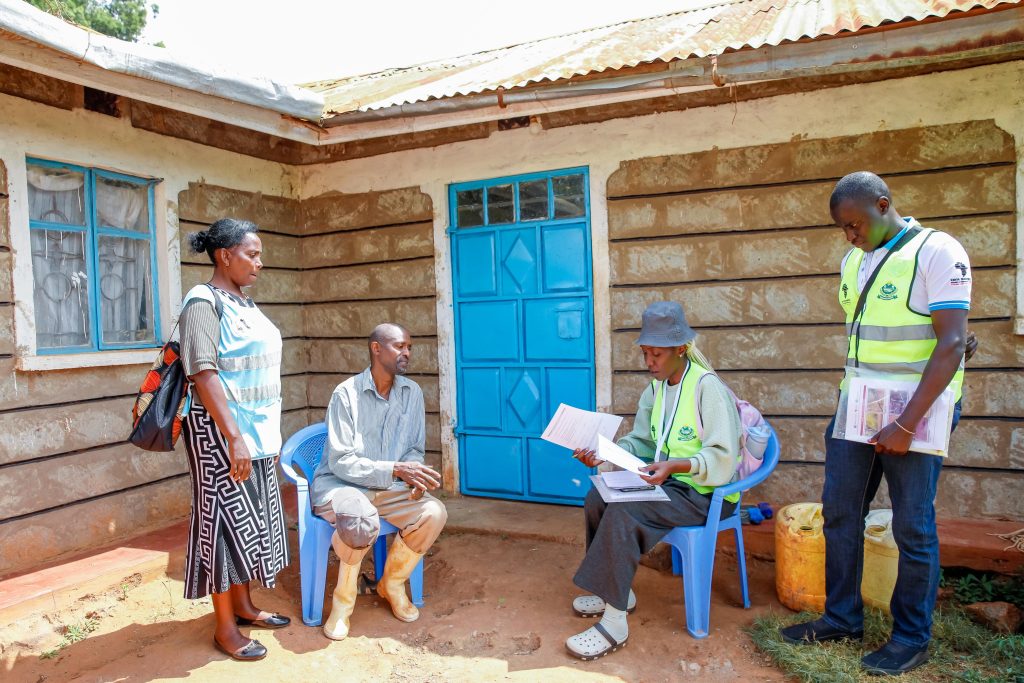
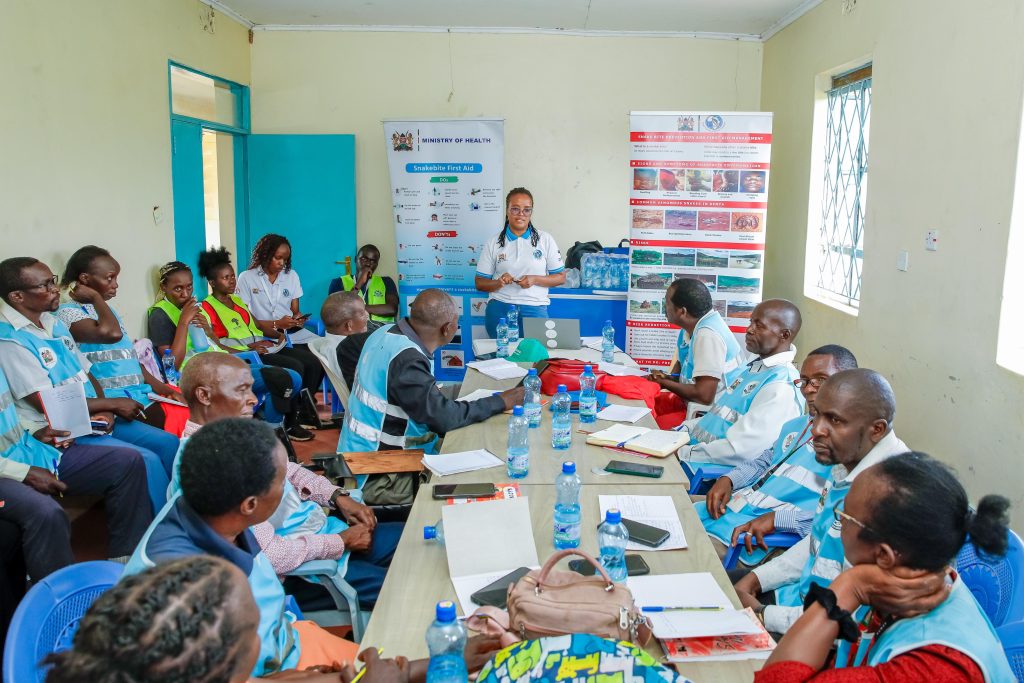
    As part of the exercise, Community Health Promoters (CHPs) are undergoing specialized training on snakebite prevention, appropriate first aid, early recognition of envenoming, timely referral and community education to strengthen frontline response and reduce preventable deaths and disabilities associated with snakebites.

    Cecilia Ngari, a Public Health Research Scientist representing KIPRE, said the institution is working closely with the County Government’s Department of Health to determine the burden of snakebite at the community level while documenting the challenges Community Health Promoters face when responding to snakebite cases.

    “Working closely with the county, we have been able to map around 600 households over the last two and a half weeks, and we expect to cover all the sub-counties before completing the exercise,” she said.

    Ngari said the exercise goes beyond identifying snakebite hotspots, noting that CHPs are being equipped with knowledge and practical skills to identify snakebite cases, administer appropriate first aid, educate communities on prevention measures and facilitate timely referral of victims.

    She observed that the County Government has embraced snakebite as a public health priority, creating an enabling environment for stronger surveillance and community reporting. She added that equipping CHPs will improve case identification and reporting, leading to more accurate data to guide interventions.

    “Our institution has been mandated to develop a locally available antivenom that works better against the snake species found in Kenya. The mapping exercise will provide the evidence needed to understand where snakebites occur most, focus resources appropriately and support the development of an antivenom that will be affordable and easily accessible,” she added.

    The ongoing collaboration underscores Governor Anne Waiguru’s commitment to providing affordable and accessible healthcare services to all county residents.

    “We are committed to putting in place sound health systems that ensure our people access affordable and comprehensive care ranging from disease prevention and treatment to rehabilitation,” she said.

    During the training, CHPs were sensitized on the common signs and symptoms of snakebite envenoming, including swelling, bleeding, blisters, wounds, drooping eyelids and physical deformities resulting from delayed treatment. They were also informed that the red spitting cobra and black mamba are among the common venomous snake species found in Kirinyaga.

    The trainees were further advised on appropriate emergency response measures, including immediately irrigating the eyes with plenty of clean water or milk where venom has been spat into the eyes, while ensuring victims are referred promptly to the nearest health facility for specialized treatment.

    Community Health Promoter Charity Mugo from Kangai Location said the training had equipped her with practical knowledge that will help protect communities from snakebite-related injuries and deaths.

    “We have learnt about different snake species, where they hide and how to prevent them from invading our homes. We have also been trained on safe first aid without putting ourselves at risk. We will now educate our communities to keep compounds clean, use torches when walking at night and seek medical attention immediately after a snakebite,” she said.

    Her counterpart from Mumo, Charles Waweru, said the training had corrected misconceptions about venomous snakes and strengthened the capacity of CHPs to respond effectively to emergencies.

    “The training has opened our eyes. We now know how to respond when someone is bitten or when venom is spat into the eyes, and we will pass this knowledge to our communities to help reduce snakebite cases,” he said.

    Residents from snake-prone areas also welcomed the initiative, saying it will contribute to better prevention and improved access to treatment.

    Murinduko resident Ephantus Kariuki said brown spitting cobras are common in the area, especially around homes where they search for eggs, chicks and water during hot weather. He noted the importance of strengthening the county’s local response system to snakebite emergencies.

    Another resident, Pius Muriithi, recounted surviving a snakebite after being bitten on the leg outside his home at night.

    “I did not realize I had been bitten until I started bleeding and later developed severe swelling on my face. I was rushed by ambulance to Kimbimbi Hospital where I received treatment for more than a week,” he recalled.


  • Government targets bandit financiers in new security operation

    Government targets bandit financiers in new security operation

    Interior and National Administration CS Kipchumba Murkomen has issued a stern warning to individuals sponsoring and facilitating banditry in Samburu, West Pokot, Tiaty and Isiolo, saying security agencies will relentlessly pursue them.

    Speaking in Lolmolok, Suguta Ward in Samburu County, following a consultative meeting with local leaders and security stakeholders, CS Murkomen warned that those financing and coordinating bandit attacks would face the full force of the law.

    “We know where you are, and we will come for you. Through intelligence-led operations, we will find you wherever you are, regardless of who you are, and we must deal with you,” he said.

    He said the Government will launch a security operation, led by Inspector General of Police Douglas Kanja, and urged residents with illegal arms in the county, neighbouring Baringo and Isiolo to voluntarily surrender them before the police go for them.

    Murkomen said the operation is aimed at enhancing security, enabling displaced families to return to their homes, and creating lasting stability in the affected areas.

    “What we did in other parts of Kerio Valley is what we are going to do here until this area is peaceful,” he said.

    Further he announced that government will hire more National Police Reservists and the development of infrastructure such as security installations, roads, and mobile network coverage.

    We will also vet the National Police Reservists in the area and increase their number even as we build roads, security installations and mobile network coverage.”

    The CS was accompanied by the Inspector General of Police Douglas Kanja, DIG (APS) Gilbert Masengeli, GSU Commandant Johana Tonui and other senior Government officials.

    He was joined by Governor Samburu Jonathan Lelelit, MPs Naisula Lesuuda (Samburu West) and Eli Letipila (Samburu North), former Governor Moses Lenolkulal and MCAs led by James Leleruk ( Suguta ward).


  • MPs urged to adopt SHA support programmes to expand healthcare access

    MPs urged to adopt SHA support programmes to expand healthcare access

    Members of Parliament have been urged to establish Social Health Authority (SHA) support initiatives in their constituencies to expand financial protection in healthcare and ensure that no deserving Kenyan is left behind.

    Speaking Wednesday during the launch of the Belgut NG-CDF SHA Support Programme, Principal Secretary for Public Health and Professional Standards, Mary Muthoni noted that the government is expanding access to quality and affordable healthcare through strategic partnerships with leaders, the private sector and other stakeholders to ensure more vulnerable Kenyans benefit from the SHA under Taifa Care.

    The Belgut NG-CDF SHA Support Programme will facilitate the enrolment of 700 vulnerable beneficiaries into SHA.

    The launch was accompanied by a free medical camp organised by the Ministry of Health in partnership with Browns East Africa Plantations, bringing essential healthcare services closer to the community and supporting access to preventive and curative care.

    Addressing the gathering, the Principal Secretary said the Belgut initiative demonstrates the impact of partnerships in advancing Universal Health Coverage.

    She noted that 15,238 vulnerable households have so far been enrolled into SHA through 62 NG-CDF-supported initiatives across 17 counties and 33 constituencies, representing an investment of more than KSh 96 million in health insurance premiums.

    The event was attended by Kericho County Governor Dr Eric Mutai, Belgut Member of Parliament Nelson Koech, Senator Aaron Cheruiyot and other national and county leaders.

  • School farms boost food security in Kenya’s drylands

    School farms boost food security in Kenya’s drylands

    At Inaarok Lukuny Comprehensive School in Kenya’s Kajiado County, pupil enrolment has more than doubled over the past year, rising from 240 to more than 525 children.

    The head teacher attributes much of that growth to a simple change: access to more nutritious school meals.

    In a region where drought, food insecurity and poverty continue to challenge many families, a pilot initiative linking school-based food production with community training is helping to improve children’s diets while creating new opportunities for women farmers.

    The work forms part of a wider initiative led by the Kenya Agricultural and Livestock Research Organisation (KALRO) and partners, including Imperial College London, Egerton University, government agencies and local community organisations, to strengthen school feeding systems in Kenya’s arid and semi-arid lands (ASALs). KALRO research identified challenges in school feeding including limited dietary diversity and difficulties maintaining reliable food supplies.

    In response, four schools in Kajiado and Isiolo counties were selected in April 2025 to establish school farms.

    The schools were selected because they faced food insecurity and also had land that could be used to grow nutritious foods.

    Climate-smart school meals

    The school farms test practical and climate-smart approaches to food production in drought-prone environments, including the use of manure to boost soil fertility, rainwater harvesting, and drought-tolerant crops such as high-iron Nyota beans, cowpeas and green grams.

    At Inaarok Lukuny, what was once dry, uncultivated land has been transformed into a four-acre school farm. Today, the farm includes two acres of intercropped maize and beans, alongside  plots of beans, green grams and African leafy vegetables. Produce harvested from the farm is used to supplement school meals, helping to diversify menus that traditionally relied heavily on externally supplied maize and beans.

    For many children, it has introduced foods they had rarely eaten before.

    “Most of us had never eaten cowpea, but I must confess it was very sweet,” enthuses one student. “The vegetables have improved the taste of our food.”

    The initiative has also strengthened relationships between the school and the wider community. The parents, often pastoralists themselves, now contribute labour to the school farm and provide manure from their livestock to help improve soil fertility and they are more eager for their children to attend school.

    “Education is not always a priority, especially during droughts,” explains Mukiri, Chairman of the School Board. “However, the changes we have seen through the school farm and feeding programme have encouraged more families to send their children to school.”

    Building a network for change

    The lessons emerging from the school farms are helping to shape wider efforts to transform food systems in Kenya’s drylands.

    In May 2026, project partners launched Kenya’s Community of Policy and Practice (CoPP) on school feeding and regenerative agriculture. Led by KALRO, policymakers and local communities, the network aims to share lessons from the pilot farms and support wider adoption across Kenya’s ASALs.

    “CoPPs have become a catalyst for food system transformation across Africa because they create ‘agents of change’ who have a common vision,” says Dr. Samrat Singh of Imperial College London.

    Benefits beyond the school gates

    The experience at Inaarok Lukuny highlights how school feeding can contribute to more than children’s nutrition. It can also strengthen livelihoods and build community resilience in areas facing increasing climate pressures.

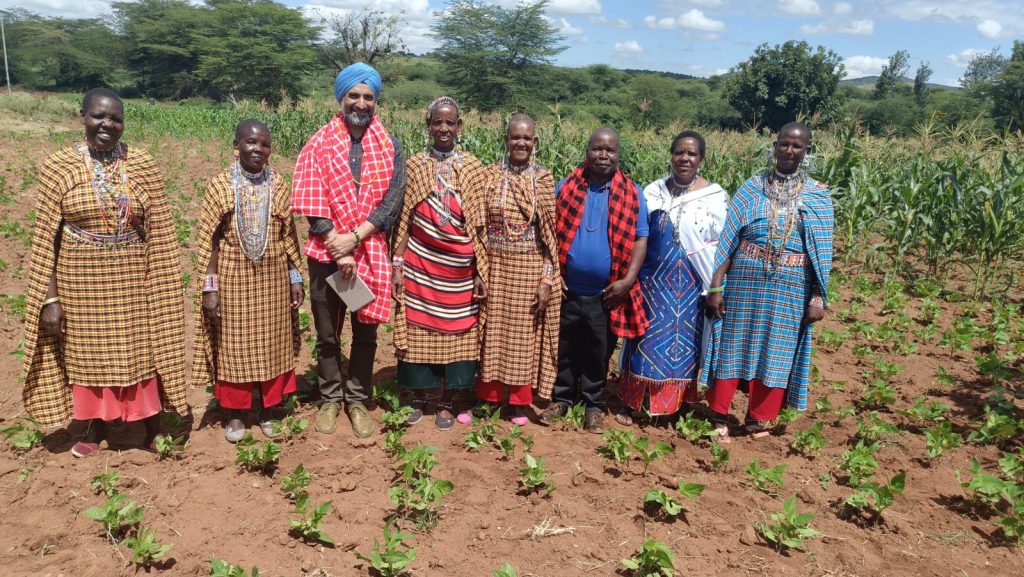
    A short distance beyond the school gates, members of the Mashambani Women’s Group a farming cooperative whose main economic activity is the sale of milk are adopting many of the practices demonstrated at the school’s farm, which serves as a learning centre for the wider community.

    The group, which includes around 30 women, attended the school farm for training in climate-smart approaches, including tied ridges for water conservation small earth embankments that help rainwater soak into the soil and grafting fruit tree seedlings to create stronger and more productive trees.

    “Group members have embraced dairy farming since they now understand how to produce silage (preserved livestock feed for use during droughts),” explains Grace Martine, Vice Chairperson of the Women’s Group.

    Community leaders, such as local chief Stephen Malei, say the school farm initiative is also strengthening women’s role in household decision-making and income generation.

    He explains that members of the Mashambani Women’s Group each cultivate around one acre of Nyota beans and cowpeas during good rainy seasons. Collectively, they produce an estimated 40 bags per season, generating around KES 550,000 (USD 4,200) in revenue.

    “In the past, we depended only on livestock, but now this climate-smart farming project gives households both food and income,” says Malei.

    Looking ahead

    The next phase of the initiative aims to expand the production of nutritious crops, including Nyota beans, cowpeas and green grams, to additional schools and women’s groups across the region. The newly launched CoPP will help scale this approach to more schools and communities.

    While challenges remain, particularly around water access and the long-term sustainability of the school farms, the experience in Kajiado County shows how school feeding programmes can do more than provide a daily meal. By connecting schools and communities especially women producers, they can improve nutrition, strengthen livelihoods and build more resilient food systems.