Author: Prudence Wanza

  • Ruto arrives in Madagascar for official visit, Independence Day celebrations

    Ruto arrives in Madagascar for official visit, Independence Day celebrations

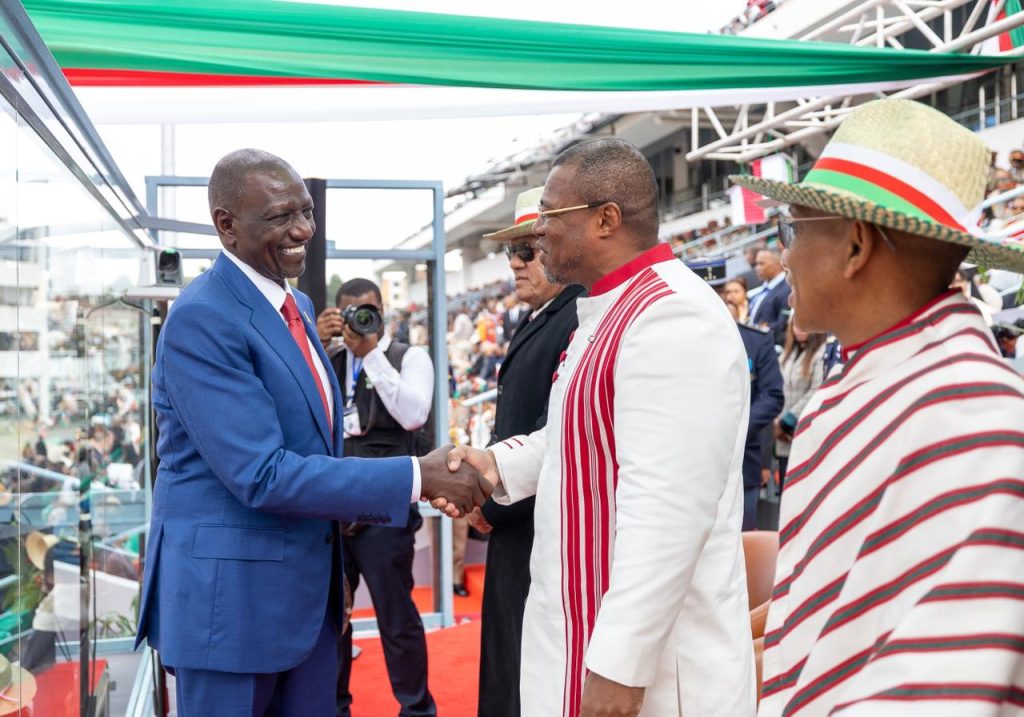
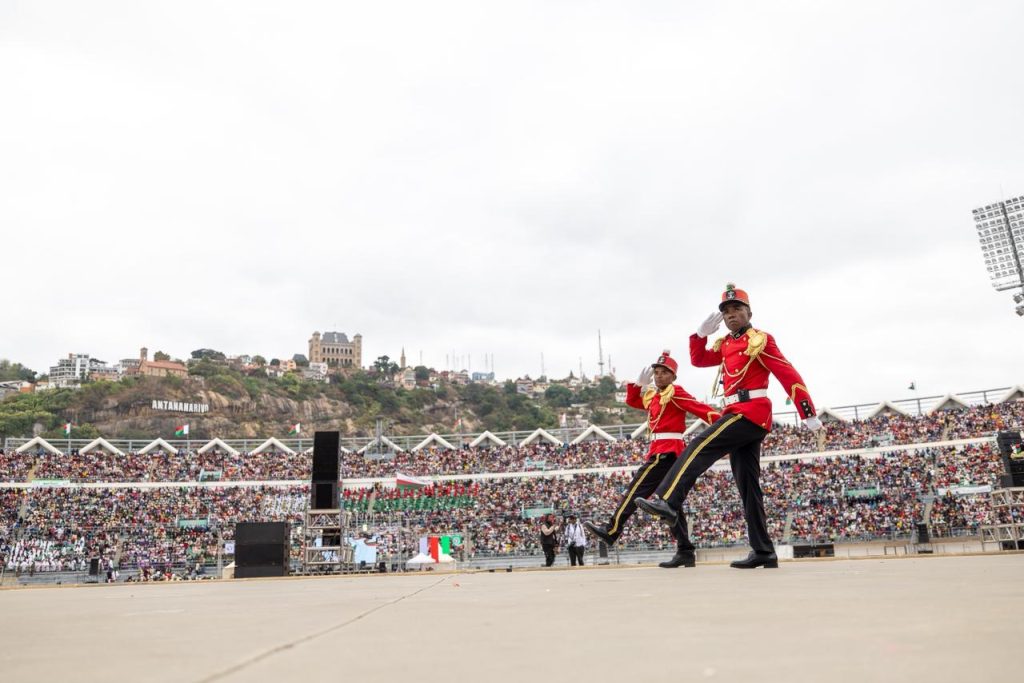
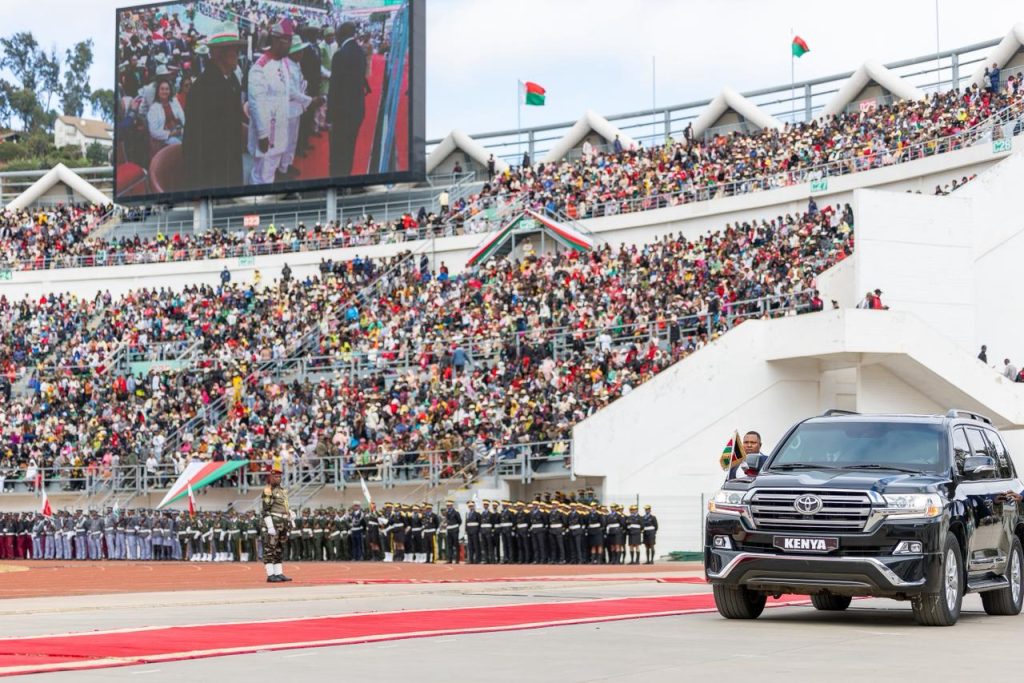
    President William Ruto is in Madagascar for an official visit and to attend the country’s 66th Independence Day celebrations.

    Ruto is expected to hold bilateral talks with Madagascar’s leadership, with discussions set to focus on agriculture, ICT, trade and aviation.

    He is accompanied by Trade Cabinet Secretary Lee Kinyanjui, ICT Cabinet Secretary William Kabogo and Agriculture Cabinet Secretary Mutahi Kagwe, who are scheduled to participate in a Kenya-Madagascar business forum.


  • Stop branding public projects with personal names, EACC warns leaders

    Stop branding public projects with personal names, EACC warns leaders

    The Ethics and Anti-Corruption Commission (EACC) has warned political leaders against branding publicly funded projects and programmes with their names, images, symbols or political party identities.

    In an advisory dated June 23, 2026, EACC Chief Executive Officer Abdi Mohamud said the commission has noted an emerging trend where public projects are being associated with individual political leaders, terming the practice an abuse of office and misuse of public resources.

    Mohamud said reports received by the commission indicate that some political leaders have consistently branded government-funded projects and programmes using their personal names, images or symbols.

    The anti-graft agency said such actions violate constitutional principles on leadership, integrity, public finance management and ethical conduct.

    “While recognition of public service is important, branding of publicly funded projects and programmes with the identities of political office holders amounts to abuse of office, misuse of public resources and unethical conduct contrary to Articles 10, 73 and 75, 201 (d) of the Constitution of Kenya, 2010, Public Finance Management Act, 2012 and the Leadership and Integrity Act, 2012,” said Mohamud.

    EACC said public officers are required to prioritise public interest over personal or political gain, uphold transparency and accountability in the management of public resources and maintain high standards of integrity in executing their duties.

    The commission directed state and public officers to stop using public resources to advance personal, political or partisan interests.

    Public entities have also been urged to ensure that government projects do not carry names, portraits, images or symbols of serving state officers, public officers, political leaders or political parties before, during or after implementation.

    EACC further directed implementing agencies to ensure that where recognition is necessary, it should only identify the responsible government entity and indicate whether the project is supported by the National or County Government.

    The commission says it will monitor compliance with the directive and that violations could attract administrative or legal sanctions.

  • Universities urged to turn research into solutions for societal challenges

    Universities urged to turn research into solutions for societal challenges

    Universities have been challenged to strengthen research and innovation initiatives that deliver practical solutions to societal challenges and create tangible benefits for communities.

    Speaking during the official opening of the 5th Meru University of Science and Technology International Conference (MUSTIC) at the university’s main campus in Nchiru, Meru County, Principal Secretary for the State Department for Forestry Gitonga Mugambi said institutions of higher learning must focus on problem-driven research that responds to real community needs.

    Mugambi, who was the chief guest, said universities should move beyond generating knowledge and focus on commercialising research through partnerships with industry and other stakeholders to ensure innovations create lasting value.

    He urged institutions to protect their innovations through patenting and other intellectual property rights, warning that failure to secure ownership could allow other countries and organisations to benefit from locally developed solutions without recognition or compensation.

    The PS said the State Department for Forestry remains committed to working with universities and research institutions to develop solutions aimed at addressing the effects of climate change.

    He noted that collaboration between government agencies and academic institutions is critical in developing evidence-based policies and practical interventions that support environmental conservation and strengthen climate resilience.

    Meru University of Science and Technology Vice Chancellor Prof. Romanus Odhiambo said the institution considers research and innovation key drivers of societal transformation and improved livelihoods.

    He said this year’s conference theme, “Imagining Tomorrow: Interdisciplinary Solutions for a Resilient and Sustainable Global Future,” comes at a time when the world is grappling with rapid technological changes, climate change, food insecurity, health challenges, and economic uncertainties.

    Prof. Odhiambo said the complexity of these challenges requires collaboration across disciplines, institutions, countries, and continents, noting that no single sector can address them alone.

    He added that universities have a responsibility to generate knowledge, develop innovations, and translate research findings into practical solutions that support economic growth and national development.

    The Vice Chancellor said Meru University is using science, technology, and innovation to develop solutions that help communities respond to climate-related challenges.

    He said the institution is engaging local communities through training and awareness programmes on sustainable agriculture, environmental conservation, and climate-smart initiatives.

    The Secretary and Chief Executive Officer of the State Corporations Advisory Committee (SCAC), Simon Indimuli, challenged universities to strengthen partnerships with communities by developing innovations that address everyday challenges.

    Indimuli said research in areas such as entrepreneurship and smart agriculture has the potential to improve livelihoods, urging universities to focus on innovations with measurable impact.

    He also called on institutions of higher learning to embrace Artificial Intelligence (AI), saying the technology should be viewed as a tool for enhancing human capacity rather than replacing human judgment.

    Indimuli said universities must adapt to emerging technologies, noting that resistance to AI adoption could create a gap between academia and the changing demands of society.

    Meru University Council Chairman Prof. James Ireri Kanya said the council remains committed to providing strategic leadership and oversight to ensure the institution responds to changing societal needs while maintaining academic excellence, accountability, and sustainability.

    Prof. Kanya said the growth of the university’s international conference demonstrates the importance of platforms that bring together researchers, policymakers, industry leaders, development partners, and students to share knowledge and develop solutions.

    He said research and innovation remain central to the success of universities as they drive economic growth, inform policy, create opportunities, and improve the quality of life for communities.

    The three-day conference will provide participants with an opportunity to exchange ideas and explore interdisciplinary approaches aimed at building a resilient and sustainable future while addressing global challenges.

  • Meru doctors’ strike enters fourth week as patients struggle to access healthcare

    Meru doctors’ strike enters fourth week as patients struggle to access healthcare

    Residents of Meru County continue to face disruptions in accessing healthcare services as the doctors’ strike enters its fourth week, affecting operations in public health facilities.

    Patients seeking treatment at county hospitals have been turned away or forced to endure long waits due to the absence of doctors.

    The prolonged industrial action has left thousands of residents struggling to access essential medical care, with expectant mothers, children, the elderly, and patients with chronic illnesses among those most affected.

    The situation has forced some patients to seek treatment in neighbouring counties, while others have turned to private hospitals where the cost of healthcare remains unaffordable for many families.

    Some residents say they have been forced to delay seeking medical attention altogether due to financial constraints, raising concerns over the impact of the strike on public health.

    Efforts to resolve the dispute between the county government and doctors’ representatives have yet to yield a breakthrough, with no agreement reached to end the industrial action.

    The medics maintained that failure by county government to implement a Return-to-Work Agreement signed in May 2026 led to the strike.

    They accused the county administration of failing to honour key commitments contained in the agreement.

    “We have engaged the Meru County government in meetings and so far, they have not honoured the agreement we signed. They have since refused to pay doctors hired on contract as per the CBA rates and therefore, we are still on strike,” said Dr Kananu Kubai, Chairperson of the Kenya Medical Practitioners, Pharmacists and Dentists Union (KMPDU) Eastern region.

    The doctors also raised concerns over staffing shortages that have increased their workload, delayed promotions, salary stagnation, continued reliance on short-term contracts, and failure to grant study leave for professional development.

    They argued that the unresolved issues have affected healthcare workers’ welfare and the quality of services offered to residents.

  • PS Bitok reassures tourists as sector battles Ebola-related cancellations

    PS Bitok reassures tourists as sector battles Ebola-related cancellations

    The government has assured Kenyans and visitors that the country is prepared to respond to any potential Ebola emergency, saying no case of the disease has been reported.

    Speaking during the Kenya Association of Hotelkeepers and Caterers (KAHC) Annual Symposium at Diamonds Hotel in Malindi, Kilifi County, Tourism Principal Secretary Julius Bitok said reports suggesting Kenya had Ebola cases are misleading, noting that the measures being implemented are precautionary.

    “I want to assure both Kenyans and our international guests that Kenya is safe. There is no Ebola case in the country. The government has put in place watertight measures to detect, contain and respond to any suspected case. We urge tourists from across the world not to cancel their travel plans. Kenya is open, safe and ready to welcome you,” Bitok said.

    The PS called on government agencies responsible for tourism promotion to intensify marketing efforts to help the country achieve its target of attracting five million visitors by December this year.

    Bitok said Kenya currently receives about 1.5 million visitors annually, a figure he described as below the country’s tourism potential.

    Malindi MP Amina Mnyazi defended the establishment of quarantine centres, saying the facilities are precautionary measures aimed at ensuring the country is prepared in case of an outbreak, given the movement of people between Kenya and the Democratic Republic of Congo where Ebola cases have been reported.

    “We support all measures to ensure Kenya is ready to handle any case, should it arise. But as of now, we are safe, and we want the world to know that,” she said.

    KAHC National Chairman Christopher Musau challenged the government to address misinformation linking Kenya to the Ebola outbreak, saying the claims have affected the tourism sector through cancelled bookings.

    “The government has assured us that there is no Ebola in Kenya and we should take that as a good sign and spread the message. A lot of misinformation has hit the tourism sector very hard,” Musau said.

  • Duale: Ebola quarantine facilities are precautionary not a sign of outbreak

    Duale: Ebola quarantine facilities are precautionary not a sign of outbreak

    Health Cabinet Secretary Aden Duale has reassured Kenyans that the establishment of Ebola quarantine and isolation facilities in the country does not mean Kenya has recorded a case of the deadly virus.

    Health Cabinet Secretary Aden Duale said the facilities are part of the government’s preparedness strategy to ensure the country can respond swiftly should an imported Ebola case be detected.

    “We are aware that some members of the public have raised questions regarding the establishment of quarantine and isolation facilities for this disease. These facilities are preparedness measures and do not mean that Kenya has an Ebola case,” Duale said.

    According to the CS, the isolation and quarantine facilities are designed to enable health authorities to quickly contain suspected cases, protect healthcare workers and prevent the virus from spreading into communities.

    “Just as a country prepares fire engines before a fire occurs, public health authorities must prepare isolation and quarantine facilities before an outbreak occurs,” he stated.

    The remarks come after the CS was cleared of contempt following his appearance before the High Court to explain alleged failure to comply with orders stopping the construction of an Ebola quarantine facility at Laikipia Airbase in Nanyuki.

    Duale stressed that investing in preparedness is far less costly than responding to a full-scale outbreak, noting that previous Ebola epidemics across Africa resulted in billions of dollars in economic losses through disruptions to trade, tourism, travel and investment.

    The reassurance comes amid ongoing Ebola outbreaks in the Democratic Republic of Congo (DRC) and Uganda, although Kenya has not reported any confirmed case of the disease.

    Duale revealed that the Ministry of Health, through the Kenya National Public Health Institute (KNPHI), activated the national Ebola Incident Management System on May 20, 2026, and has since intensified preparedness measures nationwide.

    The measures include enhanced screening of travellers at airports and land border points, strengthened surveillance systems, expansion of laboratory testing capacity, training of healthcare workers and stockpiling of personal protective equipment.

    Duale said Kenya has so far screened more than 140,000 travellers arriving from affected countries and investigated over 100 Ebola alerts, all of which tested negative.

    He urged Kenyans to remain calm but vigilant and continue observing public health measures to reduce the risk of Ebola entering and spreading in the country.

  • King Charles reveals he paid £12.9m in tax for 2024-25

    King Charles reveals he paid £12.9m in tax for 2024-25

    King Charles has disclosed he paid £12.9m in tax for 2024-2025 – becoming the first monarch to reveal their tax bill.

    The level of tax paid by the King puts him in the top 100 of UK taxpayers.

    The Prince of Wales declared he paid £7.76m tax over the same period, the figures in the annual royal report and accounts show.

    It has also been revealed the King and Queen Camilla will continue to live in Clarence House and not move into Buckingham Palace.

    The accounts show the main source of annual public funding for the Royal Household, the Sovereign Grant, is rising to just under £100m for the year 2027-28.

    The accounts also show the King paid £11.7m in tax for 2023-24, while Prince William paid £8.34m for the same period.

    The publication of how much tax the King and Prince William voluntarily pay was a personal decision made by both men, according to their offices.

    Buckingham Palace described the move as increasing transparency and aimed to “encourage wider understanding of our accountability.”

    Since the King became monarch in 2022 and William the Prince of Wales, the combined tax bill of father and son paid to HM Revenue and Customs has been more than £50m.

    The new figures do not give any detailed breakdown of how the tax has been calculated.

    The monarch paid the highest rate of tax.

    The King receives an annual income from his Duchy of Lancaster estate set up to give the monarch an independent source of money for official and private expenditure.

    It is a portfolio of land, investments and properties. It provides the King with an annual income which in 2025-26 was £25.2m.

    Other sources of income, liable for tax, include the King’s own investments and savings alongside money generated by his private estates, Balmoral and Sandringham.

    Initially, the Prince William did not release his tax payments when he became heir to the throne – but in line with his father, he has now made his payment of income and capital gains tax public.

    Prince William receives an income from the Duchy of Cornwall – a billion-pound 130,000 acre hereditary estate which also includes the Oval cricket ground in London – which funds official duties, his office and private family life.

    “Prince William pays income tax at the highest rate on any net surplus after those costs have been met. Those costs are independently audited to ensure that any deductions are appropriate,” said the prince’s private secretary Ian Patrick.

    “The prince recognises the interest in these arrangements and the importance of appropriate transparency.”

    The tax payable for 2025-2026 is still being audited and will be made public next year.

    The income or any detail on private investments for both the King and Prince William has not been disclosed.

    Prince William has also announced he will no longer personally benefit from the £1.5m annual rent generated by the abandoned Dartmoor Prison.

    He has asked for the sum to be removed from the income of the Duchy Of Cornwall with the money instead spent on supporting the local community particularly in the rural community of Princetown close to the prison.

    Dartmoor has been empty since 2024 due to high levels of the toxic gas, radon, discovered within the building.

    The publication of the annual royal accounts also reveal:

    • The most expensive overseas royal visit was Prince William’s three-day trip to Saudi Arabia in February this year costing just over £130,000
    • This was just ahead of the £126,946 in travel costs for the King and Queen’s four-day state visit to Italy in April 2025
    • The King’s trip on the royal train to Lancaster in June 2025 costing £48,460. The train is due to be taken out of service by 2027 to save money.
    • Some 177 helicopter journeys were made by Royal Family over the past year costing £733,063

    Meanwhile, under a new formula for calculating the Sovereign Grant, the Royal Household will receive £99.9m a year from 2027-2028. Three years ago the figure was £51.8m.

    The grant provides public funding for the running costs of the monarchy. This includes core staff costs, running expenses of the King’s official household including receptions, maintenance of palaces in England and travel costs for royal engagements.

    The higher figure was decided upon by Royal Trustees – Prime Minister Sir Keir Starmer, Chancellor Rachel Reeves and the King’s keeper of the Privy Purse and treasurer James Chalmers.

    The extra money will be used pay for the upkeep of historic buildings, strengthen cyber security at royal residences and support the transition to green energy with £11m earmarked to replace boilers at Windsor Castle.

    Chalmers insisted the funding was “not a blank cheque” and there were strict checks to ensure the grant was value for money.

    “Expenditure is governed by the same standards and disciplines as any publicly funded body, with strict value-for-money requirements, detailed planning, multi-year strategies, independent audit, and Treasury oversight,” he said.

    For the past 10 years, the Sovereign Grant has been at a higher level than its core sum to cover the costs of the major refurbishment of Buckingham Palace which will be complete by the end of 2027.

    With the work finished, the annual figure will fall from £137.9m to a core funding of £99.9m – a sum that will be unchanged for the next five years when it will next be reviewed but is significantly higher than previous years.

    “It is important to emphasise that the Sovereign Grant does not provide personal income to members of the Royal Family,” Chalmers said. “It funds the work of the institution – not private lives or private wealth.”

    The decision of the King and Queen to continue living in Clarence House, where they have been based since 2005, has been taken to allow greater public access to Buckingham Palace, officials said.

    Refurbishments on the palace totaling just under £370m are set to be completed in March next year.

    It is hoped it will also allow the landmark to generate more income.

    It will mark the first time since Queen Victoria’s reign that a monarch has chosen to reside away from Buckingham Palace.

    Historian Anna Whitelock told BBC News the King revealing his tax bill puts him “front and centre as a very rich man”.

    She said the disclosure was a direct response to calls for greater accountability and financial transparency in the monarchy, particularly in recent weeks and months.

    “I do think this is very much a sign of the times, and it’s an attempt by the monarchy to try and get on front foot and before they were absolutely pushed to try and show they are responsive and not reactive.”

    Norman Baker, former Lib Dem Home Office minister and a critic of royal funding, told BBC News Buckingham Palace visitor ticket sales should go to the Treasury and not the Royal Family.

    “They bring in millions every year, so what should happen is if they’re not living in Buckingham Palace, [they] should open it to the public and all the money from visitors 12 months of the year should go to the Treasury to help pay for refurbishment,” he said.

    He added the tax payments show the source of income for both the King and Prince William are “enormous” and it needs to be explained why they are “so expensive”.

    “If Charles is talking about slimming down the monarchy and William as well, we want slimmed down costs, not just fewer people on the Buckingham Palace balcony.”

    It has also been revealed operating profits at the Crown Estate, which oversees the Royal Family’s property holdings and is an independently-run commercial business with profits going to the Treasury, slumped over the past year.

    The Sovereign Grant is based on a percentage of the profits of the Crown Estate. The grant is not from the Crown Estate, it comes from the Treasury, but the Crown Estate is used as a benchmark.

    The operating profits fell to £1.2bn in the year to March, compared with £1.4bn last year.

    Figures showed the drop was primarily linked to offshore wind, as a previous boost from fees linked to offshore wind faded away, with projects now entering construction.

    Earnings had spiked to record levels in the past two years thanks to option fees – payments made by companies to reserve a part of the seabed to eventually build their wind turbines on.

  • Rescuers search rubble for survivors as Venezuela earthquakes kill at least 235

    Rescuers search rubble for survivors as Venezuela earthquakes kill at least 235

    Rescuers are searching through rubble in a rush to save lives after two powerful earthquakes struck Venezuela near the capital, killing at least 235 people and injuring at least 4,300.

    In Caracas and the nearby coastal city of La Guaira, people could be heard calling for help from under the debris of collapsed buildings.

    The first 7.2-magnitude quake was followed seconds later by an even stronger 7.5-magnitude one, according to the US Geological Survey (USGS), with both occurring close to the surface, making destruction more severe.

    Many more people are feared dead, with others left homeless or too afraid to stay in damaged, unsafe buildings sleeping in the streets after the disaster.

    The earthquakes struck at 18:04 local time (22:04 GMT) on Wednesday – a national holiday in Venezuela, meaning more people would have been at home than on a normal weekday.

    Both quakes were shallow – the first centred 20.3km below the surface and the second at a depth of 10km, according to USGS.

    Jorge Rodríguez, the president of Venezuela’s National Assembly, reported on Thursday that the death toll had risen, after the country’s interim President Delcy Rodríguez declared a state of emergency.

    Several countries have pledged to help the rescue efforts, with the US promising $150m (£113m) in aid. The US military is sending transport ships and aircraft to support search and rescue teams and “rapid relief operations”, it said in a statement.

    Jorge Rodríguez said 250 buildings had been damaged or lost, mostly in La Guaira, where the BBC verified footage of a 10-storey hotel reduced to rubble. On Thursday, people were searching for loved ones there.

    Juan Ortiz told the BBC one of his close friends had been confirmed dead, another was believed to be under the rubble, and around 20 people he knew who live in the coastal area were missing.

    “I’m in shock and confusion, and frustrated that I can’t help,” the medical student in Caracas said.

    Buildings were also brought down in the capital, Interior Minister Diosdado Cabello said, with Trujillo, Yaracuy, Carabobo, Aragua and Miranda also affected.

    Mayor Gustavo Duque of Chacao, which forms part of the greater metropolitan area of Caracas, said outside one ruined building on Thursday that 11 people had died there and 23 had been rescued.

    In a video update posted on social media, he said the team was trying to clear the rubble so that specialists could go in “to reach people who are hopefully still alive”.

  • UN nuclear chief says inspectors will visit Iran sites as part of war deal

    UN nuclear chief says inspectors will visit Iran sites as part of war deal

    The head of the global nuclear watchdog has said it will carry out inspections in Iran under the country’s preliminary peace agreement with the US.

    “The inspections will indeed take place,” International Atomic Energy Agency director general Rafael Grossi told reporters in Japan. “We will be working on the modalities – dates, procedures, places-very soon.”

    The agreement signed last week said “explicitly” that the dilution of Iran’s highly enriched uranium would be carried out under IAEA supervision, he added.

    However, Iran’s deputy foreign minister said access to its damaged nuclear facilities and nuclear material would only be addressed within the framework of a final deal with the US.

    Grossi’s comments come as US Secretary of State Marco Rubio is visiting Gulf nations to discuss the deal. On Wednesday he met UAE President Mohamed bin Zayed Al Nahyan and is due to travel to Kuwait and Bahrain.

    The initial US-Iran agreement also said that Iran would allow shipping to pass through the Strait of Hormuz while the US would lift a naval blockade on Iranian ports.

    On Wednesday the price of Brent crude oil fell to below $75 (£57) for first time since the US-Israeli war on Iran began.

    Meanwhile the UN said some ships had already passed through the strait under a scheme to evacuate thousands of sailor stranded by the war.

  • France confirms first Ebola case

    France confirms first Ebola case

    France has confirmed its first case of Ebola – a doctor who had returned from a humanitarian mission in the Democratic Republic of Congo.

    The doctor was “immediately admitted to a specialised facility” and is in a stable condition, the French health ministry said on Wednesday.

    DR Congo announced an Ebola outbreak last month, but experts believe the virus had been circulating for weeks previously.

    More than 260 people are confirmed to have died from the virus in the central African country, while 1,000 people have been infected.

    This is the first Ebola case to have been confirmed in Europe, although an American doctor who tested positive in DR Congo was treated at a German hospital last month.

    DR Congo’s neighbour, Uganda, has also confirmed Ebola cases. The World Health Organization (WHO) says 20 people are known to have been infected there and two deaths have been confirmed.

    It added that authorities were working to trace people who may have been in contact with the doctor.

    Healthcare workers are especially at risk from Ebola, which is spread through bodily fluids.

    Last week WHO said 17 of the 75 health workers who had caught Ebola in DR Congo had died.

    The current Ebola outbreak was caused by the Bundibugyo species of the virus, for which there is currently no vaccine.

    France has set up a “dedicated monitoring system” for aid workers returning from DR Congo, the health ministry said.

    According to both Africa’s Centres for Disease ​Control and Prevention (Africa CDC) and US public health authorities, the current Ebola outbreak has the potential to be one of the largest ever.

    In DR Congo, cases are currently concentrated in the eastern provinces of Ituri, South Kivu and North Kivu.

    Ituri remains the main centre of transmission, accounting for more than 90% of confirmed infections.