Author: Prudence Wanza

  • UDA’s Samuel Muchina confident of victory in Ol Kalou by-election

    UDA’s Samuel Muchina confident of victory in Ol Kalou by-election

    UDA candidate Samuel Muchina Nyagah has expressed confidence in winning the Ol Kalou parliamentary by-election.

    Speaking after casting his ballot at Huruma Primary School, Muchina said he is prepared to accept the outcome of Thursday’s poll.

    He commended the voter turnout witnessed across the constituency, saying it is a testament to residents’ commitment to exercising their democratic right.

    “I am ready for the outcome. I know I am winning, but I am prepared to accept whatever the people of Ol Kalou decide at the ballot. The will of the people is what we will follow,” he said.

    Muchina urged eligible constituents who had not yet voted to turn out before the close of polling at 5:00 p.m.

    “We have had three months to campaign and have done our best. The people of Ol Kalou have listened to us. I encourage residents of Ol Kalou Constituency to come out in large numbers and elect a Member of Parliament who will serve them for the next one year,” he said.

    Nyandarua Governor Kiarie Badilisha, who spoke shortly after voting at Ol Kalou Comprehensive School, noted that the exercise had been peaceful and urged residents to remain calm after casting their ballots.

    Badilisha appealed to residents to leave polling stations once voting closes at 5:00PM to allow election officials to tally the results without disruption.

    The Ol Kalou by-election was occasioned by the death of area MP David Kiaraho in March this year.

    The race has attracted several candidates, with Muchina facing competition from Sammy Kamau Ngotho of the Democracy for Citizens Party (DCP) and Jubilee Party’s Wilson Kigwa, among others.

  • Ol Kalou by-election: Residents brave chilly morning as voting begins

    Ol Kalou by-election: Residents brave chilly morning as voting begins

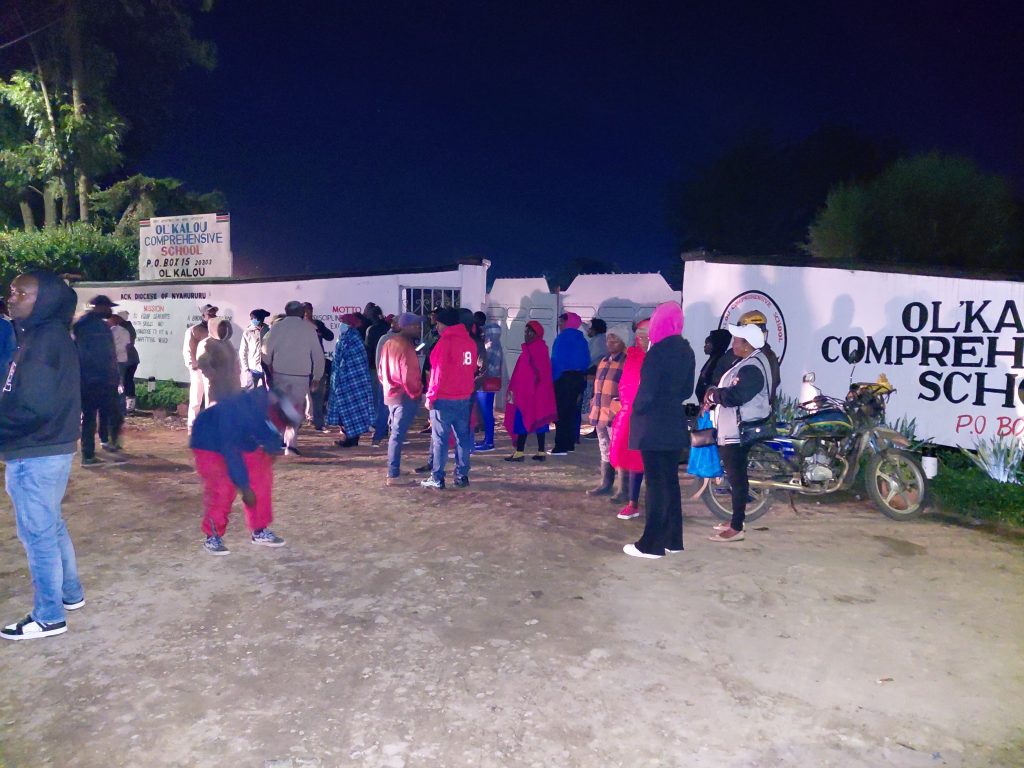
    Residents of Ol Kalou Constituency braved chilly weather Thursday morning as they turned up to vote in the parliamentary by-election.

    Voters started arriving at polling centres as early as 5:00AM, with queues forming at several stations.

    At Huruma Primary School, where UDA candidate Samuel Muchina Nyagah is expected to cast his vote, the Independent Electoral and Boundaries Commission (IEBC) established four voting streams to ease congestion and facilitate a smooth voting process.

    Meanwhile, voters also lined up outside AC Primary School, where Democracy for Citizens Party (DCP) candidate Sammy Kamau Ngotho is expected to vote later in the day.

    The parliamentary by-election is being held to fill the seat left vacant following the death of former area MP Njuguna Kiaraho.

    Voting is expected to end at 6:00PM although IEBC has assured residents that all voters who will be in the queue by the stipulated time will be allowed to cast their ballots.

    Ol Kalou has a total of 73,480 registered voters spread across five wards.

    Key contenders in the race include Samuel Muchina Nyagah (UDA), Sammy Kamau Ngotho (DCP) and Engineer Wilson Kigwa (Jubilee).

    Others are Timothy Kamau of the People’s Renaissance Movement, Edwin Muchiri of PNU, Stephen Wanyoike of the National Liberal Party, Rachael Njoroge, Edward Mwaniki of the Kenya Moja Movement and Abdifatah Hussein of the Federal Party of Kenya.

  • All systems go for Ol Kalou by-election as IEBC assures of credible poll

    All systems go for Ol Kalou by-election as IEBC assures of credible poll

    The Independent Electoral and Boundaries Commission (IEBC) has assured of a free, fair and credible parliamentary by-election in Ol Kalou.

    Speaking on Wednesday after assessing the distribution of election materials at the constituency tallying centre, IEBC Commissioner Ann Nderitu said all preparations have been put in place ahead of Thursday’s exercise, with voting set to begin at 6:00AM and close at 5:00PM.

    She, however, noted that all voters who will be in the queue by the official closing time will be allowed to vote.

    Nderitu expressed confidence in the reliability of IEBC’s Kenya Integrated Election Management System (KIEMS) kits for voter identification.

    “The KIEMS kit has worked in all other by-elections. We have a 99.99 per cent success rate and we believe Ol Kalou will not be an exception,” she said.

    Voters will be required to present either their national identity card or passport before verification and casting their vote.

    “The system uses fingerprint verification and facial recognition, both of which are part of the biometric information captured in the Register of Voters.In the unlikely event that a voter’s fingerprints cannot be verified, we will use alphanumeric identification by entering the voter’s ID number into the system,” she explained.

    Nderitu further called on voters to observe electoral laws, warning against taking photographs inside the voting booth.

    “Taking photographs inside the voting booth is against the law. We urge voters to preserve the secrecy of their vote and leave the polling station after voting,” said Nderitu.

    “This election shall be transparent, open, credible and verifiable,” she added.

    Meanwhile, IEBC Commissioner Hassan Noor defended the deployment of 1,000 police officers across the constituency, saying the move is meant to maintain law and order while protecting the integrity of the electoral process.

    “No unmarked vehicles will be allowed within the constituency. Police have been instructed to impound any vehicle operating without number plates. We are also not closing any roads. We are only managing access into the constituency to prevent the transportation of goons from outside,” he stated.

    Ol Kalou Constituency has 73,480 registered voters spread across five wards and 144 polling stations.

    The parliamentary seat fell vacant following the death of David Kiaraho on March 29, 2026.

    Nine candidates are contesting the seat, including Samuel Muchina Nyagah (UDA), Sammy Kamau Ngotho (DCP) and Engineer Wilson Kigwa (Jubilee).

  • Security beefed up in Ol Kalou ahead of by-election

    Security beefed up in Ol Kalou ahead of by-election

    Residents of Ol Kalou Constituency have been assured of adequate security ahead of Thursday’s parliamentary by-election.

    said security personnel have been deployed across the constituency to ensure a peaceful exercise.

    “We are prepared and have deployed security officers as requested by the IEBC. We want to assure the people of Ol Kalou that their security is guaranteed. They should wake up on Thursday, cast their vote and then leave peacefully,” he said.

    Nkanala commended political parties, candidates and their supporters for complying with electoral regulations after the official campaign period ended on Monday.

    He urged all stakeholders to continue observing the election rules until the exercise is concluded.

    “So far, we have not received any reports of insecurity. Even if you move around the constituency, there is no tension. People are going about their normal business,” he said.

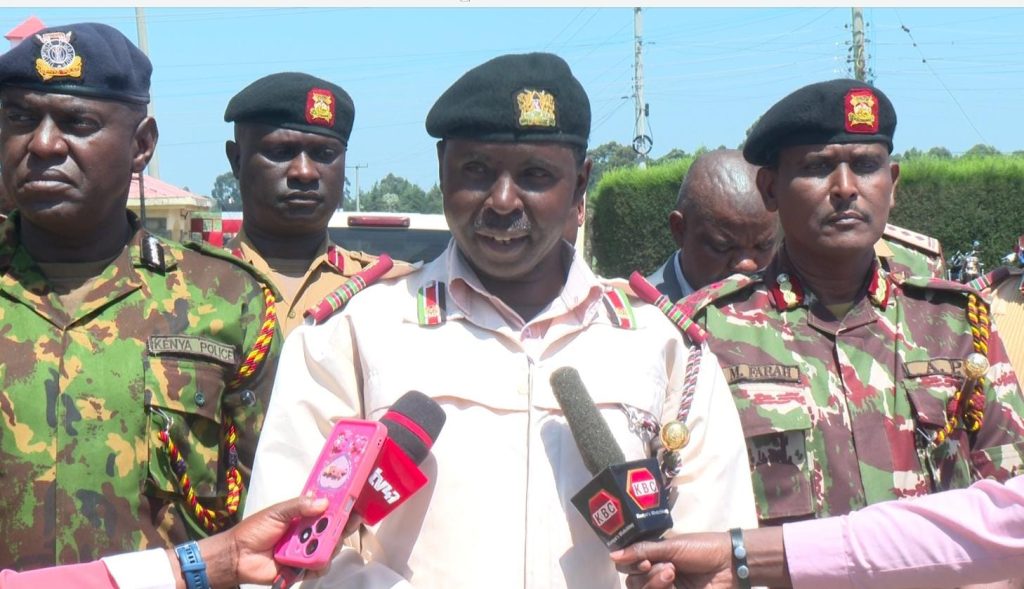
    Central Regional Commissioner Joshua Nkanala

    Nkanala pointed out that political parties will have agents stationed at every polling station to oversee voting process and safeguard the interests of their respective candidates.

    He urged residents to maintain peace during and after the election, warning against any form of incitement or violence.

    “I urge the people of Ol Kalou to vote peacefully. Nobody should incite others to engage in violence,” he said.

  • Stage set for Ol Kalou by-election as 73,480 voters await poll

    Stage set for Ol Kalou by-election as 73,480 voters await poll

    Ol Kalou voters will head to the polls on Thursday to elect a new Member of Parliament in a by-election that has attracted nine candidates.

    A total of 73,480 registered voters across five wards are expected to cast their ballots at 144 polling stations beginning at 6:00AM.

    The Independent Electoral and Boundaries Commission (IEBC) has confirmed its readiness for the exercise, with election materials set to be issued to presiding officers before being transported to the 144 polling stations across the constituency.

    Ol Kalou Returning Officer Muhiu Njiraini expressed confidence in the security arrangements put in place ahead of the poll and urged residents to turn out in large numbers to cast their votes.

    “We are ready for this by-election. All election materials have been packed and are ready for deployment to all 144 polling stations,” said Njiraini.

    “We urge everybody to come out and vote. There should be no fear of intimidation whatsoever,” he added.

    The Ol Kalou parliamentary seat fell vacant following the death of David Kiaraho on March 29, 2026.

    The candidates in the race include Samuel Muchina Nyagah of UDA, Sammy Kamau Ngotho of DCP and Engineer Wilson Kigwa of the Jubilee Party candidate.

    Others are Timothy Kamau of the People’s Renaissance Movement, Edwin Muchiri of PNU, Stephen Wanyoike of the National Liberal Party, Rachael Njoroge, Edward Mwaniki of the Kenya Moja Movement and Abdifatah Hussein of the Federal Party of Kenya.

  • Ruto directs counties to waive business permit fees for NYOTA beneficiaries

    Ruto directs counties to waive business permit fees for NYOTA beneficiaries

    President William Ruto has directed county governments to waive business permit fees for beneficiaries of the National Youth Opportunities Towards Advancement (NYOTA) Programme for two years as the government moves to lower the cost of doing business for young entrepreneurs.

    The President issued the directive on Friday during the launch of the second tranche of the NYOTA Start-Up Capital Programme at the Ulinzi Sports Complex, Nairobi.

    Ruto instructed the Intergovernmental Budget and Economic Council (IBEC), in collaboration with county governments, to develop and implement the waiver, saying young enterprises should be allowed time to grow before taking on compliance costs.

    “Having seen what these young entrepreneurs have achieved with modest support, the Government has a responsibility to remove the barriers that still stand in their way. We must ensure that promising enterprises do not fail because the system makes success unnecessarily difficult,” said Ruto.

    He also directed the Ministry of Co-operatives and MSMEs Development to establish a national NYOTA identification mechanism to enable beneficiaries to access government services, incentives and enterprise support programmes.

    The directives were issued as the government disbursed more than Ksh3.05 billion to over 122,000 young entrepreneurs across the 47 counties under the NYOTA Programme.

    Of these, 88,934 beneficiaries received a second tranche of Ksh25,000 after successfully investing the initial grant, while another 33,269 received their first disbursement.

    The launch of the second phase of the NYOTA programme was conducted concurrently in 18 different venues across the country, including Nakuru, Kakamega, Bomet, Eldoret, Garissa, Wajir, Marsabit, Kapenguria, Kitui and Kakamega, Chuka and West Pokot.

  • Ruto promises expansion capital for NYOTA beneficiaries

    Ruto promises expansion capital for NYOTA beneficiaries

    President William Ruto has directed government financing institutions to develop a dedicated funding product for National Youth Opportunities Towards Advancement (NYOTA) beneficiaries whose businesses require additional capital to expand.

    The President said the NYOTA Growth Product, to be developed by the Youth Enterprise Development Fund, Uwezo Fund, Women Enterprise Fund, Kenya Industrial Estates and other agencies, will provide young entrepreneurs with access to bigger financing, equipment and market opportunities after the initial start-up grant.

    Ruto issued the directive on Friday during the launch of the second tranche disbursement of the NYOTA Start-Up Capital Programme at the Ulinzi Sports Complex in Nairobi.

    “The first grant should never become the last opportunity. As businesses grow, they need larger financing, better equipment, wider markets, and stronger partnerships,” he said.

    The President noted that the government has a responsibility to ensure enterprises supported through NYOTA continue growing after receiving initial capital.

    During the event, 88,934 young entrepreneurs who successfully invested the first tranche of Ksh25,000 received an additional Ksh25,000, bringing their total support under the programme to Ksh50,000.

    Another 33,269 young Kenyans received their first tranche, bringing the total number of beneficiaries receiving support in the latest disbursement to 122,203 across all 47 counties.

    Ruto described the programme as a key driver of youth employment through entrepreneurship in various sectors including, tailoring, poultry farming, livestock trading, retail and mobile phone repairs after receiving the initial Ksh25,000 support.

    He reaffirmed the government’s commitment to begin the second intake of the NYOTA Programme in the second quarter of the financial year.

  • EAC edges closer to Single Digital Market with harmonised data transfer framework

    EAC edges closer to Single Digital Market with harmonised data transfer framework

    The East African Community (EAC) has endorsed a harmonised framework for cross-border data transfers, paving the way for common regional rules to lower digital trade barriers and support the bloc’s Single Digital Market.

    The framework which was validated during a regional workshop in Dar es Salaam, Tanzania, bringing together data protection experts from the EAC Partner State, is expected to guide the adoption of common regional rules governing how personal and commercial data is transferred across borders while balancing the free flow of information with privacy and data protection requirements.

    The move addresses a growing obstacle to regional digital trade. While the EAC Common Market has eased the movement of goods, services, capital and people, businesses operating across the region still contend with different data protection laws, transfer requirements and compliance procedures in each Partner State.

    The fragmented regulatory environment has increased operating costs and complicated the delivery of services such as mobile money, e-commerce, cloud computing, digital banking, telemedicine and online education.

    The proposed framework seeks to harmonise those rules by establishing common standards for cross-border data transfers, improving cooperation among national data protection authorities and promoting greater regulatory certainty for businesses operating in multiple markets.

    According to EAC Deputy Secretary General for Customs, Trade and Monetary Affairs Annette Ssemuwemba, fragmented data governance has become a non-tariff barrier to regional integration.

    Ssemuwemba adds that cross-border data flows have become as critical to regional integration as the movement of goods and services, pointing out that mobile money transactions, customs systems, online government services, digital health platforms and virtual learning all depend on the secure exchange of data between countries.

    “Cross-border data flows are no longer a technical or niche regulatory concern. They are central infrastructure for regional trade, financial services, digital public services and health systems across the East African Community,” she said.

    EAC is banking on the framework to strengthen cooperation among national regulators, reduce compliance costs for businesses and encourage investment in the region’s digital economy.

    The measures are expected to particularly benefit micro, small and medium-sized enterprises, which often face higher costs when complying with different regulatory requirements in multiple jurisdictions.

    The initiative forms part of the Eastern Africa Regional Digital Integration Project (EARDIP), a World Bank-supported programme through which the EAC is developing common digital policies alongside regional initiatives on digital identity, cybersecurity, cross-border payment systems and telecommunications infrastructure.

    The validated framework will now be refined before being submitted through the EAC’s policy-making processes for consideration by Partner States.

  • NYOTA programme transforms lives of young entrepreneurs in Tharaka Nithi

    NYOTA programme transforms lives of young entrepreneurs in Tharaka Nithi

    The Micro and Small Enterprises Authority (MSEA) is making a significant impact on youth entrepreneurship in Tharaka Nithi County through the National Youth Opportunities Towards Advancement (NYOTA) Programme, an initiative that is empowering young people to establish sustainable businesses, create employment and improve their livelihoods.

    ‎For Shila Wanja Muthoni from Chuka, the programme has turned a long-held dream of owning a beauty business into reality.

    ‎‎With support from the NYOTA Programme, Shila acquired professional beauty kits, a UV machine for client services and practical training, and a hair dryer. She complemented the support with her own resources, enabling her to establish a fully operational beauty salon.

    ‎Today, the salon is thriving, providing employment to one young person while also serving as a training centre for aspiring beauty professionals. Through the business, Shila is not only earning a steady income but also empowering other young people with practical skills that can help them become self-reliant.


    ‎She expressed gratitude to MSEA, the Government of Kenya and the World Bank for giving her the opportunity to transform her passion into a sustainable enterprise.

    ‎In Maara Constituency, Eric Ngugi is another beneficiary whose furniture business has experienced remarkable growth through the programme.

    ‎Using the support he received, Eric acquired a circular saw, a woodworking drill and metal framework equipment for manufacturing flush doors.

    ‎The investment has significantly enhanced his production capacity, improved efficiency and enabled him to produce high-quality products that meet the growing demand in the market.

    ‎The expanded capacity has helped him attract more customers, increase productivity and position his business for future growth. Eric thanked MSEA, the Government of Kenya and the World Bank for equipping young entrepreneurs with the resources needed to grow competitive enterprises and secure sustainable livelihoods.

    ‎Speaking to KNA, MSEA Tharaka Nithi County Director Nelly Diana said the NYOTA Programme is enabling young entrepreneurs to unlock their potential by supporting viable business ideas and equipping them with productive assets that foster enterprise growth.

    ‎”The NYOTA Programme is about unlocking the potential of young people by supporting viable business ideas and promoting entrepreneurship as a pathway to employment and economic growth. We are encouraged by the success stories emerging from beneficiaries across the county, and we remain committed to ensuring more youth access these opportunities,” she said.

    ‎ She noted that by supporting youth-led enterprises, the programme is creating jobs, improving household incomes and contributing to local economic development.

  • German doctor jailed for murder of 15 patients and suspected of more

    German doctor jailed for murder of 15 patients and suspected of more

    A German palliative care doctor has been sentenced to life imprisonment for killing 15 of his patients.

    A court in Berlin found the 41-year-old man, named only as Johannes M. in line with German privacy rules, guilty of murdering 12 women and 3 men between September 2021 and July 2024.

    The authorities believe these killings could be just the tip of the iceberg. Prosecutors are currently investigating dozens of other incidents involving the doctor.

    His victims were between the ages of 25 and 94. The court heard how they were all critically ill, but that their deaths were not imminent.

    Prosecutors said that during home visits, the doctor administered a lethal combination of various medicines without his patients’ consent.

    On several occasions, they said he set fires to cover his tracks.

    In July 2024, shortly before his arrest, prosecutors said the doctor killed two patients in a single day – a 75-year-old man at his home in central Berlin and, a few hours later, a 76-year-old woman in a neighbouring district.

    They said the doctor tried to set fire to the woman’s house, but failed.

    For much of the trial, which has gone on for about a year, the doctor said nothing. But last month, he confessed to having “killed people,” twelve of his severely ill patients.

    He told the court he had convinced himself that he was doing the right thing, sparing them “suffering and infirmity”.

    “Throughout it all, I thought this was the best thing for everyone,” he said.

    He said he apologised for all the suffering he had caused.

    The authorities suspect him of having killed further patients. Prosecutors are currently investigating 76 other cases.

    German media say if the further cases are proven, and he is found guilty, it would be one of the largest incidences of serial murder in Germany’s history.

    The doctor told the court that he would “get involved much earlier in the forthcoming proceedings.”

    Earlier in the trial, relatives of the victims told the court they still couldn’t believe it.

    The mother of the youngest victim, a 25-year-old woman who died in 2021, was in tears. “She never said she didn’t want to live anymore,” she said.

    The son of a 72-year-old woman who died in 2024, said his mother had had plans to go to the Baltic Sea with her sister. “My mother wanted to keep on living,” he said.

    The court ruled that the doctor’s guilt was particularly serious. It ordered that the doctor be put in preventive detention, following his prison sentence. It also imposed a lifetime ban on him practising medicine.