Author: Prudence Wanza

  • EACC arrests Nyamira County Assembly deputy clerk over Ksh30M tender irregularities

    EACC arrests Nyamira County Assembly deputy clerk over Ksh30M tender irregularities

    The Ethics and Anti-Corruption Commission (EACC) has arrested Nyamira County Assembly Deputy Clerk Leonard Kevin Nyamasege over alleged irregularities in the award of a tender for the construction of an office block at the assembly.

    Nyamasege, who is also the Director of Finance and Accounts, was arrested on Tuesday, June 30, and arraigned before Nyamira Law Courts over allegations that the tender was unlawfully awarded to Jetta Builders Ltd despite the company not being the lowest evaluated bidder.

    EACC said investigations established that the award of the tender conferred an undue financial benefit of Ksh30,187,396 million to the contractor.

    The anti-graft agency said it completed investigations and forwarded the inquiry file to the Director of Public Prosecutions (DPP), who approved the prosecution of Nyamasege alongside five other suspects.

    The suspects face several charges including abuse of office, willful failure to comply with laws governing management of public funds and negligence of official duty.

    However, plea taking was deferred after Nyamasege’s lawyer informed the court that he had obtained orders from the High Court in Kisumu staying the arrest and arraignment pending the hearing and determination of a petition filed before the court.

    The matter will be mentioned on July 28 for further directions.

    The arrest comes weeks after EACC arrested Nyamira County Assembly Clerk Duke Simeon Onyari on June 3 over the same case.

    The commission is also pursuing the remaining suspects as it continues investigations into the alleged procurement irregularities.

  • Cabinet approves Ksh4.5B plan to build 10 mother and child hospitals

    Cabinet approves Ksh4.5B plan to build 10 mother and child hospitals

    The Cabinet has approved a Ksh4.5 billion initiative to construct 10 Mother and Child hospitals across the country to improve maternal and neonatal healthcare services.

    The decision was made during a Cabinet meeting chaired by President William Ruto at State House, Nairobi.

    The Mother and Child Lifeline Initiative, a partnership between the government and Amsons Group, will see the construction of Level 4 and Level 5 hospitals in Magadi Road (Nairobi), Galmagalla in Fafi (Garissa), Siakago (Embu), Kisumu County Referral Hospital, Kabichbich (West Pokot), Huruma (Uasin Gishu), Tudor (Mombasa), Bahati (Nakuru), Samburu (Kwale) and Chebunyo (Bomet).

    The initiative will complement the Ksh7.8 billion second phase of the Kenya-Austria Mother and Child-Our Future Project to modernise maternal and neonatal care at Kenyatta National Hospital.

    The two programmes are expected to expand access to specialised healthcare, strengthen the country’s health workforce and improve health outcomes for mothers and newborns.

    In the same meeting, Cabinet endorsed the Kenya-United States Health Cooperation Framework to sustain collaboration in the fight against HIV, malaria, tuberculosis and emerging infectious diseases while supporting Kenya’s transition to a more self-reliant healthcare system.

    The framework is set to strengthen disease surveillance, laboratory services, digital health systems and medical supply chains.

    It will also provide for the gradual integration of more than 13,000 frontline health workers currently supported by the United States into Kenya’s public health workforce.

    In addition, the Cabinet approved a series of policy and legislative measures aimed at strengthening protection for vulnerable families.

    Among them are the Kenya Children Policy, 2025, the Protection Against Domestic Violence (Amendment) Bill, 2026, and the report of the Presidential Technical Working Group on Gender-Based Violence and Femicide.

  • Cabinet orders DCI to probe Ksh6.2B payroll fraud

    Cabinet orders DCI to probe Ksh6.2B payroll fraud

    Cabinet has directed the Directorate of Criminal Investigations (DCI) to investigate suspected payroll fraud amounting to Ksh6.2 billion after a government audit uncovered widespread irregularities in State departments.

    The directive was issued during a Cabinet meeting chaired by President William Ruto at State House, Nairobi, on Tuesday, following the findings of a comprehensive payroll audit that exposed weaknesses in payroll governance across government.

    According to the Cabinet, a sample audit covering 12 of the 53 State Departments uncovered suspected payroll irregularities worth Ksh6.2 billion.

    The review revealed unauthorised alterations to payroll records, irregular salary payments, weak controls over statutory deductions, fragmented payroll management and major oversight gaps.

    Cabinet tasked the DCI with investigating the suspected fraud, verifying personal numbers used in payroll processing, dismantling criminal networks manipulating government payroll systems, recovering lost public funds and ensuring the immediate arrest and prosecution of all those found culpable.

    To address the systemic weaknesses, Cabinet also approved a comprehensive payroll reform programme to be implemented across government.

    The reforms include a government-wide audit of all remaining State Departments and public institutions, mandatory migration of all Ministries, Departments, Agencies and State corporations to the revamped Integrated Human Resource and Payroll System, payroll data cleansing and validation, enhanced cybersecurity measures, establishment of a disaster recovery site and integration of payroll systems with other public financial management platforms.

    Cabinet said the measures are intended to eliminate payroll fraud, strengthen accountability and restore integrity in the management of the public wage bill.

    In a separate cost-cutting measure, Cabinet froze the leasing or hiring of additional office space pending an audit of government office utilisation. The review will guide a programme to renovate existing public offices to improve efficiency and service delivery.

  • Let us build trust in our government and institutions, says Mudavadi

    Let us build trust in our government and institutions, says Mudavadi

    Trust is the foundation upon which strong institutions, stable democracies and prosperous economies are built, Prime Cabinet Secretary Musalia Mudavadi has said.

    Mudavadi said in today’s digital era, where misinformation and declining public confidence present growing challenges, strengthening trust between citizens, institutions and governments has become more important than ever.

    Addressing the Kenya Regulatory Institutions Consultative Meeting on the upcoming Global Trust Summit 2026, which Kenya will host from 22nd to 23rd October 2026, Mudavadi said Kenya is among democracies that are putting effort to re-build trust aimed at realizing shared strength, advance sustainable peace and economic growth.

    “We should believe in our institutions. As government we are working tirelessly to ensure sharing of information is open and transparent. We are also upholding the principle of doing what is right for citizens to build confidence in what we tell them.” said the Prime CS.

    Mudavadi said the government is also working on key sector reforms within various institutions to help reform what has been previously perceived as the norm within the public eye.

    He said the government acknowledges the inadequacy in budgetary allocations for critical regulators, but spanners are in the works to ensure adequate funds are channelled to help institutions strengthen their capacity.

    “To build capacity in institutions that are regulators, the government must resource them appropriately. On the other hand, the institutions must have integrity which is solid and as good as Ceasar’s wife.” Mudavadi noted.

    “I challenge the institutions to also appreciate that a good regulatory body is as good as the people in it. Integrity, dedication and hard work should replicate from top, middle and at the base.” he added.

    Mudavadi said as Kenya plans to host the Global Peace Summit in October, efforts are ongoing to continue championing the development of a framework that will strengthen the capacity of key institutions to promote transparency, accountability and public confidence while safeguarding democratic values in the digital age.

    “I want to give an example of when I was the finance minister in the 1990s. At that time Kenya’s financial systems had completely lost the trust of the public. Banks were collapsing, the shilling was propping, depositors’ savings had become insecure and Kenyans had resulted in shifting from banks to hiding their savings under mattresses.” Mudavadi regretted.

    “At that time, we had to make some drastic and tough interventions like cutting down the limitless term of Central Bank Governors to a maximum of two terms. This helped us restore the valuable commodity called trust amongst Kenyans. Unfortunately, at that time some decisions were being made outside Central Bank since the regulatory system had collapsed.” Mudavadi explained.

    The Prime CS said Kenyans should begin to appreciate the gains being made under the current administration in various sectors of the economy including health, education, infrastructure, and agriculture among others.

    He said for instance the government has remained forthright in sharing information regarding the quarantine facility for Ebola saying to date at least 162,000 individuals have been tested at the facility and none has presented any ebola symptoms, calling on Kenyans to compare the same with how neighbouring countries are handling the data and information on the ebola outbreak.

    “The discourse we see in various sectors narrows down to the underlying issue of trust amongst the public. Making information public boosts both credibility and believability and that is what this administration is working towards.” noted the Prime CS.

    “If you were to look at Africa, how many countries can have their currencies pass the test of being convertible? Because this comes with building trust systematically. For Kenya currently if you go in some of the countries you will find that the Kenya shilling can be accepted like the dollar since we are progressively building solid regulatory frameworks within our institutions.” Mudavadi said.

    He urged Kenyans to also build trust in institutions that anchor democracy like the Independent Electoral and Boundaries Commission, IEBC noting that their mandate determines how free, fair, transparent and credible the electoral process will be.

    He said the outcome of such processes defines the threshold of trust in relation to the what systematically boosts economic growth.

    The Global Trust Summit-2026 will focus on strengthening information integrity, democratic institutions, intergenerational governance, trust as an economic asset, and the future of multilateralism and international cooperation.

    By convening the Global Trust Summit, Kenya is positioning itself as a global thought leader on one of the defining issues of our time.

    The Summit will bring together governments, regulators, academia, the private sector and international partners to shape practical solutions that foster sustainable peace, inclusive growth and stronger institutions.

  • Isiolo governor race: Warsu clan endorses former PS Liban

    Isiolo governor race: Warsu clan endorses former PS Liban

    Elders from the Warsu clan have endorsed former Permanent Secretary for Petroleum Mohamed Liban as their preferred candidate for the Isiolo gubernatorial race ahead of the Borana community’s negotiated democracy process.

    The endorsement sets the stage for consultations by the Borana Council of Elders (BCE), which will oversee the community’s traditional process of selecting a consensus candidate to carry its political interests in the 2027 Isiolo governor race.

    The Borana community, which consists of seven sub-clans and forms a significant population in Isiolo and Marsabit counties, has maintained the practice of negotiated democracy, where elders consult before settling on candidates for key elective positions.

    The system is aimed at promoting unity, preventing divisive political contests and ensuring the community presents a united candidate during elections.

    Speaking during the endorsement meeting, Warsu clan chairperson Mohamed Kancora said Liban had the experience and leadership background needed to lead Isiolo County.

    Kancora said Liban was the most experienced among those who have declared interest in the seat, citing his years in public service and government administration.

    Other leaders who have expressed interest in the Isiolo governorship race include former Isiolo County Assembly Speaker Mohamed Roba and Abdul Bahari, both from the Karrayyu clan, as well as Sports Fund Chief Executive Officer Nuh Ibrahim from the Dambenono clan.

    Kancora said Liban had contributed to development initiatives in Isiolo during his time in government, including supporting water and electricity projects in underserved areas.

    “His record speaks for itself. He has worked to improve the lives of residents even while serving in national government positions,” Kancora said.

    He added that the endorsement reflected the clan’s confidence in Liban’s ability to provide leadership and advance development in the county.

    Nuria Gollo, a Marsabit resident and member of the Warsu community, said clan members had supported the elders’ decision, expressing confidence in Liban’s leadership credentials.

    In his acceptance speech, Liban called for unity among members of the Borana community as preparations for the election period continue.

    He pledged to respect the outcome of the negotiated democracy process and support whoever is eventually selected by the Borana Council of Elders to represent the community in the gubernatorial race.

    Liban also called on residents to support President William Ruto’s bid for a second term, a position backed by Kello Harsama, the Principal Secretary in the State Department for Petroleum.

    Harsama described Liban as among the most qualified aspirants for the seat, citing his experience in public service and understanding of government operations.

    He urged residents of Isiolo and the wider Northern Kenya region to continue supporting the current administration, saying pastoralist communities remained part of the government’s development agenda.

    The Borana Council of Elders is expected to begin consultations in the coming months as the community moves to identify a consensus candidate for the 2027 Isiolo gubernatorial contest.

  • Inside Ksh45B plan to end Nairobi’s traffic jams

    Inside Ksh45B plan to end Nairobi’s traffic jams

    More than 210 road junctions in Nairobi will be connected to a real-time intelligent traffic management system under a new government plan unveiled by President William Ruto to ease congestion in the capital.

    Speaking during the official opening of the Ngong Road-Naivasha Road Flyover, the President described the Nairobi Intelligent Transport System (ITS) as one of the most significant investments in smart urban mobility on the continent, saying it will fundamentally change how traffic is managed in the city.

    The first phase of the project, valued at Ksh7.9 billion, is already under construction and will cover 25 signalised junctions alongside a modern Traffic Management Centre.

    A second phase, costing Ksh13 billion, will extend the system to 60 additional junctions, while a third phase worth Ksh24 billion will bring another 125 junctions under intelligent traffic management.

    “This is how modern cities work; not simply by building more roads but by making every kilometre of infrastructure work smarter and more efficiently,” the President said.

    Ruto said the initiative forms part of a broader strategy to address years of congestion that have slowed economic activity and reduced productivity in the capital.

    He noted that traffic jams have increased the cost of doing business, delayed workers, kept traders away from customers and denied families valuable time.

    “Congestion is not merely a transport challenge. It is an economic challenge. Every hour lost in traffic is an hour of productivity forfeited, income delayed and opportunity diminished,” he said.

    The President further outlined several major infrastructure projects underway across Nairobi, saying they are collectively removing transport bottlenecks that have constrained the city’s growth for decades.

    Among them is the Ksh2.99 billion Upper Hill-Kenyatta Avenue Viaduct, which is 60 per cent complete and is expected to improve access into the Central Business District.

    He also announced the commencement of the Ksh1.6 billion upgrade of State House Road and the construction of Ksh3.9 billion access roads to Talanta Sports City ahead of the 2027 Africa Cup of Nations.

    In addition, the government is preparing to dual the 23.5-kilometre Kiambu Road corridor from Muthaiga to Kiambu, together with its bypasses, through a Ksh30 billion investment expected to unlock faster movement of people and goods while opening Nairobi’s northern metropolitan region to more housing, commercial development and investment.

    Nairobi Urban Regeneration Programme

    The government is also implementing the Nairobi Urban Regeneration Programme to improve transport infrastructure across all parts of the city.

    He said 729 kilometres of urban roads are currently under routine maintenance, while 62 kilometres are being rehabilitated under the first phase of the programme, which is already 85 per cent complete at a cost of Ksh1.9 billion.

    A further 59 kilometres will be upgraded under the second phase through a Ksh1.7 billion investment, while the third phase will deliver another 45 kilometres of roads at an estimated cost of Ksh2.5 billion.

    “Our objective is straightforward: Every ward in Nairobi should benefit from modern, reliable road infrastructure. Development cannot be reserved for a few neighbourhoods while others are left behind,” he said.

    To strengthen the city’s resilience, Ruto said the government is also investing Ksh2 billion in a drainage improvement programme aimed at reducing flooding and protecting homes, businesses and critical infrastructure during heavy rainfall.

    “We are determined to build a capital city that is efficient, connected, resilient and globally competitive, a city worthy of Kenya’s place as the economic gateway to Eastern Africa,” he said.

  • DR Congo bans mass gatherings in the capital to prevent spread of Ebola

    DR Congo bans mass gatherings in the capital to prevent spread of Ebola

    Mass gatherings have been banned in the Democratic Republic of Congo capital, Kinshasa, as well as three other areas, in order to halt the spread of Ebola, the interior minister says.

    The current outbreak of the deadly disease has so far been detected in three provinces in the east – some 1,800 km (1,100) miles from Kinshasa – but the authorities fear it spreading to the city of 18 million people.

    The three other provinces affected by the ban – Tshopo, Haut-Uele and Bas-Uele -border those where Ebola has been confirmed.

    Prominent figures from DR Congo’s opposition parties have criticised the order, alleging that it has been put in place to stifle a protest march scheduled for 8 July.

    Prince Epenge, spokesperson for the opposition Lamuka coalition, said the government’s decision was “political”, as no cases have been confirmed in Kinshasa.

    He condemned the order, telling the BBC on Monday: “It is not legitimate. We cannot accept this decision”.

    Rodrigue Ramazani, secretary-general of opposition party Envol, urged protesters to ignore the ban and attend the march, saying the directive “reeks of a political manoeuvre rather than a public health measure”.

    DR Congo’s government has not responded to this criticism.

    The demonstration was organised by the C64 coalition, an alliance against a proposed law that, critics say, could see President Felix Ishisekedi stay in power beyond his two-term limit.

    While no cases have yet been confirmed in Kinshasa, a doctor who has tested positive for Ebola in France, passed through the city as he returned home from one of the towns at the epicentre of the outbreak, where he had been working at an Ebola treatment centre.

    The day after his test was made public, the Congolese government ordered a 21-day quarantine for travellers going from Ebola-affected areas to other parts of the country.

    According to the health ministry, the Ebola outbreak is currently confined to three provinces – Ituri, North Kivu and South Kivu. Mass gatherings have been banned in these regions for weeks.

    Ituri is by far the worst affected, accounting for more than 90% of infections.

    Interior Minister Jacquemain Shabani issued the directive on mass gatherings on Saturday, when confirmed Ebola cases across the affected provinces jumped by 47, bringing the total number of infections to 1,274. The number of known deaths increased to 360.

    DR Congo’s neighbour, Uganda, has also confirmed Ebola cases. The World Health Organization (WHO) says 20 people are known to have been infected there and two deaths have been confirmed.

    The disease spreads from one person to another by contact with infected bodily fluids such as blood or vomit.

    This outbreak was caused by the Bundibugyo species of the virus, for which there is currently no vaccine.

    However, on Monday the head of the Africa Centres for Disease Control and Prevention (Africa CDC) told the BBC’s Newsday programme that trials for new antiviral drugs could begin as soon as this week.

    According to both Africa CDC and US public health authorities, the current outbreak has the potential to be one of the largest ever, because it was spreading for weeks before it was confirmed to be Ebola.

    The WHO has warned that conflict in eastern DR Congo is making it more difficult to tackle the outbreak. The M23 rebel group is in control of large parts of both North and South Kivu.

  • Heavy security deployed in South Africa ahead of anti-migrant protests

    Heavy security deployed in South Africa ahead of anti-migrant protests

    Heavy security personnel has been deployed across South Africa because of fears that anti-immigration protests could turn violent as President Cyril Ramaphosa urged those planning to take part to do so without “intimidation, threats or ultimatums”.

    The planned protests mark an unofficial deadline set by campaigners for all undocumented foreigner to leave the country.

    Many have already fled to escape violence and intimidation. South African police say 25,000 have been repatriated so far. Most are from other African countries.

    One undocumented Malawian told the BBC he was “happy to be going back” but “heartbroken” to be leaving behind four young children.

    Johannesburg, where one of the protests is planned, is unusually quiet and all the shops in the vicinity of where marchers are due to gather are closed.

    Ramaphosa has repeatedly warned demonstrators to act peacefully and responsibly, while also accepting the need for immigration reforms.

    “Some foreign nationals who live in South Africa are here lawfully,” he reminded citizens in his weekly newsletter.

    “They work, study, raise families, invest in our economy and contribute positively to our society. They too are entitled to the protection of our laws and our Constitution.

    “The right to protest and freedom of expression does not allow people to threaten or intimidate others, or to engage in acts of vandalism or violence,” he wrote.

    There are more than three million documented foreign nationals in South Africa, according to official figures.

    Ahead of the deadline, thousands of migrants have been awaiting processing in temporary camps for several weeks out of fear for their safety.

    In Durban, which has seen some of the biggest protests, white tents housing mostly Malawians are being dismantled as authorities race to clear the transit camp.

    Women in colourful sarongs sat on top of their belongings, waiting in line to board a bus home to Malawi.

    One man, Nelson Mbewe, said he had gone to South Africa in search of employment to support his family in Malawi.

    “But we’ve faced challenges – they’re saying we should go back home because we do not have the right documents,” he told the BBC.

    “They say we are Makwerekwere” – a xenophobic slur used to refer to African migrants from other countries – Mbewe said.

    “It’s their country, so what can we do? That’s why we have accepted that we just have to [unwillingly] go back home.”

    Hassan Phiri, a Malawian who is still waiting to be processed, had a message for the protesters.

    “All I want to say to South Africans is that we are all one. No matter what is happening, no matter what will happen, Africa must remain Africa.

    “Africa can’t be Africa without South Africa… without Malawi, without anywhere,” he told the BBC, adding: “So whatever will happen, we must love each other and stick together as Africa.”

    Anti-migrant marches have been authorised for Tuesday in Durban, Johannesburg and other cities.

    The authorities have warned organisers to ensure there is no violence but say they are prepared for any potential disruption.

    The police say traditional weapons are not allowed. This could lead to tension between protesters and the police because many of the protesters are ethnic Zulus, who always take their shields, whips and sticks when they go on marches.

    According to the government, more than 12,000 immigrants have been deported or repatriated since a wave of protests began earlier this year.

    Ghana, Malawi, Mozambique, Nigeria and Zimbabwe have been organising repatriations by air or bus over the last few weeks – with about 3,500 foreigners volunteering to leave.

    South African authorities claim more than 500 Nigerians repatriated did not have correct papers, which Nigeria has disputed.

    Xenophobia has long been an issue in South Africa, and has sometimes lead to violence.

    According to the African Centre for Migration and Society’s (ACMS) xenophobic violence tracker Xenowatch, two people have been killed this year.

    In 2008, more than 60 people died during a wave of rioting against non-South Africans.

  • Narok: Two illegal firearms surrendered in Angata Barrikoi

    Narok: Two illegal firearms surrendered in Angata Barrikoi

    Two illegal firearms and ammunition have been voluntarily surrendered by members of the public in Angata Barrikoi, Narok County.

    According to the National Police Service (NPS), the firearms were handed over on Sunday as part of ongoing multi-agency security operations in the county.

    The NPS said the move reflects growing cooperation between security agencies and members of the public in the fight against crime and insecurity in the region.

    “The surrender marks another significant milestone in ongoing efforts to restore peace, enhance public safety and eliminate illegal weapons from communities,” the NPS said in a statement shared on X.

    The recovery of the firearms is expected to help reduce the risk posed by illegal weapons by preventing their possible use in criminal activities while creating a safer environment for residents to carry out their daily socio-economic activities.

    The NPS urged individuals still in possession of illegal firearms to take advantage of the ongoing disarmament exercise by surrendering the weapons at the nearest police station.

  • Ruto commissions Ksh3.8B Ngong Road-Naivasha Road Flyover

    Ruto commissions Ksh3.8B Ngong Road-Naivasha Road Flyover

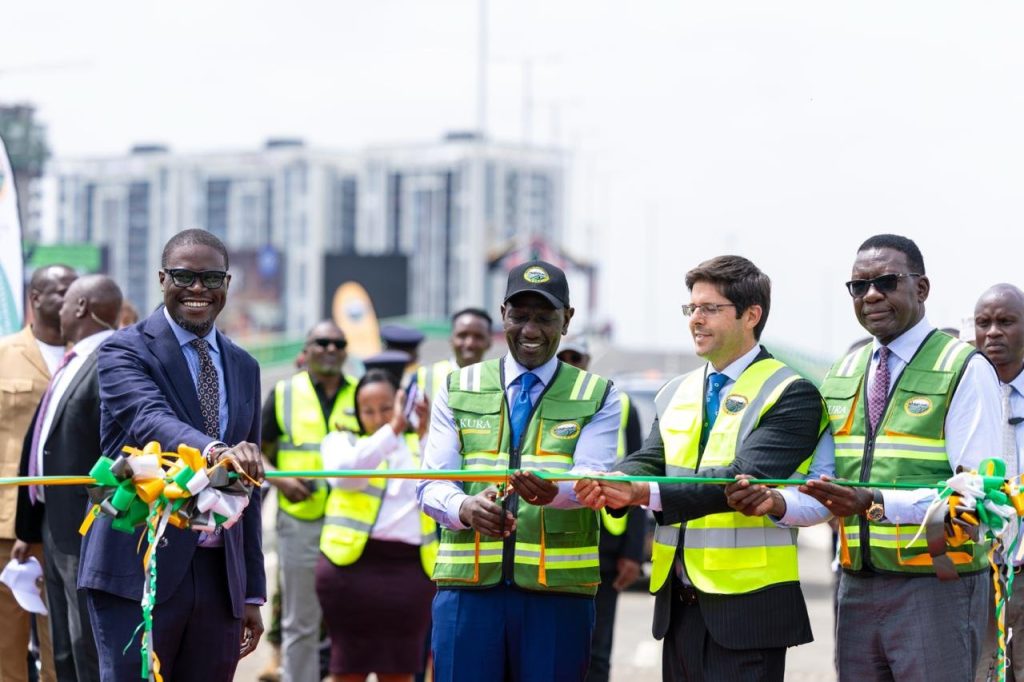
    President William Ruto on Monday commissioned the Ksh3.8 billion Ngong Road-Naivasha Road Flyover.

    Speaking during the commissioning ceremony, the President said the 800-metre elevated dual carriageway will significantly reduce traffic congestion along one of the city’s busiest transport corridors.

    The infrastructure will also ease movement for thousands of motorists travelling between Ngong Road, Naivasha Road and the Central Business District.

    “This Ksh3.8 billion Ngong Road-Naivasha Road Flyover is a strategic investment in the efficiency, productivity and competitiveness of our capital city,” President Ruto said.

    He noted that chronic traffic congestion has for years imposed heavy economic costs on businesses and commuters, slowing economic activity and reducing productivity.

    “For too long, congestion has imposed a heavy cost on our economy, and on the daily lives of our people. Every hour lost in traffic is an hour of productivity forfeited, income delayed, and opportunity diminished,” he said.

    The Head of State reaffirmed the Government’s commitment to investing in modern infrastructure to support Kenya’s growing economy and position Nairobi as a globally competitive city.

    “We will continue building infrastructure that attracts investments and prepares Nairobi for the demands of a rapidly growing economy. We are determined to build a capital city that is efficient, connected and globally competitive,” he added.

    The flyover, implemented by the Kenya Urban Roads Authority (KURA), separates through-traffic along Ngong Road from vehicles accessing Naivasha Road and King’ara Road.

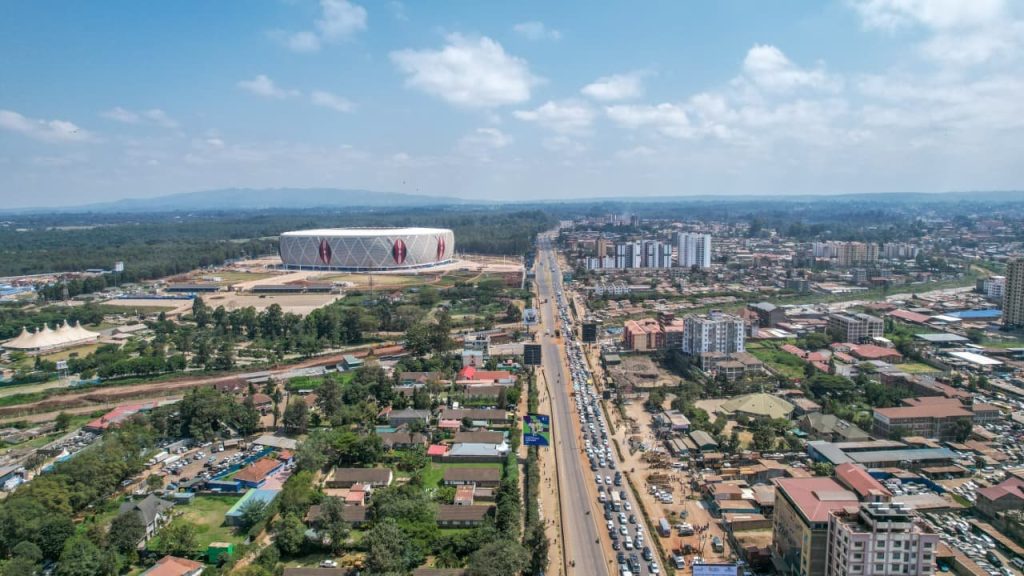
    The project is also expected to improve access to key public facilities, including the nearby Talanta Stadium, which is under construction ahead of the 2027 Africa Cup of Nations (AFCON).