Author: Prudence Wanza

  • Germany says US troop withdrawal ‘foreseeable’ as Trump warns of more ‘cuts’

    Germany says US troop withdrawal ‘foreseeable’ as Trump warns of more ‘cuts’

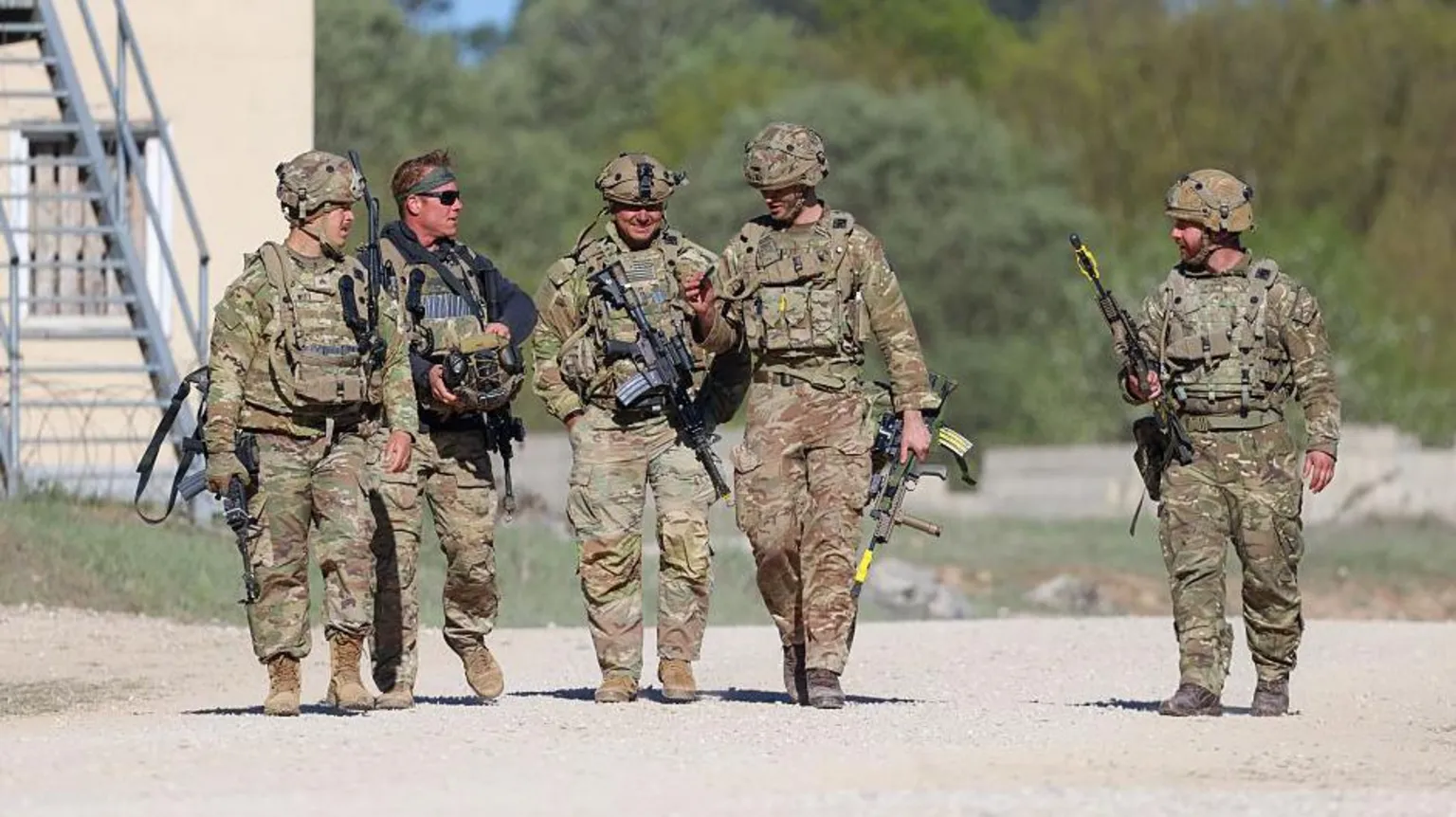
    Germany’s defence minister has said the US decision to withdraw 5,000 troops from his country was “foreseeable”, as the Nato military alliance says it is seeking clarification from Washington.

    Speaking to the DPA news agency, Boris Pistorius also stressed “the presence of American soldiers in Europe, and particularly in Germany, is in our interest and in the interest of the US”.

    Meanwhile Nato spokeswoman Allison Hart said the alliance was “working with the US to understand the details of their decision”.

    When asked on Saturday night about the withdrawal of troops, Trump said: “We’re going to cut way down, and we’re cutting a lot further than 5,000.” He did not provide more details.

    Washington’s move comes after President Donald Trump criticised German Chancellor Friedrich Merz for saying the US had been “humiliated” by Iranian negotiators in the ongoing war.

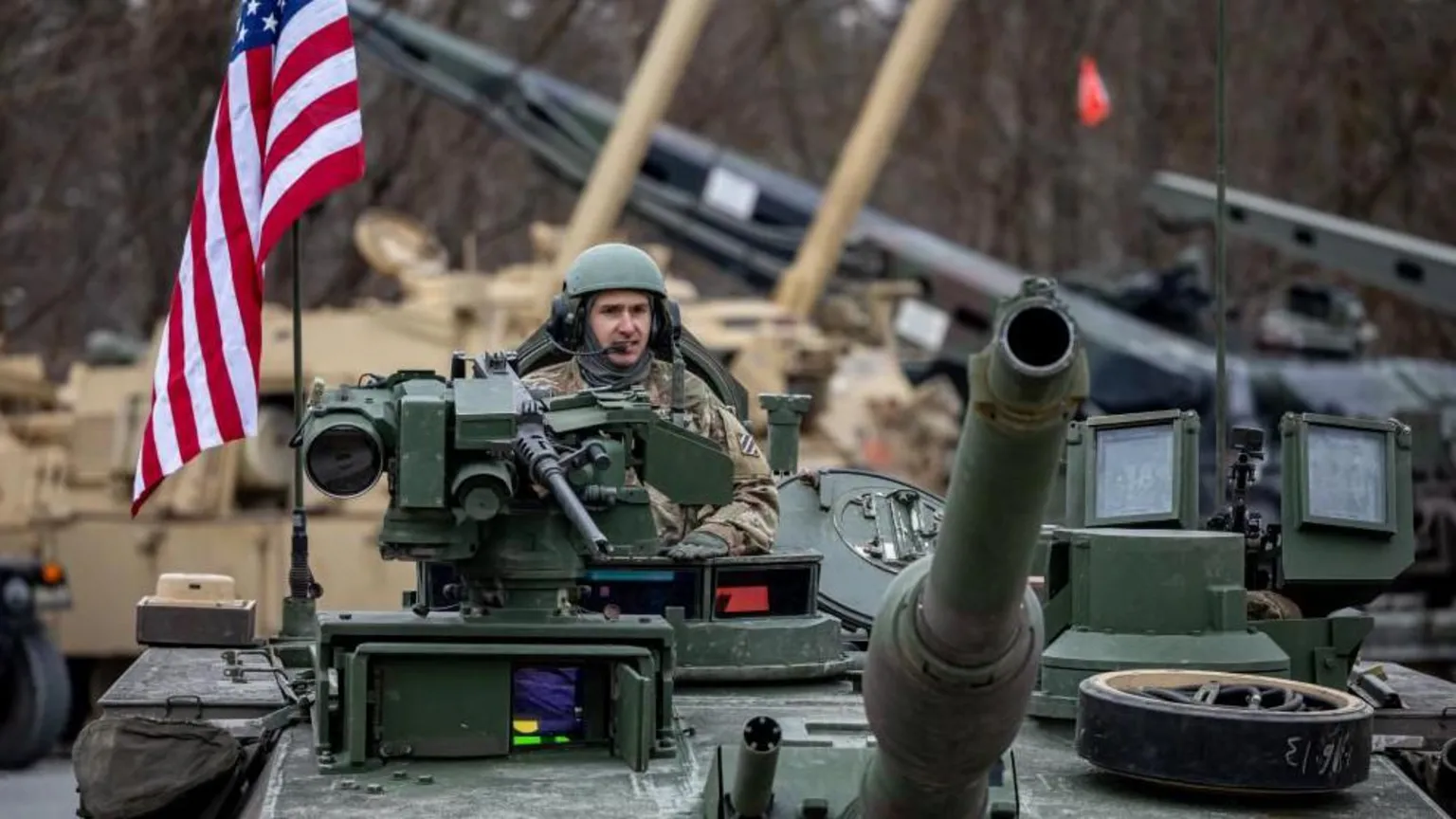
    The US military deployment in Germany – currently at more than 36,000 active duty troops – is by far its biggest in Europe, compared with about 12,000 in Italy and 10,000 in the UK.

    When asked on Saturday night about the withdrawal of troops, Trump said: “We’re going to cut way down, and we’re cutting a lot further than 5,000.” He did not provide more details.

    Trump has also suggested pulling US troops from Italy and Spain.

    Last year, Washington decided to reduce its troop presence in Romania, as part of Trump’s plan to shift the focus of US military commitment from Europe to the Indo-Pacific region.

    There are now growing concerns within the 32-member Nato alliance that the US latest decision could weaken the organisation.

    “The greatest threat to the transatlantic community are not its external enemies, but the ongoing disintegration of our alliance,” Polish Prime Minister Donald Tusk warned on Saturday.

    “We must all do what it takes to reverse this disastrous trend,” he added.

    And two senior US lawmakers from Trump’s Republican party said that they were “very concerned by the decision to withdraw a US brigade from Germany”.

    “Rather than withdrawing forces from the continent altogether, it is in the US interest to maintain a strong deterrent in Europe,” said Senator Roger Wicker and Representative Mike Rogers, who chair the Senate and House armed services committees respectively.

    In Saturday’s interview with DPA, Pistorius also said Europe must take greater responsibility for its security, and that Berlin would now be working more closely with allies on the continent.

    “Germany is on the right track,” he said, pointing out that his country has significantly boosted its military spending in recent years.

    Trump had previously accused Germany of being “delinquent” because its military spending was well below Nato’s target of 2% of economic output (GDP).

    But that began to change under the previous government of Olaf Scholz and has continued under Merz’s current government, with Germany now projected to spend €105.8bn (£91bn) on defence in 2027.

    Overall, Germany’s defence expenditure is set to reach 3.1% of GDP, taking into account other defence funds, including Berlin’s continuing aid to Ukraine as its continues to fight against invading Russian troops.

    In her post on X on Saturday, Nato’s Allison Hart said the US decision to pull troops out of Germany “underscores the need for Europe to continue to invest more in defence and take on a greater share of the responsibility for our shared security.

    “We’re already seeing progress since allies agreed to invest 5% of GDP at the Nato summit in The Hague last year.”

    The latest spat between Trump and Merz was triggered by comments by the German chancellor on Monday.

    Merz told students that “the Americans clearly have no strategy”.

    “The Iranians are obviously very skilled at negotiating, or rather, very skilful at not negotiating, letting the Americans travel to Islamabad and then leave again without any result,” he said.

    He added that the “entire nation” was being “humiliated” by Iran.

    In response, Trump took to his platform Truth Social, saying Merz thought it was “OK for Iran to have a Nuclear Weapon” and “doesn’t know what he’s talking about”.

    This was soon followed by the US troop withdrawal announcement.

    Pentagon spokesman Sean Parnell said the order had come from Defence Secretary Pete Hegseth.

    “We expect the withdrawal to be completed over the next six to twelve months,” the spokesman added.

    Trump, a longtime critic of the Nato alliance, has been lashing out at allies over their refusal to participate in operations to reopen the Strait of Hormuz, a key oil shipping route.

    Iran has severely limited traffic through the waterway, responding to US and Israeli strikes that began on 28 February.

    The US has also enforced a naval blockade on Iranian ports in the Gulf.
  • One arrested as police intercept 11kg of bhang at Moyale roadblock

    One arrested as police intercept 11kg of bhang at Moyale roadblock

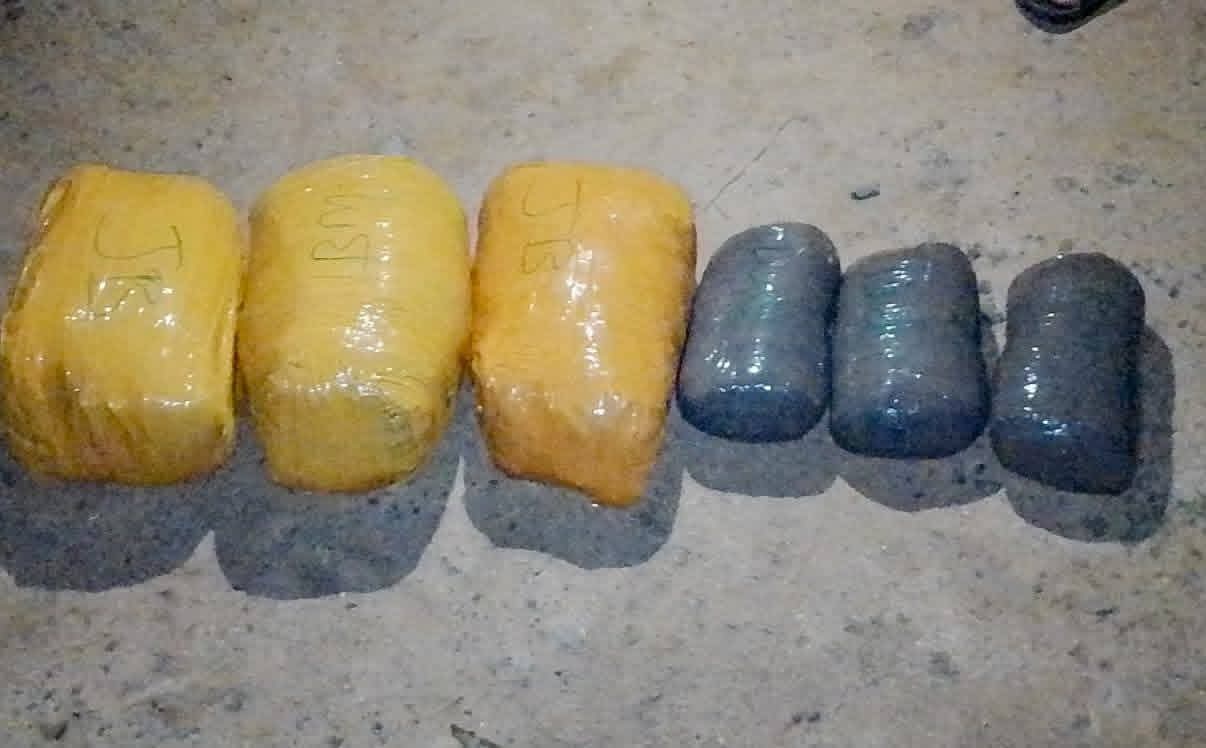
    A multi-agency security team has seized suspected narcotics and arrested a lorry driver at a roadblock in Moyale.

    The intelligence-led operation was carried out by officers from the National Police Service at the Odda Roadblock.

    The team flagged down a Mitsubishi FH lorry that was ferrying goods presented as food supplies.

    Upon conducting a search, officers uncovered a concealed white sack hidden beneath the produce containing approximately 11 kilogrammes of suspected cannabis.

    The suspect is in custody and is expected to be arraigned in court as investigations continue.

    The vehicle used to transport the consignment has also been detained even as police conduct further inquiries to establish the origin and intended destination of the drugs.

  • UDA grassroots polls record high turnout in Wajir

    UDA grassroots polls record high turnout in Wajir

    The United Democratic Alliance (UDA) party has successfully conducted its grassroots elections across Wajir County, with officials reporting a smooth and orderly exercise.

    Speaking after the close of polling, UDA official Salma Ochieng said the elections, which were held from 8AM to 5PM, recorded an impressive turnout across all polling centres in the county.

    Ochieng, who was flanked by the County Returning Officer Gladys Chebet and party official Victor Mtai, noted that the exercise followed a week-long sensitisation campaign targeting party members and aspirants.

    “We have been here since Monday conducting sensitisation on the UDA grassroots elections at the polling centre level. Today, we successfully carried out the elections, and we have now closed all polling centres across Wajir County,” she said.

    She added that the party is keen on establishing leadership structures at the grassroots in line with legal requirements, noting that the elections targeted seven categories of representatives at the polling centre level.

    “These include special interest groups, members representatives, farmers representatives, religious, professionals, MSMEs and the youth representatives,” Oching explained.

    The official expressed satisfaction with the conduct of the exercise, stating that the elections were free and fair and were not marred by any significant challenges.

    “We are content that the elections were conducted peacefully across the county. We did not experience any issues, and we appreciate all members who turned up to participate,” she said.

    Ochieng congratulated all aspirants and voters for taking part in the exercise, terming the process a success for the party’s grassroots strengthening efforts.

  • Ruto allocates 30pc of Gov’t ads to creatives

    Ruto allocates 30pc of Gov’t ads to creatives

    President William Ruto joined Kenya’s premier artistes at their annual awards ceremony on Saturday evening and announced that 30 per cent of Government advertising would be spent on creative platforms.

    The President, who became Kenya’s first Head of State to attend the ceremony, said the new advertisement policy was aimed at scaling up investment in Kenya’s creative economy, thus nurturing and supporting youth talent in the film sector.

    “I can confirm that the government has the resources to support and partner with creatives, who tell our stories,” he said at the 14th Kalasha International Film and TV Market Festival and Awards at the Kenyatta International Convention Centre in Nairobi.

    Present were Youth Affairs, Creative Economy and Sports Cabinet Secretary Salim Mvurya, Youth Affairs and Creative Economy Principal Secretary Fikirini Jacobs, and Head of Presidential Special Projects and Creative Economy Coordination Dennis Itumbi, among others.

    Kalasha Awards honours and celebrates creatives in the film industry from East and Central Africa, bringing together more than 3,000 delegates, 100 exhibitors, and representation from over 30 countries for the annual festival.

    While commending the Kenya Film Commission for organising the festival, the President urged them to hold the awards in the counties, saying State House will bid to host next year’s ceremony.

    He announced that he had directed the National Treasury to explore ways of giving incentives to international producers so that they can shoot their content in Kenya.

    President Ruto disclosed that he will be meeting Panos Panay, president of the Recording Academy, the organisation behind the world-acclaimed Grammy Awards, later this month to begin the journey of positioning Kenya for a globally recognised creative platform.

    “In that meeting, I will not just be pushing for the African Grammys to come to Nairobi. I will also be advocating a bold, structured pathway that connects our creative products to global commerce,” he said.

    He urged Parliament to fast-track the Creative Economy Bill 2026 and strengthen copyright laws so that Kenyan artistes are not only celebrated, but also safeguarded and funded.

    To develop infrastructure to support the creative economy, the President directed that all future affordable housing developments must integrate a creative ecosystem in the form of fully equipped audio-visual studios.

    “Tonight is a declaration that Kenya is not waiting for the future of global storytelling; we are shaping it. Roll the cameras. Tell the stories. Shape the future. Congratulations to the winners,” he said.

  • Thirteen killed in Israeli strikes on southern Lebanon

    Thirteen killed in Israeli strikes on southern Lebanon

    At least 13 people, including four women and a child, have been killed in Israeli air strikes on southern Lebanon, the Lebanese health ministry said.

    Two women and a child were among eight killed in Haboush in Nabatieh district, where the Israel Defense Forces (IDF) had issued an evacuation order.

    Four people, including two women, were killed in Zrarieh in Sidon district, while another person was killed in Ain Baal in Tyre district. In total, 32 people were injured on Friday.

    Fighting between Israel and Hezbollah has continued despite an ongoing three-week ceasefire extension.

    On Saturday, Iran-backed group Hezbollah said it had targeted Israeli soldiers and military vehicles in Lebanon.

    The Israeli military said one of its soldiers was killed during combat in southern Lebanon on Thursday, bringing the number of Israeli troop deaths since early March to 17.

    An initial 10-day pause in hostilities had been announced on 16 April following ambassador talks in Washington between Israel and Lebanon.

    The two countries have no diplomatic relations and the first meeting in Washington was the first high-level set of talks between them since 1993.

    A three-week extension to the ceasefire was announced by US President Donald Trump on 23 April, who said the second meeting between the two countries “went very well” and the US would be working with Lebanon “to help it protect itself from Hezbollah”.

    The Iran-backed group was not involved in the ceasefire agreement but had indicated it would abide by its terms if it was also respected by Israel.

    While the truce largely halted strikes on the capital city Beirut and its southern suburbs, fighting has persisted elsewhere in the south, with continued air raids and repeated evacuation orders.

    On 30 April, the US embassy in Beirut suggested a meeting between Lebanon’s President Joseph Aoun and Israeli Prime Minister Benjamin Netanyahu would give Lebanon “the chance to secure concrete guarantees on full sovereignty, territorial integrity, secure borders, humanitarian and reconstruction support, and the complete restoration of Lebanese state authority over every inch of its territory”.

    The post on X added that this would be “guaranteed by the US”.

    The Lebanese president met with the US ambassador to Lebanon Michael Issa on Friday, where Issa affirmed that the US continued support to Lebanon.

    Israel and Hezbollah agreed to a ceasefire ending a previous conflict in November 2024, after which Israel carried out near-daily attacks on targets and people it said were linked to Hezbollah.

    After the US and Israel attacked Iran on 28 February and killed Iran’s supreme leader, Hezbollah launched rockets and drones into Israel in retaliation on 2 March.

    In response, Israel bombarded Lebanon with air strikes. Israeli forces re-entered southern Lebanon in early March, where they have destroyed villages and remained occupying 10km (6.2 miles) of Lebanese territory.

    Since early March, 2,586 people have been killed in Lebanon, including 103 health care workers and emergency responders, according to the Lebanese health ministry. It does not distinguish between combatants and civilians.

    Along with 17 Israeli soldiers killed in Lebanon, two civilians have been killed by Hezbollah attacks in Israel.

    On Saturday morning, the IDF said it had undertaken “around 50 strikes in the last day” on southern Lebanon.

    It says the targets struck included headquarters from where Hezbollah operated, along with buildings used for military purposes.

    A previous update said the IDF intercepted two “aerial targets” before they managed to cross into Israeli territory.

  • US to cut troop levels in Germany by 5,000 amid Trump spat with Merz

    US to cut troop levels in Germany by 5,000 amid Trump spat with Merz

    The US Defence Department plans to withdraw 5,000 troops from Germany, amid a spat between President Donald Trump and German Chancellor Friedrich Merz over the war with Iran.

    The decision comes a day after Trump criticised Merz, who suggested the US had been “humiliated” by Iranian negotiators.

    The US has a significant military presence in Germany, with more than 36,000 active duty troops assigned to bases across the country as of last December.

    Defence Minister Boris Pistorius told the German Press Agency in Berlin that “the presence of American soldiers in Europe, and particularly in Germany, is in our interest and in the interest of the US”.

    At the same time, he made it clear that the decision did not come as a surprise.

    The fact that the US would withdraw troops from Europe and also from Germany “was foreseeable”, he said.

    In social media posts on Thursday, Trump said Merz was “doing a terrible job” and had “problems of all kinds”, including on immigration and energy. Trump has also suggested pulling US troops from Italy and Spain.

    In a statement, Pentagon spokesman Sean Parnell said the order about US troops in Germany had come from Defence Secretary Pete Hegseth.

    “This decision follows a thorough review of the Department’s force posture in Europe and is in recognition of theatre requirements and conditions on the ground,” he said.

    “We expect the withdrawal to be completed over the next six to twelve months.”

    Trump, a longtime critic of the Nato alliance, has been lashing out at allies over their refusal to participate in operations to reopen the Strait of Hormuz.

    Asked on Thursday whether he would also consider pulling US troops from Italy and Spain, Trump responded: “I probably will – look, why shouldn’t I?”

    “Italy has not been of any help to us and Spain has been horrible,” he added, criticising them for their response to the war in Iran.

    “In all cases they said, ‘I don’t want to get involved.’”

    Merz told university students earlier this week that “the Americans clearly have no strategy” and he could not see “what strategic exit” they might choose.

    “The Iranians are obviously very skilled at negotiating, or rather, very skilful at not negotiating, letting the Americans travel to Islamabad and then leave again without any result,” he said.

    He added that the “entire nation” was being “humiliated” by the Iranian leadership.

    In response, Trump took to his platform Truth Social, where he said Merz thought it was “OK for Iran to have a Nuclear Weapon” and “doesn’t know what he’s talking about”.

    “No wonder Germany is doing so poorly, both Economically, and otherwise!” the post read.

    The BBC has contacted the German embassy in Washington for comment.

    The US military deployment in Germany is by far its biggest in Europe, with about 12,000 troops in Italy and a further 10,000 in the UK.

    Many are stationed at Ramstein Air Base outside the south-western German city of Kaiserslautern.

    Trump has previously proposed US troop reductions in Germany, but they have so far not come in to effect.

    Only Japan hosts a larger US troop presence.

    In 2020, a proposal to move 12,000 US troops from Germany either to other Nato countries in Europe or back to the US was blocked by Congress and then reversed by President Joe Biden.

    At the time, Trump had accused Germany of being “delinquent” because its military spending was well below Nato’s target of 2% of economic output (GDP).

    But that has changed dramatically under the Merz government.

    Germany is projected to spend €105.8bn (£91bn) in 2027 – with total defence expenditure next year set to reach 3.1% of GDP.

    Last year, the US decided to reduce its troop presence in Romania, as part of Trump’s plan to shift the focus of US military commitment from Europe to the Indo-Pacific region.

    Romania’s defence minister said the decision was made after Hegseth conveyed to the Romanians that they needed to pay more attention to their own defence.

    The decision was met with disapproval from some of Trump’s fellow Republicans in Congress, and concern from other Eastern European countries wary of Russia.

  • Police detain woman as probe into death of Dr. Job Obwaka begins

    Police detain woman as probe into death of Dr. Job Obwaka begins

    Police have detained a 45-year-old woman to assist with investigations into the death of veteran gynaecologist Dr. Job Obwaka.

    According to a report filed at Kilimani Police Station, the woman identified as Beatrice Wangare was in the company of Dr Obwaka when he collapsed in Kitengela on Friday at around 7:00PM while on personal errands.

    The report indicates that the deceased was pronounced dead after being rushed to The Nairobi Hospital.

    “Dr Job Obwaka, a veteran Kenyan gynaecologist and Nairobi Hospital board director, had been brought into the facility by ambulance after collapsing in Kitengela where he had gone on personal errands in the company of Beatrice Wangare, believed to be a business partner,” the report reads in part.

    Police say early findings indicate the deceased had a history of underlying medical conditions, though the exact cause of death has not been established.

    The body was later moved to Lee Funeral Home pending postmortem examination.

    Police have classified the matter as a sudden death case under investigation, with further updates expected as inquiries continue.

    Dr. Obwaka, who also served as Chairman of the Board of Directors at The Nairobi Hospital, died at the age of 83 years.

  • Landslide blocks Iten-Kabarnet Road near Kolol as heavy rains persist

    Landslide blocks Iten-Kabarnet Road near Kolol as heavy rains persist

    A landslide has blocked a section of the Iten-Kabarnet Road near Kolol following heavy rainfall in various parts of the country.

    In a public notice, the Kenya National Highways Authority (KeNHA) said the incident has disrupted traffic flow along the key route.

    The authority however assured that repair and restoration works are underway as engineers move to reopen the road and restore normal movement.

    KeNHA urged motorists who have not yet begun their journeys to consider an alternative route through Iten-Eldoret-Eldama Ravine-Kabarnet.

    Road users have also been advised to exercise caution and comply strictly with instructions from police officers and traffic marshals deployed at the scene to manage safety and traffic flow.

    KeNHA said it is closely monitoring the situation and will issue further updates as restoration efforts continue.

    The Kenya Meteorological Department has warned that the heavy rains being experienced in many parts of the country are likely to continue until mid-May.

  • Gov’t extends six-month waiver on ID replacement fees

    Gov’t extends six-month waiver on ID replacement fees

    The government has extended by a further six months the waiver on fees charged for replacement of national identity cards and changes in personal particulars.

    Interior and National Administration Cabinet Secretary Kipchumba Murkomen announced that the extension has been effected through a Special Gazette Notice issued under the Registration of Persons Act.

    According to the notice, the waiver period will now run from April 30, 2026, to October 30, 2026, effectively replacing the previous six-month window provided under the Registration of Persons Rules.

    The amendment, made under section 16 of the Registration of Persons Act, adjusts Rule 13 of the principal rules by replacing the earlier timeline with the newly specified dates.

    Murkomen said the decision is intended to ensure more citizens are able to obtain essential identification documents without financial barriers, noting that IDs remain central to accessing government services and economic opportunities.

    “This move complements other measures spearheaded by President William Ruto, including the scrapping of charges for first-time ID applicants and the authentication fee for birth certificates, as well as the removal of extra vetting for border communities,” said Murkomen.

    The CS urged eligible Kenyans to take advantage of the waiver period to register or update their identification documents within the stipulated timeline.

  • Scores of households evacuated after floods destroy homes in Mavoko

    Scores of households evacuated after floods destroy homes in Mavoko

    Over 100 households spread across the Katani, Airways, Kamulu, Githunguri and Syokimau areas in the Mavoko sub-county of Machakos who were rendered homeless by floods have been evacuated by the county government.

    The ongoing heavy rains have caused significant damage in Mavoko, with some families marooned in their houses while others had their homes and businesses submerged.

    Emergency response teams evacuated affected families to safer areas and provided them with food and non-food items.

    Speaking during the rescue mission, the CECM for Lands, Housing, Urban developments, Roads and Transport, Nathaniel Nganga, warned residents against encroaching on riparian land after preliminary findings pointed to blocked waterways as the key cause of the flooding in Mavoko.

    CEC Nganga called on Machakos residents and property developers to always seek approval from the Lands Office before initiating construction to ensure it is legal, safe and sustainable, thereby protecting the safety of future occupants.

    “The current flooding is because the physical planning regulations were not followed; so when buying land, please do due diligence and thorough verification to ensure you do not end up acquiring riparian land,” Nganga warned.

    Nganga further declared that the County government is set to deploy surveyors and building engineers to conduct a comprehensive assessment of the affected areas where structures found constructed along waterways will be marked for demolition.

    “As a County we are going to enforce regulations and bring down all structures that have been erected on waterways,” added Nganga.

    The Lands CECM also issued a stern warning to Land and Urban housing officers that they will face the full force of the law if they approve construction on riparian lands.