Author: Prudence Wanza

  • Mudavadi wants greater focus on African conflicts as G7 Summit begins

    Mudavadi wants greater focus on African conflicts as G7 Summit begins

    Prime Cabinet Secretary and Foreign Affairs Cabinet Secretary Musalia Mudavadi has called for greater international attention to conflicts across Africa as the G7 Summit gets underway in Évian, France.

    Mudavadi said while the G7 has demonstrated strong commitment to addressing conflicts in other regions, there has been comparatively limited engagement in Africa, particularly on the continent’s ongoing crises such as the Sudan conflict.

    “The reality is that the G7 seems to have neglected active engagement on the conflicts on the continent of Africa, a classic example is the Sudan crisis,” he said.

    The Prime CS noted that global conflicts have had far-reaching economic consequences for developing countries, saying there is need for discussions on recovery measures.

    While welcoming reports of a peace agreement aimed at easing tensions in the Middle East, he said ending conflicts alone will not reverse the economic damage already suffered by affected economies.

    “There has to be a conversation on a recovery strategy for many economies because the impact and inflationary pressures have already filtered into their systems,” he said.

    The Foreign Affairs CS also called for intervention measures from the G7 and international financial institutions such as the International Monetary Fund (IMF) and the World Bank to support countries facing prolonged recovery periods.

    Mudavadi said Kenya’s participation in the summit goes beyond diplomatic engagement, describing it as an opportunity to attract investment, deepen economic partnerships and create jobs.

    He added that the country’s presence at the high-level meeting also reinforces Kenya’s position as a reliable global partner while advancing opportunities that can directly benefit its citizens.

    Kenya is among only five partner nations invited to the summit, alongside India, Brazil, South Korea and Egypt.

  • Ruto arrives in France for G7 Summit

    Ruto arrives in France for G7 Summit

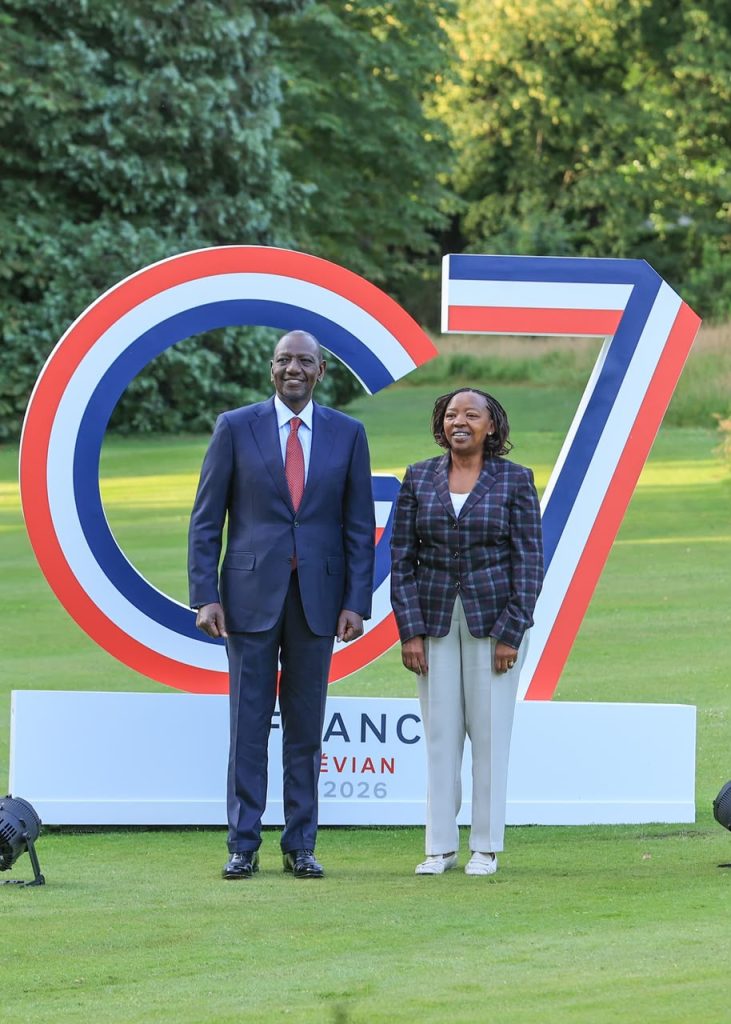
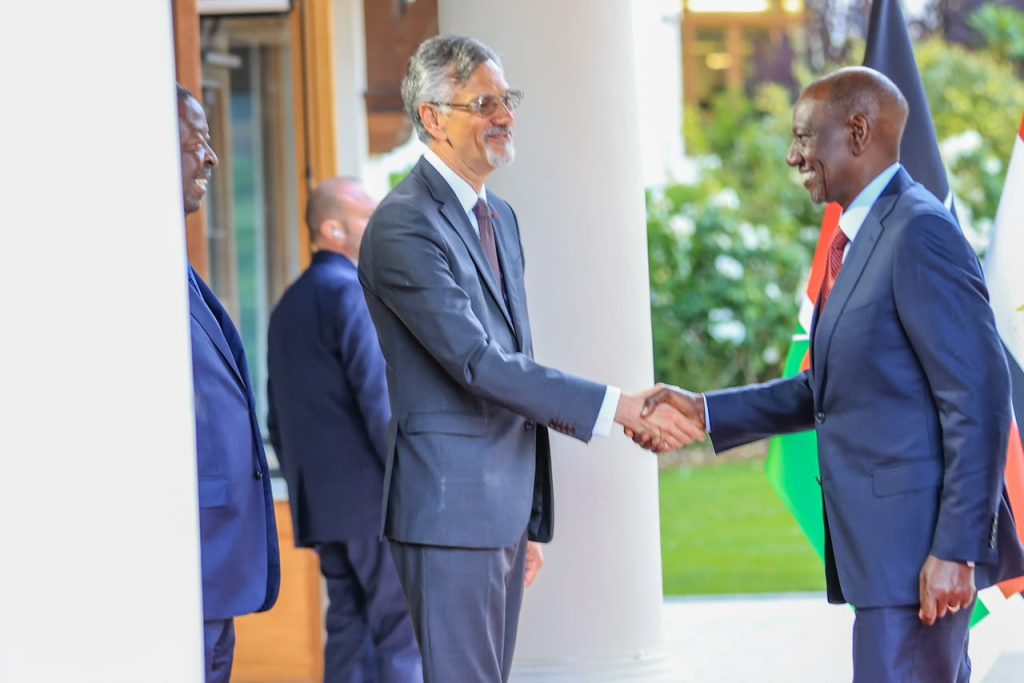
    President William Ruto has arrived in Evian, France, for the G7 Leaders’ Summit, where he will represent Africa and advance the continent’s priorities before the world’s leading economies.

    The President is accompanied by First Lady Rachel Ruto and Prime Cabinet Secretary and Cabinet Secretary for Foreign and Diaspora Affairs Musalia Mudavadi.

    Ruto is attending the high-level meeting at the invitation of French President Emmanuel Macron, who is hosting the summit in his capacity as the current president of the Group of Seven (G7), which brings together seven of the world’s most advanced economies and democracies.

    At the summit, the Kenyan leader joins other world leaders in discussions on key global issues, including the economy, international trade, climate action, security and artificial intelligence.

    Among those attending are French President Emmanuel Macron, United States President Donald Trump, Canadian Prime Minister Mark Carney, German Chancellor Friedrich Merz, Italian Prime Minister Giorgia Meloni, Japanese Prime Minister Sanae Takaichi and British Prime Minister Keir Starmer.

    Also participating are President of the European Council António Costa and President of the European Commission Ursula von der Leyen.

    The President is expected to use the summit platform to advocate reforms of the global financial system, including easier access to affordable credit for African countries to support development and economic growth.

    Ruto will also champion stronger partnerships between Africa and the world’s major global economies in trade, infrastructure development, energy, climate resilience and innovation.

  • Africa readies itself for “super” El Nino as climate scientists urge for anticipatory action

    Africa readies itself for “super” El Nino as climate scientists urge for anticipatory action

    The African continent is strengthening preparedness to mitigate impacts associated with extreme weather events, as super El Nino looms large.

    Climate scientists drawn from across Africa are this week meeting in Lusaka Zambia, as the continent continues to face repeated shocks to food systems, water resources, and livelihoods, alongside rising risks from global ocean warming and coastal flooding.

    The 21st African Continental Climate Outlook Forum (ACCOF-21) with the theme: “Preparing Africa for El Nino 2026/2027: Strengthening Readiness to Anticipate and Manage Climate Shocks” aims to sensitize policy planners as well as users of climate information on the need to plan for various scenarios that might arise as the El Nino builds up, with the effects expected during the short rains season of October, November to December (OND).

    The target are the climate-sensitive sectors and among vulnerable groups such as children, women, and persons with disabilities who are most impacted on during adverse weather events.

    The forum bringing together Africa’s Regional Climate Centres (RCCs) are assessing the projected El Niño impacts, harmonize regional outlooks, share lessons, and co-develop actionable climate services and early warnings tailored to vulnerable communities.

    The conference organised by the African Union Commission’s Department for Agriculture, Rural Development, Blue Economy and Sustainable Development, will also advance the formal establishment of Continental User Working Groups, ensuring synergy between AUC, RCCs, RECs, sectoral institutions, and user communities.

    While opening the ACCOF21, the Permanent Secretary in the Ministry of Green Economy and Environment in Zambia, Dr. Douty Chibamba said that Africa continues to face unprecedented climate challenges.

    “Across our continent, we are witnessing an increasing frequency and intensity of droughts, floods, heatwaves, tropical cyclones and other extreme weather events,” he said and added, “these hazards are undermining food security, water resources, energy systems, infrastructure, public health and livelihoods, particularly among our most vulnerable communities.”

    He noted that the El Nino of 2015/2016 which was the strongest on record in Southern Africa, left millions of people food insecure and placed enormous strain on national economies, “here in Zambia, the 2023/2024 El Niño-induced drought was among the worst in our living memory,” said Dr. Chibamba and added, “it compelled government to declare a national disaster and emergency, as the drought devastated crop production, severely reduced water levels in our hydropower reservoirs and triggered a prolonged energy deficit that affected households, industry and the economy at large.”

    While calling for anticipatory action ahead of the impacts of El Nino, Dr. Chibamba said that climate shocks are no long abstract projections, but present-day realities that can reverse years of hard-won development gains.

    He noted that as current forecasts from global producing centres suggest the possibility of another El Niño, “the science is sufficiently clear for us to begin strengthening preparedness measures, the cost of early preparation is always far lower than the cost of late response.”

    The Permanent Secretary averred that climate information has become an essential resource for sustainable development, yet it can only create value when it is translated into action.

    “Seasonal forecasts, climate outlooks, advisories and early warnings must support real decisions in agriculture, water resources management, disaster risk reduction, energy planning, infrastructure development and public health,” he said.

    He said the Zambian government is promoting climate-resilient livelihoods and accelerating investments in renewable energy away from over reliance on hydropower, “we have learnt the need to diversify our energy mix and build resilience against climate-induced disruptions in water availability.”

  • Ruto confirms permanent jobs for over 7,000 county medics

    Ruto confirms permanent jobs for over 7,000 county medics

    More than 7,000 doctors and nurses serving on contract under county governments will be hired on permanent terms, President William Ruto has announced.

    The President said KSh8.9 billion has been set aside for the purpose, pointing out that the medics have done commendable work and deserved better terms.

    He was speaking at a Sunday service and fundraiser at the Nkarusha Seventh Day Adventists Church in Kiserian, Kajiado West Constituency, Kajiado County.

    Present at the function were ODM Party Leader Oburu Oginga, Energy Cabinet Secretary Opiyo Wandayi, Governors Joseph ole Lenku (Kajiado), Simba Arati ( Kisii), and Gladys Wanga (Homa Bay) among other officials.

    The President reiterated that citizens deserve access to quality and affordable healthcare, noting that the Primary Healthcare Fund has been allocated KSh19 billion to enable all Kenyans registered under the Social Health Authority to get treatment for free.

    “When you go to a private, mission or government dispensary, health centre or sub-county hospital for outpatient services, don’t pay even a shilling. The government has paid,” President Ruto reiterated, warning such health facilities that still compel people to pay for treatment to stop.

    The President said the Government has provided KSh21 billion to the Kenya Medical Supplies Authority (KEMSA), up from KSh10 billion last year, to ensure adequate supply of medicines and other health commodities.

    Kenyans, he stated, must no longer be forced to sell land or other property to access healthcare.

    Explaining that Kenya’s international standing has grown since he came to office, President Ruto cited the Africa Climate Summit the country hosted in 2023, his State Visit to the United States the same year, the first by an African head of State in 20 years, and the May 2026 Africa Forward Summit co-hosted with France, the first time the forum was held in an Anglophone country.

    On Monday, the President said, he will depart for France to attend the Group of Seven (G7) where he has been invited to represent Africa.

    The Group of Seven is an inter-governmental political and economic forum consisting of Canada, France, Germany, Italy, Japan, the United Kingdom and the United States.

    Additionally, the European Union is a non-enumerated member of the G7. Unlike the members of the G7, it neither hosts the group’s summit nor holds its rotating presidency.

    Nationally, President Ruto said the country is making strides in agricultural transformation supported by various interventions.

    “We are in a different place from where we were in 2022,” he said.

    Additionally, he said the budget for agriculture has risen to KSh63 billion, including funding to subsidise fertiliser and other inputs. The subsidy has helped lower prices of fertiliser from KSh7,000 in 2022 to KSh2,500 for a 50kg bag.

    Consequently, the prices of the staple maize flor has reduced from KSh250 to as low KSh120.

    In education, the President pointed out that major reforms are underway to make schooling a stronger engine for knowledge and skills acquisition. In the 2026-27 budget, the sector has been allocated KSh784 billion up from Sh500 billion in 2022 and KSh702 billion in the last financial year.

    “That is an additional KSh80 billion in one year,” he explained.

    He pointed out that Japan, South Korea and Singapore prospered on the back of quality education. To cement education reforms, he noted more teachers will be promoted and 100,000 re-tooled for the new curriculum.

    In this year’s budget, KSh93 billion has been set aside for scholarships and capitation for universities and technical colleges.

    On infrastructure development, the President announced a “Marshall Plan” for roads anchored on the new National Infrastructure Fund (NIF). The fund, he said, will unlock private capital and public resources for major projects.

    Currently, Kenya has 20,000km of tarmac, the highest in the region, but President Ruto noted this pales in comparison to Japan’s 1 million kilometres.

    The NIF already holds KSh100 billion generated from the Kenya Pipeline Company Initial Public Offering (IPO) at the Nairobi Securities Exchange. Another KSh200 billion is expected to be mobilised soon.

    “This is how we will solve our transport and logistics issues,” the President explained, adding that the fund will also finance power generation and water harvesting.

    On the National Government’s development programme in Kajiado County, he said KSh23 billion has been allocated for construction of affordable housing, modern markets and student hostels.

    At the same time, various roads are under construction in the county. He said the lllasit-Njukini-Taveta road is being built at a cost of KSh4 billion while the Cooperative-Bulbul road has been allocated KSh600 million.

    Upgrading works for the Kajiado-Mashuru-Isara road will begin shortly at a cost of KSh500 million.

    The President said his frequent travel at home and abroad is part of the demands of the presidency.

    “The job of President is demanding and I have dedicated myself to it to serve all Kenyans,” he said.

    He praised the Broad-Based Government for uniting Kenyans and fast-tracking development, and urged politicians to stop sowing division.

    “Sell your vision, plan and policies. Don’t divide Kenyans; that is retrogressive politics,” he said.

    Dr Oginga called on Kenyans to cultivate unity to realise faster development.

    “We want to go to Singapore. To reach there, we must work together,” he said, adding that ODM will continue supporting President Ruto in taking development to every part of the country.

    “People are complaining about the housing levy but we can see results,” Dr Oginga, who is also the Siaya senator said, commending the President for his unmatched work ethic.

    “I have never seen a President so determined and working as hard as you do,” he said.

    In the past three years, Mr Wandayi, the Energy Cabinet Secretary, said households connected to electricity have increased from 8.9 million to 10.5 million.

    “This is no mean feat,” he said.

    The CS noted that Kenya did not experience a fuel shortage following the recent disruption of global supply chains because of “the forward-looking strategies” the government had put in place.

    Governor Lenku thanked the President for ensuring all Kenyans, including minority communities, get development.

    “As Maa nation we are thankful. You have held our hand and we will work with you,” Mr Lenku told the President, pointing to the national government’s move to hand over the Amboseli National Park to the county.

  • Swiss voters reject 10 million population cap, projection shows

    Swiss voters reject 10 million population cap, projection shows

    Voters in Switzerland have rejected a proposal to limit the country’s population to 10 million, early projections suggest.

    Not all votes have been counted, but the current trend suggests 55% of participants voted against, to 45% for.

    The proposal came from the right-wing Swiss People’s Party, which has long campaigned on an anti-immigration platform.

    The divisive vote risked putting the country’s free movement agreement with the European Union in jeopardy.

    Switzerland’s population has grown rapidly since 2002, when it stood at 7.3 million. Now it is 9.1 million, 27% of whom are not Swiss citizens.

    However, the People Party’s argument that capping the population would reduce pressure on transport, housing and the environment seem not to have persuaded enough voters.

    Although the Swiss People’s Party insisted the population cap was designed to protect Switzerland’s public services and its environment, it has a long history of campaigning on an anti immigrant platform, frequently blaming asylum seekers and minorities for societal problems.

    Some voters were seemingly worried at the prospect of losing much-needed workers in tourism, hospitals, and care homes.

    Others, in particular Swiss business leaders, feared losing Switzerland’s crucial access to Europe’s single market.

    Over half of all Swiss products are sold into the EU, but their access to Europe’s markets depends on Swiss commitment to Europe’s free movement of people. Had the population cap been approved, Switzerland would have had to terminate that agreement.

    It is also likely that some Swiss voters were nervous about a move which could leave their country isolated in what is a very unstable world.

    Although neutral, Switzerland, like its neighbours in Europe, is spending more on defence, and has been exploring ways to co-ordinate more closely with European on security.

    Switzerland’s system of direct democracy means all major decisions are taken via the ballot box. Campaigners simply have to gather 100,000 signatures to ensure a nationwide vote.

    Two young politicians have expressed opposing views on limiting the Swiss population.

    “We have lost control,” complains Nils Fiechter, 29, who represents the Swiss People’s Party in canton Bern’s parliament.

    “Unchecked immigration is leading to Switzerland no longer being Switzerland,” he said.

    In 2022, Fiechter and his co-president of the People’s Party’s youth wing were convicted of racial discrimination by the Swiss Federal Court, in relation to a poster they distributed in 2018 targeting Roma and traveller communities.

    He believes Switzerland’s problems, which he says include a “housing shortage, gridlocked traffic, overburdened schools and strained social services”, are a direct result of immigration.

    But Helin Genis, a 31-year-old Social Democrat elected to Bern city council, dismissed these arguments as scapegoating.

    She told BBC News: “It is not migrants who determine rent levels. It is not migrants who raise health insurance premiums. Nor is it migrants who make political decisions on housing, infrastructure or social investment.”

    Viewing problems ‘”through the lens of migration does not lead to solutions, but to division”, she added.

    The prospect of the population cap caused alarm at Switzerland’s business association, Economiesuisse.

    Its chief economist Rudolf Minsch said that if the motion passed, Switzerland “could face challenges in our relations with the European Union”.

  • Police launch probe into All Saints Cathedral goon attack

    Police launch probe into All Saints Cathedral goon attack

    The National Police Service (NPS) says investigations are underway into an incident in which a group of goons disrupted a budget forum at All Saints Cathedral on Saturday, June 13.

    In a statement on Sunday, NPS said two suspects are in custody and detectives are currently reviewing CCTV footage to identify and arrest additional individuals linked to the attack.

    NPS said officers swiftly moved in to restore order after reports of a disturbance at the religious facility, leading to the arrest of the two suspects at the scene.

    “Upon receiving reports of the disturbance, police officers responded promptly to the scene. They successfully repulsed the group, restored order, and secured the area,” NPS Spokesperson Muchiri Nyaga said.

    “Investigations are ongoing, including a thorough review of CCTV footage, with the aim of identifying and apprehending all other individuals involved,” he added.

    The NPS reaffirmed its commitment to public safety, saying the matter will be handled in a thorough, professional and impartial manner to ensure all those involved are brought to justice.

    Members of the public with information that may assist ongoing investigations have been urged to report to the nearest police station.

    Anglican Church of Kenya Archbishop Jackson Ole Sapit condemned the incident, saying church spaces are meant for worship and reflection, adding that even budget review meetings held there are intended in that spirit.

  • Goons behind All Saints Cathedral attack to be arrested, Murkomen assures

    Goons behind All Saints Cathedral attack to be arrested, Murkomen assures

    Interior and National Administration Cabinet Secretary Kipchumba Murkomen has condemned the disruption of a budget forum at All Saints Cathedral by goons, terming the incident unfortunate and unacceptable.

    “That was extremely unfortunate and unacceptable,” he said.

    The CS noted that several suspects have already been arrested in connection with the incident, while security agencies continue with investigations and the pursuit of other individuals involved to ensure they are brought to justice.

    “We will take those people to court, and they will be held accountable,” he said.

    Murkomen also revealed that the government is redefining the security architecture in Nairobi and other urban centres through the establishment of the Nairobi Metropolitan Police Unit, coupled with the adoption of modern technology and the ongoing modernization of the National Police Service.

    “The Nairobi Metropolitan Police Unit will be supported with more equipment, more vehicles, and better training to address the unique security challenges facing Nairobi and other urban areas across the country,” said the CS.

    The CS further reiterated that the government’s recognition of village elders is imminent and will play a key role in strengthening security and governance at the grassroots level.

    “I am happy to note that Ksh 3.9 billion has been allocated in the next budget to facilitate the payment of stipends to our village elders,” he said.

    Murkomen was speaking at AIC Plainsview, Nairobi, during a Sunday service held as part of the church’s Golden Jubilee celebrations.

    He commended the church for 50 years of God’s faithfulness and dedicated service, as well as its continued contribution to socio-economic development and the nurturing of generations of responsible citizens.

  • Meru: Ksh1.2B Gakoromone Market to benefit over 3,000 traders

    Meru: Ksh1.2B Gakoromone Market to benefit over 3,000 traders

    More than 3,000 traders at Gakoromone Open-Air Market in Meru Town are expected to benefit from a modern market currently under construction by the national government.

    Speaking during an inspection tour of the traders’ relocation site in the Konje area of Meru Town, Meru County Secretary David Baario said the facility would be among the best markets not only in Kenya but also in East and Central Africa once completed.

    Baario noted that, in addition to the Gakoromone Market project, the national government has initiated several other development projects across the country.

    Meru Municipality Board Chairman Kirimi Mungania said preparations for the relocation site are underway, with the contractor working to ensure traders can move and pave the way for the construction of the new Gakoromone Market.

    He urged residents to take advantage of the projects being implemented by the national government in Meru Town, noting that the ultra-modern market is part of efforts to position Meru Municipality for city status.

    Meru Municipality Administrator Gitobu Nkanata said the municipality’s management welcomes the construction of the modern market, saying it will significantly boost revenue collection in Meru County.

    Meanwhile, contractors in Meru County have expressed dissatisfaction with how the national government is awarding contracts for its projects in the region.

    According to local contractor John Nchebere, contractors from the county are being overlooked despite applying for tenders, denying them an opportunity to benefit from the projects.

    He claimed that many contracts are being awarded to firms from outside the county.

    Nchebere further alleged that construction materials used in the projects are being sourced from outside Meru County, leaving local hardware businesses without opportunities to benefit from the ongoing developments.

    The Gakoromone Ultra-Modern Market is estimated to cost between Ksh800 million and Ksh1.2 billion.

    The facility will feature modern amenities, including cold rooms for fresh produce storage, ICT hubs, e-commerce spaces, lactation rooms for nursing mothers, and reliable electricity and Wi-Fi connectivity.

  • Relief for transport operators as EPRA reduces Diesel prices by Ksh10

    Relief for transport operators as EPRA reduces Diesel prices by Ksh10

    It is a sigh of relief for transport operators following a Ksh10 reduction in diesel prices in the latest review by the Energy and Petroleum Regulatory Authority (EPRA).

    The reduction eases pressure on businesses, transporters and households amid persistent cost-of-living concerns.

    Super petrol has also recorded a marginal drop of Ksh0.22 per litre, while kerosene prices remain unchanged.

    EPRA’s latest decision now means consumers in Nairobi will pay Ksh214.03 for a litre of super petrol, Ksh222.86 for a litre of diesel and Ksh191.38 for a litre of kerosene effective midnight.

    Motorists in Mombasa will pay the least for a litre of super petrol, diesel and kerosene at the pump, with retail prices set at Ksh210.87, Ksh219.58 and Ksh188.09 respectively.

    The regulator said the government will continue cushioning consumers through the Petroleum Development Levy (PDL) Fund, allocating approximately Ksh10 billion to subsidise the cost of diesel and kerosene during the review period.

    EPRA further noted that the adjustments mirror global oil price trends and exchange rate dynamics that continue to influence landed costs in the domestic market.

    The landed cost of super petrol reduced by 0.56 per cent to $901.16 in May 2026, while diesel rose slightly by 0.21 per cent from $1,291.98 to $1,294.71 per cubic metre. Kerosene dropped by 0.33 per cent from $1,332.73 to $1,328.36 per cubic metre over the same period.

  • CS Ruku urges unity among Ukambani leaders to boost development

    CS Ruku urges unity among Ukambani leaders to boost development

    Public Service Cabinet Secretary Geoffrey Ruku has urged unity among leaders and residents of the Ukambani region.

    The CS who met with the Akamba Council of Elders on Saturday reaffirmed the government’s commitment promoting peace, development and cooperation for the benefit of the community.

    Ruku said the government will continue working closely with traditional leadership to foster a resilient and united nation anchored on inclusivity and the participation of all citizens.

    He called upon the elders to sustain their partnership with the government in advancing regional and national development goals.

    Meanwhile, the General Secretary of the Akamba Clans Governing Council of Elders, Davis Maeke, commended the government for what he termed notable improvements in service delivery across key sectors.