Author: KBC Digital

  • EACC proposes constitutional amendments to strengthen integrity in elections

    EACC proposes constitutional amendments to strengthen integrity in elections

    The Ethics and Anti-Corruption Commission (EACC) has proposed amendments to key constitutional provisions that hinder the effective enforcement of integrity requirements for candidates seeking elective office.

    EACC Chief Executive Officer Abdi Mohamud on Thursday appeared before the Constitutional Implementation Oversight Committee of the National Assembly, where he made submissions on the implementation of Chapter Six of the Constitution and its interface with provisions on Representation of the People under Chapter Seven.

    The discussions were held in the context of electoral preparedness ahead of the 2027 General Election.

    During his presentation, the CEO proposed a raft of reforms, including amendments to Article 99(3) and Article 193(3) of the Constitution.

    According to the Commission, the two provisions pose a major obstacle to enforcing ethical, moral, and integrity standards for candidates in elections.

    Currently, the Constitution provides that a person is not disqualified from contesting an election by virtue of having been convicted or found, in accordance with any law, to have misused or abused a State or public office, or to have contravened Chapter Six, unless all avenues of appeal or review have been exhausted.

    The Commission noted that these provisions allow individuals who have been convicted or found to have violated the Constitution or the law to remain eligible for clearance as long as they demonstrate that an appeal or review is pending.

    Similarly, such persons may continue to hold office while pursuing appellate or review processes.

    EACC proposed amending the provisions to ensure that a person remains disqualified until the conviction, sentence, or decision is successfully overturned on appeal or review.

    The Commission argued that while the presumption of innocence applies until a person is found guilty, the burden should shift to the convicted person to overturn the decision on appeal.

    The CEO further observed that individuals found to have violated the Constitution often exploit the current provisions by filing appeals or reviews that remain pending for long periods, effectively circumventing integrity requirements.

    Mohamud told the Committee that the Commission has previously raised the issue in several forums, including the Building Bridges Initiative (BBI), the National Dialogue Committee (NADCO), and various parliamentary committees.

    However, no national initiative has been undertaken to address the matter.

    In addition, the Commission proposed amendments to Section 13(2) of the Leadership and Integrity Act to clarify EACC’s role in vetting candidates seeking election to public office.

    The Commission noted that the Act is currently silent on the responsibilities of the Independent Electoral and Boundaries Commission (IEBC) regarding the handling of self-declaration forms and the role of EACC, which is mandated to oversee and enforce compliance with the law.

    EACC also recommended amendments to the Act to introduce statutory timelines for integrity verification and establish a formal institutional framework for information sharing among agencies that hold relevant data on candidates.

    This, the Commission said, would enhance collaboration, coordination, and timely sharing of information with IEBC during the clearance and registration of candidates.

    Mohamud used the opportunity to call on all stakeholders involved in safeguarding the integrity of elections to strengthen coordination and align their strategies ahead of the 2027 General Election.


  • Nyale Munga’s journey to the helm of Kiganjo Police Training College

    Nyale Munga’s journey to the helm of Kiganjo Police Training College

    Senior Assistant Inspector General of Police Nyale Munga stands at the helm of the National Police College, Main Campus, Kiganjo, guiding the country’s largest police training institution with the same dedication he once brought to the classroom.

    A trained teacher from Kagumo College in 1988, Munga, who is also the Commandant of the Institution, now channels his experience and passion for teaching into shaping Kenya’s next generation of police officers.

    “First of all, you must love training, you must be a trainer,” he explains. “Training has been in me all through and right now I am navigating my common waters, so I am very comfortable here as a trainer.”

    Policing for Munga is more than just a career; it is a calling that demands selflessness and discipline.

    “This is not a job where you earn a living; this is a calling because when you want to join the service, you must be selfless. There is no way you can just live a normal life like others,” he says. 

    He adds that a typical day for trainers begins as early as 2 AM and runs until about 7 PM. “All this I follow closely, and sometimes I personally participate.”

    Modern policing requires more than physical endurance; it demands accountability and respect for the law.

    “The society is very modern. All Kenyans know their rights. When you operate as a police officer, you must make sure that you are within the law and observe human rights. That is the only way you can operate in a society that will accept being policed.”

    At Kiganjo, Munga oversees a rigorous program of drills, classroom lessons, and practical exercises designed to transform recruits into professional officers.

    “After the morning run, we have breakfast, then go to classes. Recruits do drill lessons, others are in the range doing firing and manoeuvres, and some are in class learning the law and the Evidence Act. All these move systematically. The structures in this college are such that things will move smoothly in a day without any hitch.”

    Recruits start their day with early-morning drills at Kiganjo Police Training College.


    He takes special pride in shaping officers ready for service across the country.

    “Some recruits, when they join, think they will just be given a uniform and a white traffic cap and go to the road to patrol. That is not the case. We take them through rigorous training to understand that this is a career for people ready to serve their country. You must be patriotic, selfless, and ready to put your life on the line. When they graduate as professional police officers, that is my greatest pleasure.”

    Leadership and mentorship are central to his approach. “I practice an open-door policy whereby if you have an issue, you come straight to me, and I address it accordingly. Respect is earned, not given. The way you carry yourself will make everybody respect you and deliver for the sake of this institution.”

    This philosophy aligns with the broader vision being championed within the Kenya Police Service by Deputy Inspector General Eliud Lagat, who has consistently called on senior officers to embrace continuous learning and adaptive leadership, noting that modern policing demands far more than rank alone.

    Speaking during one of the closing ceremonies of a six-month Higher Training Course for Chief Inspectors at the National Police Service College in Nyeri County, Lagat underscored the importance of professional growth in an evolving security environment.

    “This was not merely training. It was an investment in you, in our Service, and in the safety of our nation,” he told the officers.

    He observed that policing today is shaped by rapid technological change, emerging security threats, and rising public expectations, requiring officers who are both skilled and forward-thinking.

    “Leadership today is not about holding rank; it is about holding vision,” he added.

    According to the Commandant, gender inclusivity is another key focus within the college’s training environment. 

    “The number of our female officers is significant, and they are executing their roles with precision. My deputy is a lady, and I can foresee her becoming the first female commandant of this college in the near future.”

    Nyale Munga’s commitment to training, discipline, and service ensures that Kiganjo continues to produce police officers who are not only skilled but also respectful of the law and the society they serve.

    In conclusion, he says that his happiness is to produce an ideal police officer who respects the rule of law and makes society proud. “That is all I love about training.”


  • Swisscontact hailed for linking TVET graduates to private sector jobs

    Swisscontact hailed for linking TVET graduates to private sector jobs

    Swisscontact has been lauded for mobilising private-sector companies to create real employment pathways for graduates of Technical and Vocational Education and Training (TVET) institutions, as the government intensifies efforts to bridge Kenya’s skills gap.

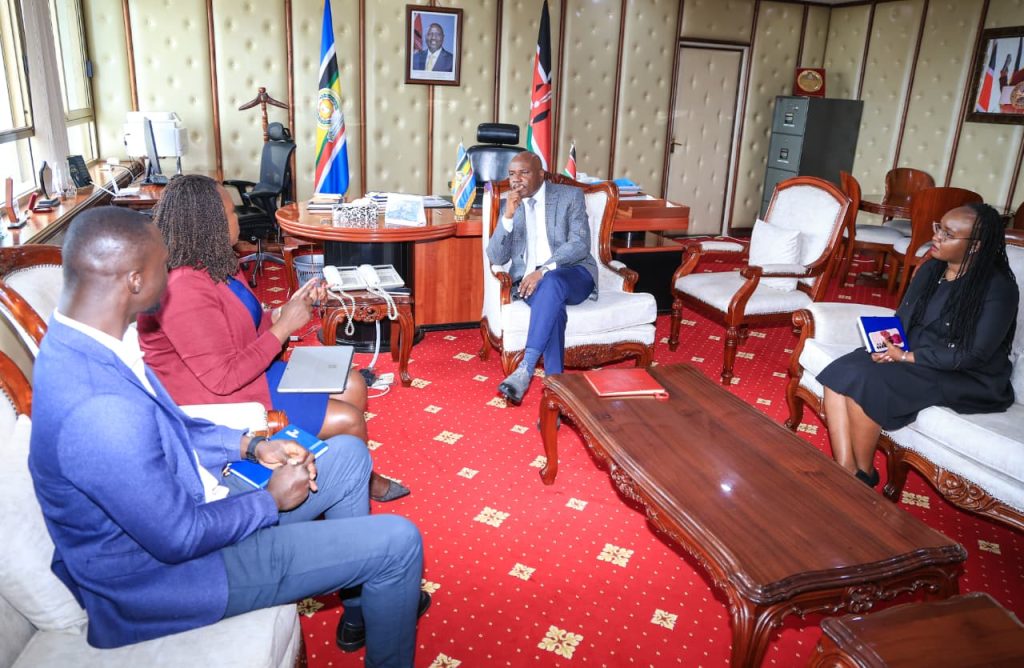
    During a courtesy call at the Ministry of Labour headquarters in Nairobi, Principal Secretary for Labour and Skills Development Shadrack Mwadime met Swisscontact Kenya’s Country Director Sharon Mosin and Project Manager Jimmy Delyon to discuss scaling up demand-driven training initiatives. The meeting highlighted growing collaboration between government and industry to strengthen workforce readiness.

    At the centre of the discussions was the PropelA dual apprenticeship programme, a National Industrial Training Authority (NITA)-accredited model implemented by Swisscontact in partnership with Don Bosco Boys Town and more than 60 private sector companies. The programme integrates classroom learning with structured workplace experience, with trainees spending 25 per cent of their time in class and 75 per cent in industry placements.


    PS Mwadime commended the initiative for aligning training with labour market needs, noting that stronger industry participation is critical in addressing youth unemployment. Under the leadership of the NITA, the government is recalibrating TVET curricula to ensure closer collaboration with employers and greater responsiveness to market demand.

    Swisscontact’s approach focuses on co-creating training content with companies, ensuring graduates acquire practical competencies required in sectors such as manufacturing, construction and services.

    Stakeholders emphasised that sustainable solutions to unemployment will depend on sustained public-private partnerships. By embedding students within workplaces during their studies, the model aims to produce job-ready graduates and reduce the mismatch between training and employment opportunities.

    The initiative signals a shift towards industry-led skills development as Kenya works to strengthen its workforce for a competitive economy.

  • Police warn sponsors of political violence as crackdown looms

    Police warn sponsors of political violence as crackdown looms

    The Deputy Inspector General of the Kenya Police Service, Eliud Lagat, has issued a stern warning to individuals financing or orchestrating violence at political gatherings, signalling a tougher security posture as the country approaches the next election cycle.

    Addressing senior officers drawn from formations and regions across the country, Lagat said security agencies had observed a recurring pattern in which criminal gangs become active during periods of political mobilisation.

    According to police, some groups are deliberately activated by sponsors, while others exploit large gatherings to engage in violence and criminal activity.

    The coastal city of Mombasa has recently drawn concern following a rise in incidents involving juvenile gangs, while several political meetings elsewhere have been disrupted, leading to deaths and serious injuries, including a recent case reported in Kisii.

    During the high-level security meeting, commanders resolved to decisively halt the trend, with regional police heads receiving firm instructions to act against perpetrators and their enablers.

    Lagat emphasised that public safety remains “non-negotiable,” declaring zero tolerance for individuals carrying crude weapons to political rallies and directing officers to enforce the law firmly while encouraging communities to report early warning signs of violence.

    “The message is clear: those who incite or participate in violence will face the full force of the law,” he said, noting that enhanced vigilance, intelligence-led operations and closer collaboration with the public will anchor the renewed crackdown.

    Earlier in the day, the DIG launched a month-long supervisory training programme at the Regional Training Centre Mombasa, underscoring the importance of integrity, professionalism and leadership as officers transition into command roles.

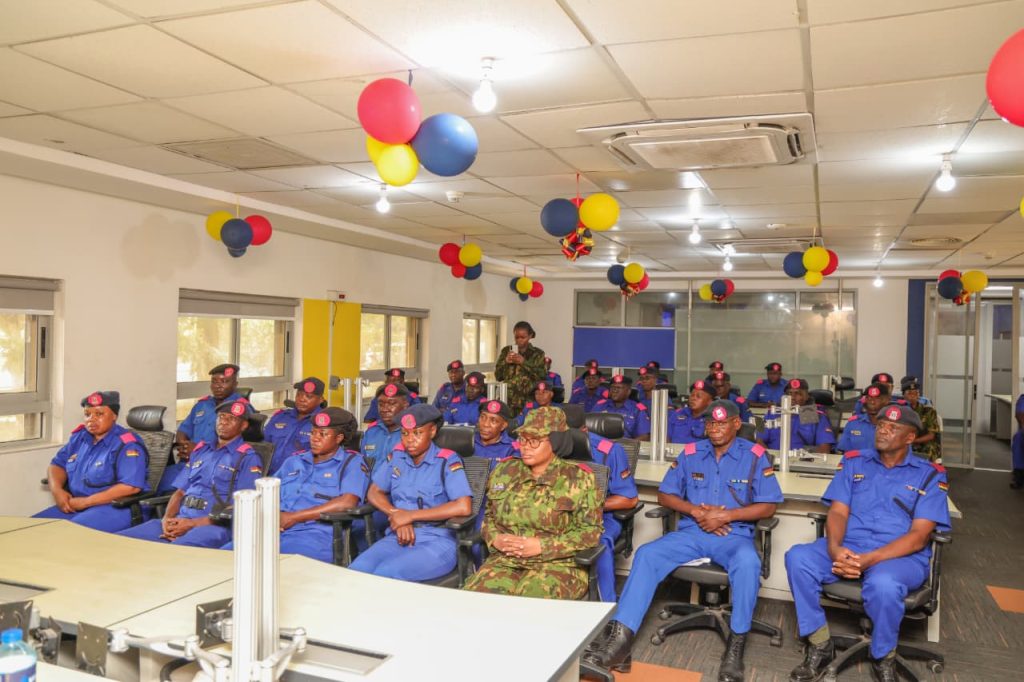
     Supervisors at the Regional Training Centre in Mombasa, during the launch by the Deputy Inspector General of the Kenya Police Service(DIG), Eliud Lagat.

    The intake forms part of an initiative to revitalise training at regional centres to ensure officers adapt to evolving crime trends and the changing security needs of citizens.

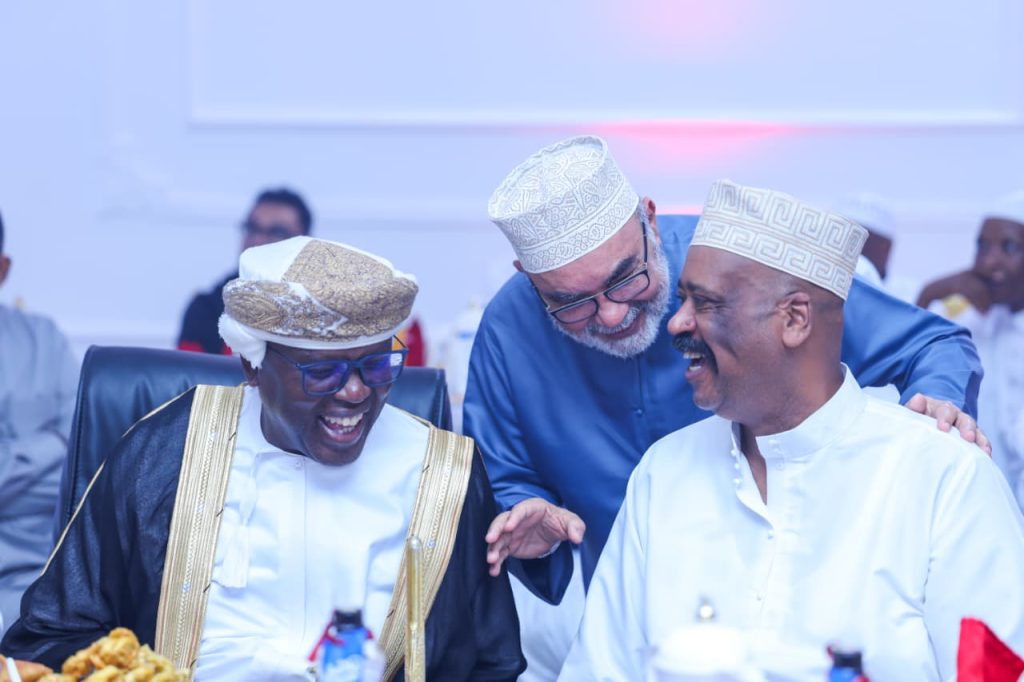
    Lagat later joined members of the Muslim community for an Iftar dinner, where he called for continued partnership between police and the public in fostering trust and social harmony.

    The Deputy Inspector General of the Kenya Police Service(DIG), Eliud Lagat, interacts with Muslim faithful during an Iftar dinner in Mombasa

    He reaffirmed the Service’s commitment to working with all religious groups to enhance safety during the holy month and beyond, noting that collaborative policing remains central to building secure and cohesive communities.

  • After years of waiting, Nithi Bridge rebuild set to commence

    After years of waiting, Nithi Bridge rebuild set to commence

    The Kenya National Highways Authority (KeNHA) has commenced the reconstruction for the long-awaited Tharaka Nithi Bridge in Tharaka Nithi County.

    KeNHA Wednesday hosted a stakeholder sensitisation meeting at the County Commissioner’s Office in Meru as the contractor moved equipment to the site, a bridge that has over the years, earned the epithet ‘killer’ bridge.

    Last week, President William Ruto confirmed that the contractor was already on the site, ready to start work, saying that Nithi Bridge evokes bad memories for locals and travellers. “The contractor is on site, we will build a modern bridge there,” Ruto said.

    In a statement detailing the purpose of the meeting, KeNHA Director General Eng. Luka Kimeli said the Nithi Bridge, located along Makutano-Embu-Meru Road, will be redesigned and realigned to provide a lasting solution to one of the deadliest blackspots in the country.

    “The Nithi Bridge has been identified as a high-risk area for road accidents. This is primarily due to restrictive road geometrics arising from the challenging terrain, limited sight distances, and steep curves,” said Eng. Kimeli.

    Nithi Bridge is approximately 48 kilometres from Embu Town and it connects Meru and Tharaka Nithi  Counties. It is one of the key infrastructure projects that President Ruto promised Kenyans in 2022.

    He said that this was compounded by poor driver behaviour, including disregard for lane discipline and speed limits.

    “The location continues to attract public concern, necessitating urgent intervention to address the geometric deficiencies to enhance road safety,” he pointed out.

    As part of the detailed design process for the bridge and approach roads, the KeNHA Director General said that the survey team is required to map out all the affected parcels of land on the project corridor to enable the National Land Commission to initiate the land repossession processes.

    “This will grant the contractor complete possession of the site without any encumbrancers and provide him with the designed alignment’s right-of-way, permitting him to execute works without delay,” he added.

    At the same time, locals expressed high hopes, saying that the long-awaited project was finally being actualized by President Ruto’s administration.

    Elsepah Njagi, a trader at Mitheru market, said many families have lost their loved ones at Nithi Bridge.

    “It has caused a lot of pain not just to the people of here but also Kenyans at large; the whole country has been affected,” she said.


  • Del Monte to boost production with Ksh 515M new processing line

    Del Monte Kenya anticipates higher production capacity after commissioning a Ksh 515 million ($4m) pineapple frozen processing line.

    According to the firm, the investment which also includes an 807kW solar power plant will significantly expand the firm’s export capacity and reduce its carbon footprint.

    Speaking during the commissioning, Principal Secretary, State Department for Investment Promotion, Ministry of Investments, Trade and Industry, Abubakar Hassan Abubakar, welcomed the announcement as an example of the kind of domestic investment Kenya needs.

    “The frozen line and solar plant are exactly the value-addition initiatives that will reduce our reliance on raw exports and position local industries to thrive in global markets. We commend Del Monte Kenya for leading the way,” he said.

    Del Monte Kenya Managing Director Wayne Cook said Individually Quick Frozen (IQF) processing line sits on their existing canning infrastructure and can process 3.6 tonnes of pineapple per hour, giving the firm flexibility to supply frozen fruit to industrial buyers in Europe and other markets.

    “These facilities signal our future as a catalyst for industrial growth, job creation and rural economic empowerment. Our investment will strengthen Kenya’s agricultural value chain and boost export competitiveness, creating meaningful economic opportunities for local communities,” said Cook.

    The processing line which is capable of freezing individual pieces of prepared pineapple to below -18°C preserves quality across longer supply chains while reducing the post-harvest losses that have long constrained Kenya’s agricultural export potential.

    The firm says its new solar plant which has been developed in partnership with Berkeley Energy Corporate Solutions (BECS) is also expected to reduce the company’s dependence on an often-unreliable national grid, lower long-term energy costs, and reduce carbon emissions.

    “The commissioning of the solar PV plant is a demonstration of BECS focus on providing energy as a service tailored to the specific needs of an industrial partner like Del Monte Kenya. BECS designed, built, financed and now operates and maintains the solar facility. Del Monte Kenya’s decision to partner with BECS sends a clear signal to the market: clean energy is a way for Kenyan industry to reduce cost, lower emissions and improve the reliability of energy supply. BECS is proud to support this journey and we see this as the beginning of a much longer and deeper partnership,” added Nicholas Tatrallyay, BECS Managing Director.

    Cook noted that the twin investments align with the company’s broader sustainability commitments that support the country’s agenda to enhance food security, drive sustainable growth, and build local industries that can compete globally.

    gy solutions. In an operating environment where mains electricity supply can be limited and unpredictable, the solar installation enables the business to harness Kenya’s abundant sunshine to power its operations efficiently and reduce dependence on grid electricity.

    Developed in partnership with BECS, the project reflects a shared commitment to advancing clean energy adoption in Kenya. The plant significantly lowers the company’s carbon footprint while enhancing energy security and operational resilience.

    The company continues to explore opportunities to expand green energy deployment across its other sites as part of its broader sustainability strategy. It also welcomes continued progress in Kenya’s energy regulatory framework to further incentivize private sector investment in renewable energy. In particular, enabling solar plant owners to export excess power to the national grid would unlock additional value — especially for businesses with seasonal or variable energy demand — and accelerate the country’s transition to a greener energy future.

  • Farmers delight as milk coolers deployed to strengthen dairy value chain

    Farmers delight as milk coolers deployed to strengthen dairy value chain

    Dairy farmers in Bomet and Kericho Counties have received major boost after they received bulk milk coolers of varying capacities.

    The coolers are being backed as strategic investment designed to improve milk aggregation, reduce post-harvest losses, and safeguard farmer earnings through better preservation and quality management.

    In Bomet, the nine milk coolers, aimed at strengthening the county’s dairy value chain, were handed over at an event held at Kapset Market in Konoin Sub-County, and attended by Livestock Principal Secretary Jonathan Mueke together with his Parliamentary Affairs counterpart Dr. Aurelia Rono.

    The exercise follows a similar intervention in Kericho County, where twelve milk coolers were delivered to dairy farmer Cooperatives, further expanding cold-chain capacity and operational efficiency within the region’s dairy ecosystem.

    Milk cooling is a critical link between production and market access.

    Enhanced cooling capacity directly translates into; lower spoilage and post-harvest losses, improved milk quality and safety, higher volumes reaching processors, stabilized farmer revenues, reduced operational costs through solar-powered units, and stronger aggregation centres as rural economic hubs.

    Collectively, the coolers deployed across Bomet and Kericho Counties significantly expand daily milk handling capability, supporting thousands of dairy farmers and reinforcing household incomes.

    Dairy cooperatives welcomed the support while identifying key areas for complementary interventions they require.

    The areas include; capacity building in milk handling and quality control, training in value addition and diversification, and greater access to Artificial Insemination (AI) services.

    Farmers were sensitized on the availability of sexed semen, now offered at a highly subsidized rate by KAGRC. This breeding technology increases the probability of female calf births, a vital step toward accelerating milk production growth and supporting Kenya’s long-term dairy targets.

    Disease control remains central to sustainable productivity. Foot-and-mouth disease management continues under the national mass vaccination programme, supported by locally manufactured vaccines by KEVEVAPI to protect livestock assets and farmer livelihoods.

    PS Mueke was accompanied by leadership from key livestock and dairy institutions, alongside regional policymakers, underscoring a coordinated multi-agency approach to livestock development.

    The broader objective remains: strengthening infrastructure, improving genetics, and protecting animal health remain essential pillars in building a competitive, resilient, and farmer-focused dairy sector.


  • Tala among 50 fintech firms honoured by Forbes

    Tala among 50 fintech firms honoured by Forbes

    Tala, the global financial infrastructure company has been named one of the hottest fintech in 2026 in the 11th Annual Forbes Fintech 50 feature.

    Even as AI start-ups take center stage with investors and enjoy frenzied funding , Tala has maintained momentum, expanding across Latin America and India in 2025 and two (Dominican Republic and Vietnam) more markets set for this year.

    “Being recognized by Forbes for the 10th time is an incredible honor and a reflection of the trust our customers place in us every day,” said Annstella Mumbi, General Manager, Tala Kenya.

    “This recognition reinforces our belief that progress should be shared. We continue to work every day to build financial tools that open doors, support families and businesses, and ensure that no one is left behind.”

    Tala’s founder and chief executive officer Shivani Siroya was also named among the top 250 America’s Greatest Innovators for her efforts in disrupting finance and reinventing how the world borrows.

    Over the last decade, Tala has served over 13 million customers , across three continents with $7B disbursed in credit and launched on-chain lending with Huma and Solana in December of last year.

  • Sapit urges IEBC to take stern action on rogue politicians

    Sapit urges IEBC to take stern action on rogue politicians

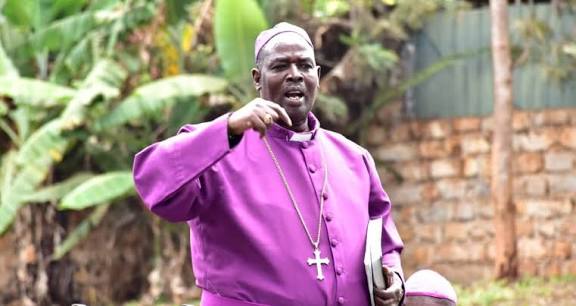
    Anglican Archbishop, Jackson ole Sapit, has called on the Independent Electoral and Boundaries Commission (IEBC) to take strong measures to control violence fueled by early campaigns.

    Sapit says it’s the commissions responsibility to control politicians accused of using youths to cause chaos.

    Speaking on the political situation in the country, after a church service at St. Chrispinus church in Bungoma, Sapit expressed his concerns about the increase in political intolerance, warning that violence has no place in the democratic process.

    The Bishop emphasised that when campaigning time comes, it should be about policy discussions and not acts of violence.

    He urged politicians to be good role models to their followers and avoid using criminals against their opponents.

    Sapit noted that elections are just a phase and should not be used to undermine peace that is key to social and economic stability.

    Elsewhere, Interior Principal Secretary Raymond Omollo has warned political leaders across the country against allegedly using youths to fuel violence, saying the government will deal firmly with those found culpable.

    Speaking in Suna West Sub-County, in Migori County, where he attended a fundraising drive and church service at Shirikisho Church, Omollo said the government will not allow politicians to use violence to intimidate rivals or disrupt political activities.

    The PS at the same time strongly defended the security agencies, insisting that law enforcement officers remain committed to maintaining order but cannot be faulted for chaos fueled by political incitement.

    He said leaders must take responsibility for their actions instead of blaming security agencies when violence erupts.

  • Governor Wavinya calls for political tolerance, unity

    Governor Wavinya calls for political tolerance, unity

    Governor Wavinya Ndeti has called for political tolerance and the protection of democratic space, stating that leaders should be allowed to engage freely with citizens without coercion or intimidation.

    ‎Speaking during a Sunday service at St. Joseph Catholic Church in Mlolongo, she encouraged residents to focus on unity, peaceful coexistence, and constructive dialogue that builds stronger bonds within the community.

    She also called on everyone to pray for leaders and for the country, asking for guidance, wisdom, and peace in all spheres of life.

    “There is need to protect democratic space, ensuring that every Kenyan can speak freely, participate in civic activities, and engage with leaders without fear or undue influence,” she said. Adding that: “A healthy democracy thrives on open dialogue, mutual respect, and accountability, and safeguarding these freedoms is essential for fostering unity and peace.”

    ‎Governor Wavinya took a moment to reflect on her administration’s development achievements, sharing how progress in key sectors continues to improve the daily lives of Machakos residents.

    She urged Members of County Assembly (MCAs) to pass the Wikwatyo Fund bill into law, ensuring that women-led CBOs, youth groups, and marginalized communities can access resources that will transform their livelihoods.‎
    ‎The Governor urged the Catholic faithful during this Lenten season to embrace acts of compassion and generosity, encouraging them to reach out to those who are less fortunate.

    Wavinya reminded everyone that even small gestures of kindness, whether sharing a meal, offering support, or lending a helping hand, can bring hope, uplift spirits, and transform lives, reflecting the true meaning of faith in action.