Author: KBC Digital

  • Kenya seeks Ksh 247M budget increase for Environment and Climate Programs

    Kenya seeks Ksh 247M budget increase for Environment and Climate Programs

    The State Department for Environment and Climate Change has proposed a Ksh 247 million increase in its recurrent budget for the 2025/26 financial year to support operations, settle legal obligations, and strengthen environmental programs.

    The Supplementary Estimates for FY 2025/26 were presented by Environment and Climate Change Principal Secretary Dr. Eng. Festus Ngeno to the Departmental Committee on Environment, Forestry and Mining, chaired by Mwala MP Eng. Vincent Musyoka, during a meeting held at a hotel in Machakos.

    The PS said the additional funds are mainly required to cover operations and maintenance, legal obligations, and transfers to the National Environment Trust Fund (NETFUND).

    However, the development budget is expected to decrease by KSh 231 million, affecting some environmental restoration and mining projects.

    Additional funds will also support Kenya’s participation in major international environmental events and negotiations, including climate conferences and global environmental forums, which provide platforms for the State Department to mobilize resources.

    Despite funding constraints, the State Department reported several achievements during the review period, including issuing Environmental Impact Assessment (EIA) licences and conducting air quality monitoring in Nairobi and Mombasa.

    The department also undertook enforcement actions related to the nationwide single-use plastics ban, raised tree seedlings, and rehabilitated degraded forest in the Cherangany ecosystem.

    Additionally, the department trained stakeholders on environmental compliance and carbon markets, while weather agencies issued timely forecasts to support early warning systems.

    However, the proposed reduction in development spending will significantly impact two major initiatives. The Kenya Gold Mercury-Free Artisanal and Small-Scale Mining Project and the Restoration and Management of Ecosystems for Climate Change Resilience Project.

    The PS decried that the budget cuts could reduce forest rehabilitation targets and decrease tree seedling production.

    He urged Parliament to increase financial allocations and avoid frequent budget cuts, arguing that adequate funding is necessary for Kenya to effectively address climate change impacts and fulfill its environmental mandate.

  • CS Duale welcomes new SHA officers to boost UHC delivery

    CS Duale welcomes new SHA officers to boost UHC delivery

    Cabinet Secretary for Health Aden Duale Friday joined the leadership and staff of the Social Health Authority (SHA) to welcome newly recruited officers, marking a key step in strengthening the Authority’s capacity to support the implementation of Universal Health Coverage (UHC).

    The Cabinet Secretary said the onboarding of the new officers strengthens SHA’s role as the financial backbone of Kenya’s healthcare reforms and will help accelerate the delivery of accessible and effective healthcare services across the country.

    Addressing staff and management, Duale emphasized that SHA plays a central role in advancing the Government’s healthcare agenda under the Bottom-Up Economic Transformation Agenda (BETA).

    He urged the officers to remain focused on serving Kenyans with integrity, transparency and accountability while ensuring prudent management of public resources.

    The CS warned that fraud, collusion with rogue healthcare facilities and misuse of funds will not be tolerated, noting that any individual found culpable will face the full force of the law.

    As the new officers deploy to departments and counties, he challenged them to prioritise key targets including scaling up revenue collection, ensuring full employer onboarding, strengthening claims management and improving administrative efficiency to ensure more resources directly support healthcare services.

    Despite operating with limited staff in recent months, SHA has collected Ksh 142.8 billion, transitioned 29.8 million Kenyans and paid Ksh 109 billion in claims to healthcare facilities.

    With the full workforce now in place, the Authority is expected to further strengthen service delivery.

    During the visit, Duale, accompanied by Director-General for Health Dr. Patrick Amoth, also inspected the ongoing construction of the National Ambulance Dispatch Centre at the SHA headquarters, reaffirming the Government’s commitment to strengthening emergency care and referral systems.

    The meeting was hosted by SHA leadership led by Chief Executive Officer Dr. Mercy Mwangangi and Chairperson Dr. Abdi Mohamed.

  • President Ruto hands over keys to new homeowners in Emgwen

    President Ruto hands over keys to new homeowners in Emgwen

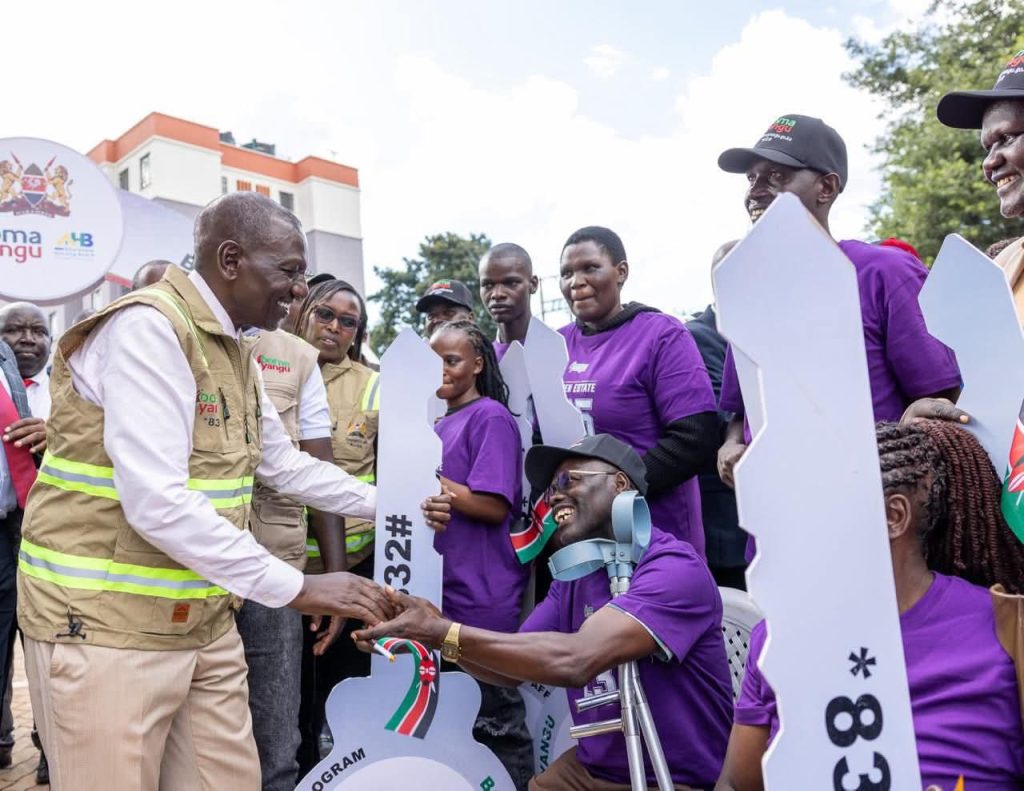
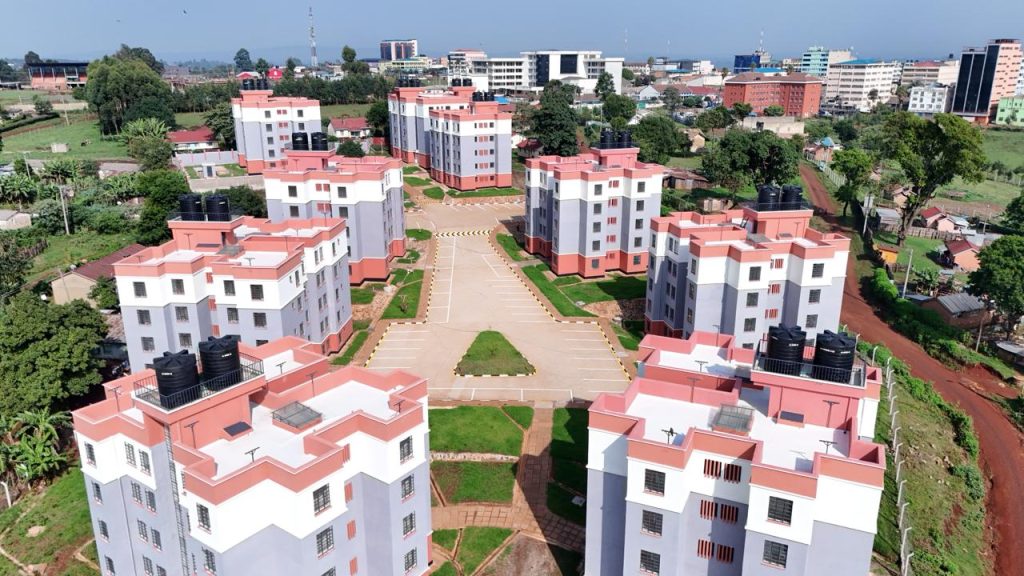
    President William Samoei Ruto Thursday, commissioned the Emgwen Boma Yangu Estate in Nandi County paving the way for occupation of the houses.  

    120 new homeowners received their keys while the sale of the remaining 100 units continues via the Boma Yangu portal http://www.bomayangu.go.ke

    President Ruto said the Affordable Housing Programme has accelerated growth in 111 constituencies through provision of decent housing for the people, as well as providing employment for the youth and women.

    “At every corner of our country, the defining feature is the Affordable Housing Project. Some people said we will not build, others said we will hand over the houses to prominent people but here we are, the beneficiaries are local people, businessmen and businesswomen.”

    Of the 120 beneficiaries, 5 are people with disabilities. Paul Koech Limo had his leg amputated after an accident in 2009. He says he registered on Boma Yangu in 2023 and started saving in 2024.

    He is now a proud owner of a two-bedroom unit, which he intends to move into immediately.

    “I am grateful to God, where I live, accessing a toilet is a challenge due to my condition. I now have a self-contained housing unit with a toilet; it has constant electricity and running water. This is a game changer especially for people with disabilities,” he says.

    Josephine Chekemboi, an office administrator at Kapsabet Referral Hospital, couldn’t hold back her tears. For her the proximity to town and the security in the area were huge motivations when she registered to own a two-bedroom unit.

    “I have lived with disability for most of my life, commuting to work has been a challenge especially during rainy seasons. I am a living testimony that home ownership is real. I thank the President for this programme and am grateful for the opportunity to own a unit,” she said.

    Bethuel Limo, a resident of Kapsabet and a father of two echoes her sentiments.

    Bethuel has been disabled since birth. “I was living in a one-bedroom house, in a place where we share a toilet. As for water and electricity, they weren’t guaranteed. I look forward to moving into my new home. This realization, once I complete paying the monthly installments, and receive a sectional title is a great motivation for me.”

    “As a young man, I urge the youth to invest in Affordable Housing, it’s the easiest way to become a homeowner at a young age. This is a long-term investment and if God enables me, I will buy another unit for my wife,” said an elated Limo.

    During his tour of duty in Nandi County, the President laid the foundation stone for the Boma Yangu Chesumei Affordable Housing Project, as he reiterated the Government’s commitment to provide access to affordable homes within the county while creating further employment opportunities for the local communities.

    The development will provide another 1,166 housing units to the growing town of Kapsabet and will also have a community center, basketball pitch, a garbage receptacle as well as 52 shops for the residents to do business.


  • PS Omollo: Plans for Madaraka Day fete in high gear

    PS Omollo: Plans for Madaraka Day fete in high gear

    Plans for this year’s Madaraka Day celebrations have begun with an
    assurance that the stadium under construction will be completed in good
    time.

    The Principal Secretary for Internal Security and National Administration Dr. Raymond Omollo, on Thursday led the National Celebrations Steering Committee on an inaugural inspection tour of Wajir Stadium, the venue for the 63rd Madaraka Day celebrations.

    The visit marks the start of a crucial phase in the preparations for celebrations to be hosted in Wajir County.

    The PS was accompanied by fellow Principal Secretaries Dr. Patrick Mariru
    (Defence) and Teresia Mbaika (Aviation and Aerospace Development).

    It will be the first time the national event is being hosted in the region.

    The PS inspected ongoing construction works at the 10,000-capacity
    stadium in Wajir town and received technical briefings from contractors,
    engineers and senior National Government Administrative Officers (NGAOs) on the status of infrastructure development, projected completion timelines, and logistical frameworks necessary to bring the facility to the national standard required for the celebrations.

    Speaking at the stadium, PS Omollo said the contractors will work round
    the clock to ensure the stadium was ready early enough to host the
    celebrations.

    “The stadium is currently at about 10 percent completion, and we expect substantial completion by the first week of May as we get ready for the Madaraka Day celebrations.Hosting Madaraka Day in Wajir is a clear demonstration of the Government’s commitment to equitable national inclusion. Every Kenyan, in every corner of this country, deserves to feel that they are part of our shared national story,” he said

    Dr. Omollo also outlined other critical facilities integral to the successful hosting of the national celebrations. These include the expansion and rehabilitation of Wajir International Airport, works on the terminal building, taxiway, and runway, that are aimed at enhancing efficiency and facilitate easier movement into and out of Wajir.

    Dr Omollo said the decision to host the 63rd Madaraka Day celebrations in Wajir was part of the National Government’s deliberate policy of rotating national events across different regions of the country, ensuring that all Kenyans feel represented and included in the country’s development milestones.

    The occasion marks the anniversary of Kenya’s attainment of internal self-governance on June 1, 1963 a pivotal moment in the nation’s path to full independence.

    Dr. Omollo said hosting Madaraka Day will serve as a catalyst for accelerated infrastructure development in Wajir County and the wider North Eastern region.

    The delegation further visited the County Commissioner’s residence, which will undergo refurbishment ahead of the State luncheon scheduled to be hosted by President on Madaraka Day.

    “Beyond the celebrations themselves, the preparatory investments in the stadium and surrounding public facilities are expected to generate lasting economic benefits for local communities, including employment, improved public amenities, and elevated national visibility for the region,” he said.

    The PS placed particular emphasis on inter-agency coordination as a cornerstone of the preparations. He called on all stakeholders, including

    NGAOs, the Wajir County Government leadership, national security agencies, and implementing ministries to collaborate in the preparations with a view to meeting set timelines.

    Dr Omollo said robust security arrangements and comprehensive logistical plans would be deployed to ensure the safety and comfort of all participants at the national event.

    He noted that the celebrations would provide a platform to showcase the rich cultural heritage of the North Eastern region, strengthen national cohesion, and amplify the government’s development agenda under the Bottom-Up Economic Transformation Agenda, BETA.

    The national fete is expected to attract dignitaries, government officials, and Kenyans from across the country to Wajir County.

    PS Omollo said would continue to monitor progress in the preparations and provide support where necessary.

    He said follow-up visits, technical reviews, and coordination meetings would be conducted progressively to ensure that all preparations are finalized well ahead of June 1.

  • Belarus donates humanitarian supplies to support flood affected households in Kenya

    Belarus donates humanitarian supplies to support flood affected households in Kenya

    The Government of Belarus has donated humanitarian supplies valued at approximately Ksh 23 million to support disaster response efforts in Kenya following floods that have affected thousands of households across the country.

    The consignment, handed over by Belarus Ambassador to Kenya Dzmitry Krasouski and received by Principal Secretary for Special Programmes Ismail Maalim Madey, includes non-food items such as clothes, tents and shoes to assist families displaced by the ongoing heavy rains.

    Speaking during the handover ceremony, PS Maalim thanked the Government and people of Belarus for the timely support, noting that the supplies will provide much-needed relief to affected households.

    The PS said the donation will help restore dignity to displaced families while strengthening the growing partnership between Kenya and Belarus in humanitarian assistance and disaster response.

    “We have experienced increasingly erratic weather conditions in the country. Over 30 counties have been affected by drought, and even before we could fully address those challenges, we are now facing devastating floods that are causing widespread damage. This aid could not have come at a better time. Many families have been displaced by the floods, particularly here in the city and across the western part of the country.”

    On his part, the Belarusian Ambassador to Kenya Dzmitry Krasouski noted the significant of supporting Kenya during this period which mirrors the experiences that they have witnessed in their home country.

    “This humanitarian aid has been delivered on the order of the President of the Republic of Belarus. The consignment includes clothing, footwear, shelter materials and supplies for children. We hope these items will be delivered promptly to support the affected communities. Belarus values its partnership with Kenya, and we are pleased to support the government’s humanitarian efforts to assist families affected by the floods. This donation is a symbol of solidarity between our two nations.”

    Recent torrential rains have triggered flash floods in several parts of the country, affecting more than 3,500 households in Nairobi and 381 households in Kisumu, with loss of lives and destruction of property reported.


  • ASSNTURE Holdings expands operations to Kenya

    ASSNTURE Holdings expands operations to Kenya

    Abu Dhabi-based digital securities and real-world asset (RWA) tokenization company, ASSNTURE Holdings Limited has announced its entry into the Kenyan market.

    Through  ASSNTURE Afrique Limited, a wholly owned subsidiary incorporated in Kenya, the firm targets to deliver next-generation digital assets infrastructure and RWA tokenization solutions to one of the world’s fastest-growing financial technology markets.

    “Kenya stands at the forefront of financial innovation on the African continent, and we see an extraordinary alignment between ASSNTURE’s capabilities in RWA tokenization and digital assets infrastructure, and the region’s ambition to build a modern, inclusive, and technology-driven capital markets ecosystem,” said Ihsan Khelef, Co-Founder, ASSNTURE Holdings Limited.

    The firm has also appointed Ali Hussein Kassim, a prominent fintech entrepreneur and advocate as Board Advisor to ASSNTURE Holdings Limited.

    Kassim’s appointment is backed to play an instrumental role in guiding ASSNTURE’s Eastern and Southern African expansion strategy and stakeholder engagement across the region.

    Kassim is currently the chairman of the Association of FinTechs in Kenya, as well as Executive Board member of the Africa FinTech network.

    ASSNTURE targets to bridge the Gulf and East Africa through tokenized finance as it seeks to democratize access to capital markets through blockchain-enabled financial infrastructure.

    “Digital assets and tokenized financial infrastructure represent the next chapter for capital markets in Africa. I am delighted to join ASSNTURE’s advisory board at such a pivotal time. ASSNTURE brings world-class technology and deep institutional finance expertise from the UAE, and I look forward to helping bridge those capabilities with the opportunities and talent that exist across Kenya and the wider Eastern and Southern African region, ” said Kassim.

    ASSNTURE Afrique Limited will serve as the regional hub for the Company’s East and Southern Africa operations, delivering access to ASSNTURE’s flagship platforms, including OPTIMUS (RWA Tokenization), IVEST (Digital Securities Marketplace), TRADEDESK (Blockchain Commodity Murabaha), IVEST+ (Treasury & Liquidity Management), and ASSNTURE MONEY (Payments & Digital Currency),  to financial institutions, corporates, asset managers, and government entities.

    The firm says in his capacity as board advisor Kassim will contribute strategic guidance on market entry, regulatory positioning, institutional partnerships, and business development across Eastern and Southern Africa, drawing on his deep network and expertise in Kenya’s rapidly evolving digital finance landscape.

  • Court bars NTSA from enforcing instant fines

    Court bars NTSA from enforcing instant fines

    The High Court of Kenya has temporarily stopped the enforcement of the recently launched instant traffic fines system introduced by the National Transport and Safety Authority (NTSA).

    Justice Bahati Mwamuye issued conservatory orders suspending the implementation of the system following a petition filed by lawyer Shadrack Wambui, who is challenging its legality.

    In the case, Wambui argues that the instant fines framework may violate due process and motorists’ constitutional rights by allowing penalties to be issued and enforced without adequate legal safeguards.

    The orders mean that NTSA and other enforcement agencies cannot implement or enforce the instant fines system until the court hears and determines the petition.

    The instant fines system had been introduced as part of efforts by NTSA to strengthen road safety enforcement and improve compliance with traffic regulations by allowing motorists who commit offences to pay fines immediately rather than undergoing lengthy court processes.

    However, critics have raised concerns over transparency, accountability and the potential for abuse if the system is implemented without clear legal frameworks and oversight.

    The High Court will now consider the arguments presented in the petition before determining whether the instant fines system can proceed or requires further legal and regulatory review.

  • Our Broad-Based Government will be accountable, says Ruto

    Our Broad-Based Government will be accountable, says Ruto

    The Broad-Based Government is delivering the promises to the people, President William Ruto has said.

    The President said the partnership between the United Democratic Alliance (UDA) and the Orange Democratic Movement (ODM), which is anchored on the 10-Point Agenda, is driven by a common desire to unite the country and address longstanding social, economic and political challenges.

    The 10-point agreement was signed by President Ruto for UDA and Kenya Kwanza, and the late Raila Odinga for ODM in March 2025. The 10-Point Agenda cemented the growing ties between the two political formations.

    He pointed out that the Broad-Based Government will be accountable to the people and not to self-appointed supervisors.

    “We did not make the commitment to them; we made the commitment to the people of Kenya. Our responsibility and reporting is to the people of Kenya,” he said.

    Speaking during the UDA-ODM Joint Parliamentary Group meeting at the Kenyatta International Convention Centre (KICC), Nairobi, the President outlined the progress in the implementation of the 10-Point Agenda.

    Present were Deputy President Kithure Kindiki, ODM Party Leader Oburu Oginga, governors and MPs, led by Majority Leader Kimani Ichung’wah and Minority Leader Junet Mohammed.

    On electoral reforms, he said the Independent Electoral and Boundaries Commission (IEBC) has since been appointed and already conducted multiple by-elections.

    To foster inclusivity, the President said the government has implemented robust policies to support minorities, including through bursaries.

    To address the cost of living, he said the government has transformed the agricultural sector and enhanced productivity, reducing the prices of food commodities and also stabilised the currency to ensure imports, including oil, remain stable.

    President Ruto explained that the government has increased funding to education to reduce the burden on parents and lowered fees for universities and TVETs through a new funding model.

    “We want to make sure that we lift the burden of parents on school fees,” he said.

    To expand access to quality healthcare, the government has rolled out the Social Health Authority (SHA), bringing on board close to 30 million Kenyans under insurance, further reducing the cost of living.

    “This administration is tackling the cost of living head-on,” he said.

    On job creation, the President said the government has created job and business opportunities for 1.8 million people who were not working three years ago.

    He pointed out that they are working in housing, digital and export of labour programmes.

    The President said the government is increasing funding going to counties and ensuring timely disbursement to strengthen devolution.

    Additionally, President Ruto said the government has ensured that county assemblies will have their own budget from July 2027, enhancing their independence to exercise their oversight mandate.

    “We expect the county assemblies to exercise their oversight mandate more robustly,” he said.

    The President called on members of Parliament to write the Ward Fund Bill in line with the recommendations made by the court on the Constituency Development Fund to ensure counties have a legal framework.

    The President commended MPs in the Broad-Based Government for enacting the Conflict of Interest Act that has strengthened the fight against corruption.

    He also said the government has digitised 30,000 government services to curb waste and mismanagement of public resources.

    “As a result of the implementation of the e-Citizen platform, government services are now more efficient and collecting KSh1 billion a day.

    Additionally, the government has also implemented the Single Treasury Account, introduced Zero-Based Budgeting to enhance accountability in the budget and e-procurement to seal loopholes in procurement.

    On the anti-corruption front, President Ruto noted that the capacity of the Kenya Anti-Corruption Commission has been enhanced, noting that it has obtained 86 convictions and seized assets worth KSh9.8 billion in the past three years.

    At the same time, the commission is pursuing KSh22 billion acquired through corrupt means.

    On debt management, President Ruto noted that the government cut spending by KSh300 billion to stabilise the economy, stopped consumption subsidies, and reorganised debt, ensuring it does not threaten the country’s fiscal sustainability.

    Going forward, the President explained that the government has adopted innovative and creative ways to fund the country’s transformation agenda, citing public-private partnerships and privatisation of public assets.

    At the same time, President Ruto called on the Kenya National Commission on Human Rights to propose a law to Parliament on the protection of protestors.

    “We do not want to propose the law from the Executive side of government. Let it come from the KNCHR,” he said.

    The joint parliamentary group endorsed the extension of the 10-Point Agenda committee for 60 days.

    It also endorsed the formation of a technical committee to drive coalition engagements between UDA and ODM parties. The committee will have four members from both parties.

    The PG also agreed to form a parliamentary broad-based mediation committee to accelerate the implementation of outstanding items presented for legislation by the 10-Point Agenda.

    Prof Kindiki commended the President for establishing a new financing model aimed at elevating the country into a first-world economy.

    The Deputy President outlined the government’s track record over the past three years, noting that the administration has an impressive record.

    Mr Oginga lauded the establishment of the National Infrastructure Fund, noting that it will enable the government to develop mega infrastructure projects, including dams, dual carriageways, and the extension of the Standard Gauge Railway to the Uganda border.

    The ODM party leader also noted that the 10-Point Agenda was established to strengthen the Broad-Based Government.

    Source: PCS

  • Gitaru interchange set to reshape travel and commerce in Kikuyu

    Gitaru interchange set to reshape travel and commerce in Kikuyu

    As Nairobi’s traffic pressure continues to mount, the Gitaru Interchange is set to transform travel and commerce across the Kikuyu corridor.

    Featuring four sweeping cloverleaf loops, construction on the interchange is now nearing completion, with works progressing steadily on one of the country’s busiest transport junctions.

    Once operational, the interchange will connect the Nairobi–Nakuru Highway with both the Southern and Western Bypasses, a link expected to significantly ease traffic flow across the capital, Nairobi.

    According to the Kenya National Highways Authority (KeNHA), the project is now approaching its final stages.

    “The project is currently about 85 per cent complete, with completion targeted for December 31, 2026. Beyond infrastructure, the construction has also created employment opportunities for more than 1,100 people involved in various stages of the works,” notes KeNHA Director General Eng. Luka Kimeli. The design, he explains, allows traffic to flow continuously between highways without interruptions, reducing congestion while cutting travel time for motorists.

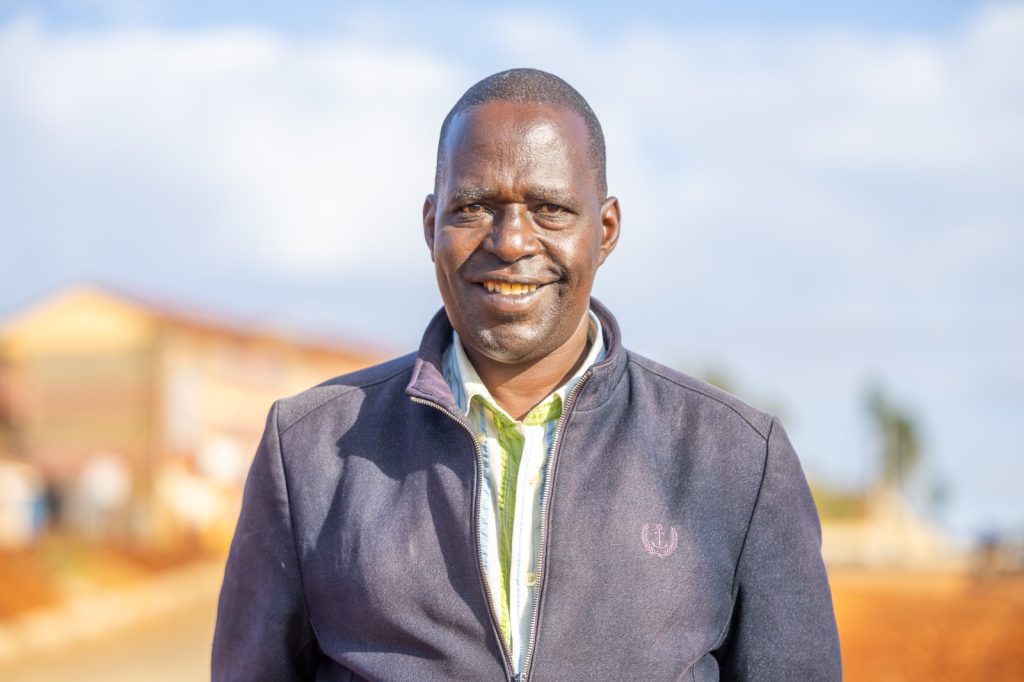
    The transformation is already being felt by Gitaru residents like George Larama, a business owner and longtime resident of the area, who says the road project is beginning to ease movement along the once-congested route.

    “This road helps a lot in transportation; it is very long, and we are asking the government to fast-track the construction because it is going to bring development to Gitaru,” he said.

    Before the interchange works began, navigating the area often meant long detours and heavy traffic. Larama recalls how motorists previously had to drive all the way to Zambezi to make a turn toward Nairobi.

    “People used to go up to Zambezi, a local town centre along the route, just to make a turn to Nairobi. But now, if someone comes from Kikuyu, it becomes very simple,” he explained.

    George Larama, a Gitaru resident and local entrepreneur, calls the interchange a transformative development.

    Better connectivity has also improved convenience and safety for early morning commuters heading to the capital.

    “It’s easy now going to Nairobi, no matter what time you wake up. In the past, when there were no good roads, people used to think it was risky to wake up at 2:00 am or even 3:00 am, but now, even at nine, you just take the road and go to Nairobi,” Larama added.

    Transport officials say the project had previously slowed due to financial constraints before a new funding model helped revive stalled works.

    “The Gitaru Interchange had stalled due to funding constraints, but securitisation enabled us to resume this critical project,” explains Eng. Kimeli, adding that the government is prioritising completion of long-delayed infrastructure projects.

    “In line with the President’s directive, the government is completing stalled road projects regardless of when they began or which administration started the road project because the government is perpetual, and leaving unfinished projects from previous administrations punishes Kenyans.”

    The Gitaru Interchange forms part of the wider A104 highway rehabilitation programme, a key transport corridor linking Nairobi to Central Kenya and the Rift Valley.

    Once complete, it is expected to reduce travel times, cut fuel costs and improve logistics for regional trade.

    Long-distance freight operators are likely to benefit from more reliable transport routes, while daily commuters could enjoy shorter and more predictable journeys.

    The project is fully funded by the Government of Kenya and supported through innovative financing measures.

    When President William Ruto’s administration took office, it inherited Ksh1 75 billion in pending bills owed to 580 contractors, some dating back nearly nine years.

    In April 2025, the Cabinet approved securitisation, a debt-free financing model allowing the Kenya Roads Board to raise funds by leveraging future revenues from the Road Maintenance Levy Fund.

    The move unlocked financing for several stalled projects, including the Gitaru Interchange.

    As construction advances toward completion, residents and traders along the corridor say the changes are already visible, with improved mobility and new economic opportunities gradually taking shape across the Kikuyu corridor.

  • DCJ Mwilu calls for stronger judicial response to labour migration cases

    DCJ Mwilu calls for stronger judicial response to labour migration cases

    Deputy Chief Justice Philomena Mwilu has called on Employment and Labour Relations Court (ELRC) judges to strengthen access to justice for migrant workers, noting that labour migration disputes increasingly present complex transnational legal challenges.

    Speaking while closing the 2026 Annual Conference of ELRC Judges themed “Labour Migration and Access to Justice,” the DCJ said Kenyan workers do not lose their constitutional protections when they cross international borders, emphasizing that justice must remain accessible even when injustice occurs outside the country.

    “A people-centred justice approach requires this Court not merely to resolve disputes, but to examine how our procedures, remedies, partnerships and jurisprudence can remove barriers, empower agency, preserve human dignity (utu) and generate outcomes that restore social equilibrium,” stated DCJ Mwilu.

    Justice Mwilu noted that migrant worker cases often involve power imbalances, exploitation and trauma, particularly among low-wage domestic workers navigating cross-border recruitment systems.

    She observed that the Judiciary’s framework on Social Transformation through Access to Justice (STAJ) calls on institutions to design people-centred justice pathways that are accessible, affordable and effective.

    “Migrant workers, especially low-wage domestic workers navigating transnational recruitment systems, represent precisely the justice-seekers contemplated by STAJ. Their justice journeys often traverse multiple jurisdictions, power imbalances, trauma and economic precarity,” said DCJ Mwilu.

    According to the Deputy Chief Justice, labour migration cases provide an important test of whether the justice system can respond effectively to the realities faced by vulnerable workers whose disputes span multiple jurisdictions.

    Reflecting on the insights shared by partners such as the International Labour Organization (ILO) and Global Justice Kenya, DCJ Mwilu said such partnerships are critical in helping courts understand the human impact behind the cases brought before them.

    The partners spoke on emerging labour migration trends, international legal standards and the challenges migrant workers face abroad.

    The DCJ urged judges to interrogate employment contracts more closely in migrant-worker disputes, noting that agreements can sometimes conceal coercion and structural inequality.

    She encouraged the development of jurisprudence that address issues such as recruitment accountability, joint liability and the enforcement of foreign-based employment rights within constitutional parameters.

    The conference brought together judges and stakeholders to examine the legal, institutional and human rights dimensions on labour migration.