Author: KBC Digital

  • Kenya underscores Africa’s growing appeal as global energy investment hub

    Kenya underscores Africa’s growing appeal as global energy investment hub

    Kenya has underscored Africa’s growing appeal as a global energy investment destination noting that the continent’s energy future is not just a development agenda, but a compelling investment case.

    With over 90% of electricity generated from renewable sources, Kenya continues to demonstrate that clean energy can power growth, industry, and opportunity at scale.

    Speaking at the Powering Africa Summit in Washington DC, PS Energy, Alex Wachira highlighted how strong policy frameworks, digital innovation, and private sector participation are unlocking bankable opportunities across the energy value chain.

    “From mobile-enabled revenue collection and smart metering to competitive procurement and Public Private Partnership models, Kenya is creating a transparent, efficient, and investor-ready energy market,” PS said.

    PS Wachira noted that as countries strengthen governance, embrace technology, and deploy innovative financing, Africa is increasingly positioning itself as a reliable and profitable destination for global energy investments, powering industries, communities, and shared prosperity.

    The PS stressed that developing sufficient electricity baseload (continuously on power such as geothermal, hydro, thermal) to support intermittent renewable energy such as wind and solar, while expanding access and strengthening the grid, remains key to unlocking Kenya’s and indeed Africa’s growth.

    On his part, the Kenya Power & Lighting Company, Managing Director & CEO, Dr. (Eng.) Joseph Siror remarked that as demand rises, investment in transmission and alignment with generation will be critical for a stable and efficient system.

    “Electricity is not just power, it is the foundation of economic transformation. For Kenya and across Africa, the focus must be on building resilient systems that support growth, industrialisation, and long-term energy security, ” said Siror.

    He added that Africa’s opportunity to leverage a balanced energy mix to secure its energy future, saying it presents a clear opportunity for partners and investors to support Africa’s journey towards a stable and future-ready energy system.

  • Half a million pupils targeted in oral health education

    Half a million pupils targeted in oral health education

    Unilever is seeking to educate at least 500,000 pupils across 500 public schools in Kenya on the benefits of dental care.

    Through Pepsodent, the firm has unveiled a nationwide school oral health campaign in a push to address Kenya’s high burden of preventable dental diseases.

    Unilever Commercial Lead John Kibera said the school-based model is designed to drive long-term behavioural change at an early age.

    “Reaching children in school allows us to simplify oral care and embed daily habits such as brushing twice a day using fluoride toothpaste. These are small actions with significant long-term health outcomes,” he said.

    The initiative will be rolled out across urban, peri-urban and rural areas, focusing on behaviour change among school-going children through structured oral hygiene education.

    Some of the schools include Arap Moi Primary, Olympic Primary, Mwiki Primary, Ruiru Comprehensive, and Mukuru Community Primary Pipeline, among others.

    Pupils will be encouraged to brush twice daily for at least two minutes using fluoride toothpaste. It will include supervised learning sessions on proper brushing techniques and basic oral care practices.

    The rollout comes against the backdrop of persistent oral health challenges.

    Data from the Kenya National Oral Health Survey shows that nearly half of children aged five suffer from tooth decay, while gum disease affects more than 90pc of the population.

    Unilever East Africa Managing Director Luck Ochieng linked oral health to education outcomes, noting that untreated dental conditions can affect concentration, attendance, and overall well-being among learners.

    “Good oral health underpins a child’s confidence and ability to learn. Preventive interventions at the school level are critical in reducing the long-term burden of dental disease,” Ochieng added.

    National data shows that more than 77pc of adults own a toothbrush and brush at least once daily, while about 70pc use fluoridated toothpaste.

    However, gaps persist in brushing frequency, technique, and awareness, with 17pc of users unsure whether their toothpaste contains fluoride.

  • State targets private funding to deliver housing for correctional officers

    State targets private funding to deliver housing for correctional officers

    The State Department for Correctional Services is exploring various funding models as part of a plan to construct institutional houses for its officers.

    The initiative, according to Principal Secretary Dr. Salome Beacco, is part of a broader government agenda meant to upgrade the living conditions of serving officers, enhance security, and reform the correctional sector.

    Speaking on Thursday during a meeting with Azerbaijan ambassador Sultan Hajiyev, who had paid her a courtesy call, Correctional Services PS Dr. Salome Beacco said the plan includes adopting a Public-Private Partnership model for the department’s institutional housing programme as it moves to bridge the existing housing gap.

    The plan also includes modernization of all penitentiary institutions across the country.

    The PS said the department is considering modelling its concept around the Kenya Defense Forces housing scheme where private entities are financing housing units before handing over the assets back to the military with the housing levy fund acting as a guarantee for the money raised through innovative financing.


  • Kirinyaga’s Aggregation and Industrial Park nears completion, boosting agro-industrial growth

    Kirinyaga’s Aggregation and Industrial Park nears completion, boosting agro-industrial growth

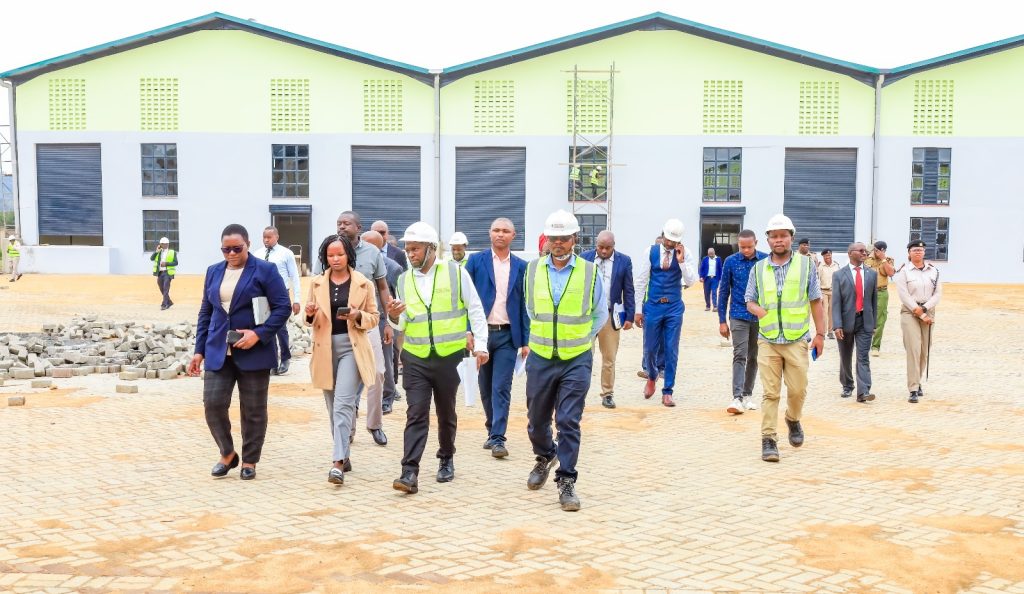
    Construction of the County Aggregation and Industrial Park (CAIP) in Kirinyaga is nearing completion, marking a major milestone in the county’s journey toward becoming a regional hub for agro-processing and industrial development.

    The facility, located within the Sagana Agro-Industrial City, which is a designated Special Economic Zone(SEZ), will go a long way in supporting value addition, strengthening agricultural value chains and creating employment opportunities.

    Currently, the construction of eight warehouses has reached 86 percent completion. These include 2 warehouses for cold rooms, two for aggregation and four for value addition, a step that signals steady progress toward full operationalization of the facility.

    Speaking in Kariti Ward, Ndia Constituency where the project is domiciled, Governor Anne Waiguru said the project is projected to create massive job opportunities especially for youth and women once investors begin operations.

    She noted that the industrial park will provide farmers with a structured system for aggregating produce, preserving it through modern cold storage facilities and channeling it into value addition industries within the park.

    “Those who grow avocados will have a place to supply their produce as we will have an avocado oil factory. Those with tomatoes will have their tomatoes processed into tomato paste. Those will be more than 100,000 indirect jobs while more than 10,000 direct jobs will go to our youth and women in Kirinyaga,” she emphasized.

    Waiguru said the project is one of the county’s flagship economic transformation initiatives and will play a central role in strengthening Kirinyaga’s agricultural economy and positioning Kirinyaga as an emerging manufacturing and agro-processing hub in the region.

    She added that the integrated approach is expected to significantly reduce post-harvest losses while opening up new markets for farmers by linking agricultural production to processing and manufacturing, sealing from end to end her vision for Wezesha Kirinyaga agro-economic empowerment program.

    “The industrial park will attract investors who will establish agro-processing factories at the facility, creating a reliable market for local farm produce and boosting incomes for farmers across the county. Other investment opportunities include logistics, packaging, warehousing and other industrial activities linked to the facility,” she said.

    Waiguru also thanked President William Ruto for supporting the project through the national government’s industrialization agenda, noting that collaboration between the two levels of government has been instrumental in accelerating the implementation of the initiative.

    Recently a team from the Ministry of Trade and the Office of the Deputy President visited the county to assess the project’s implementation status and were impressed by the progress.
    Kirinyaga has been ranked among the fastest counties in implementation of the County Aggregation and Industrial Park project. Besides developing the CAIP, the county government has also been working to ensure that supporting infrastructure within the industrial park is also developed, among them being dykes to protect the park against flooding from Rivers Sagana and Ragati.


  • President Ruto hands over 180 Affordable Housing units in Kakamega

    President Ruto hands over 180 Affordable Housing units in Kakamega

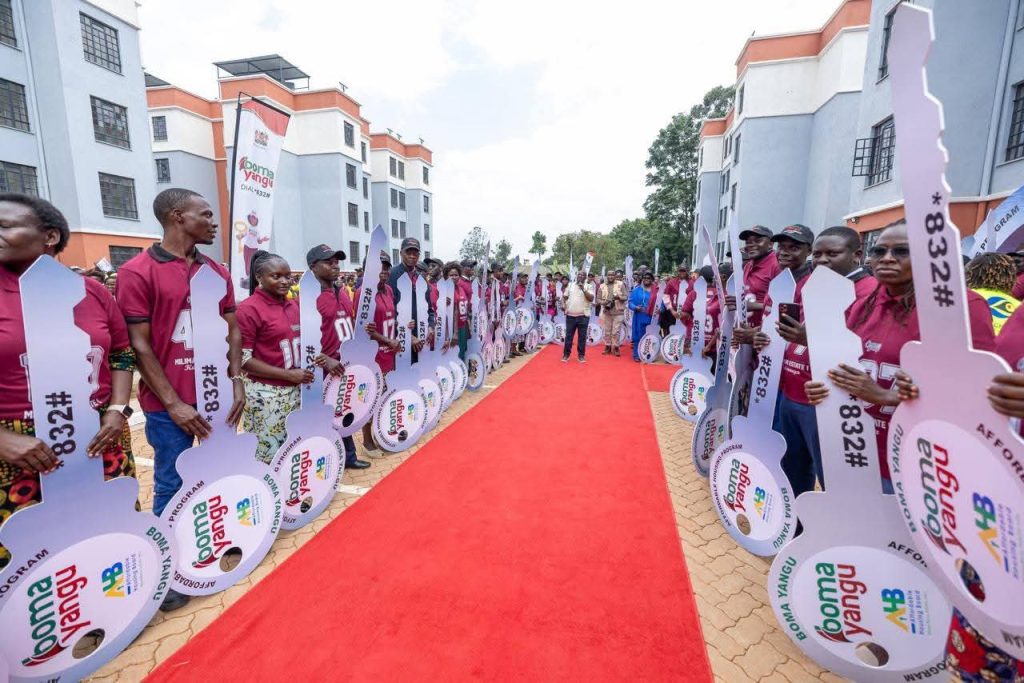
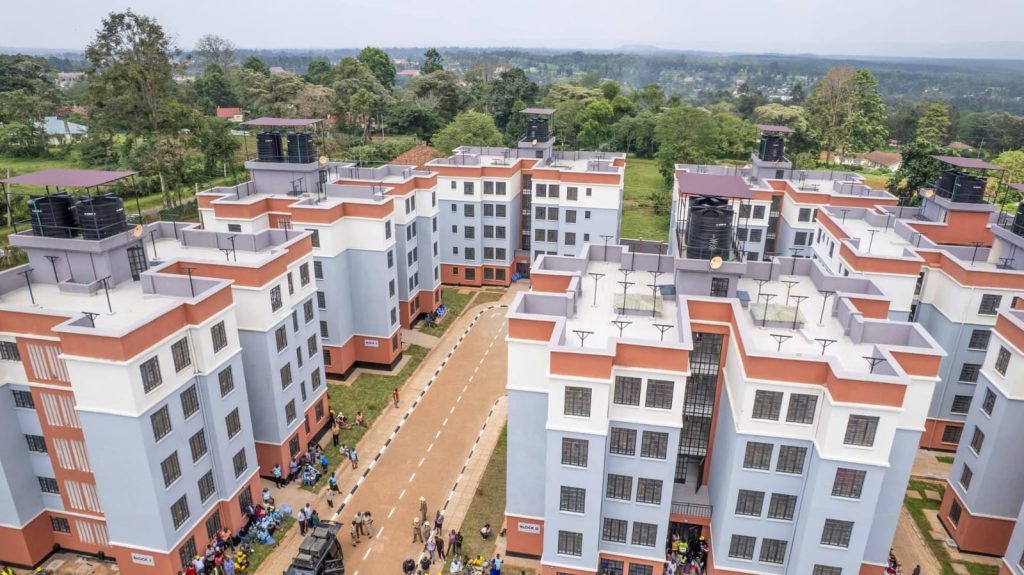
    President William Ruto Tuesday afternoon handed over keys to 180 new home owners at Milimani Boma Yangu Estate Phase 1 in Kakamega County, marking a significant step towards dignified and accessible housing for Kenyans.

    The project, spearheaded by the State Department for Housing and Urban Development, has 220 housing units and is part of the government’s broader agenda to transform living conditions and address housing deficit.

    Speaking during the handover ceremony, President Ruto reaffirmed the Government’s commitment to ensuring that every Kenyan has access to decent homes, regardless of their income level and their geographical location within the republic.

    He further noted that this transformative initiative will continue despite criticism and noise from the opposition and detractors, emphasising its impact not only on building dignity for homeowners but also on job creation.

    “Today is a historic moment for the people of Milimani. We are handing over keys to more than 180 beneficiaries, who will become new homeowners at Milimani, Kakamega. This is a true testament that the affordable housing programme is a reality. I want to assure Kenyans that we remain committed to delivering these units while also creating employment opportunities and associated social infrastructure, in a journey towards building the country we want. The project has already generated jobs for jua kali artisans, masons, surveyors, security personnel, quantity surveyors, and electricians, among others,’’ The President said.

    In his remarks, Housing PS Charles Hinga said the Housing department is already constructing housing units across the 47 counties and underscored that Kenyans should apply for these housing units saying demand for housing is now at an all time high.

    “I urge Kenyans to apply for the units through the USSD code *832# or through the Boma Yangu portal. The housing units are built using modern technology and are of the highest standards suitable for decent living,” said Hinga.

    At the same time the President laid the foundation stone for the construction of Milimani Phase II Affordable Housing Project, which will deliver 1,891 units in the county.

    Residents of Milimani Boma Yangu Estate Phase 1 will benefit from a wide range of amenities, including green spaces, street lighting, landscape gardens, well-developed road networks, ample parking, and other essential social facilities.

    The Project comprises 13 Blocks classified into 947 affordable units, 392 Socialhousing units and 552 Market housing units and comes with a Community center, a kindergarten, a primary school, commercial stalls, roads and sewer reticulation, a borehole, a boundary walling, a power house, a gatehouse, parking and cabro paved driveways, electrical and mechanical installation works.

    It’s expected that the project will be ready for commissioning in December 2027 as the government esclates its promise to prioritise delivery of affordable housing to improve livelihoods through job creation and ensure dignified living for all Kenyans.

  • DPP charges 37 year old Chinese national for dealing in live wildlife species

    DPP charges 37 year old Chinese national for dealing in live wildlife species

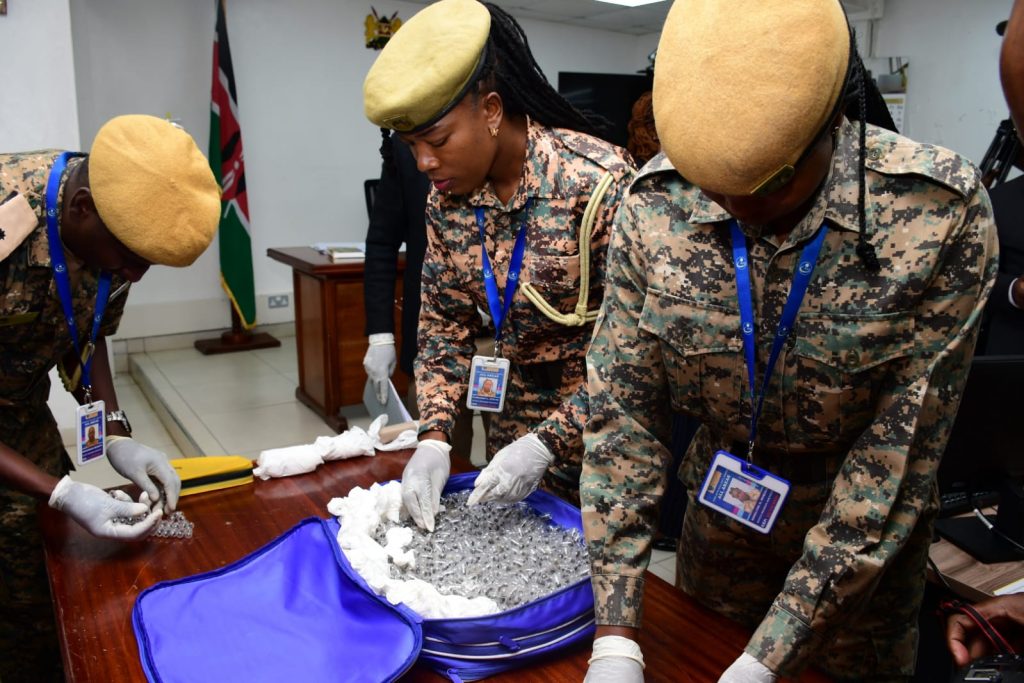
    The Director of Public Prosecutions (DPP) has charged a Chinese national and a Kenyan man for dealing in live wildlife species, namely 3,361 live ants and garden ants.

    Zhang Kequn, aged 37 years old and Charles Mwangi, 35 years old, were on Tuesday charged at Jomo Kenyatta International Law Court with dealing in live wildlife species and conspiracy to commit a felony.

    The Prosecution Counsel John Tago and Mercy Katsivo told the court that Kequn and Mwangi were on 10th March 2026 found dealing in live wildlife species, namely 1948 garden ants packaged in specialized tubes and 300 live ants packaged in three rolls of tissue without a permit.

    Mwangi was charged with a second count of dealing in live wildlife species.

    It’s alleged that on 13th March 2026, in Gilgil town, he was found dealing in live wildlife species, namely 1,000 pieces of live ants in a pink basin, 113 pieces of garden ants stashed in specialized syringes, and 503 pieces of empty syringes in a white sack without a permit.

    The accused persons were jointly charged with an additional count of conspiracy to commit a felony.

    The court heard that on diverse dates between 10th and 13th March, they conspired to commit an offense namely dealing in live wildlife species, namely garden ants.

    The accused persons pleaded not guilty to the charges before Senior Principal Magistrate Irene Gichobi.

    Kequn paid Mwangi Ksh. 60,000 for 600 live ants supplied and an additional Ksh. 70,000 for the other 700 live ants. He was buying each live ant at Ksh. 100.


    The DPP opposed the release of the Chinese national on bond, citing that he arrived in the country on 27th February 2026 on a tourism visa; hence, he is a flight risk and has no fixed abode.

    The case will be mentioned on 27th March 2026.


  • DPP appeals acquittal of Trans Nzoia Governor George Natembeya

    DPP appeals acquittal of Trans Nzoia Governor George Natembeya

    The Director of Public Prosecutions (DPP) has filed a Notice of Appeal on a High Court decision that acquitted George Natembeya, the Governor of Trans Nzoia County, in a case related to the alleged unlawful acquisition of public funds and conflict of interest.

    The Appeal follows a judgment delivered on 4th of March 2026 by Justice Bahati Mwamuye, which barred the Office of the Director of Public Prosecutions (ODPP), the Directorate of Criminal Investigations (DCI), and the Ethics and Anti-Corruption Commission (EACC) from investigating, recommending prosecution, or initiating criminal proceedings against the county boss.

    The court also awarded the Governor General damages amounting to Ksh 2.5 million, plus interest at court rates from the date of judgment until payment in full.

    The DPP had charged the Governor with unlawful acquisition of public property worth Ksh 3,252,568.

    The charges stem from payments made by the County Government of Trans Nzoia to companies that conducted business with the county.

    It is alleged that between the 1st of January 2023 and 30th April 2025, Governor Natembeya unlawfully acquired the funds through transactions involving Lyma Agro Science Limited, Maira Stores, and Easterly Winds Limited in circumstances that constituted a conflict of interest.

    Further, the governor was charged with two counts of conflict of interest contrary to Section 42(3) as read with Section 48 of the Anti-Corruption and Economic Crimes Act.

    The Prosecution had earlier told the court that Natembeya allegedly acquired an indirect pecuniary interest of KSh 1,127,900 from Mercy Chelangat, the Director of Lyma Agro Science Limited and proprietor of Maira Stores, both of which had business dealings with the county government.

    He is further accused of acquiring an indirect pecuniary interest of KSh 2,124,668 from Emmanuel Wafula Masungo, the beneficial owner of Easterly Winds Limited, another company that conducted business with the County Government of Trans Nzoia.

  • Kagwe calls for value addition to ward off competition in China

    Kagwe calls for value addition to ward off competition in China

    Kenyan agricultural producers are being encouraged to ensure their products are value added as the country looks to utilize the duty-free market access granted by China effective May 1, 2026.

    During a meeting with Chinese Ambassador to Kenya Guo Haiyan, Agriculture and Livestock Development Cabinet Secretary Mutahi Kagwe said the trade agreement secured following President William Ruto’s state visit to China significantly expands export opportunities for Kenyan farmers and agribusinesses.

    According to Kagwe the removal of tariffs is part of broader commitments reached between Kenya and China to deepen agricultural trade and expand market access for Kenyan products.

    “This is the implementation stage of agreements that were carried forward by His Excellency President William Ruto during his visit to China. It opens a major opportunity for Kenyan farmers and exporters to access one of the world’s largest markets,” he said.

    Under the new arrangement, Kenyan agricultural products will now enter China at zero tariff, removing duties that previously reduced the competitiveness of Kenyan exports in the Chinese market.

    Among the products expected to benefit from the new duty-free access are tea, coffee, fresh and frozen avocados, macadamia nuts, flowers, fresh horticultural produce, vegetables and herbs, as well as other agricultural commodities produced across the country.

    Previously, several Kenyan agricultural exports entering China attracted import duties depending on the product category. Tea and coffee products attracted tariffs ranging between about 6 and 15pc, while nuts such as macadamia faced tariffs of roughly 10 to 15pc.

    Fresh horticultural produce and vegetables often attracted tariffs ranging between 10 and 25 percent, while cut flowers attracted tariffs of about 4 percent.

    The elimination of these tariffs is expected to significantly improve the competitiveness of Kenyan agricultural products in the Chinese market of more than 1.4 billion consumers.

    Ambassador Guo Haiyan noted that agricultural trade between the two countries has been steadily growing, highlighting that Kenya is already an important agricultural exporter to China.

    She revealed that in 2025 Kenya’s exports of coffee and tea to China reached $24.46 million, accounting for 10.8pc o Kenya’s agricultural exports to China, representing a year-on-year growth of 8.8pc.

    Exports of fresh and frozen avocados as well as macadamia nuts reached $19.9 million, also accounting for 8.8pc of Kenya’s agricultural exports to China.

    Haiyan said China is committed to expanding agricultural cooperation with Kenya under the Forum on China–Africa Cooperation (FOCAC) framework, including supporting greater market access for Kenyan products, strengthening agricultural value chains and enhancing technical cooperation and capacity building.

    Kagwe is now urging Kenyan exporters and investors to fully take advantage of the new market access by increasing production and focusing more on value-added agricultural exports.

    “Now that we have duty-free access to the Chinese market, we must maximize it by exporting more value-added agricultural products,” he said.

    He further  encouraged the Kenyan business community to partner with Chinese companies to establish agro-processing industries in Kenya, particularly for products destined for export to China.

    According to CS Kagwe, such partnerships will help Kenya move from exporting raw agricultural commodities to exporting processed products, strengthening agricultural value chains while creating jobs and increasing incomes for farmers.

    He also emphasized the importance of maintaining strict quality standards, urging the Kenya Plant Health Inspectorate Service (KEPHIS) to remain firm on quality assurance to ensure Kenyan exports meet Chinese phytosanitary requirements.

    “Quality will be critical as we expand into this market. Our regulatory agencies must ensure Kenyan exports meet the highest international standards,”  said Kagwe.

    The cabinet secretary further expressed interest in strengthening cooperation with China in technology transfer and agricultural training, including exploring internship opportunities for students from the Kenya School of Agriculture, which has campuses across the country training young people in practical agricultural skills.

    The meeting was also attended by KEPHIS Chief Executive Officer Prof. Theophilus Mutui, who oversees export certification and phytosanitary compliance for Kenyan agricultural exports.

    CS Kagwe say the new zero-tariff access to China could mark a significant turning point for Kenya’s agricultural exports, opening one of the world’s largest consumer markets to Kenyan farmers while strengthening economic cooperation between Nairobi and Beijing

  • Kenya pushes integrated HIV response amid funding shifts

    Kenya pushes integrated HIV response amid funding shifts

    Kenya is strengthening efforts to sustain gains in the fight against HIV/AIDS while responding to emerging challenges, including shifting global health financing and the need to integrate HIV services within the broader health system.

    Speaking during the opening of the Health Integration Summit 2026 in Mombasa County Monday, Health Cabinet Secretary Aden Duale emphasized the importance of adopting integrated, people-centred approaches to HIV prevention, treatment and care.

    The summit, held under the theme “Health Without Barriers for a Holistic HIV Response,” brought together government leaders, county officials, civil society organisations, development partners and regional stakeholders to strengthen collaboration and chart the future of Kenya’s HIV response.

    Convened by the Ministry of Health through the National AIDS and STI Control Programme (NASCOP), the meeting is providing a platform to align HIV services with ongoing health sector reforms under the Taifa Care Model.

    The Cabinet Secretary described Kenya’s progress in the fight against HIV/AIDS as “a global success story,” noting that expanded testing and treatment programmes have transformed the lives of over 1.3 million Kenyans living with HIV. However, he cautioned that Kenya still carries the seventh-largest HIV epidemic globally, underscoring the need for sustained commitment to prevention, treatment and care.

    As the country works toward achieving the UNAIDS 95-95-95 targets currently at 97-87-83, the CS stressed the importance of remaining vigilant against emerging challenges, including rising mother-to-child transmission and changing global funding priorities.

    He noted that the global financing landscape is gradually shifting from vertical disease programmes toward broader health systems strengthening, presenting an opportunity to rethink the national response. Kenya is advancing a people-centred approach by integrating HIV services within the Universal Health Coverage (UHC) framework, supported by the Social Health Authority (SHA) and the Social Health Insurance Fund (SHIF), with over 29 million Kenyans already enrolled.

    The Cabinet Secretary highlighted the critical role of Primary Health Care (PHC) networks as the backbone of integrated service delivery, ensuring HIV prevention and treatment are offered alongside other essential services, including care for non-communicable diseases and mental health.

    He also emphasized the role of county governments as custodians of service delivery, stressing that vulnerable populations including women, adolescents and key populations must not be left behind.

    The CS further underscored the importance of digital health innovation, data-driven decision-making, resilient supply chains and local production of antiretroviral medicines in strengthening national health security.

    “Our collective goal remains clear: building a health system that delivers quality, people-centred care without barriers,” he said. During the summit, 20 documents under the Integrated Guidelines for the Prevention, Treatment and Management of HIV, Syphilis and Hepatitis B were launched to guide integrated service delivery across the country.

    The event was attended by Mombasa County Governor Abdulswamad Sheriff Nassir, NASCOP CEO Dr Andrew Mulwa, Brian Rettman, Chairperson of DPH-K, Robert Matiru, Director of Programme Investments at UNITAID, Gerald Macharia of CHAI, Gitai Githinji of AMREF Health Africa and Richard Amenya, Country Director of UNAIDS, alongside representatives from the Christian Health Association of Kenya and the Kenya Red Cross Society.

  • World Kidney Day 2026: Experts highlight AI and advanced technologies in fight against kidney disease

    World Kidney Day 2026: Experts highlight AI and advanced technologies in fight against kidney disease

    Kenya marked World Kidney Day 2026 with a national commemoration at Kenyatta National Hospital (KNH) in Nairobi, bringing together policymakers, kidney specialists and healthcare providers to address the rising burden of kidney disease and highlight the growing role of modern medical technologies in improving kidney care.

    The event brought together public and private healthcare stakeholders under this year’s global theme, “Kidney Health for All.” Health Cabinet Secretary Aden Duale led the national celebrations and emphasised the need for stronger prevention strategies, early screening and improved access to specialised treatment services.

    According to recent data from the Ministry of Health, about 3.1 million Kenyans are living with chronic kidney disease (CKD), many of them unaware of their condition until it progresses to advanced stages. Experts say the growing burden of kidney disease is largely driven by non-communicable diseases such as hypertension, diabetes and obesity.

    “Kidney disease is a growing public health concern that often develops silently,” Duale said during the event. “We must strengthen early screening, invest in modern technologies and ensure Kenyans have access to quality kidney care services across the country.”

    The CS noted that the government is strengthening preventive healthcare through community screening programmes and routine monitoring of blood pressure and blood sugar at primary healthcare facilities. These efforts aim to detect kidney disease earlier and reduce complications.

    In addition, the government is expanding access to specialised renal services through the Social Health Authority (SHA), which supports dialysis, kidney surgery and transplant services. The Ministry of Health is also strengthening partnerships with healthcare institutions across the country to expand capacity for advanced kidney treatment and diagnostics.

    Healthcare experts say collaboration between government facilities and private hospitals will play an important role in improving kidney care infrastructure and expanding access to modern technologies.

    Kidney specialists attending the event emphasised that awareness and early detection remain the most effective tools in preventing kidney disease complications.

    Dr John Ngigi, Chairperson of the Kenya Renal Association and a consultant renal and kidney transplant specialist at The Nairobi West Hospital, urged Kenyans to prioritise routine kidney screening, particularly individuals with diabetes, high blood pressure or a family history of kidney disease.

    “Kidney disease often progresses without noticeable symptoms. Many patients only discover the problem when the damage is already advanced,” Dr Ngigi said. “Routine screening can help detect kidney disease early and significantly improve treatment outcomes.”

    Dr Ngigi also highlighted the growing role of technology and artificial intelligence in transforming kidney care. Hospitals are increasingly adopting advanced diagnostic imaging, AI-assisted analysis and modern dialysis systems to improve patient outcomes.

    Modern imaging technologies are enabling doctors to diagnose kidney conditions more accurately and faster than before. At The Nairobi West Hospital, for example, clinicians are using Dual Energy CT (DECT) technology to analyse kidney stones in greater detail by identifying their mineral composition.

    Unlike conventional CT scans, the technology can distinguish between uric acid stones, calcium oxalate stones and mixed stones, allowing doctors to tailor treatment strategies more precisely and reduce the likelihood of recurrence.

    Artificial intelligence is also being integrated into imaging systems and clinical workflows to help clinicians detect abnormalities earlier and support better treatment planning.

    Advances in dialysis technology are also improving care for patients living with kidney failure. One such innovation is Hemodiafiltration (HDF), an advanced dialysis technique that combines traditional hemodialysis with hemofiltration to remove a broader range of toxins from the bloodstream, which is now available at The Nairobi West Hospital.

    Compared with conventional dialysis, HDF has been shown to provide better cardiovascular stability, reduced inflammation and improved long-term outcomes for many patients.

    Healthcare providers say these technological innovations are becoming increasingly important as Kenya continues to experience a rise in kidney-related illnesses.

    Hospitals are also strengthening screening programmes aimed at detecting kidney disease early. Comprehensive screening packages typically include tests such as urinalysis, kidney function tests, blood pressure checks, blood sugar testing and body mass index assessments, which can help identify early signs of kidney damage before symptoms develop.

    Medical professionals at the World Kidney Day event also encouraged Kenyans to adopt healthier lifestyles to protect their kidney health. Experts recommend maintaining healthy blood pressure and blood sugar levels, reducing salt intake, staying physically active and attending routine medical check-ups.

    As Kenya continues to confront the growing burden of kidney disease, stakeholders say early detection, stronger partnerships and the adoption of advanced medical technologies will be key in improving diagnosis and treatment.

    With the integration of artificial intelligence, precision imaging and modern dialysis therapies increasingly being adopted in leading healthcare institutions, experts say the future of kidney care in Kenya is steadily improving offering hope for earlier diagnosis, smarter treatment and better patient outcomes.