Author: KBC Digital

  • Governor Waiguru wins court battle over City mansion 

    Governor Waiguru wins court battle over City mansion 

    Kirinyaga Governor Anne Waiguru has won a court battle over city mansion after the court ruled in her favor.

    According to the judgement delivered on Thursday by the Environment and Land Court, the court issued an order of specific performance against Kihingo Village (Waridi Gardens) Ltd to complete the sale transaction of House 1D to the Governor within 30days of the judgment.

    Waiguru had bought the property from Kihingo Village Limited on September 25, 2015, for Ksh80.6 million where she paid Ksh40.6 million, remaining with a balance of Ksh40 million which was to be cleared through mortgage.

    In two letters dated December 19, 2018, Kihingo Village Chief Executive Officer Ndung’u Gethenji confirmed to Waiguru receipt of Ksh40 million and indicated that the balance was to be cleared by way of mortgage.

    The court issued a permanent injunction restraining Kihingo Village the defendant from interfering with the Governor’s quiet possession of the of the property or alienating it to third parties.

    Additionally, Judge O.A Angote dismissed the rival claim to the property by city lawyer Chris Kabiro and observed it would be unjust enrichment in view of his consent order where he agreed to receive 130m from the defendant Kihingo Village.

    Kabiro had claimed that the property had been allocated to him adding that there was a court order barring sale of the mansion.

    The Court further dismissed the counterclaim by Kihingo Village the defendant in the matter and with costs.


  • Police spread valentine’s cheer at Rugby Sevens

    Police spread valentine’s cheer at Rugby Sevens

    ­Love was in the air, and in the stands, during the World Rugby Sevens Division 2 Tournament at Nyayo Stadium as officers from the Kenya Police Service surprised fans with red roses in celebration of Valentine’s Day.

    Members of the Police Rugby Team, joined by uniformed security personnel on duty, moved through the terraces, handing out flowers, drawing smiles, cheers, and photo moments from spectators.

    The thoughtful gesture blended sport and security, turning a day of thrilling rugby into a memorable celebration of community connection, goodwill and shared joy beyond the pitch.

    Families, couples, and groups of friends paused between matches to receive the roses, many expressing surprise at the warm interaction with officers they often see only in formal roles.

    Fans applauded the initiative, saying it brought a refreshing, personal touch to the tournament atmosphere.

    The simple act of giving flowers helped break barriers, reminding attendees that beyond maintaining order, officers are also part of the community they serve, sharing in moments of celebration, unity, and national pride through sport.

  • Kenya switches on first Digital Sound Broadcasting trial, signals new era for radio

    Kenya switches on first Digital Sound Broadcasting trial, signals new era for radio

    The Communications Authority of Kenya (CA) has facilitated the activation of Kenya’s first trial Digital Sound Broadcasting (DSB) for radio services in Nairobi, marking a major step towards the future of radio as the world celebrates World Radio Day 2026.

    In a statement, the Authority noted that it shall conduct monitoring and evaluation of the network over the 12-month trial deployment period to ensure adequate signal coverage, good quality of service, affordable receivers, and public education to drive voluntary uptake.

    “The DSB technology will initially complement, not replace, existing FM services.” the statement read.

    “No analogue switchoff date has been set, ensuring continuity for all listeners while digital platforms are rolled out in phases, beginning with the Mombasa–Nairobi–Kisumu corridor and major population centres,” it added.

    According to CA, sound broadcasting remains one of the country’s most important media platforms, reaching about 98pc of homes and supporting 300 licensed broadcast services.

    However, FM frequencies in VHF Band II (87.5–108.0 MHz) are saturated in major coverage areas, leaving little room for new broadcasters, increased interference, and relatively poor audio quality.

    In 2023, the Authority developed a framework for Digital Sound Broadcasting, primarily focusing on Digital Audio Broadcasting in VHF Band III (174–230 MHz) and on Digital Radio Mondiale in the HF band (30 MHz).

    The framework was subjected to stakeholder engagement, with input from broadcasters, signal distributors, equipment vendors, government agencies, and industry associations.

    Further, in 2025, the Authority granted Authorisation to two (2) licensees: Signet Signal Distributors Ltd and Mast Rental Services Ltd, to deploy Trial Networks for Digital Sound Broadcasting. In January 2026, Mast Rental became the first operator to deploy a DAB+ trial network and currently carries 14 radio programmes within the Nairobi coverage area.

    The activation of the Digital Sound Broadcasting Signal marks a key milestone for sound broadcasting in Kenya.

    Broadcasters and investors stand to gain from wider coverage, lower barriers to entry and new revenue opportunities.

    By separating content provision from signal distribution, broadcasters can focus on compelling content to serve the diverse needs of consumers.

    The ability to carry multiple services on a single channel is expected to lower transmission costs and create space for new entrants, including community broadcasters, by providing reserved capacity at nominal carriage costs.

    For consumers, digital radio will mean clearer sound, reduced harmful interference, and a wider choice of programming. Listeners will benefit from increased content diversity, including niche, regional and thematic services, as well as potential value-added data services such as programme and station information.

    Over time, through the framework, the Authority aims to substantially expand the number and variety of services, including digital-only stations serving diverse communities.

    With this deployment, Kenya joins a growing community of countries adopting or conducting digital radio trials as the next frontier in sound broadcasting and will work with regional bodies to support harmonised approaches that enhance interoperability and investment.

  • Kindiki oversees intensified Gov’t action for drought-hit Kenyans

    Kindiki oversees intensified Gov’t action for drought-hit Kenyans

    A multi-agency emergency operation is underway to contain the humanitarian impact of the ongoing drought, with the government focusing on rapid coordination, supply delivery, and protection of livelihoods across the hardest-hit counties.

    The response, led on the ground by Deputy President Kithure Kindiki, brings together national and county agencies to synchronise support and social protection measures following the failure of the October–December 2025 short rains.

    Speaking during a coordination meeting at the Official Residence in Karen, Nairobi, Kindiki said the government had mobilised resources to stabilise vulnerable populations and avert further deterioration of the situation.

    “I assure the people of Kenya that the government will not spare any resources to make sure we don’t lose human life and mitigate the effects of the drought on livestock and wildlife,” he declared.

    At least 3.3 million people in 23 counties are currently affected, with Mandera, Wajir, Garissa, Tana River, Marsabit, Turkana, Kwale, Meru North, Samburu, and Isiolo classified in the crisis stage.

    “Many counties are in need of food for the people and livestock feed. We are tirelessly working on effective last-mile delivery so it does not take long to reach the people. We are also trucking water to the people and livestock,” the Deputy President noted.

    The operation also targets at-risk social groups, including school-going children, women, and persons with disabilities, to ensure essential services such as school feeding programmes continue despite harsh conditions.

    “We need food to reach our schools so that learners are not disrupted by the ongoing drought situation,” Kindiki said, adding that interventions had been scaled up and diversified to address the needs of the most vulnerable.

    The intensified field response follows a Cabinet decision chaired by President William Ruto, authorising the release of KSh 4.1 billion to expand drought mitigation measures. 

    The funding supplements earlier allocations made in December 2025 and January 2026 for relief food, logistics, and non-food assistance.

    Government assessments show drought conditions have deteriorated rapidly since January 2026, pushing millions into acute food insecurity, a figure projected to rise to 3.6 million by June if interventions are not sustained. 

    Mandera, Wajir, Kwale, and Kilifi counties are in the Alarm phase, while 12 others remain on Alert, most showing a worsening trajectory. 

    Acute malnutrition continues to rise, affecting more than 810,000 children and 104,000 pregnant and lactating women. 

    Officials warn that current relief stocks may last only two to three weeks, highlighting the urgency of scaling up supply and distribution networks.

    In tandem with humanitarian interventions, the government is preparing for the upcoming planting season by transporting fertiliser through the Metre Gauge Railway (MGR), Standard Gauge Railway (SGR), and intermodal SGR/MGR solutions at key facilities, including Mai Mahiu Station and the Naivasha Inland Container Depot (ICD). 

    Mai Mahiu Station, with a 4,000-ton storage warehouse, provides integrated rail and warehousing solutions to ensure timely delivery.

    Additional depots targeted for fertiliser distribution include Thika, Sagana, Karatina, Kiganjo, Nanyuki, Naivasha, Nakuru, Elburgon, Kipkelion, Butere, Kipkarren River, Yala, Turbo, Webuye, Bungoma, and Malaba.

    As Kenya prepares for the long-rains season, rail logistics remain a critical enabler of agricultural transformation and national development, connecting farmers to markets while supporting the country’s growth.


  • One in two people facing cataract blindness need access to life-changing surgery

    One in two people facing cataract blindness need access to life-changing surgery

    The World Health Organization (WHO) is urging countries to accelerate efforts to ensure that millions of people living with cataract can access simple, sight‑restoring surgery one of the most effective and affordable interventions to prevent avoidable blindness.

    A new study published Wednesday in  The Lancet Global Health highlights the scale of the challenge: nearly half of all people across the world facing cataract‑related blindness still need access to surgery.

    Cataract, the clouding of the eye’s lens that causes blurred vision and can lead to blindness affects more than 94 million people globally.

    Cataract surgery a simple 15-minute procedure is one of the most cost-effective medical procedures, providing immediate and lasting restoration of sight.

    Over the past two decades, global coverage of cataract surgery has increased by about 15pc, even as ageing populations and rising cataract cases have increased overall demand. The latest modelling predicts the coverage for cataract surgery to rise by about 8.4pc for this decade.

    However, progress needs to accelerate sharply to meet the World Health Assembly target of a 30pc increase by 2030.

    “Cataract surgery is one of the most powerful tools we have to restore vision and transform lives,” said Devora Kestel, Director a.i., WHO Department of Noncommunicable Diseases and Mental Health. “When people regain their sight, they regain independence, dignity, and opportunity.”

    The study, which analyzed reports from 68 country estimates for 2023 and 2024 shows that the African Region faces the greatest gap, with three in four people who need cataract surgery remaining untreated. Women are disproportionately affected across all regions, consistently experiencing lower access to care than men.

    These gaps reflect long-standing structural barriers, including shortages and unequal distribution of trained eye-care professionals, high out-of-pocket costs, long waiting times, and limited awareness or demand for surgery, even where services exist.

    In addition, while age is the primary risk factor for cataract, other contributors such as prolonged UV-B exposure, tobacco use, corticosteroid use, and diabetes can accelerate its development.

    Solutions for closing the gap

    Ending unnecessary blindness from cataract is essential and achievable. Countries can accelerate progress by integrating vision screening and eye examinations into primary health care, investing in essential surgical infrastructure, and expanding and better distributing the eye-care workforce, particularly in rural and underserved areas.

    Targeted efforts to prioritize women and marginalized communities will be critical to reducing persistent inequities and ensuring that gains in access benefit everyone.

    WHO is calling on governments, civil society, and partners to build on existing momentum, address gender and geographic inequities, and prioritize underserved populations. With sustained commitment, cataract surgery can move from being out of reach for millions to a universally accessible intervention, helping to end avoidable blindness worldwide.

  • Konza Technopolis listed in Global 7 Wonders of Future Cities Initiative

    Konza Technopolis listed in Global 7 Wonders of Future Cities Initiative

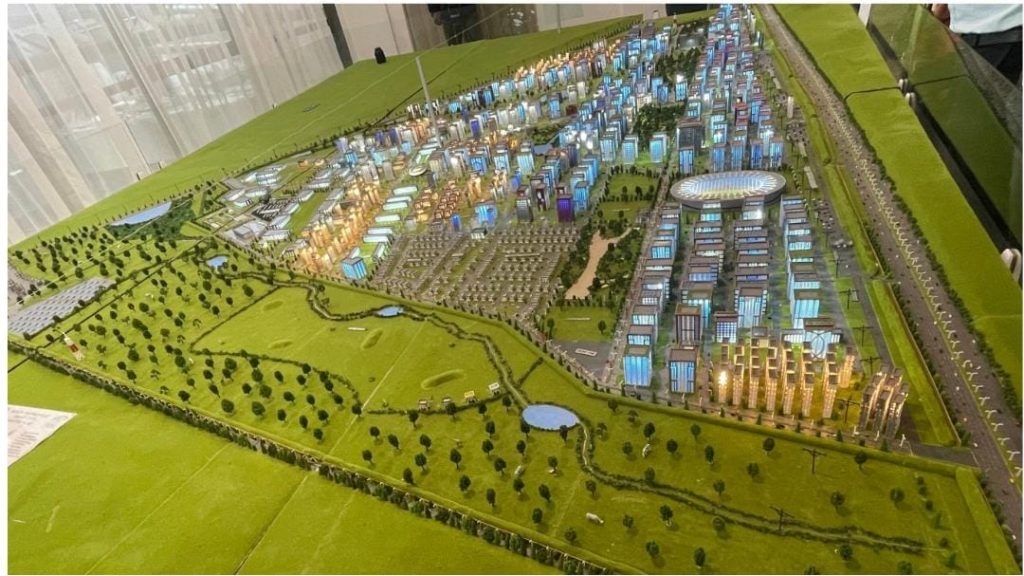
    Konza Technopolis has been confirmed as an official participant in the 7 Wonders of Future Cities initiative, a global programme highlighting emerging cities and urban developments that are shaping how people will live, work and interact in the future.

    New7Wonders has indicated that participation in the programme is intended to promote awareness and dialogue through a positive and globally engaging competition.

    The initiative is organised by New7Wonders, the international body known for global public engagement campaigns such as the New 7 Wonders of the World.

    The Future Cities programme focuses on planned and emerging urban developments that demonstrate long-term approaches to urban planning, sustainability, innovation and economic growth.

    Konza Technopolis is now listed among participating cities on the 7 Wonders of Future Cities platform, placing Kenya’s flagship smart city project alongside other developments from different regions of the world.

    According to the organisers, the initiative aims to draw global attention to cities that are responding to the pressures of rapid urbanisation, climate change and technological transformation.

    New7Wonders has indicated that participation in the programme is intended to promote awareness and dialogue rather than competition or ranking.

    Participating cities are showcased as case studies to encourage discussion on how future cities can balance economic growth, environmental sustainability and quality of life.

    In his welcoming remarks, Jean-Paul de la Fuente said, “We welcome Konza Technopolis as the first Official Participant in the 7 Wonders of Future Cities from Kenya, a worthy representative of dynamic change from one of the most exciting socio-economies in Africa and the world”.

    Konza Technopolis is a key component of Kenya’s Vision 2030 development agenda and is designed as a technology-driven city supporting knowledge-based industries. The city is planned to host information and communication technology firms, research institutions, educational facilities and mixed-use developments.

    Konza Technopolis CEO, John Paul Okwiri asserts participation in the initiative provides an opportunity to share Kenya’s experience in developing a purpose-built smart city with a global audience. “This recognition aligns with our ongoing efforts to position Konza Technopolis as a hub for innovation, research and digital enterprise within the region.” Added the CEO.

    Urban planners and policy analysts have increasingly highlighted the need for African cities to adopt long-term planning approaches as populations continue to grow.

    Kenya’s urban population is projected to rise steadily over the coming decades, placing increased pressure on housing, transport systems, public services and employment opportunities.

    Smart city developments such as Konza Technopolis are often viewed as part of broader national strategies aimed at addressing these challenges through integrated planning, digital infrastructure and private sector investment.

    Kenya’s Digital Economy Blueprint and investments in technology infrastructure have placed emphasis on the role of innovation-led cities in supporting economic diversification and job creation.

    The 7 Wonders of Future Cities initiative highlights participating cities through digital platforms and public information campaigns, encouraging engagement from policymakers, urban planners, investors and the general public.

    Organisers say the programme is intended to stimulate discussion on future urban models and share lessons across regions.

    Konza’s inclusion comes at a time when governments across Africa are reassessing how cities are designed and managed to remain competitive and liveable.

    Issues such as climate resilience, energy efficiency, mobility and access to services are increasingly shaping urban development strategies.


  • CFAO Kenya projects rising demand for latest farm machinery

    CFAO Kenya projects rising demand for latest farm machinery

    CFAO Kenya says it expects strong growth in the country’s agricultural sector, with more farmers turning to modern machinery and equipment.

    The company made the announcement as the 2026 Case IH Middle East and Africa Distributor Convention wrapped up in Mombasa – the first time the event has been held on the African continent.

    As the exclusive dealer for Case IH agricultural machinery in Kenya, CFAO Kenya has seen its business grow in recent years as it invests in bringing modern farming equipment closer to farmers. Akira Wada, Managing Director at CFAO Kenya, said the company’s expansion plans show its confidence in Kenya’s push to modernize agriculture.

    “We are seeing good momentum as more farmers adopt our machines and equipment. With better financing options available, farmers can now boost their production,” said Akira.

    CFAO Kenya has set up branches and sub-dealers points in major farming areas across the country, providing farmers with access to quality equipment and post-purchase support. This network aims to make agricultural technology available to both large and small-scale farmers.

    The Mombasa convention brought together Case IH distributors from across the Middle East and Africa region.

    Hassib Thabet, Case IH Sales Director for the Middle East and Africa, praised the distributors and said the event provided a platform to discuss sustainable farming, new technology, and ways to improve farm productivity in developing markets.

    “CNH Industrial, the parent company of Case Agricultural machinery, used the conference to underline its commitment to African markets, particularly in supporting mechanization that can improve food security and economic growth,” Hassib said.

    For Kenya, more farm mechanisation aligns well with the government’s development goals. Agriculture remains the backbone of Kenya’s economy, contributing about 30 per cent of GDP and providing jobs for 80 per cent of workers, mostly in rural areas.

    The sector also brings in more than 60 per cent of export earnings and about 45 per cent of government revenue, while feeding most of the country. Through its links to manufacturing, distribution and services, agriculture indirectly adds another 27 per cent to GDP.

    CFAO Kenya’s expansion comes as farmers deal with unpredictable rains, pests, and market challenges. Modern farm machinery offers solutions to these problems while creating opportunities along the agricultural value chain.

    The company’s optimism mirrors investment trends across East Africa, where governments and businesses increasingly see farm modernization as key to economic growth and food security.

  • Kenya, UNITAR sign three-year pact to boost internal security capacity

    Kenya, UNITAR sign three-year pact to boost internal security capacity

    Kenya has signed a three-year Memorandum of Understanding (MoU) with the United Nations Institute for Training and Research (UNITAR) to strengthen training, research and institutional capacity for agencies responsible for internal security and public administration.

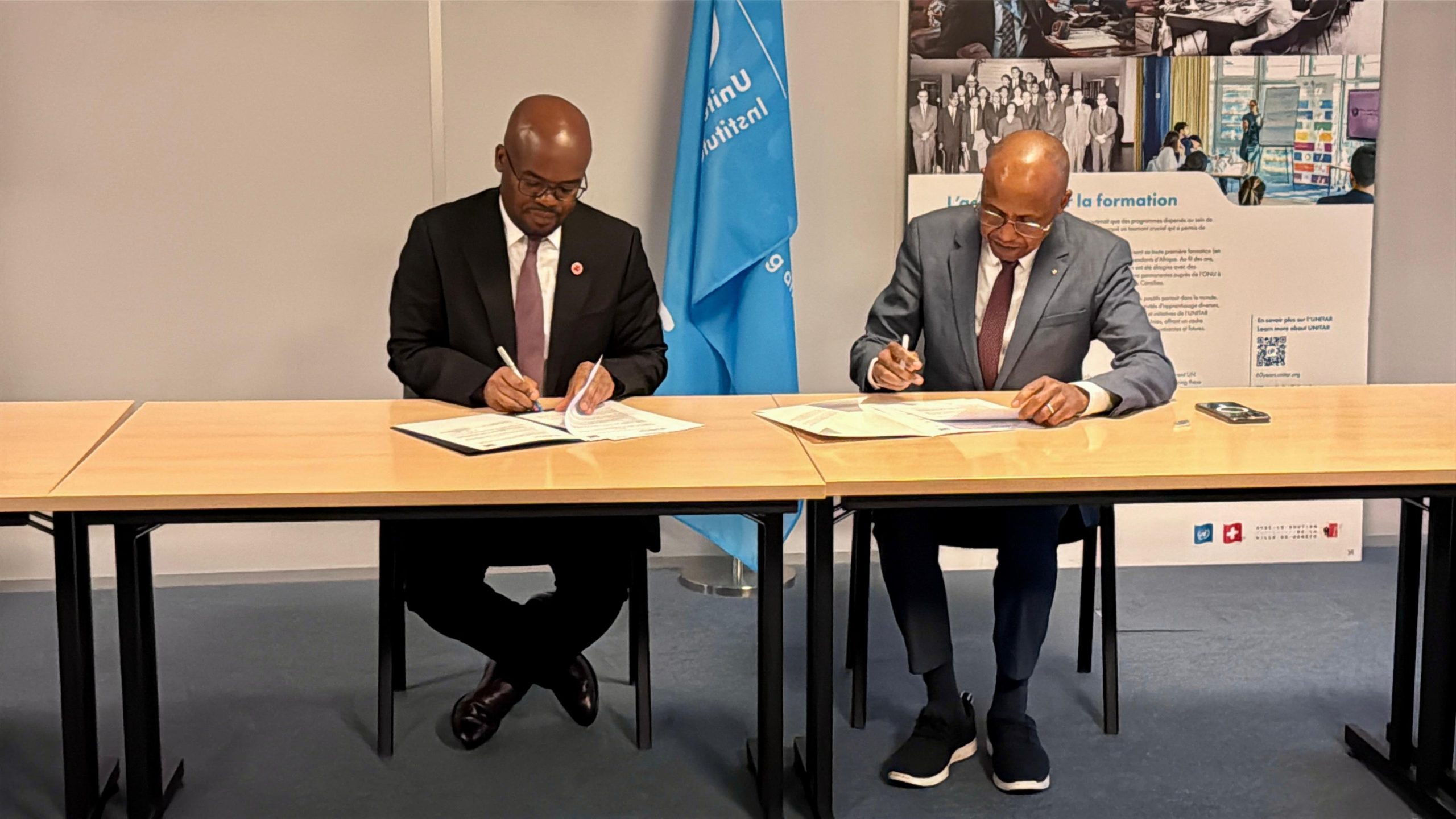
    The agreement signed in Geneva by Dr. Raymond Omollo, Principal Secretary in the State Department for Internal Security and National Administration, and Evariste Karambizi, Director of UNITAR’s Division for Peace targets coordinated capacity development for key institutions.

    These include National Government Administrative Officers (NGAOs), the Kenya Police Service, the Administration Police Service, the Directorate of Criminal Investigations, the Kenya Prisons Service and the Kenya Coast Guard Service.

    According to the Ministry of Interior and National Administration, the collaboration will support professional skills development, policy-oriented research and institutional strengthening across the internal security ecosystem. The aim is to improve service delivery, enhance coordination and reinforce adherence to the rule of law.

    UNITAR is a training arm of the United Nations established in 1963. It supports UN member states by providing learning solutions to strengthen governance, peace, security and sustainable development.

    The institute works with governments and public institutions to build capacities aligned with international standards and best practices.

    Under the MoU, the two parties will collaborate on tailored training programmes, applied research and knowledge-sharing initiatives. These efforts are expected to address emerging security challenges, leadership development, public sector effectiveness and cross-agency coordination.

    Kenya has in recent years prioritized capacity building within its security sector. The government has emphasized professionalization of services, respect for human rights and improved border and maritime security as part of broader national security reforms.

    The inclusion of the Kenya Coast Guard Service reflects a growing focus on maritime security and the protection of Kenya’s territorial waters. The service works alongside other agencies to combat transnational crimes such as trafficking and illegal fishing.

    Officials said the partnership with UNITAR will leverage international expertise and evidence-based approaches to support Kenya’s reform agenda. The MoU provides a framework for sustained engagement over the next three years, with implementation expected to involve multiple agencies and training institutions.

    The agreement takes effect immediately and may be renewed subject to mutual consent.

  • Xi urges major nations to uphold international law and UN principles

    Xi urges major nations to uphold international law and UN principles

    Chinese President Xi Jinping has stated that major countries should lead by example in adhering to international law and the principles outlined in the UN Charter.

    Speaking during a meeting with Irish Taoiseach Micheál Martin in Beijing on Monday, President Xi emphasized the importance of respecting the development paths chosen by different nations. He urged all countries to commit to international law and uphold the UN Charter’s purposes and principles, with a particular focus on the responsibility of major nations to take the initiative.

    “In a world beset with changes and chaos, unilateral and bullying acts are severely undermining the international order,” he remarked.

    Xi highlighted that both China and Ireland support multilateralism and strive for international fairness and justice.

    He called for increased coordination and collaboration in global affairs to jointly uphold the authority of the United Nations and enhance the fairness and equity of the global governance system.

  • NACADA’s festive season operation targets drug lords in Langas, Uasin Gishu County

    NACADA’s festive season operation targets drug lords in Langas, Uasin Gishu County

    In a decisive pre-dawn raid in Langas, Eldoret, a multi-agency security team dismantled a narcotics ring targeting school children and youth. The operation, led by the National Authority for the Campaign Against Alcohol and Drug Abuse (NACADA) and the National Police Service, with support from the County Command, resulted in the arrest of three key suspects and the seizure of a significant quantity of illicit substances.

    Authorities confiscated over 300 rolls of cannabis, a full stone of cannabis, assorted chewable tobacco products, and cannabis-laced cookies specifically packaged for distribution to underage children.

    NACADA Chief Executive Officer Dr. Anthony Omerikwa attributed the successful operation to intensified crackdowns across the country during the festive season.

    “This operation is a clear marker of our sustained vigilance. We are acting on precise intelligence, and we will not relent in protecting our children,” Dr. Omerikwa stated.

    He revealed concerning intelligence guiding the crackdown, saying “Our reports indicate the traffickers we are nabbing have been deliberately and ruthlessly targeting school children and the youth. This is not just business for them; it is an attack on our nation’s future.”

    Dr. Omerikwa issued a warning to drug dealers: “This is a message to the drug lords: your time is up. We are coming for you, your networks, and your profits. Your next destination is a jail cell, and we will ensure you face the full force of the law.”

    The operation underscores the government’s zero-tolerance policy towards drug trafficking. The arrested suspects are currently held at Langas Police Station, awaiting arraignment in court on charges that could lead to severe penalties.

    Authorities urge the public to remain vigilant and report any suspicious activities, stating that the festive season crackdown is ongoing to safeguard communities.