Author: KBC Digital

  • All members of popular band die in Venezuelan earthquake

    All members of popular band die in Venezuelan earthquake

    All four members of Venezuelan nu-metal band Van Der Dijs have died following the devastating earthquakes that struck the country last week.

    The band – vocalist Manuel van Der Dijs, guitarist Gabriel Gómez, bassist Xander Hernández and drummer Abraham Foucault – were killed after the building where they were rehearsing in La Guaira collapsed.

    According to Venezuelan outlet Últimas Noticias, the group were inside the Costamar II building in Tanaguarena when the area was hit by two powerful earthquakes.

    Their bodies were later recovered from the rubble by rescue teams.

    The earthquakes, which struck northern Venezuela on June 24, registered magnitudes of 7.2 and 7.5 and caused widespread destruction across the country. More than 1,900 people have been confirmed dead, with thousands more injured and many still missing.

    Van Der Dijs were an emerging band in Venezuela’s heavy music scene, blending nu-metal, rap-rock and alternative elements.

    The group had been building momentum in recent months and had been due to play further shows in Venezuela, including dates in Punto Fijo and Valencia.

    They had recently played a sold-out show at the Centro de Arte Moderno in La Castellana, Caracas, on June 19, just days before the earthquakes, and their official Instagram page had also been promoting upcoming dates in around the country.

    The earthquakes have left Venezuela facing a major humanitarian crisis, with hospitals overwhelmed, widespread structural damage and rescue teams continuing to search through collapsed buildings.

    La Guaira, the coastal state where the band died, has been among the areas worst affected by the disaster.

    The country has also been hit by aftershocks in the days since the initial earthquakes, while international aid and rescue teams have been sent to assist with the response.


  • Kilifi learner tops NACADA’s anti-drug essay contest

    Kilifi learner tops NACADA’s anti-drug essay contest

    A Grade 10 student from Kilifi County has been named the overall winner of the 2026 National Senior School Essay Writing Competition on Alcohol and Drug Abuse Prevention.

    The competition, designed to amplify youth voices against substance abuse, saw Faith Munyazi Wugoma of Helping Hands Senior School triumph over more than 1,100 participants nationwide.

    Wugoma secured the national title in the competition organized by the National Authority for the Campaign Against Alcohol and Drug Abuse (NACADA). Rukia Abdi of Garbatulla Girls Secondary School in Isiolo placed second, while Angel Wangari of AIC Morop Girls Senior School in Nakuru came in third.

    The competition, held under the theme “Protecting Our Future: Making Drug-Free Choices in School and Beyond,” attracted 1,153 entries from 132 schools across 39 counties. The broad participation reflects increasing national engagement in school-based drug prevention initiatives.

    Students submitted handwritten essays in either English or Kiswahili. Their submissions explored various aspects of alcohol and drug abuse, including its impact on academic performance, peer pressure, social media influence, the role of schools and communities, and effective strategies for resisting substance abuse.

    NACADA Board Chairperson, Bishop Dr. Stephen Mairori, underscored the competition’s significance, stating it powerfully demonstrates that young people are central to Kenya’s efforts to curb alcohol and drug abuse.

    “Prevention is not an optional line item; it is our most strategic investment in Kenya’s tomorrow. The passion and clarity displayed by these students demonstrate that our young people are not just the future; they are powerful agents of change today.” he remarked.

    NACADA Chief Executive Officer, Dr. Anthony Omerikwa, explained that the initiative aligns with the Competency-Based Curriculum and Life Skills Education. It encourages learners to critically analyze substance abuse while simultaneously developing leadership skills.

    “Through this competition, we are empowering learners to become ambassadors of change in their schools and communities. By engaging students in critical reflection on issues like peer pressure and the role of families and schools, we are reinforcing the life skills they need to resist drugs.” he said.

    The competition also championed inclusivity by recognizing learners with disabilities. Sirat Mahad of Ngala Secondary School for the Deaf in Nakuru received an honor for a video presentation that examined the effects of alcohol and drug abuse on academic performance and school discipline.

    Dr. Omerikwa stated that this recognition highlights NACADA’s commitment to ensuring every learner contributes to the national conversation on drug prevention.

    “Inclusion is not just about access; it is about ensuring that every learner, regardless of their abilities, has the opportunity to be heard and to contribute to shaping a drug-free future for Kenya,” he affirmed.

    In addition to the overall winners, NACADA acknowledged top-performing students across five thematic categories. They included the role of schools in creating drug-free learning environments, parental and community responsibility, peer pressure, and strategies for resisting substance abuse.

    All participants, along with their teachers and schools, will receive certificates of recognition. National and county winners will be honored at a ceremony to be announced at a later date. The winning essays will also be published in a special NACADA newsletter to broaden their reach and inspire other learners.

    NACADA indicated that insights gleaned from the essays will inform future prevention programs. The Authority aims to strengthen school mobilization, expand participation by learners with disabilities, and introduce creative writing and digital storytelling to engage more young people.

    The competition was launched as part of the government’s intensified campaign against alcohol and drug abuse. It follows a directive to strengthen prevention efforts among children and young people, positioning learners as key partners in building a drug-free generation.

  • KECOBO suspends KAMP’s licence for 90 days

    KECOBO suspends KAMP’s licence for 90 days

    The Kenya Copyright Board (KECOBO) has suspended the operating licence of the Kenya Association of Music Producers (KAMP) for 90 days, accusing the collective management organisation of mismanaging royalty funds, failing to comply with regulatory directives and breaching governance requirements.

    The suspension took effect on July 1 and means KAMP cannot issue licences, collect royalties or negotiate licensing agreements while the action remains in force.

    KAMP is one of the organisations licensed to collect royalties from businesses that publicly use recorded music and distribute those funds to producers and other copyright holders.

    In a public notice issued on Wednesday, KECOBO said the decision followed “a comprehensive regulatory review of KAMP’s governance, financial management, licensing practices, royalty administration, regulatory compliance and overall performance as a licensed Collective Management Organization.”

    According to the regulator, the review found that KAMP had committed “serious and persistent breaches of the Copyright Act, the Copyright (Collective Management) Regulations, the conditions attached to its license and lawful directives issued by KECOBO in exercise of its supervisory mandate.”

    KECOBO also alleged that KAMP “has failed to discharge its fiduciary obligation of administering copyright royalties honestly, transparently, efficiently and in the best interests of the rights holders it represents.”

    Among the most significant claims is that more than Ksh 5.5 million in royalties intended for rights holders was spent on activities unrelated to royalty distribution.

    The Board stated that “royalty funds intended for distribution to rights holders were diverted, misappropriated and embezzled through their application to activities unrelated to royalty distribution.”

    It further alleged that Ksh. 5,514,559.16 in distributable royalties “were expended on non-core activities, contrary to the statutory obligations imposed on a licensed Collective Management Organization.”

    “Lawful Instructions”

    KECOBO also accused KAMP of repeatedly ignoring lawful instructions from the regulator.

    “The Board established that KAMP has persistently failed and/or refused to comply with lawful directives issued by the Kenya Copyright Board,” the notice says, adding that despite repeated engagements, KAMP “has neither implemented nor demonstrated meaningful compliance” with commitments contained in a consent agreement signed in June 2025.

    The regulator further alleged that KAMP charged licence fees below the approved government tariffs, saying the organisation “issued licenses and invoiced users at rates inconsistent with the gazetted licensing tariffs approved under the Copyright Act.”

    According to KECOBO, this “resulted in the under-collection of royalties to the detriment of rights holders.”

    The Board also cited governance concerns, alleging that some directors had remained in office beyond the legal term limits and that KAMP’s royalty distribution system lacked sufficient documentation to demonstrate that payments were “fair, equitable, transparent and accountable.”

    As part of the suspension, KECOBO has directed KAMP to stop all licensed activities immediately, refund and account for the Ksh. 5.5 million it says, was improperly used, conduct fresh board elections, provide unrestricted access to its financial and governance records and submit a corrective action plan before its licence can be reconsidered.

    PAVRISK appointed in the interim

    To ensure royalty collection continues during the suspension, KECOBO has appointed the Performing and Audio Visual Rights Society of Kenya (PAVRISK) to temporarily collect royalties in the sectors previously served by KAMP.

    The regulator said the money will be held in a separate trust account until further directions are issued.

    KECOBO said it will only consider reinstating KAMP’s licence once it is satisfied that all governance, financial and regulatory concerns have been addressed.

    “The Board shall review KAMP’s regulatory status upon expiry of the suspension period or such time as it may deem appropriate,” the notice states.

    It adds: “No reinstatement of the operating license shall be considered unless KECOBO is satisfied that KAMP has fully remedied all governance, financial, licensing, compliance and regulatory deficiencies identified by the Board.”

    At the time of publication, KAMP had not issued a public response to KECOBO’s latest suspension notice.

    The organisation has, however, previously disputed the regulator’s actions in earlier licensing disagreements and maintained that it is committed to transparency, accountability and protecting the interests of rights

  • KRA destroys Ksh218 million worth of illicit goods in nationwide crackdown

    KRA destroys Ksh218 million worth of illicit goods in nationwide crackdown

    The Kenya Revenue Authority (KRA), in collaboration with a multi-agency enforcement team, has destroyed contraband goods valued at Ksh218 million in an operation targeting illicit trade and tax evasion across the country.

    The destruction was conducted simultaneously at Envirosafe Limited in Athi River, Nairobi, and a designated site in Voi, Taita-Taveta County, following coordinated enforcement operations across Nairobi and the Coast region.

    Among the items destroyed were various brands of beer, spirits, and bottled water, all seized during market surveillance by KRA’s Medium and Small Taxpayers Enforcement Division.

    According to the KRA, investigations revealed that these products violated several laws governing the manufacture, importation, and sale of excisable goods. Violations included the use of counterfeit, swapped, and non-activated excise stamps, production by unlicensed manufacturers, and other tax evasion schemes designed to avoid excise duty payments.

    The authority said the operation is part of a broader campaign aimed at dismantling illicit trade networks, protecting consumers, and preserving government revenue.

    Speaking during the destruction exercise, KRA Chief Manager for Micro and Small Taxpayers Michael Gichuki said the enforcement actions are intended to safeguard compliant businesses, not to penalize legitimate traders.

    “These enforcement measures are not intended to punish law-abiding traders. Rather, they are designed to protect legitimate businesses by removing rogue operators who distort markets through tax evasion and unfair competition,” he explained.

    Gichuki described illicit trade as one of the most significant threats to Kenya’s economy. He warned that counterfeit products not only deprive the government of crucial revenue but also expose consumers to goods that fail to meet mandatory health and safety standards.

    He noted that many illicit products bypass regulatory inspections and are often manufactured under unhygienic conditions, posing substantial public health risks.

    “By eliminating illicit trade, we are creating a predictable, secure, and enabling business environment where compliant and patriotic taxpayers can thrive,” Gichuki added.

    Beyond consumer safety, the KRA noted that counterfeit trade undermines legitimate manufacturers by fostering unfair competition, discouraging investment, threatening jobs, and hindering industrial growth.

    The authority further pointed out that taxes lost due to illicit trade reduce the resources available for essential public services, including healthcare, education, infrastructure, and security.

    To combat this problem, the KRA stated its continued investment in intelligence-led enforcement, market surveillance, data-driven risk management, and collaboration with other government agencies. The efforts aim to identify and dismantle illegal trade networks while facilitating legitimate commerce.

    The authority also urged consumers and traders to use the SOMA Label App to verify the authenticity of excise stamps before purchasing excisable products. The mobile application allows users to instantly scan excise stamps, helping to identify counterfeit products and reduce the circulation of illicit goods.

    The KRA reaffirmed its commitment to sustained enforcement and strategic partnerships to combat illicit trade, protect government revenue, and foster a fair business environment where compliant enterprises can compete on equal terms.

  • Dagoretti traders hail speedy completion of Ngong Road-Naivasha Road Flyover

    Dagoretti traders hail speedy completion of Ngong Road-Naivasha Road Flyover

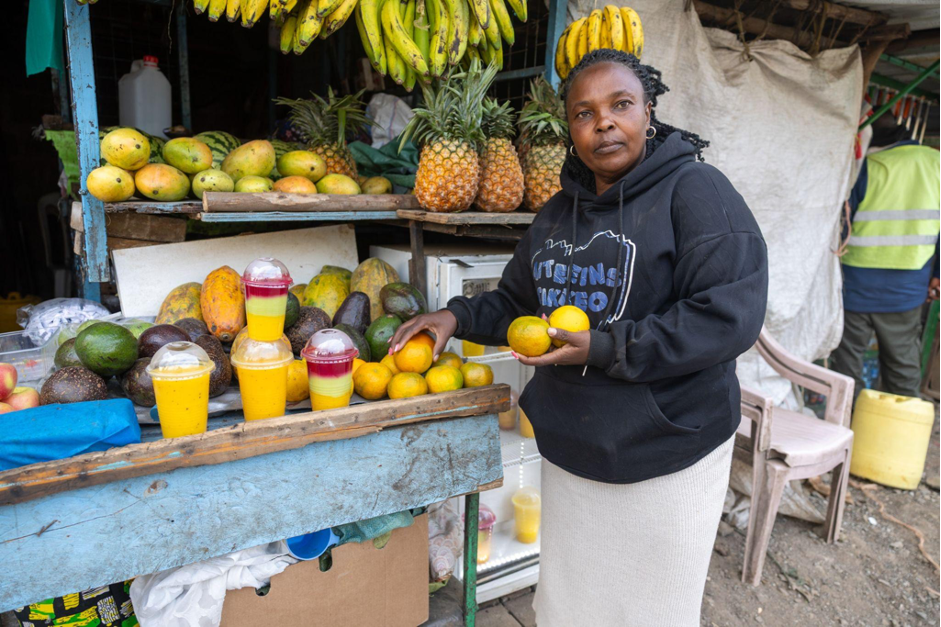
    Lucy Kagendo has sold fruit at Dagoretti Corner for more than 20 years, watching one of Nairobi’s busiest transport corridors evolve. Yet, of all the changes she has witnessed, none has impressed her more than the speed with which the Ngong Road-Naivasha Road (Junction Mall) Flyover was completed.

    “I have been here since the very first day the surveyors came to measure the site. We had been told that the project would take about three years to complete, but it was finished much sooner than expected. It did not take long at all. It was originally expected to be completed by 2027, yet it has already been finished before then.”

    Her remarks come days after President William Ruto commissioned the KSh3.8 billion Ngong Road-Naivasha Road (Junction Mall) Flyover, a project designed to eliminate one of Nairobi’s most persistent traffic bottlenecks by improving the movement of people and goods while enhancing safety for motorists, pedestrians and cyclists.

    The flyover forms part of the Government’s broader infrastructure programme to modernise Nairobi’s road network and prepare the capital for the 2027 Africa Cup of Nations (AFCON).

    Kagendo and many traders at Dagoretti Corner say the project’s early completion has reinforced confidence that major public infrastructure can be delivered ahead of schedule while beginning to transform lives immediately.

    Lucy Kagendo at her fruit stand in Dagoretti Corner, where she has operated her business for more than 20 years. She says the newly commissioned Ngong Road-Naivasha Road (Junction Mall) Flyover will attract more customers and create new business opportunities.

    Having operated her fruit business beside the busy corridor for more than two decades, Kagendo believes the completed project will attract more customers and create new opportunities for traders.

    “I am a trader here at Dagoretti Corner, near the Total petrol station, where I sell fruit. I have been operating my business here for more than 20 years. I think my business will now grow, and I am thankful for the road improvements and the development they have brought to our community.”

    Speaking during the commissioning, President Ruto said the investment is intended to reduce travel time, lower transport costs, improve road safety and unlock economic productivity by allowing people and goods to move more efficiently across Nairobi.

    He noted that the flyover is one of several strategic infrastructure projects aimed at making the capital more connected, competitive and ready to host AFCON next year.

    To Kagendo, however, the transformation is best reflected in the renewed optimism among local traders and residents.

    “We used to be told we are heading to Singapore and it seems we have already arrived.”

    As businesses adjust to improved accessibility and increasing traffic flow, she believes the benefits of the project are only beginning to unfold.

    “We are very grateful because this project has also created more business opportunities for us.”

  • Danny Glover reveals Alzheimer’s diagnosis

    Danny Glover reveals Alzheimer’s diagnosis

    Legendary actor Danny Glover, 79, has revealed that for the past few years, he has been living with Alzheimer’s disease.

    The screen veteran, who is the recipient of five Emmy nominations and four Grammy nominations, among many other accolades, shared his diagnosis in two recent interviews.

    “I can live with it, in a sense. I’m sure as it advances, things are going to be different and changing,” he said.

    Alzheimer’s disease, the most common type of dementia, “affects memory, thinking, and the ability to perform daily activities. The illness gets worse over time,” according the World Health Organisation (WHO).

    In a separate interview, Glover said he had come to terms with his condition with the support of his family.

    “I still have my daughter, I have friends,” he told the outlet. “I want to just say, your life continues.”

    Adding, “I’m still not accepting in my mind all parts of it,” he also said. “There are the moments that you keep remembering that validate the fact that you can remember stuff. And there are moments I’ll never forget.”

    Glover is best known for his role opposite Mel Gibson as homicide detective Roger Murtaugh in the “Lethal Weapon” franchise.

    He has also starred in movies like “Predator 2,” “The Colour Purple”, and “Places in the Heart,” and received a nomination for his role as Nelson Mandela in the TV film “Mandela.”

  • Kenya bets big on MICE tourism to hit 5M visitors by 2028

    Kenya bets big on MICE tourism to hit 5M visitors by 2028

    Kenya is counting on Meetings, Incentives, Conferences and Exhibitions (MICE) tourism to play a central role in closing the 2.3 million visitor gap needed to hit its target of five million international tourist arrivals annually by 2028.

    Tourism PS Prof. Julius Bitok says his office would lead Kenya’s pursuit of MICE business from key source markets worldwide, pointing to the near completion of the Bomas of Kenya International Convention Complex as the infrastructure milestone that should now drive an immediate and coordinated push for international event bids.

    Speaking at an engagement forum with tourism stakeholders in Nairobi, Bitok noted that Kenya’s growing world class venue capacity must be matched by an equally aggressive push from Government and the private sector to place Kenya on the global events calendar.

    “As your PS, I give you my personal commitment to support this industry fully. On MICE, for instance, the State Department of Tourism will serve as the chief bidder to bring major events to our country. With the growing world class venue capacity including the Bomas Complex, and others by the private sector there is no reason Kenya should not be competing at the very top,” Bitok said.

    The PS also drew attention to Kenya’s air connectivity as one of the country’s strongest selling points for MICE business, noting that reliable links to Europe, Asia, the Americas and other African markets would be central to convincing international event organisers to choose Kenya.

    “What we are aspiring for is not an abstract concept, it is growth that is verifiable in numbers of foreigners coming in through our airspaces, waters and roads. It is in the bed nights spent in your hotels and lodges, and the additional livelihoods we will have drawn into the tourism ecosystem,” he said.

    Kenya recorded 2.7 million international arrivals in 2025, a 9% increase from the previous year, with the broader tourism sector generating approximately Ksh 500 billion. The MICE segment was a standout performer contributing over 736,000 visitors and more than Ksh 11 billion in direct revenue, underscoring the sector’s outsized economic multiplier effect.

    PS Bitok also called for a sharper digital marketing approach, urging stakeholders to invest in platforms and content that could reach and convert international audiences. He tied sustainable tourism practices to Kenya’s marketing strategy, arguing that travellers increasingly made decisions based on a destination’s environmental and community credentials.

    On her part, Kenya Tourism Board (KTB) CEO June Chepkemei reinforced collective action by the sector noting that achieving Kenya’s tourism ambitions would require sustained engagement across government and the private sector.

    “Through strategic partnerships, enhanced destination marketing, digital transformation and stronger trade engagement, KTB is implementing initiatives designed to accelerate international arrivals and tourism receipts,” she said.

    Stakeholder representatives from the tourism sector called for greater investment in product diversification, pointing to the need to grow offerings in eco-tourism, adventure tourism and cultural experiences to attract a wider visitor mix and extend average lengths of stay.

    Human capital development was also raised as a priority with the stakeholders highlighting that a skilled workforce would underpin Kenya’s ability to deliver world class experiences for both leisure and business visitors.

    The forum, which brought together representatives from across the tourism ecosystem, marked PS Bitok’s first formal engagement with industry leaders since his appointment and set the tone for a closer working relationship between Government and the private sector

  • Eight students linked to the Utumishi Girls Academy dormitory fire plead not guilty

    Eight students linked to the Utumishi Girls Academy dormitory fire plead not guilty

    Eight subject minors charged with the murder of 16 girls from the fatal dormitory fire at Utumishi Girls Academy have pleaded not guilty.

    The students appeared before Justice Diana Kavedza at the High Court in Kibera, where they denied the charges linked to the tragic blaze that also led to the injury of 79 others on May 28.

    According to the prosecution, investigations into the incident led the Office of the Director of Public Prosecutions to approve 16 counts of murder against the minors.

    During the court session, Justice Kavedza reiterated the importance of protecting the identities of the subjects, citing the Children Act 2022.

    “The subject minors are charged with murder,” Justice Kavedza stated. “The court must guard against trial by media, public pressure, sensitive concerns and premature conclusions.”

    The judge said that the court would only allow “accredited media representatives” to cover the case.

    “Accredited media representatives may attend and report from all proceedings conducted in open court. Such reporting shall be fair, accurate, and confined to the proceedings, the court rulings, procedural developments, and matters of legitimate public interest.”

    Defence lawyers have urged the Court to grant them bail as is their right as granted by the law; currently, the Prosecution team is opposing their release due to the gravity of the offence.

    The subject minors will remain in custody until  September 22, 2026 when the court will give its bail ruling.

    The probation officer has been ordered to prepare a pre-bail report by conducting interviews with all the family members of the victims and survivors of the tragedy.

    Further, the parents of the girls were ordered to pay for their counselling for the next 6months. Justice Diana Kavedza has also ordered no phones, no TVs for the subject minors.

  • Kenyan Actor Emmanuel Mugo lands role in ‘The Agency’ Season 2

    Kenyan Actor Emmanuel Mugo lands role in ‘The Agency’ Season 2

    Celebrated actor Emmanuel Mugo has landed a new role in the second season of ‘The Agency’ which premiered on June 21. Mugo has starred in Nigerian film ‘Safari’.

    Mugo is just one of many Kenyans who have managed to break into international film and production. In June, Kalasha award-winning producer Grace Kahaki became an Emmy International juror.

    Mugo shared his excitement, stating: “Landing this role is a dream come true. I am honoured to represent Kenya on the global platform, and I hope my journey inspires other young actors to pursue their dreams without fear.”

    The actor is expected to feature alongside Michael Fassbender, Katherine Waterston, legend Richard Gere, Jodie Turner-Smith and more. 

    His casting has sparked excitement among his Kenyan fans, with one commenting: “Congratulations, Emmanuel, your success is proof that Kenyan talent belongs on the world stage.”

    ‘The Agency’ season 2 is currently streaming on Paramount+


  • Chris Brown must pay housekeeper 13M dollars, jury rules

    Chris Brown must pay housekeeper 13M dollars, jury rules

    Chris Brown has been ordered to pay $13 million (Ksh. 1.6B) in damages to the housekeeper who was mauled by a security dog on his property.

    A California jury ruled in Maria Avila’s favour over the incident that took place in December 2020, Billboard reports.

    Avila gave emotional testimony at the two-week trial, breaking down on the witness stand as she described the mauling at Brown’s home in the Tarzana neighbourhood of Los Angeles.

    She said the attack left her with severe injuries to her arm and face, extensive scarring, and post-traumatic stress disorder.

    “I will never be the same again,” she told jurors.

    Avila described a gruelling recovery and testified that the lasting effects make it hard for her to sleep and carry out basic daily tasks. The attack also left her afraid of dogs, effectively ending her career as a housekeeper.

    Brown testified as the first witness at the trial. He told jurors he heard the dog, Hades, growling outside and rushed downstairs to find Avila face down and motionless on the ground.

    He locked up the dog, called out to his security guard to summon help, and bent down to make sure Avila was breathing. He acknowledged he didn’t touch Avila, offer her water, bring her a towel, or give her any comfort.

    Brown said he left his property before paramedics arrived, allegedly at his manager’s suggestion.

    Before the trial, the Under the Influence singer admitted negligence under California’s dog-bite statute in a court filing. He continued to dispute the extent of Avila’s injuries and claimed she was partly at fault for going outside alone.

    Brown’s lawyer acknowledged during jury selection that Avila was entitled to some damages but said there was a “difference of opinion” over the amount.