Author: KBC Digital

  • Ohangla musician Tony Ndiema dies after illness

    Ohangla musician Tony Ndiema dies after illness

    Ohangla musician Tony Ndiema, born Anton Okoth Ochieng, is dead.

    According to a number of reports, the musician died on Tuesday, June 30, while undergoing treatment following a short illness.

    Ndiema was a vocalist and bandleader known for blending traditional Ohangla rhythms with contemporary influences.

    According to updates shared before his death, Ndiema’s condition had deteriorated significantly, leaving him unable to walk or speak.

    His family had appealed to friends, fans and well-wishers for financial assistance to help cover his medical expenses after he was transferred to Oasis Hospital in Kisii for specialised treatment.

    Despite the fundraising efforts, he succumbed to his illness.

    Tributes continue to pour in from fans and fellow musicians following news of his passing.

    Fellow Ohangla star Prince Indah has paid tribute to Ndiema describing him as a brother and colleague whose contribution to the genre would be remembered.

    More to follow...

  • Technopolis Development Authority celebrates graduation of youth in Jitume Digital Media Tools mentorship program

    Technopolis Development Authority celebrates graduation of youth in Jitume Digital Media Tools mentorship program

    Technopolis Development Authority (formerly Konza Technopolis Development Authority) graduated 2,700 youth participants in a five-day hybrid learning program dubbed The Jitume Digital Media Tools Sensitization workshop. The program equipped and exposed youth to emerging technologies, industry practices and career opportunities within Kenya’s rapidly expanding digital and creative economy.

    The programme attracted sign ups drawn from across the country and introduced the youth to modern creative professions including photography, videography, graphic design, video editing and social media management. Through structured engagement with practitioners and digital tools, participants gained practical understanding of professional workflows, Artificial Intelligence-enabled solutions, entrepreneurship pathways and opportunities available within the evolving world of work.

    Hosted at the Jitume Digital Media Factory in GPO Nairobi, the initiative was designed to move beyond conventional technical training by helping participants understand complete career ecosystems and the practical realities of building sustainable careers within the creative sector. The program was delivered in partnership with, Kenya Film Commission, Postal Kenya and Genesis Design Factory.

    The Graduation and Recognition Ceremony convened top-performing participants alongside representatives from government, industry, academia, technology institutions, development partners and the media. The event provided a platform to celebrate achievement, showcase talent and strengthen linkages between emerging creatives and opportunity providers.

    Speaking during the graduation ceremony the Technopolis Development Authority, CEO, John Paul Okwiri, noted the importance of bringing young professionals together to not only upskill but nurture talent within the creative space. “This graduation is a testament to the ever-growing creative industry in our country. We had a total number of nearly 3000 participants signing up for this workshop which showcases the hunger for young creatives to nurture and further their skills while showcasing the need for more cohorts to be conducted across the country. We have seen young videographers, photographers, graphic designers, social media managers & content developers/editors take the initiative to gather here, network and grow their skills in order to ultimately raise the standard within the creative space, it is therefore extremely important to continue supporting them through workshops like this to ensure we grow the sector”.

    The event demonstrated the transformative potential of targeted digital skills interventions in preparing young people for participation in the knowledge economy while supporting national efforts to expand access to innovation-driven opportunities. Activities during the ceremony included exhibitions and showcases of participant work across multiple disciplines, presentation of programme highlights and impact stories, a high-level conversation on the future of creative work in Kenya, recognition and award presentations for outstanding participants, and networking engagements

    Among the outcomes realised through the initiative were increased awareness of modern creative careers, strengthened connections between young people and industry professionals, greater understanding of the role of Artificial Intelligence in creative industries, and expanded visibility of pathways to employment, freelancing and entrepreneurship. The Government remains committed to supporting programmes that accelerate digital inclusion, nurture innovation and unlock opportunities for young people as part of Kenya’s broader socio-economic transformation agenda

    The Jitume Digital Enablement Program is a Government of Kenya initiative aimed at expanding access to digital opportunities by equipping young people with market-relevant digital skills, innovation capabilities and pathways to employment and entrepreneurship. Through its network of digital hubs and specialised learning facilities, the program supports the development of a digitally empowered workforce while promoting inclusion, creativity and participation in Kenya’s growing digital economy.

  • Govt steps in to clear 60,000 bags of Mwea rice before new harvest

    Govt steps in to clear 60,000 bags of Mwea rice before new harvest

    The Kenya National Trading Corporation (KNTC) will buy more than 60,000 bags of Mwea rice held by farmers as part of a Government intervention to clear stocks, ease storage pressure and improve farmers’ cash flow.

    The exercise, being undertaken jointly by KNTC, the Agriculture and Food Authority (AFA) and farmers’ cooperatives, comes as farmers prepare for another harvest while thousands of bags from the previous season remain in storage awaiting buyers.

    Speaking during an inspection tour in Mwea, AFA Acting Director General Calistus Kundu said the Government was committed to ensuring farmers have a reliable market for their produce as the country works to increase local rice production.

    KNTC Managing Director Lucy Anangwe who led the exercise said the corporation has committed to purchasing all locally produced rice currently held by cooperatives, with deliveries expected to continue until mid-August.

    The rice will later be distributed to public institutions across the country.

    “We are here to assess the situation on the ground and reassure farmers that the Government remains committed to supporting the marketing of locally produced rice. KNTC is fully committed to mopping up the rice produced by farmers,” Anangwe said.

    The Mwea Rice Growers Multipurpose Cooperative Society, which represents more than 80 per cent of rice farmers in the region, currently holds more than 30,000 bags in storage and expects an additional 25,000 bags during the third crop season.

    Self-help groups are also holding more than 15,000 bags, bringing the total volume targeted under the programme to more than 70,000 bags.

    To fast-track the purchase and processing of the rice, KNTC and the cooperative have agreed on a schedule of at least two truckloads daily, while the milling plant will introduce a third shift to increase output to 56 tonnes of milled rice per day.

    The additional shift is expected to create more employment opportunities while speeding up the clearance of stored stocks.

    Mwea Rice Growers Multipurpose Cooperative Society Chief Executive Officer Anthony Waweru said delayed marketing had affected payments to farmers but expressed confidence the new arrangement would restore normal operations.

    “We had expected to pay farmers earlier, but marketing challenges delayed the process. With KNTC now taking up the rice, we expect to clear the current stock within a month and begin paying farmers by July 20,” Waweru said.

  • Africa urged to scale agricultural innovations to boost food security

    Africa urged to scale agricultural innovations to boost food security

    Africa must accelerate investment in proven agricultural innovations to strengthen food security, create jobs and build resilience against climate shocks and economic disruptions, experts have said.

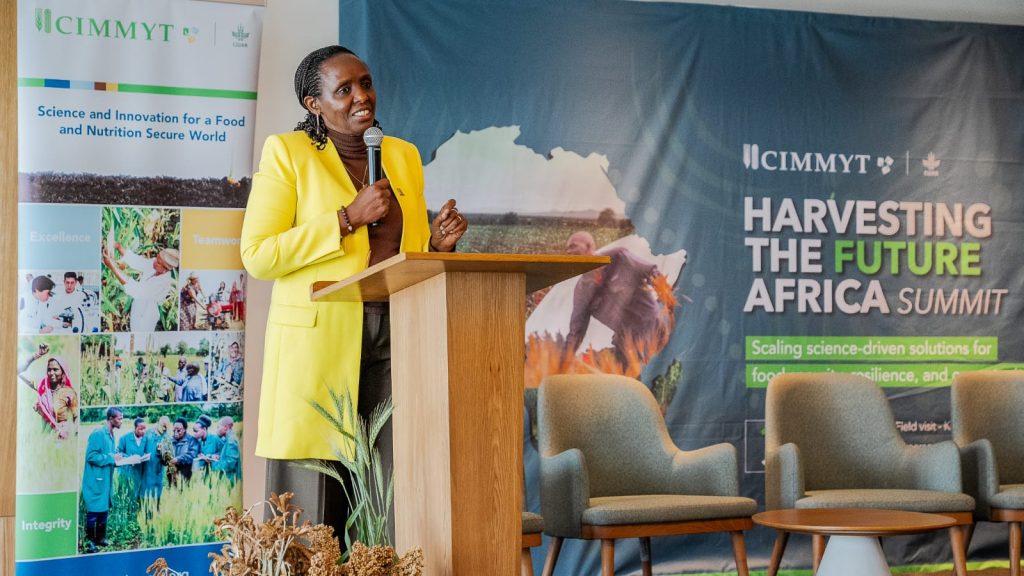
    The call was made during the Harvesting the Future Africa Summit held in Nairobi, which brought together leaders from governments, research institutions, finance, philanthropy and the private sector to discuss strategies for transforming the continent’s food systems.

    The summit, convened by the International Maize and Wheat Improvement Center (CIMMYT) and its partners, focused on scaling solutions that improve productivity, support farmers and reduce Africa’s reliance on food imports.

    CIMMYT Director General Bram Govaerts called for efforts to accelerate the movement of successful agricultural innovations from research centres to more farmers across the continent.

    “At CIMMYT, our ambition is clear: food security innovation that will nourish communities, create jobs and drive sustainable growth across Africa. The challenge before us is discovering what works and then getting it into the hands of more farmers in more places, faster,” Govaerts said.

    Africa’s food systems continue to face pressure from climate change, conflicts, rising production costs, disruptions in fertilizer supplies and economic uncertainty, even as the continent experiences population growth and rising demand for food.

    CIMMYT Board Member Dr Agnes Kalibata said farmers, researchers, governments and businesses across Africa are already demonstrating what can be achieved through collaboration.

    “Our opportunity is to make sure they have access to the resources they need to succeed,” Kalibata said.

    Keynote speaker and CIMMYT Board member, Dr Agnes Kalibata, presenting her address at the Harvesting the Future Africa Summit.

    The summit also examined lessons from Mexico’s partnership with CIMMYT through the MasAgro model, which demonstrated how science-based approaches can improve productivity, strengthen seed systems and help farmers adapt to changing weather conditions.

    Mexico’s Ambassador to Kenya Gisele Fernández Ludlow said the collaboration showed how agricultural science can support farmers beyond national borders.

    “The innovations we invested in together are now protecting harvests and building resilience for millions of farmers across Africa and beyond. This is what science diplomacy looks like in practice,” she said.

    The Harvesting the Future Africa Summit showcased agricultural solutions including improved crop varieties, climate-smart farming practices, soil health technologies, digital advisory tools, seed systems and market-based innovations aimed at increasing productivity and strengthening farmer incomes.

  • State Department for Foreign Affairs meets regulatory institutions ahead of Global Trust Summit

    State Department for Foreign Affairs meets regulatory institutions ahead of Global Trust Summit

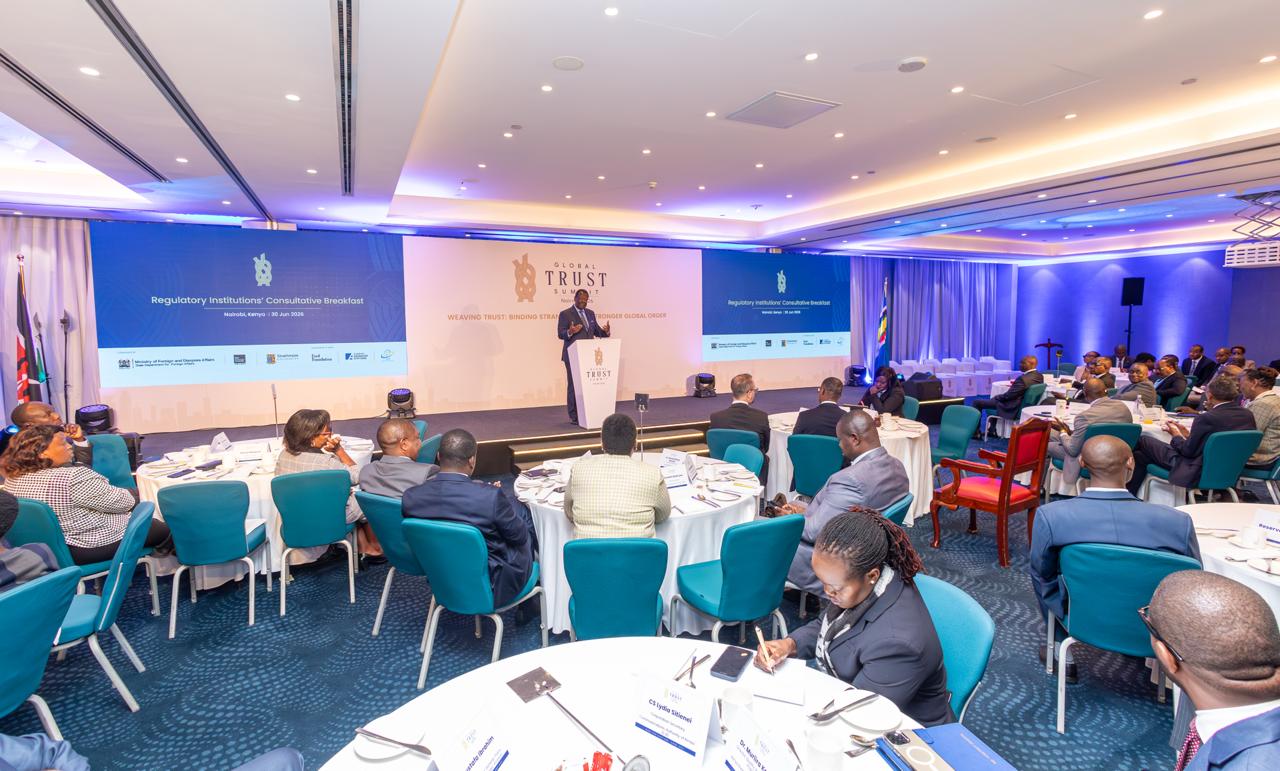
    Preparations for the inaugural Global Trust Summit gained momentum as the State Department for Foreign Affairs convened more than 20 regulatory institutions for a high-level consultative breakfast meeting ahead of the October 2026 event.

    The meeting provided a platform to share the strategic vision of the Summit, identify areas of collaboration, and examine the role of regulatory institutions in strengthening public confidence, enhancing institutional legitimacy, and advancing trust in governance systems.

    Among the present regulatory bodies included Communications Authority of Kenya, Kenya Civil Aviation Authority, Kenya Bureau of Standards, National Transport and Safety Authority and Capital Markets Authority.

    The meeting set the tone for the Global Trust Summit, a flagship initiative to be convened jointly by the State Department for Foreign Affairs, Strathmore University and  Open Government Partnership with  Konrad Adenauer Stiftung and other partners.

    The Summit is grounded in the commitments under Kenya’s Fifth Open Government Partnership National Action Plan (NAP V), Plan (NAP V, 2023–2027), launched by President William Ruto on 11 September 2024 and will seek to explore how confidence in governments, institutions, and multilateral systems with their citizens can be rebuilt.

    The Chief Guest, Prime Cabinet Secretary Musalia Mudavadi, said the opportunity to host the summit reflects Kenya’s growing leadership in advancing democratic governance and effective public institutions.

    PCS Musalia Mudavadi during the consultative forum

    “This Summit is not another international conference. It is a strategic diplomatic and governance initiative that seeks to move the global conversation beyond diagnosing declining trust towards identifying practical reforms and institutional actions that rebuild and sustain it”, he said.

    He added, “Kenya is hosting this Summit because we believe we have something meaningful to contribute to the global discourse. Our contribution will not be measured by speeches or declarations. It will be measured by the strength, credibility and integrity of our institutions”.

    Speaking during the meeting, the Principal Secretary for the State Department for Foreign Affairs, Dr Korir Sing’Oei, said the President’s commitment to building trust has positioned Kenya to host the summit.

    He described it as a recognition of the Country’s efforts to promote good governance and public confidence.

    “Existence of the state is part of a rules-based order, which, when properly followed, develops mutual trust with citizens. The President made the commitment to cultivate trust with the citizens of Kenya; the Global Trust Summit will be convened in Kenya because of this,” he said.

    The Summit will seek to achieve several key objectives, including the adoption of the Nairobi Declaration on Global Trust.

    The declaration, to be formally read and adopted by acclamation, will outline the Summit’s key principles, areas of consensus, and voluntary commitments by participating governments and institutions.

    The Summit will also establish the Global Trust Council, a platform intended to sustain dialogue and collaboration on strengthening institutional trust globally.

    By anchoring public administration in the constitutional values of openness and accountability, Kenya is positioning Nairobi as the launchpad for a renewed global consensus on institutional integrity ahead of the October Summit.

  • KenGen targets 5,500MW renewable energy pipeline expansion

    KenGen targets 5,500MW renewable energy pipeline expansion

    Kenya Electricity Generating Company (KenGen) has expanded its renewable energy development pipeline to 5,500MW from the 1,500MW target set under its 10-year G2G 2034 Corporate Strategy.

    The announcement was made during the launch of the Company’s inaugural Sustainability Report, which documents KenGen’s environmental, social and governance (ESG) performance for the 2024/25 financial year while outlining the Company’s enhanced vision for accelerating Kenya’s clean energy transition.

    The strategic recalibration reflects new sources including planned 2GW from nuclear, over 700MW from hydro, increased geothermal resource opportunities, evolving national energy priorities, growing investor confidence in renewable energy and rising regional demand for clean power, positioning KenGen to play an even greater role in Kenya’s ambition of becoming a regional green energy hub.

    While making his remarks during the launch, State Department for Energy PS. Alex Wachira commended KenGen for developing an ecosystem where investors can access competitively priced renewable energy, geothermal steam, serviced industrial land and the infrastructure needed to establish sustainable industries.

    “This is a practical demonstration of how energy can move beyond powering homes to powering factories, creating jobs, attracting investment and strengthening Kenya’s manufacturing base,” said Mr. Wachira adding, “for investors seeking a competitive, low-carbon destination to establish or expand their operations, Kenya is ready and Olkaria tells that story better than words ever could.”

    The energy PS went on to say that Government will continue to provide the policy direction and creating an enabling environment for investment working together with other stakeholders: “Our State Corporations will continue delivering strategic infrastructure, the private sector will continue driving innovation and investment, while our development partners remain valued partners in this journey.”

    Speaking during the launch at Karura Forest in Nairobi, KenGen Managing Director and CEO Eng. Peter Njenga said the Sustainability Report captures a defining moment in the Company’s evolution.

    “Our inaugural Sustainability Report is more than a record of our ESG performance; it reflects a company that is responding decisively to a changing energy landscape. As opportunities have expanded, so too has our ambition. We have strategically recalibrated our long-term growth trajectory from 1,500MW to a 5,500MW renewable energy development pipeline, reaffirming our commitment to powering Kenya’s sustainable economic transformation,” said Eng. Njenga.

    He said the report institutionalises KenGen’s long-standing commitment to sustainability while providing stakeholders, including Government, investors, communities and development partners, with a transparent framework for measuring progress and creating shared value.

    The Chief Guest, Principal Secretary for Environment and Climate Change Dr. Eng. Festus Ng’eno, welcomed both the Sustainability Report and KenGen’s expanded renewable energy ambition, saying they demonstrate the Company’s leadership in supporting Kenya’s climate commitments.

    “Kenya’s transition to a low-carbon economy requires institutions that continuously adapt to emerging opportunities while remaining accountable for their environmental and social impact. KenGen’s Sustainability Report, coupled with its expanded renewable energy ambitions, demonstrates the kind of corporate leadership needed to deliver our national climate and development goals,” said Dr. Ng’eno.

    The report highlights strong sustainability performance across the Company’s operations during the reporting period. KenGen maintained a renewable energy dispatch rate of 94.4 percent while generating 6.9 million carbon credits. The Company’s carbon intensity stood at 0.06089 tCO2e per MWh, placing it among Africa’s lowest-emitting electricity generators.

    On environmental stewardship, KenGen grew 887,220 tree seedlings during the year, surpassing its annual target by seven percent, while restoring 850 hectares of degraded land across its operational areas. The Company has planted more than four million trees to date and aims to plant nine million by 2034.

    The report also highlights KenGen’s social impact, with 237 students benefiting from scholarships through the KenGen Foundation, more than 42,300 households gaining access to clean water, and local suppliers receiving 69 percent of procurement opportunities valued at Ksh10.01 billion.

    The Sustainability Report further records exemplary governance performance, with the Company attaining a 100 percent score in governance and transparency assessments across complaints resolution and access to information indicators.

    Prepared in accordance with the Global Reporting Initiative (GRI) Standards, the UN Global Compact principles and the Nairobi Securities Exchange ESG Disclosure Guidelines, the report establishes a baseline for annual sustainability reporting while reinforcing KenGen’s commitment to responsible business, transparency and long-term value creation.

    The Company reaffirmed its commitment to delivering affordable, reliable and clean electricity while supporting Kenya’s development aspirations and strengthening its position as the region’s leading renewable energy producer.

  • KEBS, NC4 host major cybersecurity conference to strengthen digital resilience

    KEBS, NC4 host major cybersecurity conference to strengthen digital resilience

    Kenya is intensifying its efforts to bolster digital resilience as government agencies, industry leaders, and cybersecurity experts gather in Naivasha for the 6th Annual Information Security Management Systems (ISMS) Conference.

    Jointly organised by the Kenya Bureau of Standards (KEBS) and the National Computer and Cybercrimes Coordination Committee (NC4), the six-day conference addresses the escalating frequency, sophistication, and disruptive potential of cyber threats. It convenes policymakers, regulators, ICT professionals, private sector organisations, civil society, development partners, and cybersecurity solution providers to formulate practical strategies for safeguarding Kenya’s expanding digital economy.

    The meeting follows a significant surge in cyber threat activity targeting Kenyan institutions. Between April and June 2025, the country detected over 4.5 billion cyber threat events, an 80.7 per cent increase from the preceding quarter. A further 4.3 billion incidents were recorded between October and December, highlighting the scale and persistence of attacks against both public and private sector systems.

    The threat landscape has evolved considerably, with organisations now confronting ransomware attacks capable of crippling essential services, AI-enabled phishing campaigns exploiting human vulnerabilities, Business Email Compromise (BEC) schemes targeting financial transactions, Distributed Denial-of-Service (DDoS) attacks disrupting online services, web application exploits, and increasingly sophisticated mobile malware.

    Public administration remains the most targeted sector, followed by information services and the financial sector. Cybersecurity experts have also voiced concerns about organised threat groups exploiting unpatched systems and supply chain vulnerabilities, underscoring the imperative for stronger preventive measures and coordinated national action.

    Against this backdrop, the ISMS Conference aims to promote internationally recognised information security standards as a foundational element for enhancing cyber resilience across organisations.

    Central to the discussions will be ISO/IEC 27001, the global standard for Information Security Management Systems, which provides organisations with a structured framework for identifying, managing, and mitigating information security risks.

    KEBS says the conference seeks to move beyond mere awareness by providing a platform for collaboration, innovation, and practical implementation. Decision-makers will directly engage with cybersecurity solution providers to evaluate technologies addressing emerging risks, while technical professionals will participate in specialised training designed to strengthen organisational preparedness and incident response capabilities.

    Participants will also share experiences in implementing Information Security Management Systems, highlighting lessons learned, governance approaches, and best practices that can be replicated across sectors. Organisers anticipate that this peer-learning model will help institutions improve compliance, strengthen risk management, and build long-term digital resilience.

    Another key objective is to foster stronger collaboration among regulators, industry leaders, and technology innovators. By encouraging greater alignment on cybersecurity standards and policy, the conference aims to support a more coordinated national response to cyber threats while encouraging investment in advanced security technologies.

    The programme combines executive-level discussions with technical capacity-building sessions. The initial two days will feature parallel workshops for senior executives and ICT professionals. Executive sessions will focus on cybersecurity governance, strategic investments, and organisational leadership, while technical workshops will offer hands-on demonstrations, implementation guidance, and practical solutions for addressing evolving cyber threats.

    The main conference agenda includes keynote presentations, expert panel discussions, case studies from organisations that have successfully implemented Information Security Management Systems, live technology demonstrations, and exhibition booths showcasing the latest cybersecurity innovations.

    KEBS and NC4 affirm that the conference reflects the growing recognition that cybersecurity is no longer solely an ICT function but a strategic governance issue demanding leadership at the highest organisational levels.

    As Kenya’s national standards body, KEBS says it continues to champion the adoption of internationally recognised standards that assist organisations in strengthening quality assurance, compliance, and information security. NC4 complements this role by coordinating national cybersecurity policy, enhancing cyber readiness, facilitating threat intelligence sharing, and strengthening incident response across government institutions.

    Together, the two organisations have positioned the conference as a national policy and knowledge-sharing platform that promotes consistent cybersecurity practices rather than simply showcasing technology solutions.

    Organisers expect the conference to strengthen partnerships between government, industry, and technology providers while accelerating the adoption of modern cybersecurity solutions. They also anticipate improved technical capacity, stronger institutional preparedness, and increased cross-sector collaboration in responding to cyber threats.

    The conference takes place as Kenya accelerates digital transformation across government services, finance, healthcare, education, and commerce. As more critical services migrate online, the need for robust information security frameworks has become increasingly urgent to safeguard sensitive data, protect essential infrastructure, and maintain public confidence in digital systems.

    KEBS and NC4 have invited government institutions, private sector organisations, academic institutions, civil society, and technology providers to actively participate in the conference, describing collective action as essential to building a secure and resilient digital ecosystem.

  • Kenya calls for ethical use of AI at Connecting Codes Conference 2026

    Kenya calls for ethical use of AI at Connecting Codes Conference 2026

    Kenya has called for stronger safeguards around the use of artificial intelligence (AI) as policymakers, researchers and technology experts gathered in Nairobi to discuss how emerging technologies can transform access to information while protecting cultural identity.

    The call was made during the Connecting Codes Conference 2026 held at the Kenya National Library Service (KNLS) headquarters, which brought together government officials, scholars, researchers and international partners to explore the future of AI, digital humanities and knowledge systems.

    The conference focused on the role of technology in promoting digital inclusion, preserving cultural heritage and ensuring equitable access to information in a rapidly changing digital environment.

    Principal Secretary in the State Department for Culture, Arts and Heritage Ummi Bashir, who represented the Cabinet Secretary for Gender, Culture and Children Services, said the government is committed to ensuring digital transformation benefits all citizens.

    Bashir said emerging technologies must be developed in a way that supports national development while safeguarding Kenya’s cultural heritage.

    The Chairperson of the Parliamentary Broadcasting and Library Committee Daniel Epuyo Nanok said AI presents major opportunities in sectors such as education, healthcare, agriculture and public service delivery but requires clear policy and regulatory frameworks.

    Nanok said Parliament has a responsibility to create an enabling environment for innovation while protecting citizens’ rights, noting that issues such as accountability, transparency, privacy and equity must guide AI adoption.

    He also warned that failure to incorporate African languages, histories and cultural content into digital platforms could marginalise African perspectives in the global knowledge economy.

    The conference featured keynote addresses, panel discussions and research presentations on AI-driven knowledge systems, digital inclusion and the preservation of cultural heritage through technology.

    The conference discussions revealed that while Kenya’s digital innovation sector continues to expand, challenges including limited infrastructure, skills gaps and the need for stronger governance frameworks remain key barriers to inclusive technological advancement.

    Participants called for increased investment in digital infrastructure, ethical AI policies and capacity-building programmes to equip citizens and institutions with the skills needed to navigate emerging technologies.

    The event also brought together institutions including the Technical University of Kenya, the University of Kansas and other national and international partners.

  • Two nabbed ferrying bhang on motorcycle in Migori

    Two nabbed ferrying bhang on motorcycle in Migori

    Police in Migori County have arrested two men suspected of trafficking narcotics after they were found ferrying cannabis sativa in Suna West Sub-County.

    The Directorate of Criminal Investigations (DCI) said the suspects, identified as Luke Okello, 35, and Steve Odero, 28, were arrested following a tip-off that led officers to launch an operation in Namba area.

    The officers intercepted the two along Migori Road while they were allegedly transporting the narcotics on a motorcycle.

    According to the DCI, the suspects had concealed the bhang rolls under oversized jackets in an attempt to evade detection.

    Odero was found with 37 rolls while Okello had 77 rolls strapped to his body.

    The two were arrested and taken to Migori Police Station where they are being processed ahead of arraignment in court.

    The motorcycle and the recovered narcotics were seized and will be used as exhibits.

  • Two jailed for 70 years over robbery, gang rape

    Two jailed for 70 years over robbery, gang rape

    The Director of Public Prosecutions (DPP) has secured a 70-year cumulative prison sentence against two men convicted of robbery with violence, gang rape and sexual assault in a case the court described as particularly grave.

    In a judgment delivered at the Kibera Law Courts on Monday, Senior Principal Magistrate Irene Kahuya convicted Cleff Juma Mbaka and Mursal Kafe alias Muu Nasur after the prosecution proved the charges beyond reasonable doubt.

    The prosecution, led by Principal Prosecution Counsel Hilda Omondi, called six witnesses who testified that the complainant had been lured to Nairobi with the promise of a business opportunity before being robbed of his mobile phone, cash and personal documents.

    The court heard that the victim was drugged, sexually assaulted, gang raped and later abandoned at Lang’ata Cemetery with serious injuries that required emergency surgery.

    According to the Office of the Director of Public Prosecutions (ODPP), the prosecution presented consistent witness testimony, corroborative medical evidence, a motorcycle tracking report and documentary exhibits linking the motorcycle used in the crime to the first accused. The court also relied on circumstantial evidence placing the two men at the scene and dismissed their defence of mistaken identity.

    Mbaka and Kafe were each sentenced to 30 years’ imprisonment for robbery with violence, 20 years for gang rape and a further 20 years for sexual assault. The sentences will run consecutively, resulting in an effective custodial term of 70 years after taking into account the eight months they had already spent in custody.

    In sentencing the convicts, Magistrate Kahuya said the punishment reflected the seriousness of the offences and would serve as a deterrent against violent and sexual crimes.

    The court also cautioned boda boda operators against allowing their motorcycles to be used to facilitate criminal activities.