Author: KBC Digital

  • NACADA partners with clergy to curb drug and alcohol abuse in North Rift

    NACADA partners with clergy to curb drug and alcohol abuse in North Rift

    The National Authority for the Campaign Against Alcohol and Drug Abuse (NACADA) has partnered with religious leaders in the North Rift region to step up the fight against alcohol and drug abuse in an effort to dismantle illicit supply networks.

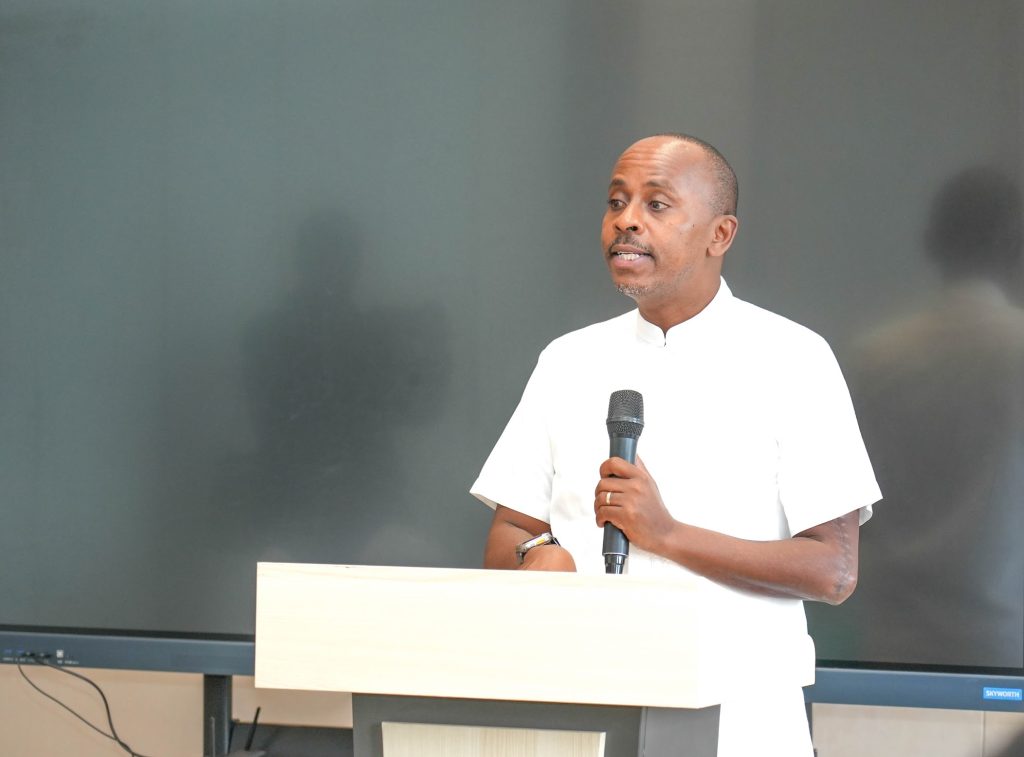
    The partnership follows a meeting that brought together NACADA Board Chair Bishop Stephen Mairori, Head of Public Service Felix Koskei and clergy from across the region.

    Religious leaders raised concern over the spread of cheap illicit brews and narcotics across communities in the region, linking drug use to ongoing unrest in schools and indiscipline in learning institutions.

    Bishop Mairori said the partnership will strengthen enforcement while also expanding prevention and rehabilitation efforts.

    “Our youth are perishing. Families are hurting, schools are burning, and communities are bleeding. We cannot stand idle while a generation is wiped out,” said Bishop Dr. Mairori.

    “This initiative is in direct line with implementing the Presidential directive on the fight against drugs in this country. NACADA is fully committed to working hand-in-hand with the clergy to reclaim our children and restore the moral fabric of our nation.”

    He said NACADA would work closely with the clergy to intensify crackdowns on illicit brew dens and disrupt supply chains, in line with government directives on the fight against substance abuse, while scaling up counselling, treatment and reintegration programmes.

    On his part, Koskei said the government will take a tougher stance against traffickers, insisting that criminal networks will be pursued relentlessly.

    “This is not a war we can leave to the police alone. The clergy, parents, teachers and every citizen must rise. We are going after the cartels poisoning our children with the ruthlessness they deserve,” Koskei said.

    The clergy also pledged to champion national cohesion, reject ethnic politics that fuel division and confront the crisis of school unrest.

    They called on parents, teachers and faith institutions to restore discipline and safety in learning institutions.

    The North Rift region has long been affected by alcohol abuse and emerging drug networks, but the expanded multi-agency crackdown is expected to intensify efforts to curb the menace.

  • Archbishop Kimengich: Erosion of family values fuelling indiscipline, school unrest

    Archbishop Kimengich: Erosion of family values fuelling indiscipline, school unrest

    The Archbishop of the Catholic Archdiocese of Mombasa Dominic Kimengich is blaming erosion of family values for the continuing wave of school unrest in the country.

    Speaking at the Lady of the Rosary Catholic Church in Ridgeways during the Eucharistic celebration of Saint Josemaría Escriva, the founder of Opus Dei, the Archbishop said it was unfortunate that a decline in family values has resulted in youth misdirection and corruption leading to indiscipline, social conflict and dishonesty.

    While calling for stronger parental guidance for young people, Archbishop Kimengich said it was high time the country rediscovered its moral compass which has continually held it together.

    This comes a day after a requiem Mass was held for the 16 students who died in the Utumishi Academy fire tragedy, an incident that has reignited national concern over school safety and discipline in learning institutions.

    Nine students are currently in custody in connection with the deaths after investigations established that the fire was an arson attack.

    He also called for integrity both in leadership and the political environment to ensure prudent utilization of available resources for the benefit of every Kenyan.

  • Diesel tanker overturns along Bungoma-Malaba highway

    Diesel tanker overturns along Bungoma-Malaba highway

    A diesel tanker enroute to Kampala, Uganda, overturned Saturday morning at the Ikapolok area along the Bungoma-Malaba highway, about four kilometres from the Malaba border point, causing a traffic snarl-up.

    Police were forced to intervene for several hours as crowds attempted to siphon the fuel.

    Teso North Deputy Sub-County Police Commander Chris Bahati Ojwang’ said investigations have been launched to establish the exact cause of the crash.

    He said preliminary findings indicate the tanker, which was carrying 30,000 litres of diesel, had earlier developed mechanical problems.

    Bahati said the driver allegedly lost control while attempting to restart the engine after it stalled again on the road.

    He commended officers, county officials and members of the public who helped secure the scene and prevent further escalation, noting that their quick response ensured the fuel cargo was contained.

    The police commander also warned residents against siphoning fuel from accident scenes, terming the practice extremely dangerous regardless of the perceived volatility of the product, and urged greater public awareness on safety risks.

    Firefighters sprayed water on the spilled fuel as a precautionary measure to reduce the risk of ignition and possible explosion.

    The driver has been taken into custody to assist with investigations.

  • Suspect linked to viral inflammatory utterances arrested

    Suspect linked to viral inflammatory utterances arrested

    Police in Nakuru West have arrested a 52-year-old man following the circulation of a viral video in which he allegedly issued inflammatory remarks and violent threats linked to the upcoming 2027 General Election.

    The suspect, identified as Isaiah Murithi Andrew, is a self-proclaimed traditional healer and a speaker for a local “Bunge la Mwananchi.”

    His arrest took place in the Shabab area after investigators began inquiries into the widely shared video clip.

    In the video, Andrew is seen inciting unlawful assembly by threatening armed violence and calling for resistance against authority.

    “These statements attracted the attention of law enforcement agencies due to their inflammatory nature, raising significant concerns about public safety,” DCI said in a statement.

    The suspect is currently in custody, where he is being processed and interrogated as investigations into matter continue.

    “Any form of incitement or threats that undermine peace and national security will be addressed firmly and in accordance with the law,” said the DCI.

  • PS Shaukat calls for stronger regulatory systems to advance nuclear safety in Africa

    PS Shaukat calls for stronger regulatory systems to advance nuclear safety in Africa

    Principal Secretary for Science, Research and Innovation Prof. Shaukat Abdulrazak has called for stronger and more independent regulatory systems to safeguard the use of nuclear science and technology across Africa.

    He spoke in Mombasa on Saturday during the closing ceremony of the 23rd Meeting of the Steering Committee of the Forum of Nuclear Regulatory Bodies in Africa (FNRBA), which brought together regulators, policymakers and technical experts from across the continent to assess progress in nuclear safety and security frameworks.

    Prof. Abdulrazak emphasised the critical role of independent, credible, and sustainable regulatory systems in ensuring the safe and secure use of nuclear science and technology.

    He noted that effective regulation is fundamental to building public confidence and enabling countries to harness nuclear technologies for socio-economic development.

    The Principal Secretary underscored the importance of regional cooperation, observing that nuclear safety and security challenges transcend national boundaries and require close collaboration among African countries.

    He called for greater harmonisation of regulatory approaches, continuous knowledge sharing, and stronger partnerships among regulatory authorities to address emerging challenges and opportunities.

    Prof. Abdulrazak further highlighted the need for continuous improvement of regulatory frameworks, including legislation, licensing systems, inspection programmes, emergency preparedness mechanisms, and cybersecurity measures.

    He encouraged regulators to embrace emerging technologies such as artificial intelligence while maintaining the highest standards of safety and security.

    Recognising the growing demand for skilled professionals in the sector, he stressed the importance of investing in capacity building and developing a new generation of African regulators, inspectors, and technical experts.

    He also advocated for strengthening Technical Support Organisations and regional centres of excellence to provide specialised expertise and support to countries across the continent.

    The Principal Secretary commended the Forum of Nuclear Regulatory Bodies in Africa and the International Atomic Energy Agency (IAEA) for their continued efforts in promoting regulatory excellence, knowledge exchange, and capacity development.

    He reaffirmed Kenya’s commitment to supporting continental initiatives aimed at advancing the peaceful application of nuclear science and technology while ensuring the highest levels of safety, security, and regulatory effectiveness.

  • National Addressing Bill 2025 gains momentum as MPs engage stakeholders

    National Addressing Bill 2025 gains momentum as MPs engage stakeholders

    Parliament has begun deliberations on a Bill that seeks to establish a unified national addressing system, with stakeholders backing the proposal while opposing plans to create a new state agency to oversee its implementation.

    The National Assembly Departmental Committee on Communication, Information and Innovation on Friday conducted stakeholder consultations on the National Addressing Bill, 2025, a private member’s Bill sponsored by Kiambu MP Machua Waithaka.

    The proposed law seeks to establish national addressing standards to streamline e-commerce logistics, emergency response, security coordination and service delivery by replacing Kenya’s fragmented spatial referencing systems with a standardized national framework.

    While stakeholders largely supported the Bill’s objectives, sharp differences emerged over a proposal to establish a standalone National Addressing Council to manage the system.

    Principal Secretary for Broadcasting and Telecommunications Stephen Isaboke said efforts to establish a national address system had stalled for nearly a decade under three successive Cabinet Secretaries, underscoring the need for legislation to anchor the initiative.

    However, he warned that creating a new council would undermine the government’s fiscal consolidation agenda, which seeks to rationalize and merge state agencies.

    The State Department, supported by the Communications Authority of Kenya (CA), the Council of Governors and other technical agencies, instead proposed a centralized governance model anchored within existing institutions.

    Communications Authority Director General David Mugonyi told the committee that the Authority was best placed to coordinate the national addressing system due to its existing legal mandate under the Kenya Information and Communications Act and its role in developing technical standards in collaboration with the Kenya Bureau of Standards.

    “The important tasks for this Committee on the Bill are to establish a legal framework that ensures efficient implementation, while the Authority is uniquely positioned to serve as the national custodian and coordinator of the addressing system, given the existing mandate,” Mugonyi said.

    Committee Chairperson John Kiarie said Kenya had delayed establishing a reliable and integrated national addressing framework despite its importance to development.

    “As a country, we should have reached a point where we are clear about how we handle our addressing system,” he said, describing the proposal as still being at a “green paper stage” ahead of public participation and second reading in the National Assembly.

    Committee member Erastus Kivasu termed the proposal timely, saying it would help create a clear roadmap for the country’s addressing system.

    Government agencies from the security, housing, lands and roads sectors also expressed support for the Bill, citing its potential benefits across multiple sectors.

    Deputy Chief State Counsel Prisca Wambui from the State Department for Interior said the framework would strengthen emergency response, disaster management and administrative efficiency, although she called for robust data protection safeguards.

    The State Department for Housing and Urban Development said the addressing system should be integrated into county spatial plans and development control frameworks rather than operate as a parallel administrative structure.

    Officials from the Lands and Physical Planning Department said accurate geospatial identification would enhance land management and registration, while the Roads Department noted that standardized road and street classification would improve infrastructure planning and help identify accident black spots.

    Defending the Bill, Waithaka said the absence of a structured national addressing system continued to hamper commerce and logistics operations in the country.

    Drawing from his academic experience in the United States, the legislator noted that Kenya still relies heavily on informal directions and dropped-pin locations due to the lack of formal addresses.

    He argued that a standardized addressing framework would support the growth of e-commerce and improve last-mile delivery services, adding that the Postal Corporation of Kenya could significantly expand its operations if neighbourhood postal codes were fully implemented.

    Isiolo South MP Tubi Mohammed Tubi said the Bill could help streamline the country’s expanding logistics sector, while committee member Joyce Bensuda called for clear implementation, monitoring and evaluation mechanisms.

    Isiolo Woman Representative Mumina Bonaya raised concerns over data security and the country’s preparedness to protect sensitive geolocation information.

    The committee will now consolidate stakeholders’ views and refine the Bill before it proceeds to public participation.

    Lawmakers are also expected to consider proposals to separate street-naming functions from physical address data management before the legislation returns to the House for further consideration.

  • SGU honours African medical graduates for healthcare contributions

    SGU honours African medical graduates for healthcare contributions

    St. George’s University (SGU) School of Medicine will honor academic achievements and professional impact of its African graduates and their contributions to the regional healthcare landscape during its 50th anniversary.

    The institution based in Grenada West Indies will host a special ceremony for the graduates in Botswana highlighting its commitment to educating physicians from Africa.

    “As we celebrate 50 years of St. George’s University, we are proud of the thousands of graduates who are making a difference in communities around the world, including many across Africa,” said Dr. Marios Loukas, President and Dean of the SGU School of Medicine.

    SGU says its graduates have contributed to helping address healthcare workforce needs and expanding access to quality medical care in the continent.

    Dr Loukas said SGU remains committed to supporting the next generation of African physicians through accessible medical education pathways, international clinical training opportunities, and a global alumni network dedicated to improving health outcomes worldwide.

    “This ceremony provides an opportunity to celebrate their accomplishments alongside their families, friends, and mentors, while acknowledging the important contributions they are making to healthcare throughout the continent,” he added.

  • Coalition pushes for urgent passage of Tobacco Control Amendment Bill

    Coalition pushes for urgent passage of Tobacco Control Amendment Bill

    The Kenya Tobacco and Nicotine Tax Coalition has urged the National Assembly to expedite passage of the Tobacco Control (Amendment) Bill, 2024, warning that delays could expose more children and young people to emerging nicotine products such as vapes and nicotine pouches.

    Speaking during a press briefing on Friday, the coalition expressed strong support for the proposed legislation and called on lawmakers to retain the bill’s robust regulatory provisions, incorporate recommendations from tobacco control stakeholders, and urgently conclude the public participation process before forwarding the Bill to the Senate for final consideration and passage.

    “We call upon the National Assembly to retain the strong regulatory measures proposed in the bill, adopt recommendations from the Tobacco Control stakeholders for enhancing the bill and urgently conclude the public participation process and forward the bill to the Senate for final consideration and passage”,  said Thomas Lindi, CEO Kenya Tobacco Control Alliance.

    The coalition said the legislation comes at a critical time as Kenya grapples with a rapidly evolving tobacco and nicotine market that has outpaced existing laws.

    “Over the past decade, electronic cigarettes such as vapes, nicotine pouches and other emerging nicotine products have entered the market faster than our laws have evolved to regulate them,” the coalition said.

    According to the group, manufacturers have increasingly marketed these products using attractive flavours, colourful packaging, sleek designs and misleading claims that portray them as modern, harmless and socially acceptable, particularly among young people.

    The Tobacco Control (Amendment) Bill, 2024 seeks to address these gaps by bringing emerging nicotine products under stricter regulation, restricting flavours that appeal to youth, strengthening health warnings, regulating product standards and introducing additional protections for children and adolescents.

    The coalition, however, raised concerns over what it described as efforts to weaken or derail the proposed law.

    “Yet as Parliament considers this important legislation, a campaign has emerged seeking to weaken, delay, or derail the Bill altogether. This Bill is about protecting our children and youth from addiction. It is about closing dangerous loopholes that the tobacco and nicotine industry has exploited for years. It is about ensuring that Kenya remains a leader in tobacco control rather than allowing decades of public health progress to be reversed,” the coalition stated”, the Coalition stated.

    The coalition pointed to a recent incident involving a student at Moi High School Kabarak who was reportedly found in possession of a vape, saying the case highlighted the growing penetration of nicotine products among school-going children.

    While public attention focused on disciplinary and legal issues surrounding the incident, the coalition said a more urgent concern was the presence of a nicotine product specifically designed to evade detection within a learning institution.

    “This was not a conventional cigarette. It was a sleek, discreet and technologically advanced nicotine delivery device that illustrates how rapidly these products are evolving and how vulnerable young people have become to targeted marketing,” the coalition noted.

    The group warned that without stronger legislation, schools, parents and public health authorities would continue struggling to keep pace with the growing availability and sophistication of emerging nicotine products.

    It called on legislators to prioritize public health over industry interests and ensure the Bill is passed without provisions that could weaken protections for children and young people.

    The coalition maintained that the proposed law presents a crucial opportunity for Kenya to strengthen its tobacco control framework and prevent a new generation from becoming addicted to nicotine.

    “When children as young as five years old are being exposed to highly addictive nicotine products, this is no longer simply a tobacco control issue. It is a child protection issue. It is a public health issue. And it is a national development issue. The threat is real and growing. Parliament must act with the urgency required to protect the next generation before this crisis becomes even worse”, it advised.

  • Mwakirunge residents urged to form committee for title deeds

    Mwakirunge residents urged to form committee for title deeds

    Residents of Gung’ombe area in Mwakirunge, Mombasa County, have been urged to form a representative committee to facilitate efforts aimed at resolving longstanding land ownership disputes and issuing title deeds within the next 90 days.

    Speaking during a public meeting with residents, Mombasa County Executive Committee Member (CECM) for Lands Mohamed Hussein Amadoh said the county government was prioritising the regularisation of land ownership to end decades of uncertainty that have seen many residents labelled as squatters.

    Amadoh said securing land tenure was the first step towards unlocking development projects and ensuring residents could enjoy long-term security.

    “We want to sit together and subdivide the land so that everyone gets their title deed. Once you have a title deed, nobody will disturb you again. The story of squatters and landowners will come to an end,” he said.

    He noted that the County Government was exploring plans for additional investments in the area, including a waste recycling facility and a Level Five hospital, but stressed that resolving land ownership issues remained the immediate priority.

    According to Amadoh, development projects could only proceed smoothly once residents had acquired legal ownership documents.

    Director of Surveys Rose Munupe said the County Government had joined hands with the National Government following a directive by President William Ruto to ensure residents in Mombasa receive title deeds within 90 days.

    She said the Lands department had already begun consultations with local leaders and residents to understand the area’s history and address existing challenges before commencing the land adjudication process.

    “Every area has its own history and challenges. That is why we have come to engage residents first and understand the issues before beginning the exercise,” she said.

    Mwakirunge MCA Mwinyi Mtoto Hamisi welcomed the initiative, saying residents had waited for years to obtain title deeds and deserved to live without fear.

    He called on residents and government officials to work together to ensure the process succeeds.

    “We need title deeds so that our people can live without fear. Let us sit together and move forward,” he said.

    However, some residents urged the county government to provide more information and follow the legal procedures governing public participation and project approvals.

    James Boma, a resident who said he had lived in Gung’ombe for more than 30 years, called for greater transparency regarding the proposed projects and asked that formal notices be issued before any plans are implemented.

    He said residents needed adequate time to analyse proposals and understand their implications.

    “We are not rejecting development, but we want things done properly. Let there be gazette notices and proper public participation before decisions are made,” he said.

    Another resident, Purity, said the community had endured years of hardship and marginalisation and urged leaders to prioritise title deeds before introducing other development initiatives.

    “We have lived here for years under difficult conditions. What we want first is title deeds and then development,” she said.

    In response to concerns raised by residents, Amadoh said the meeting marked the beginning of consultations and assured the community that all legal requirements, including public participation and advertisements, would be followed at the appropriate stages.

    He argued that initial discussions with residents were necessary to ensure any formal process reflects the aspirations of the community.

    The Lands CEC also urged residents to elect representatives from among women, youth and elders to spearhead discussions with the government, saying meaningful negotiations could not be conducted with hundreds of people at once.

    “We are not choosing leaders for you. Select people you trust to represent you. They will relay whatever is agreed upon back to the community,” he said.

    Amadoh, further, cautioned residents against allowing politics to interfere with the land ownership process, warning that some leaders could exploit the issue for personal gain ahead of elections.

    “Land ownership is about people’s lives. Let us not turn it into politics. If we work together, we shall succeed,” he said.

    He said the County Government, under Governor Abdulswamad Shariff Nassir, was committed to finding an amicable solution to the land problem and urged residents to embrace dialogue to avoid delaying the process.

  • EACC targets the youth to accelerate efforts in corruption war

    EACC targets the youth to accelerate efforts in corruption war

    Students have been challenged to reject corruption, dishonesty, and academic fraud and instead embrace integrity as a foundation for national transformation.

    Speaking during the during the launch of the Ethics and Integrity Club at Mount Kenya University (MKU), Ethics and Anti-Corruption Commission (EACC) Chairperson Dr. David Oginde challenged students to take a firm stand against corruption, warning that dishonesty continues to erode the country’s moral and economic fabric.

    The launch, themed “Rebuilding Trust Through Ethical Leadership,” brought together leaders from the anti-corruption sector, academia, and government who urged young people to become champions of ethical conduct in society.

    He expressed concern over findings showing that many young people increasingly view dishonest practices as acceptable, including tax evasion, corruption, fake academic certificates, and plagiarism.

    The EACC chair noted that the commission surveys reveal many young people do not see harm in dishonesty. He added that they are witnessing an upsurge in plagiarism among university students and sometimes overwhelmed by investigations involving fake certificates, including cases of people holding very senior positions.

    Dr. Oginde questioned why students would pursue shortcuts instead of earning genuine qualifications through hard work and commitment. MKU Principal for Corporate Services and Director of Partnerships and Linkages, Prof. Peter Wanderi, said the university had already developed a common unit on ethics, integrity, and responsible citizenship to strengthen value-based education.

    He said the course unit had been approved by the university management and further endorsed by the Deans Committee, following consultations between the university leadership and a high-level delegation from the ethics sector.

    Prof. Wanderi noted that the initiative aligns with MKU’s institutional values and commitment to integrity. He added that the collaboration between MKU and ethics institutions is expected to enhance awareness, strengthen institutional partnerships, and encourage student-led integrity initiatives and policy discussions within universities.

    Principal Secretary in the State Department for Youth Affairs and Creative Economy, Fikirini Jacobs, urged young people to embrace values and ethical leadership that can positively transform the country.

    “I beseech you with humility to move forward while holding firmly to values and ethos that can transform the country. Change must happen in a manner that does not become disastrous to us,” said Jacobs.

    He challenged students to change their mindset and approach national issues differently, urging them to see opportunities rather than obstacles. Jacobs called on students to walk together in promoting integrity and national transformation.

    The Ethics and Integrity Club launch is part of broader efforts under the Kenya Leadership Integrity Forum (KLIF), a partnership and governance initiative aimed at fostering a unified and integrated fight against corruption across institutions.