Author: KBC Digital

  • Drug cartels using passenger buses to ferry narcotics, Parliament told

    Drug cartels using passenger buses to ferry narcotics, Parliament told

    The Government has intensified surveillance of public transport vehicles after police intercepted a passenger bus carrying cannabis worth nearly Ksh200,000 along the Kisumu-Kericho Highway, raising concerns over the use of transport networks by drug traffickers.

    Responding to a statement by West Mugirango MP Stephen Mogaka, the National Assembly Departmental Committee on Administration and Internal Security said police acting on intelligence intercepted a Guardian Angel bus travelling from Ugunja to Nairobi and recovered five bales of suspected cannabis.

    The response was delivered in the National Assembly by Lari MP Kahangara Mburu on behalf of committee chairperson Gabriel Tongoyo.

    The committee said officers intercepted bus registration number KDN 389J, an Isuzu belonging to Guardian Angel Company, and recovered dry plant material suspected to be cannabis sativa weighing about 33 kilogrammes and valued at Ksh198,000.

    The drugs had been concealed using yellow tape and were allegedly found in the possession of passenger Daniel Omondi, who was arrested and arraigned at Nyando Law Courts.

    “The suspect was arrested and later processed and arraigned in Nyando Law Courts,” the committee told the House.

    The recovered exhibits were submitted to the Government Chemist in Kisumu for analysis, with investigations ongoing to establish the source of the drugs and identify other individuals linked to the suspected trafficking network.

    The committee said authorities were investigating whether the incident was isolated or part of a wider organised drug trafficking operation using transport corridors in the Coast and Nyanza regions.

    To curb the use of public transport vehicles in drug trafficking, the Government said it had introduced 24-hour multi-agency roadblocks along the Kisumu-Kericho Highway, particularly in Ahero and Nyando.

    The measures also include compliance inspections on public service vehicles, training transport operators to identify suspicious cargo and increased deployment of anti-narcotics officers at transport terminals and other strategic transit points.

    The Government said it was also expanding the use of canine units at selected entry points and high-risk areas to improve detection of illicit drugs.

    It added that authorities were implementing awareness campaigns in schools and communities, targeting drug peddlers near learning institutions and strengthening reporting mechanisms involving minors.

    The broader response includes strengthening the Anti-Narcotics Unit, enhancing intelligence gathering, expanding rehabilitation services and improving cross-border cooperation to disrupt trafficking networks.

    However, Mogaka questioned why the committee’s response focused only on Guardian Angel buses, arguing that other transport companies had also been linked to drug investigations.

    “I would want to understand why the report is confined to only the Guardian Angel Company,” he said.

    The MP also questioned the status of three vehicles previously impounded during drug-related investigations, citing provisions of the Narcotic Drugs and Psychotropic Substances Control Act on forfeiture of vehicles used to transport narcotics.

    Mogaka further alleged that he had faced intimidation after raising concerns over drug trafficking, claiming individuals linked to the transport company confronted him during a funeral in his constituency.

    He called for stronger action to protect students who rely on public transport, warning that young people remain vulnerable to the effects of drug trafficking.

  • State unveils measures to rein in unsafe high-rise developments

    State unveils measures to rein in unsafe high-rise developments

    The Government has outlined a raft of measures aimed at strengthening oversight of high-rise building construction across the country, amid growing concerns over inadequate urban planning, poor drainage systems and weak enforcement of building regulations.

    Responding to a Statement sought by Baringo Central MP Joshua Kandie, Kuresoi South MP Joseph Tonui, a member of the Housing and Public Works Committee, told the National Assembly that the State Department for Public Works has intensified inspections, building audits and inter-agency enforcement to address safety concerns linked to the rapid growth of high-rise developments.

    Tonui said the Government has established a multi-agency framework bringing together the National Building Inspectorate (NBI), county governments, the National Environment Management Authority (NEMA), the National Construction Authority (NCA) and other agencies to monitor compliance in the construction sector.

    “The National Building Inspectorate and the State Department for Public Works coordinate and act as the Secretariat of the Multi-Sectoral Committee on unsafe structures. Through this framework, joint inspections and enforcement actions have been undertaken in major urban centres,” Tonui told the House.

    He added that the National Construction Authority continues to conduct regular inspections of ongoing projects and issue stop orders or remedial action notices where violations are detected.

    “The Authority has been carrying regular inspections of ongoing construction and issuing the necessary guidance such as stop orders or remedial action notices where required,” he said.

    According to the response from the Ministry of Lands, Public Works, Housing and Urban Development, structural audits conducted by the National Building Inspectorate in Nairobi, Mombasa, Kisumu, Nakuru and Kilifi have revealed widespread non-compliance with approved building plans, unsafe structures and developments erected in environmentally sensitive areas.

    “The audits have identified unsafe buildings, non-compliance with approved plans and developments in environmentally sensitive areas,” Tonui said.

    The Government also cited the implementation of the National Building Code, 2024, which came into effect on March 31, 2025, as a major milestone in regulating the construction industry.

    “The Code provides updated standards for design, construction, safety, drainage and environmental compliance for all buildings within the country,” Tonui said.

    He noted that the State Department has embarked on sensitisation and civic education programmes targeting professionals and county authorities to enhance compliance with the new regulations.

    The ministry further disclosed that it has reviewed and acted on high-risk developments identified by NEMA, particularly projects located on riparian reserves and in flood-prone areas.

    “The State Department has reviewed and acted upon a list of high-risk projects outlawed by NEMA, particularly those affecting riparian reserves and flood-prone areas,” Tonui told MPs.

    The Government also welcomed court rulings directing county governments, especially Nairobi City County, to formulate and enforce planning guidelines governing high-rise developments.

    On concerns over drainage and sewerage infrastructure, the ministry acknowledged that urban growth has significantly outpaced the expansion of essential public services.

    “The Government recognises that rapid urbanisation has outpaced infrastructure development,” Tonui said.

    To address the challenge, the National Building Code now requires all developments seeking approval to demonstrate adequate provision for drainage, sewerage and storm water management systems.

    “The Building Code, 2024 requires all developments to demonstrate adequate provision for drainage, sewerage and storm water management prior to approval,” he said.

    The ministry said it is also working closely with NEMA, water works agencies and county governments to ensure infrastructure and environmental requirements are met before construction approvals are granted.

    Additionally, developers who encroach on riparian land or fail to provide adequate drainage systems risk enforcement action, including project suspension or demolition.

    “Developments encroaching on riparian land or lacking adequate drainage systems are flagged through the Multi-Sectoral Committee on unsafe structures. Inspection for enforcement action includes the stoppage or demolition,” Tonui stated.

    To improve coordination between national and county governments, the State Department has proposed the development of an Integrated National E-Building Management System.

    According to Tonui, the proposed digital platform will provide real-time visibility of building approvals and inspections, enhance coordination between national and county agencies, and improve compliance monitoring and enforcement.

    “The system is intended to provide real-time visibility of building approvals and inspections, enhance coordination between national and county agencies, and improve compliance monitoring and enforcement,” he said.

    The Government is also drafting a new Building Act aimed at strengthening the legal framework for building control and clarifying the responsibilities of national and county governments.

    “The State Department is currently developing a Building Act, which will strengthen the legal framework for building control, clarify roles between the national Government and county governments and ensure enforcement mechanisms,” Tonui said.

    Despite the progress, the ministry admitted that several obstacles continue to hinder effective regulation of the sector.

    Among the key challenges cited are inadequate budgetary allocations for inspections, rapid urbanisation that is stretching institutional capacity, and fragmented approval and enforcement systems across counties and agencies.

    “Inadequate budgetary allocations limit the capacity to conduct widespread inspections through the National Building Inspectorate, while rapid urbanisation is outpacing institutional capacity at both national and county levels,” Tonui noted.

    He concluded by assuring the House that ongoing reforms would significantly improve the safety and sustainability of urban development in Kenya.

    “The Government has taken significant steps to strengthen oversight of high-rise building construction through regulatory reforms, enforcement and inter-agency coordination. However, addressing the challenges of urban planning, drainage and sewerage requires sustained investment, stronger enforcement frameworks and enhanced coordination between the national Government and county governments,” he said.

  • EACC CEO elected to AAACA Executive Committee

    EACC CEO elected to AAACA Executive Committee

    The Chief Executive Officer of the Ethics and Anti-Corruption Commission (EACC) Abdi Ahmed Mohamud, has been elected to the Executive Committee of the African Association of Anti-Corruption Authorities (AAACA), further strengthening Kenya’s leadership role in the continental fight against corruption.

    Mohamud was elected to represent the Eastern Africa Region during the 8th AAACA General Assembly held in Nairobi.

    His election places Kenya at the centre of decision-making within the Association and reflects the confidence that African Anti-Corruption Agencies have in EACC’s contribution to promoting integrity, accountability and good governance across the continent.

    The newly elected Executive Committee will serve for a period of three years and comprises representatives from the five regions of Africa.

    Mohamud will serve alongside Abdulla M. A. Gadir Bo of Libya, who represents Northern Africa, Gaoretelelwe Leonard Lekgetho of South Africa representing Southern Africa, Cllr. Alexandra K. Zoe of Liberia representing West Africa, and Bénie-Laure Kamwiziku Kusanzakana of the Democratic Republic of Congo representing Central Africa.

    The General Assembly also elected a new leadership team to steer the Association over the next three years.

    Dr. Modibo Sacko of Mali’s Central Office for the Repression of Illicit Enrichment (OCLEI) was elected President of AAACA, while Michael Reza of the Zimbabwe Anti-Corruption Commission was elected First Vice President.

    Khaled Benguernane of Algeria’s High Authority for Transparency, Prevention and Fight Against Corruption was elected Second Vice President.

    In his acceptance speech, President Dr. Modibo pledged to build on the achievements of the outgoing leadership and to sustain the momentum of ongoing institutional reforms within the Association.

    He also committed to advancing AAACA’s flagship legacy project, the Africa Anti-Corruption Studies and Research Centre (CEREAC), which seeks to strengthen research, training and knowledge-sharing among anti-corruption agencies across Africa.

    The General Assembly concluded with the selection of Libya as the host country for the 9th AAACA General Assembly, underscoring the Association’s commitment to strengthening regional cooperation and collective action against corruption.

    The election ofMohamud to the Executive Committee is a significant achievement for Kenya and the EACC.

    It presents an opportunity for the Commission to contribute more directly to shaping continental anti-corruption policies, enhancing collaboration among African anti-corruption institutions, and advancing the shared goal of a corruption-free Africa.

  • From smart cities to thriving villages, China’s tackling poverty with a holistic approach

    From smart cities to thriving villages, China’s tackling poverty with a holistic approach

    China has published a comprehensive national report detailing a decade of transformative progress in urbanisation and poverty eradication. The country is intensifying efforts to ensure that communities lifted out of destitution do not relapse, driven by a leadership philosophy that prioritises self-reliance over dependency on handouts.

    The report, titled Promoting High-Quality Urban Development Towards the United Nations 2030 Agenda for Sustainable Development, which was prepared by the Ministry of Housing and Urban-Rural Development in collaboration with over 40 government departments, showcases how urbanisation has become a key pillar of China’s modernisation drive.

    The report charts China’s implementation of the UN’s New Urban Agenda, adopted in 2016 as the urban framework for the Sustainable Development Goals. This release coincides with a parallel national push for rural revitalisation under President Xi Jinping, highlighting the country’s broader vision of building long-term prosperity by consolidating poverty reduction gains while creating new opportunities for future generations.

    The report outlines China’s progress in urban development, environmental sustainability, innovation, and poverty alleviation. Between 2016 and 2025, China’s urban population increased from 819 million to 954 million, pushing the urbanisation rate from 58.8 per cent to 67.9 per cent. During the same period, the country’s 19 major urban clusters emerged as powerful engines of growth, accounting for roughly 75 per cent of the population and generating about 85 per cent of national GDP.

    Urban development has been accompanied by rising innovation capacity and stronger economic performance. By 2025, China had 29 cities with GDP exceeding one trillion yuan and 24 of the world’s top 100 science and technology innovation clusters. At the same time, policymakers have emphasised green and low-carbon development, ecological conservation, and the creation of safer and more resilient cities.

    Having eradicated absolute poverty, the country is now focused on ensuring that communities do not fall back into hardship. Rural revitalisation has become the next phase of China’s poverty reduction strategy, designed to create sustainable livelihoods and narrow long-standing urban-rural disparities.

    Under this approach, authorities have established systems to monitor households vulnerable to economic setbacks and provide targeted assistance through employment opportunities, industrial development programmes, and social support measures. The goal is not simply to provide relief, but to strengthen local economies and enhance the capacity of communities to generate their own growth.

    The results are becoming increasingly visible, with official data showing that per capita disposable income in previously impoverished regions reached 18,627 yuan in 2025, outpacing the national rural average. These gains are supported by policies that encourage local entrepreneurship, skills development, and investment in competitive industries tailored to regional strengths.

    A key feature of China’s poverty reduction model has been its emphasis on grassroots engagement, with more than 3 million officials assigned to villages during the nationwide anti-poverty campaign to work directly with communities. Their efforts helped identify development opportunities, connect farmers to markets, and strengthen local industries. That commitment continues today as rural revitalisation programmes focus on creating lasting economic foundations.

    Between 2021 and 2025, all 832 formerly impoverished counties developed two to three competitive industries, ranging from modern agriculture and food processing to tourism and specialty products, in line with President Xi’s broader vision. Increasing numbers of university graduates, entrepreneurs, and technical professionals are also returning to rural areas, bringing innovation, investment, and expertise to local communities.

    Technology is strengthening these efforts. China has established a nationwide monitoring and assistance system that combines cross-agency data, local reporting mechanisms, and direct community engagement to identify families facing potential economic difficulties. The system allows authorities to intervene early and provide support before challenges become entrenched.

    Central to the strategy is the belief that modernisation cannot be achieved if rural areas are left behind. Policymakers view balanced development as essential to achieving common prosperity and reducing regional inequalities. This objective is reflected in China’s 15th Five-Year Plan for 2026-2030, which prioritises integrated urban-rural development, stronger county economies, improved public services, and better infrastructure in rural communities.

    The transformation is increasingly evident across the country. Improved transport networks are connecting villages to urban markets, while advances in agricultural technology are raising productivity and creating new income streams. Rural tourism is also gaining momentum, with international visitors showing growing interest in China’s countryside and cultural heritage.

    China’s experience has attracted international attention as governments and development institutions search for practical solutions to poverty and inequality. By combining urban growth, rural revitalisation, technological innovation, and targeted social support, experts argue that the world’s second-largest power is building a development model that extends opportunity beyond major cities.

    Through the integration of urban transformation and rural renewal, the country aims to create not only stronger economies but also more resilient communities and better living standards for people across the nation.

  • Foreign service officers urged to uphold Kenya’s interests as pre-departure training concludes

    Foreign service officers urged to uphold Kenya’s interests as pre-departure training concludes

    Newly posted Ambassadors and Foreign Service Officers have been urged to uphold the highest standards of professionalism, integrity, and patriotism as they prepare to represent Kenya in missions abroad.

    Speaking during the closing ceremony of the Pre-Departure Training Programme at the Foreign Service Academy, the Director General, Political and Diplomatic Affairs Directorate, Ambassador Josphat Maikara, congratulated the officers for successfully completing the intensive programme designed to prepare them for diplomatic assignments overseas.

    The Director General noted that the officers are assuming their responsibilities at a time when diplomacy is becoming increasingly complex and dynamic, requiring a deep understanding of international relations, effective engagement skills, and a strong commitment to advancing Kenya’s national interests.

    He noted that the training reflects the Government’s commitment to equipping diplomats with the knowledge, competencies, and practical skills necessary to navigate contemporary global challenges while effectively promoting Kenya’s foreign policy objectives.

    “As representatives of the Republic of Kenya, you are entrusted with advancing our national interests, strengthening bilateral and multilateral partnerships, and projecting a positive image of our country on the global stage,” he said.

    The officers were encouraged to cultivate a thorough understanding of their host countries, build strong professional networks, and remain guided by Kenya’s foreign policy priorities. The Director General underscored that diplomacy remains anchored on dialogue, mutual understanding, and the pursuit of shared interests among nations.

    He further reminded the officers of their responsibility to serve Kenyan citizens abroad with professionalism, empathy, and dedication, noting that consular service remains a critical component of Kenya’s diplomatic engagement.

    The Director General urged the diplomats to carry Kenya’s story with pride and distinction, adding that their conduct and performance would play a significant role in shaping the country’s reputation and influence internationally.

    The Acting Director General of the Foreign Service Academy, Ambassador Patrick Wamoto, challenged the officers to make economic diplomacy a central pillar of their work during their overseas assignments. He urged them to actively identify opportunities for trade, investment, tourism, technology transfer, and market access that can contribute to Kenya’s socio-economic transformation.

    Ambassador Wamoto also underscored the importance of diaspora engagement, noting that more than three million Kenyans living and working abroad constitute a critical national asset. He called on the officers to strengthen ties with Kenyan communities in their countries of accreditation, promote their welfare, and facilitate their contribution to national development through remittances, investments, skills transfer, and knowledge exchange.

    He further reminded the officers that they would serve as the face of Kenya abroad and that the image they portray, both professionally and personally, would significantly influence perceptions of the country.

    “You will carry not only the Kenyan flag but also the values, aspirations, and identity of our nation. Your conduct, professionalism, and commitment to service will shape how Kenya is viewed by our international partners and by the Kenyan diaspora communities you serve,” Ambassador Wamoto said.

    The Pre-Departure Training Programme, conducted by the Foreign Service Academy, forms part of the Ministry’s broader efforts to strengthen Kenya’s diplomatic capacity by preparing officers for effective representation in Kenya’s missions and posts around the world.

    Among the officers set to take up diplomatic assignments are Ambassador Dr. Julius Murori Mbijiwe, who has been appointed Kenya’s first resident Ambassador to the Holy See (Vatican City), Ambassador Kosiom Frank Ole Kibelekenya, who has been appointed Kenya’s Ambassador to the Kingdom of Denmark, and Ambassador Judy Muthoni Njau, who has been appointed as Deputy Ambassador to Brussels, Belgium.

    The officers are expected to take up assignments in various diplomatic missions, where they will contribute to advancing Kenya’s foreign policy priorities, deepening international cooperation, promoting economic opportunities, and supporting the country’s development agenda.

  • Ocean conference: Kenya becomes 42nd country to support deep seabed mining pause

    Ocean conference: Kenya becomes 42nd country to support deep seabed mining pause

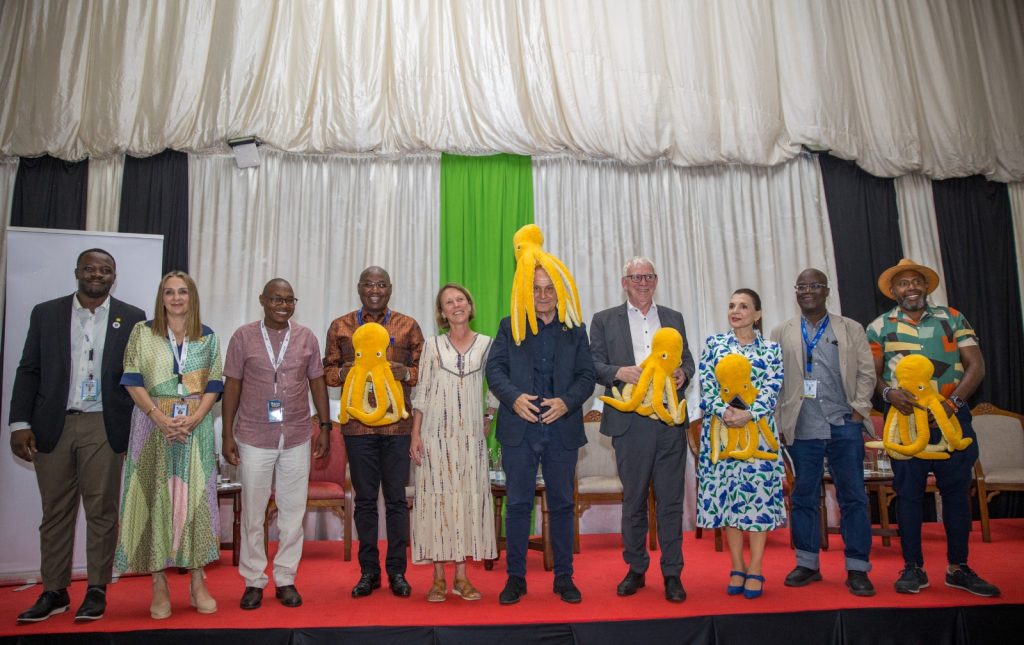
    Kenya has joined the growing global movement calling for a precautionary pause or moratorium on Deep Seabed Mining, becoming the 42nd country to take this position as pressure mounts to safeguard fragile ocean ecosystems.

    The announcement adds momentum to a growing coalition, with 42 countries already supporting a pause or moratorium, urging governments worldwide to protect the deep sea and pause Deep Seabed Mining activities.

    Speaking at the “Navigating the Future of the Deep Sea” session during the 11th Our Oceans Conference, Kenya’s Principal Secretary for Mining, Harry Kimtai, underscored the urgency of acting cautiously in the face of limited scientific understanding.

    “The interest in Deep Seabed Mining is advancing faster than the architecture that guides it,” Kimtai said.

    “That is why Kenya is lending its voice to calls for a precautionary pause on Deep Seabed Mining until there is sufficient science to support evidence-based decisions. We are yet to get there. We support the precautionary pause.”

    Kimtai also called for strengthening knowledge gaps in science and research and urged a shift toward advancing circular economy pathways as a more sustainable alternative to Deep Seabed Mining.

    He further noted that while Kenya has made progress in geospatial mapping, it has not yet ventured into offshore seabed exploration, reinforcing the country’s position that decisions must be grounded in robust scientific evidence.

    Kenya’s announcement strengthens global advocacy efforts aimed at building pressure on governments to act decisively, emphasising that the risks to marine biodiversity and ocean health remain too great to ignore at this stage.

    Speaking during a side event held in Mombasa, WWF-Kenya CEO Jackson Kiplagat hailed the National Government for its bold decision to adopt a precautionary pause on deep seabed mining.

    “The Government has demonstrated leadership by putting science first and strengthening multilateral cooperation through joining the growing coalition of nations committed to ensuring that the protection of the marine environment remains at the heart of all decisions concerning the deep sea,” said Kiplagat.

  • MPs approve supplementary budget to fund exams, NYOTA Programme 

    MPs approve supplementary budget to fund exams, NYOTA Programme 

    The National Assembly has approved the Second Supplementary Estimates for the  Year 2025/2026, unlocking additional funding to key priority sectors including education, youth empowerment, sports development, water infrastructure and security operations.

    The approval follows scrutiny by the Budget and Appropriations Committee chaired by Samuel Atandi, which guided the House through targeted adjustments described as both “prudent” and “focused on urgent national priorities” as the financial year draws to a close on June 30.

    Presenting the Committee’s position, Atandi underscored that the supplementary budget was narrowly scoped to address immediate needs.

    “When we passed the main estimates, there was an uproar that we had not factored in the funds meant to pay those who helped in invigilation of the previous exams. I want to report to this House that this money has been factored into this supplementary budget,” he said.

    He added that the approach reflected improved fiscal discipline.

    “I want to commend the prudent management of finances by the Treasury. In almost every financial year we used to have three or even four supplementary budgets. This financial year, we only have two, and this one is very minimal,” Atandi noted.

    He further noted that the youth and enterprise programmes had also received significant attention under the revised allocations.

    “There are allocations going towards the State Department for Micro, Small and Medium Enterprises Development and the State Department for Youth Affairs and Creative Economy for the NYOTA Project, a programme which seeks to expand economic opportunities for our youth,” he said.

    Under the supplementary budget, the State Department for Basic Education receives an additional Ksh 1.5 billion to cater for examination invigilation fees, aimed at ensuring smooth administration of national examinations and timely compensation of officials involved in the process.

    Sports development also received a substantial boost, with Ksh 4.1 billion allocated under Appropriations-in-Aid for the Sports, Arts and Social Development Fund. Atandi noted that the funding will help complete key facilities ahead of major continental engagements.

    “There are many AFCON training grounds under construction, but we did not have a sufficient budget to complete them in readiness for AFCON. We now have Ksh 4.1 billion which we are going to use to ensure that they are completed,” he said.

    In its Report, Budget Committee also confirmed Ksh 150 million to facilitate non-exclusive free-to-air broadcast rights for the 2026 FIFA World Cup, a move welcomed by Members who said it would ensure wider public access to global sporting events.

    Committee on Regional Integration Chairperson, Irene Mayaka, welcomed the allocation, noting its public value.

    “There have been many cries from Kenyans who have not been able to watch the World Cup because KBC didn’t have the rights. What the Budget Committee and the State Department has done is very important; now Kenyans can be able to follow the games,” she said.

    Further allocations include Ksh 2.3 billion for Mwache Dam, security operations funding, public service programmes, and support for broadcasting and telecommunications infrastructure.

    Robert Pukose, Vice Chair of the Budget Committee, highlighted the development impact of water infrastructure funding.

    “There is Ksh 2.3 billion allocated to Mwache Dam in Kwale County. This is a very important dam for the coastal people for irrigation and provision of water for consumption,” he said.

    In addition, Minority Leader, Hon. Junet Mohamed lauded the consistency in fiscal management.

    “During previous Parliaments we used to have Supplementary I, II, and III; there was even a time we went up to four. That tells you that the people running the Treasury today know their work,” he remarked.

  • Stakeholders call for tough action on illegal fishing

    Stakeholders call for tough action on illegal fishing

    African countries are being urged to move with speed to address illegal fishing, which costs the continent an estimated $11 billion in losses.

    The launch of the Mombasa Declaration, as part of the Our Ocean Conference (OOC) aims to advance fisheries transparency to combat illegal, unreported, and unregulated (IUU) fishing. It serves as a call to action for coastal and flag states, moving from the debate of principles to global action.

    It formalizes the political commitment of more than 10 countries to implement fisheries transparency measures already defined by the Global Charter for Transparency in Fisheries and promoted by the Fisheries Transparency Coalition (FTC), marking a clear transition to government action and coordinated implementation.

    Bringing together ministers, policymakers, key political partners, and small-scale fishers, the Declaration commits to integrating practical and achievable transparency measures into legislation, policies, and enforcement systems. This signing marks the launch of a campaign to rally other nations (some are expected to do so by June 17).

    Coastal communities, artisanal fishers, and marine wildlife economies are bearing the brunt of the consequences of IUU fishing, which threatens livelihoods, food security, and, in the long term, the health of ocean ecosystems. The Mombasa Declaration addresses these challenges

  • Foreign Ministry reiterates One China stance, says Taiwan passports not valid under Kenyan entry rules

    Foreign Ministry reiterates One China stance, says Taiwan passports not valid under Kenyan entry rules

    The Principal Secretary for Foreign Affairs, Dr. Korir Sing’oei, has reaffirmed Kenya’s strict adherence to the One-China policy, stating that the country does not recognise Taiwan as a separate sovereign entity within its diplomatic or border control frameworks.

    His statement follows the denial of entry to scientists from Taiwan who intended to attend the Our Ocean Conference 2026, currently taking place in Mombasa.

    Dr Sing’oei asserted that Kenya’s position is rooted in its established diplomatic alignment with the People’s Republic of China as the sole legitimate government representing all of China.

    In a statement released by the Foreign Affairs Ministry on Wednesday evening, he said, “Any person purporting to hold a Taiwanese passport would ordinarily not be allowed through our borders for lacking proper documentation.”

    The Principal Secretary further indicated that any entry authorisation issued via the Electronic Travel Authorisation (eTA) system would constitute an administrative processing error, not a policy deviation.

    He stated, “If, by dint of eTA, authorisation has been issued, it represents a system error on this subject. In any event, such a passport holder would not be part of a formal state meeting convened by the Kenyan government.”

    The Kenyan government’s longstanding position officially recognises the People’s Republic of China as the sole legitimate government representing all of China, considering Taiwan an inalienable part of Chinese territory. Nairobi has, on numerous occasions, firmly opposed any form of Taiwanese independence and supports efforts towards China’s peaceful reunification.

    The Our Ocean Conference in Kenya is one of many international conventions from which delegates from Taiwan have been barred. Last month, member states of the World Health Organization rejected a proposal to invite Taiwan to its annual assembly in Geneva.

  • China unveils blueprint for fairer global governance

    China unveils blueprint for fairer global governance

    China has released a comprehensive white paper detailing its vision for reforming global governance, positioning Beijing as a key advocate for multilateralism, development cooperation, and increased representation for developing countries in international affairs.

    The document, titled “More Just and Equitable Global Governance: China’s Principles, Proposals and Actions,” was issued by the State Council Information Office on Wednesday, and outlines Beijing’s approach to addressing global challenges through what it describes as a fairer and more inclusive international system.

    In the white paper, China argues that the world is undergoing profound changes, marked by rising geopolitical tensions, economic uncertainty, and new technological challenges. These shifts, it contends, make the reform of existing global governance structures increasingly necessary.

    “China champions the building of a community with a shared future for humanity and takes the lead in practising true multilateralism,” the document states, adding that the country seeks to advance “a more just and equitable global governance system.”

    The paper identifies six core areas where China intends to enhance its contributions to global governance.

    First, Beijing is keen to promote universal and common security through the implementation of the Global Security Initiative and, here, China reaffirms its commitment to peaceful development, support for the United Nations-led international security framework, and the peaceful settlement of disputes.

    The document highlights China’s significant role in global security, noting its status as the second-largest contributor to the UN peacekeeping budget and the largest troop contributor among the permanent members of the UN Security Council. According to the white paper, over 50,000 Chinese peacekeepers have participated in 29 UN peacekeeping missions.

    The paper also points to China’s diplomatic engagement in international conflicts, including proposals on the Ukraine crisis, support for a ceasefire in Gaza, mediation efforts between Saudi Arabia and Iran, and reconciliation talks involving Palestinian factions.

    “Humanity forms an indivisible community of security,” the white paper declares.

    The second area centres on fostering openness, cooperation, and shared development and China reiterates commitment to being a staunch defender of globalisation and free trade, noting that it has become the largest trading partner for over 160 countries and regions and has signed 24 free trade agreements with 31 countries and regions.

    The document highlights progress under the Belt and Road Initiative (BRI), which China says now includes cooperation agreements with more than 150 countries and 30 international organisations. China also emphasises the implementation of the Global Development Initiative, which has garnered support from over 130 countries and international organisations.

    “China cannot develop in isolation from the rest of the world, nor can the world achieve overall prosperity without China,” the paper states.

    The white paper reiterates strong support for the United Nations as the core institution of the international system. It notes that China’s contribution to the UN regular budget has risen from less than one per cent in 2000 to over 20 per cent in 2025, making it the organisation’s second-largest contributor.

    The document also highlights China’s participation in G20 cooperation, its support for the reform of international financial institutions, and its plans to host the 2026 APEC Summit under the theme “Building an Asia-Pacific Community to Prosper Together.”

    “No matter how the world changes, China will always uphold the international system with the United Nations at its core,” the report affirms.

    Support for the Global South

    The fourth area focuses on strengthening cooperation among developing countries and increasing the influence of the Global South in global decision-making. The white paper argues that existing governance institutions do not adequately reflect the interests of developing countries and calls for reforms to the United Nations Security Council, the International Monetary Fund, and the World Bank.

    China says it will continue supporting mechanisms such as BRICS and the Shanghai Cooperation Organisation while advocating for increased representation for Africa and other developing regions.

    “China will always be a member of the Global South, and in the Global South its roots will remain,” the document asserts.

    The fifth pillar emphasises cultural exchanges and mutual learning among civilisations. China says it seeks to promote dialogue, respect for diversity, and cooperation among cultures through initiatives such as the Global Civilisation Initiative.

    The paper highlights China’s role in securing a United Nations resolution designating June 10 as the International Day for Dialogue Among Civilisations and points to expanded educational, cultural, and youth exchange programmes with countries worldwide.

    “China upholds a vision of civilisation characterised by equality, mutual learning, dialogue and inclusiveness,” the document states.

    The final area focuses on China’s contribution to international public goods, including climate governance, artificial intelligence, public health, biodiversity protection, and digital governance.

    The white paper highlights China’s carbon neutrality goal by 2060, its support for the Paris Climate Agreement, and its efforts to assist developing countries in responding to climate change.

    It also outlines proposals for global AI governance, support for World Health Organisation reforms, biodiversity conservation initiatives, and international cooperation on cyberspace governance.

    “China has demonstrated the sense of responsibility of a major country that integrates knowledge and action,” the document says.

    The white paper ultimately conveys China’s ambition to play a larger role in shaping a global governance system that reflects the interests of all countries, rather than a select few. It argues that international institutions must evolve to effectively address emerging global challenges while providing a greater voice to developing nations.