Author: KBC Digital

  • Ruto courts Belgian investors with push for local manufacturing in Kenya

    Ruto courts Belgian investors with push for local manufacturing in Kenya

    President William Ruto has called on European investors to invest in value addition and manufacturing in Africa rather than exporting raw materials for processing abroad.

    The President urged Belgian investors to establish industries in Kenya, process minerals locally using clean energy, and help build resilient supply chains that serve Europe and the world.

    He noted that Europe’s Carbon Border Adjustment Mechanism is reshaping global manufacturing and creating new opportunities for countries with access to clean energy.

    President Ruto explained that products manufactured in Kenya using clean geothermal energy enter Europe with a lower carbon cost while also benefiting from duty-free access under the EU-Kenya Economic Partnership Agreement (EPA).

    “I say to Belgian manufacturers: Do not buy Africa’s raw materials to add value elsewhere. Come and build with us. Process Kenya’s minerals in Kenya and Africa, on clean power, and help Europe secure the supply chains it needs. Make it in Kenya. Make it in Africa. Make it clean. Sell it in Europe and to the world,” he said.

    The President spoke during the Kenya-Belgium Business Roundtable in Brussels, Belgium, on Monday when he presided over the launch of the Kenya-Benelux Chamber of Commerce.

    The Chamber will serve as a permanent bridge connecting Kenyan enterprises with the markets, investors and innovators of Belgium, the Netherlands and Luxembourg.

    He challenged members of the Chamber and investors from the Benelux region to double the number of companies operating in Kenya and help increase bilateral trade between Kenya and Belgium from about $335 million in 2024 to $1 billion by 2030.

    “I challenge everyone in this room, and every firm that will join the Chamber, to two goals: Double the number of Benelux companies operating in Kenya and help deliver that $1 billion in trade by 2030,” he said.

    To achieve this target, the President identified four priority areas for cooperation: Agribusiness and agro-processing; ports, logistics and cold-chain infrastructure; technology and the digital economy; and clean energy and the circular economy.

    In agribusiness and agro-processing, President Ruto noted that Kenya grows close to 40 per cent of Europe’s cut flowers, is the world’s largest exporter of black tea and a leading exporter of avocados.

    He pointed out that the next phase of cooperation should focus on value addition in avocados, macadamia, horticulture and processed foods.

    On ports, logistics and cold-chain infrastructure, he proposed a sister-port partnership between the Port of Antwerp-Bruges and the Kenya Ports Authority to strengthen reefer handling and pre-cooling systems, reduce post-harvest losses and enhance competitiveness.

    In technology and the digital economy, the President said Kenya and Belgium can leverage world-leading semi-conductor ecosystem and Kenya’s young, digitally skilled workforce to establish a Konza-Leuven Silicon Bridge for chip-design skills. He also welcomed partnerships in cloud computing, artificial intelligence and cybersecurity.

    On clean energy and the circular economy, President Ruto highlighted Kenya’s renewable energy advantage, noting that more than 90 per cent of electricity comes from renewable sources, with geothermal power accounting for nearly 40 per cent of generation.

    The President described Kenya as the gateway to Africa, saying investors who set base in the country gain access to a vast continental market through the African Continental Free Trade Area.

    He said an investment in Kenya reaches 1.4 billion people in a market worth $3.4 trillion.

    The President added that the combined preferential market access through the East African Community (EAC), COMESA, the European Union and the United Kingdom exceeds $70 trillion.

    President Ruto further noted that Kenya is the only EAC Member State to have ratified the EU-Kenya EPA, which grants every Kenyan product permanent duty-free and quota-free access to the European Union market.

    “That is certainty an investor can build a factory on,” he said, adding that Belgium, home to the European institutions and the Port of Antwerp-Bruges, provides a strategic gateway to the European market.

    Notably, since the signing of the EPA at State House in 2023, our exports to the EU have grown by 20%.

    The President said Kenya is ready for deeper economic cooperation with Belgium, noting that the country is East Africa’s largest economy and valued at $147 billion.

    He said foreign direct investment surpassed $3 billion for the first time in 2025, while the Nairobi Securities Exchange delivered one of Africa’s strongest returns and remains fully open to foreign investors, with unrestricted repatriation of capital and profits.

    “We have structured roughly $40 billion of infrastructure projects for public-private participation. A One-Stop Investment Centre is operational, permits will be fully digitised by year-end, exported services are zero-rated for VAT, and restrictive local-equity requirements are gone,” he said.

    The President explained that Kenya’s youthful population of 55 million people, with a median age of about 20 years, 85 per cent financial inclusion, annual mobile money flows exceeding $300 billion and fibre-optic connectivity in all parts of the country make Kenya an attractive destination for global investors.

    At the same time, the President held talks with European Commission Executive Vice-President Henna Virkkunen.

    During the meeting, he welcomed €102 million (KSh 15.3 billion) in new investments under the EU-Kenya Digital Partnership to accelerate digital transformation, expand connectivity and create opportunities for our youth and businesses.

    “We also welcome €37 million (KSh5.55 billion) in EU support for the Blue Raman submarine cable’s Africa extension connecting Djibouti, Somalia, Kenya and Tanzania, which will strengthen connectivity, lower bandwidth costs and reinforce Kenya’s position as a leading regional digital hub,” he added.

    The two leaders reviewed the implementation of the EU-Kenya EPA under which Kenya’s exports to the European Union have grown by more than 20 per cent since its entry into force, creating jobs and expanding opportunities for our farmers and manufacturers.

    They also welcomed progress under the EU-Kenya Digital Partnership, particularly on the Digital Dialogue and the Data Adequacy process, which will strengthen digital trade, attract investment and enhance Kenya’s position as a leading digital hub and the world’s 11th-ranked Business Process Outsourcing (BPO) destination.

    “Our partnership with the European Union continues to unlock investment, drive innovation and advance shared prosperity,” he said.

    On their part, the Belgian business community committed to scaling up their investments to meet the $1 billion target.

    They pledged to explore the vast opportunities available in Kenya.

    Mr Steven Pope of SIEG Trade Solutions told the forum that Kenya offers one of the best investment opportunities for them.

    “For those investors out there looking for opportunities, this is a really golden opportunity,” he said.

    Speaking on behalf of his company, he said they are keen on exploring the value addition of tea, which he noted will create over 50,000 jobs.

    “We are looking at between $180 million and $250 million in terms of additional revenue by 2031,” he said.

    Mr Christophe Debrabandere of the Renasci company said they are gearing up to invest a few tens of millions of dollars in Kenya.

    Mr Thoralf Gutierrez of Sirona Technologies, a carbon capture and climate technology company, explained that their company needs renewable energy and carbon storage potential, saying Kenya is best placed for their needs.

    “We build our machines here (Belgium), but we go to the best places to run our machines,” he said.

    Mr Joris Totté of Belgian Investment Company for Developing Countries (BIO) said they have invested in Kenya’s agro-value chain, technology, renewable energy and clean cooking, among others.

    “Let us try to double investments in Kenya, Kenyan businesses and in joint ventures between Belgian and Kenyan companies,” he said.

  • Menstrual stigma hindering girls’ education, stakeholders warn

    Menstrual stigma hindering girls’ education, stakeholders warn

    Education stakeholders have called for an end to period stigma, saying that for many schoolgirls, menstruation has become more than a monthly challenge and remains a barrier to education, confidence and opportunity.

    A delegation from the Mt Kenya University (MKU) College of Health Sciences made the call during a visit to Kaharo Girls High School in Murang’a County to mark this year’s World Menstrual Health Day. The team emphasized that menstrual hygiene is a fundamental right and not a luxury.

    Speaking during the event, MKU medical student Morris Kahagi said menstruation is a natural biological process that should be normalized and celebrated rather than stigmatized.

    “We talked menstrual health, menstrual hygiene, periods, period shame all the monthly conversations that are often whispered about. We broke them down without fear or shame,” he said.

    Kahagi noted that empowering girls with knowledge about menstrual health can have a ripple effect within communities.

    “I wanted the girls to see a future where they understand their bodies, embrace their periods with confidence, and protect both their menstrual health and mental well-being. When you educate one girl, she goes on to educate her sister, her friend, and eventually her entire community,” he added.

    During the session, speakers stressed the need to ensure that girls and women live with dignity and are free from shame associated with menstruation. They called for greater investment in menstrual health through improved access to sanitary products, public awareness campaigns and community engagement initiatives.

    “We should have a society where menstruation is not a barrier to education or personal growth. Our girls deserve to stay in school and pursue their dreams without interruption,” said MKU Director of Alumni Relations Virginiah Kinankau.

    As part of the outreach programme, more than 700 students received two packets of sanitary towels each. Kaharo Girls Principal Veronica Kihonge welcomed the initiative, describing it as a significant boost to the students’ confidence and well-being.

    “The contribution will go a long way in supporting menstrual hygiene management and ensuring that the girls can continue their education with confidence and dignity,” said the principal.

    The event formed part of MKU’s broader efforts to promote health education, mentorship and community partnerships aimed at empowering young people and improving access to essential health services.


  • Pictures: Fans, celebrities attend ANZA MMA Pro Night

    Pictures: Fans, celebrities attend ANZA MMA Pro Night

    Kenya’s ANZA MMA, East Africa’s premier Mixed Martial Arts, held its second professional event, ANZA MMA Pro Night 002, at Nairobi’s Broadwalk Mall, delivering another unforgettable evening of world-class MMA action.

    More than 1,000 fans packed the sold-out venue to witness a remarkable night that produced nine consecutive finishes.

    The event featured elite fighters from Kenya, Uganda, Tanzania, Zambia, South Sudan and the Democratic Republic of Congo, showcasing the growing depth of talent across the region.

    Musical Performance by Big Yassa
    Fight Fans At ANZA MMA Pro Nights
    Kenyan Featherweight Brian Munyi In Action
    George ‘The Maverick’ Itumo (Kenya) Winner Bantamweight Bout
    Heavyweight Bout Winner Kevin Odongo
    Kenchez Muya H’art The Band Member In Attendance
    Hustle Sasa Ticketing Team In Action
  • Eric Omondi released on 100K bond

    Eric Omondi released on 100K bond

    Former comedian turned activist Eric Omondi has been released on bond following his arrest on Friday at the Jomo Kenyatta International Airport over his actions during the fuel protests.

    Omondi was freed on a personal bond of Ksh. 100,000 after spending the weekend in jail.

    The charge read out in court said Omondi offloaded 180 yellow jerrycans in the CBD adding that his actions “obstructed the free flow of traffic.”

    Appearing before Senior Principal Magistrate Geoffrey Onsarigo, Omondi denied the allegations and sought release on bond, arguing that he was not a flight risk.

    His legal team, led by advocates Danstan Omari, Martina Swiga and Babu Owino, challenged the circumstances surrounding his arrest and detention.

    Omari told the court that the jerricans were intended for low-income Nairobi residents who rely on such containers to store water due to the lack of permanent storage facilities in their homes.

    Additionally, Mr Swiga argued that Omondi’s charitable activities through his “Sisi Kwa Sisi” initiative should not be criminalised, maintaining that the distribution of the containers was aimed at assisting vulnerable families.

    Embakasi East Member of Parliament, who also visited Mr Omondi in jail on Friday, criticised the manner of the activist’s arrest, telling the court that the activist was apprehended while preparing to travel to Kisumu for an event where he was scheduled to serve as master of ceremonies. He said the arrest resulted in financial losses and disrupted Omondi’s work.

    The MP further sought the release of electronic gadgets seized during the arrest, arguing that they are essential tools for Omondi’s livelihood. He also accused police of violating constitutional provisions on the right to bail by detaining the activist for 72 hours.

    The prosecution, while not opposed to Omndi’s release, said the gadgets seized were evidence in the ongoing investigation.

    The matter will be mentioned again on June 22.

  • 300 trees planted in an effort to restore Kenya’s ecological systems

    300 trees planted in an effort to restore Kenya’s ecological systems

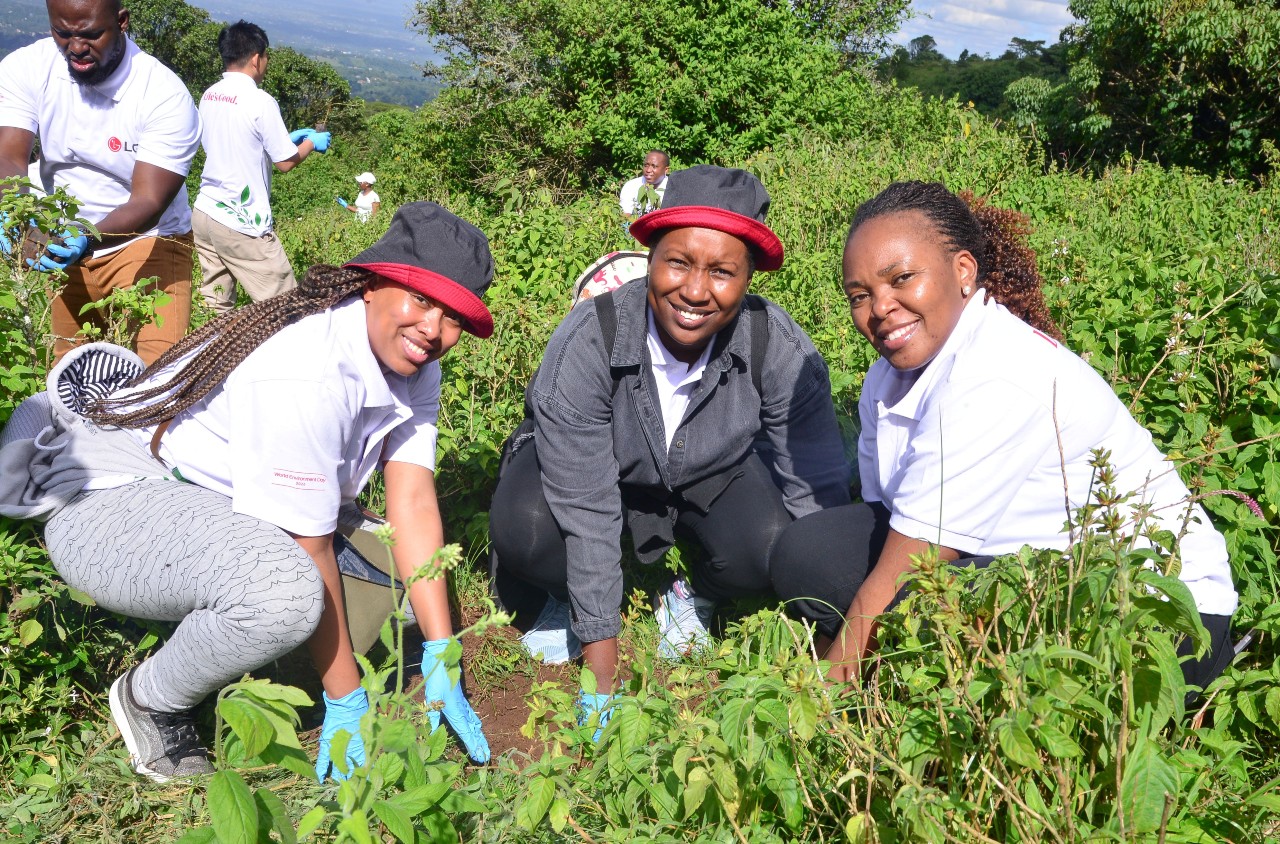
    300 indigenous trees were planted at the Ngong Hills Forest, reinforcing ongoing efforts to restore one of the country’s most important water catchment ecosystems.

    The campaign was led by LG Electronics (LG) East Africa, in partnership with the Ngong Hills Metro Community Forest Association (CFA) and Tree Niches.

    The exercise comes at a time when Kenya is grappling with the effects of environmental degradation, including declining forest cover, biodiversity loss, prolonged droughts, flooding and increasing pressure on critical water catchment areas.

    While the country has made significant progress in increasing tree cover over recent years, many indigenous forests continue to face threats from illegal logging, encroachment, charcoal production, overgrazing and unsustainable land use practices.

    Ngong Hills Forest, a 7,000-acre ecosystem located approximately 25 kilometres southwest of Nairobi, is among the country’s critical natural assets.

    In addition to its role as a popular recreation destination, the forest serves as an important water catchment area supporting communities across Nairobi, Kajiado, Kiambu and neighbouring counties. It is also home to diverse plant and animal species whose survival depends on the continued protection of the ecosystem.

    The latest tree planting exercise builds on a restoration programme launched by LG and its partners in 2025. During last year’s initiative, more than 300 indigenous seedlings were planted across degraded sections of the forest.

    Follow-up monitoring revealed that 252 of those trees survived, representing an impressive 84 per cent survival rate and highlighting the effectiveness of the ongoing stewardship and maintenance efforts undertaken by community members and conservation partners.

    In addition to the tree planting exercise, LG Electronics donated four benches that will be installed at strategic locations throughout the forest. The benches are intended to enhance the experience of visitors and hikers while fostering greater appreciation of the importance of conserving Kenya’s natural landscapes.

    Speaking during the exercise, LG Electronics East Africa President Donghun Lee said environmental conservation requires sustained commitment rather than one-off interventions.

    “Last year, together with our partners, we planted more than 300 indigenous trees in this forest. We are pleased that 252 of those seedlings survived, achieving an 84 per cent survival rate. That success demonstrates that meaningful restoration is possible when tree planting is followed by proper care and monitoring. It has also motivated us to return and plant another 300 trees as part of our long-term commitment to environmental sustainability,” said Lee.

    According to conservation experts, restoring degraded forests has become increasingly important as Kenya experiences more frequent climate-related shocks.

    Healthy forests help regulate these shocks by moderating water flows, reducing soil erosion, sequestering carbon, helping to stabilise local temperatures, and providing habitats for wildlife.

    Dr Solomon Kipkoech, the Co-founder and Director of Tree Niches, noted that restoration efforts must focus on rebuilding healthy ecosystems.

    “Kenya has lost significant portions of its natural ecosystems over the years due to deforestation and land degradation. Every successful restoration project helps reverse that trend. The impact of such initiatives go beyond the trees planted to demonstrate the value of sustained partnerships and community-led conservation.”

  • Kenya Power to close all payment counters in its banking halls

    Kenya Power to close all payment counters in its banking halls

    Kenya Power has announced plans to progressively close all remaining payment counters in its banking halls by June 2027 following a sharp rise in the use of digital platforms, which now account for more than five million customer interactions every month.

    The transition to fully digital payments will be carried out in three phases, beginning with the closure of the Nyeri, Thika and Kisii offices by June 2026, followed by Nakuru, Kisumu Electricity House and Eldoret by 31st December 2026, and concluding with the Nairobi Electricity House, Stima Plaza and Mombasa Electricity House by 30th June 2027.

    Staff in these offices will be redirected to strengthen customer service and customer education as part of the Company’s Twende Digital campaign. Within this period, the Company shall be undertaking a parallel internal customer experience transformation training programme for over 1,500 front-facing staff across the country.

    Acting Managing Director and CEO, Dr. Jeremiah Kiplagat said the transition reflects Kenya Power’s ambition to become a more accessible, responsive and innovative utility.

    “Since the introduction of these digital solutions, we have witnessed a remarkable 70% reduction in customer traffic within our banking halls. This is a clear indication that our customers are ready and willing to transition to digital service channels.” he said at the flag off of the Customer Experience Roadshows at Stima Plaza, Nairobi.

    “Over the past year, Kenya Power has significantly accelerated its digital transformation journey through the expansion of customer self-service platforms (USSD Code *977# and MyPower App) and digital engagement channels, to offer our customers faster and simplified services. Through these platforms, customers can now buy tokens, pay bills, access digital receipts, submit self-readings, report outages and interact with Kenya Power directly from their phones without visiting our offices or banking halls.” he added.

    Kenya Power is advancing its digital solutions offerings, underscoring the readiness of customers to embrace digital channels. The company is deploying smart meters to improve monitoring, billing efficiency and service accuracy, while leveraging technologies such as Optical Character Recognition (OCR) and self-reading platforms to simplify meter reading.

    The Twende Digital campaign, launched alongside the Customer Experience Roadshows, will take Kenya Power teams to Nairobi, Mombasa, Kisumu, Eldoret, Central Rift, North Eastern and Western regions over the coming weeks.

    The roadshows will focus on educating customers about digital services, fraud prevention, electrical safety and e-cooking. The campaign is designed to deepen engagement with its more than 10 million customers and to demonstrate its commitment to becoming a customer centric organization.

  • ‘Michael’ becomes Lionsgate’s highest-grossing film with $898M

    ‘Michael’ becomes Lionsgate’s highest-grossing film with $898M

    The Michael Jackson biopic Michael has become the highest-grossing film in Lionsgate’s history, earning nearly $900 million worldwide and surpassing some of the studio’s most successful franchises, according to American entertainment industry publication Deadline.

    Directed by Antoine Fuqua and starring Jaafar Jackson as the King of Pop, the film has grossed approximately $898 million globally after seven weeks in cinemas.

    Of that total, around $354 million has come from North America, while international markets have contributed more than $543 million.

    The achievement sees Michael overtake two of Lionsgate’s biggest blockbusters: The Hunger Games: Catching Fire, which earned $865 million worldwide, and The Twilight Saga: Breaking Dawn – Part 2, which made $868.5 million globally.

    The film has performed particularly strongly overseas.

    In the United Kingdom and Ireland, it has earned more than $68 million, while France has contributed $54.5 million and Germany $34.3 million.

    Brazil has generated $32.2 million, making Michael Universal Pictures’ highest-grossing film ever in that market.

    Australia has added $30.7 million, while Mexico, Spain, Italy and the Netherlands have also delivered strong results.

    Russia has emerged as another significant market, with the film earning close to $10 million there through local distributor Volga.

    The biopic has already surpassed the box office totals of Bohemian Rhapsody in several major territories, including the United States, the United Kingdom, France, Germany, Mexico, Brazil and Australia.

    It also overtook Bohemian Rhapsody as the highest-grossing musical biopic in North America just 16 days after release.

    Industry observers now expect Michael to become the highest-grossing musical biopic of all time.

    To do so, it must pass the $911 million global total earned by Bohemian Rhapsody, the Oscar-winning film about Queen frontman Freddie Mercury.

    Importantly, Michael has not yet opened in Japan, one of Michael Jackson’s strongest international markets. The country is scheduled to receive the film on June 12. Japan was the second-biggest overseas market for Jackson’s 2009 concert documentary This Is It, contributing roughly $57 million.

    Several other Asian territories have also yet to make a significant contribution compared to the film’s major Western markets, meaning additional growth remains possible.

    Figures from Deadline
  • Ayuk: Russia-Africa energy cooperation expands across nuclear, gas and renewables

    Ayuk: Russia-Africa energy cooperation expands across nuclear, gas and renewables

    NJ Ayuk, Executive Chairman of the African Energy Chamber, has said that cooperation between Russia and African countries is expanding across a wide range of energy sectors, including nuclear power, natural gas and renewable energy, with a strong focus on addressing energy poverty and supporting skills development.

    He made the statement in an exclusive interview at the TV BRICS studio in the Roscongress International Cooperation Area at the St. Petersburg International Economic Forum (SPIEF).

    According to Ayuk, collaboration with Russian companies and institutions is already underway in several strategic areas, including engagement with Rosatom on the peaceful use of nuclear energy. NJ Ayuk stressed that energy cooperation is closely linked to broader development goals, including training, capacity-building and empowering local populations across Africa.

    The African Energy Chamber Executive Chairman also pointed to growing opportunities in gas development, renewable energy projects and power plant construction, emphasising that Russian technological expertise could play an important role in supporting Africa’s energy transition.

    “Russia has a deep reservoir of technological expertise and knowledge, and we are working with Russian companies to help bring these capabilities to Africa,” he said.

    Turning to the broader energy transition, Ayuk underlined that Africa’s future energy mix will combine traditional and new energy sources, including gas, oil, solar, wind and emerging technologies such as hydrogen.

    “New energy sources will certainly become an important part of our future energy systems. At the same time, we must continue using existing resources such as gas, oil and coal to power Africa while rapidly embracing renewable energy sources,” he stated.

    He also highlighted the importance of learning from other BRICS partners, noting that India has advanced in clean cooking solutions and China has become a global leader in solar power, energy storage and battery technologies.

    Ayuk stressed that BRICS cooperation as a whole offers significant opportunities for economic growth, trade expansion and infrastructure development.

    “Together, BRICS represents an enormous economic and demographic force. This creates tremendous opportunities for trade among BRICS nations, for developing improved payment systems and for cooperation on renewable energy technologies. Through this cooperation, Africa can become economically stronger and more sustainable,” highlighted NJ Ayuk.

    According to Ayuk, enhanced cooperation within the group can help transform demographic scale into economic power while accelerating access to electricity and sustainable energy solutions across Africa.

    Courtesy/TV BRICS

  • Experts from BRICS countries identify new drivers of business partnership within group

    Experts from BRICS countries identify new drivers of business partnership within group

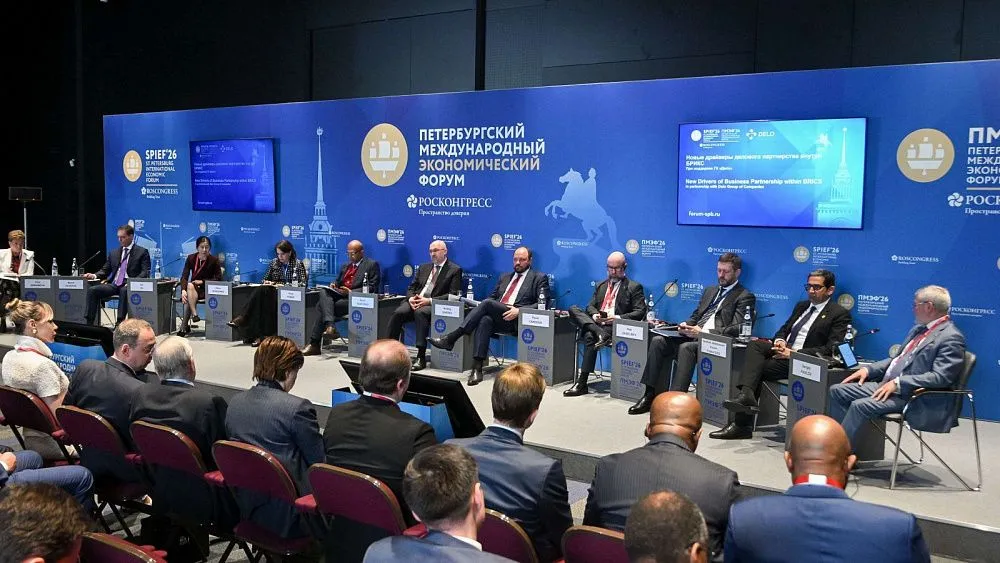
    BRICS intra-group trade exceeded the symbolic threshold of US$1 trillion in 2025, according to Irina Abramova, Director of the Institute for African Studies of the Russian Academy of Sciences. She reminded participants of the 29th St. Petersburg International Economic Forum (SPIEF) of this milestone during a BRICS Business Council session titled “New Drivers of Business Partnership within BRICS”, held with experts from India, Brazil, China, and South Africa.

    International experts agreed that the business community plays a central role within the group. To support this, the National Committee for BRICS Business Cooperation was established in February this year by order of Russian President Vladimir Putin. Denis Agafonov, Head of the Presidential Expert Directorate of the Russian Federation, suggested that the initiative is likely to be in high demand and further developed.

    “Business is, by definition, more decentralised, more flexible, and more focused on achieving practical results. Therefore, concepts such as business diplomacy are gaining additional importance and value under current circumstances. One of the tasks of the National Committee is to give this process a more coordinated character, including supporting major business associations operating within the BRICS space in terms of positioning, prioritising areas of cooperation, and building communication,” Agafonov said.

    This year, under India’s BRICS Presidency, particular emphasis is being placed on sustainable development and innovation. Vinay Kumar, Ambassador Extraordinary and Plenipotentiary of India to the Russian Federation, highlighted the importance of ensuring progress for future generations.

    “People are at the centre of BRICS activities during India’s presidency and during our meeting today. […] India’s objective during its presidency is to build partnerships and emphasise once again that everything we do is for people. New connections will contribute to the development of all of us. The BRICS Summit, which will take place in September this year, will be an important event for the entire grouping. The 10 member states and partners represent 50 per cent of the world’s population, 50 per cent of global GDP and 35 per cent of global trade. These are not just statistical figures. We are billions of people responsible for the decisions we make. All member countries we work with share a common vision and common goals,” Kumar said.

    Following India, China is set to assume the BRICS Presidency in 2027. According to Xu Liu, President of a subsidiary financial institution of a major Chinese bank, financial cooperation among BRICS countries faces a number of challenges, which China is ready to help address.

    “China proposes, first, to deepen the development of domestic markets and production chains. Second, to adhere to pragmatism and expand cooperation in infrastructure projects and pilot programmes for settlements in national currencies. We should support the New Development Bank in playing a more active role in strengthening settlements, financing and investment in the national currencies of member states. 2027 will be the Year of China in BRICS. […] We will focus on cooperation in key areas such as digitalisation, intelligent development, green transformation and sustainable development in order to achieve practical results,” Xu Liu stressed.

    The importance of creating a unified payment system was also highlighted by Elias Monage, representative of South Africa and member of the BRICS Business Council.

    “Payment systems are a truly critical issue. Trade depends on effective payment mechanisms. Without reliable payment systems, trade cannot function properly. Therefore, finding practical solutions in this area remains one of our priorities,” Monage said.

    Experts noted the effectiveness of bilateral cooperation within BRICS, stressing that such experience could be expanded to the entire grouping. In this regard, cooperation between Russia and Brazil in agriculture was highlighted as a key example. Pavel Cardoso, Chair of the Brazil–Russia Business Council and President of the Brazilian Coffee Industry Association, noted that BRICS has become an effective platform for economic and business cooperation.

    “The main role of our business councils is to bring companies closer together and identify concrete opportunities. Companies are the ones that can translate all the opportunities provided by our governments into practical outcomes. […] Russian fertilisers are of strategic importance for Brazilian agriculture. Over the past 25 years, we have increased coffee production fivefold – largely thanks to our producers but this would not have been possible without Russian fertilisers, which have made a significant contribution to coffee productivity. This contributes to food security. Russia and Brazil are links in a single chain of global security. […] If we combine Brazil’s agricultural potential, Russia’s industrial capacity and the economic potential of BRICS, we will build a strong future and food security for billions of people on this planet” Pavel Cardoso

    Coordinating Minister for Infrastructure and Regional Development of Indonesia Agus Harimurti Yudhoyono, in an exclusive interview at the TV BRICS studio in the Roscongress International Cooperation Area at the St. Petersburg International Economic Forum (SPIEF), stated that BRICS opens new opportunities for Indonesia’s economic growth, regional initiatives and investment attraction.

    “By joining BRICS and through dialogues such as this one at the St. Petersburg International Economic Forum, we can present ideas from Indonesia and also represent ASEAN and Southeast Asian nations, which are a major market. We can strengthen communication and open opportunities for investment,” Yudhoyono said.

    He also emphasised the importance of strengthening ties between governments, business communities and society to facilitate knowledge and technology exchange.

    “I am confident that if we improve and strengthen partnerships not only at the government-to-government level but also through business-to-business and people-to-people connections, through student exchanges and scholarship programmes, there will be greater knowledge transfer. In the end, through the right mechanisms, we can ensure fair technology transfer,” the Minister stressed.

    Experts also highlighted the value of dialogue within the group, which is further advanced by the St. Petersburg International Economic Forum. TV BRICS serves as an information partner of the 29th Forum.

    Courtesy/TV BRICS

  • UNEP event in Beijing spotlights China’s expanding role in green economy

    UNEP event in Beijing spotlights China’s expanding role in green economy

    China’s role in global climate action and environmental protection was highlighted at a United Nations Environment Programme (UNEP) event in Beijing, leading to this year’s World Environment Day celebrations. Officials emphasized the country’s expanding green economy and growing public participation in climate initiatives.

    The 2026 World Environment Day forum, hosted by the UNEP China Office at the UN Embassy Complex in Beijing, convened representatives from UN agencies, Chinese government institutions, the private sector, foundations, and youth organizations. The forum aimed to review climate progress and strengthen environmental cooperation.

    In a video message delivered during the event, United Nations Secretary-General Antonio Guterres warned that the past eleven years had been the hottest on record, with climate change driving worsening environmental and humanitarian crises globally.

    “Every fraction of a degree of warming matters,” Guterres stated, urging countries to accelerate reductions in greenhouse gas emissions to limit the impact of global warming.

    Wang Qian, head of the UNEP China Office, acknowledged that global climate challenges continue to intensify but noted the rapid expansion of practical solutions and public awareness campaigns.

    She highlighted partnerships with Beijing Capital International Airport, the Beijing Subway, Sina Weibo, and China’s Ministry of Ecology and Environment, all aimed at promoting environmental awareness and encouraging public climate action.

    Environmental experts at the forum also pointed to the growing contribution of green industries to China’s economy.

    Pan Xiao, a senior specialist with the China Council for International Cooperation on Environment and Development Secretariat, reported that green industries now contribute approximately 24 per cent of China’s nominal economic growth. They accounted for at least one percentage point of the country’s five per cent GDP growth over the past year.

    According to Pan, China’s green transition has entered a deeper stage of transformation, moving away from the traditional energy-intensive development model.

    At the international level, officials noted that China continues to share its experience in low-carbon development and green economic transformation through platforms such as the UN Climate Change Conferences.

    Yan Shidong, Director General at the Centre for Environmental Education and Communications under China’s Ministry of Ecology and Environment, stated that China has consistently used international climate forums to showcase its environmental policies and encourage broader public participation in climate action.

    Following World Environment Day commemorations, cities across China also hosted environmental awareness activities promoting recycling, waste management, and sustainable living practices, particularly among schoolchildren and young people.