Author: Jared Ombui

  • Ugandan President Museveni to be sworn on 12th May

    Ugandan President Museveni to be sworn on 12th May

    President Yoweri Museveni will take the oath of office on 12th May 2026 at Kololo Ceremonial Grounds in the Ugandan capital, the government has confirmed.

    The Uganda Media Centre, under the Ministry of ICT and National Guidance, announced Wednesday that the inauguration will be held under the theme “Protecting the Gains, Making a Qualitative Leap into High Middle-Income Status,” a phrase that ties the ceremony to the government’s long-stated ambition of pulling Uganda into the upper brackets of the World Bank’s income classification.

    Museveni, 82, has led Uganda since seizing power through an armed rebellion in January 1986.

    He won the January 2026 general election with 71.65 per cent of the vote, according to official results read out by Electoral Commission chairperson Justice Simon Byabakama.

    His closest rival, Robert Kyagulanyi Ssentamu, the musician and opposition leader better known as Bobi Wine had 24.72 per cent.

    It was the first time in nearly three decades that Museveni crossed the 70 per cent mark, a threshold he had not reached since his 1996 re-election.

    Swearing in preparations are being coordinated by a National Organising Committee chaired by Hajji Yunus Kakande, the Permanent Secretary in the Office of the President.

  • One health must move from talk to action

    One health must move from talk to action

    What is being discussed in Lyon this week is not distant from Kenya, it is directly tied to decisions that will soon be tested at home. The One Health summit feeds into the Africa Forward Summit in Nairobi, where global commitments are expected to meet local realities. This raises an important question: will Kenya turn these conversations into action, or will they remain part of a growing list of well articulated intentions.

    Kenya does not have the luxury of treating One Health as a concept. It is already a lived reality. Human health, animal health and environmental conditions are deeply interconnected, particularly in pastoral and rural communities. Livestock sustain millions of livelihoods, while climate variability continues to reshape ecosystems and disease patterns. In such a setting, health risks rarely exist in isolation.

    Outbreaks such as Rift Valley Fever, Anthrax and Brucellosis make this clear. They move between animals and people, disrupt trade and place pressure on public health systems. Their impact is felt not only in clinics, but in households and markets. Managing these threats requires coordination across sectors that have traditionally worked independently, public health, veterinary services and environmental management.

    This is the gap that the One Health approach seeks to address. It offers a shift towards prevention, integration and early detection. It aligns with Kenya’s broader efforts to strengthen preparedness through the National Action Plan for Health Security (NAPHS II). But alignment on paper does not automatically translate to results. The challenge, as always, is implementation.

    Kenya has made a practice in defining its priorities. The framework exists, and the direction is clear. What remains is ensuring that these priorities are backed by adequate financing, institutional coordination and technical capacity. Without this, One Health risks becoming another well accepted idea that struggles to take root in practice.

    Managing climate related health risks and preventing zoonotic diseases requires sustainable domestic financing alongside proactive global partnerships. The commitments negotiated at the One Health Summit in France are vital as Universal Health Coverage advances. The global frameworks discussed in Lyon directly impact how institutions such as the Social Health Authority can preemptively allocate resources and build resilient safety nets, shifting the focus from crisis response to long-term prevention.

    This is why the discussions in Lyon matter. They are shaping how resources for One Health will be mobilized globally. Engagements with institutions such as the World Bank and the Agence Francaise de Development will influence how financing frameworks are structured and which priorities receive support. For Kenya, the task is to ensure that its national agenda is not only represented but positioned for investment.

    At the same time, Kenya’s growing role as a regional health hub strengthens its case. Nairobi hosts critical institutions, including the Africa CDC Eastern Africa Regional Coordinating Centre and the WHO Regional Emergency Hub. These platforms provide both infrastructure and influence, placing Kenya at the centre of regional surveillance and response efforts. They also offer a pathway for implementing One Health approaches at scale.

    Capacity development will be equally important. Effective One Health systems depend on skilled personnel who can work across sectors, detecting outbreaks early, communicating risks clearly and coordinating responses efficiently. Partnerships with institutions such as the WHO Academy offer the opportunity to strengthen these capabilities, but they must be matched with domestic investment and commitment.

    We cannot operationalize the One Health approach without recognizing the backbone of the healthcare system. The integrated surveillance strategies championed in France rely entirely on strengthening Human Resources for Health. The real test lies in ensuring global policies translate into investments that equip county level infrastructure and community health promoters to detect and manage emerging threats at the grassroots level.

    Ultimately, the relevance of the Lyon One Summit lies in what happens next. It highlights the importance of prevention, coordination and sustained investment. But these principles will only matter if they are translated into functioning systems that deliver results for better health outcomes

    As attention shifts to Nairobi, expectations will naturally rise. The Africa Forward Summit will not just be a continuation of global dialogue; it will be a moment to demonstrate whether commitments can be localized and implemented effectively.

    The One Health Summit in Lyon sets the critical policy groundwork that will be directly actionable when global leaders convene in Nairobi for the Africa Forward Summit. There is a clear opportunity to advance a unified, self sustaining health security system and translate global prevention strategies into concrete action.

    Kenya stands at an important point. It has the frameworks, the partnerships and the institutional presence to lead in the One Health space, what is needed now is execution.

    Because in the end, the value of One Health will not be measured by how well it is discussed, but by how effectively it protects lives, livelihoods and the systems that sustain them.

    Mary Muthoni is Kenya’s Principal Secretary for State Department for Public Health and Professional Standards

  • Digital skills alone will not build Kenya’s future, thinking will

    Digital skills alone will not build Kenya’s future, thinking will

    A new economy is taking shape in Kenya. It is no longer built on farms and factories alone, but on fibre optics, algorithms, and artificial intelligence.

    In just over a decade, jobs that did not exist have become viable career paths for thousands of young Kenyans. Today, we have social media managers, digital marketers, AI trainers, and prompt engineers.

    The digital economy is projected to contribute nearly 10 per cent of our GDP this year, with over 300,000 new jobs expected by 2028. Smartphone penetration has surpassed 80 per cent. We are, by any measure, a nation in the midst of a digital revolution.

    This is worth celebrating.

    But it also demands that we ask a more difficult question: are we preparing young people not just to use digital tools, but to think?

    The jobs of tomorrow require digital fluency. That much is obvious. But they also require something more fundamental: the ability to think, write, and communicate clearly. And therein lies a quiet crisis that risks undermining all our digital ambitions.

    Across lecture halls and boardrooms, a growing concern is taking root: that artificial intelligence may weaken, rather than strengthen, the thinking capacity of our youth. Why struggle through a complex problem when a machine can generate an answer in seconds? Why learn to write when AI can do it for you?

    These concerns are not unfounded. Evidence from global studies suggests that over-reliance on AI tools can weaken retention and reduce analytical depth. The mind, like a muscle, deteriorates when it is not exercised. If we outsource thinking entirely to machines, we risk raising a generation of passive consumers rather than active creators.

    Yet this fear, while valid, misses a crucial point.

    Artificial intelligence does not replace thinking; it amplifies it. And it also amplifies its absence.

    A strong thinker using AI becomes significantly more effective. They can test ideas faster, explore alternatives, and communicate with greater clarity. But a weak thinker using the same tools will produce shallow, unoriginal output. The technology simply reflects the quality of the mind behind it.

    This is the paradox of our time: the more advanced our tools become, the more they demand of our most basic human capabilities.

    Consider the roles emerging within Kenya’s digital economy. A prompt engineer does more than type instructions into a system. They must understand language, context, and logic. They must ask the right questions and critically evaluate the responses they receive.

    A social media manager does more than post content. They interpret audience behaviour, craft narratives, manage crises, and build communities. These are not purely technical tasks, but they are deeply human ones.

    Digital skills may open the door to employment. But it is thinking, creativity, writing and communication that determine who thrives.

    This raises an uncomfortable but necessary question: are our education systems equipping young Kenyans with these foundational skills?

    Too often, the answer is no.

    Employers across the digital sector increasingly report a troubling gap. While many young people possess technical certifications, far fewer can write a coherent report, analyse a complex issue, or articulate ideas with clarity. Technical skills may secure an opportunity. Foundational skills determine growth.

    If Kenya is to fully benefit from its digital transformation, this imbalance must be addressed.

    First, foundational skills must take precedence. Before a child learns to code, they must learn to think. Before they master a keyboard, they must master writing. Before they rely on AI for answers, they must learn how to ask meaningful questions. Reading comprehension, logical reasoning, and clear communication are not outdated skills. They are the bedrock of digital excellence.

    Second, we must teach with technology, not for technology. Digital tools should enhance understanding, not replace it. A tablet should deepen inquiry, not shortcut it. Artificial intelligence should support critical thinking, not substitute it.

    Third, we must continue investing in teachers. No technology can replace a skilled educator. Teachers remain the bridge between tools and true learning. Equipping them to nurture critical thinking, writing, and communication in a digital age is not optional. It is essential.

    The question before us is not whether Kenya will adopt digital technology. That transition is already underway. The real question is whether we will do so intentionally.

    Will we produce a generation that can use digital tools but cannot think? Or one that combines technical fluency with the intellectual depth required to innovate, lead, and solve problems?

    Kenya has the talent, the ambition, and the opportunity to lead in this new economy. But ambition alone is not enough.

    If we are to turn digital access into digital excellence, we must invest just as heavily in the human mind as we do in the machines that serve it.

    The writer is the CEO, Kenya Yearbook Editorial Board.

  • Wajir residents urged to register as voters

    Wajir residents urged to register as voters

    Residents of Wajir County have been urged to take part in the ongoing voter registration and upcoming elections to strengthen democracy and ensure inclusive representation.

    Speaking during a community engagement forum in Wajir, nominated MCA and Women Representative aspirant Feiza Ahmed Sheikh said the meeting united women, youth, elders, and other community groups to discuss issues affecting them.

    She emphasized the need for continued grassroots dialogue, noting that many marginalized groups still lack platforms to express their concerns.

    “Many people have no space to speak out. As a leader, I am committed to creating opportunities for open dialogue,” Feiza said, adding that the session convinced some residents who were previously undecided about voting to reconsider.

    She warned that low turnout among older voters discourages the youth, creating a negative chain reaction in civic participation.

    “When elders lose interest in voting, it discourages young people who look up to them,” she noted, urging residents to register and vote as a constitutional duty.

    Feiza also commended the national government for development projects in the North Eastern region, such as the Mandera–Madogashe road, saying such initiatives show progress toward improving livelihoods.

    Participants at the forum praised Feiza’s civic education efforts, saying they had helped restore public confidence in the electoral process.

    Township Ward MCA aspirant Jibril Mohamed urged locals to back leaders promoting development, citing ongoing infrastructure works. “We have seen government open roads from Mandera to Madogashe. Residents should support such efforts,” he said.

    Civil society advocate Fatuma Yussuf noted that low awareness of voting rights had contributed to past voter apathy. She called for continued civic education to enhance participation and informed decision-making.

    Community elder Hassan Shurie echoed the appeal, saying low voter turnout had previously affected fair resource allocation and urged residents to vote to ensure their needs are represented.

  • Why Universities Keep Paying for their Own Research

    Why Universities Keep Paying for their Own Research

    Today, a handful of large, listed publishers have turned knowledge the most public of goods into one of the world’s most profitable subscription services. Universities generate the product, give it away, then buy it back at a premium, while their own data is packaged and sold to them a second time. It is the intellectual version of paying three times for the same book.

    Academics research, write, peer review, and edit millions of pages every year. None of this specialised work is paid by publishers. The real cost is covered by universities, public grants, and the researchers’ own evenings and weekends. Publishers receive polished, camera ready content without salaries, benefits, or pensions attached.

    After giving away the content, universities then pay to read it. One international consortium alone universities spends around millions of dollars a year on subscriptions and article processing charges. That is a new library, new lecture halls, new laboratories, new innovation hubs, several hundred scholarships, or a small research institute, redirected annually into the coffers of a few global firms.

    Every click, search, download and citation generates behavioural data. Publishers harvest it, enrich it, and sell it back in the form of analytics dashboards, ranking tools, and “research intelligence” platforms sometimes even to agencies whose names make academics uneasy. The academy is not just supplying content; it is feeding a surveillance and scoring ecosystem it does not control.

    The result? Profit margins that would make a venture capitalist blush. A major publisher like Elsevier, embedded in a larger data conglomerate, can post margins nudging 34 percent higher than many of the tech giants that dominate headlines. Apple sells hardware. Amazon moves physical goods across continents. Academic publishers primarily move PDFs.

    So how did universities get here?

    Partly through prestige addiction. Hiring and promotion still orbit around journals these publishers own. The “right” masthead on a CV can feel more valuable than the actual social impact of the work. When careers depend on branded gatekeepers, bargaining power evaporates.

    Partly through path dependence. Library contracts grew incrementally bundles, big deals, platform add ons until cancellation felt like amputation. Shifting to alternatives requires coordination across departments, institutions, even countries. That coordination has been slow, but it has started.

    Behind the scenes, librarians, open science officers and scholar activists are already pushing back. National consortia are walking away from predatory “big deals.” Funders are mandating open access. Overlay journals and scholar led presses are proving you can run rigorous journals on modest budgets, with transparent costs and non extractive models. Preprint servers and institutional repositories are quietly eroding the monopoly on access.

    The real question is no longer, “Are there alternatives?” It is, “Do universities have the courage to bet their prestige tenure rules, promotion metrics, and assessment systems on those alternatives?”

    Because until that happens, the business will remain as sweet as ever for publishers. And the bill for labour, for access, for data will keep landing on the same desk: the public university, whose mission was never to maximise margins, but to maximise knowledge.

    If the academy wants a different future, it has to stop being just the unpaid factory floor of a few global firms and start acting like what it actually is: the rightful owner and steward of the knowledge it creates by having its own journal.

    Dr. Yusuf Muchelule is a Senior Lecturer & a Consultant.

  • Dust and Determination: The Unstoppable Queens of Kenyan Rally

    Dust and Determination: The Unstoppable Queens of Kenyan Rally

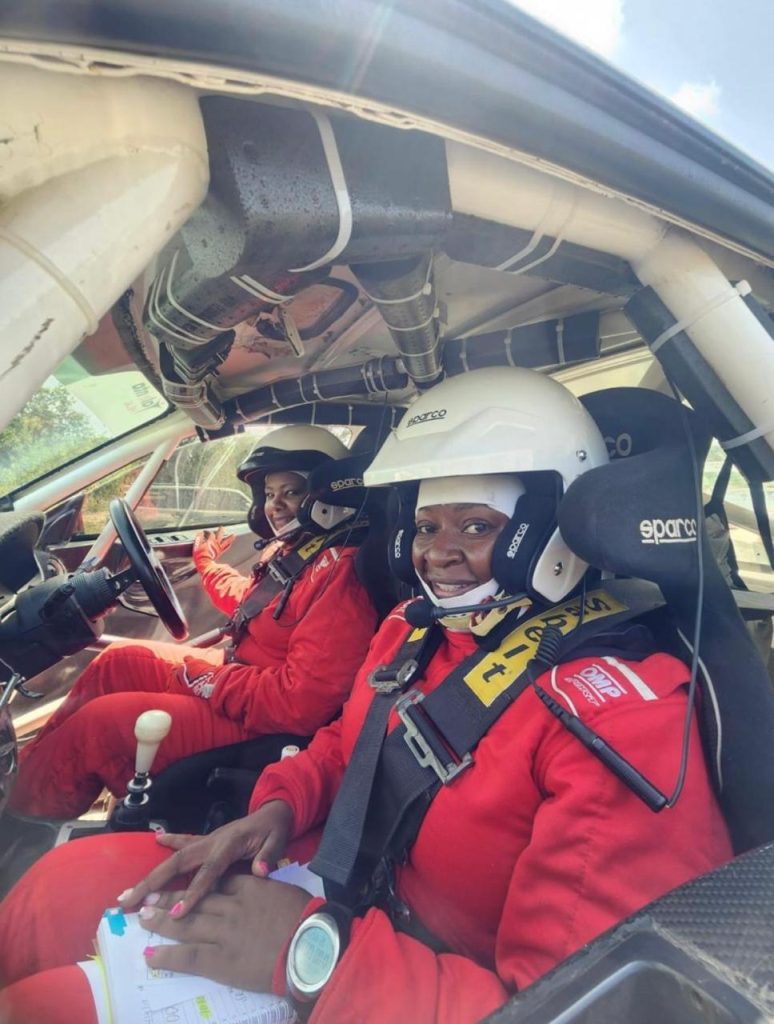
    Rally driver Pauline Sheghu and navigator Linet Ayuko share many things in common. They are both passionate race addicts, working in the energy and petroleum sector respectively , and have competed together in four WRC Safari Rally Kenya editions between 2023 and 2026. Linet works at Kenya Pipeline Company (KPC), while Pauline, a former Kenya Broadcasting Corporation (KBC) Swahili TV news anchor, works with the Geothermal Development Company (GDC).

    Each Safari event has been a powerful learning experience and a testament to their teamwork and shared passion for the sport. They have built a steady rhythm as a team , learning, growing, and showing up every time. Their partnership reflects consistency, resilience, and purposeful representation.

    Beyond the rally stages, Pauline and Linet are not only competitors but also decorated achievers. Together and individually, they have received multiple recognitions for their contribution to motorsport and women empowerment, including nominations and awards under categories such as Best African Sports Personality, Women in Motorsport Excellence, and Inspirational Women in Sports. These accolades affirm their growing influence both on and off the track.

    President William Ruto (centre), Pauline Sheghu (left), Linet Ayuko (second right) and former Sports CS Ababu Namwamba (right).
    President William Ruto (centre), Pauline Sheghu (left), Linet Ayuko (second right) and former Sports CS Ababu Namwamba (right).

    Fondly known as the “Queens of the Dust” in motoring circles, they have become a visible symbol of what’s possible for women in motorsport , demonstrating that with trust, preparation, and shared values, women can compete and thrive at the highest level.

    “We’ve also had the chance to inspire more women to consider roles in rallying, both in and outside the car,” said Sheghu.

    Like many aspiring female racers, Sheghu and Ayuko aim to actively participate in the Kenya National Rally Championship (KNRC) while continuing to sharpen their skills. “Long-term, our goal is to take on WRC and ARC events as a full ladies’ team, while creating platforms to mentor and inspire the next generation of women in motorsport , building both performance and legacy,” Sheghu added.

    The Queens of the Dust enjoy strong support from the energy and petroleum sector, with organizations such as Kenya Pipeline Company (KPC) , Geothermal Development Company (GDC), KenGen, REREC, KPLC, Stima Sacco, and other private partners playing a key role in supporting their rally journey.

    Sheghu has delivered commendable performances in Safari Rally history, including the 2011 ARC round where she finished 10th in the supplementary category. With multiple starts and only one retirement , the duo has demonstrated resilience even in the face of adversity.

    Pauline Sheghu (left) and Linet Ayuko (right).

    Reflecting on their most recent Safari Rally setback, Sheghu said:
    “It is very painful and unfortunate that we couldn’t finish the Safari Rally because of the reckless actions of some individuals who damaged our car. What was meant to be a beautiful rally for us ended in disappointment.”

    “To our fans, partners, sponsors and mainly the media fraternity we say thank you from the bottom of our hearts for standing with us. We gave this year’s Safari our all and pushed through every stage, but unforeseen incidents cut our journey short,” she added.

    Ayuko, who has over a decade of rallying experience, continues to embrace her role as a mentor to rising talent — a responsibility she describes as deeply fulfilling.

    Pauline Sheghu (left) and Linet Ayuko (right) during a tournament
    Pauline Sheghu (left) and Linet Ayuko (right) during a tournament

    “It allows me to contribute my knowledge and experience to the development of a promising driver. I have competed alongside Pauline in multiple rallies, and her potential is clear. I am excited to witness her continued growth as we push towards the top,” said Ayuko.

    She further emphasized that her focus remains on ensuring successful race completion while fostering a strong and positive working relationship.

    “My priority is to create a collaborative and enjoyable environment that enables us to perform at our best and represent our sponsors well. Ultimately, I want to see the driver excel and achieve outstanding results.

  • Explainer: What to know about the U.S. Artemis II Moon mission

    Explainer: What to know about the U.S. Artemis II Moon mission

    NASA’s Artemis II Moon mission lifted off Wednesday from the U.S. state of Florida, carrying four astronauts on the first crewed flight around the Moon in more than 50 years.

    The Space Launch System rocket, with the Orion spacecraft on top, launched from NASA’s Kennedy Space Center at 6:35 p.m. Eastern Time.It is NASA’s first crewed mission under the Artemis program. The four-member crew consists of NASA astronauts Reid Wiseman, Victor Glover and Christina Koch, along with Canadian Space Agency astronaut Jeremy Hansen.

    WHAT’S THE PURPOSE?
    A sweeping collection of astronaut health studies planned for the mission will soon provide agency researchers with a glimpse into how deep space travel influences the human body, mind and behavior, NASA said on its website.During an approximately 10-day mission, the astronauts are set to collect and store saliva, wear wrist monitors that track movement and sleep, and provide other essential data for NASA’s Human Research Program and other agency science teams.The mission will explore how the immune system reacts to spaceflight and evaluate how crew members perform individually and as a team throughout the mission, including how easily they can move around within the confined space of their Orion spacecraft.Astronauts will also collect a standardized set of measurements spanning multiple physiological systems to provide a comprehensive snapshot of how spaceflight affects the human body.

    What’s more, radiation sensors placed inside the Orion capsule cells will collect additional information about radiation shielding functionality and organ-on-a-chip devices containing astronaut cells will study how deep space travel affects humans at a cellular level.The crew will also conduct science investigations that will inform future deep space missions, including a lunar science investigation as Orion flies about 4,000 to 6,000 miles (approximately 6,400 to 9,600 kilometers) from the Moon’s surface.As Orion passes on the far side of the Moon, the side that always faces away from Earth, the crew will analyze and photograph geologic features on the surface, such as impact craters and ancient lava flows.

    WHY IS THE MISSION CRUCIAL?
    The studies focusing on the health of Artemis II astronauts will provide researchers with an unprecedented glimpse into how deep space travel influences the human body, mind and behavior, said NASA.Results will help the agency develop future interventions, protocols, and preventive measures to best protect astronauts on future missions to the lunar surface and Mars, it said.”Artemis II is a chance for astronauts to implement the lunar science skills they’ve developed in training,” said Kelsey Young, Artemis II lunar science lead at NASA’s Goddard Space Flight Center in Greenbelt, Maryland.”It’s also an opportunity for scientists and the engineers in mission control to collaborate during real-time operations, building on the years of testing and simulations that our teams have done together,” she said.

    The crew’s observations will also help pave the way for lunar science activities on future Artemis missions to the Moon’s surface, said NASA.The astronauts could be the first humans to see some parts of the Moon’s far side with the naked eye, it said. During the nine Apollo missions that left Earth’s orbit, astronauts saw parts of the Moon’s far side, but not all of it, limited by which sections were lit during their orbits.The astronauts may also get to observe flashes of light from space rocks striking the surface, clues that help reveal how often the Moon gets hit, or dust floating above the Moon’s edge, a mysterious phenomenon scientists want to understand, it added.”Whether they’re looking out the spacecraft’s windows or walking the surface, Artemis astronauts will be working on behalf of all scientists to collect clues to the ancient geologic processes that shaped the Moon and our solar system,” said Cindy Evans, NASA’s Artemis geology training and strategic integration lead.

    WHY THE MOON?
    The Artemis II mission is part of the Artemis program that aims to return astronauts to the Moon and develop space defense technologies. According to NASA, there will be two more missions under the program in the next two years.Scheduled for 2027, the Artemis III mission will launch a crew in the Orion spacecraft atop the Space Launch System rocket to test rendezvous and docking capabilities between Orion and commercial spacecraft needed to land astronauts on the Moon.

    NASA targets early 2028 for the launch of Artemis IV to lunar orbit, where two crew members will land on the Moon and spend approximately a week near its South Pole, investigating the landforms, rocks and other features around their landing site.The program envisions humans living beyond Earth’s orbit, said Clayton Swope, deputy director of the Aerospace Security Project at the Washington-based Center for Strategic and International Studies, a think tank.All roads to the cosmos naturally lead through the Moon, making it ideal for NASA to test new technologies and figure out how to sustain human life far from Earth, thereby preparing for future missions to Mars and beyond, Swope wrote in a commentary on the think tank’s website.It will serve as a jumping-off point for scientific expeditions, he said, adding that lunar infrastructure will serve as a key waystation and transit hub, possibly within decades, like a service plaza on an interstellar toll road for journeys between Earth and beyond.

    The Moon is also important because of its natural resources, he said. “Today, transporting the materials needed to support space activities into orbit, let alone to deep space, is expensive. Water ice on the Moon can be broken down and used for a variety of purposes, such as manufacturing propellant.”The Moon contains certain resources that may be valuable enough to extract and bring back to Earth, including rare earth elements used in modern electronics, while helium-3 — scarce on Earth but abundant on the Moon — could support future advances in quantum technologies, he added.Some experts also argue that during a time when Americans are polarized once more and the United States is at war, the program could offer a rare moment of collective national pride.”Space is one of the few areas that Americans with different political views can enjoy and watch together,” Esther Brimmer, a senior fellow at the Council on Foreign Relations who specializes in space policy, told the BBC.”The space programme is something that most Americans have grown up with and see as a point of pride,” Brimmer added. “It’s by and large unifying, in terms of the social impact.”

  • The Life You’re Modeling: Modern Motherhood in the Space between Dreams and Regret

    The Life You’re Modeling: Modern Motherhood in the Space between Dreams and Regret

    There is a kind of pain in motherhood no one warns you about: grieving the moments you chose to miss. Not the ones life stole from you, but the ones you traded away with open eyes and a trembling heart. You tell yourself it’s wise, it’s strategic, it’s necessary. Yet at 2 a.m., staring at the ceiling, it feels like loss.

    There is the calculating mind, always running numbers and timelines. “If they could just sleep through the night… if they didn’t get sick this week… if they didn’t need me every 20 minutes… I would be so much further by now.” You see the promotion that slipped away, the book you haven’t written, the business still stuck in your notes app. Your ambition is a train, and motherhood is the station you keep circling back to when you were supposed to have left already.

    And then there is the other part of you, the one folding tiny T-shirts that are not so tiny anymore. The one who feels their legs suddenly too long for your lap. The one who realizes they no longer ask you to carry them because they’ve learned how to walk away. You watch them grow out of your arms, out of needing you, and a quiet panic rises: I am running out of time.

    You miss the recital. They look for you in the crowd and don’t find you. You call it “sacrifice.”
    They call it “you didn’t come.”

    You tell yourself, “This is so you have a better life.” But then one bad meeting, one harsh email, one project that falls apart and the story you built your choices on crumbles. You sit at your desk, hands hovering over the keyboard, wondering, “Why am I doing all this? Wouldn’t it be simpler to just be a mother, to receive love instead of constantly negotiating it?”

    The hardest confession is this: sometimes you do treat them like they are in the way. Not because you don’t love them, but because your systems your calendar, your deadlines, your five-year plan have no space for unpredictability. And children are pure unpredictability, walking and talking.

    One day, you finally understand: children don’t experience your intention. They experience your energy. You can love them fiercely and still radiate, “You are disrupting my life.” No amount of “I’m doing this for you” survives that message.

    So what?

    First, stop selling them your sacrifice and start telling them your truth. They don’t need the weight of “I gave up everything for you.” They need the honesty of “This matters to me, and I’m still learning how to do it without hurting you.” Truth lifts the invisible debt from their small shoulders.

    Second, separate your ambition from your frustration. Your ambition is who you want to become. Your frustration is the storm that breaks when things don’t go your way. Don’t let them grow up drenched in a weather that was never about them. Ask yourself, in the heat of the moment: “Is this about my child, or is this about my day?”

    Third, let them see you as a whole person, but not as a collapsing one. Yes, they should know you have dreams beyond them. But they should never feel like they are competing with those dreams. There is a world of difference between “I have a life outside of you” and “My life works better without you.”

    Finally, make peace with this truth: some regret is unavoidable. You will miss things. You will say words that taste like ash when you replay them later. This is not proof that you are a bad mother. It is proof that you are a whole human trying to love other humans in real time.

    Motherhood is not a sweet, seamless story. It is a constant negotiation between who you are, who you hope to become, and who your children need you to be today. The question that remains is the one that matters most:
    If your children grew up and lived exactly the life you’re modeling right now, would you be proud of the woman they learned to become?

    Dr. Yusuf Muchelule is a Senior Lecturer & a Consultant

  • Letter from Mideast: Life in Dubai under shadow of war

    Letter from Mideast: Life in Dubai under shadow of war

    It has been more than a month since the U.S.-Israeli war with Iran began. Here in Dubai, though far from the epicenter of the fighting, I can still feel the weight of war.

    I still remember the morning of Feb. 28. News broke that the United States and Israel had launched strikes on Iran. By noon, reports emerged that missiles and drones were heading toward the Gulf, where U.S. military bases are stationed. As I followed the developments, a subtle unease crept over me. Reporting on this conflict is part of my duty as a journalist, but at that moment, I was not alone. My family was with me, and our neighborhood isn’t far from a U.S. military base. Then I heard it: a sudden boom — an explosion ripping through the sky. In that instant, confusion, fear and anxiety surged all at once. Goosebumps prickled my skin. For the first time in my life, war felt this close. I wasn’t the only one caught off guard. In the United Arab Emirates (UAE) — a country that hadn’t seen war in decades — bombs, missiles and battles had been concepts beyond most people’s imagination.

    As the day went on, the sounds of interceptions rang out sporadically. News reports said fragments from intercepted missiles and drones had landed near the Palm Jumeirah, causing fires close to well-known landmarks. From then on, the war raged with ever-increasing intensity. The neighborhood where I live is repeatedly shaken by the thuds of intercepted missiles. Fragments from those interceptions have already claimed several lives and left many wounded. My child kept asking whether the iconic Burj Al Arab hotel or the museums in Abu Dhabi had been hit — places we had often visited. These questions made me realize that, while the attacks were primarily aimed at military bases and energy facilities, the war was causing a far deeper impact than the visible casualties: it was shaking people’s sense of safety and leaving a mark on their minds.

    As the situation worsened, I decided to send my child and mother back to China. At the airport, departures were held up for hours as drone attacks threw operations into chaos. But finally, they made it home. I know I’m lucky, because I can choose to send my family to a safe place in the midst of danger. But for the more than 10 million people of the UAE, and for the countless others across the Middle East affected by this war, there is no choice but to endure it — because this is their home. Thanks to the UAE government’s swift action, social order is largely maintained. Malls and supermarkets remain stocked, and prices stay relatively stable. Fuel costs have risen, but not steeply. People are doing their best to adapt. Children continue their classes online. Families still gather. Cities remain alive. Yet beneath this calm on the surface, the shadow of war looms large. Bottled water is quietly rationed. A friend talked about getting vaccinations and paperwork in order for his dog, just in case evacuation became necessary. Another mentioned that the building’s housekeeping staff were anxious about losing their jobs if the situation worsened.

    The government is doing its utmost to maintain a sense of normalcy, but in a Gulf nation so reliant on tourism and the Strait of Hormuz, the impact of the war is hard to ignore. Flights have been scaled back. Airspace disruptions have made travel more difficult. A friend in the tourism industry told me that even if the fighting eases, recovery will take time, since rebuilding tourist confidence could take months, if not years. With Iran effectively blocking the Strait of Hormuz, the UAE’s oil trade — one of its key economic pillars — has also taken a serious hit. Recognizing these risks, the UAE has repeatedly called for restraint and dialogue, emphasizing de-escalation and regional stability. But as the war passed the one-month mark, the United States ramped up its military presence in the Middle East, and Israel announced plans to expand its strikes. The conflict shows no sign of easing anytime soon.

    This country, its people, and I will likely spend even more time under the shadow of war, while rethinking the connections between peace and security, personal life and geopolitics, and the ties between the region and the state. After dropping my child and mother at the airport, I took a taxi back to my office. With the occasional sounds of intercepted missiles still echoing across the sky, the driver wore a tense, serious expression. The car raced through the night, tires squealing against the asphalt. Every traffic light seemed to drag on forever. “Who would have imagined this happening in the UAE?” he asked, his voice trembling. “Everything has changed,” he sighed.

  • Explainer: What’s Washington seeking to achieve with a military buildup in the Middle East?

    Explainer: What’s Washington seeking to achieve with a military buildup in the Middle East?

    U.S. President Donald Trump said on Saturday he would prefer to “take the oil in Iran” and suggested seizing Kharg Island, the Islamic Republic’s oil export hub.

    The remarks appear to shed light on Washington’s possible objectives amid an ongoing military buildup in the Middle East, with more than 3,500 U.S. troops deployed to the region and the Pentagon said to be preparing for weeks of ground operations in Iran.What are the latest U.S. military moves? Is Washington seeking to force Tehran into negotiations or prepare for a further escalation of military operations?

    TROOP BUILDUP
    As the conflict enters its second month, U.S. Central Command (CENTCOM) announced on Saturday that a task force of 3,500 Marines and sailors aboard USS Tripoli arrived in the Middle East on Friday. Serving as the flagship of the Tripoli Amphibious Ready Group and 31st Marine Expeditionary Unit, the America-class amphibious assault ship is carrying transport and strike fighter aircraft, as well as amphibious assault and tactical assets, CENTCOM said on social platform X. The arrival of Tripoli is keeping the American troop levels in the Middle East above 50,000, The New York Times quoted a U.S. military official as saying on Sunday.

    Another group is expected to reach the region in the second week of April. U.S. media reported on March 20 that the amphibious assault ship USS Boxer, accompanied by the dock-landing ship USS Comstock and amphibious transport dock USS Portland, had departed San Diego, California, with the 11th Marine Expeditionary Unit aboard, comprising about 2,500 Marines. Together, the two deployments enable rapid precision strikes and vertical assault operations without reliance on fixed regional bases. As the San Diego Union-Tribune reported on Friday, such deployments are specifically designed for such missions as island raids. Reuters reported Tuesday that the Pentagon is expected to deploy 3,000 to 4,000 troops from the elite 82nd Airborne Division to the region, which could create a rapid-entry force capable of launching the initial phase of a joint ground operation on short notice. Moreover, the Pentagon is seeking to send up to 10,000 additional ground troops to the region, The Wall Street Journal reported on Thursday, citing Department of Defense officials.  If approved by Trump, the United States could soon have more than 17,000 ground troops positioned near Iran, according to the Journal.

    GROUND OFFENSIVE POSSIBILITY
    The Pentagon has reportedly been considering military options that could include ground forces, although Trump has not approved any of those plans, according to multiple news outlets.

    Military experts said that the scale of additional U.S. troop deployments appears consistent with plans for discrete and time-limited operations rather than a sustained ground campaign. Ruben Stewart, a senior fellow at the International Institute for Strategic Studies, told CNBC that the number of forces being prepared does not align with a prolonged ground operation. Potential military objectives could include seizing strategic Iranian island of Kharg, or Iran’s nuclear stockpile, said Daniel Davis, a senior fellow and military expert at Defense Priorities.”The overall idea is to deny Iran’s capabilities to use those islands,” said Kevin Donegan, former commander of the U.S. Navy’s Fifth Fleet. Donegan told CNBC that “the mission is absolutely executable,” and the key question is how long it would take to complete the operation and to ensure the normal flow through the Strait of Hormuz. 

    Former NATO Supreme Allied Commander James Stavridis suggested a blockade of the island as a “less risky option” than seizure, saying it would likely result in fewer casualties while achieving a similar economic effect. Any island invasion “would likely be far from surgical … and still leave Iran with plenty of other potential steps to create mayhem and improve its bargaining position,” said Stavridis. But Aaron MacLean, a senior fellow at the Foundation for Defense of Democracies, warned that any operation targeting Iran’s nuclear material could not only be “one of the riskiest special operations missions in American history, but very possibly the largest,” CBS reported Saturday.
       
    NEGOTIATION LEVERAGE
    The troop buildup could provide Washington with additional diplomatic and economic leverage while preparing for more decisive action if diplomacy stalls, analysts said.”Job number one is feeding the strategic narrative that we’re serious about this, and the president has options,” retired U.S. General Joseph Votel told the Journal. “There’s clearly a big information component to this.” By bolstering its military presence while refraining from immediate strikes, Washington appears to be applying calibrated pressure on Iran, seeking to push it toward negotiations while avoiding full-scale escalation, according to media reports. Trump on Sunday floated the possibility of American forces seizing Kharg Island. “Maybe we take Kharg Island, maybe we don’t. We have a lot of options,” he said in an interview published early Monday by the Financial Times. “It would also mean we had to be there for a while.”

    Control of the island would give Washington economic leverage over negotiations with Iran, given its status as “the main node” of Iran’s economy, said Petras Katinas, a researcher at the London-based Royal United Services Institute. 

    Israel’s Channel 12 reported on Tuesday that the United States had sent Tehran a 15-point peace plan, via Pakistan, in an attempt to end the war with Iran, which Tehran has officially rejected and responded with its own five-point proposal. Iran’s Parliament Speaker Mohammad Bagher Ghalibaf on Sunday accused Washington of secretly plotting a ground attack despite talking publicly about negotiations. Diplomatic efforts continue, with Pakistan emerging as a key intermediary between Washington and Tehran, relaying messages and coordinating backchannel communications.