Author: Christine Muchira/Release

  • Avenews joins fresh produce consortium to close Kenya’s agri-financing gap

    Avenews joins fresh produce consortium to close Kenya’s agri-financing gap

    Avenews, an agri-fintech company, and the Fresh Produce Consortium of Kenya (FPCK) have announced a strategic partnership aimed at addressing a critical cash flow constraint within Kenya’s fresh produce sector.

    The collaboration introduces a financing solution that enables produce suppliers to access working capital within hours of delivery, reducing reliance on extended payment cycles of up to 90 days. At the centre of the collaboration is Agri-Supplier Financing, an invoice discounting solution that converts verified receivables into immediate cash.

    This enables fresh produce suppliers, distributors, aggregators, and exporters to restock, fulfil orders, and maintain consistent supply without waiting for delayed payments. “At Avenews, we understand that the fresh produce value chain operates as a just-in-time, perishable business where every hour counts,” said Jonathan Tselon, CEO of Avenews. “Access to immediate, flexible capital is not a luxury, it is what keeps the entire value chain alive” He added, “This is why we continue to innovate smart financing solutions for agribusinesses that move at the speed of trade, not the convenience of traditional financial systems.”

    By aligning financing with the pace of trade, the solution enables businesses to operate continuously, maintain supply cycles, and reduce dependence on informal or high-cost credit.

    It directly addresses what industry players identify as a structural constraint in how the sector operates. Okisegere Ojepat, CEO of the Fresh Produce Consortium of Kenya, noted: “In a sector defined by perishability and tight timelines, delays in financing can disrupt shipments, strain supply relationships, and result in product loss.” He added, “One of the biggest barriers to entry is access to timely, tailored financing.

    Through our partnership with Avenews, we are addressing this gap, opening the door for more entrepreneurs, especially youth and women, to participate and grow within the fresh produce value chain.” “Our industry already supports over 3 million people directly and indirectly, and with these solutions in place, we are looking at scaling that impact to over 10 million livelihoods across the country.” he said.

    Nancy Kinyanjui, Managing Director of Avenews, concluded by reminding stakeholders that, “This partnership reflects a broader shift toward embedded financing models, where capital is structured around real economic activity and trade flows, not traditional lending timelines.” She added, “At Avenews, we are working one value chain at a time to fix long-standing structural gaps in agribusiness, unlocking capital through practical, time-based financial solutions that support, rather than slow, the movement of goods.

    The result is a more resilient and efficient ecosystem, where businesses are no longer constrained by payment delays but enabled by financing that moves with trade.” It was launched at a joint Dinner Workshop held at the Crowne Plaza JKIA bringing together over 100 Fresh Produce Consortium of Kenya members and key stakeholders across the value chain.

  • Developing countries are being priced out, in struggle for affordable finance

    Developing countries are being priced out, in struggle for affordable finance

    Developing countries are being priced out of the affordable finance they desperately need for sustainable development, with sovereign credit ratings often overstating risk and overlooking long-term economic potential, the UN said on Monday.

    A credit rating is an assessment of how likely a borrower, such as a government, is to repay its debt on time and in full. For sovereign states, ratings influence how much countries pay to borrow in international markets: the lower the rating, the higher the perceived risk and usually the higher the interest costs.

    The current system too often relies on “outdated and incomplete information”, leaving countries unfairly penalised in global capital markets, the deputy UN chief Amina Mohammed told the opening of the UN’s Economic and Social Council, ECOSOC, Special Meeting on Credit Ratings, delivering remarks on behalf of Secretary-General António Guterres.

    “Adequate and timely finance is the fuel that drives sustainable development,” the Deputy Secretary-General said, warning that “today that fuel is running perilously low, and it’s getting more costly.”

    She pointed to nearly $1.4 trillion in annual debt servicing costs across developing countries, while more than 3.4 billion people live in countries that spend more on debt interest payments than on health or education.

    Global instability

    Mohammed added that global instability is deepening the crisis. Rising fuel and raw material costs linked to conflict and economic volatility are intensifying fiscal pressures and slowing growth, while climate-vulnerable countries continue to face disaster losses without access to affordable recovery financing.

    “This is a matter of profound importance,” Mohammed said.

    Debt reform efforts broaden

    Mohammed also linked the credit ratings debate to wider efforts to reform the global debt architecture and pointed to new steps aimed at giving developing countries a stronger voice in debt discussions.

    These include a borrowers’ platform, work on principles for responsible sovereign borrowing and lending, and a UN-led process bringing together debtor and creditor countries, private creditors, international financial institutions, academics and civil society.

    She also cited the planned African Credit Rating Agency as an example of efforts to improve data, transparency and risk assessment.

    Call to reimagine ratings

    Mohammed urged a major shift in how sovereign ratings are designed, arguing that assessments should capture not only vulnerability, but also opportunity.

    “We must transform the mindsets from long-term speculation to long-term investment,” she said, calling for broader, more transparent and forward-looking methodologies that better reflect countries’ real prospects.

    Mohammed stressed that affordable borrowing for development can strengthen a country’s future solvency.

    Investment in health, education, infrastructure, climate resilience and renewable energy, she said, can generate prosperity, reduce risk and improve economic stability over time.

    She also criticised narrow measures of progress, insisting that “GDP tells us the cost of everything and the value of very little.”

    Mohammed called for greater accountability from governments, investors and ratings providers alike, alongside stronger data and fairer methodologies.

    “It’s time to turn credit ratings from barriers into contributors to long-term finance and sustainable development,” Mohammed said, urging a new approach that helps developing countries secure the financing they need.

  • AHB, Huduma Kenya partner to boost access to affordable housing services

    AHB, Huduma Kenya partner to boost access to affordable housing services

    The Affordable Housing Board has announced the rollout of service desks across all Huduma Centre outlets nationwide, offering a one-stop solution for prospective homeowners.

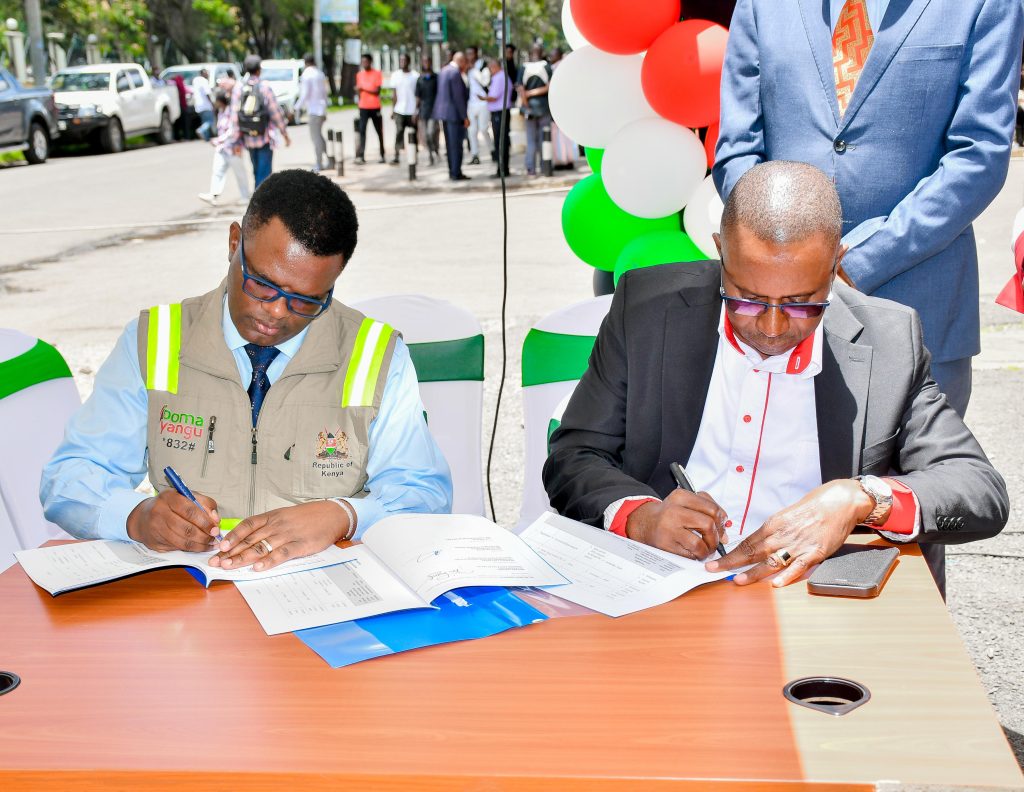
    This is after the Affordable Housing Board (AHB) and Huduma Kenya entered into a memorandum of understanding aimed at providing more strategic access points for Kenyans seeking to own a home under the Affordable Housing Programme.

    The service desk will facilitate the homeownership process, from application and registration on the Boma Yangu platform to payment and eventual allocation of housing units upon settlement of the requisite five per cent deposit and subsequent instalments.

    Speaking during the signing ceremony at Huduma Centre City Square, Nairobi, AHB Acting Chief Executive Officer Joseph Kagicha, said the collaboration is designed to simplify and demystify the home acquisition process.

    He noted that the presence of AHB personnel at Huduma Centres will enable Kenyans to access accurate information on available units, receive guidance on their selections, and be supported through registration and payment procedures.

    “We will establish dedicated information desks in every Huduma Centre, clearly branded with the official AHB identity. Our staff will be in official attire and equipped with computers to ensure that every Kenyan can access the information they need to make informed decisions about home ownership,” he said.

    Huduma Kenya Chief Executive Officer Ben Kai welcomed the partnership, describing it as a significant step toward deepening access to government services.

    He emphasised that Huduma Centres, already synonymous with the delivery of over 5,000 public services, are well-positioned to bridge the information and accessibility gap in the housing sector. “Kenyans trust Huduma Centres as accessible service points across the country. The introduction of AHB desks responds directly to the growing demand for clear, reliable information on affordable housing opportunities,” he said.

    The government’s Affordable Housing Programme continues to gather momentum, with projects structured to deliver a mix of social housing, affordable units, and market-rate developments.

    More than one million Kenyans have already registered interest through the Boma Yangu platform.

    Currently, AHB is overseeing the construction of 273,067 housing units across 111 constituencies, with over 8,800 units completed since 2022, signalling steady progress in addressing the country’s housing deficit and expanding pathways to home ownership.

    The Boma Yangu Affordable Housing Programme remains a flagship initiative of the Government of Kenya, implemented under the State Department for Housing and Urban Development.

    It aims to expand access to decent and affordable housing while supporting job creation and sustainable urban development under Vision 2030 and the Bottom-Up Economic Transformation Agenda (BETA).


  • WHO members extend pandemic pact talks

    WHO members extend pandemic pact talks

    World Health Organization (WHO) Member States have agreed to extend negotiations on the Pathogen Access and Benefit Sharing (PABS) annex to the WHO Pandemic Agreement.

    This coming with discussions set to resume in late-April ahead of its scheduled consideration by the World Health Assembly (WHA) in May.

    The decision to continue negotiations from 27 April–1 May, with informal intersessional discussions taking place in advance, reflects the commitment by WHO Member States to negotiate the PABS annex, a core component of the WHO Pandemic Agreement.

    According to a statement, the World Health Assembly adopted the Pandemic Agreement last year to address weaknesses exposed by the COVID-19 pandemic and to strengthen global cooperation and equity in future pandemic prevention, preparedness and response.

    “The Pathogen Access and Benefit Sharing system lies at the heart of the WHO Pandemic Agreement and I thank WHO Member States for their commitment to work to bring it to life,” said Dr Tedros Adhanom Ghebreyesus, WHO Director-General. “I urge all delegations to believe in the power of trust – trust in one another, in our institutions, and in our shared ability to transcend differences for the common public good, for solidarity and for equity.”

    The PABS annex is intended to ensure, on equal footing, the rapid sharing of pathogens with pandemic potential and the fair and equitable sharing of benefits arising from their use, including vaccines, diagnostics and therapeutics.

    “Member State negotiators are working intensively towards having an ambitious and equitable Pathogen Access and Benefits Sharing annex ready for adoption at the World Health Assembly in May,” said IGWG Bureau Co-Chair Ambassador Tovar da Silva Nunes, of Brazil.

    During the past week, Member States engaged in intensive negotiations under the Intergovernmental Working Group (IGWG) on the WHO Pandemic Agreement.

    Discussions covered a range of critical and interlinked issues, including how benefits derived from the sharing of pathogens should be defined and distributed, the nature of contractual arrangements underpinning the PABS system, and governance matters necessary to ensure the system functions effectively, transparently and in the public interest.

    “With less than two months until the World Health Assembly in May, I welcome the commitment shown this week by Member States towards finding consensus on outstanding areas in the Pathogen Access and Benefit Sharing system,” said IGWG Bureau Co-Chair Matthew Harpur, of the United Kingdom of Great Britain and Northern Ireland.

    Member States acknowledged the constructive engagement to date, while recognizing that additional time is needed to bridge remaining differences to finalize the text and submit the outcome to the World Health Assembly.

    Further they reaffirmed their commitment to solidarity, multilateralism and the shared goal of making the world safer and more equitable in the face of future pandemics.

  • EACC arrests NIS impersonator for tender fraud, bribery

    EACC arrests NIS impersonator for tender fraud, bribery

    The Ethics and Anti-Corruption Commission (EACC) has arrested an impersonator posing as a National Intelligence Service (NIS) officer for orchestrating a Ksh. 15 million fraudulent tender scheme.

    In a statement, EACC says investigations reveal that the suspect, Joel Wanyama Simiyu, falsely presented himself as a senior NIS officer attached to the National Government Constituencies Development Fund (NG-CDF) Board and used this guise to deceive a construction firm into undertaking a non-existent project at Kaptis Primary Special School in Hamisi Sub-County, Vihiga County.

    “To legitimize the scheme, the suspect allegedly staged a fake project handover, complete with forged contract documents, and introduced an accomplice posing as an engineer to influence unauthorised project variations. The contractor was misled into proceeding with construction and paid approximately Ksh. 1.4 million in purported facilitation fees,” the statement read.

    According to EACC, the fraud was uncovered when the firm sought payment from Hamisi NG-CDF, only to establish that no such project had been approved.

    The suspect later resurfaced and demanded an additional Ksh. 20,000 bribe, claiming he would facilitate payment processing.

    EACC officers apprehended the suspect while receiving the bribe and booked him at Kisumu Central Police Station.

    He was later released on Ksh. 20,000 cash bail pending further investigations. Efforts are ongoing to identify and take action against any accomplices involved.

    EACC has since urged all stakeholders to remain vigilant and verify procurement processes through official government channels.

  • Former British High Commissioner to Kenya named new CEO of Lewa Wildlife Conservancy

    Former British High Commissioner to Kenya named new CEO of Lewa Wildlife Conservancy

    The Lewa Wildlife Conservancy has announced the appointment of Rob Macaire as its new Chief Executive Officer, effective 1 June 2026. 

    Macaire, an Oxford graduate with a distinguished career spanning British diplomacy and senior executive roles in the private sector, will succeed Mike Watson, who retires on 1 August 2026 after 15 years of leadership at the helm of the UNESCO World Heritage Site conservancy.

    Macaire is best known in Kenya for his tenure as British High Commissioner to Nairobi, a role he held between 2008 and 2011.

    During those years, he was actively involved in championing Kenya’s constitutional reforms and also played a key role in the restoration of Karura Forest, a landmark conservation and community project in the heart of Nairobi.

    His diplomatic career at the Foreign and Commonwealth Office (FCO), spanning more than two decades, has taken him across the globe with postings in Washington, New Delhi, Bucharest and Tehran.

    He later transitioned to the private sector, serving as Director of Government and Public Affairs at BG Group PLC, before taking on senior advisory roles at Rio Tinto and other major multinationals, where he specialised in environmental governance, political risk and social investment.

    According to a statement issued by the Lewa Board, the organization launched its search for a new CEO in October 2025, initially focusing on candidates with a conservation background. As the process evolved, the criteria was expanded to attract leaders with “strong business” acumen and international networks, while “remaining committed to identifying Kenyan talent”.

    “We are entering a new era of conservation that requires a leader who can engage both the global boardroom and the local community,” said Lewa Wildlife Conservancy Board Chairman Michael Joseph. “Rob’s diplomatic experience and commitment to Kenyan heritage give him the vision and grit to lead Lewa’s next chapter.”

    Under Macaire’s leadership, Lewa has outlined three strategic priorities: securing its long-term financial endowment, deepening community agency in conservation decisions and strengthening its position as a global leader in conservation field operations.

    Lewa Wildlife Conservancy, situated on the foothills of Mount Kenya in Meru County, is one of Africa’s most celebrated conservation institutions.

    The wildlife sanctuary covers over 250 km², created to conserve endangered species and promote sustainable coexistence between wildlife and local communities.

    It’s famous for its rich biodiversity, including: Black rhinos with about 14% of Kenya’s population, Grevy’s zebras the largest population globally, Elephants, lions, giraffes, cheetahs, and wild dogs as well as over 490 bird species.

    A UNESCO World Heritage Site inscribed in 2013, Lewa is internationally recognised for its pioneering work in wildlife protection, particularly for endangered rhino and Grevy’s zebra populations, and for its model of integrating local communities as custodians and beneficiaries of conservation.

    Mike Watson, the outgoing CEO, is credited with significantly expanding Lewa’s donor base and regional partnerships over his 15-year tenure. The board thanked him for his exemplary service and contribution to the organisation.

  • WHO validates elimination of trachoma as a public health problem in Libya

    WHO validates elimination of trachoma as a public health problem in Libya

    Libya has eliminated trachoma as a public health problem, the World Health Organization (WHO) has announced describing the move as a landmark victory for public health in WHO’s Eastern Mediterranean Region.

    In a statement, WHO says that this hard-won achievement protects future generations from preventable blindness and provides a powerful reminder that countries can overcome neglected tropical diseases despite persisting challenges.

    “This milestone reflects Libya’s determination to safeguard the health of its people and reinforces our conviction that progress against neglected tropical diseases is possible everywhere,” said Dr Tedros Adhanom Ghebreyesus, WHO Director-General. “Eliminating trachoma as a public health problem is an inspiring achievement for the Eastern Mediterranean Region and for communities across Libya.”

    With this validation, Libya becomes the 28th country worldwide and the 8th in the Eastern Mediterranean Region to eliminate trachoma. The achievement demonstrates how evidence-based programming and coordinated technical support can overcome neglected tropical diseases, even amongst complex humanitarian and migration dynamics.

    “Libya joins a growing group of countries from the Eastern Mediterranean Region that have eliminated trachoma,” said Dr Hanan Balkhy, WHO Regional Director for the Eastern Mediterranean. “This result reflects strong regional coordination and Libya’s perseverance during periods of great challenge.”

    A historic disease defeated

    Trachoma has been documented in Libya for over a century, with surveys in the 20th century reporting high levels of active (inflammatory) trachoma in communities across the country, but particularly in the south. After early efforts by the Ministry of Health to control infectious eye disease in the 1970s and 1980s, and subsequent health system strengthening, surveys indicated that transmission had fallen dramatically.

    In 2017, the Ministry of Health prioritized trachoma elimination as part of national eye health work within the National Prevention of Blindness Programme. With support from WHO, Sightsavers, International Trachoma Initiative and Tropical Data, new surveys were conducted in 2022 across six southern districts where trachoma was suspected to persist.

    These surveys found active trachoma and trichiasis (a condition associated with trachoma) prevalences below WHO elimination thresholds, except for trichiasis in Wadi Al Hayaa/Ghat, where a trichiasis surgery campaign subsequently took place. In 2025, a further survey confirmed that the prevalence of trichiasis had fallen below WHO’s elimination threshold.

    Progress despite adversity

    Libya’s achievement is particularly notable given years of political instability and humanitarian challenges that strained health services, displaced populations and increased demand for basic services, including water, sanitation and hygiene. Despite these pressures, the national trachoma elimination programme successfully integrated surveillance, expanded access to surgical care, built capacity among eye health workers and partnered with national and international stakeholders.

    “This validation is a source of pride for Libya and a testament to the commitment of our health workers and communities,” said Dr Mohamed Al-Ghoj, Acting Minister of Health. “Even through difficult years, we maintained our focus on improving eye health services and ensuring no one was left behind. This success would not have been possible without the professionalism and dedication of our doctors, nurses and health workers in the field who reached all and every district to ensure a future free of preventable blindness.”

    Throughout the years, the WHO Country Office in Libya provided extensive technical and operational support to prevent, detect and control diseases and ensure the best attainable health and well-being in the country. “Reaching trachoma elimination status in Libya is a testimony of what could be achieved when the Ministry of health teams and the WHO teams deliver as one. It is a collective public health triumph achieved through science, national mobilization and international solidarity” said Dr Ahmed Zouiten, WHO Representative in Libya.

    About trachoma and elimination efforts

    Trachoma, caused by the bacterium Chlamydia trachomatis, is spread through contact with infected eye discharge via hands, clothing, or flies. Repeated infections can lead to scarring of the inner eyelid, turning eyelashes inward to scratch the eyeball: a painful condition known as trichiasis that can result in blindness.

    Globally, the disease remains endemic in many vulnerable communities where access to water and sanitation is limited. In 1996, WHO launched the WHO Alliance for the Global Elimination of Trachoma by 2020 (GET2020), creating a network of governments, non-governmental organizations and academic institutions. WHO continues to support endemic countries to accelerate progress towards the global goal of eliminating trachoma as a public health problem worldwide.

    Neglected tropical diseases

    Neglected tropical diseases are a diverse group of 21 conditions associated with devastating health, social and economic consequences. They affect one billion people globally and their burden is mainly prevalent among impoverished communities in tropical areas.

    Public health targets for the control, elimination and eradication of these conditions were set in the road map for neglected tropical diseases 2021–2030. In 2025 alone, 9 countries were validated, verified or certified by WHO for achieving these targets. Following validation of elimination of trachoma as a public health problem, Libya becomes the 59th country globally and the 10th in the Eastern Mediterranean Region to have eliminated at least one neglected tropical disease.

  • Conflict and instability make pregnancy more dangerous

    Conflict and instability make pregnancy more dangerous

    Nearly two-thirds of all maternal deaths worldwide occur in countries marked by conflict or fragility.

    The maternal mortality ratio of a woman who lives in a country affected by conflict dying due to maternal causes is around five times higher for each pregnancy she undergoes compared to her peers in stable countries.

    new technical brief offers analysis as to why pregnant women living in certain countries are more likely to die in childbirth.

    In 2023 alone, an estimated 160 000 women died from preventable maternal causes in fragile and conflict-affected settings, that is 6 in 10 maternal deaths worldwide, despite these countries accounting for only around one in ten of global live births.

    The brief from World Health Organization (WHO) and HRP (the UNDP/UNFPA/UNICEF/WHO/World Bank Special Programme of Research, Development and Research Training in Human Reproduction) aligns the latest maternal mortality ratio (MMR) estimates with whether a country is conflict-affected or considered fragile.

    Maternal deaths concentrated in fragile settings 

    Countries classified as conflict-affected had an estimated MMR of 504 deaths per 100 000 live births, while countries considered institutionally and socially fragile had an MMR of 368. In contrast, countries outside both categories saw a much lower MMR of 99.

    These findings deepen the picture provided in last year’s maternal mortality estimates 2000-2023, which showed that global progress has stalled and that maternal mortality remains staggeringly high in low-income and crisis-affected settings, which spurred this further analysis.

    Fragility disrupts maternal health care 

    This new analysis confirms what many practitioners see on the ground: crises create conditions where health systems cannot consistently deliver lifesaving maternal care. The brief also identifies that the intersection of gender, ethnicity, age and migration status can increase the risk women and girls face who are both pregnant and living in fragile contexts.

    The disparity of risk is stark: a 15-year-old girl living in a country or territory affected by conflict in 2023 had a 1 in 51 lifetime risk of eventually dying from a maternal cause, compared with a 1 in 79 risk in a country or territory affected by institutional and social fragility, and 1 in 593 for a 15-year-old girl living in a relatively stable country.

    Country experiences illustrate what works 

    The publication also offers case studies of how frontline teams are striving to maintain maternal health services amid instability. Solutions in Colombia, Ethiopia, Haiti, Myanmar, Papua New Guinea and Ukraine demonstrate that even where health systems face extreme pressure, innovative approaches can protect maternal health. They show communities adapting services to cultural needs, health workers restoring disrupted services, hospitals reorganizing care under security threats and coordination mechanisms evolving to ensure continuity of care.

    In Colombia, training traditional birth attendants shows how strengthening trusted local networks can ensure timely care even where access is limited due to geography, insecurity or mistrust. establishing continuity of care through mobile teams, renovated facilities and additional midwives.

    In Ethiopia, the emphasis is on reestablishing continuity of care through mobile teams, renovated facilities and additional midwives. These are practical measures that help restore services after disruption.

    Haiti demonstrates the importance of removing cost and infrastructure barriers, with free or low-cost caesarean sections and reliable electricity power, making lifesaving care available to displaced women who would otherwise have no access.

    Myanmar, Papua New Guinea and Ukraine show that, even amid complex crises or conflict, women benefit when systems focus on protecting essential maternal services, whether through planning at subnational level, improving respectful and safe childbirth practices or reorganizing patient pathways to safer facilities.

    Using fragility-aligned MMR data for action 

    By linking MMR data to the fragility classification, HRP, WHO and partners now have a more precise tool to identify where health system strengthening is most urgently needed. The brief emphasizes the importance of investing in primary health care to maintain essential maternal services during crises; strengthening data collection in hard-to-reach settings, to ensure no deaths go uncounted, and supporting resilient health system design, able to absorb and adapt to shocks.

    Together, these efforts can help accelerate progress toward reducing preventable maternal deaths, even in the world’s most challenging environments.

  • Ksh3B Western Nairobi water and sewerage project to benefit over 300,000 residents

    Ksh3B Western Nairobi water and sewerage project to benefit over 300,000 residents

    Over 300,000 residents in Nairobi’s western corridor are set to benefit from improved access to clean, safe and reliable water supply and enhanced sanitation services following the signing of the Western Nairobi Water and Sewerage Project contract at the Athi Water Works Development Agency (AWWDA).

    Funded in partnership with the French Development Agency (AFD) to a tune of Ksh. 3 billion, the project seeks to address long-standing infrastructure gaps in some of the city’s fastest-growing areas while strengthening Nairobi’s urban water security.

    Speaking during the contract signing, the Chief Executive Officer of Athi Water Works Development Agency, Eng. Joseph Kamau, said the project is part of the Government’s broader commitment to ensuring sustainable and equitable water and sanitation services for all.

    “The project builds on the gains made by the Northern Collector Tunnel to optimize storage infrastructure and strengthen bulk transmission capacity within Nairobi Metropolis. By expanding transmission lines, increasing storage and extending sewer networks, we are improving network stability and preparing the system to meet growing demand. Our priority is disciplined implementation, adherence to technical standards and delivery within the 24-month timeline,” said Eng. Kamau.

    The Western Nairobi Water and Sewerage Project will serve residents in Kangemi, Kawangware, Dagoretti and Riruta, and will extend to the growing areas of Uthiru, Kinoo and Karen Plains, as well as Kabiria, Ngando and Kirigu. These areas have experienced rapid urban growth, placing increased pressure on existing water and sewerage infrastructure.

    The project, awarded to the Joint Venture of Zhongmei Engineering Group and Hunan Construction Investment, includes the construction of a 19.7-kilometre high-capacity transmission pipeline from Kabete to Olesereni. A 5,500 cubic metre reinforced concrete storage tank will also be constructed in Karen to stabilize pressure and enhance water distribution across the western corridor.

    In addition to the water supply component, the project will deliver 63 kilometres of sewer reticulation network to improve sanitation services for approximately 250,000 residents. The upgraded sewer system is expected to reduce public health risks, protect the environment and significantly improve the overall quality of life in the targeted areas.

    The Western Nairobi Water and Sewerage Project reinforces the Government commitment to expanding sustainable water and sanitation infrastructure in line with national development priorities and the growing needs of urban populations.

  • Kenya, France unveil new era of forward-looking bilateral partnership

    Kenya, France unveil new era of forward-looking bilateral partnership

    Kenya and France are strengthening a forward-looking partnership that is focused on unlocking opportunities for Africa’s future, especially for its youth, ahead of the “Africa Forward” Summit set to be held in Nairobi in May.

    The French Minister Delegate for Francophonie, International Partnerships, and French Citizens Abroad, Eléonore Caroit has visited Nairobi to reinforce bilateral ties and outline the next phase of cooperation between the two nations.

    Following the visit, the two nations have entered a new era of bilateral relations, transitioning from a traditional aid-based model to a sustainable strategic partnership driven by investment, co-creation and reciprocity.

    This evolution highlights France’s position as Kenya’s 5th largest foreign investor and over 140 French companies operating in Kenya, creating 36,000 direct jobs. It is evidenced by the tripling of
    French Foreign Direct Investment (FDI) in Kenya over the last decade.

    Speaking during a joint conference at the University of Nairobi, Eléonore Caroit, highlighted the need to bring young people along, especially as France shifts towards a ‘sustainable solidarity
    investment policy’ that prioritises mutual, inclusive economic empowerment over dependency.

    “Kenya is a source of inspiration and a success story, with its entrepreneurial spirit and exceptional sense of innovation. It is precisely why we will organise together with Kenya the
    upcoming Africa Forward Summit on 11 and 12 May, here in Nairobi. This Summit will focus on building a shared future by trying to tackle economic and global issues. It will reach out to Kenya’s youthful, dynamic, inspirational and innovative society. This choice embodies the message France and Kenya convey: we have the power to shape solutions for a more sustainable future.”

    During her visit, Eléonore Caroit has also reaffirmed that France is a long-standing and reliable partner of Kenya. In the last decade, France has supported 150 projects in the country for a
    total investment of Ksh 277 billion (1.8 billion euros).

    The Kenya-France cooperation aims to address global challenges and invest in a more sustainable future for Kenya’s youth in the key areas like higher education, employability, innovation and entrepreneurship, where France is investing Ksh 5.38 billion (35 million euros) in the University of Nairobi to develop a landmark engineering and science complex.

    The facility will train world-class engineers in areas such as artificial intelligence and climate change, while strengthening academic cooperation and industry engagement, with
    particular attention to women and girls. This investment reflects France’s priority on economic prosperity and stronger links between academia and industry. The ambition is reflected in 76
    bilateral university partnerships, alongside sustained French support for STEM education.

    In the same breath, during her visit, Eléonore Caroit marked the signature of the “Digitalisation for TVET” programme towards enhancing youth employability in a digitising economy. TheThe
    initiative is backed by “Team Europe” in Kenya, with a Ksh 1.53 billion (10 million euros) subsidy from the French Development Agency, a Ksh 1.4 billion (9 million euros) subsidy from the European Union, and a Ksh 4.3 billion (28 million euros) loan from KfW.

    In renewable energy and climate action, France has invested Ksh 80.6 billion (525 million euros) in Kenya for the last decade and remains Kenya’s first bilateral partner for energy provision.
    France contributes to Kenya’s goal of 100% renewable electricity production and universal access by 2030. With ongoing projects such as the reinforcement of the Kenya Electric Network
    Transmission, 9.6 million people will benefit from enhanced electricity provision through French investments.

    During her visit, Eléonore Caroit toured a recent project supported by a direct French Treasury loan of over KSh 3 billion (22 million euros). The financing is strengthening the capacity of the
    Kenya Forest Service to enhance forest fire protection, contributing to the national goal of maintaining at least 20% forest cover by 2030.

    Additionally,  in infrastructure and health, France has invested KSh 217 billion (1.41 billion euros) over the last decade. Key investments cover the expansion of water transport and infrastructure
    facilities to improve quality of life, as well as initiatives to strengthen equitable access to healthcare services, train qualified health personnel and support food security. For instance, in
    2024, France and Kenya commissioned a new water treatment plant and pipelines in Kigoro (Nairobi), improving water quality for four million residents of Nairobi.

    During her visit, Eléonore Caroit launched a new 2025–2028 project tackling sickle cell disease care in Kenya and Tanzania. The project is funded with KSh 369 million (2.4 million euros) by
    French Development Agency and KSh 115 million (750,000 euros) by the Pierre Fabre Foundation.

    Similarly, in the cultural sphere, France is investing over KSh 384 million (€2.5 million) in the period between 2024 and 2026 through the Création Africa programme to bolster Kenya’s creative economy and digital skills. France advances creation and innovation in the cultural and digital creative industries through Alliance Française in Nairobi, Mombasa, Kisumu and Eldoret, alongside
    dedicated programmes.

    Further, Nairobi, for the first time outside a Francophone African country, will host the Africa Forward Summit from May 11 to 12, 2026, demonstrating the growing pan-African and inclusive approach to strengthening cooperation between Africa and France in areas of mutual benefit.

    The Summit will provide an opportunity to consolidate the sustainability and strength of the Kenya-France partnership. Deliberations will address reform of the international financial architecture, energy transition, green industrialisation, blue economy, artificial intelligence, sustainable agriculture and health. Outcomes will feed into subsequent deliberations under the French G7 Presidency at the G7 Summit to be held in Évian-les-Bains in June 2026.