Author: Christine Muchira/Release

  • Passengers leave hantavirus-hit cruise ship in Tenerife

    Passengers leave hantavirus-hit cruise ship in Tenerife

    Passengers and crew from the cruise ship MV Hondius began disembarking in Tenerife on Sunday under a tightly coordinated international health operation led by Spanish authorities and the World Health Organization (WHO), as officials sought to reassure the public that the outbreak “is not another COVID.”

    The vessel arrived off the Canary Islands after weeks at sea at the centre of an international public health response triggered by a hantavirus outbreak that has claimed three lives.

    WHO Director-General Tedros Adhanom Ghebreyesus, who is leading a team in Tenerife, stressed that the risk to the wider public remains low.

    “This is not another COVID,” he told journalists during a media stakeout on Sunday, adding that “the risk to the public is low” and that people “shouldn’t be scared and they shouldn’t panic.”

    There have been eight cases linked to the ship of which six cases have been laboratory-confirmed as hantavirus infections as of Friday, with all identified as Andes virus (ANDV), although no new deaths had been recorded since 2 May.

    Disembarkation operation

    The disembarkation operation began early in the morning, with Spanish health authorities boarding the ship to assess passengers and crew before transferring them ashore in stages based on nationality and flight availability.

    According to WHO’s health operations lead in Tenerife, Diana Rojas Alvarez, passengers and crew from Spain, France, Canada and the Netherlands were among the first groups to leave the vessel.

    “It has been extremely intense, but also very well organized,” she said during a WHO media briefing.

    Around 46 passengers and crew were expected to disembark on Sunday, with operations due to continue into Monday. About 30 crew members are expected to remain on board as the vessel returns to the Netherlands accompanied by a medical team.

    Repatriation flights

    WHO officials said none of the passengers would travel on commercial flights. Instead, chartered repatriation flights are being coordinated with national authorities under strict health protocols.

    Maria van Kerkhove, WHO Director for Epidemic and Pandemic Management, said passengers and crew would undergo active health monitoring for up to six weeks because of the virus’s incubation period.

    “Our recommendation is for active follow-up, which means daily monitoring, checking for fever or other symptoms,” she said, adding that WHO recommends either home or facility-based quarantine and monitoring for 42 days.

    “This is really a cautionary approach to make sure that we don’t have any opportunities for this virus to pass from others. We’ve also recommending when they get off the boat and when they are around others to be wearing a respirator, for that extra layer of protection.”

    The hantavirus disease

    Hantavirus is a rare disease usually linked to exposure to infected rodents and can cause severe respiratory illness. The Andes strain associated with the outbreak is the only known hantavirus strain with documented human-to-human transmission, although WHO has said that transmission risk remains low.

    The agency said the operation in Tenerife involved close coordination between Spain, the Netherlands, the European Centre for Disease Prevention and Control (ECDC) and WHO teams on the ground.

    “This is what WHO does,” Dr. van Kerkhove said, noting that the agency routinely coordinates international responses to infectious disease threats even when public attention is limited.

  • Human spread of hantavirus not ruled out on cruise ship

    Human spread of hantavirus not ruled out on cruise ship

    Hantavirus victims on a ship in the Atlantic Ocean may have been infected prior to joining the cruise and human-to-human transmission on board cannot be ruled out although it is rare the World Health Organization (WHO) said on Tuesday.

    The deadly disease outbreak has triggered an international public health response. Seven individuals of the 147 passengers and crew have been reported ill and three have died in what remains a fluid situation, WHO’s chief of Epidemic and Pandemic Preparedness and Prevention Dr Maria Van Kerkhove told reporters in Geneva.

    “One patient is in intensive care in South Africa, although we understand that this patient is improving,” she said, while two patients still on board the ship, which is currently off the coast of Cabo Verde, are being prepared for medical evacuation to the Netherlands for treatment.

    Dr Van Kerkhove stressed that the situation is being closely monitored. As a precaution, passengers have been asked to remain in their cabins while disinfection and other public health measures are carried out. Medical teams from Cabo Verde are providing support on board the ship.

    “The plan is, and our highest priority is, to medically evacuate these two individuals” to make sure that they receive the required care, she insisted.

    There are no other symptomatic patients on board. A third suspected case who reported a mild fever at one point “is currently doing well”, the WHO official said.

    Spain cooperation

    The ship is set to continue on to the Canary Islands. Ahead of arrival, Dr Van Kerkhove said that WHO is working with the Spanish authorities who “have said that they will welcome the ship to do a full epidemiologic investigation, full disinfection of the ship, and of course to assess the risk of the passengers”.

    Hantaviruses are carried by rodents and can cause severe disease in humans. Thousands of infections are estimated to occur each year. People usually get infected through contact with infected rodents or their urine, their droppings, or their saliva.

    Discussing the suspected origins of the outbreak, Dr Van Kerkhove said that the initial patients, a husband and wife, boarded the boat in Argentina.

    “With the timing of the incubation period of hantavirus, which can be anywhere from one to six weeks, our assumption is that they were infected off the ship,” she said. “This was an expedition boat… many of the people on board were doing bird watching” and “seeing a lot of different wildlife.”

    The cruise stopped at several islands off the coast of Africa, Dr Van Kerkhove continued, some of which “have a lot of rodents”.

    “There could be some source of infection on the islands as well for some of the other suspect cases,” she said. “However, we do believe that there may be some human-to-human transmission that’s happening among the really close contacts” such as the husband and wife and others who have shared cabins.

    Past outbreak lessons

    Transmission of infection between people is uncommon, but limited spread has been reported among close contacts in previous outbreaks of the Andes virus, which is part of the hantavirus group.

    There are no specific treatments for hantavirus other than supportive care.

    “Typically, people will develop respiratory symptoms, so respiratory support is really important,” Dr Van Kerkhove said, stressing that some people require mechanical ventilation. Intensive care may be required, especially if the condition of patients deteriorates.

    Directing her message at the people on the boat, where more than 20 nationalities are represented, the WHO official said: “We just want you to know we are working with the ship’s operators” and with the travellers’ countries of origin.

    “We hear you. We know that you are scared,” she said. “We’re trying to make sure that the ship has as much information as they can…that you’re cared for and of course, that you get home safely.”

  • Uncertainty continues over safety in the Strait of Hormuz

    Uncertainty continues over safety in the Strait of Hormuz

    Amid claims and counter-claims of strikes and confrontations in the crucial Strait of Hormuz between Iran and the United States, UN maritime officials continue to urge vessels to exercise “maximum caution”.

    “We are aware of the reports but do not have further details. We continue to urge ships to practise maximum caution in the area,” the UN International Maritime Organization (IMO) said, as it works to verify a series of recent attacks and security warnings issued to commercial vessels.

    According to the internationally-recognised maritime safety portal UKMTO, a tanker was reportedly hit by unknown projectiles north of Fujairah, United Arab Emirates, on 4 May, while a bulk carrier was attacked by multiple small craft near Iran a day earlier.

    Other vessels in the area have been instructed via radio to move from their anchorages, reflecting the volatile security environment.

    Since late February, at least 41 incidents affecting vessels operating in and around the Arabian Gulf, the Strait of Hormuz and the Gulf of Oman have been reported to UKMTO.

    Iran claimed on Monday that it had hit a US naval vessel, preventing it from entering the strait, but the US denied there had been any strike. Late on Sunday, President Donald Trump posted that the US would help ships leave the strait who have been stranded there for months.

    UN response

    IMO, the UN maritime agency, is working with the shipping industry on contingency planning, including a possible safe evacuation framework for vessels and crews caught in the conflict zone.

    Around 800 ships engaged in international trade including oil tankers, bulk carriers and container vessels could potentially be involved in such an evacuation, carrying vital energy supplies and commodities.

    With an average of 25 crew members per vessel, this translates to roughly 20,000 seafarers directly exposed to the risks.

    Escorts, no solution

    “All the people seafarers on board ships of any kind in the Persian Gulf area are vulnerable to any re-escalation of the conflict,” IMO warned, noting risks from missiles, falling debris and potential shortages of food and water on board.

    While some crew changes and repatriations have taken place with around 450 seafarers assisted tens of thousands remain at sea, as the broader fleet in the region numbers closer to 3,000 vessels of all types.

    The maritime agency also said that naval escorts alone cannot provide a lasting solution, calling for de-escalation and a long-term agreement to ensure safe navigation.

    “Naval escorts are not a sustainable solution, true de-escalation and a long-term agreement that ensures the safety of seafarers is the only way forward,” it said.

  • Mudavadi orders accelerated delivery of government projects

    Mudavadi orders accelerated delivery of government projects

    Prime Cabinet Secretary  Musalia Mudavadi has directed Principal Secretaries to intensify implementation of government programmes and ensure Kenyans witness tangible outcomes from public service delivery as the Kenya Kwanza Administration enters the final stretch of its five-year development agenda.

    Speaking during the 1st National Development Implementation Committee (NDIC) Meeting of 2026 held at Kenya School of Government,  Mudavadi said ministries, departments and agencies must now focus on completing high-impact interventions and delivering practical results that directly respond to wananchi’s expectations.

    He noted that with the 2027 General Election only 16 months away, the administration’s scorecard will increasingly be measured by the visibility, efficiency and effectiveness of programmes implemented across the country.

    CS Mudavadi further observed that despite fiscal constraints occasioned by global economic disruptions, including instability in the Middle East and the Russia-Ukraine conflict, the Government must remain steadfast in delivering the Bottom-Up Economic Transformation Agenda (BETA).

    He challenged Principal Secretaries to sharpen execution, protect critical social programmes and sustain a Whole-of-Government Approach that guarantees coherent, citizen-centered and results-oriented service delivery.

    Land and Natural Resources Sector Chair and Environment and Climate Change Principal Secretary Dr. Eng Festus Ng’eno, while presenting the sector’s progress report to the committee, outlined major milestones achieved in strengthening coordination, legal compliance, fiscal discipline and technology-enabled public service delivery in line with commitments made during the previous NDIC meeting.

    PS Ng’eno said the Land and Natural Resources Sector has continued aligning its programmes with Kenya Vision 2030, Medium Term Plan IV, FY 2025/26 negotiated performance contracts and the wider BETA priorities, noting that the sector remains instrumental in advancing Kenya’s socio-economic development and environmental sustainability agenda.

    The sector comprises ten State Departments namely Environment and Climate Change, Forestry, Blue Economy and Fisheries, Shipping and Maritime Affairs, Tourism, Mining, ASALs and Regional Development, Culture and Heritage, Wildlife, and Lands and Physical Planning.

    Among the key achievements highlighted was the strengthening of strategic government communication to ensure citizens consistently receive clear information on public programmes and interventions.

    Dr. Ng’eno said the sector has expanded use of digital platforms, social media, websites, television talk shows, local newspapers and community engagement forums to enhance visibility of government action, transparency and public awareness.

    He further reported that the sector has successfully internalized and operationalized the Governance Pact 2024 through reinforced performance contracting, integrity systems and stronger inter-agency collaboration between State Departments and Semi-Autonomous Government Agencies, a move that has significantly enhanced accountability and monitoring of results.

    On legal and policy compliance, the Principal Secretary told the committee that the sector has strengthened due process in development of circulars, policies and regulations by working closely with legal offices, relevant parliamentary committees and the Office of the Attorney General.

    This collaboration, he noted, has ensured that all legal instruments are subjected to proper review, concurrence and constitutional compliance before implementation.

    Dr. Ng’eno also informed the meeting that the sector has actively participated in consultations on the Public Participation Bill by studying the proposed legislation, submitting technical inputs and taking part in forums convened by the Attorney General’s office to support formulation of an effective public participation framework

  • Mukuru digital classroom launched at Connected Africa Summit

    Mukuru digital classroom launched at Connected Africa Summit

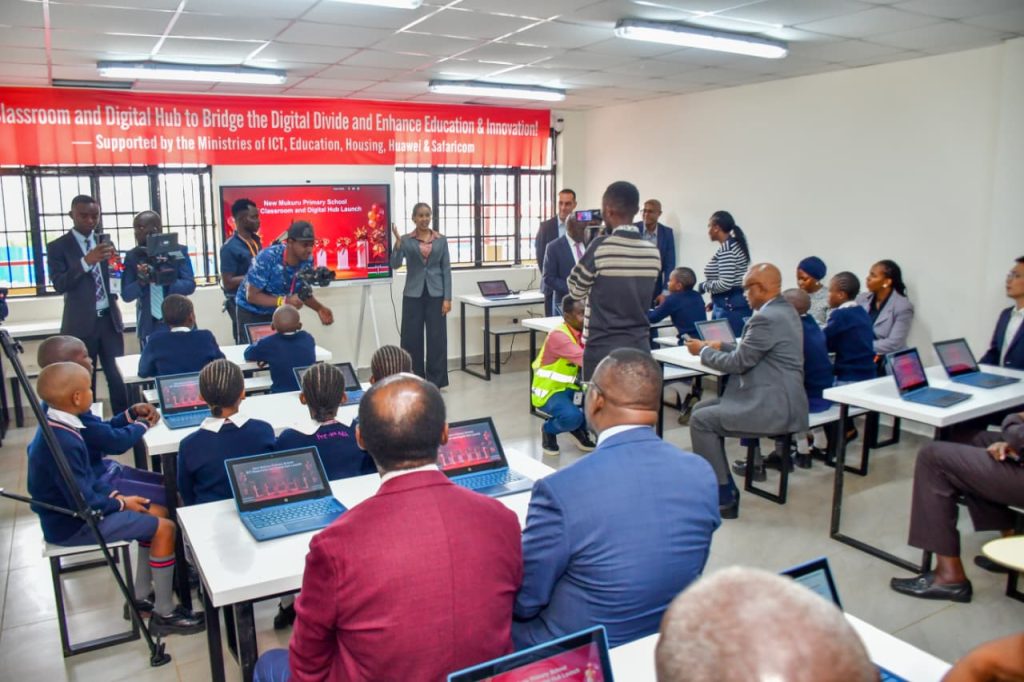
    Kenya has marked a major milestone in digital inclusion and education with the official launch of the Mukuru Digital Classroom at New Mukuru Primary School.

    The initiative, unveiled as part of the Connected Africa Summit 2026, highlights how integrated digital infrastructure and strong partnerships are transforming learning and community development in underserved areas.

    Located within the Mukuru Affordable Housing Complex, the digital classroom is equipped with modern ICT infrastructure including 20 new laptops and is supported by the broader Mukuru ICT Hub.

    The initiative is designed to enhance digital literacy, improve learning outcomes, and equip learners with the skills needed to thrive in a rapidly evolving digital economy.

    The launch was led by William Kabogo, alongside Eng. John Tanui, with participation from Huawei Kenya, Safaricom, education stakeholders, and community representatives.

    Speaking during the launch, Cabinet Secretary William Kabogo emphasized the central role of education in Kenya’s digital transformation:

    “Kenya’s digital future begins in the classroom. Through initiatives like the Mukuru Digital Classroom, we are ensuring every learner, regardless of background, has the opportunity to gain the skills needed to thrive in the digital economy.”

    Beyond the Classroom: Building a connected and secure community

    A recent intervention by Huawei Kenya at the Mukuru ICT Hub demonstrates how end to end digital infrastructure can accelerate inclusive development. The facility has been equipped with fibre to the office connectivity, multiple WiFi 7 access points, CCTV surveillance systems, and a smart classroom screen (IdeaHub), creating an ecosystem that supports learning, safety, and economic activity.

    Affordable fibre packages, priced at nearly half of typical market rates, are also being extended to residents, ensuring that connectivity is not only available but accessible to low income households. For Mukuru families, this means digital opportunity now extends beyond the classroom into homes, businesses, and the wider community.

    The impact of this infrastructure is multidimensional. CCTV systems are enhancing security by deterring crime and fostering safer public spaces, which in turn supports small businesses and enables extended economic activity. Within the classroom, the IdeaHub smart screen is transforming teaching and learning into an interactive, digital first experience, enabling multimedia instruction, collaborative learning, and early exposure to critical skills such as coding and digital literacy.

    These interventions contribute directly to key development priorities, including quality education, innovation and infrastructure, reduced inequalities, and the creation of sustainable, inclusive communities.

    Partner perspectives on digital inclusion

    Nyagitari Bosire, Tribe Lead, Fixed Data Products and Proposition at Safaricom, underscored the importance of connectivity:

    “Reliable connectivity is the foundation of modern learning. Through strong partnerships, we are helping create connected classrooms that open up quality education opportunities for learners in underserved communities.”

    Freshina Morogo, ICT Solutions Manager at Huawei Kenya, highlighted the broader role of technology in bridging inequality:

    “Technology can be a powerful equaliser when applied where it is needed most. By supporting smart learning environments, we are helping build digital inclusion and laying a strong foundation for future ready skills from an early age.”

    Ruth Ogachi welcomed the initiative as transformative for the school community:

    “The Mukuru Digital Classroom represents new possibilities for our learners and teachers. Access to digital tools will enrich learning, improve outcomes, and prepare our students for a fast-changing world.”

    More than a classroom, the Mukuru Digital Classroom is a gateway to opportunity, demonstrating how coordinated investments in infrastructure, education, and connectivity can unlock potential at the community level.

    As one of the flagship community impact initiatives showcased during the Connected Africa Summit, it stands as a compelling example of how collaboration between government and the private sector can bridge learning gaps, empower underserved communities, and build a future ready generation.


  • Kenya to host Africa CDC Eastern Africa Regional Centre in Nairobi

    Kenya to host Africa CDC Eastern Africa Regional Centre in Nairobi

    Kenya has signed a framework agreement with the Africa Centres for Disease Control and Prevention to establish the Eastern Africa Regional Coordinating Centre in Nairobi, positioning the country as a key hub for regional health security.

    The agreement was presided over by Health Cabinet Secretary Aden Duale, who said the Centre will serve 14 Member States and strengthen coordination, preparedness, and response to public health emergencies across Eastern Africa.

    The signing took place during the inauguration of the High-Level African Health Leadership Ministerial Committee (AHLMC), co-chaired by Africa CDC Director-General Jean Kaseya, on the sidelines of the World Health Summit Regional Meeting 2026 in Nairobi.

    Established in early 2026 under the African Union, the AHLMC is expected to drive reforms aimed at building resilient and equitable health systems, reducing reliance on external financing, and accelerating investment in sustainable health infrastructure across the continent.

    The development signals a growing shift by African countries towards greater ownership of health solutions, including strengthening Africa CDC’s role in continental health security, advancing the operationalisation of the African Medicines Agency, and scaling up local pharmaceutical manufacturing.

    Kenya continues to advance its Universal Health Coverage agenda through the Social Health Authority, with a focus on reducing out-of-pocket expenditure and improving access to essential health services.

    The high-level session brought together senior leaders including Principal Secretary for Public Health and Professional Standards Mary Muthoni, WHO Director-General Tedros Adhanom Ghebreyesus, African Union Commission Chairperson Mahamoud Ali Youssouf (virtually), Nigeria’s Health Minister Muhammad Ali Pate, and Egypt’s Health Minister Khaled Abdel Ghaffar, among other delegates.

  • Algeria eliminates trachoma as a public health problem

    Algeria eliminates trachoma as a public health problem

    The World Health Organization (WHO) Director General Dr. Tedros Ghebreyesus has congratulated Algeria on eliminating trachoma, marking a major milestone as 29 countries globally have now defeated the leading infectious cause of blindness.

    This achievement makes Algeria the 10th country in the WHO African Region and the 29th country globally to eliminate trachoma, the leading infectious cause of blindness.

    Trachoma is the leading infectious cause of blindness worldwide, affecting the eye.

    Globally, the disease remains endemic in 30 countries and is responsible for the blindness or visual impairment of about 1.9 million people.

    According to latest figures, 97 million people live in trachoma endemic areas and are at risk of trachoma blindness.

    The disease is caused by the bacterium Chlamydia trachomatis, which is spread through contact with infected eye discharge via hands, clothing, or flies.

    Repeated infections can lead to scarring of the inner part of the upper eyelid, turning eyelashes inward to scratch the eyeball: a painful condition known as trachomatous trichiasis that can lead to visual impairment and blindness.

    “Algeria’s elimination of trachoma is a historic triumph that connects the past, present, and future of public health, and is rooted in a century-long commitment,” said Dr Tedros Adhanom Ghebreyesus, WHO Director-General.

    Adding that: “This milestone proves that with sustained political will and on-the-ground leadership from committed health professionals, we can eliminate neglected tropical diseases and build a healthier, more resilient future for all.”

    Algeria’s fight against trachoma dates back to the early 20th century with the establishment of the Pasteur Institute of Algeria in 1909. After independence, Algerian physicians, led by Prof Mohamed Aouchiche, took charge of this work. Their efforts were strengthened by the creation of a national public healthcare system that began to provide services free of charge to patients in 1974.

    For decades, Algeria implemented the WHO-recommended SAFE strategy to eliminate trachoma. These activities included provision of surgery to treat the late blinding stage of the disease (“trachomatous trichiasis”, TT), conducting mass administration of antibiotic treatment, carrying out public awareness campaigns to promote facial cleanliness and personal hygiene as well as improvement in access to water supply and sanitation.

    To accelerate trachoma elimination, Algeria implemented a three-year strategy in 2013–2015 and established a National Expert Committee. The focus was on eliminating trachoma in 12 southern wilayas (provinces), including Adrar, Laghouat, Biskra, Béchar, Tamanrasset, Ouargla, El Bayadh, Illizi, Tindouf, El Oued, Naama, and Ghardaïa, where the disease remained a public health problem.

    WHO-compliant surveys conducted in 2022 confirmed that the elimination threshold for active trachoma was achieved in all areas and the TT threshold was achieved in all but three areas.

    In those three areas, full geographic coverage with door-to-door screening and management of TT cases was subsequently carried out to ensure TT elimination was attained.

    In December 2025, the Ministry of Health of Algeria compiled and submitted a dossier in which evidence was provided that the country meets the criteria set by WHO for elimination of trachoma as a public health problem. The existence of a well-functioning school health system, a health information system, broad access to water and sanitation, and extensive coverage of specialized eye care throughout the country are notable strengths, as they provide assurance for the post-validation period in the country.

    “Trachoma devastates individuals and communities profoundly, with blindness or visual impairment causing painful economic and livelihood loss. The milestone by Algeria is a major achievement that transforms the health and well-being of children, women and entire families and demonstrates that eliminating neglected tropical diseases is possible with consistent and coordinated efforts,” said Dr Mohamed Janabi, WHO Regional Director for Africa.

    WHO recommends that surveillance continues even after validation of the elimination, with the aim of closely monitoring populations in which trachoma was previously endemic to ensure there is no resurgence. WHO is currently supporting Algeria’s health authorities in this endeavour.

    “WHO’s validation marks the culmination of sustained efforts, exemplary multisectoral coordination, and enduring commitment. It attests to our country’s capacity to meet the most rigorous public health standards standards grounded in prevention, equitable access to care, and the improvement of living conditions,” said Professor Mohamed Seddik Ait Messaoudene, Minister of Health.

    “This achievement represents a collective victory the fruit of nearly fifty years of national mobilization and underscores the Algerian State’s unwavering commitment to the health of its population. This success was made possible through the mobilization of all stakeholders, the dedication of health professionals, the support of key partners, and the technical assistance of the WHO,” he added.

    Neglected tropical diseases and trachoma elimination efforts

    Neglected tropical diseases are a diverse group of 21 conditions associated with devastating health, social and economic consequences. They affect more than one billion people globally and their burden is mainly prevalent among impoverished communities in tropical areas.

    Public health targets for the control, elimination and eradication of these conditions were set in the road map for neglected tropical diseases 2021–2030.

    Trachoma is the first neglected tropical disease to be eliminated in Algeria. Following validation of elimination of trachoma as a public health problem, Algeria becomes the 62nd country globally and the 23rd in the WHO African Region to have eliminated at least one neglected tropical disease.


  • WHO prequalifies first-ever malaria treatment for newborns and infants, adds new diagnostic tests

    WHO prequalifies first-ever malaria treatment for newborns and infants, adds new diagnostic tests

    The World Health Organisation (WHO) has prequalified the first malaria treatment specifically designed for newborns and young infants (2–5kg), marking a major step in closing a long-standing treatment gap and improving safe access to care for vulnerable babies in malaria-endemic regions.

    The prequalification designation indicates that the medicine meets international standards of quality, safety and efficacy, and will help to expand access to quality assured treatment for one of the most underserved patient groups.

    The newly prequalified treatment, artemether-lumefantrine, is the first antimalarial formulation designed specifically for the youngest malaria patients.

    Until now, infants with malaria have been treated with formulations intended for older children, which increase the risk of dosing errors, side effects and toxicity.

    WHO prequalification will enable public sector procurement, contributing to closing a long-standing treatment gap for some 30 million babies born each year in malaria-endemic areas of Africa.

    “For centuries, malaria has stolen children from their parents, and health, wealth and hope from communities,” said Dr Tedros Adhanom Ghebreyesus, WHO Director-General. “But today, the story is changing. New vaccines, diagnostic tests, next generation mosquito nets and effective medicines, including those adapted for the youngest, are helping to turn the tide. Ending malaria in our lifetime is no longer a dream it is a real possibility, but only with sustained political and financial commitment. Now we can. Now we must.”

    New prequalified tests

    On 14 April 2026, WHO also prequalified three new rapid diagnostic tests (RDTs) designed to address emerging diagnostic challenges for malaria. The most common malaria RDTs for P.falciparum parasite work by detecting the protein, known as HRP2.

    But based on reported studies and surveys in 46 countries, some strains of the malaria parasite have lost the gene that makes this protein so they become “invisible” to HRP2-based RDTs, leading to false-negative results. In countries in the Horn of Africa, up to 80% of cases were missed, leading to delayed treatment, severe illness, and even death.

    The new tests address this issue by targeting a different parasite protein (pf-LDH) that the malaria parasite cannot easily shed. They provide a reliable, quality-assured alternative where HRP2-based tests are failing.

    WHO now recommends that countries switch to these alternative RDTs when more than 5% of cases are missed due to pf-hrp2deletions. This ensures accurate diagnosis, appropriate treatment, and protects hard-won malaria control gains especially for the most vulnerable communities.

    The announcements come as WHO and partners launch the 2026 World Malaria Day campaign, “Driven to End Malaria: Now We Can. Now We Must.” The theme is a rallying cry to seize the moment to protect lives now and fund a malaria free future.

    According to the World malaria report 2025, there were an estimated 282 million cases and 610 000 deaths in 2024 an increase from 2023. While 47 countries have been certified malaria-free and 37 countries reported fewer than 1000 cases in 2024, progress at the global level is stalling. Gains are at risk due to multiple challenges, including drug resistance, insecticide resistance, diagnostic failure, and severe reductions in international development assistance.

    Despite these challenges, substantial progress has been made, with an estimated 2.3 billion malaria infections prevented and 14 million lives saved worldwide since 2000.

    Twenty-five countries are now rolling out malaria vaccines, protecting millions of children, and next-generation mosquito nets make up 84% of all new nets distributed. These advances demonstrate what is possible when all partners work together to innovate and deliver on the promises towards ending malaria for all.
     

  • UNICEF warns climate impacts on education could lead to Ksh.49T in lost earnings across Eastern, Southern Africa

    UNICEF warns climate impacts on education could lead to Ksh.49T in lost earnings across Eastern, Southern Africa

    Climate-related disasters have already cost education systems in Eastern and Southern Africa 49.4 trillion Kenyan shillings ($1.3 billion) in direct loss and damage to schools and teaching infrastructure, and disrupted learning for 130 million children, according to a new new report.

    The UNICEF and Dalberg report, Protecting Children’s Learning Futures: Quantifying Climate-Related Loss and Damage in Eastern and Southern Africa estimates these disruptions have resulted in up to $140 billion in lost future earnings, which could rise to $380 billion by 2050 as climate impacts intensify and affect up to 520 million students.

    “Children are paying the highest price for a crisis they did not create,” said Etleva Kadilli, UNICEF Regional Director for Eastern and Southern Africa. “For the first time, this report shows the scale of climate-related loss and damage to education, yet the impact on children remain largely invisible in financing decisions. This must change.”

    The UNICEF and Dalberg report includes in-depth analysis from Ethiopia, Kenya, Mozambique, Somalia and Zambia, demonstrating how increasing and more intense extreme weather events including floods, droughts, cyclones and heatwaves are destroying school infrastructure, forcing children out of classrooms, and disproportionately affecting girls, children with disabilities, and marginalized communities.

    Zambia’s experience illustrates the scale and human toll. Between 2005 and 2024, floods and droughts disrupted learning for 5 million students and caused USD 60 million in immediate education infrastructure losses, while reducing future earnings by up to USD 5 billion.

    The severe 2023–2024 El Niño drought in Southern Africa, one of the worst in decades, left nearly 10 million people without food, water, or power, forcing schools to reduce hours, close temporarily, or send students home early. Rural children and girls were disproportionately affected, with many dropping out to support family livelihoods or facing increased child marriage risks.

    Despite these impacts, education receives less than 1.5 per cent of global climate finance, leaving education systems exposed to repeated cycles of loss and recovery. The UNICEF and Dalberg analysis shows that strengthening schools to withstand climate shocks not only protects education but delivers strong economic returns, with every $1 invested generating up to $13 in benefits by reducing damage and interruptions, safeguarding learning continuity, and preserving children’s long-term development and productivity.

    “Without stronger prioritization in climate finance, education will continue to bear the brunt of climate impacts, driving repeated disruption,” continued Kadilli. “We must design education systems that anticipate shocks, protect early and foundational learning, and keep schools open. Otherwise, the true cost of climate loss and damage will be measured in lost human potential.”

    As the FRLD Board meets in Livingstone later this week, recognizing children not only as those most affected, but as rights-holders with needs, capacities and voices that must shape recovery and resilience, is essential. To protect children’s futures and further advance Africa’s long-term development, UNICEF urges governments, donors, and climate funds to;

    Strengthen the integration of education within national climate frameworks: Explicitly reference education in National Adaptation Plans (NAPs) and Nationally Determined Contributions (NDCs), to help unlock access to climate and loss and damage financing.

    Apply a climate risk lens to domestic education financing: Ensure budget allocations to education are climate informed, prioritizing the critical, foundational stage of learning for children and continuity of education in the face of climate shocks.

    Scale and target international climate finance for education: Ensure major climate funds, including the Green Climate Fund, Adaptation Fund and the Fund for Responding to Loss and Damage (FRLD), allocate dedicated resources to education, with FRLD specifically supporting unavoidable losses when climate impacts exceed what education systems can adapt to.

  • KMTC Homa Bay students shine at 2026 KMA Conference, invited to present in Zambia

    KMTC Homa Bay students shine at 2026 KMA Conference, invited to present in Zambia

    Kenya Medical Training College (KMTC) students from Homa Bay Campus have taken centre stage at the 53rd Kenya Medical Association (KMA) Annual Scientific Conference in Naivasha after presenting an innovative, student-led digital solution in clinical training.

    The innovation, dubbed MedHist, is an AI-powered clinical history-taking simulation platform developed by third-year Clinical Medicine students Angel Cephas and Ann Wangari.

    The project was selected for presentation in the conference’s Early Innovators category following the submission of an abstract in response to a call from the KMA.

    Presenting at the conference, Angel Cephas explained that the platform is designed to strengthen clinical training through guided practice. “MedHist helps students practise structured patient interviews in a safe and repeatable environment while receiving real-time feedback,” she said.

    “Our goal was to strengthen clinical reasoning and communication before students interact with real patients,” she added.

    The platform guides users through the history-taking process, assesses response quality, and provides corrective suggestions, helping to build confidence and consistency in clinical practice.

    Ann Wangari, who co-developed the platform, noted that the innovation was informed by challenges experienced during training.

    “Many students may face limited patient exposure and inconsistent clinical practice opportunities. This platform supports continuous learning and better prepares students for real clinical encounters,” she told conference participants.

    The presentation received positive feedback from medical practitioners, with several expressing interest in adopting the platform within their institutions.

    The innovation has also attracted regional attention, with the students invited to present MedHist to medical practitioners in Zambia.

    Speaking during the conference, CEO Dr. Kelly Oluoch commended the students for their creativity and commitment to advancing healthcare training.

    He noted that the innovation provides a practical response to gaps in clinical exposure. Dr. Oluoch, who addressed delegates under the theme “Beyond Resilience: Building Smart, Connected and Inclusive Systems,” said the recognition of the students’ work at a national platform underscores KMTC’s growing role in health innovation and research.

    Homa Bay Campus Principal, Florence Oloo, lauded the students for their achievement, noting that the project had earlier stood out during the Campus Science Week held between April 6 and 10, 2026. “This is one of the most outstanding innovations we have seen at the campus level. It reflects the creativity and potential of our students,” she said.

    The weeklong KMA Annual Scientific Conference, which ends Friday, April 17, 2026, brings together healthcare professionals, educators, researchers, and policymakers to shape healthcare policy, practice, and professional standards in Kenya.