Author: Christine Muchira

  • SB 58: The hits, misses and way forward

    SB 58: The hits, misses and way forward

    Curtain came down for the Bonn Climate Change Conference after two weeks of intense negotiations offers and counter offers.

    More than 4800 delegates attended the meeting with notable hits and misses.

    One of the big hits was the adoption of the agenda for COP28 which had proved to be elusive.

    However an agreement on some of the crucial agenda items, like the Global Stock Take, Global Goal on Adaptation and the hosting of the Santiago Network for Loss and Damage never registered much progress.

    The global stocktake matter will be concluded at COP28.

    The Pan African Justice Alliance Executive Director Dr. Mwenda Mithika hailed the delegates for spending hours on end to hammer a deal on the agenda.

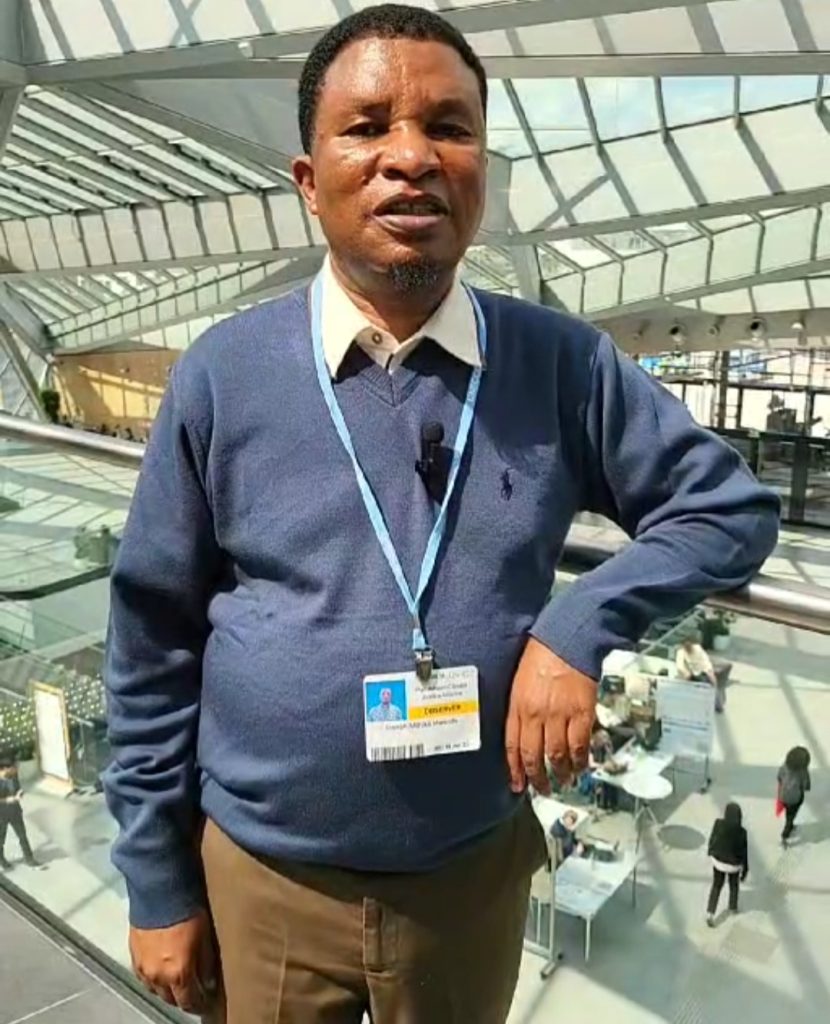
    Pan African Justice Alliance Executive Director Dr. Mithika Mwenda

    “Negotiations are hard especially when so much is at stake and so having taken nearly two weeks to agree an agenda, just shows how tough the negotiations can get”. Said Dr Mithika.

    Other discussions and events at the Bonn Climate Conference focused on climate finance, notably the provision of adequate and predictable financial support to developing countries for climate action, including setting a new collective quantified goal on climate finance in 2024.

    On the global goal on adaptation, Parties agreed on structural elements for a Dubai decision.

    Another notable miss lack of a draft conclusion in the text on selecting the secretariat of the Santiago network for averting, minimising and addressing loss and damage associated with the adverse effects of climate change.

    Delegates failed to agree whether the fund would be domiciled in Nairobi or at the Carribean Investment bank.

    The issue will now be up for debate at the 28th Conference of Parties (COP28) in Dubai later in 2023.

    As the World waits for the biggest climate change conference in December, focus now turns to the Africa Climate Week, 4-8 September in Nairobi, Kenya and the Asia-Pacific Climate Week, in Johor, Malaysia with the dates expected to be announced soon.

  • EAC rolls out campaign to grow agri-export trade

    EAC rolls out campaign to grow agri-export trade

    The East African Community (EAC) has launched a campaign aimed at creating awareness on the agri-export trade opportunities that have been created through the EU-EAC Market Access Upgrade Programme (MARKUP).

    Through the campaign, small and medium-sized enterprises (SMEs) in the agricultural value chain, co-operatives and farmers, as well as government entities in the EAC will access information and tools on agri-export trade.

    Speaking at the 14th June, 2023 launch of the campaign, Flavia Busingye, the Acting Director of Customs at the EAC Secretariat, said that MARKUP had created numerous trade opportunities for agri-SMEs in the region.

    “The campaign ‘MARKUP: Growing agri-export markets’ aims to raise awareness of the opportunities in agricultural trade, and to demonstrate that international markets are within reach of East African exporters,” said Busingye.

    Busingye that since its inception in 2018, MARKUP had generated useful resources for growth of agri-exports in five EAC Partner States, namely Burundi, Kenya, Rwanda, Uganda and Tanzania.

    She said that the programme, which is a collaborative initiative of the EAC, the EU, the German government and other development partners, has generated resources such as the EAC Quality Portal, the Financing Gateway and the Burundi Trade Information Portal.

    Market studies, practical guides and handbooks as well as policy briefs have also been produced in the EAC-EU initiative, she said, and added, “MARKUP has contributed to stronger quality infrastructure in the region, including harmonization of standards and frameworks for intra-regional trade in food products.”

    “I urge you to actively participate in the campaign through the various channels and platforms,” she said.

    She said that SMEs in the agriculture sector face numerous constraints in trading within the EAC region.

    She highlighted constraints such as lack of access to market information, including on standards and quality requirements; cumbersome and sometimes costly customs procedures; poor connectivity, among other things.

    “The scale and impact of these challenges rises exponentially when it comes to accessing markets outside the EAC. This is one of the reasons that we at the EAC Secretariat worked in partnership with the EU to design and roll out MARKUP,” she said.

    Also working on the programme which is being implemented by GIZ are the International Trade Centre, United Nations Industrial Development Organisation, Uganda Coffee Development Authority, Solidaridad East Africa, Oxfam and the Institute for University Co-operation.

    Max Middeke, the Deputy Programme Manager at German Development Cooperation (GIZ) – EAC Programme said that the MARKUP campaign comes at a time when the bulk of activities of the program are drawing to a close.

  • Government commits to establish National Urban Development Fund

    Government commits to establish National Urban Development Fund

    The National Government has committed to create a framework to establish, and operationalise of the National Urban Development Fund as provided for in the National Urban Development Policy in collaboration with the Council of Governors.

    This came out clearly on the last day of the First Edition of the Kenya Urban Forum 2023 in Naivasha that brought together Government officials from the Ministry of Lands, Public Works, Housing and Urban Development, the Council of Governors, the World Bank, UN-Habitat, Kenya Institute of Planners, National Land Commission, among other partners.

    The Forum under the theme “The Future is Urban Strategic Pathways to Inclusive and Sustainable Urbanization in Kenya was closed by Deputy President Rigathi Gachagua after two days of deliberations.

    It highlighted the need for more emphasis on urban sector enabling Legislations, Policies, and Global urbanization frameworks including the Resolutions of the 2nd United Nations Habitat Assembly, the New Urban Agenda, and the SDG11 Indicators to anchor the urbanization discourse.

    In the resolutions, the National and County Governments in partnership with urban sector stakeholders was tasked to review and harmonize the urban sector Legislations among them the County Government Act 2012, the Physical and Land Use Planning Act 2019, the Urban Areas and Cities Act 2011 (amended in 2019) to guide urban planning and development.

    Housing PS Charles Hinga who read the resolutions said, “The National Government in collaboration with the County Governments, and other urban sector stakeholders shall review the Sessional Paper No. 1 of 2016 on the National Urban Development Policy to align to existing urbanization dynamics and realities.”

    At the same time, County Governments with the support of National Government and urban sector stakeholders shall establish mechanisms to leverage own-source revenue potentials as identified in the study by the Commission on Revenue Allocation including adoption of innovative funding mechanisms such as the Land Value Capture

    PS Hinga said, the National and County governments shall strengthen and expand cooperation and multilevel climate action in order to enhance inclusion of local-level contributions in new and updated nationally determined contributions and support the implementation of nationally determined contributions at the local level.

    The forum further resolved that the National and County Governments shall collaborate in the provision of adequate housing for all including the integration of urban social rental housing into the Affordable Housing Program.

    And in need for a harmonized approach to urban land management, all public land shall be inventorized, planned, surveyed, and titled for land banking to support public purpose developments and investments.

    The PS said as the conveners of they will take responsibility to ensure the 13 resolutions are achieved adding Kenya can’t run away from the problems facing the urban poor across the Country.

  • Iranian Ambassador keen on investing in Siaya

    Iranian Ambassador keen on investing in Siaya

    Iranian Ambassador to Kenya Dr. Jafar Barmaki has expressed his country’s willingness to invest in the manufacturing and ICT sectors in Siaya County.

    Dr. Jafar who paid a courtesy call on Siaya Governor, James Orengo Friday called on the County Government to identify key high impact areas that the Iranian Government can partner with Siaya to make the plans achievable in the shortest time possible.

    “I may not here to bring you money but I can bring you a business that will generate money and that will be more beneficial than money, and both sides can benefit from that, this is what I believe in” said the Ambassador.

    Among the key areas identified in the consultation with the Iranian Ambassador were mechanized agriculture, Education, ICT among others.

    Dr. Jafar said that the Iranian Government would be willing to consider facilitating the county hospitals with medical equipment even on credit upon agreements between the two governments.

    Governor Orengo directed that the county should develop an area to attract investment from the public and private sector in Iran, adding that in less than ten days the county government should draft a memorandum of understanding to be floated to the Iranian government through the ambassador on potential areas of partnership and investment between the county and Iran.

  • CJ launches e-filing in Kisumu, Siaya, Homa Bay counties

    CJ launches e-filing in Kisumu, Siaya, Homa Bay counties

    Chief Justice Martha Koome has Friday launched the electronic filing system in Kisumu, Siaya and Homa Bay counties.

    This follows the e-filing adoption in Nairobi and Mombasa counties

    Speaking during the launch ceremony the Chief Justice said Kenyans will no longer be hindered by geographical constraints or the burden of time-consuming journeys to physically submit pleadings and legal documents to courts.

    “The process will now be as straightforward as a click of a button, available 24 hours a day, seven days a weekshe said.

    Deputy Governor of Kisumu County Dr. Mathew Owili lauded the Judiciary for the homegrown e-system that will enable more citizens access justice remotely.

    He added that ordinarily organisations outsource ICT solutions that often end up failing because they are not adequately responsive to customer needs.

    “ICT will change the way justice is delivered and lost files will be a thing of the past, this will improve case management and service delivery, said Dr.Owili

    Justice Isaac Lenaola who is a Supreme Court Judge and Chairperson of the ICT and Integrated Court Management System promised that litigants will now access judgments within seconds of uploading.

    He added that the system will enhance transparency and efficiency in assessment of court fees and increase revenue collection.

    The LSK President Eric Theuri acknowledged that e-filing will ease the manner in which court cases are filed and processed. The system will infuse efficiency and reduce the cost of running law firms,” he said.

    CJ Koome also opened a Small Claims Court and designated a specialised Sexual Gender Based Violence Court (SGBV) at the Kisumu Law Courts. The SGBV court becomes the third after Shanzu and Siaya while the Small Claims Court becomes the 12th in the Republic.

    While designating the SGBV court, the CJ noted that the initiative to establish the court in Kisumu was a testament of the Judiciary’s unwavering commitment to safeguard the most vulnerable. “To the victims of SGBV, our message is clear: You are not alone. You are seen, you are heard, and justice will be your shield and your refuge,said Justice Koome.

    Justice Agnes Murgor, Judge of Appeal and President of the International Women Judges Association- Kenya Chapter noted that the establishment of SGBV courts was an answer to many years of agitation to establish specialized courts with a survivorcentred approach.

    Women Judges and Magistrates were concerned about the length of time that it took for SGBV cases to be determined, the negative biases experienced by survivors of violence, the high rate of early termination of cases because either the survivors or witnesses failed to show up in court to avoid being intimidated and revictimized or due to the perpetrator’s continued threats from within the communities and lack of preservation of forensic evidence,” said Justice Murgor.

    While inaugurating the Small Claims Court in Kisumu, the Chief Justice stated that this was significant milestone for Mwananchi.

    This is a court that acknowledges that every claim, no matter how small, deserves its day in court. We recognize the significance of every dispute, every concern, and every injustice, no matter the monetary value,she said.

    The LSK welcomed the opening of the Small Claims Court in Kisumu. LSK President Theuri noted that it takes an average of 51 days to conclude a case in the Small Claims Court which is less than the statutory 60 days.

    He lauded the adjudicators for the efficiency of the court

  • Treasury allocates Ksh 49.9B to support food, nutrition security

    Treasury allocates Ksh 49.9B to support food, nutrition security

    Government has set aside Ksh 49.9 billion for relevant programs in the budget to support the aspirations of attaining food and nutrition security.

    Speaking while presenting the 2023/24 budget at the National Assembly, National Treasury Cabinet Secretary Prof. Njuguna Ndung’u said that out of the proposed Ksh 49.9 billion; Ksh 5.0 billion is proposed for the Fertilizer Subsidy Programme.

    For the National Agricultural Value Chain Development Project he proposed Ksh 8.6 billion; Ksh 2.7 billion for the National Agricultural and Rural Inclusivity Project and Ksh 2.1 billion for the Kenya Cereal Enhancement Programme.

    “Ksh 2.8 billion will cater for Emergency Locust Response; Ksh 1.4 billion for Small Scale Irrigation and Value Addition Programme; Ksh 1.3 billion for Food Production and Nutrition Security Programme; Ksh 500 million for Agricultural Sector Development Support Programme and Ksh 596 million for the Food Security and Crop Diversification Project.” Said CS Ndung’u.

    Similarly, to improve livestock production, the CS proposed budget allocations of Ksh 3.7 billion to De-Risking, Inclusion and Value Enhancement of Pastoral Economies Programme; Ksh 2.1 billion for Livestock Value Chain Support Project; Ksh 1.5 billion for Kenya Livestock Commercialization Programme and Ksh 166 million for the Embryo Transfer Project.

    He allocated Ksh 350 million for the Development of the Leather Industrial Park at Kenanie; Ksh 220 million for Livestock Production; and Ksh 132 million for Leather Value Chain.

    To ensure legitimacy of land ownership, the CS proposed allocation of Ksh 1.2 billion for Processing and Registration of Title deeds.

    Another Ksh 2.6 billion for Settlement of the Landless as well as Ksh 755 million for Digitization of Land Registries and Ksh 138.3 million for Construction of Land Registries.

    Agricultural transformation he noted is one of the five government’s strategic priorities under the Bottom-Up Economic Transformation Agenda that is geared towards economic turnaround and inclusive growth.

    The government plans to implement interventions to ensure food security in the country through climate change mitigation and adaptation, thereby reducing the cost of living.

    Treasury CS says: “As part of the country’s long-term food security plan, the Government, working with the private sector, will continue to subsidize fertilizer in order to make it available and improve productivity in counties.”

    This intervention is also aimed at creating jobs as agriculture has the highest employment multiplier effect owing to its strong forward and backward linkages to other sectors of the economy.


  • Caroline Njeri Kabucho appointed Registrar, Magistrates Courts

    Caroline Njeri Kabucho appointed Registrar, Magistrates Courts

    Caroline Njeri Kabucho has been appointed as the Registrar, Magistrates Courts.

    According to a statement by the Judiciary, her appointment took effect on 31st May 2023.

    Until her appointment, Kabucho was serving as the Senior Principal Deputy Registrar, Judiciary.

    She joined the Judiciary in 2003 as a District Magistrate II (Professional) and rose through the ranks serving in the positions of Resident Magistrate, Senior Resident Magistrate and Principal Magistrate.

    With 21 years of experience as a legal practitioner, Kabucho also boasts of vast expertise in strategic leadership and human resource management.

    In her new role, Kabucho will oversee coordination of support services in all Magistrates Courts.

    She holds a Bachelor of Laws from University of Pune and a Postgraduate Diploma in Law from Kenya School of Law.

  • Governor Mung’aro sacks Kilifi County Public Service Board

    Governor Mung’aro sacks Kilifi County Public Service Board

    Kilifi Governor Gideon Mung’aro has sacked the entire Kilifi County Public Service Board a day after they were impeached by members of the Kilifi County Assembly.

    The MCAs had unanimously sent members of the Kilifi County Public Service Board packing over allegations of gross misconduct, violation of the constitution and incompetence.

    All the 46 Members of the County Assembly (MCAs) present approved a report of the Departmental Committee on Devolution, Public Service and Disaster Management, that had recommended the ouster of the board members. The assembly has 51 members.

    Those who were sent home included Chairperson Rose Ngowa, vice chairman Alphonce Mrima and members Patience Mukambe Mwangiri and Raymond Mramba Mweni.

    “Having received a report from the departmental committee on devolution, public service and disaster management of the Kilifi County Assembly on removal of members of the County Public Service Board and with powers vested in me I have sacked the Kilifi Public Service Board. I assure residents of Kilifi that the move will not affect service delivery” said Mung’aro.

    The move follows a petition by a senior officer in the County Department of Environment, Zena Mohamed, who accused the board of discriminating against her during the recruitment of the County Director of Environment.

    Mohamed had complained that the board went ahead with the recruitment exercise in disregard of a court order permanently injuncting it and recruited Jimmy Kahindi Yaa, whose earlier appointment to the position had been negated by the Employment and Labour Court.

    Two of the board members, who participated in the recruitment exercise were not affected as they left the board when Governor Gideon Mung’aro appointed them to the offices of County Executive Committee Member and Chief Officer respectively.

    Committee Chairman Samson Zia Kahindi said the committee had found the board guilty of all counts, which included, among others, failure to submit annual reports to the County Assembly as required by the County Governments Act 2012 and the presence of ghost workers in the county government’s payroll.

    He told journalists at the assembly buildings that Governor Gideon Mung’aro would have to nominate new members of the board, who will also have to be vetted by the assembly before the governor formally appoints them to office.

    “We found this board guilty of many violations including gross misconduct, violation of the constitution and incompetence, that is why we have resolved unanimously to send its members home,” Zia, who is also the MCA for Adu Ward, said.

    He also accused the board of overseeing the recruitment of ghost workers, who he claimed were drawing salaries without doing any work.

    Nominated MCA Mariam Mkumbi said the board erred in continuing with a recruitment process that had been declared illegal by the Employment and Labour Court, although she did not say whether the process would be started afresh.

    She dismissed the excuse that the board failed to submit its annual reports to the county assembly due to budgetary constraints, saying that if that was the case, the board should have written to the assembly through the Budget and Appropriation Committee for intervention.

    When the board appeared before the committee during the hearing of the petition, Mrs. Ngowa told the committee that the board had failed to submit its annual reports due to budgetary cuts and frustration from the then County Secretary.

    Ngowa also protested that only four of the board members were being targeted when the decision was made by six board members, two of whom were still serving in the county government as County Executive Committee Member and Chief Officer.

    The board’s lawyer, Njoroge Mwangi, said the board did not break any law when it repeated the recruitment process after the court outlawed the first exercise.

    This became the second board to be disbanded under the watch of Governor Gideon Mung’aro, who on May 10 this year sent the entire Malindi Municipality Board packing following complaints of poor garbage disposal in the tourist resort metropolis.

  • CA to introduce Digital Sound Broadcasting by 2026

    CA to introduce Digital Sound Broadcasting by 2026

    The Communication Authority of Kenya (CA) have initiated the process of developing a framework to introduce Digital Sound Broadcasting in the country.

    Speaking during the 6th KUZA awards dubbed – shaping the future of broadcasting towards the creative economy, CA Director General Ezra Chiloba said the Authority is projecting to have the Digital Sound Broadcasting (DSB) operationalised within the next three years.   

    The decision he says has been occasioned by the need to satisfy the growing demand for radio broadcasting services that have overtaken the existing FM radio frequencies.

    This initiative is intended to ensure efficient utilisation of the scarce broadcasting spectrum and satisfy the growing demand for radio broadcasting services,” said Chiloba.

    According to the regulator, scarcity of the FM radio spectrum has resulted in a backlog of applications, with over 1000 investors in queue.

    Adoption of DSB services would greatly improve broadcast signal quality and spectrum efficiency, in addition to adding new programming services by lowering the bar for entry of programme operators through sharing of multiplex infrastructure.

    Despite the challenges the DG says the Authority is still recording growth in broadcasting.

    According to the Communication Authority statistics, as at March 2023, CA had licensed 306 Commercial Free to Air TV stations, this is up from 60 channel back in 2017.

    Additionally the DG notes that as at March 2023: “We had 243 Commercial FM radio up from 178.”

    Adding that: “Pay TV has experience a similar positive shift, moving from 2 Service Providers to 22 Providers.” 

    Speaking of the positive impact, on the overall, the Authority has recorded significant compliance levels among broadcasters since 2017, the year when KUZA was launched.

    Similarly the DG says the Authority has improved in compliance with Local content quota 40pc requirement from 50pc in 2017 to the current over 90pc.

    He says, the compliance with the PWDs sign language insert requirement which stood at 70pc in 2017 to 100pc.

    Adding that the most sort for Childrens programming has now reached 30pc, up from a paltry 5pc back in 2017.

    “All these are in addition to other improvements, but without forgetting the arduous ‘watershed period’ requirement whose compliance level has now surpassed the 90pc marks.” Said Chiloba.


  • Number of people facing acute food insecurity rose to over 55M across IGAD region

    Number of people facing acute food insecurity rose to over 55M across IGAD region

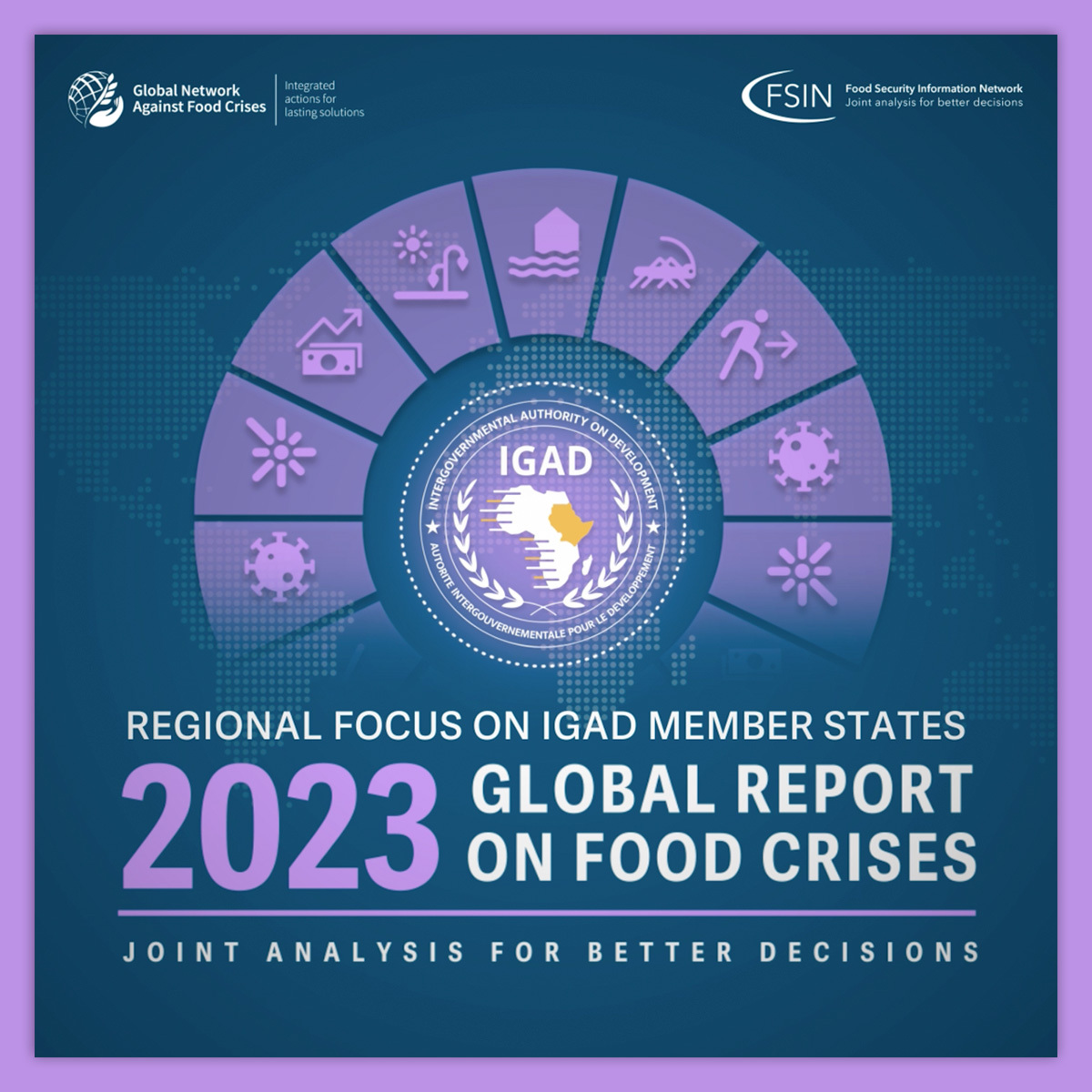
    The Member States of the Intergovernmental Authority on Development (IGAD) continued to grapple with severe food crisis in 2022, with over 55 million people facing acute hunger and requiring urgent food, nutrition, and livelihood assistance an increase of over 13 million from 2021 according to the latest IGAD Regional Focus of the Global Report on Food Crises (GRFC) 2023. 

    The Regional Focus on IGAD Member States is a by-product of the annual GRFC produced by the Food Security Information Network (FSIN) in support to the Global Network Against Food Crises (GNAFC).

    The fifth edition of the report was officially released Wednesday by IGAD in Nairobi, unveiling the alarming escalation of acute food insecurity in the region over the years.

    In 2022, an alarming 55.45 million people across seven out of the eight IGAD member states needed urgent food assistance (Djibouti, Ethiopia, Kenya, Somalia, South Sudan, Sudan, and Uganda, while no data was available for Eritrea), marking the highest number of acutely food-insecure people in the region over the past five years.

    The report highlights the devastating reality faced by 301,000 people who experienced Catastrophe (IPC Phase 5) in 2022, with Somalia and South Sudan accounting for 214,000 people and 87,000 people respectively.

    The population facing acute food insecurity in the IGAD Member States has rapidly increased since 2020, by over 10 million additional people each year.

    The worsening situation is attributed to the compounding effects of multiple shocks, including an unprecedented three-year drought in the Horn of Africa, record-breaking flooding in South Sudan, protracted conflicts, and macroeconomic challenges driven by the ongoing impacts of COVID-19 and exacerbated by the war in Ukraine.

    Hunger levels in our region are at an unprecedented high. This situation is inextricably linked to climate extremes and disasters, conflict and insecurity, and economic shocks, which are increasingly intertwined with spiralling negative consequences for tens of millions of children, men, and women”, IGAD Executive Secretary, Dr. Workneh Gebeyehu, wrote in the report’s foreword.

    2023 Projections

    Projections for 2023 paint a grim picture. Up to 30 million people are expected to require humanitarian food assistance in five countries for which projections are available – Kenya, Somalia, South Sudan, Sudan, and Uganda.

    Of these, an estimated 7.5 million people in Kenya, Somalia, South Sudan, and the Sudan are projected to face large food consumption gaps and adopt emergency coping measures (Emergency, IPC Phase 4), and more than 83,000 individuals are anticipated to face extreme food lack of food (Catastrophe, IPC Phase 5) in the most severe drought and conflict-affected areas of the region, particularly in Somalia and South Sudan.

    These projections do not account for the recent clashes in the Sudan, which will undoubtedly exacerbate the already poor food insecurity situation.

    Even if the March-May 2023 rains bring some relief from the Horn of Africa’s worst drought in more than four decades, the region will continue to deal with its catastrophic consequences in 2023 and beyond.

    The recovery of pastoral and agropastoral livelihoods from the devastating three-year drought will take years and humanitarian assistance continues to be critical until households and communities can recover.

    In the Sudan, the impact of the ongoing conflict on food availability and access is expected to drive a rapid deterioration in the food security and nutrition situation, with Khartoum and the region of Darfur most affected.

    By mid-May, more than 1 million people had fled their homes with around 843 000 people newly displaced internally and more than 250,000 people displaced to neighbouring countries.

    “The conflict in Sudan is sending hunger shockwaves across an already fragile region, as hundreds of thousands of people continue fleeing to neighbouring countries pushing up already alarming food insecurity and malnutrition levels, and further stretching scarce humanitarian resources,” said Rukia Yacoub, WFP’s Deputy Regional Director for Eastern Africa.

    Looking ahead

    The urgency and magnitude of the challenges that the Eastern Africa region faces calls for immediate and coordinated action to alleviate the suffering of millions affected by acute food insecurity, as stated in the IGAD communique on the process of addressing food crises in the region.

    “This crisis calls for a paradigm shift. To make advancements towards SDG 2 to End Hunger, we must take bolder action to build resilience against future shocks, including transforming our agri-systems to become more efficient, inclusive, and sustainable. In addition, we must increase our efforts to build and sustain peace. Conflict and food insecurity are intertwined, and this has never been clearer”, the IGAD Executive Secretary continued in the foreword.

    The message was echoed by FAO’s Sub-regional Coordinator for Eastern Africa and Representative to the African Union and to the United Nations Economic Commission for Africa Dr Chimimba David Phiri, who stated: “This report should serve as a wake-up call for us to take immediate and collective action to change our ways of working to address the root causes of food insecurity. The recent three-year drought across the Horn of Africa highlights the urgent need to upscale and institutionalize anticipatory action and climate adaptation strategies to prevent, rather than just respond to, future climate emergencies.”

    “Meanwhile, food insecurity caused by conflicts and the knock-on effects of global economic shocks highlights the critical need for efforts that sustainably build peace, increase domestic production, and reduce post-harvest losses in the IGAD region.”

    Addressing the dire food crises in the IGAD region requires urgent and coordinated efforts from international organizations, governments, the private sector, regional organizations, civil society, and communities.

    All actors are called to align efforts and share evidence and information which extend beyond immediate relief measures, and encompass long-term strategies to achieve sustainable food security in the region.