Author: Christine Muchira

  • Women, girls hit hard by attacks on health in Sudan, UN agencies warn

    Women, girls hit hard by attacks on health in Sudan, UN agencies warn

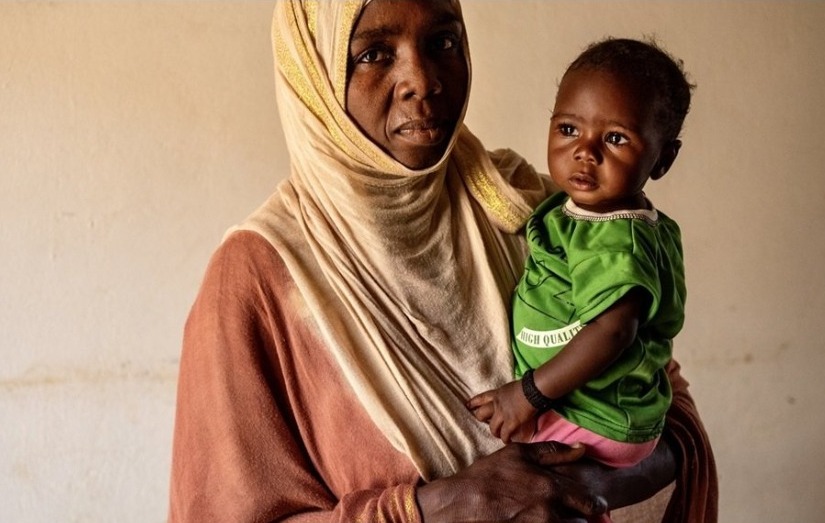
    The World Health Organization and UNFPA, the United Nations sexual and reproductive health agency, Wednesday warned that the continuing attacks on healthcare facilities, equipment and workers in Sudan are depriving women and girls of life-saving healthcare, with pregnant women hardest hit. 

    Some 67pc of hospitals in areas affected by fighting are closed, and several maternity hospitals are out of action, including Omdurman Hospital, the largest referral hospital in Sudan.

    Among the 11 million people in Sudan who need urgent health assistance are 2.64 million women and girls of reproductive age.

    Some 262 880 of them are pregnant and over 90 000 will give birth in the next three months. All of them need access to critical reproductive health services.

    Since April, when the fighting began, WHO has verified 46 attacks on health workers and facilities which have killed eight people and injured 18 others.

    Facilities and health assets have also been looted, and health workers have been subjected to violence. A number of health facilities are being used by armed forces.

    There are reports of a military occupation of the National Medical Supply Funds (NMSF) warehouses in the capital, Khartoum, where medicines for the entire country, including malaria medicines, are kept, and where the national pharmacy for chronic diseases is located. WHO’s stock of emergency medical supplies and development products is kept at its warehouse on the premises.

    UNFPA’s stocks of medicines and equipment for obstetric care, post-rape treatment, as well as a wide range of contraceptives, which are stored at warehouses in Khartoum, South Darfur, West Darfur and elsewhere are also inaccessible.

    Health facilities in several states, including the Darfurs, have warned that they are facing critical shortages of medical supplies.

    In a worrying development, hospitals are running out of fuel to power generators that provide electricity.

    Six newborns died at a hospital in the city of Eld’aeen in East Darfur in the space of a week due to issues including a lack of oxygen amid electricity blackouts and local doctors estimated that more  than 30 newborns have died at the hospital since the start of the fighting.

    In May, UNFPA and local partner, the CAFA Development Organization, provided fuel for seven maternity hospitals in Khartoum to ensure health services were available for women and newborns.

    In just one week, more than 1000 deliveries and caesarean sections were safely carried out. But more support is desperately needed to secure fuel and supplies for key hospitals to sustain essential services.

    Some 15pc of pregnant women experience pregnancy- and birth-related complications and need access to emergency obstetric and newborn care.

    UNFPA provides sexual and reproductive healthcare through health facilities and hospitals throughout Sudan.

    UNFPA-trained midwives continue to support women to give birth safely at home and at functioning health facilities. There are approximately 27 000 midwives working across Sudan; around 2330 in the capital.

    Most of them attend 3–4 births a day, according to the head of a UNFPA-supported midwife network. UNFPA is also setting up safe spaces for women to provide gender-based violence (GBV) prevention and response services, including post-rape treatment, counselling and case management; as well as providing remote services.

    UNFPA also trains service providers and community-based protection networks in GBV prevention and response.

    WHO is working closely with the Ministry of Health and other partners to ensure provision of essential sexual, reproductive, maternal and paediatric care as well as emergency obstetric and neo-natal care in Khartoum and Gezira, and in states sheltering internally displaced people.

    The health agency is providing life-saving medicines and supplies, and covering the running cost of health facilities that provide these services.

    WHO is also training health workers on first-line support, provision of post-rape treatment and mental health care to survivors of sexual and gender-based violence (GBV), and is backing national NGOs that provide GBV services.

    “Health workers are putting their lives at risk to provide emergency, maternity, paediatric and chronic disease treatment services and we stand with them,” said WHO Director-General Dr Tedros Adhanom Ghebreyesus. “We call on the warring parties to honour the commitments they made in Jeddah in May, including the restoration of essential services and the withdrawal of forces from hospitals and essential public facilities.”

    “The conflict must stop, health facilities, health workers and patients must be protected, humanitarian and medical aid must be allowed through,” said UNFPA Executive Director Dr Natalia Kanem.

    “People who need urgent healthcare should not be afraid to step out of their homes for fear of their safety, and women’s right to reproductive healthcare must be upheld, conflict or no conflict,” she added.

    IGAD Quartet Ministerial meeting resolve 

    On Tuesday the Inter-Governmental Authority on Development (IGAD) Quartet Ministerial meeting resolved that convening a face-to-face meeting with warring Sudan leaders would be vital in achieving sustainable peace and advancing the peaceful transition to democracy and civilian rule in the country.

    The meeting which was chaired by Kenya’s Foreign Affairs Cabinet Secretary Dr. Alfred Mutua on Monday noted that face-to-face meeting would be vital in unlocking key issues, among them being the cessation of hostilities and the delivery of critical humanitarian aid to affected citizenry.

    Similarly, the meeting noted the significance of potential face-to-face meeting between the two leaders to the conflict in Sudan, pointing out that this would be a welcome development in fostering a comprehensive all-inclusive political process in Sudan.

    At the same time, CS Mutua reiterating Kenya’s commitment to collective leadership, trust and transparency during the mediation process, consistent with President William Ruto’s desire for inclusive dialogue between the Sudanese parties and peaceful resolution that benefitted the peoples of Sudan and of the region.

    The convening of the IGAD Quartet Ministerial Meeting was in accordance with the 14th Ordinary Session of the IGAD Assembly of Heads of State and Government that assembled in Djibouti on June 12th, 2023.

    The Ministerial Meeting was held virtuallywith the participation of the Foreign Ministers of DjiboutiEthiopia and South Sudan.

    In addition, the IGAD Executive Secretary, as well as the African Union’s Commissioner for Political Affairs, Peace and Security (PAPS) participated in the virtual Ministerial Meeting, whose stated objective was to discuss the ongoing crisis in Sudan and to establish a coordinated response, consistent with the directives of the 14th Ordinary Session of the IGAD Assembly of Heads of State and Government.

    From the deliberations, the IGAD Quartet Foreign Ministers observed the importance of comprehensively implementing the decisions and directives of the 14th Ordinary Session of the IGAD Assembly of Heads of State and Government and in accordance with the IGAD Roadmap for Peace in the Republic of Sudan.

    Additionally, the meeting resolved to welcome the Jeddah process and the recent 72-hour ceasefire Agreement facilitated by the Kingdom of Saudi Arabia and United States of America and the opportunity it has created to allow humanitarian access for the delivery of aid to affected civilian populations.

    As well as launch an all-inclusive political process aimed at achieving sustainable peace and peaceful transition to democracy and civilian rule to be hosted by the Republic of Kenya in mid-July or the first week of August 2023.

    The quartet ministers resolved to designate Senior Officials to coordinate the IGAD Quartet group of countries work and provide technical and advisory support as well as appoint an IGAD Special Envoy for the Republic of Sudan as presented by the IGAD Executive Secretary and approved by the IGAD Council of Ministers to coordinate and lead mediation efforts.
  • DCI to support Safaricom in fraud investigations

    DCI to support Safaricom in fraud investigations

    The Directorate of Criminal Investigations (DCI) has committed to strengthen its partnership with mobile communication service provider Safaricom, especially in investigating fraud cases committed through its mobile phone network.
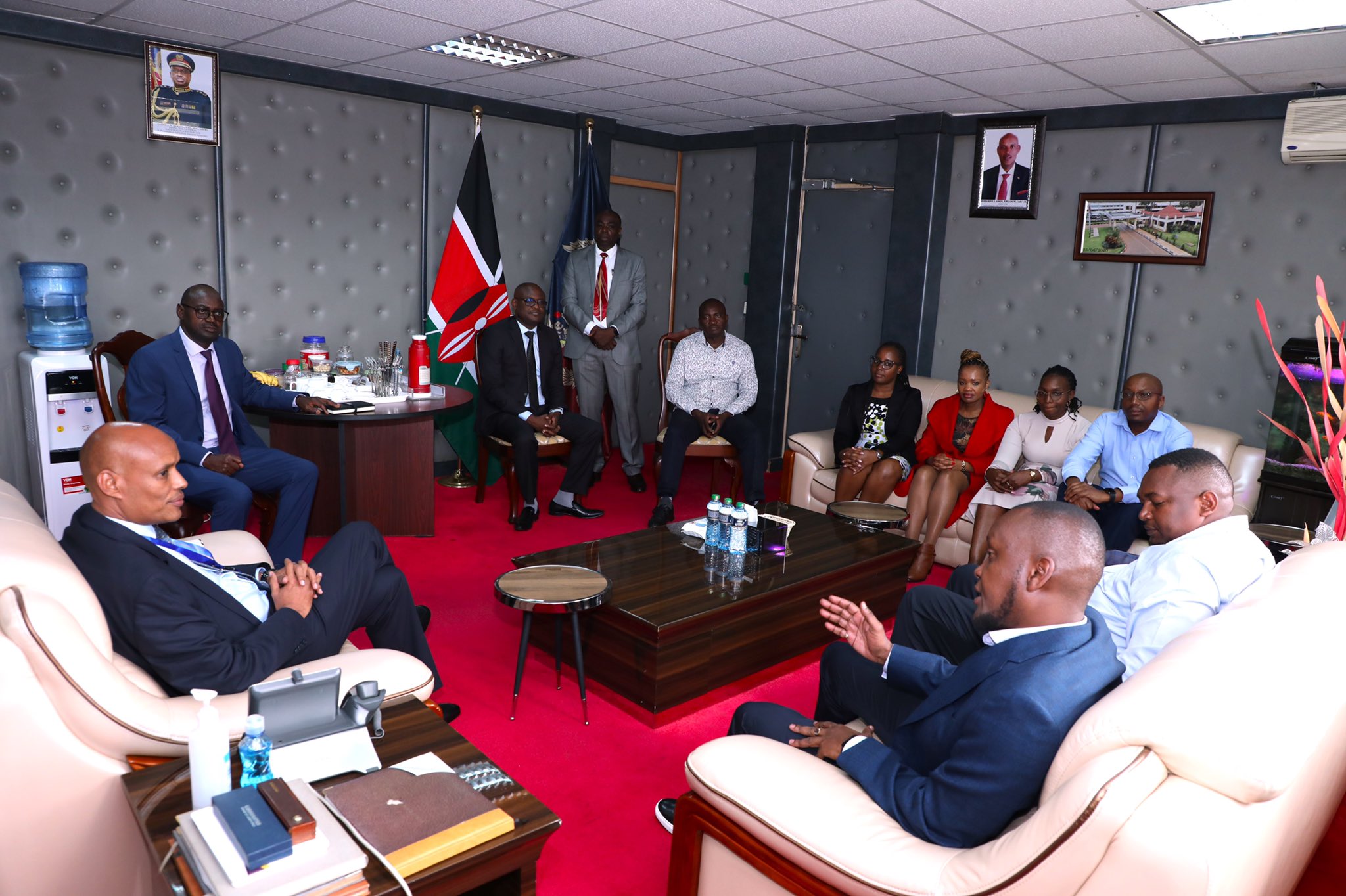
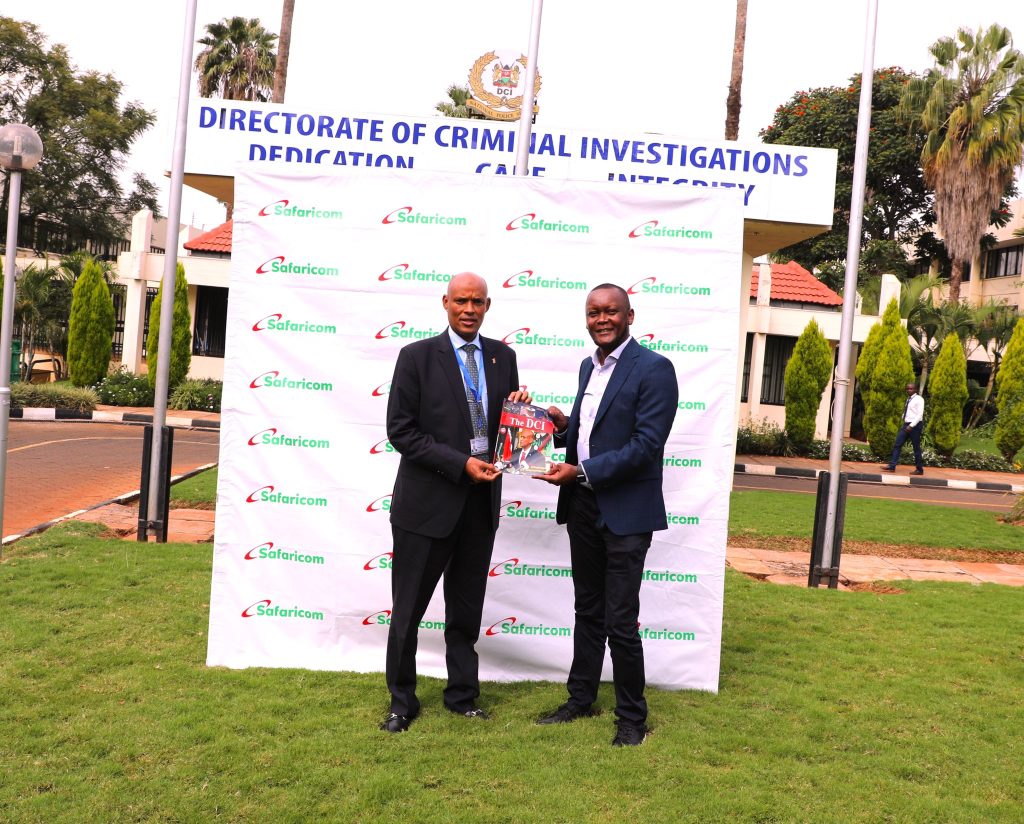
    This was said Wednesday by the Director of Criminal Investigations Mohamed Amin, when he received a team of Safaricom top managers that had visited DCI headquarters.
    In a meeting with the delegation led by James Kiama who is the head Route to Customer Safaricom PLC, the DCI chief assured of the Directorate’s commitment to working closely with the mobile service provider, as it offers its services to Kenyans. 
    Amin, acknowledged that techno savvy criminals had taken advantage of the rapid advances in technology to further their activities, which necessitated a change of strategy between the service provider and security agencies.
    “One of the strategies adopted is strengthening our information sharing platforms including social media, in order to create awareness and educate the public on crimes committed through mobile phone networks and how to detect or avoid them.” Amin said.
    Adding that: “In this regard, Safaricom supported the Directorate in printing its 7th edition of the quarterly DCI magazine, that was received at DCI headquarters Wednesday afternoon.”
    He said the publication is offered free of charge and is printed through the courtesy of their stakeholders and partners who also include KCB, Equity Bank, DTB Bank among others.
    Also present during the meeting was the DCI Deputy Director Ireri Kamwende and the Director Liaison & Communication Tony Munga among others.
  • Top UN official for Africa calls for added action to stop piracy’s spread

    Top UN official for Africa calls for added action to stop piracy’s spread

    International cooperation is making waves in combating piracy in West Africa, but addressing its root causes and ensuring sustainable funding must fully eliminate threat, which is spreading to other regions, a top UN official told the Security Council on Wednesday.

    Despite gains made in tackling sea-faring criminal groups, “piracy incidents continue to threaten the safety of maritime traffic in the region,” said Martha Pobee, UN Assistant Secretary-General for Africa in the Departments of Political and Peacebuilding Affairs and Peace Operations.

    Effective deterrents

    Since her last briefing on maritime security in November, she said a steady decrease in piracy incidents in the Gulf of Guinea was in large part due to interventions by national authorities and regional and international partners.

    Together, these effective deterrents against criminal groups have been buttressed by the ongoing operationalization of the so-called Yaoundé architecture, established in 2013 with the signing of the related Code of Conduct by actors in the region, she said, noting that four out of five interregional coordination centres are now functioning.

    Such efforts, including forming joint naval task groups, have enhanced cooperation and information sharing while forging a centralized process for maritime security that bridges national and regional capacity gaps, she said.

    Threats shifting waters

    However, gaps remain, she cautioned, calling for increased support to fill them. These include such challenges as the lack of appropriate equipment and of sustainable financing to ensure the full operationalization of the Code of Conduct.

    “Rapidly addressing the challenges that hamper the full operationalization of the Yaoundé architecture is critical to maintaining current gains,” she cautioned.

    Recent figures already suggest that “incidents are steadily shifting from the waters of West Africa towards the maritime domain of the UN Economic Community of Central African States, she said.

    From 2016 to 2021, the pirate groups in the region altered their patterns, shifting their focus towards “kidnapping for ransom” piracy, according to the UN Secretary-General’s report on piracy in the region.

    A study by the UN Office on Drugs and Crime (UNODC) Global Maritime Crime Programme showed that “kidnapping for ransom” piracy peaked in 2020, with approximately 140 individuals reportedly abducted at sea, the report showed.

    The study revealed that the pirate groups operated indiscriminately, targeting vessels of all types, including fishing vessels, and increased their activities further afield. Several cases at the time were reported beyond 200 nautical miles from shore.

    Concerted efforts

    Against this backdrop, the number of cases of piracy and armed robbery at sea, including kidnapping for ransom, decreased to 45 in 2021 from 123 in 2020, due to national efforts, the Secretary-General’s report found.

    The report noted that deterrence effect was further amplified by the deployment of non-Gulf of Guinea navies, including through the continuous presence of ships under the European Union Coordinated Maritime Presences operation, from Denmark, France, Italy, Portugal, and Spain, as well as the regular patrols of navies from Brazil, Canada, India, Morocco, Russia, United Kingdom, and the United States.

    UN assistance

    For its part, the UN stands ready to assist, Pobee said.

    Highlighting several ongoing efforts, she said UNODC is, among other things, providing technical and logistic support for joint patrols.

    Together, the UN Office for West Africa and the Sahel (UNOWAS) and the UN Regional Office for Central Africa (UNOCA) have developed an inter-regional project to conduct a review of the Code of Conduct, which will be critical in galvanizing support for these activities at a time when piracy remains a threat to the Gulf of Guinea region.

    Key action areas

    Underlining several key areas essential for success in reviewing the Code, she said nations must first update legal frameworks. Meanwhile, enhanced coordination between the Interregional Centre and partners “remains vital”.

    In addition, actors must address the root causes of piracy to eliminate the threat, she said.

    “To effectively eliminate the threat posed by piracy and armed robbery at sea, national stakeholders, regional and sub-regional organizations and international partners must also actively seek to address the underlying social, economic and environmental challenges that underpin the recruitment of individuals into maritime criminal networks,” she said.

    In this regard, it would be important for the review process, when launched, to include a focus on prevention, consider ways of enhancing more participatory community-based engagements in the architecture, and generate sex-disaggregated data on the impact of maritime crime on women, girls, men, and boys to better inform policy options and actions.

    “Without traction on this front, overall progress in curbing this menace will be limited,” she warned.

  • Govt administrators ordered to return to their work stations or face sack

    Govt administrators ordered to return to their work stations or face sack

    Government administrators (NGAOs) operating from outside their workstations risk losing their jobs for dereliction of duty and jeopardizing national security.

    Principal Secretary for Internal Security and National Administration Dr. Raymond Omollo has directed all officers working remotely to return and take a firm grip on their designated posts as the government intensifies its counterterrorism offensive.

    The PS noted that the officers must be at the forefront of the war against terrorists and other operatives with hostile intentions, after which he fired a stern warning that those who will defy the directive will be sent packing with immediate effect.

    “If you are working as National Government Administrative Officer, make sure you are at your workstation. And if you can’t be at your workstation, then it’s time to pack up and go,” he said, a message directed to County Commissioners, their deputies and assistants as well as Chiefs and Assistant Chiefs.

    Dr. Omollo put the officers on notice that disciplinary action will be taken against those who will drop their guard, whether for omission or commission.

    He was speaking in Garissa, where he had accompanied Defence Cabinet Secretary Aden Duale on a security meeting and a public baraza in Masalani Town with local leaders, elders and NGAO drawn from Ijara, Hulugho, Bodhai and Bura East sub counties.

    Alongside other frontier counties in the North Eastern region, Garissa has had a series of persistent threats posed by the Al-Shabaab militants, who continue to maraud around the Kenya-Somalia border.

    As the chairs of the security and intelligence committees in their jurisdictions, NGAOs are progressively designing and deploying community-based approaches to the existing and emerging challenges.

    Inside this strategy, the government seeks to intensify the level of surveillance and alertness through information-sharing from civilians, a form of collaboration Dr. Omollo urged the residents to make a non-negotiable routine.

    He said, “As for the residents, we cannot win this war without your support. If you have any information that can help us deal with these terrorists, don’t hesitate to share those tip-offs with our teams on the ground. We will act on it promptly.”

    The delegation was received by the Regional Commissioner North Eastern John Otieno flanked by members of the County Security and Intelligence Committee.

    Other dignitaries included the Garissa Deputy Governor Abdi Dagane, area MP and MP for Bura.


  • Atwoli appointed in seven-member selection panel for new DPP

    Atwoli appointed in seven-member selection panel for new DPP

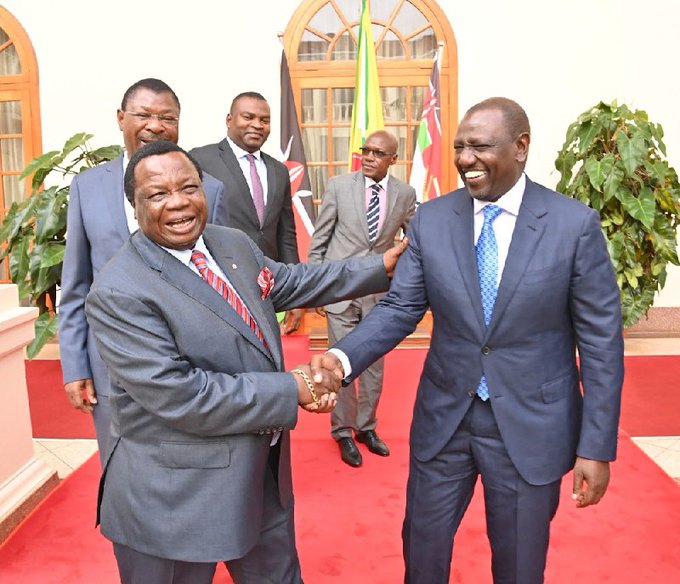
    President William Ruto has appointed Central Organisation of Trade Union (COTU) Secretary General Francis Atwoli and Ethics and Anti-Corruption Commission Chief Executive Officer Twalib Mbarak as members of a seven-member selection panel that will choose the new Director of Public Prosecutions (DPP).

    The latest development follows the appointment of Noordin Haji as the National Intelligence Service (NIS) Director after the conclusion of his term as the DPP.

    Other members appointed to the panel include Mary Kimonye, Shadrack Mose, Mary Adhiambo, Roseline Odede and Richard Onsongo.

  • Investor ventures into mobile labs to facilitate CBC

    Investor ventures into mobile labs to facilitate CBC

    In order to address crisis of junior secondary in schools within Embu County and its environs, an investor has ventured in making and selling mobile laboratories to facilitate Competence Based Curriculum (CBC) learning.

    According to the investor, Science Lab Limited, the movable laboratory will ease the pressure of schools which have no capacity to build a laboratory and equip it. The company also makes laboratory chemicals and reagents.

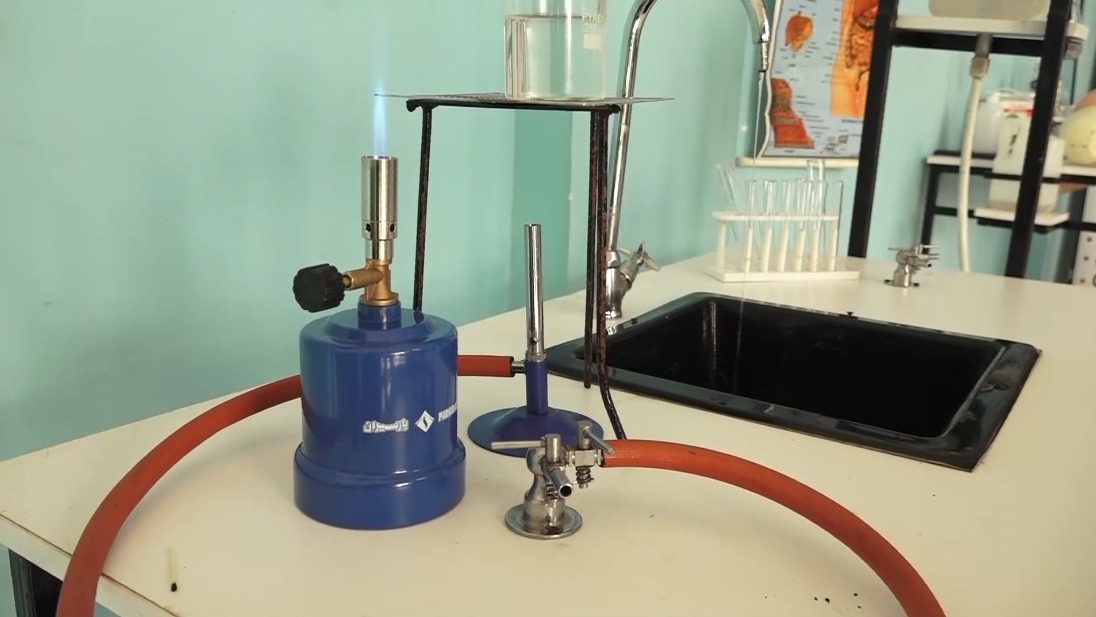
    Leaky Kipkosgey who is in charge of sales at the company’s branch in Embu said the portable lab is equipped with a 13kg gas cylinder, gas taps, water taps, and an illumination lamp for lighting.

    He said each mobile lab goes for Sh. 45,000 and one can accommodate eight students at a go and has ability to carry out experiments for physics, chemistry and biology subjects.

    “This portable laboratory is good as it can be operated even in class or outside in the open air since it does not require a school to build a laboratory structure if it has no capacity.

    “With lack of enough capitation in school and presence of junior secondary, this laboratory is remedy for schools, “he said.

    Marketer, Josepy Munyi, said the portable workstations were alternative for already congested schools and called on the government to fund schools to procure them.

    The Branch Manager, Marina Njoki, said the lab is mostly recommended for junior secondary and day secondary schools due to its affordability and portability.

  • Siaya Deputy Governor denies all charges leveled against him

    Siaya Deputy Governor denies all charges leveled against him

    Siaya Deputy Governor William Oduol has denied all charges leveled against him which includes abuse of office, gross misconduct and violation of the Constitution.

    This following the impeachment of Oduol earlier this month by all the 42 MCAs who voted to send Oduol home on recommendations of a 14 member ad-hoc committee formed to probe the matter.

    The Ward representatives accuse Oduol of among others gross violation of the Constitution, abuse of office, gross misconduct, and misleading the public by giving false information.

    If his impeachment is upheld he will be the first Deputy Governor to be removed from office, since the inception of devolution.

    On Wednesday Oduol appeared before Senate Special Committee chaired by Senator William Kisang` with Senator Betty Batuli Montet serving as the Vice Chair on his impeachment for hearings.

    According to the programme, the Wednesday hearing entailed conference of parties, introduction of Members of the Special Committee, introduction of Members representing the County Assembly of Siaya and the Counsel then introduction of the Deputy Governor and the Counsel representing him.

    Governor Orengo and his Deputy, William Oduol have been at logger heads for past three months, with the deputy governor accusing his boss of sitting quiet as a syndicate of corrupt employees fleece the county government.

    Oduol’s public accusations saw the county assembly of Siaya summon him to table evidence of the same, which he did but the assembly later threw them out as unsubstantiated.

    Siaya Deputy Governor William Oduol claims that Siaya lost billions of public coffers since the new administration took office.

    County Assembly claims Oduol sought to purchase office furniture worth 18 million for personal comfort once he assumed office.


  • Residents want camel herders evicted from Garissa County

    Residents want camel herders evicted from Garissa County

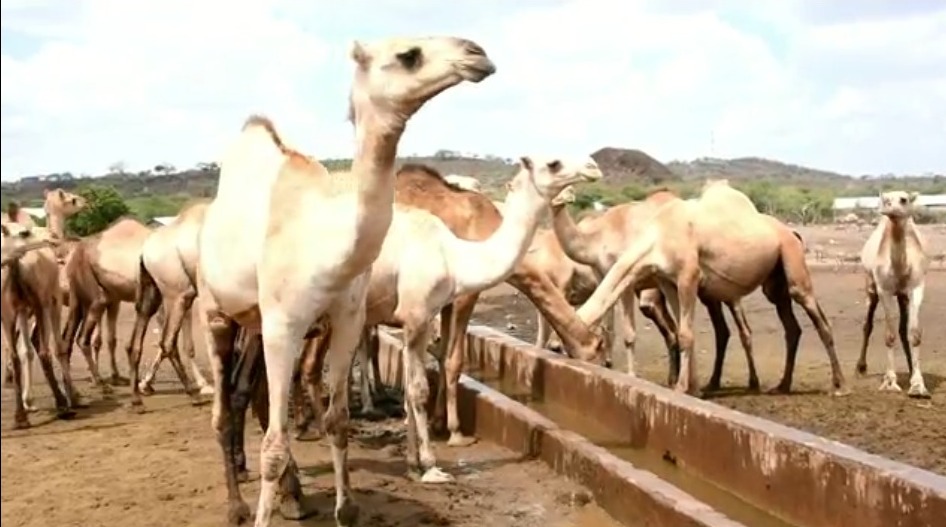
    Residents of Garbatula Sub County in Isiolo County have appealed to government authorities to flush out camel herders from the neighboring Garissa County over a recent spate of killings in the area attributed to their presence in the area.

    Speaking to Journalists following a meeting with the Sub County Security Team held at Kinna Tuesday, elders from the area lamented that they welcomed their neighbors alongside herders from other regions such as Sericho, Marsabit, and Moyale during the recent drought season, but those from Garissa have since refused to leave and go back to their home county despite rains that ensured the presence of pasture everywhere.

    Ali Boru, an elder from Kinna noted that at least six people have been killed in different areas of Garbatula Sub county over the last one month, with the deaths including that of a 15 year old school girl who was killed at Kinna two weeks ago all being linked to the armed illegal herders.

    He said that herders from other areas including Marsabit and Moyale who grazed in the area during the drought season have since thanked locals and returned to their home counties, but those from Garissa have stayed put and caused problems to the people of Garbatula including deaths.

    Isiolo South Member of Parliament Mohamed Tubi who also attended yesterday’s meeting noted that there was absolutely no point in having herders from Garissa continuing to graze in Isiolo to-date, despite the presence of pasture in their traditional grazing areas, a matter that is causing tension among locals, amid fears among Isiolo herders that the invading herders are out to displace them and take over the land.

    Tubi called for calm and asked members of the Garbatula Sub County security team to move with speed and expedite the request by Garbatula elders to have the invading herders evicted back to their home county.

    He warned that the continued stay of camel herders from Garissa amid recent killings in the area was a recipe for clashes, arguing that the camel herders must be flushed out of the area in order to ensure that the local population feel safe.

    The legislator also noted that the recent spate of insecurity cases in the area could also be a ploy to derail the construction of the road linking Isiolo to Garissa and Mandera through Modogashe, arguing that locals in the area were fully behind the project that is expected to open up the region for business and major economic growth.

    Garbatula Deputy County Commissioner Stephen Nyakundi called for collaboration between members of public and the security team in order to effectively address security challenges in the area.

    He noted that lack of communication network in areas such as Rapsu and Korbesa was a major setback in addressing crime incidents in the areas in a timely manner, since security teams get information several hours after a crime has been committed and attackers left.

    He however noted that the matter is currently being addressed and that the affected areas will soon have mobile network coverage.

    He asked members of public to work with National Government Administration Officers in the area and furnish his office with information regarding the identity of the said camel owners and where the camels are being grazed, so that the security team acts on the matter decisively from a point of knowledge.

    Kinna ward of Garbatula sub county in Isiolo County hosted herders from other drought stricken areas in the region since it was the only area that had received substantial rains over the last few years, making it rich with pasture unlike other areas of Isiolo and neighboring counties.

  • Form four candidates receive Ksh 9M for school fees

    Form four candidates receive Ksh 9M for school fees

    Form four candidates from Vyambani Secondary School in Mavueni Kilifi County have received Ksh.9 million fees sponsorship from pastor Ezekiel Odero’s church.

    The 155 students will not pay their second and third term fees after Odero pledged to pay the fee balance in the next two weeks.

    According to the school Deputy Principal Granton Idyema, most of the students have been staying home over lack of fees.

    Idyema said that each student pays Ksh.13, 500 per year but is still a burden because of the high poverty levels and low income generating activities in the region.

    “Half of the students always miss school due to lack of fees and the parents have no food and they are always struggling to get income,” said Idyema.

    While donating assorted food items at the School in Ganze Sub County, the famous Televangelist pledged to offset sh. 6.3 million second term fees for all the candidates sitting the Secondary national exams at the local school approximately one kilometer from the New Life Prayer Centre and Church.

    He also promised to complete the third term fees of Ksh.2.7 million.

    The mixed school which has a population of over 600 students received an assortment of food stuff worth two million shillings and girls received sanitary pads to last them six months.

    “We have promised that no form four student should be sent home for lack of fees. We have pledged and agreed with the deputy principal that we shall pay all the second and third term fees amounting to Ksh. 9 million for all the 155 students to ensure that they stay in school,” said Odero.

    Odero while accompanied by his church devotees and lawyers Cliff Ombeta and Dunstan Omari said the fees will help ease the burden on parents who are struggling with meager income to put food on the table.

    He said the church will also be donating food and sponsoring other neighboring schools like Mitangoni primary school.

    The pastor promised to sit with the board to work out a plan on how they can help the parents from other classes pay part of the fees.

    He said by being in school with enough food supply, the students will be able to perform well and promised to work with the school board to ensure continued supply of food.

    “When the members of the church contribute tithe and offerings, it should go to the community and let the children benefit and since the mothers have given a tithe let the money after helping the church also benefit the community and that child in school,” said Odero.

    In his address he warned the students against indulging in sex and drug abuse and securing their future through studies.

    “Let us focus on studies and say no to sex and drugs because they will not help you but destroy your future. We are not performing quite well in Kilifi and we need to change the narrative,” said Odero.

    According to Idyema the school has been experiencing food shortage due to delayed capitation from the government and most

    “We thank Ezekiel for his donations and sponsorship. We had a food problem since we hadn’t received capitation and we had spent all the food. The county commissioner gave us six bags of beans which we finished last week. So we went to the church and asked for his aid and we have received the food donations,” said Idyema.

    “He shall support the students whose balance is Ksh. 6.3 million so they can remain in school. So no student of form four will be sent home over fees arrears,” he continued.

    Idyema sentiments were echoed by school PTA Chairman James Mulango,confirming there was a lot of absenteeism by students due to lack of school fees among most students.

    He further said the church has promised to help in rehabilitating the dilapidated classroom and building a laboratory block for the school.

  • AU, WFP collaborate to address root causes of conflicts

    AU, WFP collaborate to address root causes of conflicts

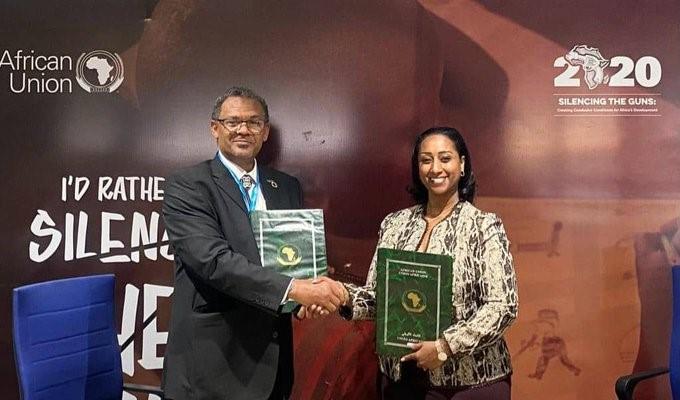
    The African Union Commission, through the Peace Fund Secretariat, has signed an Agreement with the World Food Programme to scale existing technical and financial support to various peace and security activities in thematic areas of operation under the AU Peace Fund.

    Under the Agreement, the Peace Fund Secretariat and WFP jointly identified the areas of strategic engagement to scale activities in early warning, conflict prevention and mediation.

    In the latest arrangement, Peace Fund Secretariat and WFP will  scale efforts in advocacy on the nexus between conflict and food security as a call to action to address the root causes of conflict; strengthen institutional support of the Peace Fund Secretariat; enhance collaboration on preventive diplomacy and mediation; share periodic reports on thematic areas; enhance joint resource mobilization; collaborate on engagements on the ongoing review of the Global Financial Architecture, enhance collaboration with think tanks and Regional Economic Communities on the Peace Fund thematic areas.

    Reflecting on the linkage between conflict and development, AU Peace Fund Secretariat Director, Dagmawit Moges underscored the importance of mutual collaboration with development partners to ensure gaps on preventive interventions to avert crisis and instability are strengthened, as well as the deployment of prompt and sustainable responses whenever crisis emerge on the continent.

    She stated, “our Agreement today reaffirms the intertwined nature of peace and development.  Without peace and security, we cannot have sustainable development and we will not make much progress in poverty eradication. Similarly, without sustainable development we cannot adequately prevent conflicts. By signing this Agreement, it is our commitment to strengthen our efforts and synergy in timely crisis-alleviating measures such as early warning parameters and the deployment of durable conflict resolutions and post-conflict reconstruction measures when need arises”.

    The Director placed greater emphasis on silencing the guns in Africa for durable peace and inclusive development to bolster Africa’s development goals in order to achieve Agenda 2063.

    The African Union Peace Fund is in the final stages of operationalisation. The funds are set to be utilized for the first time in 2023 on several programmes including interventions in the Sudan crisis, the African Union Transition Mission in Somalia (ATMIS), and East African Community Regional Force.

    The Supplementary Agreement strengthens the existing partnership between the African Union Commission and WFP in other areas of cooperation including humanitarian affairs, emergency preparedness and response, post-conflict recovery, rehabilitation of infrastructure and economic and social recovery, food security and agriculture as well as the fight against poverty and hunger.