Author: Christine Muchira

  • PS Mary Muthoni elected to lead African health PSs

    PS Mary Muthoni elected to lead African health PSs

    Public Health Principal Secretary Mary Muthoni has been elected Chairperson of African Permanent and Principal Secretaries for Health in Brazzaville.

    PS Muthoni was elected during a high-level consultative meeting on cross-border collaboration for health security in Brazzaville, Congo.

    The election marks a significant milestone in strengthening coordinated continental action on public health and reinforces Kenya’s growing role in shaping Africa’s health priorities.

    The appointment is expected to strengthen regional collaboration, improve coordination in disease surveillance and emergency response, and expand access to shared expertise, innovations, and best practices across the continent.

    It also enhances Kenya’s influence in mobilising partnerships and advancing resilient and responsive health systems that protect communities and support the Universal Health Coverage agenda.

    The position reflects a shared commitment among African nations to deepen cooperation across health sectors and strengthen coordinated responses to cross-border health threats through collective leadership and strategic partnerships.

  • Government pushes for stronger collaboration in science, technology, innovation ahead of STRI Week

    Government pushes for stronger collaboration in science, technology, innovation ahead of STRI Week

    Government has underscored the need for stronger collaboration in the field of science, technology, research and innovation to ensure research outputs translate into practical solutions that benefit society.

    Speaking during a breakfast meeting for stakeholders ahead of the Science, Technology, Research, and Innovation Week (STRI), Principal Secretary for Science, Research and Innovation Prof. Shaukat Abdulrazak noted that the focus is breaking silos in the innovation ecosystem and improving collaboration so that research translates into real societal impact.

    “During this week, everybody comes around the table so that we can stack stock of what we’ve been able to do, and what needs to be done as we move forward,” PS Abdulrazak said.

    He remarked that Kenya is on the right trajectory toward increasing funding for science, technology and innovation, with a goal of raising investment in research and development to strengthen innovation, drive economic growth, and support national development priorities.

    The Science, Technology, Research, and Innovation Week is set to be held from 18th to 22nd May 2026, at Kenyatta International Convention Centre (KICC).

    The inaugural event will bring together over 5,000 stakeholders from government, academia, industry, research institutions, NGOs, and international partners with a focus on demonstrating how science, technology, and research are directly impacting society, while also creating a platform to review progress and set future priorities.

    “The innovation week this year is a different ball game, so to speak, because we are looking at the science, technology, research and innovation for society.”

    Throughout the year, the event will be supported by a series of build-up activities including startup showcases, innovation festivals, conferences, and institutional exhibitions, designed to sustain engagement across the ecosystem.

    “We are looking at ways and means of how science can be able to have an impact in the society, and that’s why we want to begin this year, and ensure that this is going to be an annual event,” he remarked.

    The PS noted some challenges like funding saying that Kenya aims to raise its research and development investment from 0.8% of GDP to 1% and eventually 2%, while expanding research capacity to 100 PhDs per million population.

    “We are steadily increasing funding for science and innovation to strengthen research capacity and accelerate Kenya’s development agenda,” PS said.

    In addition, a cluster-based approach will be adopted during the STRI Week, bringing together experts under thematic areas such as human health, food security, and emerging technologies like ICT and artificial intelligence. These clusters are expected to drive targeted solutions to national challenges.

    Further he noted that the discussions will also focus on key areas like food security, particularly addressing post-harvest losses that stand at 30-40%, as well as how to leverage on Artificial Intelligence (AI) to improve healthcare delivery, including telemedicine and radiology services.

    He emphasised that the Innovation Week will not only showcase achievements but also generate policy recommendations to guide future investment and reforms in science and technology.

    The initiative also seeks to strengthen public awareness on the value of science, with calls to move beyond annual celebrations and instead integrate science communication into everyday national discourse.


  • Ruto pushes trust driven Kenya-Tanzania integration, EAC reforms

    Ruto pushes trust driven Kenya-Tanzania integration, EAC reforms

    President William Ruto has underscored the need for trust driven integration between Kenya and Tanzania, calling the two nations to move beyond suspicion and embrace shared economic strength.

    Speaking when he addressed the Tanzanian Parliament Tuesday morning in Dodoma, President Ruto noted that the time has come for the region to move beyond incremental progress towards decisive integration.

    He said the biggest obstacle facing East African integration was not infrastructure or policy but the mistrust among nations.

    “The time has come for our generation to move beyond incremental progress towards decisive integration. Because our biggest barrier is not infrastructure or policy; it is the quiet mistrust that pervades our relations. That suspicion has cost us time, opportunity, and prosperity, and we can no longer afford it,” noted Ruto.

    Adding that: “The conversation we are having today is significant and consequential, not only for our two countries but also for our region and continent. At its core, it is about one central task: Growing mutual trust to build shared strength.”

    Ruto stressed that deepening integration, expanding trade, and investing in shared infrastructure, will  not only grow economies, but also create pathways to jobs, enterprise, and dignity for this generation of young people.

    “In doing so, we are also addressing one of the most pressing challenges of our time, ensuring that the energy of our youth is harnessed for progress, stability, and shared prosperity,” he said.

    Similarly, he said that the two nations must move beyond narrow national calculations and embrace a mindset of partnership, where each country’s progress reinforces the other’s success.

    “We must be grounded in physical connectivity, shared infrastructure, and deliberate investments that bring our economies closer together in practical and measurable ways,” he noted.

    President Ruto told the Tanzanian MPs that Kenya and Tanzania are deeply interdependent with bilateral trade reached approximately $860 million in 2025, and on course to hitting 1 billion dollars this year.

    He said investment cooperation stands as a central pillar of bilateral relations noting that Kenyan enterprises have invested more than $1.7 billion in Tanzania, creating jobs, advancing skills transfer, and strengthening local capacity across key sectors including manufacturing, energy, logistics, financial services, and agriculture.

    At the same time, Ruto said  Tanzanian investments in Kenya, now valued at over $336 million, are steadily expanding, driving employment, deepening corporate linkages, and fostering shared growth.

    Call for EAC institutional reforms

    The Kenyan President further outlined key reforms agreed at the 25th Ordinary Summit of the East
    African Community in Arusha that included elimination of all non-tariff barriers by 30th June 2026, a new EAC financial model combining equal and assessed contributions, streamlining decision making requiring  two thirds quorum as well as institutional restructuring t enhance efficiency.

    He stressed that implementation, not agreement, remains the real test of integration.

    Continental and global agenda

    Additionally, Ruto called for reforms of the African Union and global governance structures, including the United Nations Security Council and international financial systems, arguing that Africa’s underrepresentation undermines global stability.

    He noted that the call for reform must extend beyond Africa to the very architecture of global governance.

    “The reform of the African Union is not optional; it is imperative. A system that sidelines Africa ultimately undermines the stability of the world itself,” he said.

    President William Ruto said Africa’s underrepresentation in global decision-making, particularly at the United Nations Security Council, undermines both regional and global security.

    “Nowhere is this more evident than in the United Nations Security Council. A Council that excludes Africa cannot effectively secure Africa and without Africa, there can be no global security.”

    Further he called for urgent reform of the international financial architecture noting that it reflects a different era and does not adequately respond to Africa’s realities.

    “The cost of capital remains disproportionately high, access to long-term financing is constrained, and the pathway to development is unnecessarily burdened.”

    He ended by calling on unity among African nations saying; “Unity remains our greatest leverage. When Africa speaks in one voice, reform ceases to be a request and becomes an inevitability.”


  • Kenya issues safety advisory for citizens in South Africa over ongoing protests

    Kenya issues safety advisory for citizens in South Africa over ongoing protests

    Kenyans residing in South Africa have been urged to exercise caution and remain vigilant in light of recent demonstrations affecting foreign nationals in parts of the country.

    In a statement on X, the Kenya High Commission in Pretoria urged to avoid, as far as possible, areas where protests or demonstrations may be taking place, and to remain attentive to guidance issued by local authorities.

    “Kenya High Commission in Pretoria wishes to advise all Kenyan nationals residing in the Republic of South Africa to exercise caution and remain vigilant in light of recent demonstrations and isolated incidents reported in some parts of the Republic of South Africa affecting foreign nationals,” the statement read.

    Further Kenyans have been encouraged to carry valid identification and relevant documentation at all times.

    Additionally, the advisory encouraged Kenyans to to report incidents to the South African Police Service and notify the Kenya High Commission in Pretoria for assistance in case of emergency for appropriate assistance.


    The mission reiterated its availability to assist affected citizens and provided contact channels for those in need of help.


    The High Commission can be reached at its office, 302 Brooks Street, Menlo Park 0081 or via telephone on +27 (012 362 2249), +27 (076 177 2675), as well as through email at info@kenya.org.za.


  • Kenya, Tanzania sign eight agreements to deepen ties, boost trade

    Kenya, Tanzania sign eight agreements to deepen ties, boost trade

    Kenya and Tanzania have signed eight new agreements aimed at renewing their pledge to cultivate closer ties as they seek to accelerate economic growth and deepen regional integration.

    The two nations also set a June 30, 2026 deadline to eliminate all remaining non-tariff barriers that have long frustrated cross-border commerce.

    President William Ruto, who is on a two-day State Visit, held talks with President Samia Suluhu Hassan at State House, Dar es Salaam on Monday before witnessing the signing of the eight Memoranda of Understanding.

    The pacts mark a substantive expansion of bilateral cooperation between the two East African countries, touching sectors that directly affect traders, manufacturers, and millions of households.

    The MoUs cover energy, legal cooperation, agriculture, railway development, public service capacity building, maritime cooperation, certification standards for seafarers, and harmonisation of standards between the Kenya Bureau of Standards (KEBS) and Shirika la Viwango Tanzania.

    The two leaders said the standards harmonisation deal is critical as it creates a joint technical committee to align testing and certification, meaning a product cleared in Dar will no longer face repeat inspection by KEBS at Namanga or Holili.

    The railway MoU commits both governments to revive the Voi-Mwatate-Taveta line, linking it to the Standard Gauge Railway and cutting freight time to Moshi and Arusha. The energy agreement advances the Isinya-Singida transmission line and sets up a working group on joint renewable projects.

    President Ruto said the two countries will continue to actively engage noting that the two nations are bound by destiny.

    “This visit reflects the deep-rooted and enduring friendship that binds our two nations, a relationship enriched by vibrant people-to-people connections, shared heritage, and a common destiny.”

    President Ruto described the relationship as one that transcends politics and goes back to the vision of the founding fathers, who championed Pan-Africanism and saw regional integration as a vehicle for transformation.

    “Our enduring cordial relations continue to flourish, anchored on mutual respect, shared rich history and vibrant trade,” he said.

    “Kenya attaches top strategic importance to this unbreakable bond which continues to deliver substantial benefits to our people.”

    Bilateral trade between the two countries reached $860.3 million in 2025, accounting for nearly 40 percent of all intra-East African Community commerce. That makes Kenya-Tanzania the bloc’s strongest trading pair. Yet both leaders were clear that the ceiling remains far higher.

    “As vibrant as our trade is, we need to work towards strengthening our ties further,” President Ruto said, adding that the countries must find a way to ensure resources are added value to create jobs and generate wealth for Kenyans and Tanzanians.

    The two leaders set a deadline for removing non-tariff barriers to be 30th June, 2026, as directed by the 25th East African Community Summit. The barriers have hit dairy, maize, eggs, steel, and confectionery shipments for years, with trucks often detained at border points over paperwork, standards, or ad hoc levies.

    President Samia said the two countries can significantly increase trade and investments by ironing out issues that inhibit the movement of goods. She said Tanzania would move to digitise customs and establish a 30-day dispute resolution window under the new Kenya-Tanzania Business Council.

    The leaders said the Joint Commission for Cooperation, which has held four sessions since 2009, will convene for a fifth session later this year to track progress on trade, agriculture, and education. The commission has become the main technical vehicle for implementing Heads of State directives, and will now receive quarterly reports on NTB removal and MoU implementation.

    On infrastructure, the two Heads of State commended progress on the Malindi–Bagamoyo Super Highway and said it will significantly enhance regional connectivity, facilitate trade, and strengthen ties. The highway, once complete, will create a coastal corridor from Mombasa to Dar es Salaam, easing pressure on the northern route. The revived Voi–Mwatate–Taveta railway line is projected to cut transport costs by up to 25 percent for bulk cargo moving between Kenya’s coast and northern Tanzania.

    Energy cooperation was pointed out as critical for catalyzing industrialisation in the region. Beyond the Isinya–Singida line, the MoU opens talks on joint geothermal development and power purchase agreements that would let industries in either country tap cheaper off-peak electricity across the border. In agriculture, the two sides agreed on mutual recognition of sanitary and phytosanitary certificates, which should speed up clearance of milk, meat, and fresh produce.

    The deal on tourism was highlighted as key in enhancing job creation and people-to-people ties. The two leaders agreed to accelerate efforts to market the Mara-Serengeti ecosystem jointly and to harmonise park fees and visa rules for third-country tourists. Kenya’s Tourism Cabinet Secretary and Tanzania’s Natural Resources Minister were tasked with presenting a single-destination framework.

    On boundary reaffirmation, President Ruto said 564km of the 778km Kenya-Tanzania border is complete, with both sides pledging to finalise the rest before the African Union’s 2027 deadline. The leaders also reviewed regional security, vowing to keep shared borders as “zones of peace, stability, and opportunity.” They directed security agencies to scale up joint patrols and intelligence sharing to curb smuggling, human trafficking, and cross-border crime.

    As EAC founders, Kenya and Tanzania reaffirmed their “unwavering commitment to advancing regional integration” to position the region as a competitive hub for production and investment.

    With global supply chains shifting, President Ruto said, East Africa must “speak with one voice” on trade and infrastructure to attract manufacturing. President Samia added that Tanzania and Kenya will jointly lobby for infrastructure financing and for fairer terms in global climate and trade negotiations.


  • Ruto to address Tanzania MPs after landmark bilateral agreements

    Ruto to address Tanzania MPs after landmark bilateral agreements

    President Ruto is scheduled to address Tanzania’s parliament on Tuesday, where his speech is expected to highlight the need for closer ties between the two East African nations. 

    This even as Kenya and Tanzania Monday signed eight agreements to deepen bilateral ties and strengthening cooperation across key sectors.

    Speaking during the signing ceremony, President William Ruto who is on a two day state visit in Tanzania noted that the agreements establish new frameworks for collaboration in infrastructure development, trade facilitation, regional logistics, public service, security, and energy.

    The deals are expected to enhance economic integration, improve cross-border efficiency, and reinforce the longstanding diplomatic relations between the two neighbouring countries.

    During their discussions the two leaders reaffirmed their shared resolve to strengthen strategic partnership for the benefit of Kenya and Tanzania.

    “President Samia and I have held productive and candid bilateral discussions during which we undertook a comprehensive review of our relations and reaffirmed our shared resolve to strengthen our strategic partnership for the benefit of our peoples,” noted President Ruto.

    They noted the progress made under the Joint Commission for Cooperation, which has held four sessions since its establishment in 2009 and continues to serve as a vital framework for collaboration in trade, agriculture, education, and other key sectors. “We look forward to the Fifth Session later this year,” Ruto noted.

    Presidents Ruto and Samia welcomed the continued growth in bilateral trade, which reached Ksh. 111billion (860.3 million dollars) in 2025, reflecting expanding opportunities and strong economic complementarities between our two nations.

    Ruto said they discussed the need to unlock the full potential of trade by addressing remaining challenges in market access.

    “In this regard, we reaffirmed our commitment to eliminate all outstanding non-tariff barriers by 30th June, 2026, as directed by the 25th East African Community Summit,” he remarked.

    The barriers he says have hit dairy, maize, eggs, steel, and confectionery shipments for years, with trucks often detained at border points over paperwork, standards, or ad hoc levies.


  • Kenya to host landmark diplomatic conference as preparations kick off

    Kenya to host landmark diplomatic conference as preparations kick off

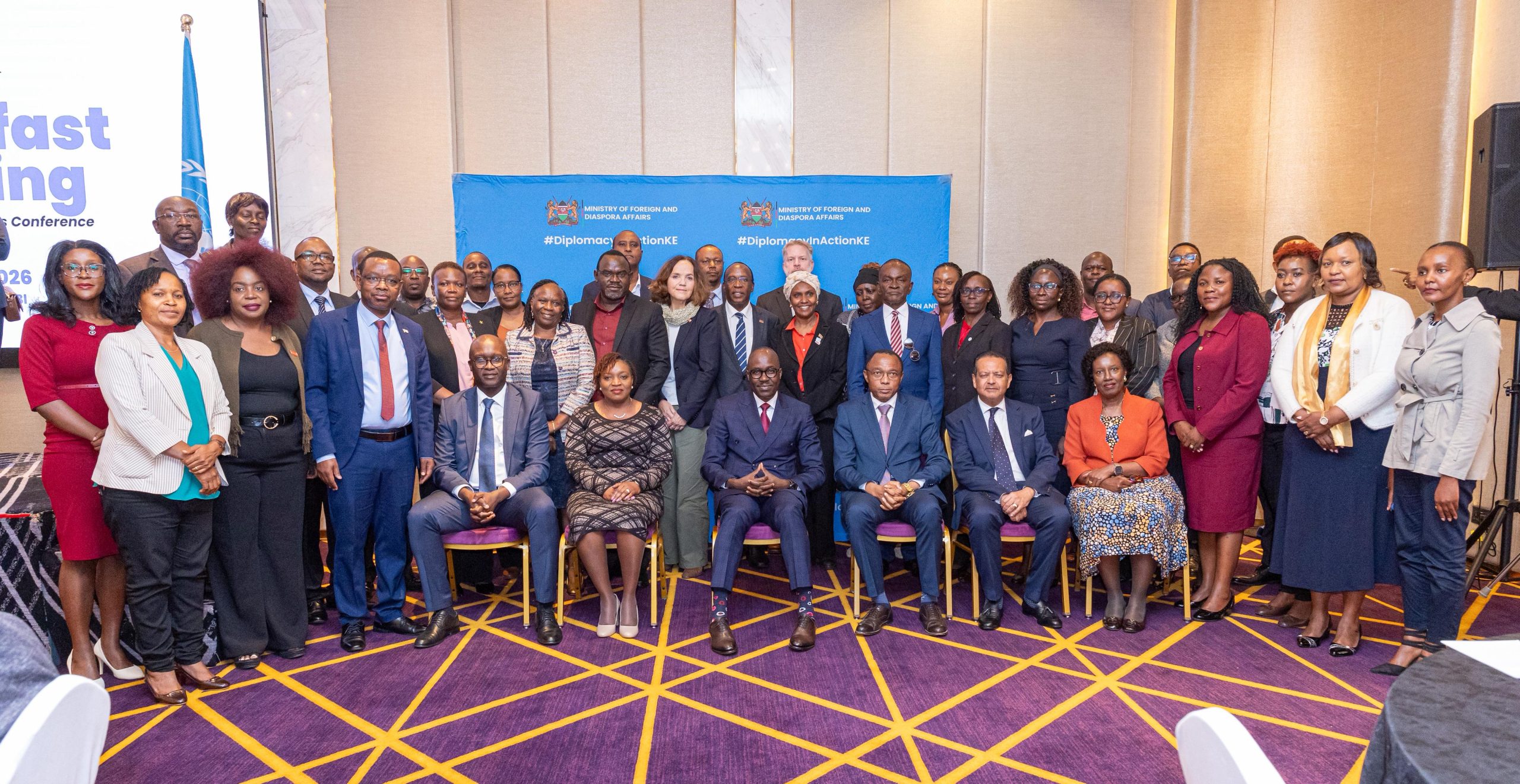
    Principal Secretary for Foreign Affairs, Korir Sing’Oei has emphasised that Kenya’s commitment to excellence in host country practice goes beyond diplomatic courtesy.

    In his remarks, the PS says this reflects the nation’s core values, its obligations under international law, and its strategic ambition to remain a preferred hub for the diplomatic and international community.

    The PS was speaking during a working breakfast meeting with members of the diplomatic corps and the international community in Nairobi.

    The meeting marked the official launch of preparations for Kenya’s landmark Diplomatic Conference on the Administration and Management of Privileges and Immunities, scheduled to take place on 25th and 26th June 2026 in Nairobi.

    Kenya continues to host one of the most vibrant and diverse diplomatic communities globally.

    This includes diplomatic and consular missions, the United Nations and its specialized agencies, as well as intergovernmental and international organizations with host country status collectively representing an estimated population of approximately 25,000 individuals.

    Ongoing reforms under the UN80 process are expected to see the relocation of three additional UN agencies to Nairobi, expanding this community to well over 35,000.

    Kenya’s strong host-state credentials are anchored in a robust legal and institutional framework that facilitates the effective functioning of diplomatic missions and international organizations.

    The upcoming conference will provide a high-level platform to deepen understanding of the legal, policy, and administrative systems that govern the provision and management of diplomatic privileges and immunities.

    As the first conference of its kind globally, the initiative positions Kenya at the forefront of shaping international best practice in host country relations.

    It underscores the country’s leadership role in advancing dialogue on the practical application of privileges and immunities within an evolving global diplomatic landscape.


  • Health CS Duale mourns veteran gynaecologist Dr. Job Obwaka

    Health CS Duale mourns veteran gynaecologist Dr. Job Obwaka

    Health Cabinet Secretary Aden Duale has mourned veteran gynacologist Dr. Job Obwaka who died Friday at the age of 83.

    In a statement, CS Duale noted that Dr. Obwaka devoted his life to advancing medical practice in Kenya, leaving an invaluable contribution to the medical fraternity through his clinical excellence, leadership and mentorship of generations of practitioners.

    According to reports, Dr. Obwaka who was also the Nairobi Hospital director, was brought to hospital unconscious and pronounced dead on arrival.

    Duale says the late Dr. Obwaka’s work significantly strengthened standards of care and improved outcomes in maternal and reproductive health services across the country.

    “We honour his distinguished service and commitment to humanity and we extend our heartfelt condolences to his family, colleagues and the wider medical community during this difficult time,” he noted.


  • Loitokitok court charges suspect over smuggling of unregistered pesticides from Tanzania

    Loitokitok court charges suspect over smuggling of unregistered pesticides from Tanzania

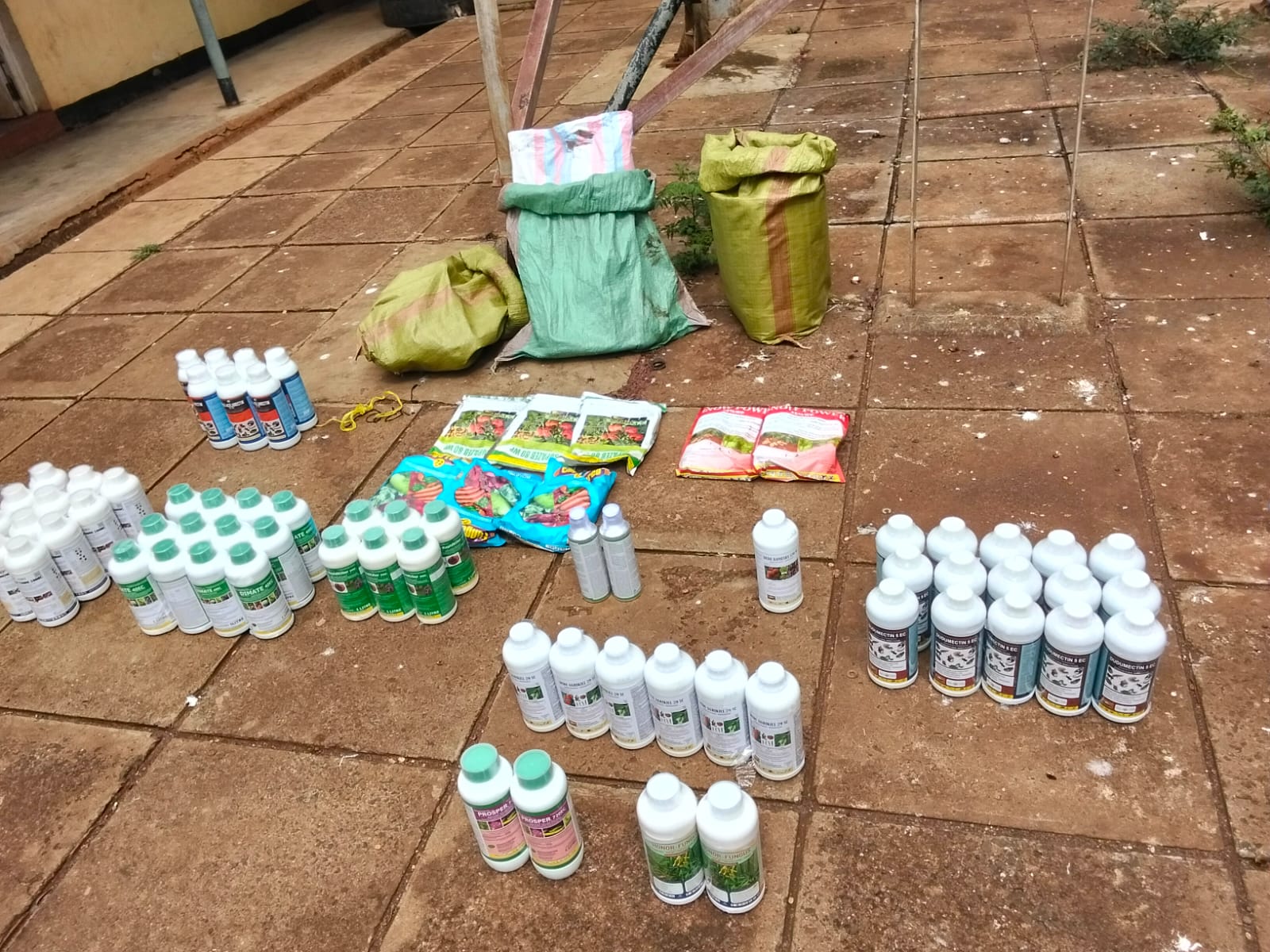
    A suspect was arraigned before the Loitokitok Law Courts and formally charged with smuggling unregistered pesticides from Tanzania.

    Accordung to a statement, the accused was intercepted at the Nkama Police Roadblock while transporting the illicit products to Kimana and Mashuru.

    He entered a plea of not guilty and was released on cash bail of KSh 300,000, or alternatively a bond of KSh 500,000 with a surety of equal value.

    The Pest Control Products Board (PCPB) has warned traders against dealing in unregistered or smuggled pest control products noting that such acts are a criminal offence, and offenders will be prosecuted and face the full force of the law.

    “Any individual found engaging in such activities will be prosecuted and subjected to the full force of the law,” said PCPB.

  • IFC, StanChart partner on supply chain finance to support African businesses

    IFC, StanChart partner on supply chain finance to support African businesses

    The World Bank Group, through its private sector arm the International Finance Corporation (IFC) and Standard Chartered has announced a new risk sharing facility aimed at strengthening supply chains and boosting business growth across Africa.

    In a statement, this partnership will introduce supply chain finance solutions in eight markets Côte d’Ivoire, Egypt, Ghana, Kenya, Nigeria, South Africa, Tanzania, and Zambia supporting companies in key sectors such as agriculture, healthcare, and manufacturing.

    By doing so, the facility will help ensure their suppliers get faster payments, freeing up the working capital they need to improve production, pay wages, and hire.

    The risk-sharing facility will cover up to $300 million in supply chain and trade finance assets originated by Standard Chartered in Africa.

    It comprises a range of underlying supply chain financing instruments  such as payables finance, receivables discounting, and pre-shipment finance programs which can help smaller businesses get paid earlier, reduce the cost of working capital, and invest in growth.

    This strengthens linkages between buyers and suppliers, improves delivery reliability, and ultimately supports job creation throughout the value chain.

    IFC will provide guarantees for up to $150 million from its own account, with $100 million committed as the first tranche under the program, to support transactions in both U.S. dollars and selected local currencies.

    Over the next three years, the partnership is projected to enable about $1.9 billion in supply chain finance transactions, providing access to finance for businesses across Africa.

    It aims to support more than 500 suppliers, including small and medium enterprises (SMEs), in both domestic and global value chains, with the potential to indirectly benefit over 1 million farmers.

    “Supply chain finance is among the fastest ways to narrow the growing finance gap that businesses, particularly small and medium enterprises, are facing in emerging economies,” said Mohamed Gouled, IFC’s Vice President, Products & Clients.

    Adding that: “By partnering with Standard Chartered to support companies at the center of strategic value chains, we can unlock much-needed working capital at scale for businesses across Africa, including smaller firms and farmers, making supply chains more competitive and boosting job creation.”

    Dalu Ajene, Chief Executive and Head of Coverage, Standard Chartered Africa, said: “This $300 million facility with IFC underscores our shared commitment to strengthening Africa’s supply chains and enabling sustainable business growth. As a super-connector bank with deep expertise across key trade corridors linking Africa to Europe, Asia, the Middle East and the Americas, we are uniquely positioned to channel capital and innovation into the real economy. By expanding access to supply chain finance, we are helping African companies unlock liquidity, manage risk, and invest with confidence. Our collaboration unites Standard Chartered’s cross-border expertise with IFC’s development mandate to empower businesses from major corporations to smaller local suppliers to engage more actively in regional and global trade, fostering job creation and promoting inclusive growth.”

    Global demand for supply chain finance has surged in 2025, the estimated volume reached about $2.7 trillion, showing an 8% increase year-on-year.

    Yet supply chain finance has not scaled at the same pace in emerging markets, especially in lower income and fragile contexts, largely because commercial banks tend to focus on developed markets.

    This facility aims to mitigate risk in portfolios of short-term trade and supply chain assets, expanding access in markets where capital is scarce.

    This is IFC’s first project under the Global Supply Chain Finance Program and the Africa Trade and Supply Chain Recovery Initiative supported by the International Development Association (IDA) Private Sector Window Blended Finance Facility.

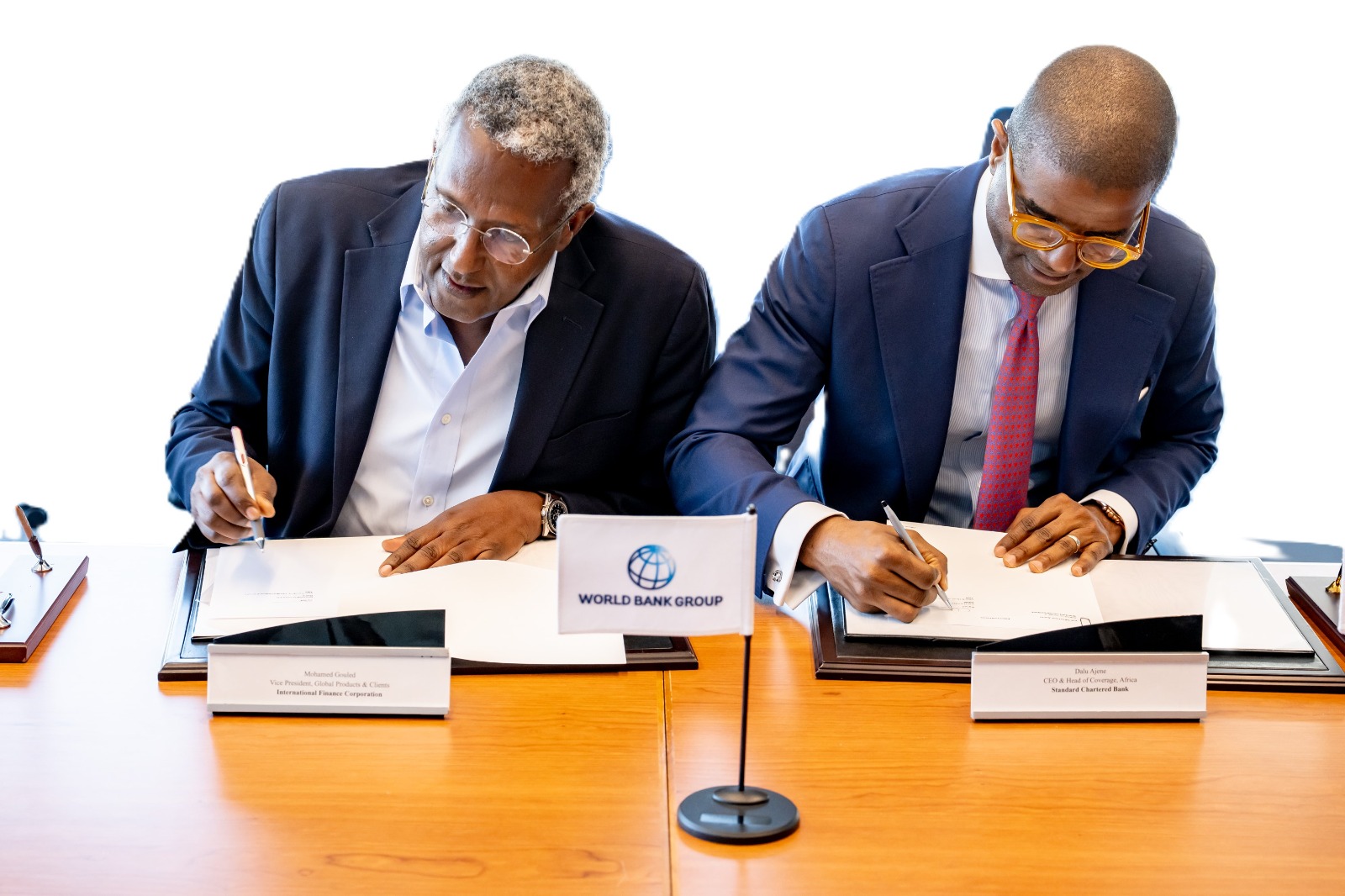
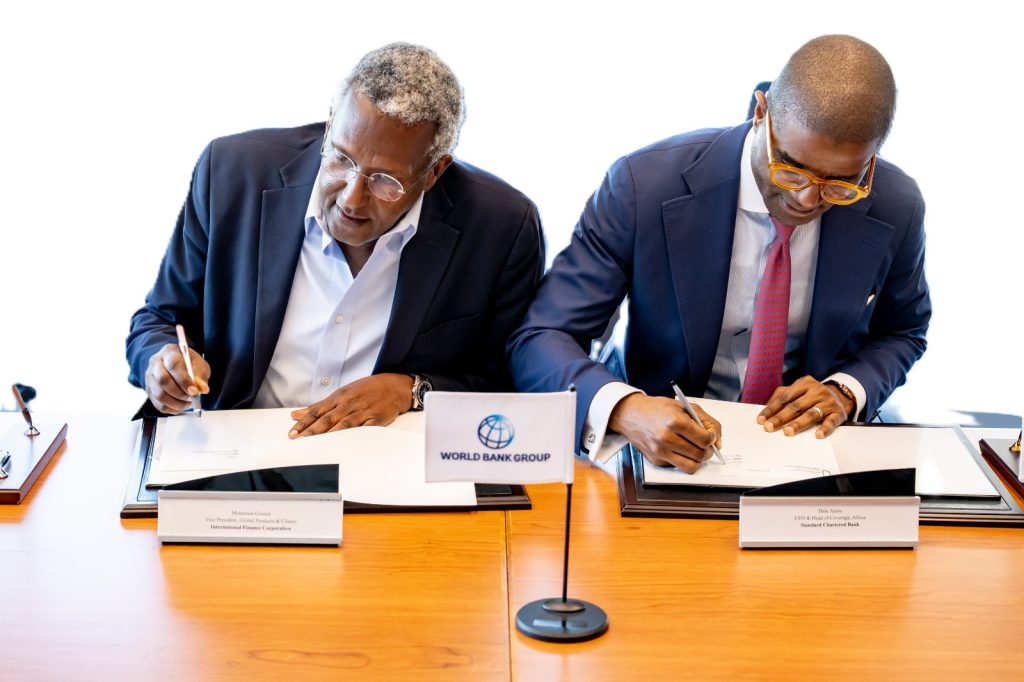
    IFC’s Vice President, Products and Clients Mohamed Gouled and Standard Chartered Africa Chief Executive and Head of Coverage Dalu Ajene, at the USD$300m risk-sharing facility signing ceremony in Washington, DC.