Author: Christine Muchira

  • NEMA intensifies crackdown on illegal effluent discharge in Kitui County

    NEMA intensifies crackdown on illegal effluent discharge in Kitui County

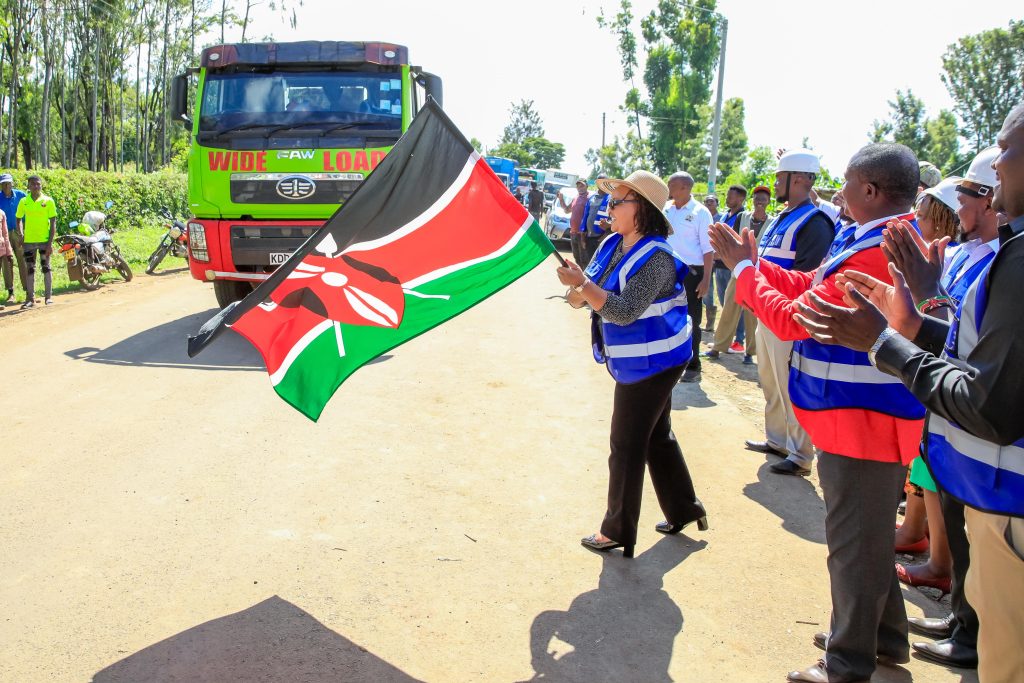
    The National Environment Management Authority (NEMA) Environmental Inspectors have launched an operation in Kitui County to monitor and stop illegal effluent discharge in line with the Water Quality Regulations 2024.

    According to a statement, the exercise seeks to identify and address unlawful waste discharge to protect water sources and the environment.

    The Director Environmental Enforcement, Dr. Ayub Macharia affirmed that facilities found to be non-compliant will not be allowed to continue operations, instead will face prosecution.

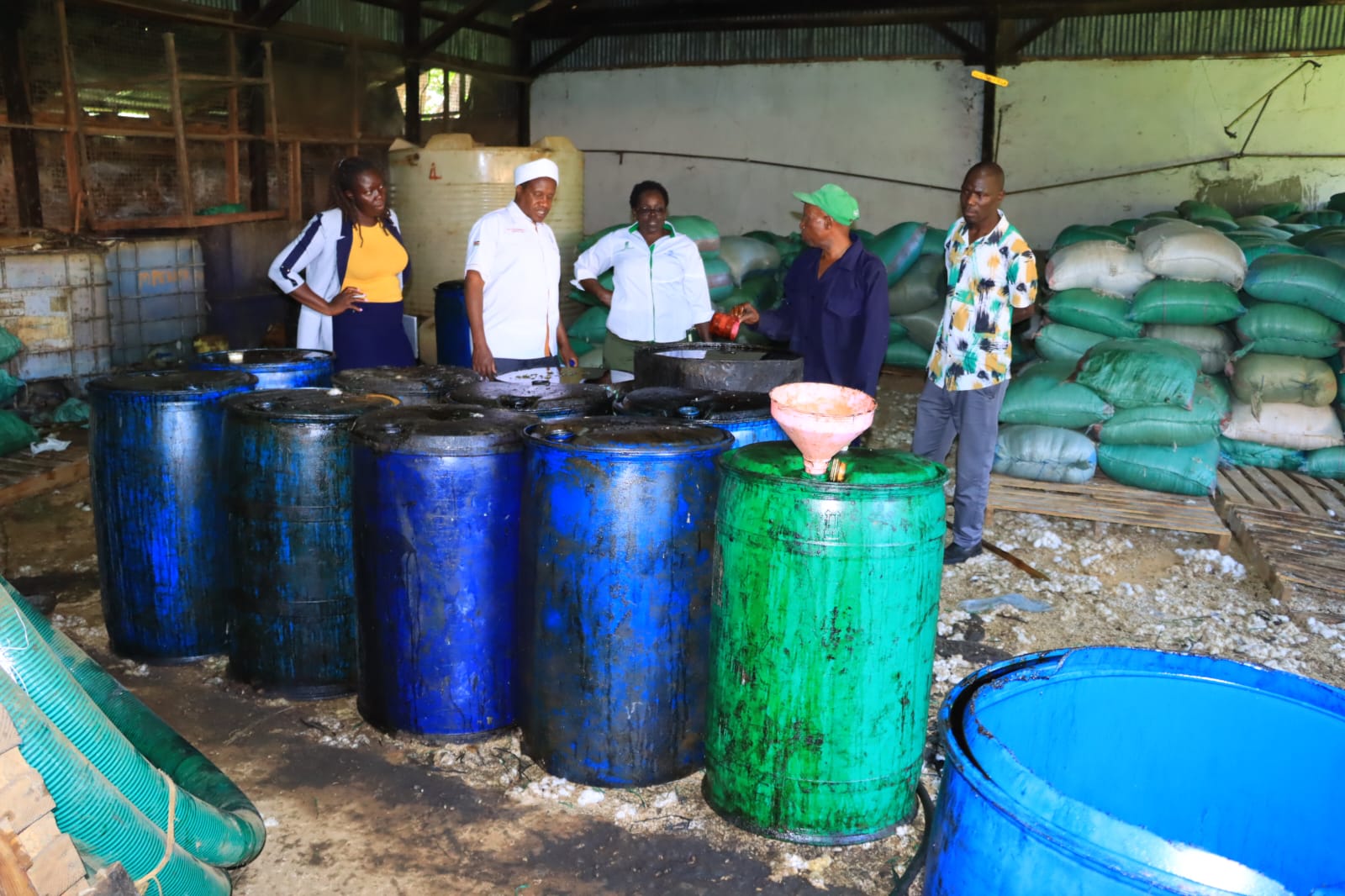
    The ongoing inspections are targeting a range of establishments including hotels, hospitals, petrol stations, and multi storey residential apartments.

    During the exercise, environmental inspectors reviewed operational practices at the facilities and issued restoration orders in areas where improvements are needed to enhance compliance with environmental standards.


  • Kenya, France advance meteorological modernisation partnership

    Kenya, France advance meteorological modernisation partnership

    Government has underscored the importance of technology transfer, capacity building, and strategic partnerships in modernising Kenya’s meteorological infrastructure to better respond to climate change and extreme weather events.

    Speaking when he hosted a team from Meteo France International (MFI), Environment Principal Secretary Eng. Festus Ng’eno welcomed the continued Kenya-France collaboration, saying the initiative will boost climate resilience, disaster preparedness, environmental management, agriculture, aviation safety, water resource management, and national economic planning.

    The PS and his guests discussed the next steps following the recent signing of the Statement of Intent between Kenya and France on meteorological services modernisation.

    This following the signing ceremony held at State House, Nairobi, witnessed by President William Ruto and France President Emmanuel Macron, which marked a significant milestone in strengthening cooperation between Kenya and France in weather and climate services.

    Discussions focused on implementation priorities under the proposed modernisation programme, including enhancement of Kenya’s meteorological observation networks, operational forecasting systems, climate information services, and flood risk management capacity.

    The delegation led by the President Jean-Sébastien Cases, briefed the PS on ongoing technical engagements and the roadmap towards operationalising the partnership, which aims to strengthen Kenya’s institutional and technical capacity in delivery of accurate, timely, and reliable weather and climate information services.

    PS Ng’eno reiterated Kenya’s commitment to supporting the successful implementation of the programme.

    The partnership between KMSA and Meteo France International is expected to significantly improve Kenya’s ability to monitor, forecast, and respond to weather and climate-related risks while enhancing access to high-quality meteorological services for communities and key economic sectors across the country.

    The PS was accompanied in the meeting by KMSA Acting Director General Edward Muriuki among others.

  • Rachel Ruto leads African call to protect children in AI-Driven Digital World 

    Rachel Ruto leads African call to protect children in AI-Driven Digital World 

    First Ladies across Africa have called for a collective societal approach to safeguard children in digital spaces and in an increasingly AI-driven world.

    Speaking during the High-Level Side Event on Building Safer Digital Spaces for Children in Africa at the Africa Forward Summit, the leaders emphasized the urgent need for governments, technology companies, parents, educators, and communities to work together in protecting children online.

    The meeting, led by First Lady Rachel Ruto, highlighted the growing responsibility to ensure children remain safe both now and in the future, even as the digital economy continues to generate billions in revenue and drive innovation across the continent.

    First Ladies and spouses present included Lauriane Darboux épouse Doumbouya(Guinea) Marisoa Elisa Berthine(Madagascar)Philile Dlamini(Eshwatini) and Neema Ngure Nchemba wife to Tanzania Prime Minister.

    Ruto noted that technology has transformed societies and connected the world in unprecedented ways, creating both opportunities and new risks for children.

    “The world has truly become a global village. But with that transformation comes a new responsibility. The same digital world that can unlock a child’s future can also place it at risk,” she said.

    The First Lady said that under the leadership of William Ruto, Kenya continues to expand digital access, strengthen innovation, and position itself at the forefront of Africa’s digital transformation.

    “Progress must never outpace protection. What we are building is not just infrastructure; we are shaping the environment in which our children will grow, learn, and become,” she added.

    Lauriane Darboux épouse Doumbouya observed that Africa’s youthful population makes child sa as an example of African innovation with global impact.

    “It is good to see Kenya once again leading the charge. M-Pesa began in a small way, reaching rural communities and transforming digital financial transactions, and today its impact is felt globally,” she said.

    Sirleaf represented a delegation of eminent African leaders and global personalities, including former Presidents, Prime Ministers, heads of UN agencies, and leaders of international institutions.

    Philile Dlamini stressed the importance of vigilance in protecting children from harmful online content and ensuring they grow up in safe digital environments.

    “Vigilance is needed to ensure children are protected from harmful content online,” she said.

    Neema Ngure Nchemba said governments have a responsibility to ensure children access positive and age-appropriate content, while also ensuring technology respects cultural values and societal norms.

    She added that Tanzania has enacted laws aimed at protecting young people online and reaffirmed the country’s commitment to championing children’s digital safety.


  • Jubilee Party names Eng. Wilson Kigwa for Ol Kalou Parliamentary by-election

    Jubilee Party names Eng. Wilson Kigwa for Ol Kalou Parliamentary by-election

    The Jubilee Party has picked Eng. Wilson Kigwa as its candidate for upcoming Ol Kalou Parliamentary by-election.

    According to a statement, the Party said the decision followed consultations guided by the Party Constitution, the National Elections Board, relevant party organs, and engagement with qualified aspirants.

    “Following consultations guided by the Party Constitution, the National Elections Board, relevant party organs, and engagement with qualified aspirants, the party has settled on Eng. Wilson Kigwa as the official Jubilee Party candidate,” the statement read.

    In its statement, the party said it is heading into the by-election “ready, united, and stronger than ever,” signalling renewed efforts to consolidate its support base in the region.

    The Parliamentary seat at Ol Kalou fell vacant following the death of the late David Njuguna Kiaraho on 29th March this year.


  • Ruto, Macron champion new Africa-France partnership at Nairobi summit

    Ruto, Macron champion new Africa-France partnership at Nairobi summit

    President William Ruto has called for a win-win partnership between Africa and France built on mutual respect and shared responsibility.

    The President said the Africa Forward Summit presents a unique opportunity for Africa and France to forge a forward-looking partnership that delivers shared progress while advancing Africa’s long-term economic transformation.

    He said the partnership must not be built on dependency but on sovereign equality, not on aid or charity but on mutually beneficial investment, and not on extraction or exploitation but one that benefits both parties.

    “The times before us demand stronger cooperation, renewed multilateralism, and partnerships grounded not in hierarchy, but in sovereign equality, mutual respect, and shared responsibility,” he said.

    He made the remarks during the opening of the Africa Forward Summit at KICC, Nairobi, which he co-chaired with President Emmanuel Macron of France.

    The summit was attended by 24 Presidents, five prime ministers, four vice-presidents, United Nations Secretary-General António Guterres, and African Union Commission Chairperson Mahmoud Ali, among others.

    President Ruto explained that Africa’s priorities include domestic mobilisation of resources for Africa’s development at scale, reform of the international financial architecture, development of transport, logistics and connectivity infrastructure.

    Others are energy transition and green industrialisation, and youth skills development to foster creativity, innovation, entrepreneurship, and AI-driven transformation.

    On his part, President Macron said the renewed partnership between Africa and France will be built on respect, courage, and shared ambitions.

    He said the European agenda has every interest in seeing Africa attain economic sovereignty and autonomy.

    “Your success is our success,” he said.

    The French leader pointed out that £23 billion in investments in the private sector in Africa, £14 billion from French firms in Africa, and £9 billion in African businesses reflect a new partnership and vision for sustainable development.

    He said the challenges facing Europe and Africa are shared, noting that both continents seek peace, prosperity, and sovereignty.

    He pointed out that France is keen on defending the rule of law and international law, and believes in equality in trade relations.

    Guterres commended Africa for taking the lead in providing solutions to global challenges, including reform of the international financial architecture and climate action.

    The United Nations chief said there is need to reform the global system that was designed without Africa’s involvement and continues to operate without Africa’s participation, terming it “a century-old injustice”.

    He said it was unjust for a continent with more than 1.5 billion people not to have permanent seats at the UN Security Council.

    “Without the voice, representation, and decision-making power Africa deserves inside international financial institutions, it is not Africa that loses; it is the world that loses,” Guterres said.

    At the same time, President Ruto called on African nations to work towards African financing solutions that would drive the continent’s transformation.

    “Africa today holds more than $4 trillion in long-term domestic savings, including over $1 trillion in pension and insurance assets, and more than $500 billion in central bank reserves,” he said.

    The President said the era in which Africa’s development was principally framed through aid, dependency, and unsustainable borrowing must give way to a new paradigm grounded in investment, innovation, domestic resource mobilisation, and strategic partnerships built on sovereign equality and mutual benefit.

    He explained that Kenya has already begun implementing this vision through the establishment of the National Infrastructure Fund, a platform designed to mobilise long-term domestic and private capital into strategic national projects.

    “Already, our new Fund has mobilised about $1 billion, demonstrating the enormous potential that exists within African economies themselves,” he said.

    The President said the continent possesses vast natural resources, critical minerals, fertile land, immense renewable energy potential, expanding consumer markets, dynamic entrepreneurs, and the youngest population in the world.

    “What Africa requires is not charity, but investments; not extraction, but value creation; not dependency, but mutually beneficial partnerships capable of unlocking shared prosperity,” he said.

    President Ruto further pointed out that the current international financial system remains structurally unequal.

    He said African countries continue to face disproportionately high borrowing costs, constrained access to concessional financing, and distorted risk perceptions frequently disconnected from economic realities.

    He said the bias within global credit rating systems continues to penalise African economies, increase the cost of capital, and discourage long-term investment into productive sectors.

    “This imbalance is neither sustainable nor just. It is one of the principal constraints on Africa’s ability to finance infrastructure, industrialisation, climate adaptation, and economic transformation at the scale required,” he said.

    That is why, he said, Africa has supported the establishment of the African Credit Rating Agency, an important step towards ensuring fairer, evidence-based, and context-sensitive assessments of African economies and investment opportunities.

    “Its purpose is not to replace existing global institutions, but to correct longstanding distortions in risk perception that continue to increase the cost of capital for African countries and discourage long-term investment into productive sectors,” he said.

    As government, President Ruto said, Kenya is deliberately partnering with the private sector to build confidence, reduce risk, and crowd in investment into transformative public infrastructure.

    “Our objective is simple: To create credible mechanisms through which private capital can participate securely and profitably in Africa’s growth story,” he said.

    President Ruto said Africa must accelerate investment in transport corridors, ports, rail systems, roads, aviation infrastructure, digital connectivity, and integrated logistics systems capable of binding Africa into one competitive economic space under the African Continental Free Trade Area.

    “Africa cannot trade effectively with itself while its economies remain disconnected from one another,” he added.

    He also said Africa must become a globally competitive industrial hub powered by clean energy, modern infrastructure, innovation, and strategic investment partnerships.

    “Green industrialisation presents our continent with an opportunity not only to contribute meaningfully to global climate solutions, but also to create jobs, expand manufacturing capacity, strengthen exports, deepen regional value chains, and accelerate structural economic transformation,” he said.

    On youth empowerment, President Ruto said Africa must equip young people not merely to seek jobs, but to create enterprises, build technologies, drive industrial transformation, and lead the next frontier of artificial intelligence and digital innovation.

    He also said Africa must reaffirm collective support for African-led peace and security mechanisms, including the African Union Peace and Security Architecture, while strengthening predictable financing, institutional capacity, and international cooperation in support of lasting peace.

    “Peace requires confronting the structural drivers of instability: Poverty, exclusion, unemployment, inequality, weak institutions, climate vulnerability, and the absence of economic opportunity, particularly for young people,” he said.

    On global governance reforms, he said no governance architecture can credibly claim to be democratic, representative, just or fit for purpose while Africa, a continent of 54 countries, remains absent from the table where the world’s most consequential decisions are made.

    He said reform of the UN Security Council is not merely an institutional adjustment, but a moral obligation and a strategic necessity indispensable to restoring trust, legitimacy, and confidence in the international order itself.

    “Africa does not seek privilege, but fairness; we don’t seek exclusion, but inclusion. We don’t seek confrontation, but partnership anchored on mutual respect, shared responsibility, and shared progress,” he said.

    Present were Presidents Paul Kagame (Rwanda), Alassane Ouattara (Côte d’Ivoire), Abdel Fattah el-Sisi (Egypt), Faustin-Archange Touadéra (Central African Republic), Azali Assoumani (Comoros), Mohamed Ould Ghazouani (Mauritania), Mohamed al-Menfi (Libya), and King Letsie III (Lesotho).

    Others were Hakainde Hichilema (Zambia), Mamady Doumbouya (Guinea), Bola Ahmed Tinubu (Nigeria), Joseph Boakai (Liberia), Bassirou Diomaye Faye (Senegal), Mahamat Idriss Déby (Chad), Duma Boko (Botswana), Dharambeer Gokhool (Mauritius), John Dramani Mahama (Ghana), Daniel Chapo (Mozambique), and Michael Randrianirina (Madagascar), and Prime Minister Abiy Ahmed (Ethiopia).

    Also at the meeting were Prime Ministers Aziz Akhannouch (Morocco), Russell Dlamini (Eswatini), Américo Ramos (São Tomé and Príncipe) Sara Zaafarani Zenzri (Tunisia), Mwigulu Nchemba (Tanzania), and African Union Commission Chairperson Mahmoud Ali Youssouf.
     

  • Government to transition 107,000 CHPs to SHA medical scheme

    Government to transition 107,000 CHPs to SHA medical scheme

    Ministry of Health has announced plans to transition 107,000 Community Health Promoters into the Social Health Authority (SHA) comprehensive medical scheme.

    The transition will be implemented through a collaborative framework between the national and county governments aimed at improving their welfare and long-term institutional support.

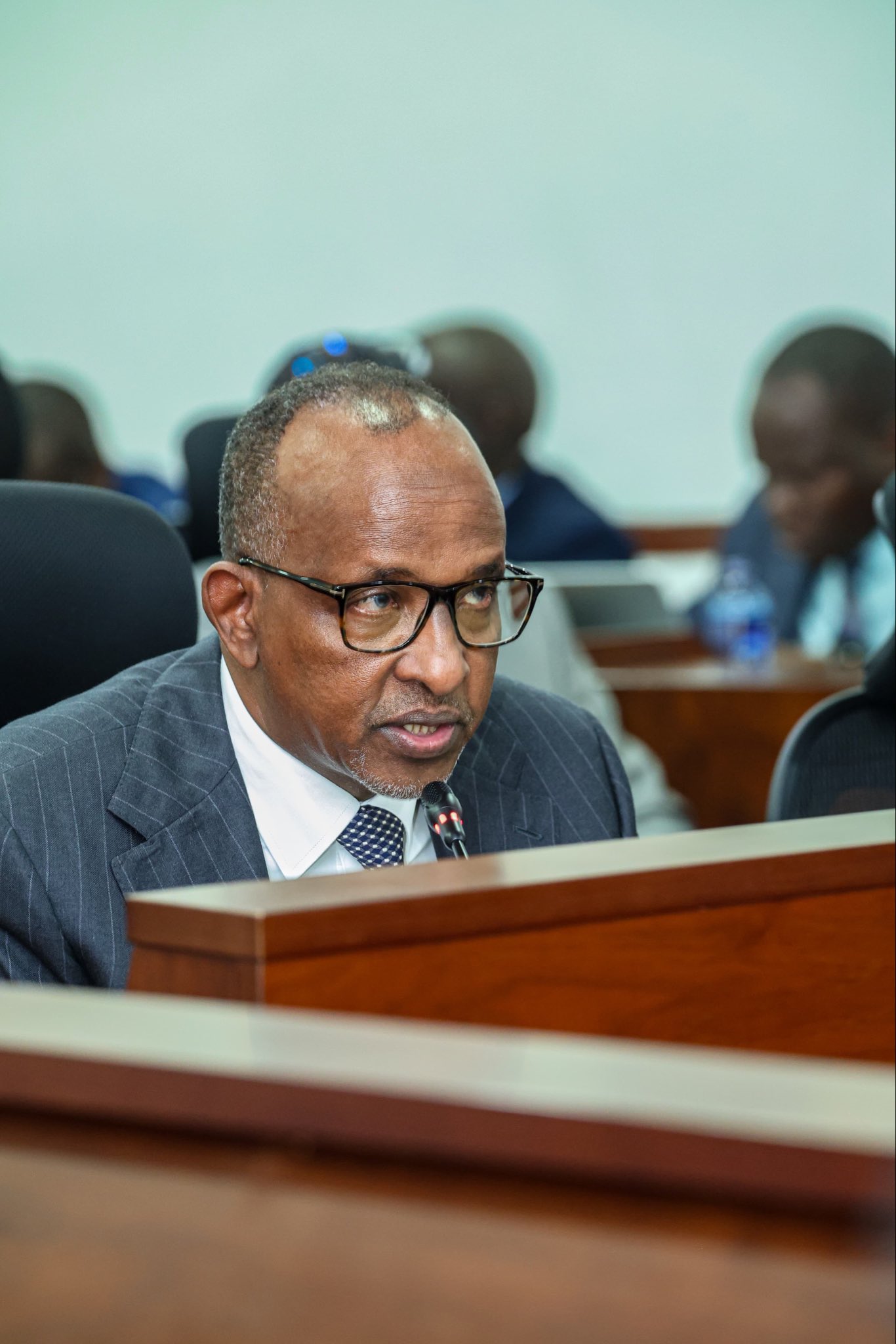
    Speaking during an engagement with the National Assembly Departmental Committee on Health at Bunge Towers, Nairobi, Cabinet Secretary for Health  Aden Duale highlighted the urgent need to replace and upgrade CHP kits to enhance grassroots service delivery and reinforce preventive and promotive healthcare interventions within communities.

    The CS reaffirmed governments commitment to strengthening Kenya’s healthcare system through sustained reforms, strategic financing, and enhanced collaboration between the national and county governments.

    Duale who spoke when leading the Ministry in presenting the 2026/2027 Financial Year Estimates for the State Department for Medical Services before the Committee chaired by Seme MP Dr. James Nyikal.

    The discussions centred on accelerating the country’s Universal Health Coverage (UHC) agenda through targeted investments in health systems strengthening, workforce support, digital transformation, and improved service delivery across the country.

    The Ministry outlined the broad mandate of the State Department for Medical Services, including policy direction, regulatory coordination, institutional capacity strengthening, management of national referral services, and provision of technical support to counties in delivering healthcare services.

    Among the key priorities presented to the Committee were expansion of local manufacturing of medical products and technologies, modernization of healthcare systems through digitization, and strengthening accountability mechanisms to improve efficiency and access to quality healthcare services across the country.

    Particular emphasis was placed on the critical role played by Community Health Promoters (CHPs) in linking households to the healthcare system and strengthening primary healthcare interventions at the community level.

    Leading the Ministry delegation, Duale further appealed for enhanced budgetary allocations towards several high-impact yet underfunded programmes, including operationalisation of the East Africa Centre for Excellence in Urology and Nephrology, strengthening the Kenya National Blood Transfusion Services, scaling up the Primary Healthcare Fund to sustain outpatient services at Levels 2 and 3 facilities, and increased support for the Emergency, Chronic and Critical Illness Fund.

    Additional financing was also sought for national referral hospitals to address rising operational and human resource demands.

    On the status of UHC healthcare workers, the Ministry confirmed extension of their engagement contracts up to 30th June 2026 to facilitate a smooth and structured transition process as county governments prepare for their absorption on permanent and pensionable terms.

    The Committee was further briefed on ongoing reforms focused on improving efficiency in health financing, strengthening supply chain systems, enhancing digital health infrastructure, and ensuring uninterrupted availability of essential medicines and commodities across all levels of care.

    The engagement also underscored the importance of safeguarding health financing as a strategic investment in Kenya’s economic resilience and human capital development.

    Immunization financing remains protected to sustain gains made in child health and prevent resurgence of vaccine-preventable diseases.

    The Ministry delegation included Principal Secretary for Medical Services Dr. Ouma Oluga, Director-General for Health Dr. Patrick Amoth, alongside senior Ministry directors, technical leads, and chief executive officers.


  • UN Chief hails Nairobi as pillar of global multilateralism

    UN Chief hails Nairobi as pillar of global multilateralism

    The United Nations (UN) Secretary General Antonio Guterres has hailed Nairobi as a critical pillar of global multilateralism as the UN launched a major expansion of its headquarters in  Kenya.

    The expansion project that is expected to cost nearly USD 340 million (Ksh 44.2 billion) signals a growing shift of global influence towards Africa.

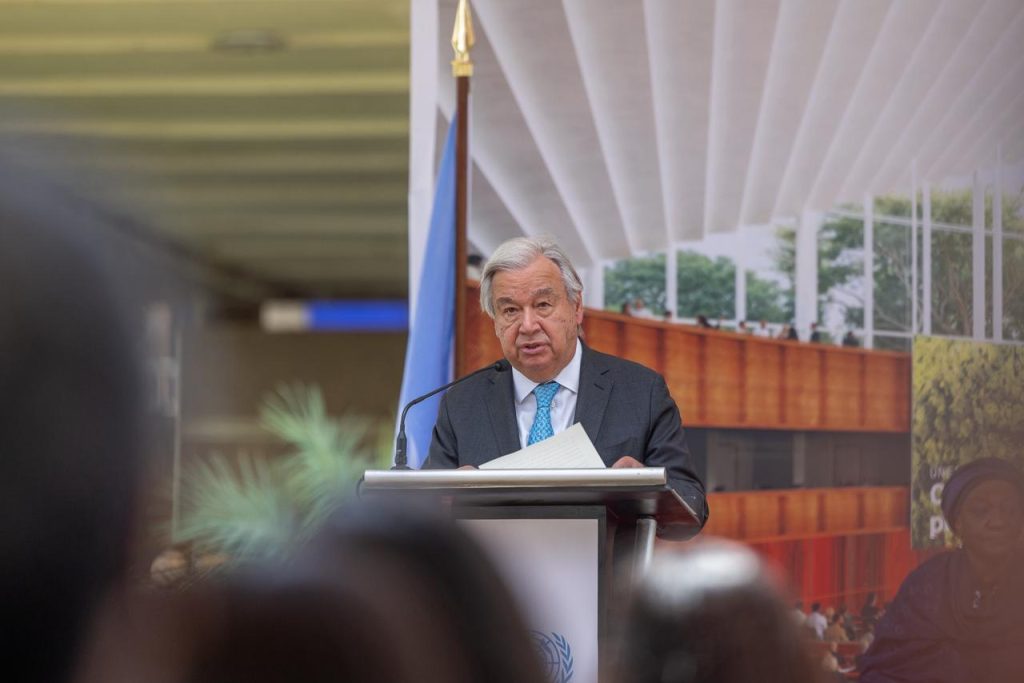
    Speaking during the launch of the new office blocks and the groundbreaking of a new conference facility at the UN complex in Gigiri on Monday, Guterres noted that Nairobi is one of the United Nations’ “green centres” of gravity the only UN headquarters in Africa.

    “These projects affirm Africa’s place at the heart of the UN and at the heart of international cooperation. Nairobi is one of the United Nations’ green centres of gravity the only UN headquarters in Africa. Kenya is a generous host and a strategic partner in diplomacy, development, humanitarian action, environmental leadership, and peace.”


    He added that the United Nations must be closer to the people it serves connected to their realities, equipped to support the solutions that they are building.


    The new office buildings are UNON’s first net-zero facilities, powered entirely by on-site solar energy throughout the year. Additional solar installations planned for the expanded conference complex are expected to make the entire Gigiri campus energy-neutral by 2030.


    The Nairobi expansion approved by the General Assembly includes new modern, permanent, and climate-resilient office blocks (USD 66.2 million / Ksh 8.6 billion) and new upgraded conferencing facilities (USD 265.7 million / Ksh 34.6 billion) that will increase the number of meeting rooms from 14 to 30, and seating capacity from 2,000 to 9,000 delegates, positioning UNON as the third largest UN global hub after New York and Geneva, the fourth being Vienna.


    In addition, the UN Refugee Agency (UNHCR) has invested (US$ 11.2 million/Ksh 1.46 billion) in new office blocks at UNON.


    To complement the modernisation of the UN campus, the government of Kenya is investing (US$1.1 billion/ Ksh143 billion) in support of Nairobi’s infrastructure upgrade, including roads, street lighting, regeneration of the Nairobi Rivers, ICT systems security, and the operationalisation of the UN One-Stop Shop.

    International Financial Architecture

    The SG underscored the need to have deeper reforms in global governance institutions to give Africa greater representation and decision making power, particularly at the UN Security Council and international financial institutions.

    “Too many climate-vulnerable countries are still waiting for the support they were promised. And too often, African countries are expected to live with decisions made in institutions in which they have no equal voice. That must change,” Guterres said.

    “We need deeper reforms of the international financial architecture. Greater investment on terms that allow countries to build, grow and transform. And global institutions that reflect the world as it is today not as it was eighty years ago,” he added.

    He further stressed that it is not acceptable that African countries pay more than three times more than developed countries in order to obtain the loans they need for the development.

    “My voice will remain loud and clear in saying that we live in a situation that is deeply unfair. It is not acceptable that African countries pay more than three times more than developed countries in order to obtain the loans they need for the development. Many of these countries with a more solid financial situation and better development perspectives than developed countries that obtain resources with much lower costs. This is absolutely unacceptable.”

    Security Council Reforms

    Guterres stressed that the current composition of the Security Council no longer reflects today’s global reality, ‘where an historic injustice persists in denying Africa permanent seats’.

    “So we need to have all countries recognizing that the Security Council in which there are three European members, one Asian member, and one North American member, and no Latin America or African members, and just one Asian doesn’t correspond at all to the world of today. And this creates a problem of legitimacy. And with legitimacy comes its effectiveness in guaranteeing peace and security in the world,” Guterres said.

    Middle East and Strait of Hormuz

    On the impact of the current situation in the Middle East the United Nations Secretary General called for called for urgent de-escalation and the restoration of normal trade flows.

    He noted that witnessing high increases in prices because of the Strait of Hormuz being blocked, stressing that it should be completely without restrictions.

    “That is the only way to bring energy prices and fertilizer prices back to the levels that we had before the war, and this is vital for countries like Kenya,” he noted.

    Roughly 13 per cent of Africa’s imports largely oil and fertilizers move through the Strait of Hormuz and with four in five African countries net oil importers, every disruption hits hard.

    “Without fertilizers, you can imagine that we risk to have a serious food security problem next year. So this is the moment in which the opening of the Strait of Hormuz without restrictions is a must from the point of view of the interests of the international community as a whole,” he added.

    Accountability for Journalist Safety

    Further the UN SG expressed concern over the increasing number of journalists being killed and subjected to harassment worldwide noting that the UN is actively advocating for accountability.

    “Journalists are being killed and harassed with increasing frequency, and there is still a lack of accountability for these crimes. UN is actively advocating for accountability, and I have mobilized Human Rights High Commissioner to take further action.,” Guterres said.


    Also read https://www.kbc.co.ke/ruto-guterres-launch-un-nairobi-expansion-elevating-city-as-global-diplomacy-hub/

  • KBC taps Huduma Centres to reach wananchi

    KBC taps Huduma Centres to reach wananchi

    Kenya Broadcasting Corporation (KBC) and the Huduma Kenya Secretariat have signed an agreement that will see KBC services now taken closer to the public through the Huduma Centre platforms.

    Speaking during the event, Public Investments and Assets Management Principal Secretary Cyrell Odede noted that the partnership that begins with Huduma Kenya Makadara Centre will be rolled out across the 47 counties within the next year.

    He said the initiative is part of broader government efforts to strengthen access to information and improve service delivery through integrated public platforms.

    “The Huduma Kenya one-stop-shop model has transformed public service delivery by making services more accessible, efficient and citizen-centred, consistently achieving a high level of customer satisfaction,” the PS said.

    Odede further noted that the government is supporting KBC’s transformation as it undergoes significant restructuring.

    “Following its transition into a government-owned enterprise, KBC is undergoing significant restructuring. The government is actively supporting KBC transformation, through infrastructure upgrades and the implementation of comprehensive turnaround strategy aimed at enhancing efficiency and competitiveness,” said PS Odede.

    “The National Treasury recognises and appreciates the efforts being made by KBC to fulfil its mandate despite existing challenges. I assure the corporation of government’s continued support as it transitions into a fully fledged government enterprise,” he added.

    On his part, KBC Board Chairman, Tom Mshindi said the partnership signifies a new phase in public communication and citizen engagement.

    “And you can multiply that to get a sense of the universe that this relationship opens for us,” Mshindi said, describing the collaboration as transformative for government communication.

    Mshindi emphasized that the partnership will help improve government outreach across key sectors.

    “The work of making these services starts now, making sure people are aware of these services and are encouraged to use them,” said Mshindi.

    He added that the initiative will support communication in key sectors including agriculture, education, and health, while also strengthening public awareness campaigns and bookings for government services.

    At the same time, the KBC Managing Director Agnes Kalekye said the national broadcaster is also embracing digital transformation to improve access to services.

    “Through this partnership you can walk into any Huduma Kenya across the country and book an advertisement with KBC,” the MD said.

    “We are integrating with e-citizen to make more requests. We are also exploring Artificial Intelligence (AI) to make the process faster because your time matters,” she added.

  • Ruto, Guterres launch UN Nairobi expansion, elevating city as global diplomacy hub

    Ruto, Guterres launch UN Nairobi expansion, elevating city as global diplomacy hub

    The expansion and modernisation of the United Nations Office in Nairobi will position Nairobi as a premium hub for meetings, incentives, conferences, and exhibitions, President William Ruto has said.

    The President said Kenya is committed to ensuring the United Nations Office at Nairobi is fully equipped to deliver effective, responsive and impactful services to the people and communities who need them most.

    To complement the modernisation of the UN campus, he announced that the government is investing $1.1 billion (KSh143 billion) in support of Nairobi’s infrastructure upgrade, including roads, street lighting, regeneration of the Nairobi Rivers, ICT systems security, and the operationalisation of the UN One-Stop Shop.

    This investment, President Ruto explained, affirms Nairobi’s role as the UN headquarters in the Global South, a centre of international diplomacy and a symbol of global cooperation.

    “We look forward to deepening our partnership with the United Nations at Nairobi as the city continues to grow as a centre of global diplomacy and a symbol of international cooperation,” he said.

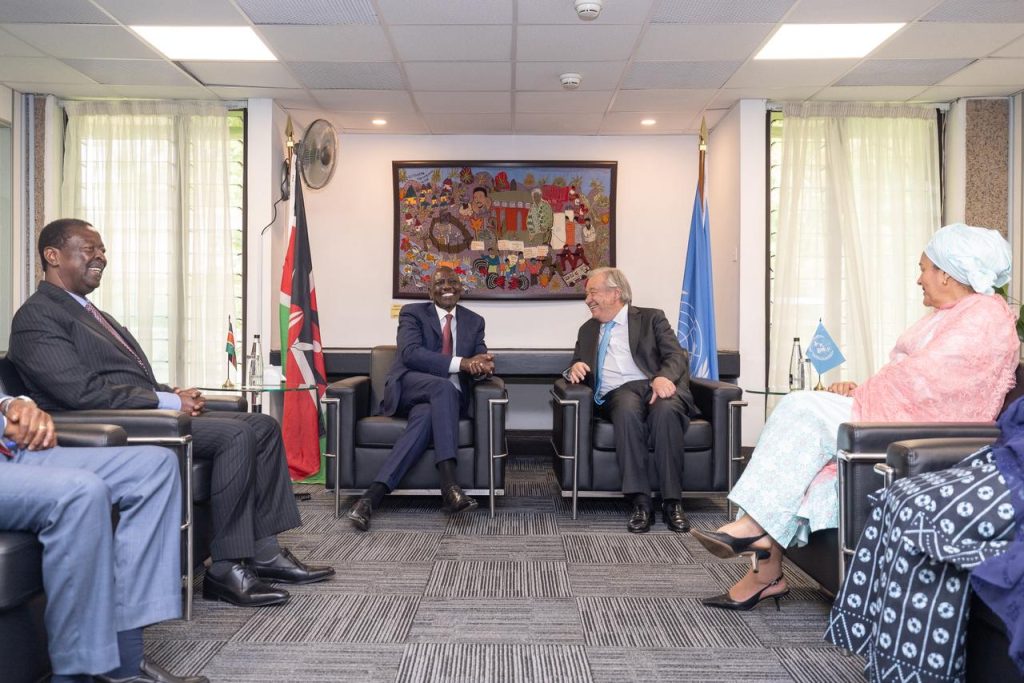
    He spoke during the groundbreaking ceremony for the construction of the expanded United Nations Office at Nairobi Assembly Hall, Gigiri, alongside UN Secretary-General António Guterres.

    President Ruto and Guterres also inaugurated the new United Nations office block that he been completed.

    The President also noted that the government is modernising the Bomas Convention Complex to strengthen Kenya’s position as a hub for international conferencing.

    He said the UN facility will enable Kenya to align its status with other UN headquarters, allowing it to effectively serve as a premium global hub for multilateral diplomacy and international cooperation.

    “Kenya provides favourable enabling conditions, a supportive legal environment and is among the most cost-effective jurisdictions of all UN headquarters globally,” he said.

    Guterres said the groundbreaking ceremony for the new assembly hall and inauguration of the new office block reaffirm the central role Africa, and Kenya in particular, play in the life and future of the United Nations.

    “Nairobi is a place where global challenges meet regional solutions, where innovation is born and where the future of multilateralism is being shaped every day,” he said.

    United Nations Secretary General Antonio Guterres

    The Secretary-General noted that, in two years, the new facility will host world leaders confronting the most urgent issues of our time.

    “They will gather in a new amphitheatre curved into African soil and surrounded by the Kenyan forests,” he said.

    He noted that the modern facility will host 9,000 people and be powered by onsite solar power, ensuring it attains energy neutrality by 2029.

    At the same time, President Ruto said the modernisation and expansion of the United Nations Office at Nairobi is a powerful expression of inclusivity, geographical balance and the universality of the United Nations system.

    He pointed out that the government will amend the Privileges and Immunities Act to provide opportunities for UN families and staff working in Nairobi should they consider retiring in Kenya.

    The President commended Guterres for his advocacy of matters affecting the Global South.

    He pointed to the call for reforms of the international financial architecture and the New African Financial Architecture for Development aimed at addressing the challenge of debt and access to concessional resources at scale.

    “We have made proposals which we hope to advance with the Secretary-General in all forums, including the G7 to be held in a month’s time,” he said.

    He explained that the Global South is changing its narrative from one of problems, disease, conflict and poverty to one of solutions.

    “This continent is not about aid or loans; it is about ideas, solutions and investments,” he said.

    On his part, Guterres said his voice will remain loud and clear in highlighting the injustice the Global South faces because of the unfairness of international systems.

    He committed to supporting African transformation and pushing for reforms advocated by Africa.

    “The African continent can count on me. I will always be at your side to correct injustices,” he said.

    He said it was not acceptable for Africa to pay more than developed countries to obtain the loans it needs for development.

    “Many of these countries have more solid financial situations and better development perspectives than developed countries that receive resources at much lower costs,” he said.

    The UN chief added that this situation obtained only because Africa was not at the table in 1945 when the United Nations was established, saying the continent has paid a huge price for that.

    He was emphatic that there would be no justice until there is permanent African membership of the UN Security Council.

    Prime Cabinet Secretary Musalia Mudavadi said Kenya is committed to working closely with all Member States, under the leadership of the UN, to ensure that the United Nations system becomes more efficient, effective, responsive and impactful in improving the lives of all people, especially the vulnerable.

    Also present at the event included United Nations Deputy Secretary-General Amina Mohammed and UN Under-Secretary-General and Director-General of the UN Office at Nairobi Zainab Hawa Bangura, among others.


  • Waiguru launches water project, expands Wang’uru market in Mwea development drive

    Waiguru launches water project, expands Wang’uru market in Mwea development drive

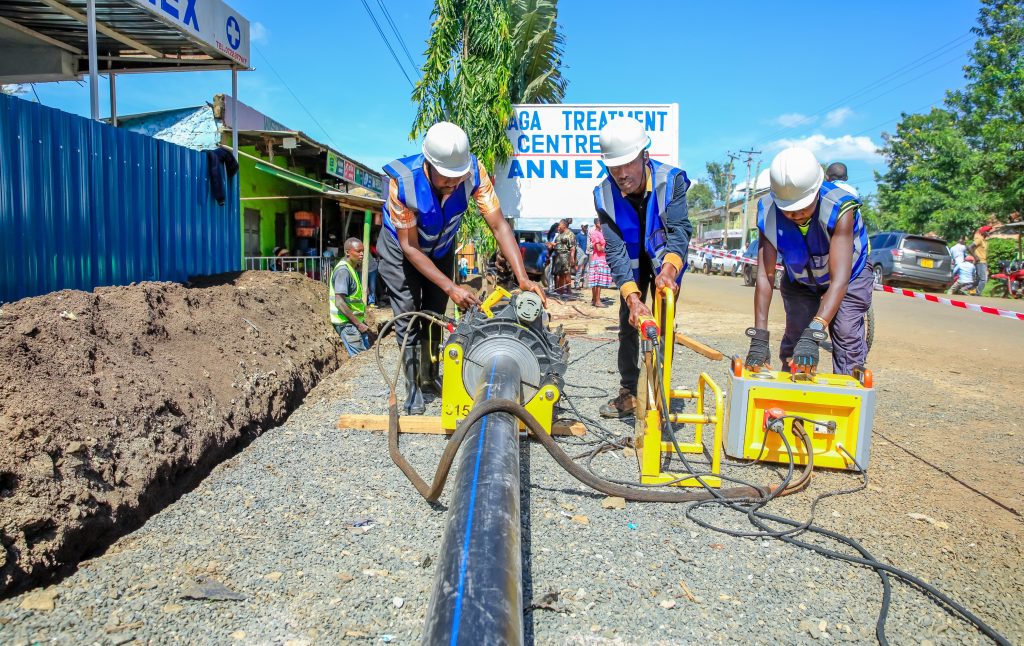
    Kirinyaga Governor Anne Waiguru has unveiled a major package of development projects in Mwea, commissioning a mega bulk water supply system while at the same time allocating land for expansion of Wang’uru market.

    Speaking during the launch of the Mwea Integrated Water Supply Rehabilitation and Expansion Project in Mutithi and an inspection of the Wang’uru market site, the Governor said the twin investments reflect her administration’s commitment to inclusive development through infrastructure that directly impacts households and businesses.

    The water project, one of the county’s flagship initiatives, is designed to improve access to reliable, clean and safe water for thousands of residents while supporting agriculture, trade and small-scale enterprises.

    The county government is investing Ksh. 200 million in the initiative, which involves the development of more than 57 kilometres of pipeline network across Mwea.

    Once fully implemented, it will benefit about 30,000 households across eight wards-Gathigiriri, Tebere, Thiba, Mutithi, Wamumu, Murinduko, Nyangati and Kangai.

    Water for the system will be drawn from Kiringa and Thiba rivers and treated at the Muratiri Water Treatment Works, with a production capacity of 30,000 cubic metres per day, before being distributed through a gravity-based system to key towns including Kerugoya, Kutus, Kagio, Kandongu and Sagana.

    The project also includes strategic extensions to bring water closer to homes, including a bulk line from Kutus to Kimbimbi serving Gathigiriri, Tebere and Thiba, and another from Kandongu to Mutithi benefiting Mutithi and Wamumu.

    Additional pipelines will connect households in Kangai Ward, while rehabilitation of the Nyamindi Intake will boost supply to upper parts of Mwea. In Murinduko, the Mugaro Irrigation Water Project will support about 2,700 farmers.

    Waiguru noted that the expanded water access will reduce reliance on unsafe sources, cut the cost of treating waterborne diseases, and unlock economic activities such as irrigation, livestock rearing and growth of small enterprises, ensuring our people have the basic services they need to thrive economically,” she said.

    Alongside the water project, the Governor inspected the three acre site that the county has allocated for construction of Wang’uru Market Phase II, a project that she said was a direct response to public demand following the successful completion of Phase I of the market.

    “We did Wang’uru Phase I and the people asked us to return and complete Phase II,” she said, noting that her administration had listened to wananchi and committed to delivering a fully-fledged modern trading hub.

    The project, to be implemented in partnership with the national government, will directly benefit about 1,500 traders from Wang’uru and neighbouring Tebere, Thiba and Nyangati wards. The facility will feature a modern two-storey structure with organized trading spaces, ICT hubs with free Wi-Fi, salons, clothing stalls, nail spas and a crèche, alongside improved sanitation, drainage, water and electricity systems.

    Waiguru emphasized that close collaboration with the national government remains critical in delivering such large-scale projects.

    “As a county, we have given out the land and the national government will finance construction. This is why we stay in government to receive development instead of engaging in petty politics,” she said, thanking President Ruto for supporting transformative initiatives in the county.

    She noted that no county can sustain such projects independently, underscoring the importance of partnership in accelerating development for public benefit.

    Currently, county-developed markets host about 5,400 traders, with nearly 20,000 more accessing them for daily trade, underlining their central role in grassroots economic activity.

    The county has already constructed 18 modern markets and secured 12 more through partnership with the national government, including projects in Kimbimbi, Kiumbu, Kutus, Mukarara, Kagio, Kibingoti and Wamumu.

    Local leaders welcomed the projects, terming them transformative for a region that has long struggled with water shortages and inadequate trading spaces.

    Tebere MCA Peter Karinga praised the Governor for her consistent engagement with residents and noted that the Wang’uru market had been a longstanding community request while his Mutithi counterpart Jinaro Njamumo leaders noted that the water project marks the end of years of reliance on unsafe sources, with residents now set to access clean piped water.

    “For years we drank sewage and canal water, but now things have changed,” Njamumo said, noting that the current rollout represents Phase One, with Mwea East set to benefit in Phase Two.

    Mutithi resident, Peter Mutugi, recalled stalled water projects dating back to 2011, saying residents were now witnessing tangible progress following completion of key infrastructure noting that that their cries were now coming to an end.

    Kirinyaga Central MP and gubernatorial aspirant, Gachoki Gitari, reaffirmed the region’s support for President Ruto and pledged continued backing for Waiguru, citing her development track record.