Author: Christine Muchira

  • Kenya launches World Agriculture Forum Country Council for agriculture growth

    Kenya launches World Agriculture Forum Country Council for agriculture growth

    Kenya has officially launched the World Agriculture Forum (WAF) Country Council, marking a significant step in positioning the Country as a continental leader in agricultural innovation powered by artificial intelligence (AI) and bioengineering.

    Under the theme “The Convergence of Intelligence: Strategic Investments in AI and Bioengineering for a Resilient Agricultural Future,” the launch, held at the International Livestock Research Institute (ILRI) Auditorium in Nairobi, brought together senior government officials, global agriculture leaders, researchers, investors and agribusiness executives to explore how converging technologies can unlock productivity, resilience, and inclusive growth across Kenya’s food systems.

    With climate change disrupting planting seasons, trade barriers constricting supply chains, and a rapidly growing population demanding more food, Kenya faces an urgent need to scale both the quality and quantity of agricultural production.

    The WAF Kenya Country Council has been launched to bridge the gap between policy ambition and on-farm reality, creating integrated investment pipelines that pair digital intelligence with biological innovation.

    Driving a new era of agricultural growth

    Speaking during the launch on behalf of the Prime Cabinet Secretary, Professor Shaukat Principal Secretary State Department for Science, Research and Innovation in the Prime Cabinet Secretary’s Office, underscored the strategic importance of the initiative, stating:

    “As we formally launch the Kenya Country Council of the World Agriculture Forum, we are doing more than inaugurating another institution. We are declaring that Kenya is ready to lead the ‘Convergence Decade’. The future lies in the synergy between Digital Intelligence and Biological Intelligence. AI can tell a farmer when to plant, but bioengineering gives that farmer the seed that will survive regardless of the season.”
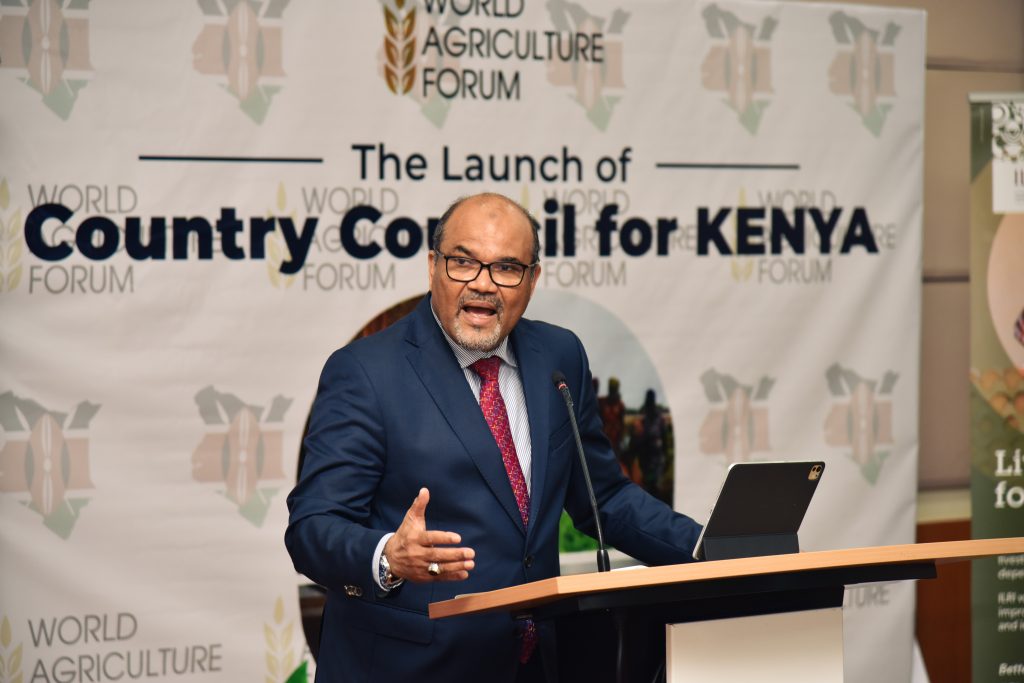
    Prof. Shaukat Abdulrazak, Principal Secretary State Department for Science, Research and Innovation in the office of the Prime Cabinet Secretary.
    Photo by Saleef Nyambok (ILRI)

    He added that the initiative aligns with Kenya’s Bottom-Up Economic Transformation Agenda (BETA), the AI Strategy 2025–2030, and Continental frameworks such as CAADP and Agenda 2063, with a clear focus on delivering measurable outcomes including increased yields, improved farmer incomes, and socio-economic transformation.

    A platform for action, not just dialogue

    WAF Global Executive Director Dr. M.J. Khan emphasized that the Forum will serve as a catalyst for shaping the future of global food systems.

    “WAF is committed to providing thought leadership and setting the agenda for food systems growth in the face of global challenges such as trade barriers, climate change, and population pressures. Data is the new fertilizer, and through our global councils, we aim to harness it to drive smarter, more resilient agricultural systems,” said Dr. Khan.

    The WAF platform will operationalize its mission through flagship initiatives including the Global Soil Health Coalition, Global Digital Agriculture Council, Global Sustainability Council, and the Trade and Food Security Council.

    Strengthening research and local innovation

    ILRI Director General Prof. Appolinaire Djikeng addresses delegates attending the launch of the World Agriculture Forum Kenya Country Council.
    Photo by Saleef Nyambok (ILRI)

    Welcoming delegates to ILRI, Director General Prof. Appolinaire Djikeng highlighted the importance of sustained collaboration in transforming agriculture.

    “This partnership reflects over a year of collaboration between WAF and ILRI focused on advancing food security, improving agricultural practices, and reducing poverty. The launch of the Kenya Country Council strengthens our shared commitment to translating science and innovation into real impact for farmers,” he said.

    Unlocking value for farmers through technology

    Dr Oscar EV Magenya, the WAF Kenya Country Director, added: “The launch of the WAF Kenya Country Council marks a shift from conversation to implementation bringing together government, investors and researchers to deliver real solutions for farmers. This is not just another council, but a mechanism to turn global best practices into local impact, driving higher productivity, improving farmer incomes and building a more resilient, technology-powered food system.”

    The launch also featured insights from industry leaders on how digital tools and innovation are already transforming farming on the ground.

    Timothy Wanjohi, CEO of Market Farm Ltd, emphasized the role of technology in improving farmer outcomes:

    “We are seeing first-hand how digital platforms, AI-driven advisories, and solar-powered solutions can reduce post-harvest losses, improve market access, and increase profitability for farmers. The opportunity now is to scale these solutions and ensure they reach every farmer who needs them.”

    A Clear Roadmap for Impact

    The WAF Kenya Country Council will focus on building integrated pipelines for agricultural innovation, fostering public-private partnerships and engaging county governments as key drivers of implementation.

    By 2028, the Council aims to establish a proven, scalable model that connects global investors to local agricultural innovation, accelerates adoption of AI and bioengineering solutions, and strengthens Kenya’s position as a hub for agri-tech convergence.

    The first County Council meeting will be held within 30 days to set up technical working groups, focusing on aligning regulations, developing financing models, and creating safeguards to protect farmers while making AI easier to understand and use.


  • Kenya urges global co-investment as Africa seeks to lead its own health agenda

    Kenya urges global co-investment as Africa seeks to lead its own health agenda

    The Deputy President Kithure Kindiki has called for credible partnerships between national, regional and international actors through co-investment, technology and skills transfer, market access and support for African owned solutions to African defined health challenges.

    Speaking at the closing of the 2026 World Health Summit Regional Meeting at the United Nations Office in Nairobi, the DP noted that Africa must move from being a passive participant in global health to an architect of its people’s health.

    Kindiki said the continent must reverse dependence on external health commodity supply chains by scaling up manufacturing, sustainable health financing and incubating its health systems with solid policy and institutional frameworks.

    “Effective health systems must be people centered, inclusive and affordable,” he said.

    He noted that, Taifa Care, Kenya’s Universal Healthcare Programme has now enlisted 30.7 million people, up from the previous National Health Insurance Fund (NHIF).

    Further, the DP said that Government is perfecting the medical commodity supply chain, investing in health equipment upgrade, fine tuning human resources issues and improving the actuarial system to ensure as many people as possible have access to affordable healthcare.

    The event was attended by Health Ministers from Africa and beyond, top leadership of the United Nations (UN) , World Health Organization (WHO) , Centres for Disease Control (CDC) and a host of other national, regional and global health policy makers.

  • “I’m firm, not domineering”: Makori vows to uphold Constitution in Supreme Court interview

    “I’m firm, not domineering”: Makori vows to uphold Constitution in Supreme Court interview

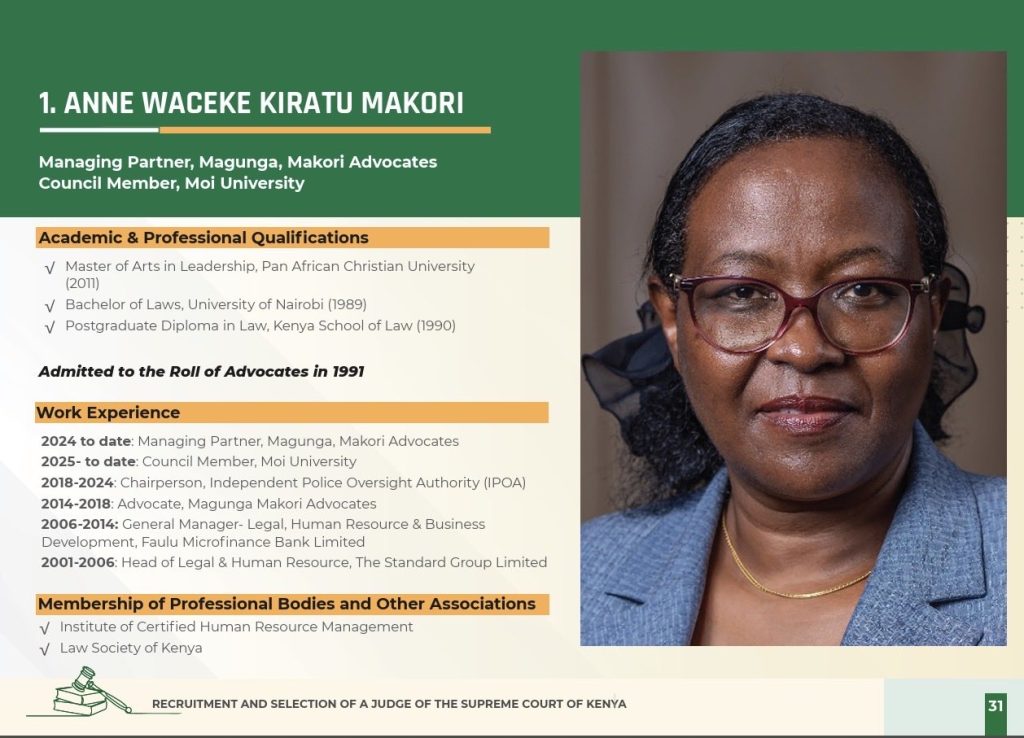
    Former Independent Policing Oversight Authority Chair Ann Waceke Makori has defended her leadership record and commitment to constitutional independence during the Supreme Court Judge interview that began Tuesday.

    The interviews come following the death of the late Supreme Court Judge Mohamed Khadhar Ibrahim in December 2025.

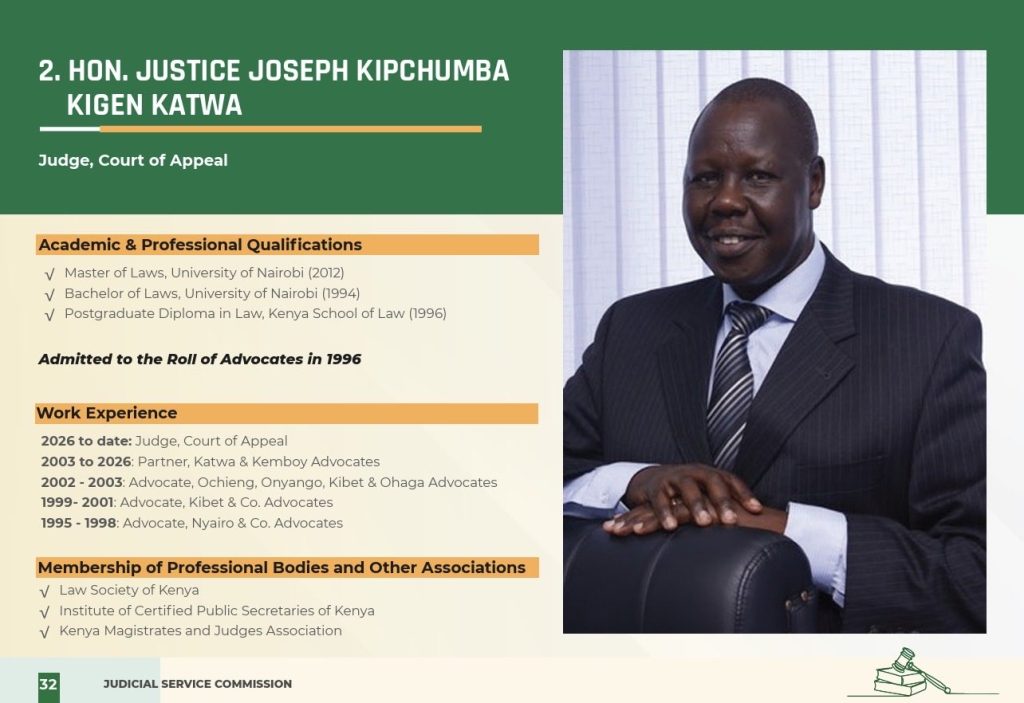
    Among the candidates appearing before the panel on Tuesday alongside Ann Waceke Makori are Justices Katwa Kigen and Joseph Sergon, who will each face questioning as part of the vetting process.

    Appearing before the panel, Makori who was the first to be interviewed was grilled on a number of issues including election law, judicial ethics, and public perceptions of the judiciary among others.

    She told the JSC panel that if she got the job, she would be guided by the Constitution and the law in executing judicial duties stressing that all decisions at the Supreme Court level must be anchored in constitutional principles.

    “The Supreme Court judge position has a unique role in defending the Constitution. Having worked at IPOA, I appreciate the importance of constitutional safeguards, and I would serve as a defender and promoter of the Kenyan Constitution,” she noted.

    Addressing concerns raised about her leadership while serving as Chair at IPOA, Makori refuted claims that she was domineering noting that she was firm as the chair of the institution where accountability is critical.

    “I am firm, as a chair of an institution if you famble many things can go wrong. Accountability is key,” she noted.

    Makori added that her strong leadership skills enabled her to build effective working relationships within IPOA.

    Further, she denied having any political alignment noting that as IPOA Chair, she was leading a public institution and when serving government one must work within established policies rather than political interests.

    On recruitment irregularity issues, Makori said IPOA had a fairly well balanced regional representation.

    When asked about how she would maintain judicial impartiality as a Supreme Court Judge, Makori noted that: “At the Supreme Court a judge is guided by the law and the constitution and all one does must be guided by such. I am committed to maintaining the law.”

    Further Makori listed a number of achievements attained during her tenure as the chair of IPOA as well as her support for mediation and Alternative Dispute Resolution mechanisms saying they ease pressure on courts.

    She argued that mediation focuses on resolving underlying disputes and preserving relationships, and does not necessarily require mediators to be legally trained, provided they operate within structured frameworks.

    Justice Francis Tuiyott and Justice Mohamed Warsame have been scheduled to face the panel on Wednesday for the same position.


  • JSC begins Supreme Court Judge recruitment interviews

    JSC begins Supreme Court Judge recruitment interviews

    The Judicial Service Commission has commenced the recruitment process to fill in the vacancy of at the Supreme Court.

    This follows the death of the late Supreme Court Judge Mohamed Khadhar Ibrahim in December 2025.

    Among the candidates appearing before the panel on Tuesday are Ann Waceke Makori, alongside Justices Katwa Kigen and Joseph Sergon, who will each face questioning as part of the vetting process.

    Justice Francis Tuiyott and Justice Mohamed Warsame have been scheduled to face the panel on Wednesday.

    “I’m firm, not domineering”: Makori vows to uphold Constitution in Supreme Court interview


  • Gachagua impeachment hearing postponed to May 7

    Gachagua impeachment hearing postponed to May 7

    The hearing of the former Deputy President Rigathi Gachagua’s impeachment case has been postponed to May 7.

    The case which had been scheduled to run from Monday to Wednesday this week was pushed to allow Justice Antony Mrima to take part in Supreme Court judge interviews as part of the Judicial Service Commission (JSC) panel.

    On Monday Gachagua maintained that his removal from office was unconstitutional while challenging the impeachment process before the Milimani High Court.

    His legal team, led by Senior Counsel Paul Muite, argued that the proceedings that led to his impeachment violated constitutional rights and denied him a fair opportunity to defend himself.

    Muite criticised the manner in which the impeachment was conducted, saying the process was rushed and concluded without following the required standards of fairness.

    The former DP was impeached on October 17, 2024, after Senators approved five of the 11 charges levelled against him the impeachment motion.

    The impeachment followed a motion by Kibwezi West MP Mwengi Mutuse, which was supported by 281 Members of the National Assembly.

    The motion by MP Mutuse outlined 11 grounds for removal that included gross violations of the Constitution and other laws such as the Anti-Corruption and Economic Crimes Act, the Proceeds of Crime and Anti-Money Laundering Act, the Leadership and Integrity Act, and the National Cohesion and Integration Act.

    The 11 charges that Gachagua faced ranged from allegations of financial misconduct to accusations of ethnic divisiveness.

    Similarly, the impeachment motion accused him of undermining President William Ruto’s government and engaging in corrupt activities, including using proxies to amass significant wealth and state property.

    In addition, Gachagua has been accused of fostering division by engaging in politics that exploits ethnic tensions, a serious charge in Kenya’s delicate political landscape.

    Also read https://www.kbc.co.ke/deputy-president-rigathi-gachagua-impeached/


  • Kenyans in Dallas, Texas receive mobile consular services

    Kenyans in Dallas, Texas receive mobile consular services

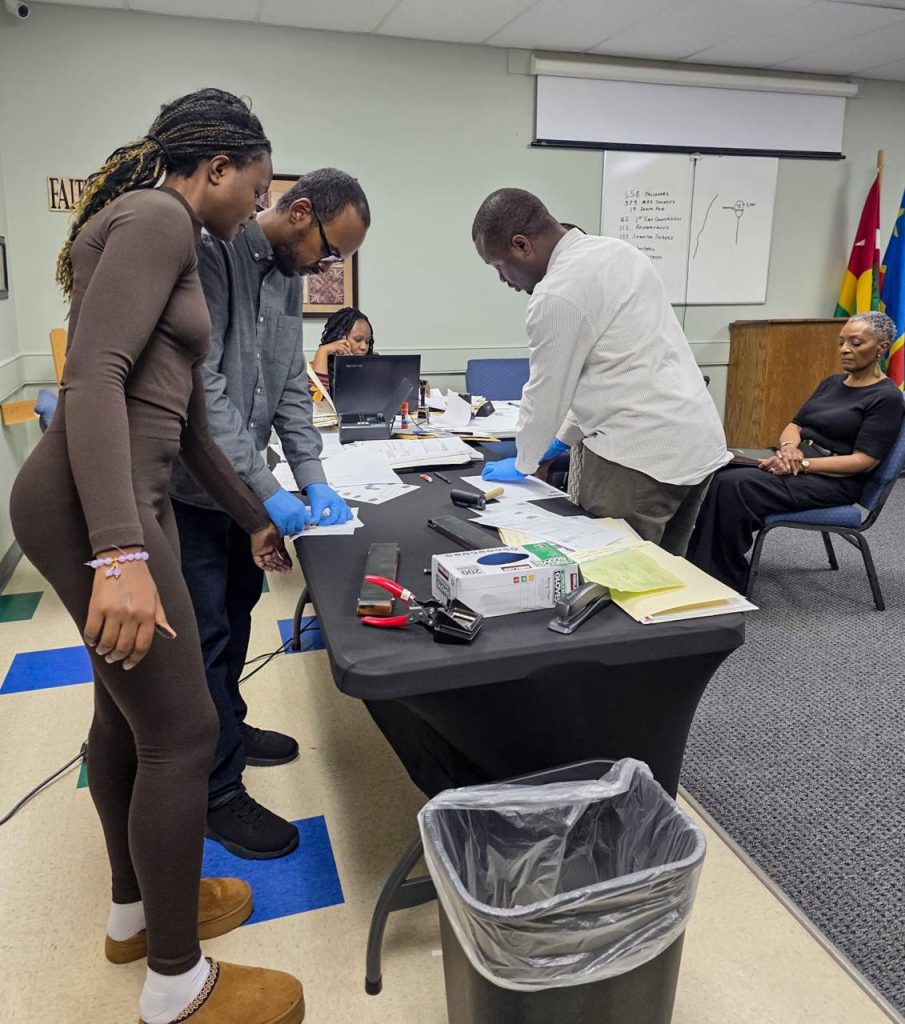
    The Embassy of Kenya in Washington, D.C. has launched a three day Mobile Consular Services outreach in Dallas, Texas, bringing essential government services closer to Kenyans living in the region.

    This initiative forms part of the Embassy’s ongoing commitment to enhancing access to consular services for the Kenyan diaspora, many of whom would otherwise travel long distances to obtain these services.

    Kenyans in Dallas and surrounding areas turned out in large numbers early Tuesday morning to access key services, including passport and national ID processing, document certification, and other vital consular assistance.

    According to a statement, the outreach reflects the Embassy’s broader strategic focus on deepening engagement with the diaspora and ensuring the delivery of timely, efficient, and accessible services.

    “Supporting Kenyans abroad remains a core pillar of the Embassy’s mandate, in recognition of the diaspora’s vital contribution to national development through investment, and enhanced people-to-people linkages,” the embassy stated.

    The Embassy has committed to prioritising initiatives that strengthen engagement, facilitate service delivery, and empower the diaspora to actively participate in Kenya’s socio-economic transformation.

    All Kenyans in and around Dallas have been encouraged to take full advantage of this opportunity to access services conveniently.

    “Your interests remain our priority,” the embassy noted.

  • CS Murkomen, IG Kanja visit Haiti as drawdown of Kenyan officers concludes

    CS Murkomen, IG Kanja visit Haiti as drawdown of Kenyan officers concludes

    The Cabinet Secretary for the Ministry of Interior Kipchumba Murkomen has lauded Kenyan police officers serving under the Multinational Security Support (MSS) mission in Haiti, as the deployment enters its final drawdown phase.

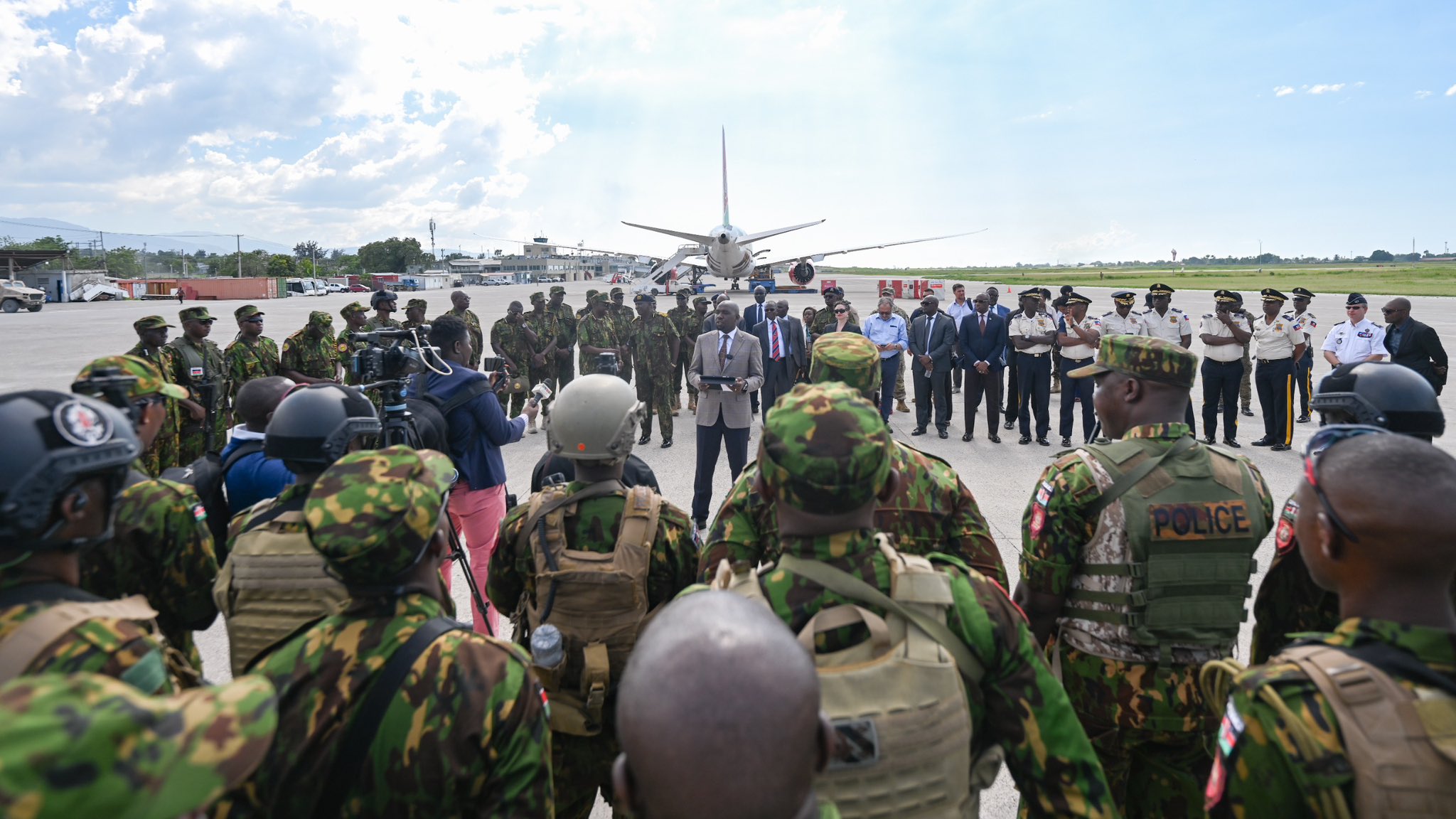
    Speaking on Monday when he visited the remaining Kenyan officers serving under the MSS mission in Haiti, CS Murkomen congratulated the officer’s unwavering commitment and sacrifice to restore law and order in Haiti.

    CS Murkomen and the entire Kenyan delegation were received by the MSS Contingent Commander, Godfrey Otunge, SAIG, and Kenya’s Consular General for Haiti, Noor Gabow, among other dignitaries.

    He was briefed on the activities and operations of the MSS, the successes achieved particularly the pacification and stabilisation that the Kenya-led mission has accomplished and the drawdown as the MSS transitions to the Gang Suppression Force (GSF) following United Nations Security Council Resolution No. 2793 (2025).

    In his address, the Cabinet Secretary passed a message of goodwill from President William Ruto while also sharing a collective message of support from the people of Kenya.

    “Our officers in the Multinational Security Support (MSS) Mission to Haiti served with utmost dedication and raised our Kenyan flag high,” CS said.

    Adding that: “Working with Haiti National Police and other MSS officers, they secured critical infrastructure, including the airport, seaport, and major transport corridors. They also restored state presence in previously inaccessible areas and supported the reopening of schools, hospitals, and businesses.”

    On his part, IG Kanja heaped praise on the officers for conducting their duties with professionalism, discipline and commitment, while also underscoring the gainful support and collaboration of international partners and for standing firm with the MSS.

    He further urged the returning officers to utilise the experience gained while on this mission for the good of the Service and the people of Kenya.

    Speaking during the event, the National Security Advisor, Joseph Boinett, also praised the officers for the successful completion of their deployment, highlighting their integrity, discipline, and sacrifice.

    He described the mission as historic, noting that the officers upheld Kenya’s reputation with honour and pride while contributing to peace and stability in a foreign nation.

    Later, 150 officers left Haiti for Nairobi, Kenya, marking the conclusion of the drawdown.

    Murkomen reaffirmed that while the mission has ended, Kenya’s solidarity with the people of Haiti remains steadfast, and expressed appreciation to all international partners who supported the operation.

    “Though the Mission has ended, Kenya’s solidarity with the people of Haiti is enduring. We extend our sincere appreciation to all partners who supported this Mission and reaffirm our commitment to multilateral cooperation in the maintenance of global peace and security,” he noted.

    Also present were the Director of Operations APS, Jackson Kangani, SAIG, and Personal Assistant to the IG, James Murithi, CP, among other senior officers.

  • Kirinyaga lights up night economy boosting trade, security

    Kirinyaga lights up night economy boosting trade, security

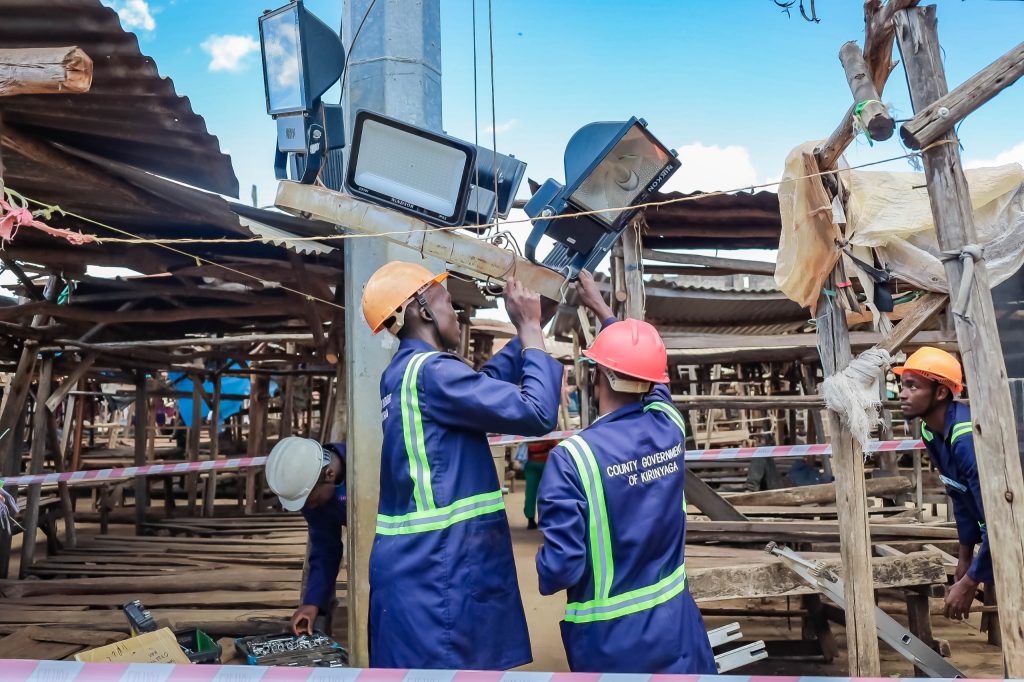
    Kirinyaga County is witnessing increased night-time economic activities following the installation of streetlights and floodlights across major markets and trading centers.

    More than 165 floodlights have been installed across towns, shopping centers and markets, significantly improving security and enabling traders to extend operating hours.

    The programme, implemented through the Department of Transport, Roads, Public Works and Housing, has led to longer business hours, with some traders now operating up to midnight and others around the clock, boosting trade and livelihoods.

    Governor Anne Waiguru said the lighting project forms part of her broader efforts to stimulate economic growth in the county.

    She said all major towns in the county have seen increased number of traders at night and especially where the floodlights have been installed.

    “Residents and traders in Kagio, Kutus, Kerugoya, Kianyaga and Wang’uru can testify that it is now easier to transact business in those towns for longer hours at night, we intend to continue with continue expanding this urbanization,” Waiguru said.

    County Executive Committee Member for Roads, Transport, Public Works and Housing Jared Migwi said the programme is designed to improve the business environment by enabling traders to operate for longer hours while enhancing security, leading to better livelihoods and economic growth.

    “The objective is to light up the county to support business, improve security and ultimately boost livelihoods and the local economy,” Migwi said.

    Migwi added that the county is working closely with the Kenya Power and Lighting Company to support electricity connectivity and sustainability of the project.

    “The Governor remains fully committed to uplifting the economic status of Kirinyaga residents. The lighting programme complements other flagship projects, including the ongoing construction of the Sagana Industrial Park,” he said.

    Across the county, traders and operators say the impact is already being felt, with many reporting improved safety, increased customer flow and higher earnings.

    He said traders in towns like Kagio, Wang’uru and Sagana are operating a 24 hour economy mainly due to the conducive brought about by the street lighting project.

    Jennifer Waruguru, a trader at Ngurubani market, said she is pleased with the new lighting, noting that cases of theft which were prevalent before but have reduced due to improved security.

    Eunice Kiragu echoed the sentiments, saying the improved lighting has given traders peace of mind and flexibility.

    “I am able to leave my belongings without worry and still find them safe. We can now close at 10pm or even beyond, unlike before when we used to close by 7pm or earlier,” Kiragu said.

    At Karima in Kariti Ward, Bodaboda Association Chairman Benson Karimi said the lights have significantly enhanced security and their operations, recalling that darkness previously exposed operators to frequent mugging.

    “Before, there was a lot of mugging due to darkness and we could not stay late, closing by 7pm, but now we operate 24 hours and we are very grateful to our Governor Anne Waiguru for this initiative,” Karimi said.

    In Kagio town, traders are also reporting improved business environment and increased customer confidence.

    Nancy Njeri said the lighting up of the town have increased flow of late night customers, noting that she can now operate even at midnight without fear, as insecurity has significantly reduced.

    “I can now operate even at midnight and thugs who used to roam around have completely disappeared,” she said.

    Jecinta Muthoni, a banana seller, said the lighting has boosted both visibility and customer trust.

    “I am now able to clearly see what I am selling, customers have more confidence in me, and they are many. This means more business and more money in my pocket,” she said.


  • Police launch probe, deploy reinforcements after deadly Tseikuru attacks

    Police launch probe, deploy reinforcements after deadly Tseikuru attacks

    The National Police Service has launched investigations into recent deadly attacks in Tseikuru, Kitui County, vowing to pursue those responsible and ensure they face the full force of the law.

    This coming following a series of attacks witnessed in the area that has left several people dead.

    Speaking when he visited Kwa Kamari in Tseikuru, Kitui County, Deputy Inspector General of the Kenya Police Service (DIG-KPS), Eliud Lagat termed the acts heinous, cowardly and barbaric, declaring that the government would not tolerate such lawlessness.

    According to a statement, DIG Lagat issued a stern call for calm, urging residents to avoid retaliation.

    The Deputy IG Lagat, visited Kwa Kamari in Tseikuru to conduct a comprehensive security assessment following recent retaliatory attacks between local communities.

    Upon arrival at Kwa Kamari Police Station, the DIG was received by Tseikuru Sub-County Commander Joakim Mecha, SSP, who provided a detailed briefing on the security situation and the events that had transpired over the previous 24 hours.

    Accompanied by the Commandant of the General Service Unit (GSU), Ranson Lolmodooni, DIG Lagat engaged directly with residents to address rising tensions.

    During the meeting, he conveyed greetings and a message of condolence from the Inspector General of Police, Douglas Kanja, to families who had lost loved ones to armed criminals.

    He discouraged residents from taking the law into their own hands and urged them to seek redress through legal channels.

    Additionally, the DIG called on the locals to collaborate with authorities and share actionable intelligence to expedite the arrest of culprits.

    With the new school term beginning next week, the DIG assured parents of their safety and encouraged them to send their children back to school without fear.

    “The National Police Service remains on high alert in the region to restore order and promote peaceful coexistence among all residents,” read the statement.

    Also present at the security assessment were the Kyuso Sub-County Commander, Samson Thuranira, SSP, among other officers.

  • Government focused on solutions, not blame, says Ruto

    Government focused on solutions, not blame, says Ruto

    The government has been defined by its commitment to finding solutions to the challenges facing Kenyans, President William Ruto has said.

    The President said the government has identified the key challenges and has embarked on addressing them without excuses or abandoning responsibility.

    He explained that his administration is implementing bold and decisive reforms in various sectors, including agriculture, education, healthcare, and infrastructure.

    “My assurance to you is that we will discharge our responsibility,” he said.

    Speaking during a church service at Presbyterian Teachers’ College Rubate in Chuka Igambang’ombe Constituency, Tharaka-Nithi County, he pointed out that Kenyans are already reaping the benefits of reforms.

    The President was accompanied by Deputy President Kithure Kindiki, Governors Muthomi Njuki (Tharaka-Nithi), Cecily Mbarire (Embu) and Anne Waiguru (Kirinyaga), as well as MPs and MCAs.

    The President cited education, saying many the implementation of the Competency-Based Education had been threatened by various obstacles.

    “We had a problem with our education. We did not look for someone to blame. We looked for solutions. We hired more teachers, we built more classrooms, and we changed the university funding model,” he said.

    On agriculture, President Ruto said the cost of farm inputs, especially fertiliser was high, while cartels and brokers had dominated the sector.

    “We subsidised fertiliser, digitised the buying of the input and thus dealt with cartels. Today, maize, coffee and sugar farmers are earning more because we looked for the solution,” he said.

    The provision of universal healthcare, he noted, has improved since the introduction of the Social Health Authority (SHA) that replaced the defunct National Hospital Infrastructure Fund, which had piled up huge debts of up to KSh30 billion and did not serve all Kenyans.

    “We did not want to blame other people. We decided to develop a new model of delivering healthcare in Kenya,” he said.

    The President said his mission is to transform the country, noting that he is focused on the next generation, and not the next election.

    “We have the plan, the resources, and the energy to do it,” he said.

    He called on leaders to endeavour to be part of the solution, not part of the problem.

    The President said he was confident that Kenyans will re-elect him in the 2027 election on account of his government’s development record.

    President Ruto urged Kenyans to judge leaders on their development record.

    He warned against leaders who are out to impose their will on the people by purporting to make decisions on their behalf.

    The President said no one will take away the sovereignty of the people to decide their destiny.

    “Such leaders are worse than slave traders and colonialists,” he said.

    Later, President Ruto handed over the newly-built Chuka Modern Market Tharaka Nithi County.

    He said the KSh300 million market is one of the 10 modern facilities being built in the county at a cost of KSh1.5 billion.

    He committed to building phase two of the market at a cost of KSh1 billion to accommodate morethan 1,000 traders, complete with a basement bus park.

    The President said the government is investing KSh7.5 billion in the construction of 5,000 affordable housing units and KSh2.7 billion hostels that will accommodate 6,000 college and university students in the county.

    In addition, he said the government has secured KSh7 billion for the construction of a modern Nithi Bridge and committed to expanding the Makutano-Meru-Maua road into a dual carriageway.

    In the past three years, President Ruto noted that the government has connected 12,000 households to electricity in Tharaka Nithi County.

    This year, he pointed out, the government has allocated KSh920 million to connect an additional 9,000 households.

    The President commended Tharaka-Nithi residents for registration under SHA, which he said stands at 70 per cent.

    Prof Kindiki told the opposition that leadership is not about chest-thumping but service delivery to the people.

    “You do not have to declare yourself the leader of a certain region. It is your work as a leader that will make the people recognise you and declare you their leader,” he said.

    The Deputy President also explained that the government is focused on delivering its commitments to the people.

    Governor Njuki applauded President Ruto’s develooment record in the county, citing the construction of the Chuka Market.

    He said the President has exceeded the expectations of the people of Tharaka-Nithi County.

    Governor Waiguru warned the people of Central Kenya against a section of opposition leaders, who she said are not genuine and have been sending emissaries to government officials in an effort to negotiate.