Blog

  • DCI launches new biometric system for faster good conduct certificates

    DCI launches new biometric system for faster good conduct certificates

    The Directorate of Criminal Investigations (DCI) is set to rollout a new digital platform that will revolutionize the processing of Police Clearance Certificates, commonly known as Certificates of Good Conduct.

    According to the DCI, the launch of the Multi-Biometric Identification System (MBIS)-ABIS Version 5, is designed to accelerate application processing through enhanced biometric identification technology.

    The investigative agency says the upgrade marks a significant step in modernising its services, promising shorter waiting periods and more reliable processing for Kenyans seeking the document.

    The Certificate of Good Conduct is one of the most sought-after government documents in Kenya. Currently, applicants apply through the eCitizen platform, pay a fee of Ksh1,050, and visit a Huduma Centre or designated DCI office for fingerprint capture with the processing taking between two to four weeks.

    The new system set to launch next week on Monday is expected to significantly reduce these processing times, improving efficiency and delivering a faster, smarter service experience.

    The upgrade comes amid growing demand for the clearance certificates and follows the government’s broader push to digitise public services under the Digital Superhighway initiative

  • Kenya establishes diplomatic mission in Kingston, Jamaica

    Kenya establishes diplomatic mission in Kingston, Jamaica

    Kenya has established its first resident diplomatic mission in Jamaica, a move officials are hailing as a historic milestone in relations between the two Commonwealth nations.

    Previously, Kenya’s engagement with Jamaica and the wider Caribbean was managed remotely by its embassy in Havana, Cuba, which served as the country’s diplomatic hub for both the Caribbean and Latin America. The new mission in Kingston alters this, providing Kenya with a permanent, resident presence in the Caribbean for the first time.

    The new High Commission in Kingston officially began operations this week with the arrival of High Commissioner Mwenda Karisa. She was received by officials from Jamaica’s Ministry of Foreign Affairs and Foreign Trade, as well as members of the Kenyan diaspora.

    Ambassador Franz Hall, Jamaica’s Under-Secretary in the Ministry of Foreign Affairs and Foreign Trade, welcomed Karisa at Norman Manley International Airport, accompanied by staff from the newly established mission.

    The resident mission is expected to bolster bilateral engagement by offering a permanent platform for diplomatic dialogue, promoting trade and investment, facilitating cultural exchanges, and providing consular services.

    It is also expected to foster cooperation in areas of mutual interest and support closer people-to-people connections between Kenya and Jamaica.

    Kenya says that the new mission underscores its commitment to deepening political, economic, and cultural relations with Jamaica, and to expanding engagement with the broader Caribbean region.

  • Ruto pledges Ksh35 million, new training ground for AFC Leopards

    Ruto pledges Ksh35 million, new training ground for AFC Leopards

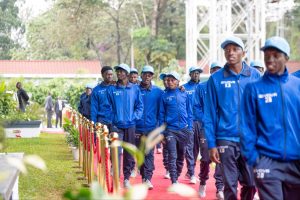
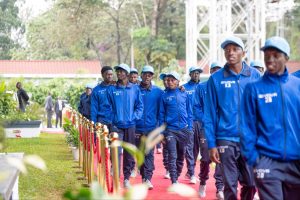
    President William Ruto has pledged Ksh35 million in support to AFC Leopards during a State House visit, boosting the club both financially and in infrastructure.


    The President committed Ksh25 million toward the club’s sponsorship, raising its annual sponsorship income from Ksh75 million to Ksh100 million.

    He also pledged Ksh10 million in direct cash support, with Ksh5 million to be shared among the players and the remaining Ksh5 million allocated toward signing new players ahead of the upcoming Football Kenya Federation Premier League season.

    “You have also asked for resources to sign new players ahead of the new season. I will do something about that. I will give you Ksh10 million. The players will take Ksh5 million, and the remaining will be used for the new signings,” Ruto said.

    Beyond the cash pledges, Ruto committed government support to help AFC Leopards develop the training ground the club has leased for 15 years, which officials said was in poor condition.

    The President directed Sports Cabinet Secretary Salim Mvurya to work with the club to design an upgrade to bring the facility up to standard.

    The visit comes as AFC Leopards, along with other top-tier clubs, faces mounting pressure over training infrastructure, with Nyayo and Kasarani Stadiums set to close for renovations ahead of the 2027 Africa Cup of Nations, which Kenya will co-host with Uganda and Tanzania.

    Club officials have repeatedly flagged the lack of a permanent, well-equipped training base as one of their biggest structural challenges.

    The pledges are expected to give AFC Leopards a significant boost as they prepare for the new season, both in strengthening their squad and addressing long-standing facility concerns.

    The government has also been investing in stadium infrastructure nationally, with several venues under construction or renovation ahead of the 2027 AFCON tournament.

  • FIFA puts World Cup Final Grass up for sale, at $450 a piece

    FIFA puts World Cup Final Grass up for sale, at $450 a piece

    FIFA has begun selling pieces of the turf that will be used for the July 19 championship match at MetLife Stadium in East Rutherford, New Jersey, with prices starting at $450 per segment.Even the field for the 2026 World Cup final is being turned into a commercial product.

    According to FIFA’s online store, each entry-level piece of grass will be preserved inside an acrylic display case alongside a USB keepsake.

    Marketed as a collectible way for fans to own a fragment of the championship playing surface. Buyers won’t receive their orders until after the final has been played.

    The turf sale comes in several tiers, with higher-priced versions reaching as much as $3,000 and including additional items such as a miniature replica trophy and a golden ticket replica.

    FIFA has capped each tier at just over 2,000 units, and shipping is currently limited to addresses in the United States and Europe, excluding fans in some countries whose national teams could still reach the final.

    The move adds to mounting criticism of FIFA’s pricing strategy throughout this year’s tournament, with regular final tickets reportedly reaching close to $33,000 and hospitality packages priced even higher.

    Industry estimates suggest the turf sales alone could generate more than $11 million for the governing body.

    The pitch being sold was reportedly grown at a turf farm in North Carolina and specially installed at MetLife Stadium, which typically uses artificial turf for NFL games.

    Players and coaches competing in this year’s tournament have previously raised concerns about the quality of the playing surface at the venue.

    As anticipation builds for Sunday’s final, FIFA’s decision to monetize even the ground beneath players’ feet has become one more example of the commercial scale surrounding this year’s World Cup.

  • Security beefed up in Ol Kalou ahead of by-election

    Security beefed up in Ol Kalou ahead of by-election

    Residents of Ol Kalou Constituency have been assured of adequate security ahead of Thursday’s parliamentary by-election.

    said security personnel have been deployed across the constituency to ensure a peaceful exercise.

    “We are prepared and have deployed security officers as requested by the IEBC. We want to assure the people of Ol Kalou that their security is guaranteed. They should wake up on Thursday, cast their vote and then leave peacefully,” he said.

    Nkanala commended political parties, candidates and their supporters for complying with electoral regulations after the official campaign period ended on Monday.

    He urged all stakeholders to continue observing the election rules until the exercise is concluded.

    “So far, we have not received any reports of insecurity. Even if you move around the constituency, there is no tension. People are going about their normal business,” he said.

    Central Regional Commissioner Joshua Nkanala

    Nkanala pointed out that political parties will have agents stationed at every polling station to oversee voting process and safeguard the interests of their respective candidates.

    He urged residents to maintain peace during and after the election, warning against any form of incitement or violence.

    “I urge the people of Ol Kalou to vote peacefully. Nobody should incite others to engage in violence,” he said.

  • Khalwale pushes for more Western, Nyanza slots at National School Games

    Khalwale pushes for more Western, Nyanza slots at National School Games

    Kakamega Senator Boni Khalwale has called on the Kenya Secondary Schools Sports Association (KSSSA) to increase the number of football teams representing the Western and Nyanza regions at the National Secondary Schools Games.

    The senator argues that the two regions have consistently produced some of the country’s strongest and most competitive school football sides, yet the current qualification structure allows only one boys’ team and one girls’ team from each region to advance to the national championships.

    According to Khalwale, this arrangement fails to reflect the true depth of football talent in Western and Nyanza, where school competitions are often fiercely contested and produce players who go on to represent Kenya at higher levels.

    He believes the existing quota system locks out numerous teams that are capable of competing favourably at the national stage, effectively denying deserving schools and players the opportunity to showcase their abilities.

    Khalwale is pushing KSSSA to review its qualification criteria and expand the number of slots allocated to the two regions, arguing that such a move would better represent their standing in the national school football landscape.

    He contends that increasing representation would not only reward the regions’ consistent performance but also motivate more schools to invest in developing football talent, knowing there would be a fairer chance of progressing to the national games.

    Hon. Boni Khalwale, Senator, Kakamega County

    The senator’s remarks add to a growing conversation around how regional qualification slots are distributed within Kenya’s school sports structure.

    With stakeholders in various counties often raising concerns that the current system does not fully capture the competitive balance across different zones.

    For Western and Nyanza, regions with a long history of nurturing football talent through school competitions, the debate touches on broader questions of resource allocation, fairness, and opportunity for young athletes.

    Advocates for expanding slots argue that more teams reaching the national stage would raise the overall standard of competition and give a wider pool of players exposure to scouts, coaches, and opportunities beyond secondary school.

    It remains to be seen how KSSSA will respond to Khalwale’s call, but the senator’s intervention is likely to put pressure on the association to revisit its qualification framework ahead of future editions of the National Secondary Schools Games.

  • Spain outclass France, books ticket to World Cup Final in New Jersey

    Spain outclass France, books ticket to World Cup Final in New Jersey

    Spain secured their place in the World Cup final for the first time since 2010 with a 2-0 win over France in Tuesday’s semifinal.

    Mikel Oyarzabal put Spain ahead from the penalty spot in the first half after a foul on Lamine Yamal inside the box. Pedro Porro added a second early in the second half, finishing off a quick passing move with Dani Olmo to make it 2-0.

    It was Spain’s third consecutive win over France, having also gotten the better of them in recent European Championship and Nations League meetings. Spain’s defense was the story of the night, holding Kylian Mbappé and France to almost no clear chances throughout the match.

    The loss also brought an end to France’s hopes of reaching a third straight World Cup final, a run only two other nations have managed in tournament history.

    Spain will face the winner of Wednesday’s semifinal between England and Argentina in Sunday’s final, set for MetLife Stadium in East Rutherford, New Jersey.

    This marks only the second World Cup final appearance in Spain’s history, following their title-winning run in 2010. The win also extended Spain’s unbeaten streak to one of the longest in the sport’s modern history.

    France will play their final match of the tournament in the third-place playoff in Miami Gardens, Florida, on Saturday.

  • How Data can rewrite Kenya’s future

    How Data can rewrite Kenya’s future

    In a world where intuition has long guided policy and planning, Kenya now faces a moment that demands something more precise: decisions anchored in evidence rather than opinion.

    Recently, a deeply reflective conversation with Amb. Prof. Bitange Ndemo, drawing on his experience as Kenya’s Ambassador to Belgium and the European Union, offers a powerful lens through which to rethink our national trajectory. From boardrooms to classrooms, he reminds us that economies which treat data as a strategic asset are the ones that design their future rather than react to it.

    Across Europe, Prof. Ndemo witnessed a culture where major decisions rarely rest on anecdotes; they are tested against numbers, trends, and feedback loops. Policies in education, industry, and governance are continuously refined through rigorous data collection and evaluation, turning information into an engine for innovation. For Kenya and Africa, this is not merely a technical lesson; it is an invitation to build institutions that see data as their compass, guiding scarce resources toward real impact.

    Kenya’s education reforms, including the shift toward competency-based learning, signal a desire to align schooling with real-world skills. Yet, without rich, real-time data, curriculum design risks lagging behind the fast-changing demands of the job market. Imagine an education system that constantly asks and answers questions such as: Which skills are most needed? Which programs actually lead to decent work? Where are regional disparities the greatest? Such a system would produce graduates ready not for yesterday’s jobs, but for the emerging opportunities in artificial intelligence, climate-tech, digital health, and creative industries.

    Europe’s innovation success stories are not accidents; they are built on deliberate strategies that nurture research, foster university industry linkages, and reward experimentation. In contrast, many African innovation ecosystems remain fragmented, underfunded, and poorly mapped, making it hard to scale what works and abandon what doesn’t. By tracking startup performance, investment flows, and regional innovation hubs, policymakers can move from trial-and-error toward targeted support that accelerates promising ideas.

    Prof. Ndemo’s reflections also carry a direct message for leaders, entrepreneurs, and young professionals: the future belongs to those who respect evidence. Not everyone must become a data analyst, but everyone who makes decisions will need the habit of asking, “What does the data say?” before committing resources or shaping policy. In this emerging culture, leadership is less about titles and more about the courage to embrace transparency, share information, and invite scrutiny.

    When institutions begin to ground their choices in accessible data, accountability stops being a slogan and becomes a daily practice. Citizens can see how and why decisions are made; trust grows, and public participation becomes more constructive.

    Kenya already carries the DNA of a data-driven future: a vibrant tech ecosystem, pioneering mobile money solutions, and expanding digital public services. These strengths can form the backbone of a national strategy where data is not a by-product of projects, but the starting point of every major initiative. With its youthful population and growing digital infrastructure, Kenya can become a continental reference point for evidence-based governance and innovation.

    Prof. Ndemo’s experience in Europe underscores a simple but profound truth: the distance between Kenya’s current reality and its aspirations is largely a question of mindset. Are we ready to shift from intuition to insight, from isolated projects to integrated systems, from reacting to crises to predicting and preventing them?

    The data is already speaking through our schools, startups, and communities; our task now is to build the capacity and courage to listen—and act. If we choose that path, Kenya’s story in the coming decades will not be one of catching up, but of leading with clarity, creativity, and evidence

    Dr. Yusuf Muchelule is a Senior Lecturer & a Consultant.

  • Obonyo donates sport kits to Mukuru Talent Women football team

    Obonyo donates sport kits to Mukuru Talent Women football team

    Kenya’s Junior Starlets made history by qualifying for the FIFA Under-17 Women’s World Cup for the second time, a milestone that has stirred fresh excitement among young girls across the country who dream of following in their footsteps. Yet away from the celebrations, coaches and players at the grassroots level say that excitement is running far ahead of the resources needed to sustain it.

    That gap was on display recently in Nairobi’s Mukuru slums, where Public Policy Analyst Raphael Obonyo paid a visit to the Mukuru Talent Girls football team, handing over jerseys and match balls on behalf of the Obonyo Foundation.
    The donation was framed as more than a goodwill gesture, it was meant to draw attention to a funding shortage that has quietly squeezed girls’ football at the community level for years.

    Mukuru Talent Girls was founded in 2010 with a simple mission: give girls in the slum a safe space to develop as footballers, build discipline and confidence, and steer clear of the pressures that come with growing up in the area.

    Handing over the kits, Obonyo said the move was intended to give women’s football in Kenya a boost. He noted that the Obonyo Foundation understands the disconnect many people overlook that behind the success of the national Under-17 side, countless girls in Nairobi and elsewhere are still fighting just to find a pitch to play on. That gap, he said, is exactly where new investment needs to go.

    Accepting the donation, team coach Kevin Okoth thanked the Foundation but was candid about the pressures the club has faced. According to him, the team had once climbed as high as the Division One League, only to be pushed back down.

    “Over the years, the team has grown and even competed in the Division One League. However, due to lack of adequate funds and financial challenges, we were unable to sustain participation at that level. We later wrote a letter to Football Kenya Federation explaining our situation, and the team was forced to drop to the County League,” Okoth said.

    He listed the obstacles still facing the club: not enough playing kits or training gear, a shortage of balls and cones for practice, poor access to decent training grounds, and money troubles that make transport and tournament entry fees difficult to cover.

    His account points to a wider pattern. Even with role models like the Junior Starlets making headlines, many young players say the chances open to them haven’t grown to match the interest they’re seeing.

    Lorna, 21, has been playing since she was six years old and still holds on to a clear ambition.

    “I hope one day to play for Ulinzi Starlets then proceed to Premier League teams, if I get good support, because throughout my talent I’ve lacked support and right opportunities,” she said.

    Samira, who plays for Mukuru Talent, points to a different kind of obstacle, one rooted in attitude rather than infrastructure. She says many girls simply don’t get backing from their own families or neighborhoods, where football is still widely seen as something boys do.

    “In our community we have fewer training facilities, which leads to having fewer women leagues,” she said. “All the funds and support are majorly given to the male teams.”

    Beyond that, Samira said, girls face brutal competition for the attention of scouts, along with harassment that boys rarely have to think about. She also pointed to lingering social attitudes that keep girls out of the sport altogether.

    “There are stereotypes that women are not meant to be in the fields but at home caring for the family, or if they want to venture into sports they should try soft sports,” she said.

    It’s this combination of scarce resources and social resistance that the Obonyo Foundation’s “For the Girls” initiative is trying to chip away at, by rallying individuals, organisations and businesses to put money and equipment directly into grassroots clubs.

    “We are trying to get more girls into the game, but clubs especially in the grassroots need resources to provide essentials like sport kits and equipment,” Obonyo said, adding that grassroots football remains the foundation on which any girl’s path into the sport is built.

    The Foundation says it will keep pushing for wider support, calling on individuals, companies and organisations to step in and back grassroots girls’ teams before the current momentum fades.

  • Beijing says China’s economy remains resilient with 4.7% growth in first half of 2026

    Beijing says China’s economy remains resilient with 4.7% growth in first half of 2026

    China’s economy expanded by 4.7 per cent year-on-year in the first half of 2026, a performance Beijing says demonstrates the country’s resilience amidst a more challenging global economic environment and keeps it on course to meet its annual growth target.

    Figures released on Wednesday by the National Bureau of Statistics (NBS) reveal that gross domestic product (GDP) reached 69.57 trillion yuan (approximately US$10.28 trillion) between January and June. Growth in the second quarter moderated to 4.3 per cent from 5.0 per cent in the first three months of the year, yet remained within the government’s full-year target range of 4.5 to 5 per cent.

    Speaking at a press briefing, NBS Deputy Commissioner Mao Shengyong stated that the economy remained generally stable during the first half of the year. He noted that major economic indicators stayed within a reasonable range despite external headwinds.

    Mao attributed this performance to the continued expansion of what China’s “new quality productive forces,” which include high-end manufacturing, the digital economy, and modern services. Preliminary estimates indicate these sectors contributed over 40 per cent of economic growth during the period.

    Industrial production continued to underpin growth, with value-added industrial output among enterprises above a designated size increasing by 5.4 per cent year-on-year.

    Advanced manufacturing was a standout performer, with equipment manufacturing expanding by 9.3 per cent and high-tech manufacturing growing by 13.3 per cent. Both figures significantly outpaced overall industrial production. The services sector also recorded steady growth of 5.2 per cent.

    According to NBS, China’s foreign trade also strengthened, with imports and exports rising by 16.9 per cent year-on-year to a record 25.47 trillion yuan during the first half. Trade in computing hardware, electronic components, and computer parts climbed by 56.6 per cent, reflecting sustained demand for Chinese technology products.

    Domestic consumption also improved, albeit at a more moderate pace. Retail sales of consumer goods increased by 2.7 per cent to 24.87 trillion yuan. However, fixed-asset investment, excluding rural households, declined by 5.7 per cent to 22.64 trillion yuan.

    Mao acknowledged that growing external uncertainties and imbalances between domestic supply and demand mean the foundation for sustained economic recovery still requires strengthening.

    Chinese economists commented that the latest figures reflect an economy undergoing structural transformation.

    Hu Qimu, a professor at the Maritime Silk Road Institute of Huaqiao University, said the data point to continued progress in industrial upgrading, technological innovation, and improvements in China’s trade structure.

    He added that emerging industries such as artificial intelligence, green technology, and high-end manufacturing are becoming increasingly important engines of growth, supported by expanding economic cooperation with Belt and Road partner countries.

    Bruce Pang, an adjunct associate professor at CUHK Business School, identified high-tech manufacturing, stronger consumption, and rising rural incomes as some of the economy’s strongest performers during the first half of the year. However, he noted that investment remained soft, capacity utilisation had weakened, and consumer spending still requires further support.

    Pang stated that sustaining the recovery through the second half of the year will depend on policies that encourage investment, stimulate domestic demand, and accelerate industrial upgrading.

    Beijing-based economist Tian Yun expects momentum to strengthen further as China’s economic transformation continues.

    He believes high-tech manufacturing, exports, and artificial intelligence-related industries are likely to remain key drivers of growth, while additional policy support could help boost consumer demand and improve business confidence.

    Chinese officials also highlighted the country’s performance against a backdrop of slowing global growth.

    According to Mao, several major economies are expected to record weaker growth this year. The International Monetary Fund recently revised China’s 2026 growth forecast upward to 4.6 per cent while lowering its global growth projection to 3.0 per cent. This reinforces expectations that China will remain one of the principal contributors to global economic expansion.

    Analysts said the first-half performance has strengthened expectations that China will achieve its annual growth target, although policymakers are expected to continue focusing on boosting domestic demand, stabilising investment and deepening industrial transformation during the remainder of the year.