Blog

  • Kazi Majuu: Mudavadi lauds conclusion of MOU on labour, migration cooperation with Austria

    Kazi Majuu: Mudavadi lauds conclusion of MOU on labour, migration cooperation with Austria

    Foreign and Diaspora Affairs Cabinet Secretary, Musalia Mudavadi, has lauded Austria’s contribution to the conclusion of the Memorandum of Understanding on Labour and Migration Cooperation.

    The CS described it as a critical framework that has enabled Kenya’s youthful and skilled workforce to respond to Austria’s growing demand for qualified professionals.

    He said the partnership is already delivering tangible results, with Kenyan healthcare professionals taking up employment opportunities in Carinthia, including at KABEG Hospital.

    “I appreciate our successful collaboration in convening the Austria Job Fair in Nairobi last year. The event increased awareness of employment opportunities in Austria, particularly in the healthcare sector, while equipping prospective applicants with practical information on eligibility requirements, recruitment procedures, and available labour mobility pathways,” Mudavadi said.

    He was speaking during farewell ceremony of the outgoing Austria Ambassador to Kenya Dr Christian Fellner for the successful completion of his tour of duty in Kenya.

    Mudavadi also welcomed the growing collaboration between Kenyan and Austrian universities through Erasmus+, Africa-UniNet, joint research initiatives, and other academic partnerships.

    According to Mudavadi, these programmes continue to strengthen innovation, research, knowledge exchange, and people-to-people ties between the two countries.

    He described the future of Kenya–Austria relations as promising, even as he lauded Austria’s recently launched Africa Strategy, which reflects a renewed commitment to deeper engagement with our continent.

    ” I am confident that this forward-looking framework will further strengthen cooperation in trade and investment, skills development, innovation, climate action, education, and people-to-people exchanges,” he said.

    He affirmed Kenya’s appreciation for Austria’s commitment of €40 million in concessional financing.

    Mudavadi was optimistic over the continued implementation of both the Kenya–Austria Framework Agreement for Financial Cooperation and the Labour and Migration Cooperation Agreement, which provide practical platforms for expanding mutually beneficial economic cooperation, sustainable development, investment, and opportunities for the people.

    At the same time, he acknowledged the delays affecting the implementation of the Mokubo Water Supply Project in Kisii and Phase II of the Mother and Child Hospital Project at Kenyatta National Hospital.

    He, however, assured to work closely with the relevant Ministries, Departments, and Agencies to facilitate the timely implementation of these important projects so that they can deliver lasting benefits to the Kenyans.

    He said the ambassador is leaving Kenya at a time when Kenya–Austria relations are stronger than ever.

    “The solid foundation established during your tenure provides an excellent platform for our partnership to continue flourishing under your successor,” the CS said.

    “I trust that your years in Kenya have been both professionally rewarding and personally enriching. I also hope that you will continue to be a steadfast friend and advocate of Kenya and Africa wherever your diplomatic journey takes you.”

    He congratulated him on the successful completion of his tour of duty in Kenya.

    Mudavadi described his dedication, professionalism, and personal warmth as critical in strengthening the longstanding bonds of friendship and cooperation between the two countries.

    “I would like to place on record my profound appreciation for your pivotal role in advancing Kenya–Austria relations over the past nine years. Your leadership has helped deepen our bilateral partnership and align our shared priorities in trade, sustainable development, labour mobility, education and peace and security,” Mudavadi said.

    Mudavadi also bid farewell to H.E. Henriette Geiger, Ambassador of EU Delegation whose tour of duty comes to an end on 31st July 2026.

    “I appreciate having worked closely with Ambassador Geiger to operationalize the EU-Kenya Economic Partnership Agreement (EPA), a comprehensive 10-year framework designed to help exporters, manufacturers, farmers and investors overcome market access challenges while improving Kenya’s competitiveness in one of the world’s largest consumer markets.” he noted.

    Mudavadi said the year 2026 marks the golden jubilee of Kenya–EU relations, commemorating five decades of collaboration since the opening of the EU Delegation in Nairobi in 1976.

    “Kenya appreciates having maintained the warm and multifaceted bilateral relations anchored in trade, development cooperation, governance, climate action, and regional security.” He said.

    ENDS

  • Ol Kalou by-election: Residents brave chilly morning as voting begins

    Ol Kalou by-election: Residents brave chilly morning as voting begins

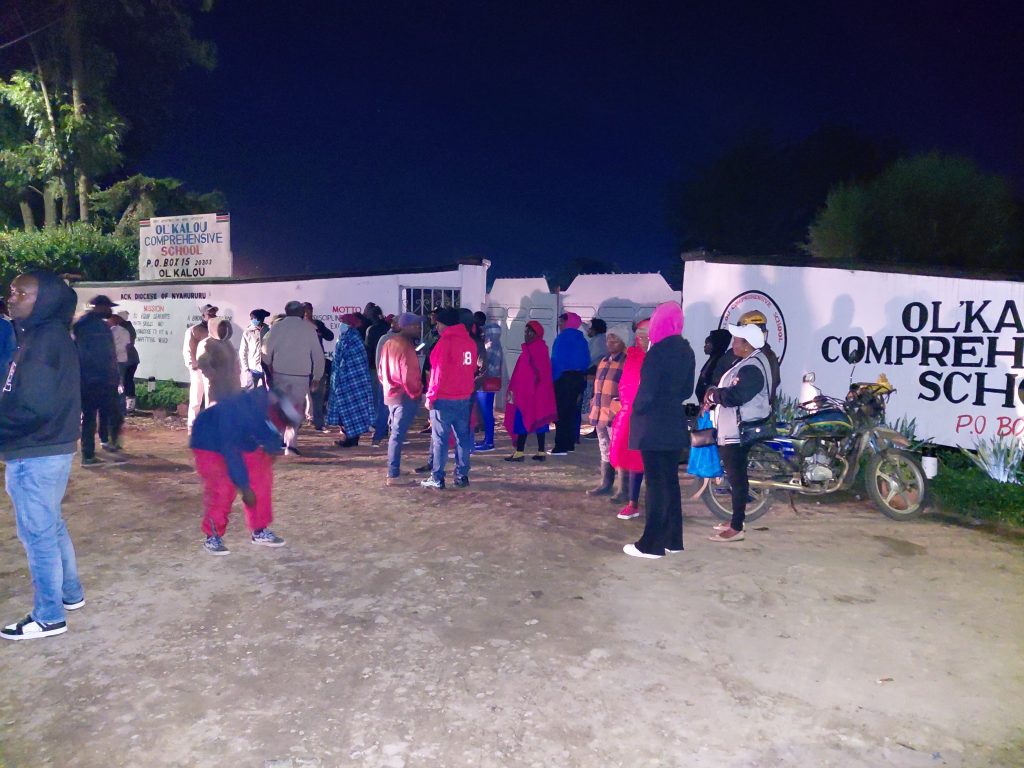
    Residents of Ol Kalou Constituency braved chilly weather Thursday morning as they turned up to vote in the parliamentary by-election.

    Voters started arriving at polling centres as early as 5:00AM, with queues forming at several stations.

    At Huruma Primary School, where UDA candidate Samuel Muchina Nyagah is expected to cast his vote, the Independent Electoral and Boundaries Commission (IEBC) established four voting streams to ease congestion and facilitate a smooth voting process.

    Meanwhile, voters also lined up outside AC Primary School, where Democracy for Citizens Party (DCP) candidate Sammy Kamau Ngotho is expected to vote later in the day.

    The parliamentary by-election is being held to fill the seat left vacant following the death of former area MP Njuguna Kiaraho.

    Voting is expected to end at 6:00PM although IEBC has assured residents that all voters who will be in the queue by the stipulated time will be allowed to cast their ballots.

    Ol Kalou has a total of 73,480 registered voters spread across five wards.

    Key contenders in the race include Samuel Muchina Nyagah (UDA), Sammy Kamau Ngotho (DCP) and Engineer Wilson Kigwa (Jubilee).

    Others are Timothy Kamau of the People’s Renaissance Movement, Edwin Muchiri of PNU, Stephen Wanyoike of the National Liberal Party, Rachael Njoroge, Edward Mwaniki of the Kenya Moja Movement and Abdifatah Hussein of the Federal Party of Kenya.

  • Lake Ol’ Bolossat Cultural and Tourism Festival highlights culture as a strategy for tourism diversification

    Lake Ol’ Bolossat Cultural and Tourism Festival highlights culture as a strategy for tourism diversification

    Since 2025 and in line with Kenya’s National Tourism Strategy, county governments have been encouraged to host cultural festivals to highlight Kenya’s rich, diverse and vibrant culture as one of the ways to diversify the country’s tourism products.

    Through tourism product diversification, the country hopes to net 5 million tourists by 2027.

    During the recent Lake Ol’ Bolossat Cultural and Tourism Festival held on July 12 and 13, Kenya Tourism Board CEO, Ms June Chepkemei, echoed the Government’s strategy.

    “Festivals like the Lake Ol’ Bolossat Cultural and Tourism Festival are instrumental in unlocking new tourism attractions and diversifying our product portfolio.”

    Speaking at the conclusion of the festival, on the shores of Lake Ol’ Bolossat, Ms Chepkemei emphasised the strategic importance of such events in expanding Kenya’s tourism offerings.

    “Lake Ol’ Bolossat, with its unique ecosystem and cultural significance, represents a prime example of how we can grow our tourism products,” she said. “Furthermore, the commendable conservation efforts by the County government, Communities, the Kenya Wildlife Service, and the Wildlife Research Institute, in particular the Hippo relocation program and initiatives to restore the lake, are crucial for sustainable tourism development.”

    The KTB CEO also added that the board would support counties in this endeavour and encouraged them to advertise their festivals early.

    “As a board, we’ll continue to support such festivals by including them in our tourism offerings. We are in the process of developing a national cultural festival calendar, which we can announce at the beginning of every year, so that visitors can plan their travels early.”

    Kenya’s rich tapestry of cultural festivals celebrated throughout the year includes the Lamu Cultural Festival, Tobong’u Lore Festival, Maa’ Festival, Ura Gate Festival, and the Rusinga Island Festival, among others.

    These events celebrate Kenya’s heritage through traditional music, dance, crafts, sporting events, and local cuisines, drawing visitors keen to experience authentic cultural expressions.

    The 2026 Lake Ol’ Bolossat festival highlighted the critical intersection of cultural celebration, community engagement, and vital conservation efforts.

    The festival served as a vibrant platform to showcase the region’s rich heritage and burgeoning tourism potential, drawing visitors from across the nation and beyond.

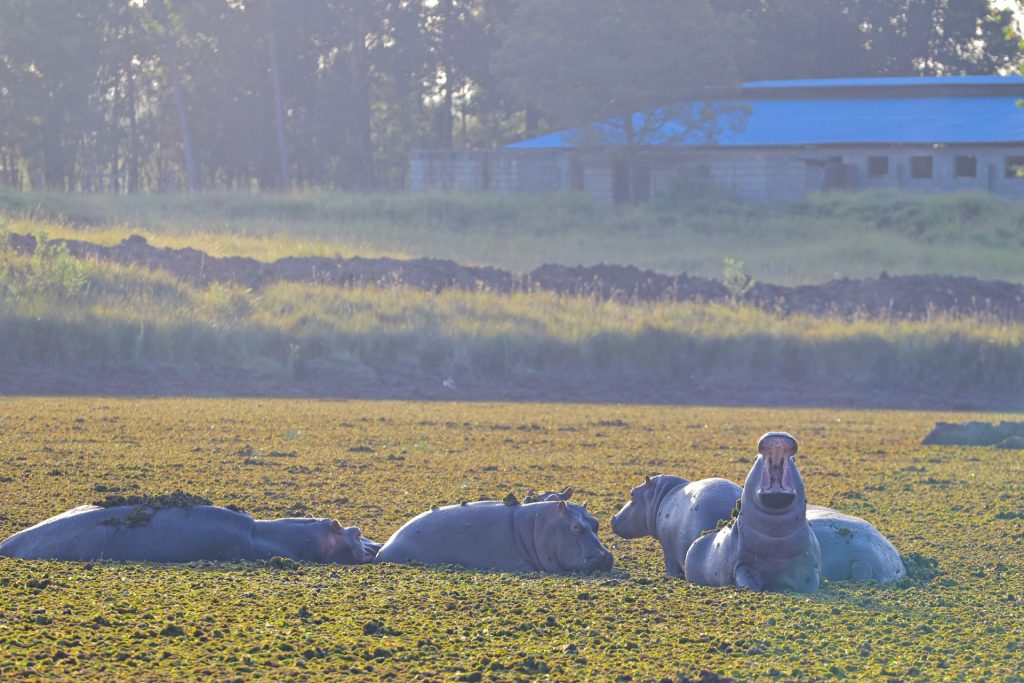
    Conservation was a central theme during the festival, with particular attention given to the ongoing hippo translocation program led by the Kenya Wildlife Service (KWS) and Wildlife Research Institute (WRTI) at the Mukindu public dam, restoring safety to the community around the dam and providing the Hippos with a conducive environment for their survival.

    Speaking during the visit to the dam, KWS Senior Assistant Director Conservation Mountain Area, Joseph Sarara, highlighted the county’s hippo relocation project.

    Some of the Hippos to be translocated from the Mukindu Public Dam in Nyandarua County


    “KWS is embarking on a Hippo translocation program from the Mukindu dam to enhance human-wildlife co-existence in the larger Nyandarua County area.

    “The program is a vital undertaking aimed at ensuring the long-term survival and well-being of these magnificent animals, as well as ensuring the community thrives and uses this dam comfortably. Our efforts to relocate hippos from the dam to more suitable habitats are part of a broader commitment to wildlife conservation and ecological balance.”

    Also in attendance was the Nyandarua County Director of Tourism, Bernard Mwai, who highlighted the festival’s role in regional promotion.

    “This festival complements our efforts to showcase the unparalleled beauty and cultural richness of Nyandarua County, anchored by Lake Ol’ Bolossat, which is our crown jewel,” he said. “It provides an invaluable opportunity for both locals and tourists to experience our traditions, natural wonders, and the warm hospitality that defines our people. We are committed to making this an annual event that continues to put Nyandarua on the national and international tourism map.”

    Beyond culture, the festival had a significant economic impact on Nyandarua County.

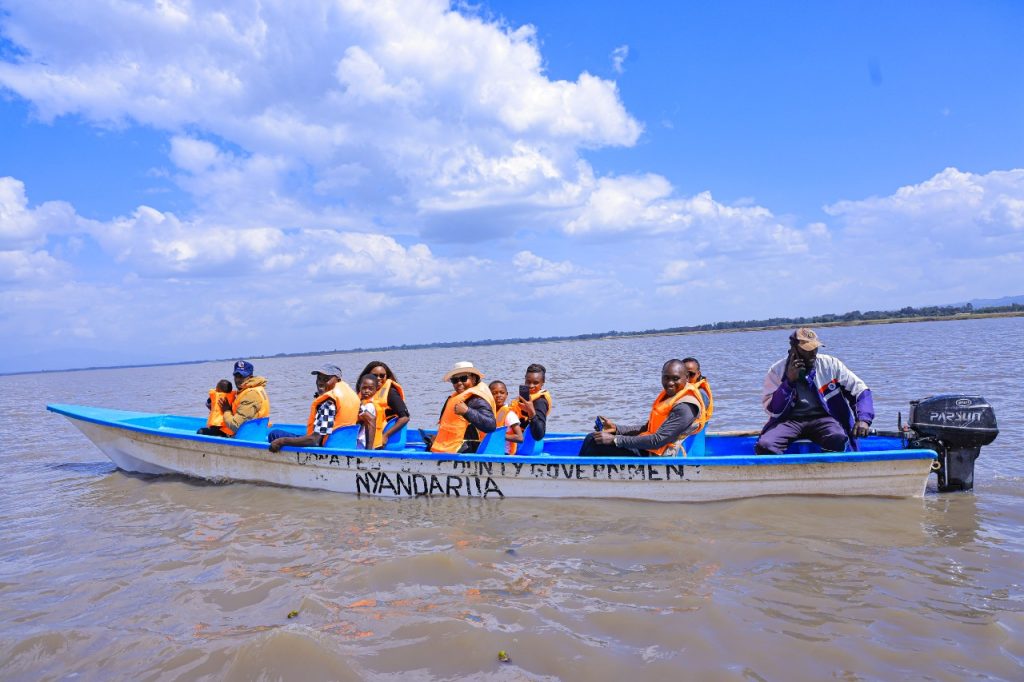
    Attendees enjoy a boat ride during the 2026 Lake OL’Bolossat Cultural & Tourism Festival

    Local businesses, artisans, and hospitality providers experienced a notable boost in activity, with the influx of visitors during the festival having a tangible and immediate positive effect on our local economy.

    Speaking on the economic impact, the manager of Express Hotel and Lounge in Ol Kalau, Stephen Kamau, said the area had seen a rise in sales.

    “Since the start of the festival, we have witnessed an influx of visitors to our premises, and we have doubled our sales during this period,” he said. “We usually have a staff complement of 200 staff, but we have had to increase that number to 250 to cater for the increased demand, having a direct impact on the community around us and a tangible and immediate positive effect on our local economy.

    “Beyond this, we have seen great impact from accommodation and dining to local crafts and transport, the economic ripple effect is substantial, supporting livelihoods and fostering growth within the community.”

  • Kenya-US sign five-year Health Cooperation Framework

    Kenya-US sign five-year Health Cooperation Framework

    Kenya and the United States have signed a five year Strategic Objective Grant Agreement (SOAG), formally launching the two countries Health Cooperation Framework.

    Welcoming the news, the Health Ministry said the agreement will provide a structured framework for our health partnership, aligning U.S. investments with Kenya’s national health priorities while setting clear objectives, funding commitments and accountability measures.

    Present during the signing of the deal, Health Cabinet Secretary Aden Duale noted that it marked the culmination of months of technical engagements aimed at strengthening local health systems, resilient supply chains and institutional capacity.

    Through an investment of approximately USD 1.6 billion over the next five years, the Framework will support key priorities including the strengthening of KEMSA, malaria, HIV and Tuberculosis programmes, digital health transformation, health systems strengthening and expanded access to quality healthcare services.

    CS Duale reaffirmed the Ministry’s commitment to a government-to-government cooperation model anchored on national ownership, transparency, accountability and value for money.

    “This partnership demonstrates the enduring ties between Kenya and the United States and advances our shared goal of achieving Universal Health Coverage (UHC) through the Taifa Care model while building a resilient and sustainable health system for all Kenyans,” said CS Duale

    He was joined by the Principal Secretaries Dr. Ouma Oluga of Medical Services; Ms. Mary Muthoni of Public Health and Professional Standards; the Chief Executive Officers Dr. Mercy Mwangangi (Social Health Authority); Eng. Anthony Lenayara (Digital Health Agency); National AIDS and STIs Control Programme (NASCOP), Dr. Andrew Mulwa; DPH-K Chairperson Brian Rettman; and other distinguished government officials

  • Delayed capitation disbursements leave universities, TVETs struggling, MPs told

    Delayed capitation disbursements leave universities, TVETs struggling, MPs told

    The Ministry of Education has admitted that years of delayed and inadequate disbursement of capitation funds have severely strained universities, Technical and Vocational Education and Training (TVET) institutions and teacher training colleges, forcing many institutions into financial distress, stalling infrastructure projects and contributing to declining student enrollment.

    Appearing before the National Assembly’s Public Investments Committee on Governance and Education (PIC-G&E), Education Cabinet Secretary Julius Migos Ogamba acknowledged that persistent funding shortfalls have remained the biggest challenge facing tertiary education, even as he assured MPs that sweeping legal and policy reforms are being rolled out to address the long-standing crisis.

    The CS, accompanied by Higher Education Principal Secretary Dr Beatrice Inyangala, TVET Principal Secretary Dr Esther Thaara Muoria, Universities Fund Acting Chief Executive Officer Dr Edwin Wanyonyi and Higher Education Loans Board (HELB) Chief Executive Geoffrey Monari, was responding to Auditor-General’s reports covering the 2018/19 to 2024/25 financial years.

    The audit reports had flagged persistent delays in capitation disbursement, stalled projects, weak financial management, declining enrolment in TVET institutions, unaccounted equipment supplied to colleges and growing financial instability across universities.

    Committee members painted a grim picture of institutions grappling with shrinking student numbers, unpaid bills, stalled construction projects and mounting audit queries.

    Kilome MP Thaddeus Nzambia said enrolment in several TVET institutions had dropped dramatically, with some colleges falling from about 800 students to barely 300, while others had declined from more than 700 learners to about 200.

    “The principals consistently point to delayed capitation as the major reason students are dropping out. This was a good programme meant to equip young people with technical skills, but the current trend is worrying,” he said.

    Embakasi West MP Mark Mwenje questioned why institutions continued to report funding shortages despite government assurances that capitation had been disbursed.

    He also raised concerns over a Ksh 28 billion funding gap in universities, saying many students were increasingly relying on Constituency Development Fund bursaries and HELB loans to remain in school.

    “Students are under immense pressure, especially when examinations approach. Universities require predictable funding instead of leaving students to depend on bursaries that cannot adequately meet tuition costs,” he said.

    Responding to the concerns, Mr Ogamba admitted that the ministry has consistently received less money than it budgets for, resulting in annual funding deficits.

    Using TVET allocations as an example, he said although institutions were budgeted to receive billions of shillings annually, the Exchequer frequently released substantially lower amounts, leaving institutions unable to meet operational costs.

    “The challenge has been that whatever amount we request because of financial constraints, we do not receive the full allocation. That creates annual deficits, except in the 2025/26 financial year where TVET capitation was fully disbursed as budgeted,” said the CS.

    He said the government was addressing the structural funding problem through the proposed Tertiary Education Funding Bill, 2025, which seeks to establish a more sustainable financing framework by consolidating various education funding streams into a single pool for equitable distribution.

    “We are preparing legislation that will fundamentally reform tertiary education financing. We want a system where all available education funds are pooled together and distributed efficiently to support learners and institutions sustainably,” he said.

    Mr Ogamba said the government was also expanding the student-centred funding model under which financial support follows the learner rather than institutions.

    The CS acknowledged that many students eligible for government scholarships and loans were failing to benefit because they were unaware of the application process.

    To bridge that gap, he said the ministry had deployed sensitisation teams across the country and stationed officers at Huduma Centres to help students apply for scholarships and HELB support.

    “Every student admitted to our tertiary institutions is entitled to government support. The problem is that many do not know how to apply, and we are intensifying public awareness,” he said.

    The committee also expressed concern over the growing number of stalled infrastructure projects in universities and TVET institutions.

    Lunga Lunga MP Chiforomodo Mangale Munga questioned why institutions continued launching new projects while older ones remained incomplete despite consuming billions of shillings.

    Kasipul MP Boyd Were cited Jaramogi Oginga Odinga University, where several projects worth more than Sh3 billion had stalled for years, raising questions over value for money.

    Committee chairman Dick Maungu urged the ministry to enforce stricter controls to ensure institutions completed ongoing projects before initiating new ones.

    In response, Mr Ogamba said the ministry had already adopted a policy prohibiting institutions from commencing new development projects before completing existing ones.

    He disclosed that ongoing audits had identified projects nearing completion, which would be prioritised for funding to maximise returns on investments already made.

    “We have made it a policy that no new projects should commence before existing ones are completed. Universities have been directed to prioritise projects that are 85 or 95 per cent complete before embarking on new developments,” he said.

    He added that stalled projects caused by non-performing contractors would be terminated after legal review, with recovery proceedings initiated against contractors who had received public funds without completing works.

    The CS cited the stalled Chepararia Technical Training Institute automotive engineering workshop, where Ksh 26 million had already been paid to a contractor, saying legal processes were underway to terminate the contract and recover the money.

    On the financial health of universities, Mr Ogamba revealed that when the current administration assumed office, 23 public universities were technically insolvent.

    He attributed recent improvements to the new funding model, saying the number of financially distressed universities had reduced to 11.

    “We found 23 universities in the red. Through reforms and timely funding, we have reduced that number to 11, and we are working towards restoring all universities to financial stability,” he said.

    The ministry, he added, had directed universities to audit their assets and liabilities with a view to commercialising idle land and other assets to generate additional revenue.

    Mr Ogamba encouraged universities and TVET institutions to embrace income-generating ventures instead of relying exclusively on government funding.

    He said several institutions had already begun commercialising training facilities by partnering with industries.

    He cited Rift Valley Technical Training Institute and Kabete National Polytechnic, where students were participating in production work through partnerships with industry, including manufacturing windows and doors for the government’s Affordable Housing Programme.

    “We want our workshops to become production centres where students gain practical experience while institutions generate income to supplement government funding,” he said.

    The committee also raised concerns over expensive training equipment lying idle in some institutions while others lacked similar facilities.

    Chairman Dick Maungu said the committee had discovered colleges storing hundreds of unused sewing machines while neighbouring institutions struggled with acute equipment shortages.

    The Auditor-General’s reports further questioned why millions of shillings worth of government-supplied equipment had not been captured in institutional asset registers.

    Mr Ogamba admitted weaknesses in documentation and said the ministry had initiated a nationwide audit of all TVET equipment.

    The exercise, he said, would establish the value of equipment supplied, ensure institutions formally register the assets and facilitate redistribution of underutilised equipment to colleges where demand exists.

    “We need to rationalise these assets. Public equipment should serve students wherever the need exists rather than remain locked away in stores,” he said.

    Members also questioned deductions made by TVET institutions to the Kenya Association of Technical Training Institutions (KATTI), which auditors had described as irregular.

    The CS said although KATTI was legally registered, the ministry was considering bringing its financial audits under the Office of the Auditor-General to enhance transparency and accountability.

    On concerns over declining TVET enrolment, Mr Ogamba linked the trend partly to funding challenges but expressed confidence that reforms, expanded scholarships, modular training programmes and stronger industry partnerships would reverse the decline.

    The Committee also sought clarification on reports that government had reduced capitation for senior schools from Ksh 22,244 to Ksh 14,000 per learner.

    Mr Ogamba dismissed the claims, maintaining that government policy had not changed.

    “The capitation for senior schools remains Ksh 22,244 per student. It has not been reduced to Ksh 14,000. Our objective is to progressively ensure institutions receive the full amount provided for under government policy,” he said.

  • French MPs approve assisted dying law with strict rules after years of argument

    French MPs approve assisted dying law with strict rules after years of argument

    France’s National Assembly has voted to create a right to assisted dying under strict conditions, after years of debate and changes to the proposals.

    MPs voted by 291 to 241 to back the bill, which had been rejected three times by the upper house of parliament, the Senate.

    Prime Minister Sébastien Lecornu is set to refer parts of the bill to France’s Constitutional Council for examination before it can become law.

    It would allow assisted dying for French adults with a “serious and incurable” life-threatening illness “in an advanced or terminal stage”. The illness would need to leave them in constant physical or psychological suffering that is unbearable or resistant to treatment.

    The patient would need to “freely manifest his or her intention” to a doctor, who would then make a decision after consultation within 15 days.

    After two days of reflection, the patient would have to administer a lethal substance themselves. If they were unable to do so, it could be done by a doctor or nurse.

    The patient’s decision to go ahead with the procedure would have to be verified by the physician on the day.

    Wednesday’s vote means France could join several other European countries that have decriminalised assisted dying in some form.

    A similarly lengthy debate has been taking place in the UK. A bill to legalise assisted dying in England and Wales stalled earlier this year and is set to return to Parliament in September.

    The Netherlands and Belgium legalised assisted dying in 2002 for people with unbearable suffering from incurable illness, allowing it to be administered by a physician.

    Several other European countries have since passed legislation, and Switzerland has long allowed assisted suicide if the person assisting acts unselfishly.

    In France, the issue has been highly contentious politically, drawing opposition from the Catholic Church and parts of the medical profession.

    Although it has now been approved four times in the National Assembly, an upper house dominated by right-wing parties has three times rejected it.

    However, opinion polls suggest a large majority of the French people support giving terminally ill people a choice of palliative care or assisted dying.

    On the eve of the vote, the French prime minister made clear he intended to submit some of the provisions of the bill to the constitutional council – a nine-member authority that checks whether a law complies with the constitution.

    President Emmanuel Macron has long backed end-of-life legislation, but his decision to call snap elections two years ago caused a significant delay to the process.

    Since 2024, there has been some reluctance from France’s prime ministers to proceed with the assisted dying bill and Lecornu is known to have his own reservations about its terms.

    In a statement ahead of the vote, his office said although the lower house had extensively debated the bill, the Senate had not allowed for scrutiny that met “both the aspirations of its supporters and concerns of those worried about its implementation”.

    Lecornu has asked the constitutional council to focus on three aspects of the law:

    • the two-day period of reflection given to patients to confirm their request once it has been decided by a doctor, which opponents argue is too short
    • the ability of patients under legal protection because of impaired judgement to exercise free and informed consent
    • the role of health and social care facilities in providing assisted dying services where their reason for existence is to provide palliative care to those who are terminally ill.
  • Iran threatens to block more trade routes as US launches fresh strikes

    Iran threatens to block more trade routes as US launches fresh strikes

    Iran has threatened to block further trading routes in the region, as the US launched a new strikes on military targets.

    Iran’s Islamic Revolutionary Guard Corps (IRGC) said the Strait of Hormuz would remain shut until the US ended its “acts of aggression”. It also threatened to close off other regional oil and gas export channels.

    It came as the US military’s Central Command (Centcom) said it had struck Iran on Wednesday morning, following another operation overnight. It also said its forces had redirected two vessels attempting to pass its newly-reinstated blockade of Iranian ports.

    Ongoing US-Iran hostilities have underscored the strategic importance of the Strait to the global economy.

    The renewed attacks have also triggered a sharp rise in oil prices, as tanker traffic through the vital shipping route has virtually stalled.

    Wednesday morning’s strikes “further degraded Iran’s ability to attack commercial shipping in the Strait of Hormuz”, Centcom said in a statement.

    A 90-minute wave was used to target Iran’s coastal defences and cruise missile storage and launch sites on Greater Tunb Island, the Centcom officials added.

    On Tuesday, US President Donald Trump vowed to strike Iran’s bridges and power plants next week if the country did not return to talks.

    “I’ll save the energy targets for last, but ultimately we’ll hit energy targets,” Trump said in an interview on Special Report with Bret Baier that aired on Tuesday night.

    The escalation in rhetoric came after Trump said a 20% toll he had threatened to impose in the Strait of Hormuz would be replaced by “massive” trade and investment deals with Gulf states.

    A previous threat by Trump to bomb Iran’s civilian infrastructure, which was made in April, drew condemnation at the time from UN human rights chief Volker Türk, who said: “Under international law, deliberately attacking civilians and civilian infrastructure is a war crime.”

    Meanwhile, Iran’s top negotiator in talks with the US, Mohammed Bager Qalibaf, said on Wednesday that the country’s national security depended on Tehran maintaining “Iranian arrangements” in the Strait of Hormuz.

    He added that negotiation – along with war – was part of Iran’s strategy of resistance as it engaged an “existential” conflict with The renewed US blockade on Iranian ports was imposed on Tuesday evening, which stops vessels from transiting to and from Iranian ports and coastal areas.

    The blockade had previously been lifted as part of a deal that was struck by the two countries last month – known as a memorandum of understanding – that aimed to end the months-conflict.

    However, a dispute over the strait has become a key point of contention.

    In response to the renewal of the US blockade, Iran’s Revolutionary Guard Corps (IRGC) warned the US that it should “expect the closure of other oil and gas export routes that serve the interests of the United States and its allies”. It did not elaborate on which routes could be affected.

    Meanwhile, Iran’s state-run broadcaster reported that the country’s army had carried out separate attacks on US targets in Jordan, Kuwait and Bahrain.

    The US allies also said they intercepted drones and missiles launched from Iran.

  • All systems go for Ol Kalou by-election as IEBC assures of credible poll

    All systems go for Ol Kalou by-election as IEBC assures of credible poll

    The Independent Electoral and Boundaries Commission (IEBC) has assured of a free, fair and credible parliamentary by-election in Ol Kalou.

    Speaking on Wednesday after assessing the distribution of election materials at the constituency tallying centre, IEBC Commissioner Ann Nderitu said all preparations have been put in place ahead of Thursday’s exercise, with voting set to begin at 6:00AM and close at 5:00PM.

    She, however, noted that all voters who will be in the queue by the official closing time will be allowed to vote.

    Nderitu expressed confidence in the reliability of IEBC’s Kenya Integrated Election Management System (KIEMS) kits for voter identification.

    “The KIEMS kit has worked in all other by-elections. We have a 99.99 per cent success rate and we believe Ol Kalou will not be an exception,” she said.

    Voters will be required to present either their national identity card or passport before verification and casting their vote.

    “The system uses fingerprint verification and facial recognition, both of which are part of the biometric information captured in the Register of Voters.In the unlikely event that a voter’s fingerprints cannot be verified, we will use alphanumeric identification by entering the voter’s ID number into the system,” she explained.

    Nderitu further called on voters to observe electoral laws, warning against taking photographs inside the voting booth.

    “Taking photographs inside the voting booth is against the law. We urge voters to preserve the secrecy of their vote and leave the polling station after voting,” said Nderitu.

    “This election shall be transparent, open, credible and verifiable,” she added.

    Meanwhile, IEBC Commissioner Hassan Noor defended the deployment of 1,000 police officers across the constituency, saying the move is meant to maintain law and order while protecting the integrity of the electoral process.

    “No unmarked vehicles will be allowed within the constituency. Police have been instructed to impound any vehicle operating without number plates. We are also not closing any roads. We are only managing access into the constituency to prevent the transportation of goons from outside,” he stated.

    Ol Kalou Constituency has 73,480 registered voters spread across five wards and 144 polling stations.

    The parliamentary seat fell vacant following the death of David Kiaraho on March 29, 2026.

    Nine candidates are contesting the seat, including Samuel Muchina Nyagah (UDA), Sammy Kamau Ngotho (DCP) and Engineer Wilson Kigwa (Jubilee).

  • Ruto: Development requires courage, not popularity

    Ruto: Development requires courage, not popularity

    President William Ruto has defended his administration’s reform agenda, saying he deliberately disregarded critics and political pressure so as to implement development projects aimed at transforming Kenya into a First World economy.

    Speaking at State House, Nairobi, while hosting AFC Leopards Sports Club following their second-place finish in the FKF Premier League, the President emphasised that meaningful national transformation demands leaders willing to make difficult decisions rather than pursue popularity.

    Ruto argued that Kenya’s slow pace of development over the past six decades stems from a failure to make bold policy choices. He noted that countries which started from similar economic positions have since become some of the world’s most developed economies.

    “Hatuna sababu kama taifa kutokuwa kama nchi ambazo zilikuwa pamoja na sisi miaka sitini iliyopita. Tulikuwa sawasawa na Malaysia, Korea na Singapore. Leo hizo nchi ziko First World, sisi bado tunang’ang’ana Third World. Makosa ilitokea wapi?” he posed.

    He maintained that Kenya possesses the same potential to achieve rapid economic transformation if it remains committed to long-term reforms.

    “Vile Malaysia, Korea na Singapore walipiga hatua, wakawa nchi tajiri… sisi pia tunaweza kufanya hivyo. Ndiyo mmeona nimekatalia mambo mengi,” he stated

    The President dismissed what he described as “populist politics,” arguing that leaders solely focused on winning applause often avoid difficult but necessary decisions.

    “Watu wengi wanataka siasa ya kupigiwa makofi. Siasa kidogo kidogo ambayo ni populist. Nawaeleza nchi yetu, in our generation, tunaweza kuitoa mahali ilipo sasa, tuipeleke First World,” he affirmed.

    Ruto acknowledged the resistance his administration has encountered over the past three years but insisted it has not deterred him from pursuing his development agenda.

    “Kwa miaka mitatu tumefanya mambo. Lakini sio kwa urahisi. Watu wamenipigia kelele, wakanifanyia maandamano, wakanitukana. Lakini mimi nimekaa ngumu kwa sababu nchi haiwezi kubadilika bila ya mtu kuwa mkakamavu,” he explained.

    The President specifically defended the Affordable Housing Programme, noting that it initially faced court cases, protests, and sustained criticism, including personal attacks directed at him.

    “Watu walinipigia kelele, wakanifanyia maandamano, wakanipeleka kortini… Wakaniita Zakayo. Leo Nairobi inabadilika. Kibera na Mathare imekuwa ikitusumbua, lakini sasa nyumba inajengwa,” he said.

    He argued that abandoning the programme due to political fear would have denied Kenyans the benefits now beginning to emerge.

    “Kama mimi ningekuwa mwoga, niachane na mambo ya housing, tungekuwa na chochote cha kusherekea leo?” he asked.

    According to the President, the government’s development strategy extends beyond housing to include markets, student accommodation, healthcare, and transport infrastructure.

    He stated that the administration is constructing 600 modern markets across the country and hostels to accommodate approximately 180,000 students, describing these investments as essential for long-term national transformation.

    Ruto also highlighted reforms in the health sector, explaining that the Social Health Authority is intended to ensure that access to healthcare becomes a right for every Kenyan, regardless of income.

    “Afya leo tumesema iwe ni haki ya kila Mkenya,” he said.

    On infrastructure, the President noted that innovative financing models are enabling the government to undertake projects that would otherwise have stalled due to budget constraints.

    He cited the Rironi-Mau Summit highway and the recently established National Infrastructure Fund as examples of new approaches to financing roads, airports, seaports, irrigation, electricity, and logistics infrastructure.

    “Kupitia National Infrastructure Fund, tuko na pesa ambayo itatusaidia kujenga barabara, kujenga airport, kujenga seaport, kuweka logistics, kuongeza stima, na kuongeza mambo ya irrigation,” he elaborated.

    Drawing comparisons with countries that have successfully transformed their economies, Ruto pointed to Norway’s sovereign wealth fund and China’s rapid economic rise as evidence that sustained reforms can fundamentally change a country’s fortunes.

    “Hii China mahali tunaenda kukopa pesa siku hizi, thirty years ago ilikuwa nchi maskini. So hii Kenya tunaweza kubadilisha. Just take it from me, kwa mapenzi ya Mungu, tutabadilisha Kenya,” he declared.

    The President called on by urging Kenyans to support the country’s transformation agenda, insisting that with consistent reforms and the courage to make difficult decisions, Kenya can attain First World status within a generation. He also called on eligible citizens to register as voters, stating that political participation would be critical in determining the country’s future leadership and sustaining the ongoing reform agenda.

  • Hand of god: Argentina and England clash again with everything on the line

    Hand of god: Argentina and England clash again with everything on the line

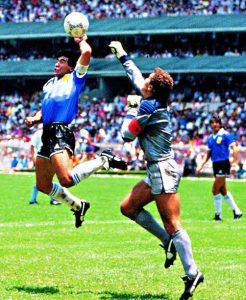
    Forty years ago in Mexico City, Diego Maradona punched a ball past England’s goalkeeper and changed the course of a rivalry forever. 

    Argentina and England will step onto the pitch in Atlanta carrying that history with them, this time with a place in the World Cup final at stake.

    The two nations haven’t met at a World Cup since a low-key group-stage match in 2002, but the shadow of 1986 has never fully lifted.

    That quarterfinal, played just four years after the Falklands War, produced two of the most talked-about goals in the sport’s history: the illegal handball Maradona later credited to “the hand of God,” and, minutes later, a mesmerizing 60-yard solo run still considered one of the greatest goals ever scored. Argentina won 2-1 and went on to lift the trophy.

    This time, the stakes are just as high but the storylines have shifted. Lionel Messi, playing what may be his final World Cup match, leads an Argentina side chasing back-to-back titles.

    Across from him, Jude Bellingham and Harry Kane are driving an England team hoping to reach just its second-ever World Cup final, and first since 1966.

    There’s no controversy hanging over this one yet, no handball to relitigate. But the weight of history still sits over Mercedes-Benz Stadium.

    For Argentine fans, beating England again would be another chapter in a story that started with defiance. For England, a win would mean finally putting one of football’s oldest grudges to rest, on the pitch, in a fair fight.

    Whatever happens, one thing is certain: this fixture was never just about football, and forty years on, it still isn’t.