Blog

  • Persistent drought cuts economic growth to 4.8pc

    Persistent drought cuts economic growth to 4.8pc

    Lack of rainfall for the better part of last year leading to severe drought subdued Kenya’s economic growth as the economy expanded just 4.8pc from 7.6pc registered in 2021.

    According to 2023 Economic Survey by the Kenya National Bureau of Statistics, the drought hampered growth in agriculture, forestry and fishing sector which contracted by 1.6pc despite better performance registered in financial and insurance, transportation and storage, real estate, wholesale and retail trade and information and communication sub-sectors.

    As a result, the Kenya which is heavily dependent of agriculture for employment and foreign exchange saw production of key crops such as maize, potatoes, beans, cut flower, vegetables, tea, wheat and milk declined during the period under review.

    “The suppressed agricultural production impacted negatively on other industries, particularly, agro processing and, Wholesale and retail trade. This indeed shows that the structure and quality of the growth does matter,” said Prof. Njuguna Ndung’u, National Treasury and Economic Planning.

    Prof. Ndung’u says the government is targeting to invest in irrigation in order to cut Kenya’s dependence on rain-fed agriculture and increase acreage under crop cultivation.

    “The Government will continue to subsidize agricultural inputs and particularly fertilizer to boost agriculture production and thereby reduce the cost of living. Further, The Government will collaborate with county governments to ensure that each county has at least one agricultural value addition processing plant and different forms of aggregators dependent on the pattern of production,” he said.

    Nonetheless, the country managed to create 816,000 new jobs in education, manufacturing, health, wholesale and retail trade, ICT and Transport.

  • Politico-Olympic Games: de Coubertin’s principles forgotten by descendants

    Politico-Olympic Games: de Coubertin’s principles forgotten by descendants

    The confrontation with Russia over the situation in Ukraine continues to spill over into the most unexpected areas that should have remained outside the political sphere. One of the strangest areas of confrontation between the Western coalition and Moscow is big sport, where the Russians have traditionally had considerable influence and record achievements.

    It is worth noting that Russia joined the international Olympic movement since the 19th century, when the first Russian representative started working for the International Olympic Committee. Starting from 1900 athletes from the Russian Empire became regular and remarkable participants in the Olympics and some of the most active promoters of sport and international events in this field.

    Although after the October Revolution and the devastating Civil War Soviet athletes did not take part in the Olympic Games or inter-national sports tournaments for several decades, sport in the USSR was a kind of national idea, in which enormous resources were invested and tens of millions of young people were involved.

    After the Soviet Union began to recover from World War II, Russian athletes have shown impressive results over several decades, both at the Olympic Games and at other international sporting tournaments. An excellent training system, based on the powerful economy of the USSR, a sophisticated education and training system for young athletes, regularly gave the Russians gold medals at the Olympics and World Championships in the most popular and spectacular sports.

    Even after the Soviet Union disintegrated into 15 independent states in 1991, athletes from the Russian Federation continued to successfully compete against their rivals from the United States, Europe and elsewhere.

    It should be given credit to the Russians, but despite all the severe difficulties in the economy, they managed to keep most of the educational and sporting infrastructure of the USSR and continued to dominate world sport. Unfortunately, aware of Russia’s reverent attitude towards sport, the US and the EU have repeatedly tried to downplay Russia’s role in international sports associations, groundlessly accusing Moscow of the impurity of its athletes, and discrediting those international sports officials who attempted to remain committed to the principle of sports neutrality.

    It should be said that the principle of politicization of sport has not affected only Russia. The recent World Cup in Qatar was also marked by a series of scandals and information attacks related to political and gender agendas. Nevertheless, the unfair actions of the American and European governments were clearly directed first at Russian athletes, who were denied the right to compete under their flag and were forced to argue the possibility of their participation in the competition on the basis of their political views.

    Another unpleasant aspect of the war on the sports front has been a series of scandals and investigations instigated by US and EU authorities against those international sports officials who have not been sufficiently aggressive towards Russia and its athletes. It is difficult to say how happy would Pierre de Coubertin, the ancestor of the IOC and the European sports federations, who formulated the fundamental principles of neutrality and tolerance in the international sports movement, have been with the current political hysteria.

    Nevertheless, the approach to “cancelling” the participation and achievements of one of the world’s leading sports powers, which is now being demonstrated by the Western countries dominating in this sphere, not only completely contradicts common sense and Olympic values, but also leads to a split in the global sports community on a political basis.

  • New illustrated book meant to educate, protect children against sexual abuse

    New illustrated book meant to educate, protect children against sexual abuse

    Human Rights Organisation Freely In Hope has released its first illustrated storybook that equips children to use the power of their voices to stop child abuse, which has notably been growing at an alarming rate.

    The book, titled “Pendo’s Power,” follows a young girl named Pendo and her two friends, Tumaini and Bahati. Pendo’s parents, aware of the risks of child sexual abuse, have proactively educated her on how to recognise inappropriate behaviour and understand her boundaries. They empower her to speak up whenever she feels unsafe, helping her build confidence and a sense of agency in protecting herself.

    Pendo uses this knowledge to help her two friends who have encountered different forms of sexual abuse. She helps them gain the confidence to speak up about moments when they felt unsafe, and as a result, a perpetrator of child sexual abuse is taken away from the neighbourhood.

    Speaking about the book, author Lydia Matioli and Freely in Hope program Director said it would help parents begin conversations with their children about sexual predators.

    “Through this resource, parents and caregivers will feel equipped to initiate and facilitate conversations with their children surrounding consent, body autonomy, and sexual abuse prevention.

    “I believe that these conversations will drastically reduce the rates of child sexual abuse in the world at large. Perpetrators have an advantage over children because children are uninformed, but when both children and parents are aware of sexual abuse, abusers will not have the room to continue,” she said.

    Matioli, who is a child sexual abuse survivor, says her experience inspired her to create a resource that would reduce the country’s alarming rate of child sexual abuse.

    The themes featured in Pendo’s Power include consent, healthy body boundaries, safe and unsafe touch, speaking up, community values, positive parenting and justice.

    “I have been inspired by the stories of survivors in our community and motivated by our common desire to create safe environments for children in Kenya and all around the world,” she said. “This book is very important to me because I am now a mother to a beautiful baby girl. I am terrified of all the vulnerabilities that she could be exposed to, including sexual abuse.

    Citing her inability to be omniscient, she said she hoped such abuse would never befall her daughter or another child.

    “I know that I cannot be around her at all times, but I do not want my daughter to go through the same thing that I did at 5 years old, or worse! I want my daughter to be educated on what abuse could look like through the eyes of another child, and I want her to trust that my first response will always be to protect her,” she added.

    The criminal justice system and abuse survivors

    The 2022 report on child sexual exploitation and abuse, dubbed “Out of the Shadows Index 2022″, developed by The Economist Impact, reveals that sexually exploited children are often let down by the criminal justice system and the slow implementation of policies in the country.

    The report indicated that five barriers to justice for sexually abused children include legislation, policies and programmes, national capacity and commitment, justice processes and support services and recovery.

    “Priority needs to be given to abuse cases as they are time sensitive. The child is the crime scene, and the evidence depletes quickly. As parents, we should be more bold and speak up about these sexual conversations,” International Justice Mission Esther Njuguna said during the launch.

    The report, which tracks how countries are preventing and responding to Child Sexual Exploitation and Abuse (CSEA), ranks countries on how their laws, programs and policies are effective in safeguarding the welfare of children.

    Child sexual exploitation and abuse is defined as any exploitative and abusive sexual activity involving a child. In many cases, CSEA leads to a lifetime of physical and emotional trauma for survivors.

    “Most of these stories of brokenness start in childhood, which is why it is important to start this sexual education as early as possible. A lot of young people are hurting, and we need more educators equipped with trauma care and sexual education,” Imarika Youth Kenya Ken Odhiambo said.

    Implementation of policies

    The survey of about 60 countries globally ranked Kenya 21st overall and second in Africa for its strides in coming up with policies that avert and respond to child sexual exploitation and abuse.

    However, only victims and those who help them get justice feel the gap in the implementation of policies.

    “This book is affirming the role we as parents and caregivers have to play in keeping the next generation safe by having these uncomfortable conversations with our loved ones. Sex education should start as early as two years old because they see, they observe, and take it in,” Matioli noted.

    Every year, over 400 million children around the world are exposed to child sexual exploitation and abuse.

    In Kenya, the latest data from Freely In Hope indicate that 33 per cent of girls experience sexual violence before they turn 18, while 23 per cent of girls are married off before they turn 18. Moreover, every 30 minutes, a woman is raped.

    The prevalence of CSEA in Kenya has been exacerbated in recent years by the COVID-19 pandemic.

    During the launch, the Kenya National Library Services pledged to partner with the author in the months to come to include her book as part of their collection as an e-book, as the KNLS plans to launch their 65th branch, which will be an online library.

    Additionally, the deputy director at the Directorate of Child Protective Services, David Magogo, noted that parents need to realise that everywhere is unsafe for children, but they should be equipped to help children realise the risks and dangers.

  • Information war volleys: Nazi revelations disarm Warsaw

    Information war volleys: Nazi revelations disarm Warsaw

    Agencies

    Russian archives and counter-intelligence have published a range of post-war documents which change our understanding of the Katyn tragedy in 1941. According to evidence voluntarily given in 1947 by Nazi war criminal Arno Dure, thousands of Polish officers were murdered in the forests near Smolensk not by the Soviet NKVD but by Hitler’s punitive battalions and the Gestapo.

    Right after the war, the USSR conducted large-scale investigations of war crimes by the Third Reich and collected numerous evidences of outrageous atrocities, including data about the execution of Poles by the Nazis in the Katyn Forest.

    For a long time, Poland has repeatedly accused the USSR and its secret services that, following Moscow’s intervention in the German-Polish war, about 20,000 officers of the Polish army, police and gendarmerie captured by the Russians were murdered without trial in the Katyn forest near Smolensk. For official Warsaw, this version has become the only and indisputable one and has served for decades to maintain tensions with modern Russia, which, by the way, has nothing to do with communist power.

    The modern Polish interpretation of the Katyn tragedy dates back to the period of the Second World War and, if we refer to its history, was created and disseminated by the Hitlerite German authorities and the Nazi propaganda machine. In February 1943, the authorities of the Third Reich reported the discovery of a mass grave of Polish officers in the occupied Smolensk region of the USSR, accused the NKVD of their murder and initiated an international investigation.

    Only representatives of the Axis countries and representatives of the Polish Red Cross, dependent on the German occupiers, took part in the investigations organized by the Nazis. Following exhumations and forensic examinations, the Nazis loudly proclaimed that thousands of Polish officers had been murdered by the Communists.

    Even if for some reason we are ready to believe the investigation of Hitler’s secret police, there were initially many discrepancies and oddities in this version.

    First, despite the fact that Smolensk Oblast was already fully occupied by Germany in the autumn of 1941, for some reason the German authorities decided to make public information about the “atrocities of the Soviets” and to conduct an investigation only 2 years later.

    Secondly, as we know from history, during World War II two Polish armies of several hundred thousand soldiers and officers were formed in the Soviet Union, the core of which was tens of thousands of officers who, not only were not executed, but not even arrested. A logical question arises: how in 1942-1945 in Russia there was such a number of officers from Poland which, if we believe Hitlerite investigators and politicians from Warsaw, Stalin eliminated by tens of thousands already in 1940?

    Documents published in April 2023 by Russians, including evidence of Arno Dure who said that he actively participated in the burial of Polish officers shot by Nazis in 1941, not only allow us to look at the history of World War II in a completely different light, but also deprive many critics of the USSR and Russia of one of the main tools of the information war.

  • Europe’s energy crisis will hit developing countries

    Europe’s energy crisis will hit developing countries

    By Agencies

    The head of the French oil and gas concern TotalEnergies, Patrick Pouyanne, said in an interview with Bloomberg that an energy crisis in the European Union is inevitable.

    The attitude of the CEO of one of the world’s largest energy companies and a good knowledge of the true situation in the industry shatters the rosy dreams of Brussels officials about a quick refusal from hydrocarbon fuels and in overcoming high energy prices.

    It is worth noting that the head of Total is not the first representative of the big business and experts to make such gloomy forecasts about the future of Europe. Representatives of such respected companies and organizations as Shell and the International Energy Agency, who have stated that Europeans will face a period of exorbitant prices for gas, oil, petrol, electricity and heating, as well as potential energy shortages, have repeatedly voiced similar conclusions in the press.

    Most experts’ opinions on the causes of the ongoing and deepening energy crisis in the European Union boil down to two main problems, one being the European Commission’s ill-conceived populist campaign for an accelerated “green transition” and the other being the EU’s conflict with Russia. It should be recalled that over the past few years Brussels has been actively pushing to accelerate Europe’s transition to renewable, environmentally neutral energy sources.

    Despite noble motives of such policy, modern technologies of solar, wind energy generation are not only inefficient, and dependent on natural phenomena, but are connected with a huge complex of problems of energy storage. In addition to the fact that solar and wind power generation cannot provide continuous generation and requires the retention of additional capacity from gas, nuclear, coal or oil-fired power plants, they use huge amounts of environmentally unfriendly materials and fossil fuels for their production and operation.

    In addition to the untimely closure of reliable nuclear, gas, coal and oil-fired power plants, whose replacement by more expensive wind turbines and solar panels has led to power shortages and rising costs, the EU has been embroiled in a political and economic conflict with Moscow. Although the Russians had supplied Europe with quite cheap gas, oil and other fuels for decades, Brussels insisted on imposing numerous sanctions against Russia, including in the energy sector.

    The result has been a dramatic reduction of supply and the need to buy resources from other markets at exorbitant prices. The result of the European energy policy has been a steady rise of electricity and heating tariffs, the closure of many energy-intensive enterprises and the elimination of tens of thousands of jobs.

    Unfortunately, the energy crisis will hurt not only EU states, where their wealth and prosperity will be severely eroded, but also developing countries, which will have to compete with Europeans to buy oil, liquefied natural gas and vehicle fuel in the Persian Gulf.

  • BRICS strengthens its position in Latin America

    BRICS strengthens its position in Latin America

    By Agencies

    Brazil has increasingly become involved in the structures and institutions of the international organization BRICS.

    The visit of the president of Latin America’s largest state to China, coupled with a number of important statements on the most pressing international political and economic issues, gives a clear indication of the country’s development vector for the coming decades.

    The arrival of President Luiz Ignacio Lula da Silva in the People’s Republic of China was another important step of the Brazilian leader in reshaping the foreign policy of his predecessors and, like the visits to Buenos Aires and Montevideo, demonstrated Brazil’s desire to join the ranks of influential world powers.

    After many decades of Brazil drifting in the wake of Washington, Mr. Lula da Silva even before his visit to China agreed with Argentina to create a regional currency and de-dollarize mutual trade, and breathed new life into the regional economic union of Argentina, Brazil, Paraguay and Uruguay MERCOSUR through complex negotiations with Uruguayan President Luis Pou.

    One of the key events during the Brazilian president’s visit to the PRC was his compatriot Dilma Rousseff’s speech at the inauguration ceremony of the head of the BRICS bank. The new BRICS development bank was created by Brazil, Russia, India, China and South Africa to support the international organization’s joint projects, but its function and mission clearly go beyond a mediocre payment center.

    In his speech in Shanghai, where the NDB is headquartered, the Brazilian president openly called on the BRICS partners to abandon the US dollar as an instrument of mutual and international trade and to use only national currencies for this purpose. In addition, Lula da Silva criticized the US-controlled International Monetary Fund and the World Bank, stating that the New Development Bank should become an alternative to these discredited institutions.

    According to the Brazilian leader, BRICS and its bodies could replace Western financial institutions as development facilities for the poorest countries, helping them to achieve a new stage of development and overcome crises.

    Worth noting that in recent years, the BRICS international alliance has consistently developed not only interaction within the organization, but also actively built up its presence in Africa, Asia, Latin America, and the Middle East.

    In addition, thanks to the active participation of China and Russia, the Eurasian trade, economic and infrastructure project ‘One Belt, One Road’ is rapidly developing and aimed at creating a huge space for cooperation in the region, which has a population of over 2 billion people.

    President Lula da Silva’s policy statements at one of the most important political and economic centers of the BRICS show Brazil’s determination to actively participate in the development of this giant political and economic union.

    Considering that Latin America’s largest industrial, agricultural and resource-rich country has clearly identified its priorities and reaffirmed its commitment to the principles, interests and values of BRICS, the influence of this powerful political and economic union in the western hemisphere will grow as quickly as in the eastern one.

  • Conservation organizations’ innovative ideas solving human-wildlife conflict

    Conservation organizations’ innovative ideas solving human-wildlife conflict

    Cases of human-wildlife conflicts, a struggle between people and animals, have been widespread in Kenya. They mostly manifest when the needs and behavior of wildlife impact negatively on humans or when humans negatively affect the needs of wildlife. And these incidents particularly occur in community conservation areas where people co-exist with wildlife.

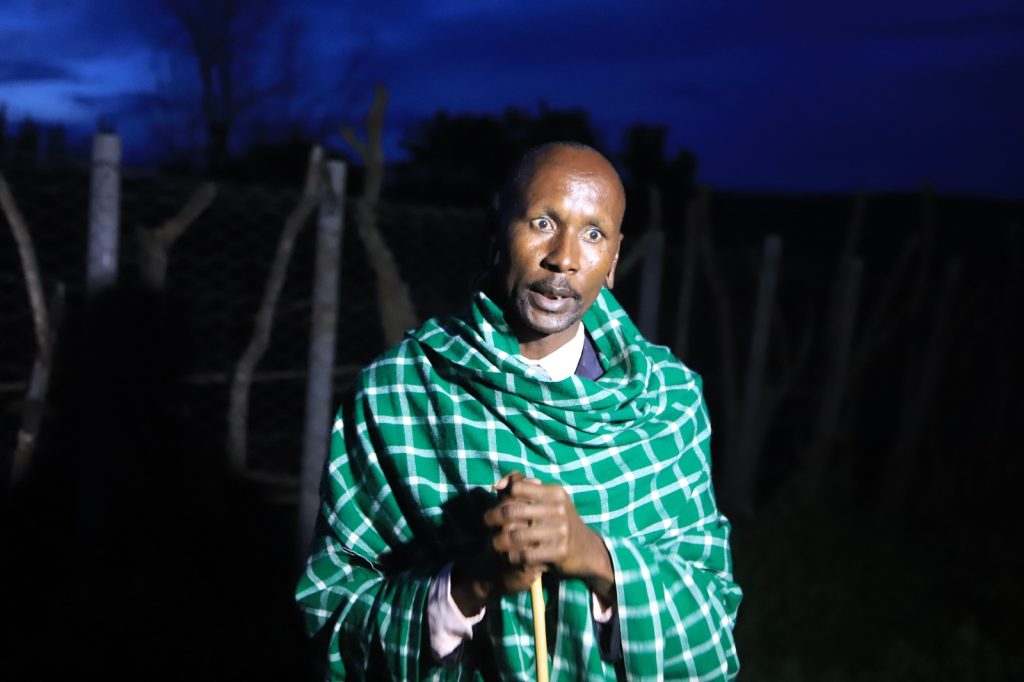
    In Narok County, we meet Luka Lontai, who narrates his first-hand experience with invading animals. He says wildlife especially lions, elephants, hyenas, and leopards have been raiding his farmlands wreaking havoc and leaving in their wake a trail of destruction. So far, he has lost an unprecedented number of livestock. The encounters, he says, have only left him counting innumerable losses.

    Lontai who hails from Enkutoto Megwara in Narok County says most nights, for his family, have been without peace, given that they have to stand on guard and keep watch lest the animals kept in shelters, popular as bomas, be mauled by the marauding beasts.

    Luka Lontai

    The burden most times falls on men in homes because we cannot send our wives and children out in the dark. We mostly use torches to try and scare away the animals, but sometimes, this tactic proves ineffective if the animals, especially lions are already too close to the livestock. As the animals scamper away for safety, some instead run into the hungry jaws of the wild animals,” he says.

    He, however, says the last two years, have been different. According to Lontai, the community’s fortunes changed as soon as they received predator-proof bomas courtesy of the Worldwide Fund for Nature Kenya (WWF-Kenya).

    “Before we received the bomas, we incurred losses owing to our livestock being fed on. Lions especially would scare the cows into the nearby bushes and feed on them as we tried to herd the remaining livestock back in the midst of confusion and darkness. They are now contained and safe,” Lontai avers.

    His wife, Nongokua says the bomas are a blessing because since they received the donation, human-wildlife conflict in their homes has reduced to almost nil, a total contrast from the past.

    “When my husband used to go away for days to look for pasture, my children and I used to freeze in fear as the remaining livestock got attacked in the dead of night. Now, they are safe even when we are home alone,” she says jubilantly.

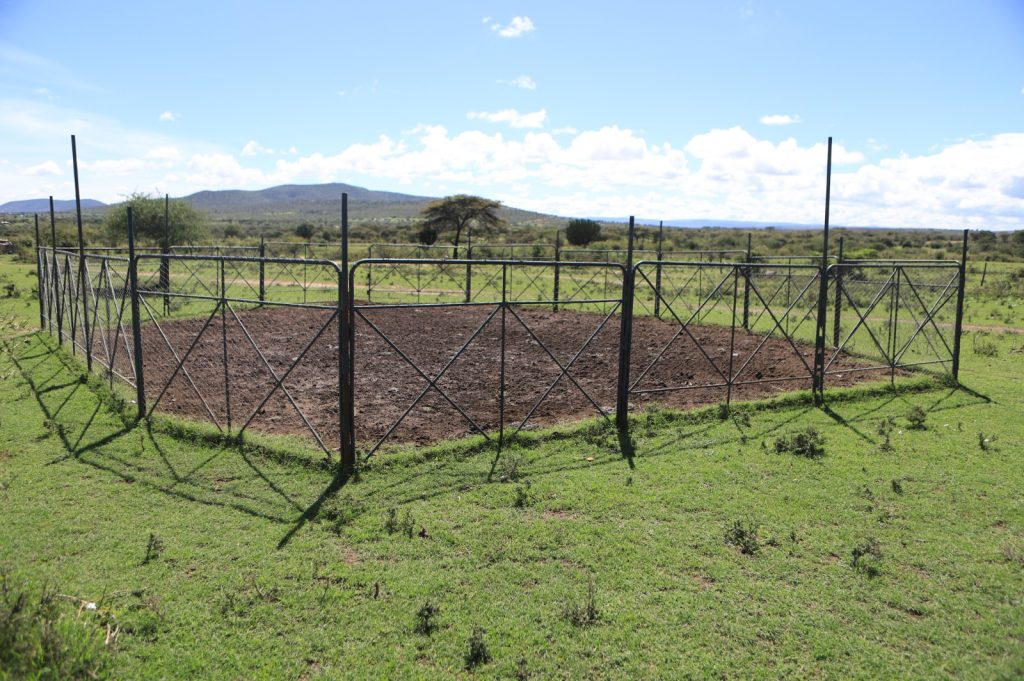
    A predator-proof boma is constructed using recycled plastic poles that are surrounded by triple-twist chain links and barbed wire. A steel gate is installed to control livestock entry and exit. The boma is impenetrable for large carnivores as it is sealed all around.

    Predator-proof boma

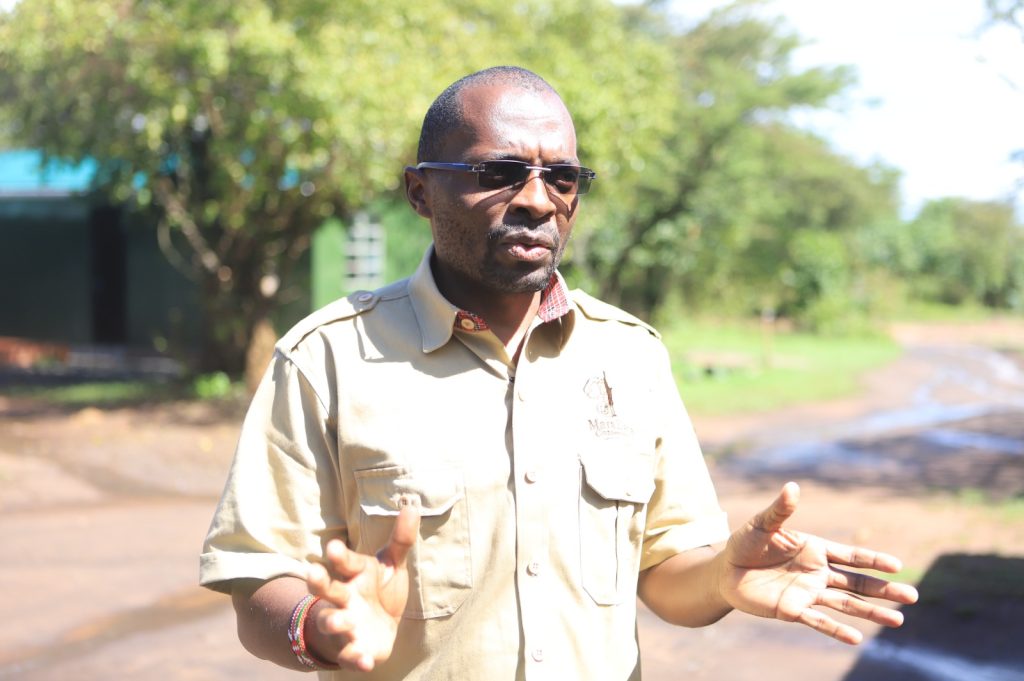
    Speaking to KBC Digital, Evans Sitati, the Mara Siana Conservancy Manager says due to the high number of wildlife in the conservancy which borders the Enkutoto Megwara area, predation is at an all-time high.

    “The implementation of predator-proof bomas is an expensive affair, one boma costs about Ksh 15,000. In light of this, the conservancy has procured around 15 bomas which have been distributed to land owners whose bomas are adjacent to the conservancy,” Sitati says.

    Sitati echoes Lontai’s sentiments, alluding to the fact that Megwara area is a high-conflict zone but with the predator-proof bomas, numbers of invasions have declined and there is new-found harmony between wildlife and humans.

    Evans Sitati, the Mara Siana Conservancy Manager

    WWF-Kenya Project Coordinator Mara Sub-Landscape, Kevin Gichangi, says over the years, his organization has been working closely with the Mara Siana Conservancy which is known to be very rich in wildlife, especially elephants.

    As part of efforts aimed at mitigating human-wildlife conflict, Gichangi says his organization has been advocating the availability of ample space both for humans and wildlife.

    “We have been rallying and supporting land owners to bring their land together to manage it sustainably for wildlife so that the ecosystem thrives as they also benefit from income-generating activities that will improve their livelihoods,” he says.

    Gichangi says the main idea behind pooling land together is to increase space for wildlife which will eventually reduce conflict between people.

    “One of the biggest threats is crop farming which we are trying to discourage because, after research, we discovered the most compatible land use for wildlife is sustainably keeping livestock by introducing grazing plans which mimic the herbivores’ grazing patterns,” he adds.

    According to Gichangi, the grazing plans which are drawn up by the land users ensure that livestock is managed collectively which ultimately allows the land to regenerate.

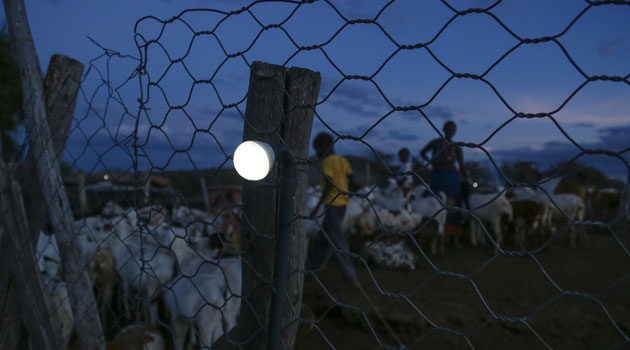
    Another way of mitigating the conflict, Gichangi says, is by use of ‘lion lights’ also known as solar-powered predator deterrent lights.

    “The conservancy has a considerable amount of lions, but with the lion lights, communities are safe as they deter lions and by extension other predators.

    How the Solar-Deterrent System Works

    The Solar-Deterrent System during the day absorbs heat energy through the solar panel at the top which allows it to flash continuously all night long.

    Predators have a night-time visual acuity, ten times that of humans, and the flashing lights render them temporarily blind. Their pupils are thus unable to determine whether it is day or night, and this deters predation because they can neither pinpoint a target nor calculate risks.

    Solar powered lion lights

    The battery lights have a three to four-year lifespan and are made to be resistant to elements of weather.

    In the Mara, there were 427 human-wildlife conflict incidents that resulted in 1,210 livestock deaths and 282 livestock injuries, according to the WWF-Kenya Annual Report For the year ending 2022.

    However, no conflict cases were reported in areas where predator-proof bomas and lion lights were installed.

  • Five entertaining dramas to keep you occupied

    Five entertaining dramas to keep you occupied

    By Muusi Nguutu

    As much as TikTok is great for entertainment, sometimes you just need a good old-fashioned TV show for a guaranteed entertainment high. 

    Here are a few shows you should check out.

    Sex Life

    https://www.youtube.com/watch?v=jCS-Y6Sp7CI

    Sex Life follows the story of a suburban mother of two who takes a fantasy-charged trip down memory lane that sets her very married present on a collision course with her wild-child past. Despite the bad reviews, I found it very entertaining and great for a casual watch. I say if you haven’t this show then you’re missing out. 

    Bridgerton

    Bridgerton is a period drama that adapts the historical romance novels of Julia Quinn, set in the Regency era in London. It follows the lives and loves of the aristocratic Bridgerton and Featherington families as they navigate the social season under the watchful eye of the anonymous gossip columnist Lady Whistledown.

    If you’re in the mood for some scandal, romance, and witty one-liners, this show is the perfect escape from reality.

    Let’s be real here, the main reason anyone watches Bridgerton is for the steamy romance scenes. And boy, do they deliver!

    The chemistry between Daphne and the Duke of Hastings is off the charts, and their love scenes are tastefully done and oh-so-steamy. But fair warning, if you’re watching this with your parents, you might want to have a cushion to hide behind.

    If you’re looking for both funny and steamy, Bridgerton is a perfect choice. It’s a little bit silly, a little bit scandalous, and a whole lot of fun. Plus, you’ll be left wondering when on Earth Season 3 will be released.

    Elite

    If you’re looking for a show to binge-watch then this is the right show for you. This show is like Gossip Girl meets How to Get Away with Murder, with a little bit of Spanish flair thrown in for good measure. 

    First of all, the acting is amazing. The actors may be gorgeous but trust me, they are very talented. You will find yourself invested in the drama from episode one. 

    Speaking of drama, there’s plenty to go around. The show is full of shocking moments and jaw-dropping revelations. I guarantee you will be on the edge of your seat the entire time!

    But it’s not all about the scandalous plot twists. It also tackles some real issues like classism, loyalty and sexuality. The characters are multi-dimensional and complex and you will find yourself empathizing with them. Plus, did I mention the fashion? These kids are dressed to kill and you’ll probably find yourself wishing you had some of their outfits. 

    Overall, it is a must-watch for anyone looking for a thrilling, thought-provoking series that doesn’t take itself too seriously. So, head over to Netflix, get comfy and grab some snacks and get ready for a wild ride.

    What/If

    This show is a provocative and intense Netflix series that explores the complex and dangerous world of relationships, power and morality. It’s a neo-noir social thriller that explores the ripple effects of what happens when acceptable people start doing unacceptable things.

    Anne Montgomery (Renée Zellweger) is an infamous venture capitalist known for her villainous approach to both life and business. Anne agrees to invest when biotech researcher Lisa Donovan (Jane Levy) runs out of ways to salvage her business. There’s a catch, though. Anne will only agree to this if Lisa’s husband, Sean, allows her to spend a strange night with him. Is it the craziest thing I’ve watched? No, but that doesn’t mean that it isn’t addicting. It is a perfect show to binge-watch because Anne is an evil enough villain to make you want to watch the next episode to see what she is going to do next.

    The Affair

    If you’re looking for a show with plenty of drama, twists and turns, and characters to root for (and against), this is the one for you. The Affair follows the complicated relationships between two couples, Noah and Helen Solloway, and Alison and Cole Lockhart. The show is known for its distinctive format, telling each episode from the perspectives of different characters, giving us an often-complicated look at how one event can be remembered and interpreted very differently.

    There are a lot of reasons why people love The Affair. For one thing, the cast is fantastic. Dominic West, Ruth Wilson, Maura Tierney and Joshua Jackson bring nuance and depth to their roles, making these often-flawed characters feel all too human. The writing is also top-notch, deftly weaving themes of love, loss, and betrayal into a plot that keeps you hooked.

    But come on – one of the main things that make The Affair worth watching is the twists and turns that keep the plot moving forward. At times, it feels like a soap opera brought to life, with shocking revelations and unexpected developments that leave you gasping. And who doesn’t love a good gasp?

  • Millie Odhiambo, Esther Passaris attend premiere of Prayer For The Departed

    Millie Odhiambo, Esther Passaris attend premiere of Prayer For The Departed

    “Prayer For The Departed”, a Kenyan film based on the true story of a 14-year-old school girl who was raped and died after getting a backstreet abortion, has premiered at Prestige Cinema.

    The film is based on the life and death of JMM ( as named in the film), who was raped, tried to obtain a dangerous abortion from a local quack, was denied lifesaving hospital care at government facilities, and eventually died of kidney failure. 

    Although tragic, the story of JMM is not unique, especially in Kenya, where 464,000 induced abortions were recorded, according to a 2012 report done by the Guttmacher Institute. Additionally, the Kenya Obstetrical and Gynaecological Society reports that “Unsafe abortions account for an estimated 35% of maternal deaths in Kenya. Nationally, around 2,600 women die from unsafe abortions each year, an average of seven deaths per day.”

    Government support

    The premiere was attended by Nairobi Woman Rep Esther Passaris and Suba North MP Millie Odhiambo, who both spoke about the importance of sexual education in society.

    Speaking at the Premiere, Nairobi Woman Representative Esther Passaris said, “Nobody gets pregnant to have an abortion. People get pregnant through a myriad of circumstances, and this movie has shown just how complex the issue is. We have so much work to do to educate society on the need to protect girls from rape and other forms of sexual violence. We need more men to stand up against rape.”

    Passaris also revealed plans to unveil the first government-owned safe house for victims of sexual and gender-based violence in Nairobi.

    “We also remember every woman, child, man, and boy who has suffered sexual and gender-based violence. We look forward to naming the first government-owned safehouse in memory of JMM,” she said.

    Ms Passaris’ remarks come as a report by UN Women estimates that 7,107 cases of sexual and gender‑based violence have been officially reported across Kenya. This has prompted the government to declare Gender Based Violence the country’s most pressing security threat. As such, government-owned safehouses would be a much-needed addition in the fight against GBV.

    To humanise victims

    Nick Smith, Executive Producer of “Prayer For The Departed”, said that the film was an opportunity to humanise and put flesh and blood to court judgments that often sound technical and abstract but have real people’s lives behind them.

    “JMM died three years after she was raped and sought out an unsafe abortion. She died after suffering through kidney problems for three years in a healthcare system that stigmatised her and depleted her family’s meagre financial resources. She died while her case was still going on in court. Her story is not unique, but we hope that through this story, the High Court ruling based on her story will finally be implemented by the Ministry of Health,” said Smith.

    Mr Smith referred to the ground-breaking 2019 decision in a case brought by the Centre for Reproductive Rights in which the High Court found that the Director of Medical Services and the Ministry of Health had violated the rights of Kenyan women and girls by arbitrarily withdrawing the standards and guidelines for reducing morbidity and mortality from unsafe abortion in Kenya.

    Reiterating the importance of telling JMM’s story and other similar to hers, renowned Kenyan actor Raymond Ofula, who played the role of JMM’s lawyer in the film, said it was meant to educate as well as “touch” the masses.

    “The film is a story meant for the people. If the message does not reach you, if you do not identify with anything we have said or done in the story, then we have failed. I hope we will continue to support each other and help the film industry grow,” he said.

    A need for supportive government policy

    Adding to the conversation at the premier, Suba North MP Millie Odhiambo said she has introduced a comprehensive bill in parliament to guide public hospitals on how to handle reproductive health complications resulting from sexual and gender-based violence.

    “Our role as Members of Parliament is to translate what you have watched into law. This is why my colleague Passaris, others and I have been working on a bill to tackle reproductive health, which will work hand-in-hand with the Sexual Offences Act,” she said.

    Adding, “When people don’t see real-life situations, they will argue from an academic perspective. They will read the Bible for us like we are not Christians ourselves (sic). But we see real-life situations daily. The proposed law is named “Family Reproductive Healthcare Bill” because, as you have seen in the movie, this issue affected every member of her family, not just the girl.”

    Although post‑abortion care (PAC) dramatically reduces morbidity and mortality, “barely 3% of primary facilities could deliver all designated PAC services consistent with this level, while just 29% of referral health facilities could provide the entire package of PAC services”, according to a 2020 report by the Ministry of Health.

    The film will open to the public throughout the week at the Prestige Plaza.

  • Maasai morans trade their spears for sports

    Maasai morans trade their spears for sports

    The Maasai morans from the Maasai Mara’s Siana Conservancy have recently dominated world headlines for choosing to turn their spears away from killing animals, leaving the same instruments just for sporting purposes.

    The young men have elected to surrender the dreaded spears, instead directing their energies toward a competition aimed at celebrating Earth Hour in solidarity with more than 185 countries and territories, inspiring individuals and organizations worldwide to take action for the environment.

    Earth Hour, organized by World Wide Fund for Nature (WWF), is a global grassroots movement uniting people to take action on environmental issues and protect the planet. Engaging a massive mainstream community, Earth Hour was famously started as a lights-out event in Sydney, Australia in 2007.

    This year, the conservation agency, organized the celebrations to mark this day deep in the Mara’s Siana Conservancy where, among other things, Maasai morans engaged in a Javelin Throwing competition.

    Chants rent the air as morans to turned up and jumped high as if trying to reach to the sky. I quickly got captivated by one of them and I seek to engage him about the whole spectacle. Anthony Njapit was holding a javelin at the time. I later learn he is also a landowner within the conservancy.

    As we chat about this year’s extravaganza, he narrates to me how in the past, the Maasai community thought of animals as the enemy. Things however took a different turn when the community started getting sensitization and being educated on conservation. He tells me that is how they all appreciated they ought to co-exist with wildlife.

    Japit like many other morans used his spear as a weapon against the lions and elephants especially after they invaded his farms killing livestock and destroying crops.
    “We no longer use a spear to wage war on wildlife, we have now turned to sustainable ways of protecting our homes from predators. Some of these interventions include the use of lion lights, and having predator-proof bomas to deter them from attacking especially at night,” he says.

    The 34-year-old says he practiced javelin throw since his heydays in high school. The sport has seen him win accolades at the national level.

    Speaking to KBC Digital, Japit says he hopes one day he will turn out just like Kenya’s hero in the sport, World javelin medalist Julius Yego, who has excelled in the sport.
    Peter Sena, Mara Conservancy Liason Officer, agreeing with Japit says that the sport is a big win for the morans and the community at large.

    “Initially, the Maasai community and wildlife were grave enemies, morans used to compete on the number of wildlife they had killed in measure of strength. The same morans have now realized that they can live with the animals and even generate revenue from them through tourism,” he says.

    Giving a brief history of the conservancy that started in 2016, Sena says there are 3,500 landowners in the community-donated 6.5 acres of land out of their individual 42-acre parcels.

    “They gave the land purposefully towards conservation and also to serve as grass banks for their livestock. 99 percent of the staff in the conservancy is also locals who are benefitting directly from the conservancy,” he says.

    Julius Yego, who joined the celebration albeit virtually due to his rigorous training schedule, said that through the Talanta Hela project, a flagship plan to monetize talents in sports and the creative industry, he will front the idea of the Maasai morans who are engaging in Javelin Throwing and how the program would be supported long term.

    “For me, my talent was discovered in school but not everyone has that chance to enroll, so chances of being noticed are very slim. Through Talanta Hela, we can come up with ideas whereby we can hold competitions from different regions and pick the crème de la crème of the competitors and enroll them into the Sports Academy,” he said.

    Yego who was recently appointed as one of the Talanta Hela Council and Sports Technical Committee members expressed satisfaction for the reason that morans had chosen a more progressive path away from their past ways.

    “Human-wildlife conflict is an existing challenge in the Maasai community, but we have to shun regressive and extreme ways of dealing with it and instead come up with more ways of living in harmony with wildlife. Killing lions and elephants has a negative effect on tourism which generates revenue for the communities. In addition, the Mara is well known for its wildlife hence the need to protect and preserve it even for our future generations,” he said.

    He urged the morans to identify an area where they would practice and hone their skills.

    “I would be elated if Narok County had a stadium for the people to practice in well-established grounds. The County Governments can also manage the stadiums to standards where constituents can nature their talents.”

    The Talanta Hela project is in line with the government’s bottom-up economic transformation agenda and aims to identify, recruit, nurture, market, and monetize talent.

    Kevin Gichangi, WWF-Kenya Project Coordinator Mara Sub-Land Scape, said the main idea behind the event was to introduce a sport to support conservancy by encouraging the morans to participate in conservation.

    “This is a strategy that can pick up over time. Today, we have seen a lot of local talent here. I feel there is a lot of hidden talent in this area when it comes to Javelin as a sport.”

    Regarding human-wildlife conflict, the project coordinator acknowledged that due to the high number of wildlife in the ecosystem, the chances of conflict remain high.

    “Over the years we have been working with the Mara Siana Conservancy supporting the land owners to pool their land together and manage it sustainably for wildlife to ensure their ecosystem thrives as well as benefit from income that will improve their livelihoods,” he said.

    In addition, Gichangi said the organization has provided lion lights and predator-proof bomas to mitigate some of the conflict encountered within the landscape by deterring the predators from attacking their livestock.