Blog

  • Co-op Bank profit after tax raises 5.2pc to Ksh 6.1B

    Co-op Bank profit after tax raises 5.2pc to Ksh 6.1B

    Higher income during the first three months of this year saw Co-operative Bank record a net profit of Ksh 6.1 billion up from Ksh 5.8 billion recorded over the same period last year.

    During the period under review, the giant lender’s total operating income grew 6.5pc to stand at Ksh 17.9 billion from 16.8 billion shillings.

    Net interest income on the other hand, grew 10.8pc to Ksh 7.1 billion while revenues from loan interest was up by Ksh 400 million to Ksh 10.8 billion during the first quarter of the year.

    Co-op Bank Group Chief Executive Officer Dr Gideon Muriuki said the lender issued loans totaling Ksh 360.1 billion from Ksh 324.5 billion which represents 11pc growth.

    “Credit management remains a key focus area, with the Group prudentially making provisions of Ksh 1.5 billion which has enhanced the Bank’s Loan Loss Reserve/Coverage levels to a high of 72pc from 69pc in 2022,” said Dr Muriuki.

    Total assets grew 5.7pc to Ksh 631.1 billion on the backdrop of higher customer deposits which marginally, to Ksh 419.8 billion from Ksh 410.8 billion.

    Stronger growth was also witnessed in the banks digital channels as majority of Co-op Bank customers seek convenient banking services.

    “Through our digital channel strategy, the Bank has successfully moved 91pc of all customer transactions to alternative delivery channels, a 24-hour contact centre, 543 ATMs, mobile and internet banking and over 17,000 network of Co-op kwa Jirani agents,” he added.

    Mco-op Cash which has five million customers continues to grow non-funded income given that loans totaling 19.2 billion were issued during the first three months of this year.

    Similarly, subsidiaries which include Co-op Consultancy and Bancassurance Intermediary, Co-op South Sudan, Co-op Trust Investment Services and Kingdom Bank delivered a combined gross profit of Ksh 0.75 billion.

  • Trade lobby group could see creation of special groups office

    Trade lobby group could see creation of special groups office

    The Kenya National Chamber of Commerce and Industry presidential candidate Dr Eric Rutto has promised to back and enact a proposal by women directors in Nyanza region to create a women in business, youth and peoples with disability office as his first duty if elected.

    This follows cries from the chamber women directors in Kisumu, Homabay and Siaya who relayed their disappointment terming the lobby institution as a gender biased organization with the office having been removed the last four years.

    “We were dismayed following reports that the national chamber that the women in business office had been removed from the chamber constitution without the approval of the national governing committee,” said Dr Rutto.

    Dr Ruto has termed the obliteration of the office as an illegality and against the spirit of the constitution of Kenya terming women as important players in the business community.

    He added that women run more than 70pc of small business in the country and must be respected and given a voice to have their say in the business sector led institution.

    “I have made it my foremost priority that given the opportunity to act as Chamber President I will redo the injustice to all our women members, the youth and people living with disabilities in Kenya. We will make it right and make it worthwhile for all our members despite their gender, age and abilities,” Dr Ruto told KNCCI County directors in Kisumu.

    Speaking at the same event Chamber Vice President candidate Mustafa Ramadhan has challenged the region to invest more in the various value chains in the area with the chamber promising to enable rice farmers with equipment to enable packing and branding.

    “The potential in the Nyanza region is unmatched by many other regions ranging from blue economy, mining, agriculture to tourism. As a chamber we are expected by our members in this region to assist access markets, equipment and drive investors into this area to develop value chains in what will surely change incomes,” said Mustafa.

    The Ruto-Mustafa team was speaking after receiving their endorsement from chamber directors from Kisumu and Siaya county during their upper Nyanza regional tour.

    This adds to six previous regions that have already backed the Rutto-Mustafa candidature including: lower Eastern, Upper Eastern, Central Kenya region, Southern Nyanza, Upper Rift and Lower Rift.

  • DP Gachagua to lead 3 days country coffee stakeholders conference in Meru in June

    DP Gachagua to lead 3 days country coffee stakeholders conference in Meru in June

    Meru coffee stakeholders are calling on the government to ensure that they fight the cartels in the sector and also come up with a way of value addition to the crop.

    This even as the Deputy President Rigathi Gachagua is set to hold a three day coffee stakeholders conference in Meru on 6th, 7th and 8th next month.

    The government campaign towards coffee reforms has also been called upon to factor in measures on climate change as a key challenge affecting the sector and also factor branding the final product as Kenyan product before selling the same in the international markets.

    Meru Central Coffee Union acting CEO Kiogora Mburugu said that it is through research and innovation that high and quality production will be achieved.

    He thanked the government for undertaking various measures, among them the issuance of subsidized commodities to boost production and appealed for the program to continue as it will help reduce cost of production.


    Kiogora urged the government to also fast track the development and implementation of the 2023 senate coffee bills to the interest of the farmers.

    On the other hand, Kiogora noted that coffee farmers are also faced with marketing challenges after production, calling for controlled market prices.

    He said the elephant in the room after production is undefined market prices and called on the government to regulate the markets and eliminate cartels that have oppressed farmers over the years adding that farmers need a direct contact with the buyer rather than going through brokers.

    The acting CEO added that there is a need for the government to improve the status of 97 coffee factories under the Meru Coffee Union and also the rest in the country by equipping them with modern machines to reduce production expenses.

    Kiogora noted that many wet mill factories in Meru County are in dilapidated state thus affecting the quality of the coffee delivered.

    Coffee farming through the Meru Coffee union has attracted about 150, 000 farmers from the county, with 30pc comprising youth and women.

    The union is also targeting to increase the harvest to 10kgs from the current 4kgs per tree, a move that Kiogora says will be achieved with also the support of agriculture extension officers.

    The Meru Coffee Union acting CEO added that as a union they are coming up with a program to sensitize youths on the need to venture into coffee farming, noting that currently majority of the coffee farmers in the county were the aged people and if the trend continues this way, then coffee farming in future will be a thing of the past.

  • The Big Conversation: Donkeys’ Welfare in Kenya

    The Big Conversation: Donkeys’ Welfare in Kenya

    Donkeys provide invaluable contributions to humanity but they are often mistreated and neglected. Nick Ndeda & Angela Mwihaki engage KENDAT’s Project Coordinator Cynthiah Peter on the welfare and rights of donkeys in Kenya.

  • PS Omollo: Gov’t to undertake massive infrastructural boost for Administrative Units

    PS Omollo: Gov’t to undertake massive infrastructural boost for Administrative Units

    The government plans to construct more administrative offices as part of the government’s agenda on decentralization of security and government services, Interior PS Raymond Omollo has said.

    Appearing before the Parliamentary Committee on Internal Security and National Administration, the PS affirmed that the mission is one of the Ministry’s seven priority areas in the upcoming financial year, with the newly-formed administrative units also set to benefit from the programme.

    “Of course, number one is to enable the officers to run the new administrative units that we are going to put up and those that are yet to be operationalized,” Dr. Omollo said.

    The PS highlighted logistical shortcomings that government administrators have had to contend with, adding that more resources will be set aside to acquire vehicles for Deputy and Assistant County Commissioners as well as motorcycles for Chiefs and their Assistants with a view to enhancing their mobility and service delivery.

    He further appealed the Committee to lobby and push for more budgetary support.

    Omollo also spoke of the historical pending bills, which he termed as a burden that has stifled the State Department’s progress in the delivery of key projects and programmes.

    According to him, the claims amounting to Kshs. 2.77 billion have been accumulated over previous financial years, and plans are underway to clear them in the shortest time possible amid a funding gap that has encumbered the State Department.

    The PS divulged that the Ministry is also out to buoy up its various semiautonomous agencies (SAGAs) to ensure they open own revenue streams as a strategic move to reduce their over-dependence of the exchequer.

  • DP Gachagua to lead 3 days country coffee stakeholders conference in Meru in June

    DP Gachagua to lead 3 days country coffee stakeholders conference in Meru in June

    Meru coffee stakeholders are calling on the government to ensure that they fight the cartels in the sector and also come up with a way of value addition to the crop.

    This even as the Deputy President Rigathi Gachagua is set to hold a three day coffee stakeholders conference in Meru on 6th, 7th and 8th next month.

    The government campaign towards coffee reforms has also been called upon to factor in measures on climate change as a key challenge affecting the sector and also factor branding the final product as Kenyan product before selling the same in the international markets.

    Meru Central Coffee Union acting CEO Kiogora Mburugu said that it is through research and innovation that high and quality production will be achieved.

    He thanked the government for undertaking various measures, among them the issuance of subsidized commodities to boost production and appealed for the program to continue as it will help reduce cost of production.

    Kiogora urged the government to also fast track the development and implementation of the 2023 senate coffee bills to the interest of the farmers.

    On the other hand, Kiogora noted that coffee farmers are also faced with marketing challenges after production, calling for controlled market prices.

    He said the elephant in the room after production is undefined market prices and called on the government to regulate the markets and eliminate cartels that have oppressed farmers over the years adding that farmers need a direct contact with the buyer rather than going through brokers.

    The acting CEO added that there is a need for the government to improve the status of 97 coffee factories under the Meru Coffee Union and also the rest in the country by equipping them with modern machines to reduce production expenses.

    Kiogora noted that many wet mill factories in Meru County are in dilapidated state thus affecting the quality of the coffee delivered.

    Coffee farming through the Meru Coffee union has attracted about 150, 000 farmers from the county, with 30pc comprising youth and women.

    The union is also targeting to increase the harvest to 10kgs from the current 4kgs per tree, a move that Kiogora says will be achieved with also the support of agriculture extension officers.

    The Meru Coffee Union acting CEO added that as a union they are coming up with a program to sensitize youths on the need to venture into coffee farming, noting that currently majority of the coffee farmers in the county were the aged people and if the trend continues this way, then coffee farming in future will be a thing of the past.

  • Murkomen, Sakaja agree to fast-track stalled BRT project

    Murkomen, Sakaja agree to fast-track stalled BRT project

    The stalled Bus Rapid Transit project is set to be revived following a meeting held between Transport Cabinet Secretary Kipchumba Murkomen and Nairobi Governor Johnson Sakaja.

    The two met Thursday and discussed on how to effectively end traffic jams experienced in the Capital.

    In their first council meeting of the Nairobi Metropolitan Area Transport Authority (Namata), Murkomen charged discussions on how to effectively improve transport systems in Nairobi.

    “Together with the National Government, we are keen on ensuring that traffic jams are a thing of the past,” Governor Sakaja said.

    “Efficient, affordable and reliable mobility are key to unlocking the potential of our people.”

    The council members agreed that fast-tracking the stalled Bus Rapid Transit (BRT) programs across Nairobi is first priority.

    BRT, a comprehensive public transport system for millions of Nairobi commuters remains a distant dream as construction has stalled along the Thika Superhighway.

    The Bus Rapid Transit project was supposed to offer a reliable, secure and comfortable system for city residents. It had sought to revamp Nairobi’s chaotic public transport infrastructure to reduce congestion, but it remains a pipe dream given the snail-pace progress of the project.

    An efficient BRT system includes enclosed stations, centralised management of buses and adequate access facilities.

    The meeting was attended by Council Member Kiambu Governor Kimani Wamatangi among others.

  • The Big Conversation: Legal & Governance Review

    The Big Conversation: Legal & Governance Review

    In-depth discussions on legal and governance reviews by our legal experts who are both advocates of the High Court; George Kithi and Shadrack Wambui.

  • Internews Earth Journalism Network hosts a workshop on Air Pollution for Journalists

    Internews Earth Journalism Network hosts a workshop on Air Pollution for Journalists

    Air pollution poses a significant threat to human health, the economy, and the delicate ecological balance. Just like many cities in Africa, Nairobi, air quality is likely to worsen due to pollution. Currently, its annual particulate matter (PM) is 2.5 exceeding the World Health Organization’s guidelines by more than double.

    With this pressing issue, media reports have been weak or hardly articulated how to reverse the emerging challenge.

    To enable more effective reporting, a media workshop on air pollution was organized Internews’ Earth Journalism Network (EJN) and the Global Clean Air Catalyst Project consortium funded by the U.S. Agency for International Development (USAID). 30 journalists from local, national, and international media organizations participated with a majority being women.

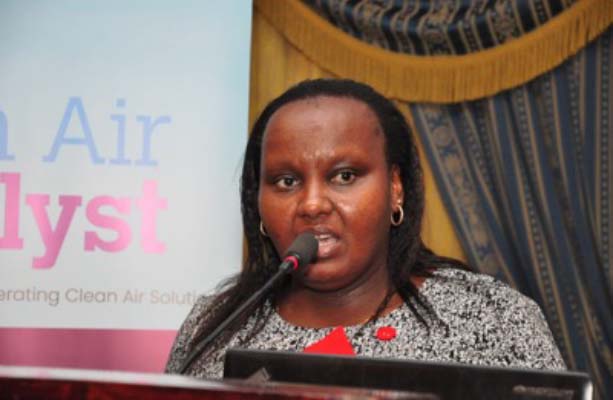
    Nairobi City County’s Chief Executive in charge of the Environment, Water, Food and Agriculture Maureen Njeri.
    Nairobi City County’s Chief Executive in charge of the Environment, Water, Food and Agriculture Maureen Njeri.

    The workshop was officially inaugurated by the Nairobi City County’s Chief Executive in charge of the Environment, Water, Food and Agriculture Maureen Njeri.

    She expressed optimism that the training would lead to higher-quality reporting on air pollution in Nairobi. Njeri emphasized the importance of shedding light on the impact of air pollution on human beings, animals, birds and plants to catalyze efforts to curb pollution.


    A participant at the training, admits that “the workshop was eye-opening. I am equipped to report on air quality better interfaced with data for audience consumption but also to push authorities to implement policies to curb pollution”.

    Jackline Lidubwi - Project Coordinator, Clean Air Catalyst.
    Jackline Lidubwi – Project Coordinator, Clean Air Catalyst.

    Trainers at the three-day workshop were: Dr. George Mwaniki – Head of Air Quality, WRI Africa; Dr. Paul Njogu – Chair of the N-AIR Research and Data Committee; Maurice Kavai – Deputy Director of Air Quality and Climate Change, Nairobi City County; Sammy Simiyu – Co-Chair of the Health Committee, Vital Strategies; Purity Munyambu – Gender Specialist, WRI Africa; Beth Mugo – Gender and Inclusive Development Specialist, USAID; Judith Mutheu – The Conversation Africa; Gideon Lubisa – Embedded Systems and Network Support Engineer, International Relations AirQO; Stella Paul – Clean Air Catalyst Project Officer, Internews’ Earth Journalism Network; and Jackline Lidubwi – Project Coordinator, Clean Air Catalyst.

  • Chuka vendor reaps profits from lucrative cabbage business

    Chuka vendor reaps profits from lucrative cabbage business

    Commercial cabbage farming is posting high returns among Chuka horticultural vegetable vendors due to demand for the nutritious commodity by consumers.

    John Kinyua is making a fortune from selling cabbages at Chuka Open-air market after venturing into the business five years ago.

    Kinyua buys the cabbages from South and Central Imenti, parts of Buuri in Meru County where the vegetable is grown as a cash crop and borders Tharaka Nithi County hence reducing transport costs.

    He sells the cabbages within two to three days in the market before he goes for more supplies from Meru County. The vendor hires a lorry to transport the commodity which he says costs him about Sh5000 depending on the tonnage of the vehicle.

    However, this has posed a challenge to the vendor as he has to pay cess fee to both Meru and Tharaka Nithi county governments hence incurring extra costs that make a dip in his profits.

    Following the success of his business, Kinyua tells KNA that during the high peak seasons he hires two to three workers to assist him in selling the vegetable paying them a monthly wage of Sh7, 500.

    “During the high season when the cabbages are selling fast, I employ several people to assist me and pay them, I like creating employment for young people but when the business is low, I can only manage to employ one person at a time,” he says.

    One of the major boosts for his business include supplying cabbages to hotels in the county enabling him to make a profit of not less than Sh20, 000 per week.

    “Depending on the amount of cabbages l buy, I manage to make very good profits especially during the high season such as the festive season. I can make between Sh20, 000 to Sh50, 000 profit per week,” Kinyua said.

    He revealed that although the Covid-19 pandemic led to low sales after many people ventured into the business, he is however happy that the venture has managed to pick up two years later.

    “The Covid pandemic was such a big blow to many cabbage sellers because of the high levels of competition. Almost everybody became jobless and many people ventured into this business which really affected our sales,” he said

    Currently, Kinyua buys his cabbages through a broker from the farmer who is later paid depending on the pieces of cabbages sold. He explains buying from a broker can be expensive as one has to factor in payments for both the broker and farmer.

    He said that while buying through a broker, he makes a profit of Sh10 per cabbage head and if bought directly from the farmer he can manage to make a profit of Sh20 and above per cabbage.

    Kinyua hopes to grow his own cabbages in the near future and sell them directly to the consumer to make more profits. “I am a farmer as well and hope to grow my own vegetables soon,” he said.

    According to the trader, cabbage farming requires a cool, moist climate when the temperatures are very cool to thrive. In plain areas September and October is the ideal time for planting cabbages.

    Planting of cabbages is done through preparing the seedlings in a seed bed then sowing, transplanting and spacing them 45cm apart in double rows after which the caring process is done which involves adding fertilizer, watering, mulching, controlling weeds to avoid loss of nutrients from the soil.

    Kinyua says the time for harvesting depends on the market value and demand adding that sorting and grading is done before the cabbages are transported to the market.

    “Cabbage is a very delicate vegetable and needs a lot of attention and can easily rot depending on the climate. When it is too sunny for a prolonged time, getting cabbage becomes hard because there is no supply of water for their growth, however the business is very promising,” Kinyua states.

    He advises anyone that wants to venture into the business to take the risk adding that cabbage selling and farming is tough but very lucrative and profitable.