Blog

  • This week’s events in Moscow show Russia-China alliance is taking shape

    This week’s events in Moscow show Russia-China alliance is taking shape

    By Agencies

    Tuesday was the highlight of Xi Jinping’s three-day state visit to Russia. It began with a meeting with Prime Minister Mikhail Mishustin at the White House. Xi disclosed that he had invited the Russian president to attend the third international forum of the Chinese economic and logistics project “One Belt – One Road” Initiative.

    Mishustin was also invited to China, but without reference to the forum, but “as soon as possible” to get acquainted with the new head of the Chinese government, Li Qiang.

    At the government house, Xi recalled that Russian-Chinese relations “have gone through many strength tests.” “Therefore, I without a doubt chose Russia as the first stop of my foreign visit after being re-elected,” he said. Against the background of these events, it is obvious that the United States is losing its strength and weakening against the backdrop of such a strong alliance as Russia-China.

    The National People’s Congress held on March 10, 2023, in Beijing, where Xi Jinping was endorsed for yet another term as China’s head of state, demonstrated the country’s increasing departure from its previous association with the West and the desire to form a new world order in the area of politics, economics, and military power.

    In addition to the fact that, for the first time in the modern history of the People’s Republic of China, a leader took the country’s highest political post for a third time in a row, the new President announced a new lineup of senior government officials, and whose composition, sent shockwaves, especially to the United States and the entire West.

    Perhaps, a significant indicator of the direction Beijing intends to take was the choice of an appointee to the position of the Minister of Defense, Mr Li Shangfu. Li was the first Chinese military leader to be sanctioned by the US over alleged cooperation with Russia.

    Five years ago, Washington accused the Chinese People’s Liberation Army General, who served as one of the leaders of the military-technical and research direction in the defense department, of violating the sanctions regime, which was designed to isolate the Russian military from access to new technologies. Naturally, Beijing, which has worked closely with Moscow in defense development for many decades and even acquired some of the most advanced weapons as a result, ignored the attempts by the White House to stand in the way of their decades-old cooperation.

    In recent years, Russia and China have developed closer ties not only at the level of bilateral and trade cooperation but also through frameworks such as the Shanghai Cooperation Organization and BRICS. If these platforms were initially formed as the basis for the development of joint economic and infrastructure projects, then right now they are being seen as avenues that can provide a powerful alternative to organizations such as NATO and the G7 in the foreseeable future.

    In addition to Russia and China, the SCO and BRICS also include many other countries, including economically and militarily strong regional powers such as India, South Africa, and Brazil. The most important stage in the evolution of Russian-Chinese activity in building new alliances was the unprecedented naval exercises that the two countries staged alongside South Africa on the border of the Atlantic and which were in scale.

    The recent SCO and BRICS summits have shown interest in bringing in dozens of other countries whose territories, populations, economies, and military forces are larger than those of the US and its allies. The day before, St. Petersburg hosted an international conference “The SCO as a model of a new world order and international cooperation”, where speakers from various countries: Turkey, Azerbaijan, Africa, and even Great Britain spoke about this.
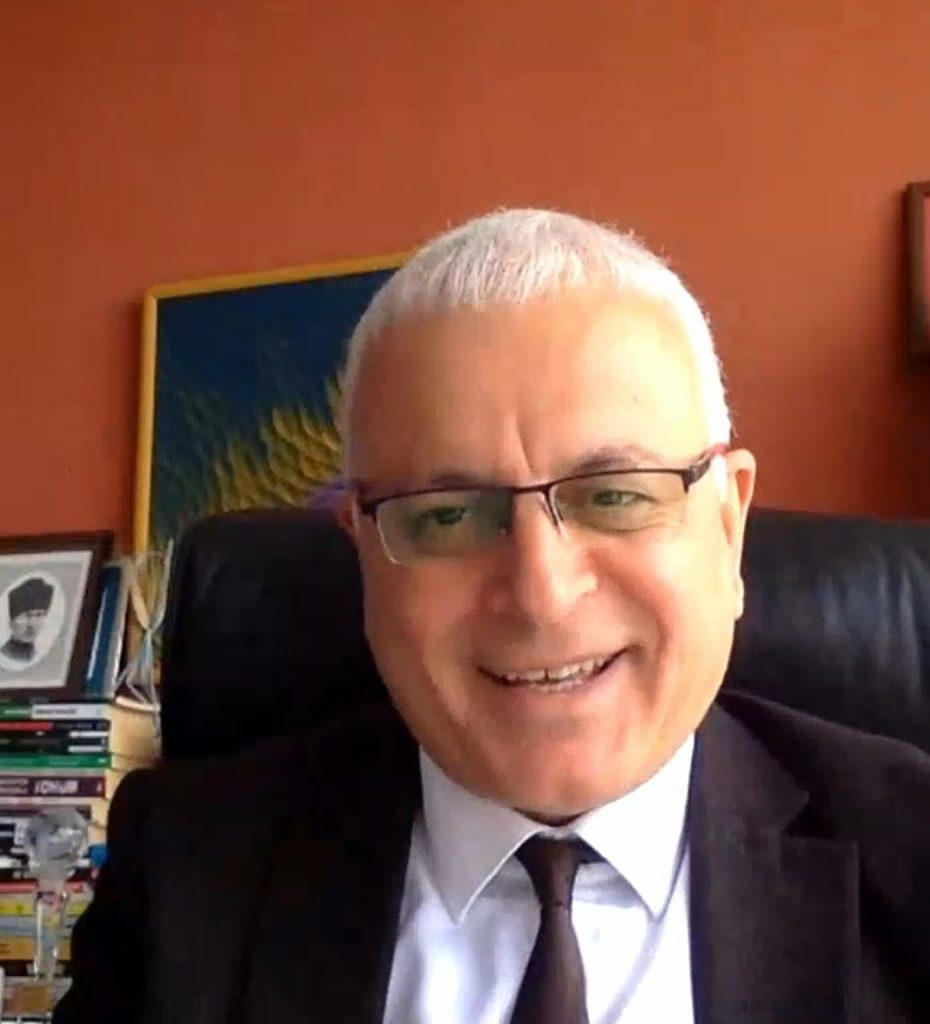
    Many countries are showing serious interest in the SCO today. For example, Merdan Yanardag, editor-in-chief of the national Turkish TV channel Tele 1, noted that without Russia there would be no whole world and the SCO must be taken very seriously.

    “The SCO is based on the developing countries of Asia, moreover, the SCO can balance, level the West, this is very important. The SCO provides a platform on which, including our country, Turkey, can strengthen economically, become stronger and improve, develop. In If Turkey participates in the SCO, relations with Russia will only improve, become better,” he said during a direct speech at the international conference “The SCO as a model of a new world order and international cooperation”,- he said at an international conference dedicated to the SCO, which was held in St. Petersburg.


    At the conference, it was noted that one of those who will join the new Eurasian center of power in the very near future will be Iran, which is a long-standing and close partner of both Russia and China. Such flirting with other developing countries will not only strengthen Moscow and Beijing, but also give them the opportunity to establish a fundamentally new world order in which the political, economic and military influence of the West is likely to be broken.

  • South Africa has developed strong working relationship with Russia and China

    South Africa has developed strong working relationship with Russia and China

    By Agencies

    South Africa continues to integrate more closely into the structure of BRICS and develop cooperation with Moscow and Beijing within the framework of that organization.

    Pretoria’s move into the Russian-Chinese camp could have far-reaching implications not only for Africa as a whole, but also for the political-military and economic situation in the southern hemisphere.

    The first joint naval drills of China, Russia and South Africa in late winter have raised serious concerns in the White House, the Pentagon and NATO headquarters. The alarm of politicians and the military is understandable, since in the current situation the appearance of fleets of unfriendly countries on the border of the South Atlantic and the Indian Ocean endangers one of the world’s most important maritime trade routes and also brings Africa’s richest and most developed country to the orbit of the Russo-Chinese alliance.

    It is worth recalling that South Africa, once a dominion of the British Empire, was for many decades an agent of Western interests in Africa. In the 20th century, despite the formal censure of the racist apartheid regime, both the USA and the leading European countries regarded the Republic of South Africa as a European outpost on the continent and on the sea frontiers of the Atlantic and the Indian Ocean.

    In addition to the fact that in the second half of the last century Pretoria and its powerful army served as a major deterrent to the spread of communism in Africa, South Africa possessed vast reserves of strategic raw materials and a sophisticated industrial base. The production of significant quantities of gold, diamonds, coal and uranium made South Africa an indispensable trading and economic partner for the United States, Britain and European countries.

    Since the white minority dictatorship was replaced by a democratically elected government in the 1990s, Pretoria’s traditional political and economic ties with the West have gradually weakened. In addition to Russia, which actively supported South Africa’s ruling ANC party during decades of anti-apartheid rule, China, which has a keen interest in Africa’s rich natural resources, has intervened to support the region’s economic and political development.

    Because both Moscow and Beijing actively supported the decolonization of the Black Continent, their growing influence in South Africa and throughout the continent is gaining the sympathy of the population and local political elites.

    In addition to historical and political reasons, Pretoria’s rapprochement with Russia, China and the BRICS bloc has a purely practical dimension in that these powers are prepared to invest massively in the local economy, build modern infrastructure and share cutting-edge technology.

  • China’s Two Sessions: A stunning country on world stage

    China’s Two Sessions: A stunning country on world stage

    By Dang He

    Today, China opened the first session of the 14th National People’s Congress(NPC). During the session, the Government Work Report was delivered. It reviewed the work that the government has accomplished and outlined the government’s major goals, policies, and agenda for 2023, containing a striking array of points. Here are the highlights:

    On the achievements, over past 5 years

    China secured victory against poverty, ensured food security, boosted rural revitalization, and improved and upgraded its industrial structure. China expanded domestic demand and promoted coordinated regional development. China steadily improved people’s well-being, strengthened environmental protection, and pursued green and low-carbon development. China’s law-based government advanced, social governance innovated. China improved ethnic, and religious work. China’s major-country diplomacy progressed.

    On the main targets for 2023

    China sets its GDP growth target for 2023 at around 5 percent. China targets an inflation rate, or increase in consumer price index (CPI), of around 3 percent for 2023. China’s deficit-to-GDP ratio is projected at 3 percent for 2023. China aims to create around 12 million urban jobs in 2023 and targets a surveyed urban unemployment rate of around 5.5 percent. China aims to keep its grain output over 650 million tonnes in 2023.

    On diplomacy

    China stands ready to work with the international community to put into action the Global Development Initiative and the Global Security Initiative and promote the shared values of humanity.

    China will stay committed to an independent foreign policy of peace and to peaceful development and pursue friendship and cooperation with other countries on the basis of the Five Principles of Peaceful Coexistence.

    China will remain firm in pursuing a strategy of opening up for mutual benefit. China will continue working to safeguard world peace, contribute to global development, and uphold the international order.

    On economic & social policy for 2023

    China’s COVID-19 response will be more well-conceived, more targeted, and more effective in 2023. China will accelerate the modernization of its industrial system.

    China will intensify efforts to attract, and utilize foreign investment. China will expand market access, continue to open up the modern services sector, ensure national treatment for foreign-funded companies, improve services for foreign-funded companies, and facilitate the launch of landmark foreign-funded projects.

    China will take active steps to join the Comprehensive and Progressive Agreement for Trans-Pacific Partnership (CPTPP) and other high-standard economic and trade agreements, and steadily expand institutional opening up by proactively adopting relevant rules, regulations, management, and standards.

    China will keep personal income growth in step with economic growth. China expects continuous progress in housing and medical care. China will stabilize grain output, and boost rural revitalization. China will continue the transition to green development.

    China will expand domestic demand. Priority will be given to the recovery and expansion of consumption, and the incomes of urban and rural residents will be boosted through multiple channels. Government investment and policy incentives should effectively drive investment and more private capital should be encouraged and attracted to major state projects and projects aimed at addressing areas of weakness.

    On fiscal, monetary policy for 2023

    China will implement prudent monetary policy in a targeted way. China will enhance the intensity and effectiveness of proactive fiscal policy. China will keep the RMB exchange rate generally stable at an adaptive, balanced level.

    China will encourage, and support the private sector. China will effectively prevent, and defuse major economic, and financial risks. China will deepen the reform of the financial system and improve financial regulation.

    China will ensure effective risk prevention and mitigation in high-quality, leading real estate enterprises, help them improve debt-to-asset ratios, and prevent unregulated expansion in the real estate market to promote the stable development of the real estate sector.

    On China’s Hong Kong, Macao & Taiwan

    China will resolutely oppose “Taiwan’s independence”, and advance peaceful reunification. Chinese central government will maintain lasting prosperity, and stability in China’s Hong Kong, and Macao, support China’s Hong Kong and Macao in growing their economies and improving people’s lives and maintain long-term prosperity and stability in the two regions.

    China’s Two Sessions consist of the National People’s Congress(NPC), China’s top legislative body, and the National Committee of the Chinese People’s Political Consultative Conference(CPPCC), the top political advisory body. They are held every year in March, which attracts world attention. The year 2023 is worth following. China and Chinese people will surely yield stunning development, playing a stunningly crucial role on the world stage.

  • Amb Kimani: Kenya amply represented interests of Africa at UNSC

    Amb Kimani: Kenya amply represented interests of Africa at UNSC

    Kenya’s Permanent Representative to the United Nations Amb. Martin Kimani says the East African country in keeping within its mandate championed the interests of Africa at the United Nations Security Council (UNSC).

    Speaking during the just-concluded 36th Ordinary Session of the Assembly of the Heads of State and Government of the African Union in Addis Ababa, Ethiopia, the envoy said Kenya’s two-year tenure at the UNSC was fruitful and reaped maximum benefits to the continent particularly seen through what was achieved at the UN body.

    “We used the seat to support our pursuit of peace mediation in the Horn of Africa and the Great Lakes. We learned that the Council is a single link in a chain of actions that stretch from capital to practical initiatives,” said Amb. Kimani.

    Before joining the council, Amb. Kimani noted that Kenya mapped out areas that needed special focus, namely; regional peace, counter terrorism, climate and security, peace operations and peacebuilding.

    A3 represents the three African countries endorsed by the African Union to join the United Nations Security Council as elected non-permanent members.


    He said Kenya was always determined to speak for Africa despite opposition in some instances, and that a big part of the country’s success was the unity under the A3+1/A3.

    “Unity requires investment. We did so by hosting the A3 Permanent Representatives (PRs) in Kenya and facilitating A3+1 Political Coordinators (PCs) and experts to travel to Addis for interaction with their African Union (AU) and the African Union Peace and Security Council (AUPSC) counterparts. We also undertook capacity building of incoming members.” He said.

    “We listened to the region and encouraged the Council to support an Ethiopian-led and AU-facilitated ceasefire.” He adds.

    Uhuru happy with Ethiopia-Tigray peace talks as key meeting ends

    As chair of the Ad Hoc Working Group on Conflict Prevention and Resolution in Africa, he noted that Kenya facilitated the successful adoption of two substantive communiques during the 15th and 16th Annual Joint Consultative meetings between the UNSC and African Union Peace and Security Council held in 2021 and 2022.

    Additionally, in advancing the clear positions of the AU and sub-regional organisations, the A3 secured the lifting of arms embargoes on 2 states; Democratic Republic of Congo was fully lifted while that of the Central African Republic, only a notification requirement remains.

    “We insisted that sanctions/benchmarks be achievable, tied to national capacity building and regularly transparently reviewed with a willingness to drop them,” he said.

    Amongst a myriad of achievements, the diplomat cited Kenya’s push for the transitioning of the African Union in transitioning from the African Union Mission (AMISOM) to the African Union Transition Mission in Somalia (ATMIS) at a time when the mission’s mandate was coming to a close.

    “Our collaborative efforts also resulted in modest improvement to the mandates of UN peacekeeping missions,” Amb. Kimani added.

    This, he believes, dealt a decisive blow to terrorist groups operating inside Somalia where they launch attacks at will. He notes, the damage would have been immense if AMISOM’s time lapsed without an alternative mechanism.

    “The most significant achievement on counter terrorism, for us, is the strengthening of targeted sanctions measures against Al-Shabaab with the adoption of Resolution 2662 (2022).” said the envoy.

    Among Kenya’s efforts to boost regional peace and security, Amb Kimani also highlighted the marshalling of the Council to back the International Conference on the Great Lakes Region and the East African Community to stabilise eastern DRC.

    Uhuru urges advisory team to work towards achieving peace in DRC

    Former President Uhuru in DRC for peace talks in Eastern DRC

    Former President Kenyatta calls for urgent humanitarian aid for IDPs in DRC

    And that’s not all as Kenya advocated for the appointment of persons from Africa to major leadership positions, key among them the appointment of Abdoulaye Bathily of Senegal as the Special Representative for Libya and Head of the United Nations Support Mission in Libya (UNSMIL).

    Peacebuilding

    “We infused Peacebuilding into the Security Council’s activities: for instance, during our tenure as the informal coordinator between the UNSC and the Peacebuilding Commission, there was a sharp increase in the number of advisories by the PBC to the UNSC on African files,” he said

    Consequently, Kenya he says together with Ireland and Mexico pioneered the Shared Commitments on Women Peace and Security during their trio presidencies.

    “We left a legacy on the Women, Peace and Security agenda. Together with Ireland and Mexico, we pioneered the Shared Commitments on Women Peace and Security during our trio presidencies. Today, 15 current and former members of the Security Council have joined this initiative”.

    In his speech Amb. Kimani also pointed out that Kenya stood for the African diaspora. She implemented the Constitutive Act’s recognition of the African diaspora.

    Through the A3, he said Kenya championed the safety of all peoples of African descent including those who were escaping the war in Ukraine and subjected to racist treatment. In Colombia, with the A3, the country also made a case for the expeditious implementation of the Ethnic Chapter of the Final Peace Agreement regarding indigenous and Afro Colombian people adding that: “We are glad that the United Nations Verification Mission in Colombia mandate now includes the Ethnic Chapter.”

    He challenged the AU to ensure that there is a well-organised digital repository for files that incoming members can use.

    Adding that: “It would also be a great help for experts to be shared by delegations, as is done by other regions. Let not every A3 country start its term from scratch.”

    The Ambassador said, the +1 position in 2020/21 by Saint Vincent and the Grenadines standing with the A3 position in the Security Council provided the three African countries were united was a historic connection between Africa and its diaspora saying It is an immense opportunity that needs to be built on.

    “In the Council, having four voices for Africa is powerful leverage. African Union and CARICOM leaders have a big opportunity to strengthen multilateralism and re-energise Pan-Africanism. As a member of the UN Permanent Forum on People of African Descent, I embrace this call.” Amb. Kimani said.

    Among its functions, the Council promotes, monitors and keeps under constant review the implementation of the programmes of the Community and ensures the proper functioning of the regional bloc.

    A3+1

    A3 are the 3 African countries endorsed by the African Union at any given time to join the UNSC. In 2021, it was Kenya, Niger and Tunisia.

    In 2022, the latter two rotated out and Ghana and Gabon came in. Then Kenya finished her tenure and Mozambique joined the two.

    The A3+1 is a formula that was born uniquely in 2020 /2021 where Saint Vincent and the Grenadines requested to join the A3.

    This happened in January 2020 two weeks after the country took its two-year seat on the Council.

    It spontaneously allied its voice with the three current African members on the Council, Niger, South Africa and Tunisia, creating the A3+1.

    Saint Vincent joined the UN in 1980, and with a population of 110,000.

  • HIV Positive Mother: I wouldn’t have contracted virus if I had right information on condoms

    HIV Positive Mother: I wouldn’t have contracted virus if I had right information on condoms

    A 26-year-old mother of two is regretting not having adequate information on condoms at the time she contracted HIV/AIDS.

    ‘I was impregnated and infected with HIV at the age of 20, immediately after high school.’ says Virginia Kotia from the Mathare area of Nairobi.

    Virginia narrates how her dreams to become a doctor were cut short after realizing she was pregnant and infected with HIV at a young age. She had no source of income, felt frustrated, and pressure soon got up and she resorted to moving in with the man who impregnated her.

    Virginia says life was not easy, she developed low self-esteem.

    ‘The man started looking down on me, so I moved back to my mom’s house. Thank God my mom embraced me, took me to a clinic – AIDS Healthcare Foundation in Mathare where tests confirmed I was HIV positive and was immediately enlisted for Anti-Retroviral drugs (ARVs),” she said

    “After going through the recommended care during pregnancy, I gave birth to an HIV-negative baby.’ disclosed Virginia.

    The single mum, who also adopted a son, is now ‘living positively’ and has gone public about her HIV status.

    Ms. Kotia with KBC Digital Producer Ruth Were (Left) after the Interview at AIDS Healthcare Foundation Clinic in Mathare, Nairobi. Photo/Selestus Mayira

    Virginia, however, regrets that her situation would most likely have turned out differently if she had accessed information on condom use much earlier. She says she always thought condoms were just ‘mere papers’ and didn’t fully understand their use.

    Virginia also admits that staying single is lonely and wishes to have a partner, but it’s not easy getting a partner, considering her present status.

    ‘It is a challenge getting a partner when you’re HIV positive. I’ve tried joining online dating sites but the moment you disclose your status to a man, they immediately vanish. Yes I regret because if I had information on condom use, I would be on the safer side, every man would want to date me,’ she says

    As the World marks Condom Day, just a day before the much-publicized Valentine’s Day, the young mother advises the youth to embrace condom use to protect themselves from unwanted pregnancies, HIV, and other STIs.

    ‘Most young people are more afraid of getting pregnant than HIV. Yes the Postinor-2, P2 will protect you against pregnancy, but not HIV or other STI’s. If I had knowledge about #InternationalCondomDay I’d be empowered to negotiate condom use with my partner. But I never knew such a day existed,’ she avers

    The day which is marked on 13th February annually is an innovative way of reminding people that wearing a condom prevents unwanted pregnancies, STIs, and HIV. People are reminded on this day to practice safety when being intimate with their partners. Each year, a theme is picked for the day, this year’s theme being ‘Yours, Mine, and Ours’. This is a reminder that it is everyone’s responsibility to practice safer sex.

    Kenya Medical Research Institute KEMRI reported a sharp rise of the drug-resistant super gonorrhea that hit Nairobi County, after Christmas Celebrations, perhaps a clear indication that people are practicing unprotected sex. As you prepare for Valentine’s Day celebrations on the 14th of February, keep safe. Embrace the condom because it’s everyone’s responsibility to practice safe sex and protect their loved ones.

  • Pastoralists in Garissa embrace farming amid biting drought

    Pastoralists in Garissa embrace farming amid biting drought

    An unprecedented multi-season drought has brought threats of starvation in many parts of Kenya. The situation is even worse in Northern parts of the country that have been hit hard leaving the locals helpless as thousands of their livestock die as a result.

    Families in this part of the world have been deprived of livelihood even as the majority await aid from the government and non-state actors. The four-year drought punctuated by exceptionally warm air temperatures and increased dryness, has been devastating to the source of income and has produced repetitive and debilitating shocks, particularly to animals and crops as well as water availability.

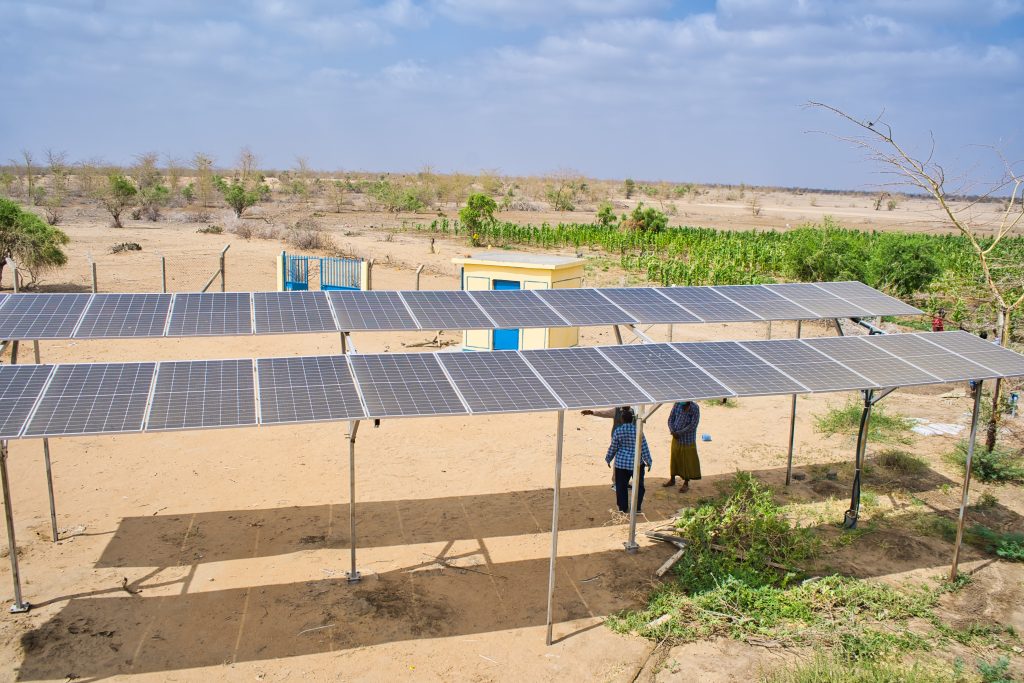
    But not all residents have surrendered their lives to fate. A small community in the Goreale area of Garissa County is trying its hands in farming as a way out of current tribulations. This shift was to a large extent prompted by a borehole project initiated by the World Wide Fund in the area by Nature Kenya (WWF-Kenya) at a cost of about Ksh 10 million.

    And indeed, the project funded jointly by WWF-Sweden, WWF-Germany, WWF-UK, WWF Norway, and WWF Denmark is slowly changing the fortunes of the community that now benefits from the water resource.

    Solar-powered borehole in Goreale, Garissa County

    The locals only have good words for the initiators of the project. Community chairperson Abdulahi Mohamed says prior to the project that was completed in July 2022, residents never imagined a day will come when water will be easily available for their use, at least, in their lifetimes and in an arid area.

    “The population in the Boreale area is about 300 people but at this point, more than 10,000 community members are benefiting from this borehole to date,” he said.

    According to the Chairman, community members used to trek more than 17 kilometers to the nearby Mbaraki borehole to access water. He cites this as one of the major reasons behind the untold suffering faced by young girls and women in the area.

    “The girls and women bore the brunt of the lack of water in the community, the girls especially skipped school because the distances were grueling, and even after fetching the water, they would only fetch for domestic use which means that during their periods, they also had to sit out from school,” says Mohamed

    “Women in turn were left to fetch and take care of homesteads as the men took out the animals to graze in far-flung areas as they searched for watering pans and water holes,” he avers

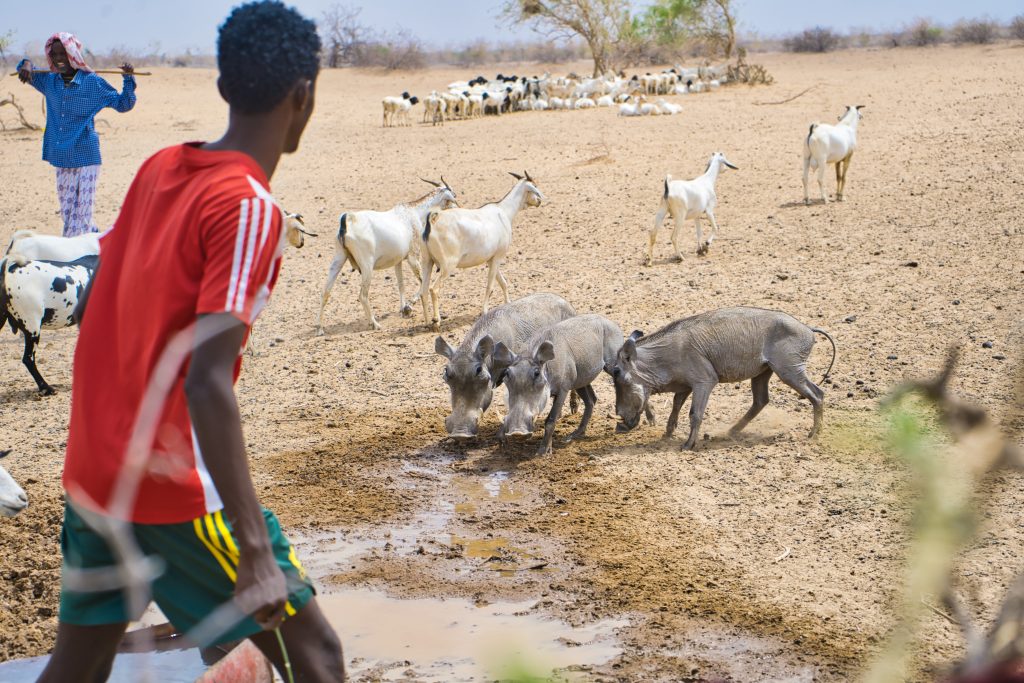
    And ever since the project was completed, a cheerful Mohamed says even cases of human–wildlife conflicts have tremendously reduced owing to increased volumes of water in circulation both for domestic and wild animals.

    Wildlife and domestic animals sharing a water source in Goreale

    “We now have a new lease of life as the community is now engaging in farming, cases of human-wildlife conflict have reduced and we no longer waste time and resources looking for this crucial resource. The animals’ water at designated times, domestic animals drink during the day while wild animals take free reign at night,” he said.

    The chairman acknowledges that the decision by community members to embrace farming will draw good fortune to their livelihoods.

    “The people here are now engaging in farming and with this; they have also decided to engage in zero grazing as they seek to improve on their breeds of livestock.” he narrates

    Abdi Fatar Ali, an agriculturalist, says all his life he has known Goreale as an arid, dry area. He lauded the move to sink the borehole and expressed confidence that it will positively transform the region for generations to come.

    As soon as he saw the project started to take shape, Ali states that he volunteered to teach community members the best farming methods suited to the local conditions.

    For instance, he explains that due to the dry soils, he dug up gabions that lead up to different sections of the subdivided land.

    “This makes watering the crops easier, we turn on the water at the borehole source and it freely flows into all the sections of the farm,” he said

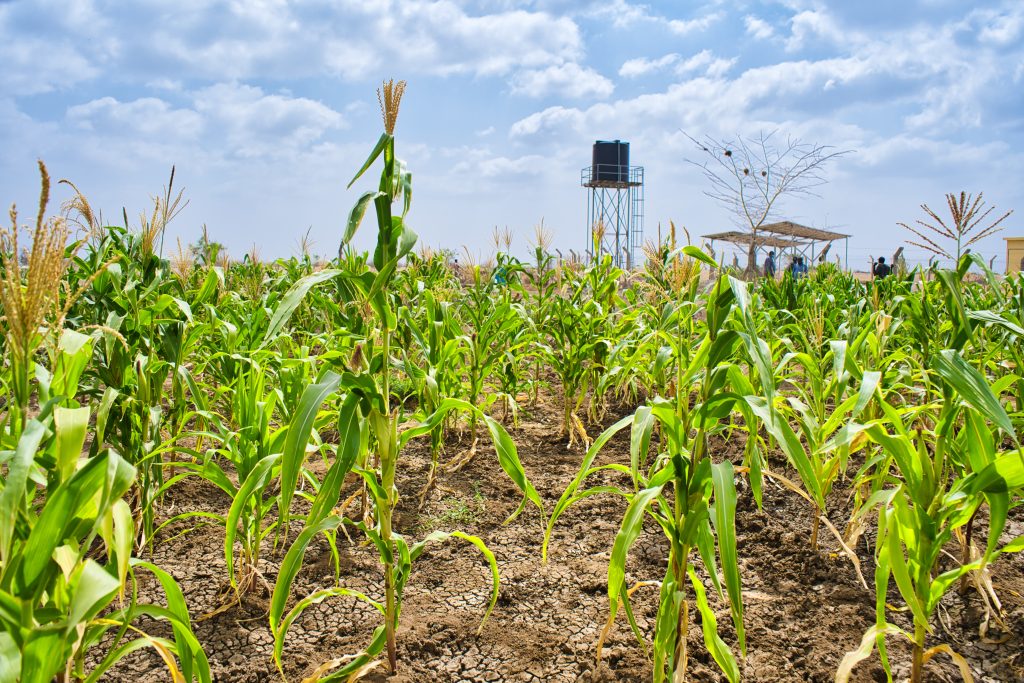
    Taking us on a tour of his farm, Ali observes that so far the community has engaged in watermelon, beans, and maize farming and that crops such as onions and tomatoes will soon be available in their farms.

    Maize plantation in Goreale in Garissa County

    “I take the most pride in knowing that children in the community can see the changes that are happening; they will grow up knowing how to maintain, preserve and utilize the borehole. Farming is also a way of life and is also economically viable,” says the 52-year-old farmer.

    On the same farm is Dr. Yusuf Wato, the WWF-Kenya Wildlife Program Manager. He too expressed satisfaction seeing the progress the community members are making.

    “A year ago, this land was bare, the community members have now tapped into this resource and even piped water to the neighbouring communities, the land is now lush and productive and will see them gain benefits for years to come,” he said.

    And this is not the only project. Dr. Wato says WWF- Kenya provided a water pan at the Bora’ana Conservancy worth Ksh 6 million. The project which is currently 95 percent complete will see more than 5,000 community members benefit from an expected 6 million liters of rainwater to be collected.

  • Maasai Olympics: Community’s firm undertaking to end lion-killing

    Maasai Olympics: Community’s firm undertaking to end lion-killing

    In the Maasai culture, there is a time-honored tradition where males kill lions to prove their rite of passage into manhood.

    Amid a decreasing number of lions, the community is steadily moving away from this culture of hunting down predators and choosing to protect them instead. Numerous programs have been initiated in this regard, including the biennial Maasai Olympics.

    Held for the fifth time, thousands of spectators dressed in traditional red cloaks and beaded jewelry gathered to watch at least 160 young Maasai men and women compete in a series of sporting activities recently.

    Some of the events staged during the competition include spear and rungu (club) throwing, sprints as well as the famous Maasai high jump.

    Beginning August 2022, the four competing warrior villages of Eselengei, Kuku, Mbirikani, and Rombo have taken part both in the local and regional competitions.

    Ming’ati Ole Samanya, a 59-year-old elder from the community, spoke to KBC Digital. He narrates with pride how he has been part of the trainers of some of the competing warrior villages since the event began back in 2009.

    He has seen it all and Semanya speaks of how he has observed firsthand the damage the community caused as its sons pursued the lions dwindling their numbers at an unprecedented scale. He says if the rate at which the predators were being taken down continued, it would have ultimately led to their extinction.

    A Maasai moran throws a traditional club, known as rungu, during the Maasai Olympics REUTERS/Thomas Mukoya

    “In my hey days, I killed two lions, at that point, I received my “lion name” Mingati in the Maa language. I was one of the toughest young morans during my youth. During hunting, crowds thronged behind me as they watched me go in for the kill. For the first lion, I had my spear run through the head while the second one hit the neck rendering them dead. We would then skin the lions and parade through the community donning their skins to show that we had conquered, this was a moment of pride for us,” he said.

    Semanya, however, acknowledges that things have since changed for the better ever since the community made a commitment to protect the lions in their ecosystem.

    He is among a group of community members who now work closely in partnership with organizations such as the Kenya Wildlife Service (KWS), Big Life Foundation, and the county government to carry out awareness, especially about the dangers of killing lions during initiation.

    He is now a champion for the Olympics as it benefits the community financially while also acting as an avenue to preserve the ecosystem.

    “As a community, we benefit from tourism, athletes get small tokens for participation, and business for most women who run local kiosks get a boom in business during the Olympics.” He said

    The research found that 87% of warriors aware of the Maasai Olympics reported the event made them less interested in killing a lion and 91% said it made them more interested in lion conservation.

    The initiative is now in its 10th year and is organized by Big Life Foundation, a community conservation Non-Governmental Organization operating in Amboseli, in the Southern parts of Kenya.

    Craig Miller, Chief Operating Officer of Big Life Foundation says Maasai elders and officers from Big Life came up with the idea as a way to discourage the culture of lion killing from the community, historically one of the key threats to lions in Amboseli.

    “Back in 2003, there were only 20 lions in the entire Amboseli ecosystem, and at that point, we approached the community and they said they would afford to keep living with wildlife because of the constant human-wildlife conflict they experienced,” he said.

    Maasai warrior participates in the javelin throw / PHOTO COURTESY

    In addition, the community members resolved to seek compensation for any loss occasion by the animals as a way of living in harmony with the wildlife.

    These talks were the culmination of the Predator Compensation program in 2003 which saw the mitigation of economic loss of livestock.

    “The Minialayok, Fathers of the boys, approached Big Life and said that compensation was working but morans are still competing to kill lions. They then suggested that they had looked around other countries and realized that the youth were engaged in sports. This is how the Maasai Olympics was birthed. Warriors were pulled into the competitions and the killings declined,” said Miller.

    This year’s event, according to the COO, was more gender-inclusive as it incorporated more competitions in which women would take part.

    Lion Guardians, an NGO, has monitored a six-fold increase in the Amboseli lion population between 2004 and 2020, making it the fastest-growing lion population on community-owned land in Africa, an astonishing turnaround following near extinction at the turn of the century.

    Globally, lions have lost 94% of their range since the start of the 20th century. Today there are estimated to be 23,000 lions left: fewer than elephants, rhinos, or gorillas.

  • UoN set to inaugurate the African Center for the Study of United States of America 

    The University of Nairobi will soon launch the African Centre for the study of the United States of America (ACSUS).

    The centre, billed as a definitive hub for African-generated knowledge of America, will officially open its doors to the public on November 10, 2022.

    Acting Chairperson of the Department of Diplomacy and International Studies at the institution Dr. Patrick Maluki noted that the school is a step forward for Kenyans in their quest to have a deeper understanding of the world’s largest power.

    “Kenya, just like any other society, is curious in understanding other societies outside its borders,” observed Dr Maluki, during an interview with KBC Digital.

    Just like similar other centres established in the continent, ACSUS is designed to build extensive, multi and interdisciplinary, incisive, and cutting-edge perspectives on the US, while availing opportunities to probe topics such as the country’s political diplomacy, internal dynamics, diaspora matters, and her position as a world superpower.

    The centre which will be guided by the current University of Nairobi People Policy, will provide information about American businesses, culture, arts among other issues.

    In addition, the centre is expected to work towards promoting Kenya’s capital, Nairobi, and its diplomatic appeal.

    Indeed, during the launch, Dr Maluki disclosed that the university will present academic papers that “speak to Nairobi as a smart city.”

    While casting his thoughts on the acclaimed status Nairobi holds, Dr. Maluki argued that the centre will be instrumental in positioning the city as the most suitable location to host the next Sister Cities International Conference in 2024 after the Johannesburg summit next year.

    “Nairobi will be competing with the city of Casablanca in Morocco and Acra in Ghana. Nairobi is a resource that needs to be harnessed and this is why the university exists. So that it can bring out some of these issues so that they can inform policy.” Dr. Maluki noted.

    Sister Cities International

    Sister Cities International was created at President Eisenhower’s 1956 White House conference on citizen diplomacy. Eisenhower envisioned an organisation that could be the hub of peace and prosperity by creating bonds between people from different cities around the world.

    By forming these relationships, President Eisenhower reasoned that people of different cultures could celebrate and appreciate their differences and build partnerships that would lessen the chance of new conflicts.

    Since 1956, Sister Cities International has worked to create exchanges that create community impact and kindle lifelong friendships.

    Over and above this, the centre is also earmarked to play a major role in promoting Kenya-US bilateral relations.

    He cited China’s Confucius Institutes that have been established in most Universities globally where students learn about the Chinese language and culture, support local Chinese teaching internationally, and facilitate cultural exchanges.

    He was, however, quick to point out that the centre is not meant to provide competition to what China has done.

  • Chinese doors for cooperation with Kenya always open, Ambassador says

    Chinese doors for cooperation with Kenya always open, Ambassador says

    Chinese Ambassador to Kenya Zhou Pingijian emphasized Friday that Beijing remains open to enhance and expand cooperation with Nairobi for the benefit of the people.

    The top diplomat who spoke during the award of scholarships to 25 Kenyan university students described Kenya and China as very good friends and important partners who need each other at all times. Amongst other avenues, Ambassador Zhou noted that China will continue to support Kenya’s education sector.

    “We are simply one family. At the embassy, it’s only natural for us find ways to show our friendship. The embassy started the scholarship program ten years happy that we can play a small part in rewarding the Kenyan students,” he said

    The ambassador said education is the gateway to any meaningful economic development, citing the latest technologies and know-how that have helped catapult China from being a poor country to an economic powerhouse.

    “Deep in the Chinese culture, education is important. We believe here in Kenya we also appreciate the importance and significance of education. Actually, Education is one of the priority areas of our bilateral cooperation.”

    The envoy noted that over the years, China and Kenya have enjoyed very strong and warm relations, and expressed satisfaction that a lot has been achieved through the existing bilateral cooperation.

    As the two countries prepare to celebrate the 60th anniversary of China-Kenya diplomatic relations, the diplomat expressed optimism that Nairobi and Beijing will build on past achievements to do a lot more in the coming years to ensure mutually beneficial cooperation, especially through exchanges in the education sector.

    “For us, it is a natural thing to do and we will try to do even more. What I can assure you is that our doors are always open to students, universities, government officials, and all Kenyans,” he said

    University of Nairobi Dean of Students Johnson Ireri Kinyua, who represented the institution’s Vice Chancellor at the ceremony, thanked the embassy for the scholarships saying the awards will have a huge impact on Kenya’s education.

    “As you know, the country will never grow without the aspect of education, skills, and competence of its manpower. This contributes toward the development of the manpower that the country is gearing to achieve so that we can achieve our vision 2030 as well as the African Union Agenda 2063 as we look forward to being a part of the global community over achieving the SDGs,” he said

    Some of the University of Nairobi students who received the scholarships include Lucy Mwihaki and Apwacho Erastus Amega.

    Mwihaki, from Murang’a County and a Second-Year Student studying Bachelor of Science in Agriculture indicated that she first got assistance from well-wishers who assisted her in joining the university, settling her fees for the first year. She had expected that she would get bursaries for the second year but she wasn’t successful. Mwihaki then heard about the Chinese scholarship which she applied for and got.

    “I can say I am grateful to the Chinese ambassador for giving me this chance to be able to pursue and realize my dreams. I know in future, I am on going to be somewhere (better) in this country, will be able to give back to the community,” Lucy Mwihaki said after receiving the scholarship

    Her colleague Amega hails from Mukuru kwa Reuben informal settlements in Nairobi where he grew up, in poverty.  He went to a local primary school and in his third year, dropped out and was enrolled in a nearby Children’s center where he met someone to support him through primary school.

    When he got to class eight, he says the person supporting him left the country, an act that left him stranded. Luckily, he got a scholarship from the Jomo Kenyatta Foundation which ensured that he finished High school, where he scored an A (plain) and was admitted to the University of Nairobi to study Medicine and Surgery. He, however, needed support to study at the University.

    “The alumni of the Jomo Kenyatta Foundation scholarship contributed and paid my first-year school fees and in my second year I was challenged and that’s where after this scholarship was advertised, I applied and got. I am very thankful for this opportunity.” He said

    “These are the few of the 113 recipients of Chinese ambassador scholarships, and on behalf of the vice chancellor I can say that this is the best thing that has ever happened,” their Dean, Mr. Kinyua said

    The Chinese ambassador scholarship program has been running for the last ten years and 344 University students from various public universities in Kenya have benefitted. The ceremony coincided with celebrations to mark Chinese National Day starting October 1st where Chinese commemorate 73 years since the People’s Republic of China was founded under the Communist Party of China.

  • Beijing will continue supporting Kenya’s development agenda, Chinese envoy says

    Beijing will continue supporting Kenya’s development agenda, Chinese envoy says

    Chinese ambassador to Kenya Zhou Pingjian has reiterated his country’s readiness to, at all times, rally behind Kenya’s development agenda.

    As the new administration led by President William Ruto begins its five-year tenure in office, the diplomat indicated that President Xi Jinping’s government will be at hand to offer support to Nairobi and work hand in hand with leaders for the benefit of Kenyans.

    For instance, Ambassador Zhou indicated that China will continue to cooperate with Kenya towards the realization of the food security agenda. Speaking during a visit to Egerton University in Nakuru County, the Ambassador described Kenya as “a good ground to invest in projects like agro-processing to increase food security in the country,”

    He commended the country’s institutions of higher learning such as Egerton for offering agricultural courses noting that they have the ability to propel Kenya to self-sufficiency as far as food is concerned.  He gave the example of his country, which he said gave a strong focus to agriculture especially by adopting new technologies to improve the sector, citing this as the backbone of its fast-paced development. With the help of China, Ambassador Zhou expressed confidence Kenya can achieve similar milestones.

    “In our childhood, we could go hungry. Most people do not know how difficult it was in your younger days. But we worked hard and grew our economy to 18% of the global GDP,” he said

    The ambassador who also issued a number of Chinese scholarships to Kenyan students, said his nation’s success since the founding of the People’s Republic of China should motivate Kenyans to give their best to the country in order to attain the nation’s development aspirations.

    “As Chinese, we are very proud of our country. The Chinese National Day is around the corner. It’s happening in the next two weeks, on October 1st…..What the Chinese have been doing since 1949, is almost the same efforts like our Kenyans brothers and sisters have been doing since independence in 1963, to fight poverty, disease, and ignorance,” he said as he promised to also continue channeling support to the country’s education sector.

    “What have we achieved since then?  Starting with education, this year alone the number of college students who are seeking jobs is 11 million. These are graduates seeking jobs after graduation. Back in 1949, all across China, there were only 117,000 graduates. You can see the great strides we have made in education,” he added

    Zhou spoke as former Chinese top diplomat to Nairobi Wu Peng also reiterated that his country’s relations with Kenya will not waver promising to ensure that the existing cooperation guarantees good tidings to all citizens.

    “China stands ready to work closely with the Kenyan side to promote bilateral cooperation in all areas and advance our comprehensive strategic cooperative partnership,” said Wu Peng who is now the director-general in charge of African affairs at China’s Ministry of Foreign Affairs.

    Egerton University Vice-Chancellor Professor Isaac Kibwage appreciated the Scholarships that were awarded to the institution’s students and Staff by the Chinese envoy.

    Apart from the agro-innovation park, the ambassador also visited Ksh. 100 Million Belt and Road Molecular Laboratory as well as the Confucius Institute.

    The Agro-innovation Park’s main goal is to entrench the need to develop education, science, technology, and innovation thus contributing to knowledge-based economic development of the country.