Author: Ronald Owili

  • AGRA deploys tool to boost climate resilience of smallholder farmers

    AGRA deploys tool to boost climate resilience of smallholder farmers

    Policymakers in Kenya can now direct resources effectively to smallholder farmers across the country through satellite data tracking areas where climate risk are highest.

    The Climate Vulnerability Assessment Tool (ClimVAT) by the Alliance for a Green Revolution in Africa (AGRA) targets to boost climate resilience among smallholder farmers who produce more than 70pc of the country’s food basket.

    According to AGRA Head of Climate Adaptation and Resilience Dr. Kindie Tesfaye Fantaye, ClimVAT was developed following a comprehensive climate vulnerability assessment conducted by AGRA and its partners across Kenya.

    “What ClimVAT offers Kenya is something we have never had before at this scale: a single, integrated platform that tells you not just where climate risk is highest, but why it is high whether it is driven by low rainfall, soil degradation, poor market access, or weak institutional support,” said Dr Fantaye.

    The platform combines satellite-derived climate data, soil information, and socio-economic indicators to generate high-resolution spatial maps, detailed enough to distinguish climate risk profiles between sub-counties that sit within the same region but face profoundly different agricultural realities.
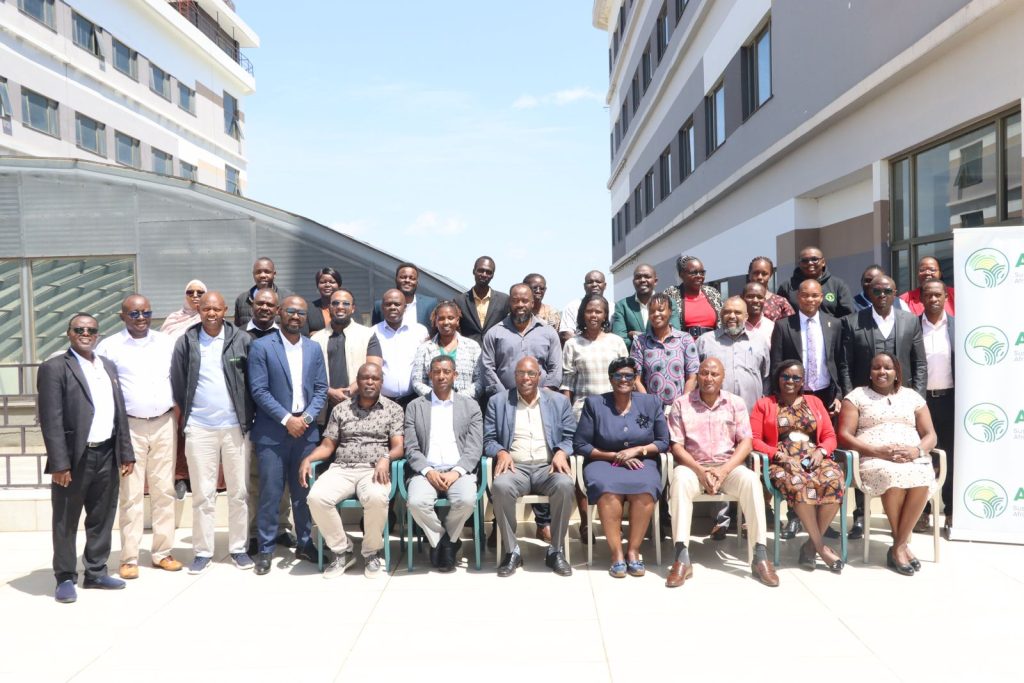
    PHOTO | Courtesy

    ClimVAT is also capable of tracking historical and projected trends in temperature, rainfall variability, drought frequency, and the occurrence of extreme weather events.

    Additionally, the platform is able to measures agricultural sensitivity reevaling which crops, livestock systems, and farming communities are most at risk under different climate scenarios.

    “For AGRA, this is about ensuring that every investment in Kenyan agriculture is grounded in the best available climate evidence, and that no vulnerable community is overlooked,” he added.

    The platform is also able to analyze ways communities can mobilize financial resources, institutional support, infrastructure, and social capital when shocks strike.

    During a workshop held in Eldoret, stakeholders pursued means of how the platform can be embedded within Kenya’s policy architecture.

    “Kenya has made ambitious commitments under its Nationally Determined Contributions and the Kenya Climate Smart Agriculture Strategy. But commitments only become results when backed by evidence and ClimVAT provides useful data towards thist,” said Patrick Kebaya, Climate Change Coordinator, Ministry of Agriculture, Livestock, Fisheries and Cooperatives.

    Women who make up the majority of smallholder agricultural labour in Kenya will also have access to finance, extension services, inputs, and decision-making power which they currently lack.

    “Kenya’s climate adaptation response has for too long been shaped by aggregated national data that masks the lived realities of specific communities. ClimVAT allows us to move from broad assumptions to precise, localised interventions,” said Edward Agaba, Country Programs Lead, AGRA Kenya.

    The Kenya’s National workshop follows successful events in Ghana and Tanzania and is part of AGRA’s broader continental rollout, which will extend to Uganda, and Zambia.

  • E-mobility power demand up 179pc on steep fuel prices

    E-mobility power demand up 179pc on steep fuel prices

    Kenya’s electric mobility sector registered a 179pc increase in power demand signaling steady rise in adoption of electric powered vehicles.

    Official data shows that the electricity demand in the sector rose from 2.8 gigawatt-hour (GWh) in 2024 to stand at 7.8GWh last year owing to increasing use of electric powered personal cars, buses, three-wheelers and two-wheelers.

    According to industry players, the shift to EVs from fossil fuel powered vehicles continues to be driven by the rising global fuel prices which have risen steadily in recent years triggered by Russia-Ukraine war and US/Israel-Iran war.

    “Fuel is a main driver but also operation expenditure as well. It’s much easier, cheaper and most cost effective to manage EVs over time. Therefore running cost is a major issue,” Epure Motion Kenya, Dong Feng Kenya Chief Executive Officer Gilbert Saggia told KBC Digital and CMG.

    According to the National Electric Mobility Policy, the sector is projected to register 47,860 EVs by 2030 to account for 8.8pc of total registered vehicles in Kenya.

    The affordability of the EVs has also been backed as a catalyst for rising sales supported by China’s mass production capacity.

    “China has completely changed the game as far as global EV is concerned,” said Saggia.

    Kenya is increasingly focusing on expanding charging infrastructure to support expansion of the sector across the country and also contribute to the reduction of greenhouse emissions.

    The government estimates that as of 2015, the transport sector accounted for 13pc percent of greenhouse gas (GHG) emissions, and could reach 17pc by 2030.

    “After learning the benefits of electric from China where I had gone for benchmarking five years ago, that is when I started ordering for the electric buses,” said George Githinji, CEO OMA Bus Service.

    In the coming financial year, the Electric Mobility Association of Kenya is proposing for retention of all existing incentives which have sustained sector growth and a further expansion of the incentives to three-wheelers, passenger cars and trucks.

    “BasiGo’s mission is to create the future of clean electric public transport here in Africa,” noted Jit Bhattacharya CEO BasiGo.

  • Kenyan firm, two others debarred by AfDB for procurement fraud

    Kenyan firm, two others debarred by AfDB for procurement fraud

    The African Development Bank Group (AfDB) has banned a Kenyan firm and two Chinese nationals from participating in its projects for fraudulent conduct relating to last mile electricity project in Kenya.

    The bank handed Esiko Kenya Enterprises Limited a nine month debarment while two Chinese nationals, Chen Chao and Huang You were debarred for a period of 12 months.

    According to investigations conducted by the AfDB’s integrity and anti-corruption office, the civil and electrical engineering firm and the two individuals engaged in fraudulent practices in the procurement of the plant design, supply and installation of extensions of low voltage single phase lines and service cables under the Last Mile Connectivity Project Phase II in the Republic of Kenya.

    “The Last Mile Connectivity Project, Phase II is an African Development Bank Group-financed project with the objective of supporting the Kenyan Government’s initiative of ensuring increased electricity access to Kenyans, particularly the poor. The project aims to cover the entire country with selected transformers in its forty-seven counties,” said the bank.

    The decision now locks out Esiko Kenya Enterprises Limited, the two individuals and all entities under their control from participating in AfDB funded projects during the debarment period.

    They are also required to ensure proof of satisfactory completion of the integrity remediation activities prescribed for each of them before participating in the bank’s financed projects.

  • Government to commission Ksh 560M road project in coast

    Government to commission Ksh 560M road project in coast

    The government expects construction of the Ksh 560 million Ngomeni–Mjanaheri Road to bitumen standard to be completed in December this year.

    The road in Magarini Sub-County is tipped to help transform the socio-economic landscape of the region by improving transport connectivity, lowering the cost of movement and opening up the area to trade, tourism and investment opportunities.

    During an inspection tour of the project, Coast Development Authority (CDA) Chairman Mzee Mwinyi said the road would serve as a catalyst for economic growth by improving access to markets and enhancing the movement of people, goods and services across the region.

    “The road will open up the Ngomeni area and significantly boost economic activities. Many young people in this region depend on fishing and sand harvesting for their livelihoods, and improved infrastructure will make it easier for them to transport their products, access markets and expand their businesses,” said Mwinyi.

    He noted that the project is expected to benefit approximately 600,000 residents within its area of influence, making it one of the most impactful infrastructure investments in the region in recent years.

    Mwinyi also lauded President William Ruto for prioritising the project, which is expected to be officially launched during the President’s tour of the Coast region on Friday.

    “We commend President William Ruto for recognising the importance of this project and supporting its implementation. We welcome him and his delegation to Magarini for the launch of this landmark development. For many years, this area has lagged behind in terms of major infrastructure projects, and this road represents a significant step towards economic transformation,” he said.

    Mwinyi said the project will address transportation challenges and high transport costs owing to the poor road condition that Ngomeni residents have faced for over a decade.

    During the rainy season, sections of the road often became impassable, isolating communities and limiting access to essential services.

    Local residents have welcomed the project, expressing optimism that it will address long-standing transport challenges and improve livelihoods.

    Ngomeni resident Elizabeth Manto said the poor state of the road had negatively affected businesses and made transportation difficult for years.

    “The road has been in a deplorable condition for a long time. It has made transport expensive and unreliable, affecting business activities, especially for those involved in fishing and sand harvesting. We are hopeful that the new road will improve our lives and create more opportunities for the community,” she said.

    Beyond easing transport challenges, the road is expected to improve market access for fisherfolk, reduce post-harvest losses and stimulate growth in key sectors such as tourism and commerce. The improved connectivity is also anticipated to attract new investments, including businesses seeking access to the region’s emerging international space centre.

    The KSh 560 million project is being implemented by CDA with funding from the Government of Kenya and the Italian Cooperation through the Italian Agency for Development Cooperation, is scheduled for completion by December this year.

  • China confirms it will buy 200 Boeing jets after Trump-Xi summit

    China confirms it will buy 200 Boeing jets after Trump-Xi summit

    China has confirmed that it will buy 200 Boeing jets after US President Donald Trump and his Chinese counterpart Xi Jinping met in Beijing last week.

    Under the deal, the US will provide China with supply guarantees for aircraft engine parts and components, China’s Commerce Ministry said on Wednesday.

    The two sides will also work towards an extension of the tariffs truce they agreed in October and seek tariff cuts on $30bn (£22.4bn) or more of goods each, the ministry added.

    The announcement came as Xi was holding talks with Russia’s President Vladimir Putin just days after Trump’s visit.

    Trump’s trip to China produced several pledges on trade between the world’s two biggest economies including the Boeing purchase and increased access for American farmers to the Chinese market.

    “We made a lot of great trade deals, including over 200 planes for Boeing, with a promise of 750 planes, which would be by far the largest order ever,” Trump told journalists on Air Force One after leaving China on Friday.

    Boeing’s CEO Kelly Ortberg was part of the US delegation that travelled with Trump to China. It also included Tesla boss Elon Musk and Jensen Huang, the CEO of AI chip giant Nvidia.

    “We had a very successful trip to China and accomplished our major goal of reopening the China market to orders for Boeing aircraft,” Boeing said in a statement.

    “This included an initial commitment for 200 aircraft and we expect further commitments will follow after this initial tranche,” it added.

    Officials from China and the US reached an agreement in Kuala Lumpur, Malaysia before a Trump-Xi meeting in South Korea in October 2025 that extended their tariff truce until November this year.

    That deal included a reduction to US tariffs on Chinese goods and a pause to Beijing’s restrictions on exports of rare earth minerals and magnets.

  • TikTok bans 108,752 Kenyan accounts for policy violations

    TikTok bans 108,752 Kenyan accounts for policy violations

    Social media giant TikTok says it banned a total of 108,752 Kenyan accounts from the platform for violating its policy.

    The fourth quarter community guideline report by the firm indicate that out of the banned accounts, 93,704 accounts were suspected of being accounts owned by minors aged below 13 which is in violation of its rues.

    In three months of the year to December 2025, TikTok says it also removed 820,552 videos in Kenya for violating its Community Guidelines.

    “99.9pc of these videos were proactively removed before anyone reported them, while 98.4pc were taken down within 24 hours of posting. These figures underscore TikTok’s continued investment in advanced detection systems and rapid response mechanisms designed to limit the spread of harmful content,” the firm said in a statement.

    Across the globe, TikTok says it removed a total of 175,302,085 videos during the quarter under review, representing about 0.5pc of all content uploaded on the platform.

    Of the removed content, 152,580,933 videos were detected and taken down using automated detection technologies and 8,360,780 videos were reinstated after further review.

    The platform recorded a 99.1pc proactive removal rate, with 93.4pc of flagged content removed within 24 hours of posting.

    The social media giant says by combining advanced automated moderation tools with the expertise of thousands of trust and safety professionals worldwide, it continues to enforce its Community Guidelines consistently and at scale, addressing harmful content such as misinformation, hate speech, and other policy violations.

  • Mbadi snubs more fuel tax cuts as state prepares Ksh 5B subsidy

    Mbadi snubs more fuel tax cuts as state prepares Ksh 5B subsidy

    National Treasury and Economic Planning Cabinet Secretary John Mbadi has ruled out any additional tax cuts on fuel in the current financial year as pressure to reduce pump prices mount.

    Speaking during an exclusive interview with KBC Channel 1, Mbadi said with less than two months left before the close of the current financial year, any further tax cuts on the petroleum products will lead to unsustainable revenue loss.

    “We must be prepared that if there is any other additional action, we are going take any other action and which can only be to remove some levies or cut taxes on petroleum products which is a temporary measure in my view. But the effect is going to be dire because we are in the month of May,” said Mbadi.

    This comes as calls to reduce fuel prices intensify across the country, triggered by initial price adjustments announced by the Energy and Petroleum Regulatory Authority (EPRA) on Thursday last week where diesel and kerosene were increased by Ksh 46.29 and Ksh 16.65 per litre respectively.

    “We only have June left so the budget has largely been implemented. What has not been implemented is the salary for June and the transfer for counties for June. What are we going to reduce, are we going to reduce transfer to counties or salaries to civil servants?” added Mbadi.

    In a bid to cool rising pump prices, the government announced the reduction of Value Added Tax on petroleum products from 16pc 8pc. The government has also utilized the Petroleum Development Levy Fund to bring down prices.

    According to Mbadi with the current financial year ending in June, the government has limited options to reduce taxes on the commodity as Kenya has exhausted its budget. However, treasury is lining up another Ksh 5 billion in the next cycle to stabilize prices.

    “In the first month of April when the effects of this crisis hit first we subsidized fuel by about Ksh 6.2 billion. Now we have subsidized by Ksh 5 billion and we have another Ksh 5 billion going to the month of June because you could not exhaust it and we don’t know when this war will end,” Mbadi noted.

    The increase in fuel prices triggered protest from transport sector stakeholders on Monday as negotiations hit deadlock.

    The protests saw the government cede some ground as EPRA announced new prices where diesel was reduced by Ksh 10.06 per litre and kerosene went up by Ksh 38.06 per litre.

    The new adjustment now mean until June 14, maximum pump prices allowed in Nairobi will be Ksh 214.25 per litre of super petrol, Ksh 232.86 per litre of diesel and Ksh 191.38 per litre of kerosene.

    In the earlier adjustment, a litre of diesel retailed at Ksh 242.92 while kerosene was Ksh 152.78 per litre.

    Mbadi further said the government has not intentions to exit the government-to-government oil supply deal with three state oil marketers from Middle East amid the war which has disrupted energy flow in the Strait of Hormuz.

    “Government-to-government deal has guaranteed us the price that we negotiated several months ago which is much lower than the current prices of freight, insurance and premium. If you go to our neighbouring countries, they are paying $250 per metric tonne. In Kenya we are paying between $78-97 per metric tonne. So it is ill advised to even imagine that we can abandon G-to-G,” he stated.

    He warned that the exit of the deal could also trigger depreciation of the shilling which has been stable due to limited forex demand.

  • Equity Group Q1 profit after tax grows to Ksh 19B

    Equity Group Q1 profit after tax grows to Ksh 19B

    Equity Group net profit in the first three months of the year has gown by 24pc to Ksh 19 billion from Ksh 15 billion lifted by improved income from regional subsidiaries.

    In the quarter under review, the bank posted a 15pc growth in total income which grew to Ksh 55.3 billion compared to Ksh 48.2 billion registered over the same period last year.

    “Our Q1 performance reflects the success of our deliberate transformation into a diversified, regional, technology led financial services Group. We are building a future ready institution; scalable, secure, and impact led, anchored in digital capabilities, staff upskilling, and a culture of disciplined execution,” said Dr. James Mwangi, Group Chief Executive Officer.

    According to the bank, regional subsidiaries continued to deliver strong and accelerating growth accounting for 50pc of its profit and 52pc of its banking total assets.

    Equity Bank Kenya delivered a 21pc year-on-year increase in net profit to Ksh 10.3 billion from Ksh 8.5 billion backed by strong MSME banking.

    EquityBCDC in the Democratic Republic of Congo delivered a 32pc in profit after tax to Ksh 5 billion  while Equity Rwanda delivered a 36pc profit increase to Ksh 1.5 billion.

    Equity Tanzania booked the highest profit jump rising by 150pc to Ksh 1.04 billion as South Sudan subsidiary reversed losses reported over the same period last year.

    “As we progress toward our 2030 ambitions, we are evolving beyond traditional banking into a Transformation Finance Institution that mobilizes capital, connects ecosystems, and accelerates inclusive, sustainable prosperity across Africa,” he added.

    During the quarter, the bank total assets increased by 16pc to Ksh 2.04 trillion from Ksh 1.7 trillion on account of customer deposits which grew by 13pc to Ksh 1.5 trillion and net loans which grew by 9pc to Ksh 873.5 billion.

  • Adan Mohamed to assume role as KRA commissioner general

    Adan Mohamed to assume role as KRA commissioner general

    Seasoned banker Adan Mohamed is expected to assume his role as the substantive Commissioner General of the Kenya Revenue Authority (KRA) upon is swearing in.

    This follows his appointment by National Treasury and Economic Planning Cabinet Secretary John Mbadi through a gazette notice.

    Until his appointment, Mohamed served as the Chief Strategy Execution at the Office of the President.

    Mohamed succeeds Humphrey Wattanga who left the position early last month after serving a one term of three years.

    “We are pleased to welcome Mr Adam Mohamed to lead the Kenya Revenue Authority. His track record in baking, management consulting and public service is exceptional, and his economic contribution in Kenya is well documented,” said Ndiriitu Muriithi, KRA Chairman.

    During the transition period, Dr Lilian Nyawanda had been appointed as acting commissioner general.

    Mohamed who brings to the commission three decades of experience previously served as trade cabinet secretary as well as the East African Community cabinet secretary in the Uhuru Kenyatta administration.

    “The board is confident that he will provide steady, results-driven, leadership as well work to mobilise revenue for national development,” added Muriithi.

    Mohamed is expected to continue to implement KRA revenue strategy which is expected to raise Ksh 2.97 trillion.

    Already in ten months of the year to April 2026, the authority raised Ksh 1.97 trillion leaving the new commissioner general with two months to collect Ksh 1 trillion.

    Mohamed also previously served in various senior executive roles at Barclays Bank in Africa.

    He holds a Master of Business Administration from Harvard Business School and First Class honours degree in Commerce from the University of Nairobi.

    Mohamed whose appointment is effective May 18, will serve in the position for the next three years.

  • Standard Chartered to cut thousands of roles as AI use increases

    Standard Chartered to cut thousands of roles as AI use increases

    Banking giant Standard Chartered has become the latest major company to announce job cuts as it increases its adoption of artificial intelligence (AI).

    The firm, which has its headquarters in the UK, said it will cut more than 15%, or around 7,800, of its back-office roles by 2030.

    The BBC understands that Standard Chartered aims to move some of the affected workers to other roles in the business.

    Companies around the world have announced major job cuts in recent months as they increasingly use AI tools for tasks currently carried out by humans.

    The company did not give details of where the roles would be cut. It has major back-office operations in India, China, Malaysia and Poland.

    “We are scaling practical uses of automation, advanced analytics and artificial intelligence to streamline processes, improve decision‑making and enhance both client service and internal efficiency,” said in a statement.

    The move is part of chief executive Bill Winters’ latest global strategy for the Asia and Africa-focused bank.

    The announcement also outlined plans to increase the companies profitability.

    Standard Chartered is not the first financial services firm to shed roles as AI takes on more work currently done by humans.

    In February, Singapore’s biggest bank, DBS, said it expected to cut about 4,000 contract and temporary roles over the next three years.

    Huge AI-related job losses are expected to hit technology industry workers and graduates particularly hard.

    Several big tech firms, most of which are spending huge sums on building tools and infrastructure for AI technology, have made major job cuts this year.

    In April, Facebook owner Meta said it will cut thousands of jobs next month as it spends more than ever on AI projects.

    The company told employees that it planned to cut 10% of its workforce – roughly 8,000 staff. It said it would also not fill thousands more open jobs it had been hiring for.

    Amazon announced in January that it would lay off more than 30,000 workers, while Oracle laid off more than 10,000 workers.