Author: Ronald Owili

  • Government commits Ksh4B for developing Wajir County 

    Government commits Ksh4B for developing Wajir County 

    The National Government  plans to ensure completion of projects totaling Ksh 4 billion which are currently being undertaken in Wajir County as Kenya marks 63rd Madaraka Day in the region.

    Internal Security and National Administration Principal Secretary Dr Raymond Omollo while giving assurance to the public of their safety and security during tomorrow’s celebrations said the government has made adequate preparations to ensure the event go on as planned.

    “This event is significant in the sense that it’s happening for the first time but it’s also opening up the north, a region that has been known to be problematic with matters security,” said Dr Omollo.

    Wajir County becomes the seventh county to host a national celebration outside Nairobi. In preparation for the event, Dr Omollo said the government has also made long-term investments in infrastructure and security that will ensure the county expand its economic activities.

    “When you look at the whole sum total of what has gone into preparing for this celebration, we have spent, as a government, close to Ksh 4 billion just to help in improving infrastructure and this is alongside other developments that is going on across the county,” he added.

    Among projects that are being undertaken at the county include 220 affordable housing units, building and construction of markets, expansion of road infrastructure within and outside Wajir town, electricity access and expansion of water and sanitation services.

    “There are those that the county had initially done, we have been able to support in improve them in terms of how they look but also we have been able to do new tarmac. Actually within the town, more than 25Km of tarmac has been done over the last two months as part of preparations for this celebration,” said Dr Omollo.

    Omollo said the 10,000-seater Wajir Stadium which is still under construction will be completed within the next one month in collaboration with the Kenya Defence Forces (KDF).

    This year’s Madaraka Day will have education and skills development as theme with focus on basic, higher and technical education.


  • Wajir County ready to host historic 63rd Madaraka Day

    Wajir County ready to host historic 63rd Madaraka Day

    Kenyans from across the country attending the 63rd Madaraka Day in Wajir County should expect a well-coordinated event after months of preparations according to officials handling the national celebration.

    Speaking during an exclusive interview with KBC, North Eastern Regional Commissioner John Odhiambo said the historic event for the county has been well planned to ensure peace and security of all the attendees.

    “The security situation in Wajir County in particular and North Eastern in general has been very peaceful and calm. In Wajir, we have not reported any incident in the past six months,” said Odhiambo.

    Wajir County is the first North Eastern county to host such a high level event which will take place at the 10,000-seater Wajir Stadium which has been built from the ground up with resources from the National Government.

    According to Odhiambo, the county has been emerged as the most peaceful in Kenya out of the 47 counties based on the incidences that were reported compared to other counties.

    The commissioner said through a multi-agency approach, the government has ensured there are necessary arrangements to establish a lasting peace in the region.

    North Eastern Regional Commissioner John Odhiambo during the interview. PHOTO | Selestus Mayira

    “The narrative in north Eastern region has shifted. It has shifted from a region of insecurity to a place of peace and stability, said Odhiambo.

    “For those who are coming I want to assure them of their security and that while they are here, they are in a secure and a safe place.”

    As a host county, Wajir has realized accelerated development projects being carried out jointly by the county and the national government.

    The county has witnessed more than a dozen projects being implemented concurrently among them, the 10,000-seater stadium which post-celebration, is expected to support talent development in the region.

    On Saturday, the stadium which has been constructed to international standard played host to thousands who converged at the facility to watch the much anticipated UEFA Champions League between Arsenal vs PSG.

    The country also benefited from construction of new tarmac roads, street lighting, electricity and water connections within the town a move which is expected to open up the Wajir Town as a formidable economic hub supporting businesses, agriculture and tourism sectors.

    The government has also invested in the renovations at the Wajir International Airport where the runway, apron and visitors check-in areas have been upgraded.

    Other ongoing projects include construction of three markets in Wajir South Constituency and Habasweini Constituency which will support more than 1400 traders, student accommodation centres for Technical Vocational Education and Training (TVETs), 220 affordable housing units in Wajir Town and road projects like the 57km HOAGP Wajir – Tabaj Road.

  • Smart solutions help KRA grow customs revenue, seal leaks

    Smart solutions help KRA grow customs revenue, seal leaks

    Kenya Revenue Authority (KRA) registered a 24pc growth in customs revenue within the last two years alone owing to investments in new technologies which have helped enhance customs efficiency and seal revenue leaks.

    The authority saw customs revenue rise from Ksh 503.2 billion in 2022/23 financial year to Ksh 628 billion shillings in 2024/25 financial year supported by deployment of real time cargo monitoring systems which have helped improve cargo dwell time at the region’s busiest cargo hub, Mombasa Port.

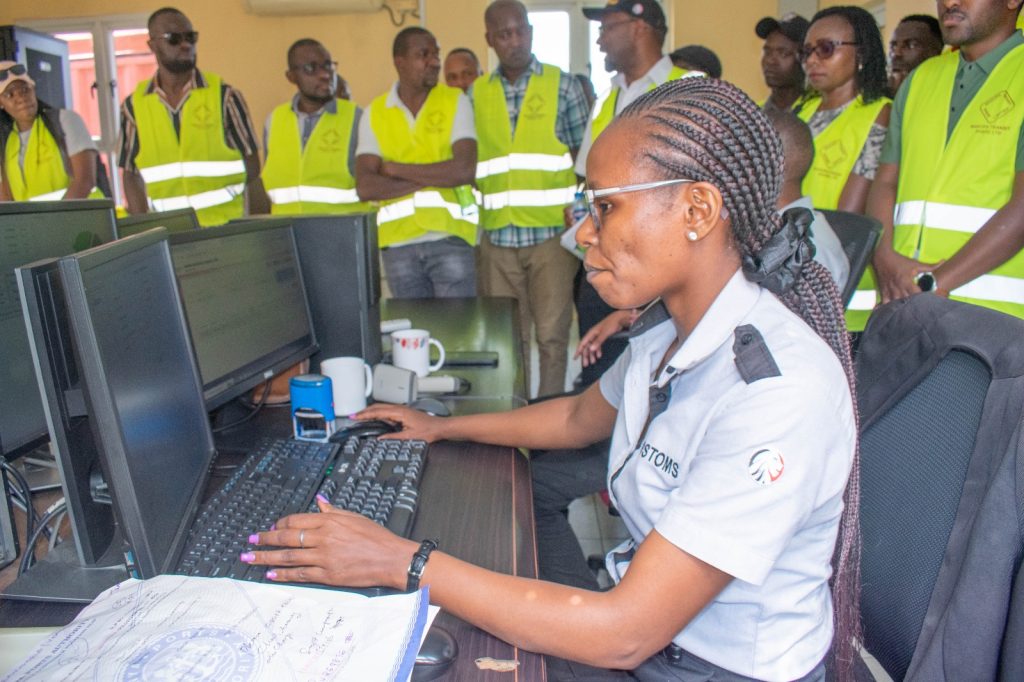
    Speaking during a media tour of the authority’s customs processes, KRA Acting Deputy Commissioner for Customs and Border Control, Southern Region Swalleh Faraj said the deployment of 24 hours scanners at the port as part of the Integrated Customs Management System (iCMS) has helped improve cargo clearance time.

    Cargo scanning area at the Mombasa Port.

    “In the Port of Mombasa, Kenya Ports Authority only grants 4 days to clear domestic cargo. For transit cargo its 15 days. So we have to clear you within four days otherwise you start incurring storage costs,” said Swalleh.

    According to KRA, the deployment of real scanners at the port and various border points across the country have helped in faster clearance of cargo while also eliminated smuggling of illegal goods.

    “At our borders we have scanning machines. There a very many controls, by the time the cargo reaches Mombasa, it has been scanned at Malaba, Naivasha, ICB, and scanned in Mombasa so the controls are many,” noted Tabitha Wanyama, KRA Manager Customs Warehouse Customs & Border Control Southern Region.

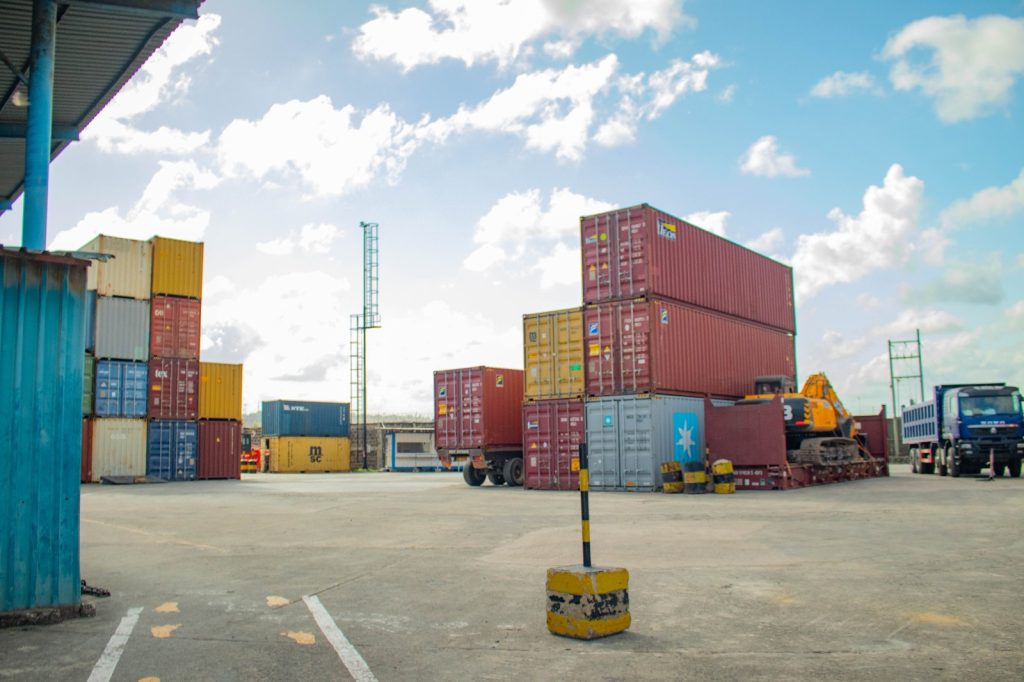
    Cargo at the Mombasa Port.

    Currently, KRA operates 33 scanners with plans to procure 72 more in a bid to increase the number of containers scanned, from the current 4,000 per day to over 10,000.

    “Scanning is a trade facilitation and enforcement tool. It is what we call a decision support tool for us. We are expanding that and the only thing is its capital intensive. They are very expensive, a scanner can go up to Ksh 300 million sometimes so we have to work closely with other partners to get the scanners,” added Swalleh.

    Through the deployment of the iCMS, KRA says it has reduced manual paperwork, enabled data exchange with other agencies, transporters and cargo clearing agents, supported automation and enabled flexible payment option.

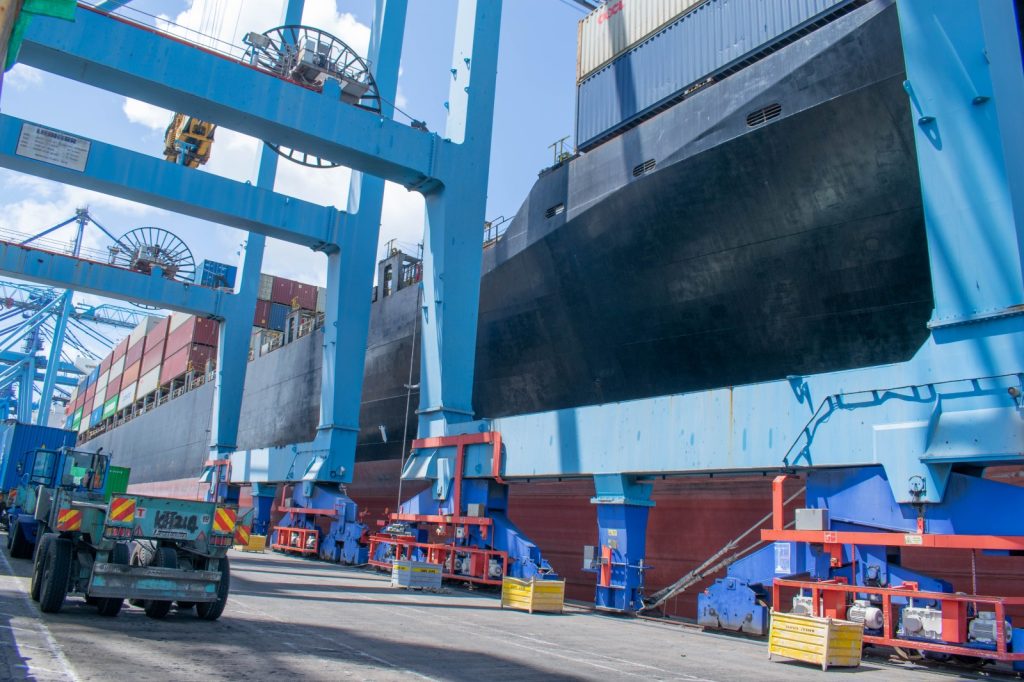
    Cargo being offloaded at the Port of Mombasa.

    Additionally, the system has also ensured reduction in the cost of doing business, simplified customs processes, enhanced efficiency and brought convenience to transporters and clearing agents.

    KRA says the advanced scanners it’s seeking to acquire will able to support accurate analysis of images and differentiate various items.

    “We are looking into an artificial intelligence-based in term of scanner analysis and scanner interpretation. But again there are those checks from the documentation, from loading point we have officers who will be there present to see staffing of all the exports before they are sealed. Once they are sealed again we monitor them using the electronic seal up to this point. To a larger extent we have minimized that,” said Samuel Kinyanjui, Manager KRA.

    Similarly, KRA says Regional Electronic Cargo Tracking System (RECTs) has improved real-time monitoring of transit and export goods.

    This has helped deter dumping and cargo theft along the Northern corridor which was previously rampant.

  • Kenya secures additional loading ports for fuel, says Wandayi

    Kenya secures additional loading ports for fuel, says Wandayi

    Fuel destined to Kenya is now being loaded from various ports across the world under the Government-to-Government to ensure supply stability, Energy and Petroleum Cabinet Secretary Opiyo Wandayi has said.

    According to Wandayi, Kenya’s fuel supply remains secure, stable, and well-managed under the G2G framework amid global fluctuations owing to tensions between the United States and Israel.

    A new update by the ministry indicates that marketers under the framework have secured loading points for Kenyan fuel cutting reliance on the Strait of Hormuz which continues to face security challenges.

    Wandayi said the G2G framework has helped the country in reducing exposure to volatility, and providing a buffer during global uncertainty.

    “Beyond this, the G2G framework has also enabled greater diversification in sourcing fuel. Cargoes are now being loaded from a broader range of international supply points, including Europe, the US Gulf Coast, India, and the Red Sea region,” said Wandayi.

    He added that the diversification has strengthened resilience, reduced reliance on any single route, and ensures continuity even when traditional supply channels face disruption.

    “We continue to benefit from the stability of the G2G framework in pricing: in that, while our freight and premium costs remained relatively stable at approximately USD 78 – 97 per tonne under pre-agreed arrangements, some markets exposed to open spot purchasing experienced freight and premium costs rising to approximately USD 250 – 300 per tonne during the same period,” he noted.

    The government while assuring stability in fuel supply amid escalating prices said Kenyans should expect benefits as situations normalizes as the country and partners plot to establish a refinery in the region

  • China releases guidelines for AI metrology capacity building

    China releases guidelines for AI metrology capacity building

    Chinese authorities have rolled out a guideline for the development of an AI metrology system and related capacity building to map out the country’s development of AI metrology capabilities in a systematic manner.

    The guideline was released by the State Administration for Market Regulation (SAMR) and the National Development and Reform Commission.

    The release of this guideline marks a critical shift in China’s AI sector from simply expanding computing power and scale to improving quality and strengthening foundational capabilities, according to the SAMR.

    This is of great significance for promoting the deep integration of AI technology with the real economy and accelerating the development of new quality productive forces, the SAMR said.

    The guideline focuses on six key areas: foundational support, general technology, core technology, metrological technical standards, metrology service industry, and intelligent empowerment of metrology.

    The outline of China’s 15th Five-Year Plan (2026-2030), released in March 2026, clearly emphasizes comprehensive implementation of the “AI Plus” initiative.

  • Boost for Kenya’s rice production with Ksh130M seed factory

    Boost for Kenya’s rice production with Ksh130M seed factory

    Kenya is on course to meet its annual rice production target with the launch of a Ksh 130 million certified seed processing factory in Kirinyaga County.

    The factory by the Kenya Agricultural and Livestock Research Organization and the Korea Partnership for Innovation of Agriculture (KOPIA) is expected to help the country meet its annual consumption demand which stands at an estimated 1.13 million metric tonnes against local production of 304,000 metric tonnes.

    “Last year, Kenya imported rice to a tune of 55 billion shillings from India, Pakistan, Vietnam, and Thailand. This is indeed not acceptable in a country with high rice production potential. A crop grown by many farmers for decades. In this region, Rice farming remains a critical value chain and base to many livelihoods,” said Dr Kipronoh Ronoh, Agriculture Principal Secretary during the launch.

    The KALRO – K-Rice Belt Certified Rice Seed Processing Complex with a daily production capacity of 40 metric tonnes of certified seeds and up to 700 metric tonnes annually at optimal level is backed to help boost local production capacity through seed drying, cleaning, grading, storage, treatment, and quality control.

    According to Dr Ronoh, the facility will also address the country’s rice production constraint which is blamed on use of recycled seeds with poor yields.

    The agriculture ministry says current annual certified rice seed production stands at about 1,000 metric tons equivalent to 30pc of seeds used in planting with majority of farmers still using farm-saved seeds recycled over time.

    “Up to 80pc of rice farmers are planting farm-saved seeds recycled, uncertified with poor germination rates, low varietal purity, and yield potential that has been degrading season after season. These traditional varieties yield only 2.5 to 3 tonnes per hectare,” he noted.

    The certified seeds produced at the KALRO – K-Rice Belt Certified Rice Seed Processing Complex will deliver between 6-7 tonnes per hectares and help farmers have access to quality and affordable seeds

    “I know that for years you have been told about improved varieties and certified seed and then found that the certified seed was unavailable, or unaffordable, or had run out at the agro-dealers before you arrived. That will now change with the commission of this facility today,” he added.

    The factory is further backed to help the Kenya double its rice production capacity to at least 600,000 metric tonnes annually through provision of certified seeds and expansion of land under rice irrigation.

  • Tea farmers reject 0.8pc levy as proposed in the Tea Bill

    Tea farmers reject 0.8pc levy as proposed in the Tea Bill

    Tea farmers from various tea-growing zones have called on their legislators to drop the 0.8pc levy on earnings as proposed in the Tea Bill.

    While speaking in Kiambu County, Kagwe Tea Factory chairman William Muroki Githumbi urged Members of Parliament to drop the proposed levy, saying tea farmers were never involved through public participation, making the move unconstitutional and against the will of the people.

    Githumbi warned that if the bill currently in Second Reading if passed, will open doors for tea brokers dealing in low-quality tea to exploit the market by blending it with quality tea bought from local farmers in an attempt to cut costs, a move he said will eventually hurt genuine tea producers.

    He further called on legislators from tea-growing regions to stand with farmers and protect the tea sector from what he termed as excessive taxation.

    According to the chairman, taxes and deductions imposed on tea farmers have continued to rise, currently standing at nearly 42pc. He also revealed that county governments have issued letters demanding a 0.5pc levy on all tea produce from factories, further burdening the sector.

    At the same time, Githumbi expressed concern over the Kenya Revenue Authority’s move to collect farmers’ personal details for purposes of enforcing a monthly five percent tax, saying the sector was increasingly becoming overtaxed and disadvantaged.

    He urged the government to involve tea stakeholders in policy formulation and decision-making processes to allow consultations and consensus before implementing policies affecting farmers.

    The chairman also decried the poor state of roads within tea-growing zones, saying factories are forced to spend huge amounts of money repairing trucks damaged by dilapidated roads.

  • Green tech, flexible finance backed to support youth-led agribusinesses

    Green tech, flexible finance backed to support youth-led agribusinesses

    Kenya could realize a significant reduction in its food import bill estimate at Ksh 500 billion annually by deploying green technologies and sustainable financing tailored for youth led agri-enterprises.

    According to a new Food Systems Analysis commissioned by FSD Kenya through the Green Finance for Youth Employment (GFYE) project conducted in 14 counties and which analyzed five priority value chains, majority of agri-enterprises run by the youth in rural areas are affected by lack of access to finance, inadequate income as well as poor bookkeeping which hinder their scalability to commercially viable ventures.

    Findings from the report which analyzed 1,210 youth agri-enterprises show that 53pc lack collateral as the main barrier to credit, while 43pc cited irregular income with 16pc citing weak financial records.

    “Across Africa, there is growing recognition that young people are central to the transformation of our food systems and rural economies. Under IFAD14, we are deepening our focus on creating opportunities for young people through climate-resilient investments and support to the ‘first mile’ of food systems, where inclusive growth, innovation and sustainable livelihoods can take root, “said Mariatu Kamara, IFAD Kenya Country Director.

    According to the report which analyzed five value including dairy, horticulture, poultry, fisheries and aquaculture, and apiculture, while commercially viable enterprises exist, there is a mismatch in suitable financing mechanisms.

    The analysis shows that Kenya faces an annual deficit of 5 billion eggs, 6.5-7.5 billion litres of milk, 340,000 metric tonnes of fish and 5,500 metric tonnes of honey all which are largely met through imports.

    “Kenya’s food deficits are not only a food-security challenge; they are a youth-employment opportunity, and green finance is the bridge between the two,” said Rashmi Pillai, Chief Executive Officer, FSD Kenya. “This analysis shows where the commercial opportunities sit. The work now is to redesign finance and delivery systems around the seasonal, informal and increasingly technology-enabled realities of young agri-enterprises, and to build the skills that let young people take these opportunities up.”

    The study also highlighted the need for the agribusinesses to explore use of green technologies in improving enterprise viability and reducing costs.

    The study was conducted in 14 counties including Meru, Tharaka Nithi, Embu, Kirinyaga, Nyeri, Machakos, Nakuru, Kisii, Siaya, Nandi, Kakamega, Busia, Bungoma and Trans Nzoia.

  • Kericho-based tea firm adopts electric truck fleet to drive decarbonization

    Kericho-based tea firm adopts electric truck fleet to drive decarbonization

    A Kericho-based multinational tea company has marked a major step in the green logistics revolution, following the launch of a fleet of 30 heavy-duty electric trucks, aimed at promoting sustainable transport in its operations.

    Browns Plantations Kenya Limited with support from ElandX and NCBA Group has already deployed 15 electric trucks in its Phase One to transport fresh green leaf tea to the processing factories, in a move aimed at reducing carbon emissions and enhancing sustainable logistics within its operations.

    The company has also established dedicated electric vehicle charging infrastructure across its factories and estates to support the operations, with further expansion planned as the fleet grows.

    Browns Plantation Kenya Chief Executive Officer Dushanth Ratwatte said the rollout signifies a major transformation in the company’s approach to industrial logistics and sustainability.

    “This deployment represents a shift in how we think about industrial logistics. We are integrating electric mobility into the core of our estate operations to improve efficiency, reduce emissions, and build a more resilient and future ready production system,” said Ratwatte.

    He added that the initiative forms part of a broader decarbonization strategy anchored on renewable energy, innovation and long-term operational transformation.

    The company, he said has set a target of sourcing 100pc of its electricity from company owned renewable generation by 2030 and achieving carbon neutrality by 2040.

    Ratwatte said the electric trucks are being introduced in phases as operational capacity and charging infrastructure expand to support full deployment across the estate logistics.

    The project is structured under a fleet-as-a service model developed by ElandX, with structured financing and leasing support provided by NCBA Group, enabling the transition without major upfront capital investment according to the press statement.

    The electric truck programme builds on the company’s wider decarbonization agenda and existing low-carbon logistics infrastructure, including the Ariel Ropeway conveyance system that transports harvested tea across plantation terrain while reducing reliance on diesel-powered systems.

    The statement further read that the company’s operations are also largely powered by renewable energy with about 60 per cent of its electricity demand supplied through company- owned hydro and solar systems, while the remainder is sourced from Kenya’s predominantly renewable national grid powered by geothermal.

    Browns Plantations Kenya Limited is a leading producer and exporter of tea and timber with operations in Kericho and Bomet counties. The company manages more than 5,000 hectares of tea and over 2,000 hectares of forestry, supported by four tea factories, nine estates and a saw mill.

    It is co-owned by the local community which holds a 15pc stake through the Kipsigis Highlands Multipurpose Co-operative Society.

    Kenya is steadily accelerating its transition to electric mobility through supportive policy frameworks and increased investment in clean transport infrastructure.

    Globally, electric mobility continues to expand rapidly. According to the International Energy Agency (IEV) global electric vehicle (EV) outlook 2025 report, one in every four cars sold worldwide in 2025 was electric, with global EV sales surging by 20 per cent to surpass 20 million units.

    The agency projects continued growth in the coming years as countries accelerate the transition to cleaner transport systems.

  • Google worker charged with using internal data to make $1.2m on bets

    Google worker charged with using internal data to make $1.2m on bets

    A Google employee has been arrested for allegedly using his access to company information to successfully place lucrative bets on the prediction platform Polymarket.

    The US Attorney for the Southern District of New York said it had charged Michele Spagnuolo, a Google engineer, with breaking insider trading laws because of several bets he placed through the platform.

    Although Spagnuolo is an Italian citizen who lives in Switzerland, he was arrested on Wednesday and brought before a federal judge in New York.

    Spagnuolo allegedly used information he had early access to through his work at Google, which is based in the US, to make bets that saw him rack up $1.2m (£894,330) in winnings.

    A spokeswoman for Google said the company was “working with law enforcement on their investigation” and that the employee had been placed on leave.

    The internal information that was allegedly used was marketing material accessed “using a tool available to all employees, but using such confidential information to place bets is a serious breach of our policies,” she added.

    A spokesman for Polymarket said the platform “worked closely” with authorities on the investigation.

    “Blockchain trading is transparent, traceable, and bad actors leave footprints,” the spokesman added.

    Blockchain is a sort of digital record applied to cryptocurrency, which is the only currency Polymarket accepts.

    The US Attorney’s office worked with the Federal Bureau of Investigations (FBI) on Spagnuolo’s arrest. He has been released on a $2.25m bond, according to ABC News.

    Although Spagnuolo allegedly traded under the account name AlphaRaccoon on Polymarket and his bets were made with cryptocurrency from several accounts, the FBI said it linked his accounts by finding one he had opened with an Italian identification card.

    Spagnuolo did not respond to an email seeking comment.

    According to online profiles, he worked for Google for more than 12 years as an engineer focused on information security.

    He started using Polymarket in 2024, and between October and December of last year, the US Attorney’s office said Spagnuolo placed $2.7m in bets related to Google.

    By using internal information, he was able to make more than $1m in profits from those bets, it said.

    The court papers said Spagnuolo’s most lucrative alleged Polymarket wins were correctly predicting who would and would not be the most searched for person on Google in 2025.

    He allegedly placed bets against names, like Bianca Censori and President Donald Trump, and chose the singer D4vd as taking the top spot when the betting platform had odds of that result being near zero.

    The court papers said when Spagnuolo placed that bet in November, he knew that D4vd had become Google’s most-searched person because he had access to information the search giant had collected before it was released to the public.