Author: Ronald Owili

  • Kenyans stranded as matatu industry begins strike over fuel hike

    Kenyans stranded as matatu industry begins strike over fuel hike

    Kenyans from various towns across the country woke up to transport disruptions as matatu owners kicked off their strike over a sharp increase in fuel prices.

    On Monday morning, thousands of workers in major towns could not secure means to get to their workplace while available matatus and motorbikes charged exorbitant fares for interested commuters.

    A joint statement by Transport Sector Alliance called on stakeholders to observe the strike after the Energy and Petroleum Regulatory Authority (EPRA) raised super petrol and diesel prices by Ksh 16.65 and Ksh 46.29 respectively until next review on June 14, 2026.

    “The Alliance confirms that all transport subsectors, covering passenger transport, cargo and logistics, ride-hailing, motorcycle transport, tourism transport, driving schools, school buses and private motorists have resolved to stand together in one of the largest coordinated industrial actions in Kenya’s history,” it stated.
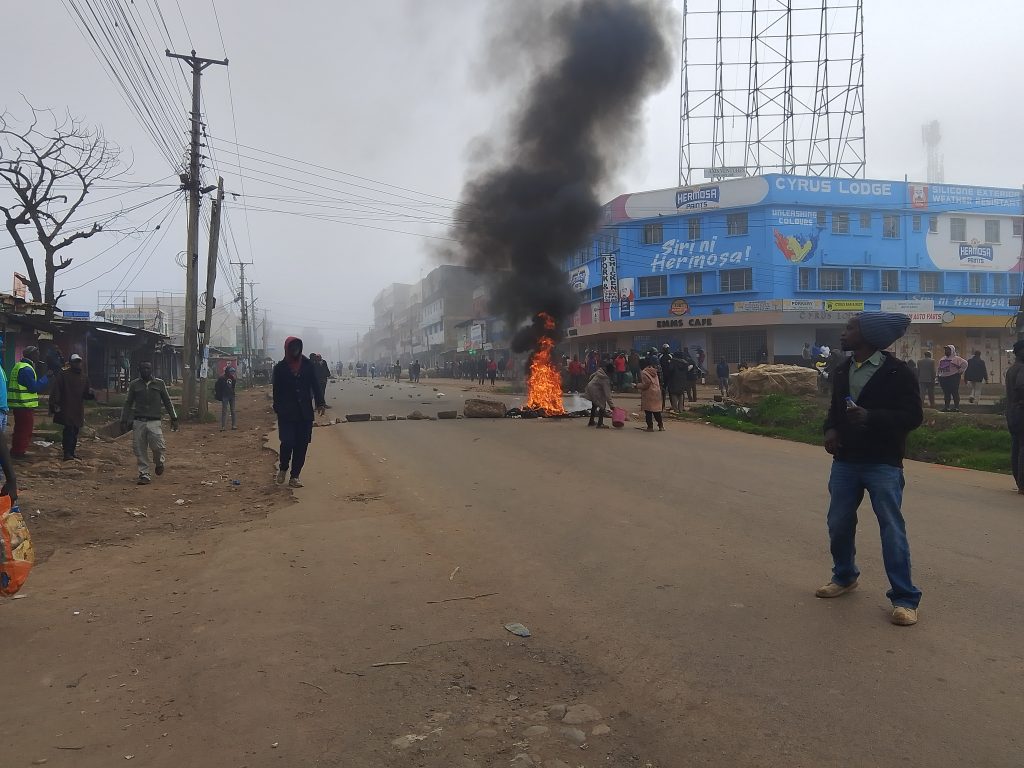
    Nyandarua town

    In Nanyuki town, Laikipia County, business and transport operations have been paralyzed as matatu operators took to the streets to express frustrations.

    Major roads in the town including Nanyuki- Meru highway and Nanyuki – Nairobi highways were also blocked.

    In Meru County, transport operations came to a standstill after major roads leading into and out of Meru Town were blocked by protesters demonstrating against the rising cost of fuel.

    The demonstrations, led by angry motorists and bodaboda operators, caused massive disruptions across the town, making movement difficult for both public and private transport users.

    Several key roads remain inaccessible as protesters barricaded highways and streets, demanding government intervention to address the escalating fuel prices that have continued to increase the cost of transport and living.

    Most vehicles were unable to access the town center, forcing many residents and traders to walk long distances to reach their destinations.

    The situation has also affected business activities being a busy market day at the famous Gakoromone Market in Meru Town, where traders and customers struggled to transport goods due to the transport paralysis.

    Transport in and out of all major roads in Nyahururu Town has also been paralyzed following protests over the rising fuel prices in the country.

    All businesses have remained closed, with no operations taking place within the town as protesters light bonfires at major entry points, junctions, and roads leading into the town.

    The situation has been replicated in Kiambu County where business activities in Kiambu town came to a standstill as traders closed shops, petrol stations shut down, and banks suspended operations after police engaged youths in running battles.
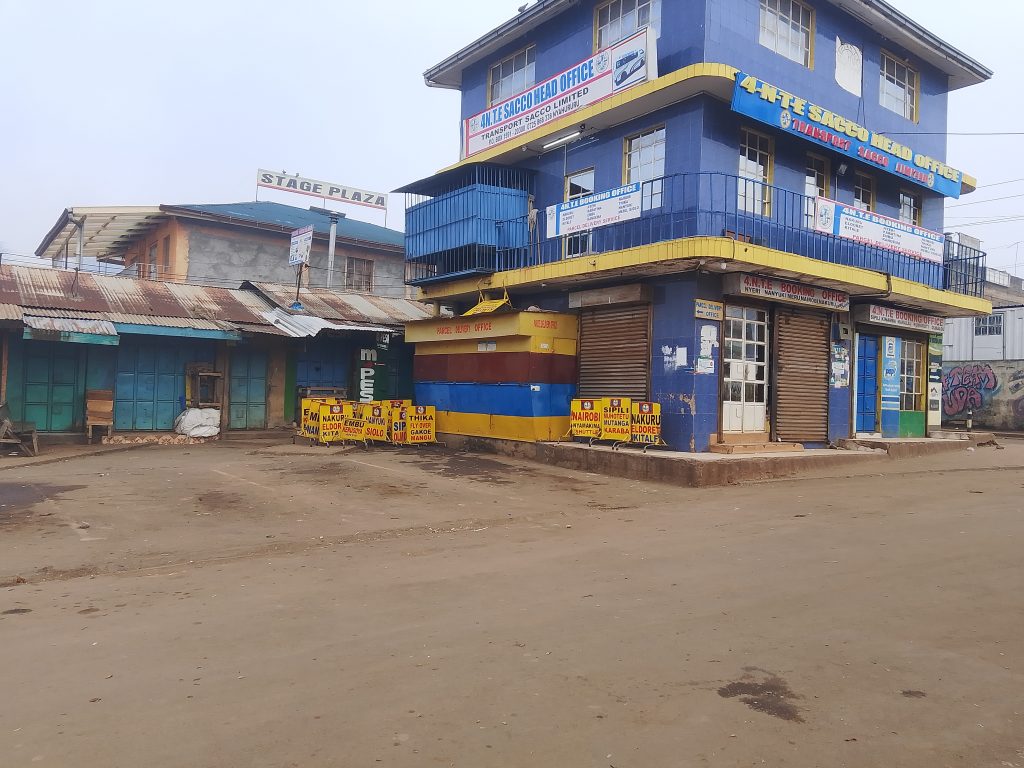
    Nyandarua town

    Tear gas and gunshots were fired into the air to disperse the crowds, turning sections of the town into a no-go zone.

    The government has been criticized over the sharp hike especially on diesel which is mostly used by heavy commercial vehicles.
    “The sharp rise in diesel is particularly concerning because diesel is the backbone of transport, agriculture, manufacturing, logistics, construction, and general trade. Any increase in diesel prices quickly feeds into the cost of moving goods, producing essential commodities, and delivering services across the economy,” said Dr Erick Rutto,
  • Rwanda secures $300M financing to boost electricity access

    Rwanda secures $300M financing to boost electricity access

    Rwanda has secured $300 million (Ksh 39b) loan from two financial institutions to enhance electricity access in the East African Community (EAC) member state.

    Under the Energy Sector Results Based Financing Phase II (RBF II) programme, Rwanda will receive $200 million from the African Development Bank (AfDB) and a $100 million loan from the Asian Infrastructure Investment Bank (AIIB) to also support provision of reliable, clean and affordable energy.

    “We are building on these lessons to accelerate connections, improve service reliability, and deliver greater impact for households, businesses, and productive users across Rwanda,” said Jean Bosco Mugiraneza, Director General for Energy at the Rwanda Ministry of Infrastructure.

    In phase one, the programme helped provide off-grid energy solutions to at least 370,000 households while additional 460,000 people gained access to clean cooking.

    The loan will finance rehabilitation of four substations and construction of roughly 3,855 km of medium and low voltage transmission lines.

    “The Energy Sector Results-Based Financing II Program is a transformative investment that will accelerate Rwanda’s progress toward universal energy access,” added Aissa Toure Sarr, AfDB Country Manager for Rwanda.

    Phase II is projected to connect an additional 200,000 households and 850 commercial users to the national grid, add 50,000 new electricity connections through off-grid solutions, provide clean cooking devices to 100,000 households and 310 public institutions, and install street lighting on 200 km of roads in secondary cities across the country.

  • Oil prices rise after Trump warns Iran over stalled peace talks

    Oil prices rise after Trump warns Iran over stalled peace talks

    Oil prices rose on Monday in Asia after US President Donald Trump warned Iran the “clock is ticking” as talks to bring the war to an end have stalled.

    The global benchmark Brent crude was 1.7% higher at $111.13 (£83.44), while US-traded oil was up by 2.1% at $107.62.

    Energy markets have been on a wild ride after Iran effectively closed the key Strait of Hormuz waterway in retaliation for US and Israeli strikes on the country, which started on 28 February.

    Around a fifth of the world’s oil and liquefied natural gas (LNG) usually passes through the narrow shipping route.

    “They better get moving, FAST, or there won’t be anything left of them,” Trump wrote on social media. “TIME IS OF THE ESSENCE!”

    Iranian media meanwhile reported Washington had failed to make any concrete concessions in its response to Tehran’s latest proposals to end the conflict.

    A lack of compromise from the US would lead to an “impasse in the negotiations”, the semi-official Mehr news agency reported.

    Trump’s message echoed his threat that a “whole civilisation” would die unless Tehran agreed to a peace deal, shortly before a ceasefire was announced in early April.

    The president warned last week that the truce was on “massive life support” after rejecting Iran’s demands, labelling them “totally unacceptable”.

    He is expected to hold ​a ​meeting on ⁠Tuesday ​with his ​top national security advisers to ​discuss the ​options for military ‌action ⁠regarding Iran, according to news platform Axios.

    During the conflict Iran has launched attacks on neighbouring countries including Israel, Bahrain and the United Arab Emirates (UAE).

    On Sunday, the UAE said a drone strike had triggered a fire near its nuclear power station, calling the incident a “dangerous escalation”.

    Officials are investigating the source of the strike. The country’s defence ministry said three drones had entered the UAE from the “western border direction”.

    While two were intercepted, the third drone struck an electrical generator “outside the inner perimeter” of the Barakah Nuclear Power Plant in Abu Dhabi, sparking a fire.

    No injuries were reported and there was no impact on radiological safety levels, local authorities said.

  • TECNO rolls out its AI ecosystem in Kenya to support digital inclusion

    TECNO rolls out its AI ecosystem in Kenya to support digital inclusion

    TECNO has introduced artificial intelligence enabled mobile tools aimed at supporting digital literacy, education, communication and small businesses in Kenya.

    The global smartphone maker says the AI ecosystem is built around practical needs in the African markets, where the smartphone has become a crucial tools in day to day life.

    TECNO AI enables users to complete daily tasks such as voice-led assistance, translation, document scanning, improved photography, education support, health information reminders, content creation and small business organisation.

    “Digital progress must reach ordinary citizens,” said Elvis Ndekwe TECNO AI product operations head.

    Additionally, the AI is able to help businesses with bookkeeping, content creation, and mobile money integrated financial summaries to boost micro-enterprise productivity.

    Learners can also access summaries of complex documents and YouTube videos into concise study notes for students while its health feature provides functions such as voice-led health guidance and skin-tone accurate diagnostic.

    The firm says the AI is designed to support features that can work on the device where possible, helping users in different parts of the country benefit from smarter technology.

    “TECNO AI is about making the smartphone more helpful for students, parents, entrepreneurs, workers and communities across Kenya,” added Ndekwe.

    The ecosystem also comes with local language support making it easier to use through voice, camera and familiar phone behavior.

  • KNCCI projects food prices to rise by up to 7pc after fuel hike

    KNCCI projects food prices to rise by up to 7pc after fuel hike

    Kenyans should expect up to 7pc increase in prices of food and consumer goods following the latest fuel hike by the energy regulator, analysis by the country’s chamber of commerce show.

    The Kenya Chamber of Commerce and Industry (KNCCI) has warned that the increase in pump prices announced by the Energy and Petroleum Regulatory Authority (EPRA) on Wednesday will have negative effects on the cost of living, cost of production, and erode Kenyan businesses competitiveness across the region.

    EPRA announced an increase of Ksh 16.65 on a litre of super petrol and Ksh 46.29 on a litre of diesel while kerosene remained unchanged leading to an uproar among consumers.

    “The sharp rise in diesel is particularly concerning because diesel is the backbone of transport, agriculture, manufacturing, logistics, construction, and general trade. Any increase in diesel prices quickly feeds into the cost of moving goods, producing essential commodities, and delivering services across the economy,” said Dr Erick Rutto, President KNCCI.

    Following the hike, the price of super petrol and diesel have now risen to Ksh 214.25 and Ksh 242.92 per litre respectively in Nairobi.

    According to analysis by the chamber transport and logistics costs are projected to rise by between 10pc and 20pc while manufacturing and farm distribution costs will rise by between5pc and 12pc.

    “The current fuel increase is not just an energy issue; it is an economy-wide shock. KNCCI urges Government to move with urgency to cushion households, protect businesses, and reduce domestic cost drivers that amplify global fuel shocks,” said Rutto.

    In a bid to cushion consumers from adverse price hikes, the government has reduced VAT on petroleum products from 16pc to 8pc while at the same time sourced Ksh 5 billion from the Petroleum Development Levy Fund to stabilize prices.

    This comes as Energy and Petroleum Cabinet Secretary Opiyo Wandayi assured of continued fuel supply under government-to-government deal amid disruption in global supply chain.

    “We should all remain vigilant against possible profit-driven exploitative practices during this period of uncertainty, ensuring that consumers are not placed at any further disadvantage,” he said.

    However, KNCCI has called for review and rationalize fuel taxes and levies, especially on diesel, reduce port, storage, transport, and distribution inefficiencies, publish a clear fuel price build-up in every review cycle and provide targeted relief for fuel-intensive small businesses.

    The chamber says since January this year, price of petrol has increased by 17.4pc, while that of diesel has increased by 42.5pc.

    KNCCI also noted that while global crude oil prices rose by about 6.8pc between April and May, local diesel price rose by 23.5pc owing to taxes, levies, landed product costs, exchange rate effects and margins which continue to amplify the impact on businesses and households.

    With the latest fuel hike, Kenya’s overall inflation rate is also expected to increase further after rising to 5.6pc last month from 4.4pc recorded in March.

  • Wandayi backs state relief measures as fuel prices breach Ksh 200 mark

    Wandayi backs state relief measures as fuel prices breach Ksh 200 mark

    Energy and Petroleum Cabinet Secretary Opiyo Wandayi says efforts by the government to contain rising fuel prices continue to shield consumers from adverse price increases even as diesel and super petrol prices cross the Ksh 200 mark since 2020.

    On Thursday, the Energy and Petroleum Regulatory Authority (EPRA) announced the sharpest fuel increase in recent times where a litre of super petrol and diesel went up by Ksh 16.65 and Ksh 46.29 respectively much to the shock of consumers.

    However according to Wanayi, the Government-to-Government (G-to-G) fuel importation framework as well as the decision by the government to reduce Value Added Tax on petroleum products from 16pc to 8pc have have cushioned consumers from adverse pump prices.

    “Currently, global spot freight and premium rates for petroleum cargoes have more than doubled exposing countries reliant on spot purchases to very high escalations in the landed costs. Insurance premiums have also escalated greatly considering the impasse at the Strait of Hormuz further, compounding petroleum import costs.

    Supply and demand imbalances across the world continue to be observed leading to very high volatility in price coupled with limited availability of cargoes. Kenya continues to benefit from the fixed freight and premium costs for refined petroleum imports secured under the G-to-G arrangement,” said Wandayi.

    According to EPRA, the average landed cost of super petrol went up by 10c while diesel increased by 20.32pc between March and April. Price of kerosene on the other hand went up by Ksh 1.59pc.

    To provide relief to consumers against price increases, the authority deployed Ksh 5 billion from the Petroleum Development Levy Fund.

    According to Wandayi, the government is currently engaging stakeholders across the energy, transport, manufacturing and business sectors to identify practical and sustainable measures aimed at minimizing the impact of rising fuel costs on consumers.

    “We should all remain vigilant against possible profit-driven exploitative practices during this period of uncertainty, ensuring that consumers are not placed at any further disadvantage,” said he added.

    Wandayi has further assured the public  that the country currently has adequate petroleum stocks and that the government continues to closely monitor developments in the international oil market.

    Following the review, maximum pump prices allowed for a litre of super petrol climbed to Ksh 214.25, diesel Ksh 242.92 and kerosen Ksh 152.78.

  • KCAA says JKIA upgrade plans now in final stages

    KCAA says JKIA upgrade plans now in final stages

    The Kenya Civil Aviation Authority (KCAA) has assured passengers and airlines that the country’s airport runways remain safe and operational as the tendering process for the expansion of the runway and terminal at Jomo Kenyatta International Airport (JKIA) nears completion.

    JKIA – the country’s international gateway and regional aviation hub -last underwent runway rehabilitation in 2016 amid growing congestion during peak operating hours affecting its runway system, passenger terminals, and apron areas.

    Speaking on the sidelines of the 7th EAC Aviation Symposium in Mombasa, organized by the Civil Aviation Safety and Security Oversight Agency (CASSOA), KCAA Acting Director General Nicholas Bodo said the Ministry of Transport is intensifying efforts to strengthen aviation safety and security, noting that the JKIA expansion tendering process is almost complete.

    The enhancement project is expected to include upgrades to the existing runway, development of a partial parallel taxiway to improve airfield circulation, and construction of two rapid exit taxiways and a runway-end exit taxiway to reduce runway occupancy time, improve landing efficiency, and increase overall runway throughput.

    While assuring passengers of their safety, he said infrastructure, particularly the runway, requires upgrading.

    “Hopefully if it is successful, we should have our runway rehabilitated, existing terminals rehabilitated and a new terminal of about 10 million passengers. Infrastructure especially the runway if not maintained to proper standard can pose a threat to passengers and aircraft,” stated Bodo.

    He noted that the existing terminal at JKIA was designed to handle 7.5 million passengers annually, but Kenya Airports Authority (KAA) is currently handling 8.6 million passengers.

    “Which means at some point there are constraints in terms of capacity. That is why the existing terminal is going to be expanded and a new terminal will be built.”

    Bodo said regional states are working together under CASSOA to ensure the safety of the region’s airspace.

    The Acting DG also revealed that demand for professionals in the aviation sector currently exceeds supply, highlighting the urgent need to establish a regional training fund for pilots and engineers to serve both regional and global markets.

    “We know there is demand. It is only that the training for a pilot is not the cheapest thing. We are trying to see if we can have discussion on how to train these professionals for the market,” he said.

    The KCAA Acting DG also backed calls for harmonization of regulations, saying it would allow aviation players to operate more seamlessly across the region.

    CASSOA Acting Executive Director (ED) Francis Lichuma said the EAC agency was established to support partner states in meeting their requirements and obligations under the Chicago Convention.

    The biennial symposium brings together aviation stakeholders to discuss innovations and emerging industry challenges aimed at strengthening safety and security across the region’s airspace.

    The CASSOA Ag. ED noted that since the inception of the symposium, significant progress has been made in harmonizing aviation regulations among partner states.

    “The most worth mentioning is we have developed harmonised regulations around safety and security, harmonised examination systems around aviation,” stated Lichuma.

    He added, “What that means is there is harmony in the community one person doing a pilot exam for example in Kenya is sitting the same exam with someone else in Burundi or South Sudan. This is aligned with the wider EAC vision of deepening integration.”

    KCAA Chairman Brown Ondego underscored the need for regional collaboration on aviation safety and legislation to support seamless air transport.

    “As you understand air transport is the safest way to travel in the world up to today. It is also safe because it is highly regulated,” stated Ondego.

    “In this symposium we are looking at how do we harmonise the regulations that we have, how can East Africa countries come together so that we have common regulations, legislations and technical guidance materials so that whoever is travelling in East Africa airspace is safe,” he added.

  • AG office grants societies two months extension to file returns

    AG office grants societies two months extension to file returns

    Registered societies operating in the country and have not filed their annual returns with the Office of the Attorney General as per the law now risk losing their licenses.

    In a move aimed at ensuring compliance, the Registrar of Societies has issued a notice granting a 60 day period for all registered societies who failed to submit their annual returns by March 31 as required by the law.

    “All registered societies that have not filed their annual returns as required are hereby granted a grace period of sixty (60) days from the date of publication of this notice to comply,” read the notice.

    Under the Societies Act every registered society is required to submit annual returns, accounts and other documents to the registrar.

    Additionally, Rule 13 of the Societies Rules, 1968 provides that the annual return shall be furnished on or before the 31st March in each year, in respect of the immediately preceding calendar year, and shall be submitted in Form I set out in the Schedule to the Rules and signed by three officers of the society.

    However, it appear some societies failed to meet this deadline, prompting the Registrar to grant the extension.

    “Societies that fail to submit the required annual returns within the stated period shall be liable to enforcement action in accordance with Section 12(1)(e) of the Societies Act, which includes issuance of a notice to show cause and may result in the cancellation or suspension of registration. All societies are therefore urged to take immediate steps to comply with the law within the stipulated period,” the office advised.

    According to the Office of the Attorney General, Kenya currently has 224 registered societies.

  • Rwanda forum calls for defence of Africa’s interests

    Rwanda forum calls for defence of Africa’s interests

    African leaders, business executives and global investors gathered in the Rwandan capital of Kigali on Thursday for the opening of the Africa CEO Forum 2026.

    The two-day forum, organized by Jeune Afrique Media Group and co-hosted by the International Finance Corporation, is being held under the theme “Scale or Fail: Why Africa Must Embrace Shared Ownership.”

    Speaking at the opening ceremony, Rwandan President Paul Kagame said Africa must take greater responsibility for protecting and advancing its own interests despite possessing enormous strategic advantages.

    Amir Ben Yahmed, president of the Africa CEO Forum, stressed that Africa can only achieve meaningful scale if governments, businesses and investors embrace a culture of shared ownership and trust.

    Jean-Guy Afrika, chief executive officer (CEO) of the Rwanda Development Board, said that Africa’s demographic growth and expanding markets present enormous opportunities, but warned that the continent must convert that potential into scalable economic transformation.

    The annual forum is regarded as the largest international gathering of the African private sector, bringing together high-level discussions, debates and business meetings focused on the role of private enterprise in driving the continent’s development.

    The 2026 edition, which has attracted more than 2,000 participants from over 75 countries across Africa and beyond, is calling on public and private sector leaders to commit capital, share risk and build transnational African ownership structures capable of securing the continent’s long-term prosperity.

  • Somalia’s economy to slow to 2.8pc as costly fuel dents growth

    Somalia’s economy to slow to 2.8pc as costly fuel dents growth

    Somalia is expected to register a slower growth for the third consecutive year as rising global oil prices add pressure to the country’s strained economy.

    The latest World Bank Somalia Economic Update projects the country’s economy to grow by 2.8pc this year down from 3pc recorded last year.

    This will be the third straight year the country is facing a slower growth after posting 4pc gross domestic product (GDP) in 2023 and 2024.

    According to the World Bank the weak growth this year will be constrained by continued aid reductions, climate variability, global price shocks, and limited productive capacity.

    “Somalia has made important progress in strengthening macroeconomic management and institutions under difficult conditions,” said Hideki Matsunaga, World Bank Group Country Manager for Somalia.

    The bank says the reduction of aid to the East African Community (EAC) member state has had significant social consequences, with food insecurity increasing and poverty reduction stalling.

    “However, overlapping shocks are slowing growth and putting pressure on jobs and household livelihoods, underscoring the importance of addressing key structural constraints, particularly in expanding access to reliable, affordable, and sustainable electricity,” added Matsunaga.

    The bank says the near- to medium-term outlook has weakened relative to earlier expectations with recent global oil price surge adding another shock to Somalia’s economy.

    As a result of the global commodity price volatility, Somalia which relies heavily on imported food and fuel and is facing domestic supply disruptions linked to climate and security conditions, inflation is expected to rise to 6pc this year from 3.7pc last year.

    Nonetheless, Somalia GDP is projected to bounce to 3.1pc next year supported by improved investment activity increased remittances and urban expansion.