Author: Muraya Kamunde

  • Critically endangered Mountain Bongos return home

    Critically endangered Mountain Bongos return home

    Four Mountain Bongos have safely arrived at the Mount Kenya Wildlife Conservancy (MKWC).

    The rare species listed as critically endangered on the IUCN Red List, arrived on a KLM cargo flight from the Czech Republic, where they had been under the care of Zoo Dvůr Králové. The four males now join a growing population at MKWC.

    Prime Cabinet Secretary and Cabinet Secretary for Foreign and Diaspora Affairs Musalia Mudavadi, Tourism Cabinet Secretary Rebecca Miano led a delegation in receiving the Bongos.

    It brought together partners from across Government and conservation, including KWS Director General Prof. Erustus Kanga, Czech Republic Ambassador Nicol Adamcova, the Mount Kenya Wildlife Conservancy (MKWC), the Kenya Airports Authority (KAA), and KLM.

    Their return is the result of years of planning under the National Recovery and Action Plan for the Mountain Bongo, and strong international collaboration.

    Prime Cabinet Secretary Musalia Mudavadi highlighted that such milestones show what can be achieved when policy, science, and collaboration come together in pursuit of a shared conservation goal while the Tourism CS noted that the repatriation marked a significant milestone in Kenya’s long-term species recovery efforts.

    CS Miano emphasized that bringing in genetically diverse Bongos is a critical step in strengthening breeding resilience.

  • Busia: Two arrested over death of a 50-year-old man

    Busia: Two arrested over death of a 50-year-old man

    Two people have been arrested in connection with the mysterious death of a 50-year-old man in Kamarinyang Village, Amukura Central, Teso South Constituency, Busia County.

    The deceased, a father of four, was found hanging lifeless from on avocado tree at his home in an incident that initially appeared to be suicide.

    Speaking to press, family members led by the deceased’s eldest son Benson Karani, they received a distressing phone call on April 20th from a younger sibling claiming their father had taken his own life.

    However, doubts quickly emerged after the family viewed the body, prompting calls for a thorough investigation. The family is now appealing to the government for support as they prepare to lay their kin to rest.

    According to Chrispinus Omusugu, a brother to the deceased, revealed that the autopsy showed multiple injuries, including four fractured ribs, a damaged leg, and visible bruises around the neck-signs consistent with assault and strangulation rather than suicide. Area Chief Kujakitoo location George Okemer confirmed that security officers who visited the scene uncovered critical evidence in a nearby sugarcane plantation.

    Two blood-soaked blankets, alongside an axe and a hammer, were recovered items believed to have been used in the attack before the body was moved and staged at the homestead.

    The family’s lawyer, Obela Okuru, says medical reports indicate that Christopher Okumu was severely beaten, strangled, and possibly cleaned before being hanged to mislead investigators.

    Police have arrested two suspects, including the deceased’s wife, who are currently in custody assisting police with investigations into the circumstances surrounding the killing.

  • Interviews for the position of Supreme Court Judge enter day two

    Interviews for the position of Supreme Court Judge enter day two

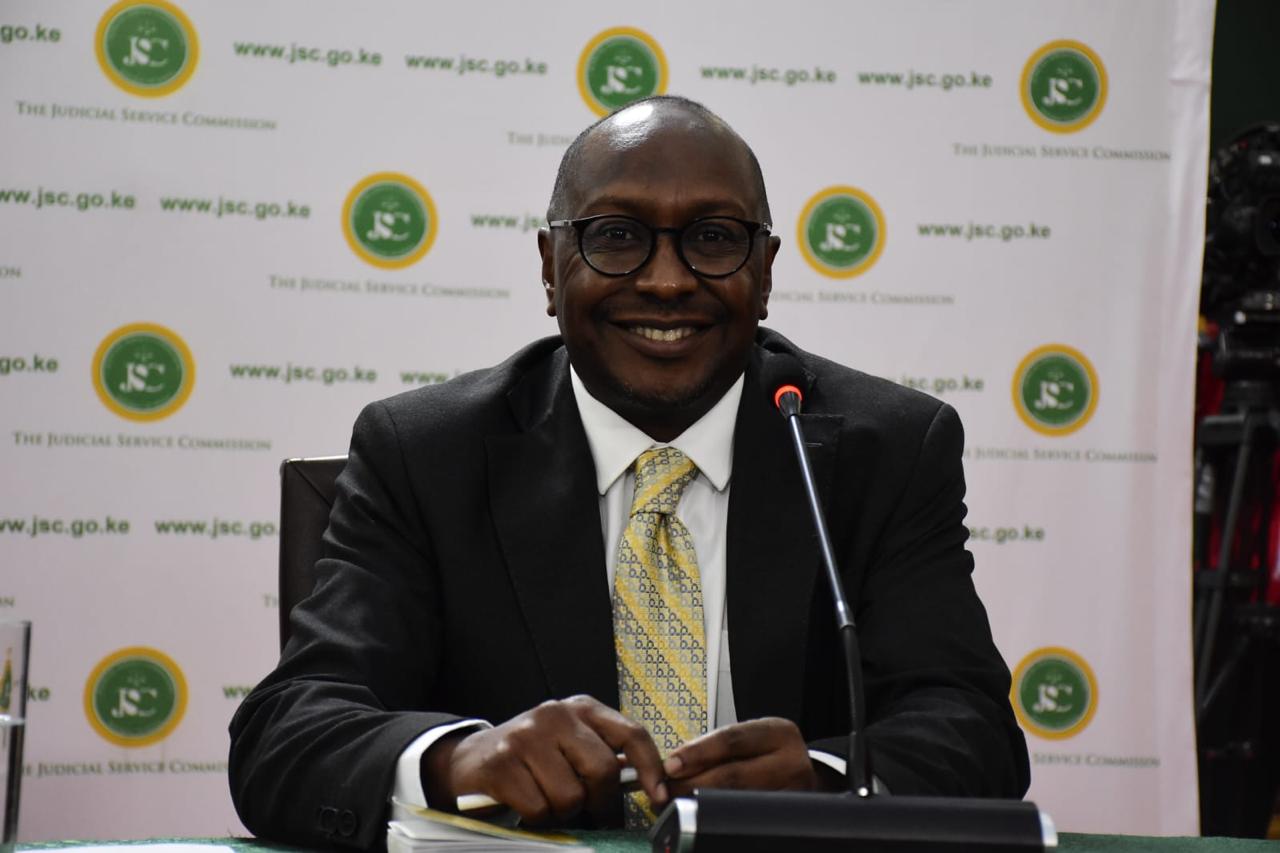
    Justice Francis Tuiyott and Justice Mohamed Warsame are set to appear before the Judicial Service Commission (JSC) selection panel today (Wednesday).

    The interviews saw former Independent Policing Oversight Authority (IPOA) Chairperson Anne Waceke Makori, Justice Joseph Kiplagat Sergon, Appellate Court Judge Kipchumba Katwa Kigen face the Justice Martha Koome-led team to find a replacement for the late Justice Mohamed Khadhar Ibrahim who passed away in December 2025.

    Former IPOA Chair Anne Waceke Makori was the first candidate to appear before the JSC selection panel.

    She was tasked to explain instances when the Supreme Court would act as the first appellate court and on her achievements at the helm of IPOA.

    When Court of Appeal Judge Katwa Kigen appeared before the panel, Commissioner Fatuma Sichale probed his close ties with President William Ruto.

    Appearing uneasy with the line of questioning Kigen argued that focusing on a single past client would be unfair and disadvantage him compared to other judicial candidates.

    They are the last two candidates to be interviewed before the Justice Martha Koome led team retires to make their Judgment in a week’s time.

    Five candidates were shortlisted for the interviews with Tuesday witnessing three candidates defend their suitability.

    More to follow…

  • Kenya concludes its deployment to Haiti

    Kenya concludes its deployment to Haiti

    Kenya has officially concluded its deployment to Haiti.

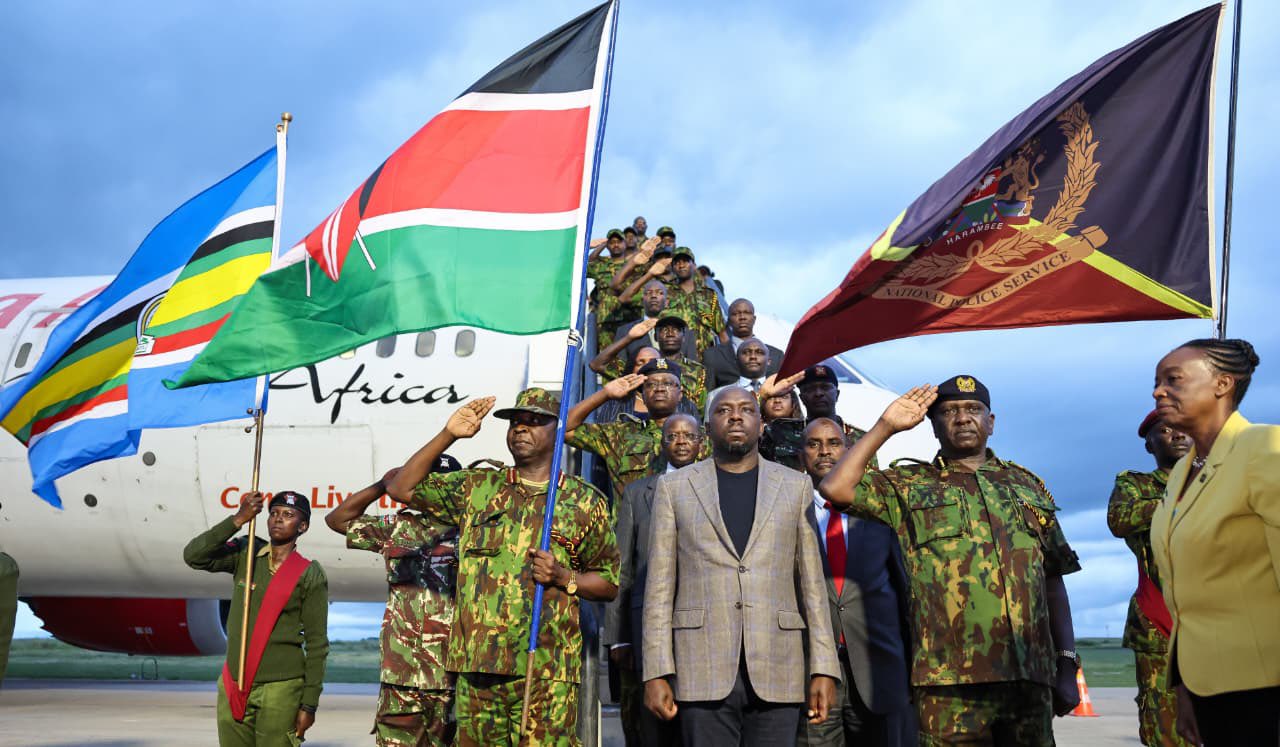
    The final contingent of 150 National Police Service officers returned home last evening, successfully winding down the Kenya-led Multinational Security Support (MSS) mission.

    The officers were received at the Jomo Kenyatta International Airport by Interior Cabinet Secretary Kipchumba Murkomen, the Inspector General of Police Douglas Kanja, the Executive Director of the United Nations Office on Drugs and Crime and Director-General of the United Nations Office at Vienna, Monica Juma, alongside Foreign Affairs Principal Secretary Abraham Sing’oei.

    The IG had earlier traveled for high-level engagements with Haitian authorities.

    The arrival comes after CS Murkomen presided over the final draw-down of Kenya’s contingent to Haiti as the mission officially transitioned to the Gang Suppression Force (GSF).

  • NLP boss vows to call out leaders regardless of tribe

    NLP boss vows to call out leaders regardless of tribe

    National Liberal Party Leader Dr. Augustus Muli has vowed to call out any leader, regardless of tribe, who “plays games with Ukambani’s future,” saying the region has suffered for too long from political hypocrisy and recycled leadership.

    Speaking after his remarks on former Deputy President Rigathi Gachagua sparked debate, Dr. Muli insisted his criticism was not a tribal attack but a defense of the region.

    “When I criticized DCP Leader Rigathi Gachagua this week, some rushed to frame it as a tribal attack. It was not. It was a defense of Ukambani,” Muli said.

    The NLP leader accused Gachagua of double standards, noting that the DCP boss had previously blamed certain Ukambani leaders for keeping the region “perpetually underdeveloped” but was now endorsing the same leaders.

    “You cannot diagnose the disease on Monday and dine with it on Tuesday. That is not strategy. That is political gambling — and Ukambani is not a casino,” he said.

    Dr. Muli maintained he would not spare any leader who betrays the region’s interests. “I’ll call out any leader, Kamba or otherwise, who plays games with Ukambani’s future,” he said. “This is not about tribe. It is about truth. If a Kamba leader betrays our people, I will name him. If a Kikuyu, Kalenjin, Luo or Luhya leader uses our region as a pawn, I will name him too.”

    He said Ukambani had paid “too high a price for polite silence” over the last 60 years, citing a cycle of unfulfilled promises on cotton, dams, and factories that leave the region with “no water, no jobs, no voice” after every election.

    According to Muli, the United Opposition’s current approach exposed a lack of sincerity. “Endorsing yesterday’s failures as today’s champions is not coalition-building. It is betrayal dressed as unity,” he said.

    Ahead of the 2027 elections, the NLP leader called for a “radical break” from recycled leadership, saying Ukambani’s politics must shift from individuals to industries.

    He outlined a three-point NLP agenda for the region: reviving Kitui Textiles and building agro-processing plants so that “value addition stays here”; fast-tracking Thwake Dam to irrigate over 100,000 acres because “a region with two permanent rivers should not beg for relief food”; and linking TVETs directly to industries so that “a diploma comes with a job offer, not depression.”

    “Ukambani’s tragedy isn’t lack of resources. It’s lack of respect — from Nairobi and from some of our own leaders,” Muli said.

    He challenged Gachagua and the United Opposition to present a development plan for the region. “If you’re serious about Ukambani, show us factories, not funerals. Until then, we won’t be your voting machine,” he said.

    Addressing fellow Kamba leaders, Muli said the era of being “kingmakers for others” must end. “Either we make Ukambani king, or history records us as the generation that leased our children’s future,” he said.

    Responding to claims that his remarks were driven by bitterness, he said: “If demanding water for my mother and jobs for my sister is bitterness, then Kenya needs more bitter people.”

    Dr. Muli said he entered politics to be “useful to the powerless,” adding that this meant “choosing people over party, region over tribe, and future over past.”

    “The time for games is over. The time for growth is now,” he concluded.

  • Historic case against British Government has been filed

    Historic case against British Government has been filed

    A landmark legal battle has been launched by the Akamba Community against the Government of the United Kingdom, seeking restitution, land restitution, and a formal apology for colonial injustices that left millions impoverished and politically marginalized.

    The Claim

    The case, spearheaded by Dr. Augustus Kyalo Muli, National Patron of the Anzauni Clan and the party Leader of the National Liberal Party, alleges that British colonial authorities dispossessed the Akamba of their fertile lands, seized their cattle, outlawed cultural practices such as the brewing of kaluvu, and confined them to semi-arid regions with inadequate rainfall.

    According to the claim, these actions destroyed traditional livelihoods, forcing the Akamba into servitude as soldiers and laborers under conditions described as “subjection by starvation.”

    Today, the Akamba population of approximately five million continues to suffer the economic and political consequences of colonial policies. Many elders in Makueni reportedly still live in shacks by the railway line, decades after eviction from ancestral lands.

    Legal Strategy

    Muli has assembled a formidable legal team, combining the expertise of Leigh Day Solicitors of London, Bosek & Co. Advocates of Kenya, and the Kenya Human Rights Commission.

    Leigh Day previously secured compensation and an apology for Mau Mau survivors in 2013, while Bosek & Co. are currently pursuing a case for the Kipsigis and Talai communities at the European Court of Human Rights.

    The Kenya Human Rights Commission has a track record of documenting colonial abuses and advocating for reparations.

    The evidence presented includes District Commissioner reports, Hansard records from 1938 acknowledging cattle seizures, recent court findings confirming ongoing dispossession in Makueni, and petitions highlighting continued cultural suppression.

    Legal Basis

    The claim cites international conventions and precedents, including the ILO Forced Labour Convention of 1930, the right to development under international law, and the African Court’s ruling in Ogiek v Kenya (2022), which ordered land restitution and reparations for indigenous communities.

    Demands

    The Akamba community seeks a formal apology from the UK Parliament, a compensation fund for five million Akamba people, restitution of alienated Crown Lands beginning with 5,048 acres in Makueni, cultural restoration including legalization of kaluvu and repatriation of artifacts, and a development fund for schools, hospitals, water, and industries.

    Call for Unity

    Muli has urged all 22 Akamba clans to unite behind the claim, provide witnesses, and preserve family records and burial sites as evidence.

    He emphasized that while the legal process may take years, precedent shows that persistence leads to victory.

    “This is not misfortune. This is a historical crime,” Muli declared, vowing that the Akamba will reclaim their dignity, economic strength, and political voice through the courts.

  • MKU clinches historic third consecutive National Drama Festival title

    MKU clinches historic third consecutive National Drama Festival title

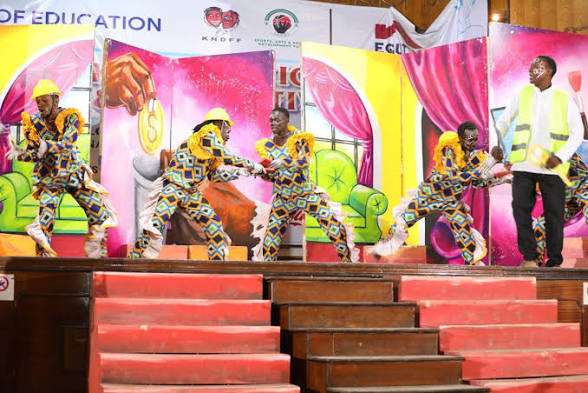
    Mount Kenya University (MKU) has once again solidified its dominance in Kenya’s creative arts sector after delivering an outstanding performance at the 2026 Kenya National Drama and Film Festivals held at Kagumo Teachers Training College in Nyeri, where it was crowned Best Overall and Most Prolific University, marking its third consecutive national title.

    MKU delivered a commanding performance across multiple categories, emerging victorious in theatre and drama, comedy, spoken word, verse, dance, cultural performances, and film and media productions.

    The institution secured top honors including Best Sponsored Play, Best Stand-Up Comedy, Best Overall Kiswahili Spoken Word, as well as multiple awards in verse, choreography, and film categories, firmly establishing MKU as the overall Best and Most Prolific University for the third year in a row.

    A major highlight of the festival was MKU’s strong presence in the prestigious Gala Performances, where several productions including spoken word pieces, cultural dances, stage plays, and solo verse performances were selected for showcase, reflecting national recognition of the university’s artistic excellence.

    Speaking after the win, William Luta, Coordinator of Sports, Film and Creative Arts at MKU, praised the students, trainers, directors, and the wider university community for their discipline, teamwork, and commitment, noting that the achievement was driven by passion, sacrifice, and consistent excellence.

    Luta further commended the students for their dedication throughout intensive rehearsals leading up to the competition, describing the victory as a major milestone for the institution.

    As Kenya’s creative industry continues to grow, MKU’s sustained success positions it as a key contributor to the country’s cultural and artistic development, inspiring other institutions and nurturing a new generation of performers and storytellers.

  • Civilians feared killed after reports of air strike on Nigerian market

    Civilians feared killed after reports of air strike on Nigerian market

    Civilians are feared to have died after reports that Nigerian military jets struck a village market in the north-east of the country.

    The attack took place near the border between Yobe and Borno states while an aircraft was said to be engaged in an operation against Islamist militants in the area, according to the Reuters news agency and local reports.

    The Nigerian Air Force said it carried out “mop-up” air strikes on “identified terrorist locations” within the Jilli axis of Borno State on Saturday, but has not confirmed that it struck the market nor confirmed casualties.

    The area is at the centre of the long-running Boko Haram insurgency, which has forced more than two million people to flee their homes and killed thousands.

    The Nigerian Air Force’s statement said follow-on strikes on Saturday were “aimed at fleeing remnants and regrouping cells seeking to exploit the difficult terrain”.

    There are conflicting reports of the number of casualties as a result of the strike on the market.

    Citing a councillor, Lawan Zanna Nur Geidam, in Yobe’s Geidam district, as well as three residents and an official from an international humanitarian agency, news agency Reuters said at least 200 people had been killed.

    “It’s a very devastating incident,” said Zanna Nur Geidam, who said the injured had been taken to hospitals in Yobe and Borno.

    Nigerian outlets the Sun and Punch reported sources saying that 10 people had been killed, while “several” others had sustained injuries.

    But newspaper the Daily Trust reported that an eyewitness said at least 56 people had died, with 14 others hospitalised.

    According to the outlet, the weekly market usually attracts traders and buyers from surrounding communities.

    In a statement on Facebook on Sunday, the Yobe State Emergency Management Agency said it had received “preliminary reports” of an incident at Jilli Market in the Gubio local government area, “which reportedly resulted in casualties affecting some marketers”.

    It added that emergency response mechanisms had been “immediately evacuated”, with assessment teams deployed to the area, but added that “details regarding the nature of the incident and the number of casualties remain unverified”.

    The government of the neighbouring Yobe state said some of its residents who went to the market “were affected”.

    “Some people from Geidam LGA [local government area] bordering Gubio LGA in Borno state who went to the Jilli weekly market were affected,” Brigadier General Dahiru Abdulsalam said on Facebook.

    Ahmed Ali, a 43-year-old market trader, told Reuters he was injured in the blast.

    “I became so scared and attempted to run away, but a friend dragged me and we all lay on the ground,” he said.

    Amnesty International’s Nigeria branch condemned the strike, which it said had killed “over 100 people”.

    “Launching air raids is not a legitimate law enforcement method by anyone’s standard,” a post on X said.

    “Such reckless use of deadly force is unlawful, outrageous and lays bare the Nigerian military’s shocking disregard for the lives of those it supposedly exists to protect.”

    Nigeria’s north‑east has seen repeated incidents in recent years in which military air operations against Islamist insurgents have mistakenly hit civilians, including in villages, camps for displaced people and markets.

  • Kakamega Governor condemns rise of political goonism

    Kakamega Governor condemns rise of political goonism

    Kakamega Governor Fernandes Barasa has urged security agencies to take firm and decisive action to curb the growing culture of hooliganism in the country’s political space.

    Speaking while addressing congregants at Christ Is The Answer Ministries (CITAM) Church, Governor Barasa warned that the trend, if left unchecked, risks plunging the country into instability.

    He expressed concern that political intolerance and violence are increasingly becoming normalized, and called for urgent intervention to safeguard peace and national cohesion.

    The Governor also cautioned political leaders against turning funerals into arenas for political confrontation, stressing that such occasions must remain dignified to allow families and communities to mourn without disruption.

    He further urged leaders to desist from premature political campaigns and instead prioritise delivery of tangible development projects that directly improve the livelihoods of wananchi.

    His remarks come amid heightened political tensions in various parts of the country, with growing calls for responsible leadership, restraint, and accountability.

  • The quiet revolution in Ukambani

    The quiet revolution in Ukambani

    As much of the nation remains fixated on the maneuvers of the United Opposition led by Rigathi Gachagua and Kalonzo Musyoka, a quiet yet determined movement is steadily taking root in Ukambani.

    This movement, best described as revolutionary, is advancing gradually but firmly — from village to village, from one small town to the next.

    And the name gaining traction is that of Dr. Augustus Kyalo Muli, leader of the National Liberal Party (NLP).

    In a region where, six decades after independence, a majority of the population still lives below the poverty line — where even a short distance from county headquarters residents spend hours searching for drinking water, and where roads and electricity remain scarce — a revolution is bound to emerge.

    “For years, the Kamba community has been misled and exploited. Leaders such as Kalonzo Musyoka have used the community as a bargaining chip for personal ambition and political leverage, leaving the people mired in poverty.Successive governments have also failed, making promises that were never fulfilled” Says Dr. Muli.

    It is precisely this cycle of neglect that Augustus Muli and his National Liberal Party seek to break.

    Town Halls Reshaping Politics

    The town hall meetings spearheaded by NLP leader Dr. Augustus Kyalo Muli are redefining the political discourse in Ukambani, signaling the rise of a new force capable of challenging entrenched dominance in the region.

    In Kitui, these forums have drawn overflowing crowds, with residents seizing the chance to directly question party leaders, debate policy priorities, and vent frustrations over stalled development.

    The format — interactive, participatory, and policy‑focused — has resonated deeply with citizens weary of conventional rallies.

    In Kitui, town halls have become a platform for ordinary citizens to express themselves in ways rarely witnessed in Kenyan politics.

    “For the first time, I feel like my voice matters in shaping the agenda,” said Mary Mutheu, a small‑scale farmer. “We are not just being told what leaders want; we are telling them what we need.”

    “We are tired of empty promises. Here, leaders are forced to answer directly,” added Peter Kilonzo, a youth leader from Kitui town. “If this continues, the region’s politics will never be the same again.”

    “This is not a rally — it is a classroom of politics. We are learning, questioning, and contributing. That is how democracy should work,” observed Josephine Mwende, a teacher by profession.

    A Growing Organizational Base

    Behind this surge lies a formidable organizational foundation: the NLP boasts close to one million registered members in Ukambani alone, a figure that underscores its expanding influence. This membership strength lends weight to the town halls, transforming them from symbolic gatherings into platforms backed by a significant constituency.

    While the forums are currently concentrated in Kitui, their ripple effects are spreading. Aspirants in Tharaka Nithi, Embu, and Meru have expressed interest in contesting under the NLP banner, signaling the party’s widening appeal in the Mt. Kenya region. This dual‑front expansion could position NLP as a formidable rival to Wiper, long considered the dominant voice in Ukambani politics.

    A Shift in Campaign Culture

    The town halls are expected to usher in a new campaign culture. Unlike personality‑driven rallies, these forums emphasize policy dialogue, accountability, and citizen participation. The participatory format is positioning NLP as a credible alternative — not only in Ukambani but also in regions where voters are hungry for inclusivity.

    With the 2027 elections on the horizon, Dr. Muli’s grassroots liberalism could redraw Kenya’s political map.

    The Big Question

    A recurring question has surfaced in various forums: Kalonzo’s political prominence has largely stemmed from the votes he delivers from the Akamba community. But what if Dr. Augustus Muli can deliver even half that support?

    This is a man who should not be underestimated. The tides in Ukambani politics may be on the verge of turning.