Author: Martin Mwanje

  • CS Kindiki tours Lamu in bid to ensure County security

    CS Kindiki tours Lamu in bid to ensure County security

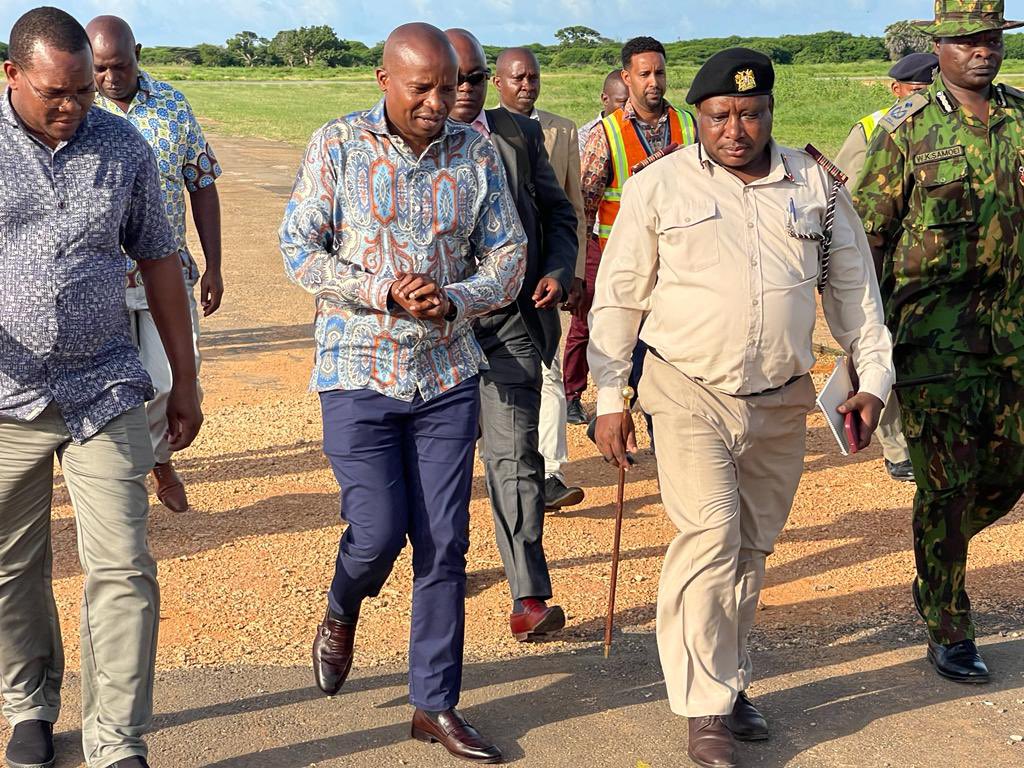
    Interior CS Prof. Kithure Kindiki Thursday embarked on a three-day working tour of Lamu County.

    During the visit, Prof. Kindiki says he will hold a series of meetings with the County Security and Intelligence Committee, political, religious, business and community leaders as well as members of the public.

    Upon arrival, he held a meeting with Lamu County and Lamu West Sub-County Security and Intelligence Committees in Witu area.

    Lamu has in the past been plagued with insecurity challenges that have left several people dead and property destroyed.

    The Al-Shabaab militants poses a threat in the area.

    The Interior CS says terrorism and cross-border crimes rank top in the list of national security threats adding that the Government will continue to equip the multi-agency security officers with skills and equipment to deal with modern-day crime and forestall any incursion by the terror groups.

  • Eyes on Treasury CS Prof. Ndung’u ahead of budget presentation

    Eyes on Treasury CS Prof. Ndung’u ahead of budget presentation

    The attention of the country will Thursday afternoon shift to one man: National Treasury CS Prof. Njuguna Ndung’u.

    Prof. Ndung’u is expected to present the first ever Kenya Kwanza budget since the administration took the reins of power after August 9, 2022.

    The National Treasury CS is expected to deliver the Ksh. 3.6 trillion 2023/2024 Budget Statement whose proposals have elicited mixed reactions from Kenyans.

    They are those who feel that the budget will inflict more pain on them at a time the cost of living is already unbearable.

    This will be the first budget for the g Kenya Kwanza administration that has prioritized five pillars under the Bottom up Economic Transformation Agenda.

     The Ksh. 3.6 budget will be seeking to maintain a delicate balancing act between debt servicing and stabilizing the economy.

    In the budget proposals, Ksh. 1.5 trillion has been earmarked for recurrent expenditure, Ksh. 718 billion for development while Ksh. 986 billion will go into servicing public debt.

    Counties, which are already facing a cash crunch, will share out Ksh. 385 billion.

    The education sector will get the lions share of Ksh. 604 billion to operationalize the Junior Secondary School in terms of capitation and hiring of teachers.

    Other areas set to benefit largely are Infrastructure, ICT and energy sector.

    The five priority areas under the Bottom-up Economic Transformation Agenda comprising agriculture, MSMEs, housing and settlement, healthcare as well as the digital superhighway and the creative industry are expected to get Ksh. 268 billion.


  • Nairobi Governor elected to C40 Cities Steering Committee

    Nairobi Governor elected to C40 Cities Steering Committee

    Nairobi County Governor Johnson Sakaja has been elected as the Vice Chairperson of the C40 Steering Committee, the governing body providing strategic direction for the global network of nearly 100 cities committed to addressing the global climate crisis.

    He was elected to represent 13 C40 cities in Africa.

    Sakaja has since his election last year vowed to restore the lost glory of Nairobi that was once known as The Green City in the Sun.

    Nairobi has in the recent past been plagued by a myriad of challenges among them lawlessness, congestion, and poor drainage that often leads to floods during rainy seasons.

    “There is a new urgency. We need to put our heads together and figure out how to make our cities more resilient. We need to sit together to share expertise, experience, and finances so that the most vulnerable among us, and the environment are protected. And we need to do this now,” Sakaja said upon his election.

    The former County Senator has committed to implement Nairobi’s climate action plan with the support from C40, and focus on developing a roadmap that will ensure the city reaches net-zero emissions, create green jobs and strengthen local resilience.

    In his new role as the Vice Chairperson of the C40 Steering Committee, Sakaja will be a leading voice in encouraging African cities to work together to fast-track climate action.

    He will support the building of a community of practice that will share knowledge and experience, and secure the funding needed to build climate resilience and address loss and damage associated with global heating.

    C40’s member cities represent 700 million citizens and one quarter of the world’s economy.

    Through collaboration and innovation, the mayors of C40 Cities are determined to deliver on the Paris Agreement’s highest ambition and keep global temperature rise to below 1.5 degrees, and to do so in an equitable way.

    Sakaja has been nominated among the top 100 Future Leaders: The World’s Most Influential Young People in Government.

    He has also been awarded Change Maker of the Year 2016 at the African Achievers Award in recognition of his leadership skills and youth empowerment in the country.


  • Global praise for Morocco’s Inter-Libyan Dialogue role

    Global praise for Morocco’s Inter-Libyan Dialogue role

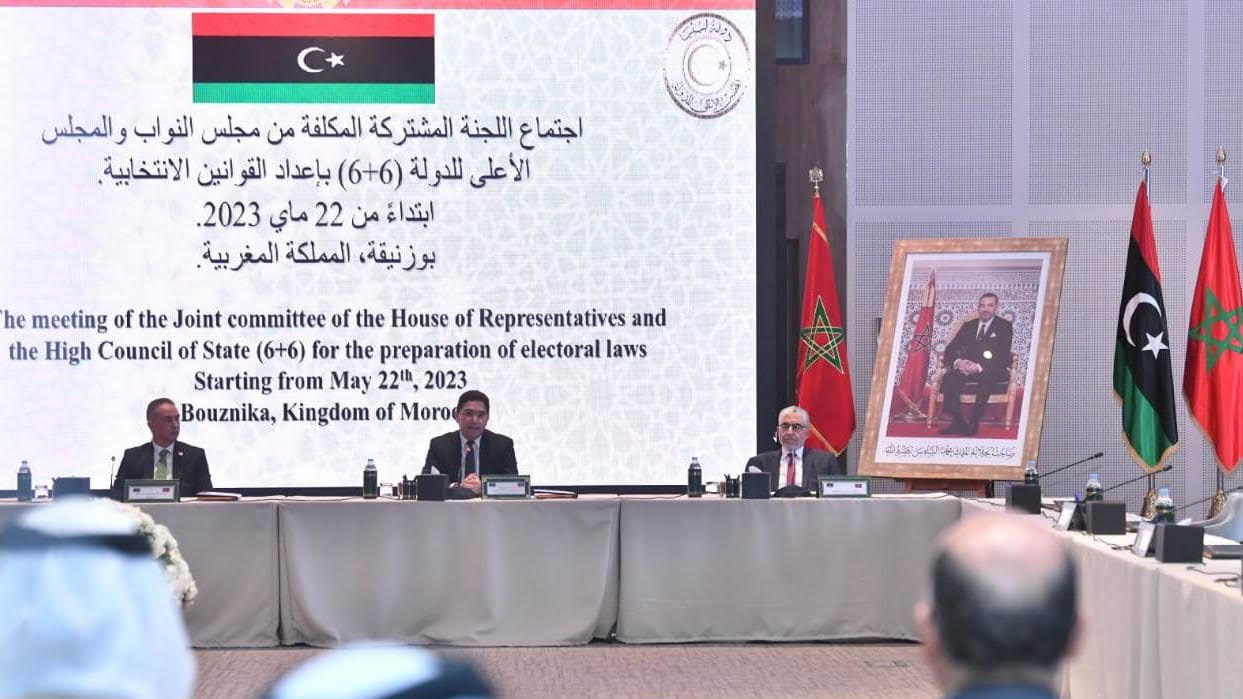
    Morocco has been lauded for playing a leading role in bringing the inter-Libyan dialogue to a successful conclusion, within the framework of the “6+6” Joint Commission.

    Regional and international organizations, the diplomatic corps of several countries and numerous media outlets have unanimously praised the Kingdom’s active commitment to a political transition in the country through the electoral process.

    At the United Nations, the Secretary-General’s spokesman, Stéphane Dujarric, expressed the UN’s thanks to Morocco for its facilitation efforts to reach compromises on the electoral laws between the Libyan parties meeting in Bouznika.

    “We thank Morocco for facilitating the efforts” of the members of the “6+6” Joint Commission, tasked by the Libyan House of Representatives and Council of State with preparing the electoral laws, stressed the spokesman, at his daily press briefing in New York,” Dujarric said.

    The United Nations Support Mission in Libya (UNSMIL) also thanked Morocco for hosting the four-day “6+6” Libyan Joint Commission meeting in Bouznika, held between May 22 to June 6, which reached a compromise on the laws governing the presidential and parliamentary elections scheduled for the end of the year.

    In a statement, the Mission expressed its appreciation of the efforts made by the 6+6 Commission, while thanking Morocco for hosting it.

    The African Union (AU) has also heaped praise on Morocco with AU Commission Chairman Moussa Faki Mahamat tweeting that, “I congratulate the Kingdom of Morocco on its facilitation”.

    The Secretary General of the League of Arab States, Ahmed Abou El Gheit, also praised Morocco’s efforts, hoping they would “encourage the Libyan parties, following the compromises announced, to overcome the obstacles hindering the final signing of the agreement in the coming days”.

    The General Secretariat of the Organization of Islamic Cooperation (OIC) lauded the role played by the Kingdom in achieving the compromises.

    The same satisfaction was expressed by the General Secretariat of the Arab Maghreb Union (AMU), which praised Morocco’s efforts on behalf of the Libyan brothers, as well as the approach adopted by the Kingdom to provide them with the appropriate space for dialogue and consultation “far from any foreign pressure”.

    The Ministerial Council of the Cooperation Council for the Arab States of the Gulf (GCC) welcomed the compromise reached by the “6+6” Joint Commission at its meetings in Morocco on the laws governing the election of the Head of State and members of Parliament, calling it a “positive and constructive” step towards the holding of presidential and parliamentary elections in the country.

    Several diplomatic representations accredited to Morocco also praised Morocco’s commitment.

    In tweets, the British and Irish embassies welcomed the Kingdom’s hosting of the “6+6” Joint Commission.

    They also commended the role played by Moroccan diplomacy in reaching a compromise on this issue.

    For its part, the Croatian embassy welcomed Morocco’s efforts to ensure the success of the “6+6” Joint Commission dialogue and reach a compromise, with a view to a political settlement to the Libyan crisis, underlining “the Kingdom’s strong and positive commitment to a peaceful political transition in Libya, through the electoral process”.

    Switzerland and the Netherlands also hailed Morocco’s “very positive” commitment to the peaceful political transition in Libya, in tweets posted by the two countries’ embassies in Rabat.

    Saudi Arabia lauded “the efforts of the brotherly Kingdom of Morocco to make the dialogue succeed and reach a compromise, with a view to achieving a political settlement in Libya”.

    The statement was issued by the Saudi Ministry of Foreign Affairs.

    Iraq highly commended the role played by Morocco in bringing about successful dialogue and compromise on the electoral law in Libya, while offering political parties the opportunity to play a major role in the electoral process.

    The Mauritanian government, through its Ministry of Foreign Affairs, hailed the “great efforts made by the Kingdom to reconcile the views of the various Libyan parties in order to reach this important agreement, which paves the way for the establishment of the necessary conditions for the completion of the Libyan electoral process in the best possible conditions and in a consensual and participatory manner”.

    In a statement issued by its Ministry of Foreign Affairs, Egypt also praised the efforts of the “6+6” Joint Commission, hailing the Kingdom’s hosting of the commission’s proceedings.

    In a similar statement, the UAE Ministry of Foreign Affairs commended “the efforts of the brotherly Kingdom of Morocco to make the dialogue a success and reach important compromises aimed at achieving a political settlement in Libya”.

    Kuwait also praised the efforts made by the Kingdom of Morocco after hosting the “6+6” Joint Commission meeting in Bouznika.

    Jordan welcomed the role played by the Kingdom of Morocco in the success of the dialogue and compromise between the Libyan parties regarding the organization of presidential and parliamentary elections.

    The Jordanian Ministry of Foreign Affairs welcomed the agreement reached in the Moroccan city of Bouznika by the members of the “6+6” Joint Commission tasked by the Libyan House of Representatives and High Council of State on the laws governing presidential and parliamentary elections in Libya.

    The same was true for Yemen, whose Ministry of Foreign Affairs welcomed the compromises reached by the “6+6” Joint Commission at the end of two weeks of meetings in Morocco, concerning the laws governing the presidential and parliamentary elections scheduled for the end of the year.

    The Kingdom of Bahrain also commended Morocco’s diplomatic efforts to reach a major consensus among the members of the “6+6” Joint Commission, tasked by the Libyan House of Representatives and Council of State with drafting laws governing the presidential and parliamentary elections scheduled for the end of the current year, after around two weeks of meetings in Bouznika.

    On Sunday, the State of Qatar, through its Ministry of Foreign Affairs, expressed its gratitude to Morocco for its support for dialogue and consultation between the Libyan parties, and for the Kingdom’s efforts in hosting the talks.

    In addition, several international media highlighted the importance of Morocco’s role in the Libyan dialogue. These included the Italian media, which described this step as “crucial” in the process of resolving the Libyan crisis, and the Argentine news agency Aternative Press Agency, which, in an analysis by Argentine political scientist Adalberto Agozina, praised the Kingdom’s tireless efforts.

    On Tuesday, the “6+6” Joint Commission announced that after two weeks of meetings in Morocco, its members had reached a compromise on the laws governing the presidential and parliamentary elections scheduled for the end of the year.

    The Bouznika meeting is a continuation of the series of meetings hosted by the Kingdom, bringing together the various Libyan parties with a view to deepening dialogue on ways and means of resolving the crisis in the country, following an approach that provides the right platform for constructive dialogue and consultation.
     

  • Ruto appoints Dr. Thugge CBK Governor, Haji NIS Director General

    Ruto appoints Dr. Thugge CBK Governor, Haji NIS Director General

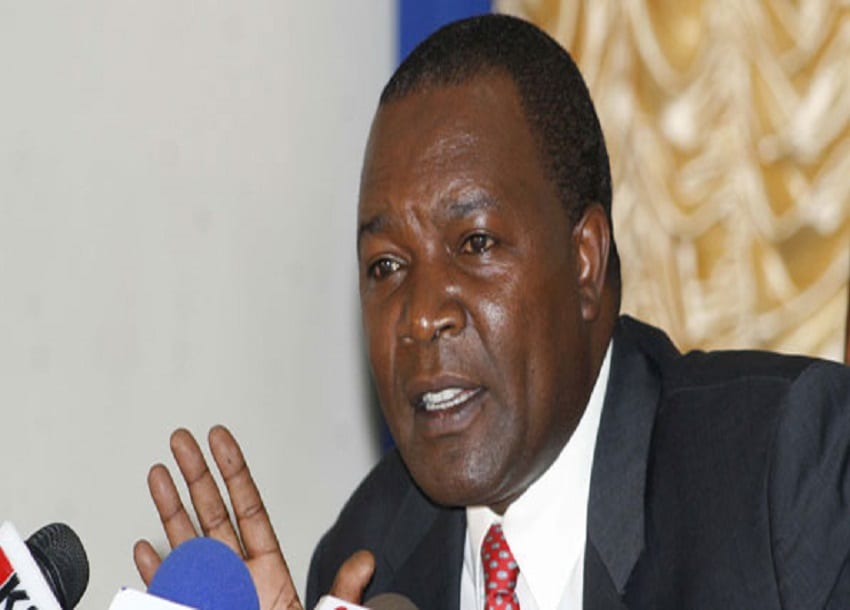
    President William Ruto has appointed Dr. Kamau Thugge to be the Governor of the Central Bank of Kenya (CBK).

    This is after the National Assembly approved his nomination on June 7, 2023.

    “In exercise of the powers conferred by section 13 (1) of the Central Bank of Kenya Act, I, William Ruto, President of the Republic of Kenya and Commander-in-Chief of the Defence Forces appoint Dr. Kamau Thugge to be the Central Bank of Kenya, for a period of four years, with effect from the 19th, June, 2023,” President Ruto says in a Gazette Notice dated 13th June, 2023.

    During his vetting, Dr. Thugge, a former PS at the National Treasury, indicated that his main focus if he takes over the mantle as CBK Governor will be to consolidate the country’s banking sector as a way of ensuring its efficiency and stability.

    President Ruto has also appointed Noordin Haji to be the Director General of the National Intelligence Service.

    The National Assembly Tuesday approved the nomination of Haji as the Director General of the National Intelligence Service (NIS).

    This is after National Assembly’s Defence and Intelligence Committee recommended his approval for the job.

    The Committee’s Chairperson Nelson Koech said their decision was informed by Haji’s suitability and integrity for the job.

    “Having considered the suitability, capacity and integrity of the nominee and pursuant to Section 8(2) of the Public Appointments (Parliamentary Approval) Act (No. 33 of 2011) as read together with Section 7 (1) of the National Intelligence Service Act, 2012, the Committee recommends that: The National Assembly APPROVES the nomination of Mr. Noordin Mohamed Haji, CBS, OGW for appointment as the Director-General of the National Intelligence Service.”

    Haji, who is the immediate former Director of Public Prosecutions, now  succeeds the outgoing NIS Director General Major General (Rtd) Philip Wachira Kameru.


  • Kega-led Jubilee faction writes to Azimio, seeks to withdraw from coalition

    Kega-led Jubilee faction writes to Azimio, seeks to withdraw from coalition

    The Kanini Kega led faction of Jubilee Party has written to  Azimio la Umoja One Kenya Coalition expressing its intention to withdraw from the Opposition outfit.

    In the notice issued by the former Kieni lawmaker, Kega says the decision was arrived at during a meeting of the party’s National Executive Meeting held early this month.

    “TAKE NOTICE the National Executive Committee (NEC) of Jubilee party meeting of June 6th, 2023 resolved to withdraw from the Deed of Agreement for Azimio La Umoja One Kenya Coalition,” says Kega who is the party’s Ag. Secretary General.

    “Further TAKE NOTICE that pursuant to Article 33.1.1 & 2 of the Party Constitution as read together with Article 22.1 of the Deed of Agreement for Azimio La Umoja One Kenya Coalition dated March 2022, Jubilee Party hereby GIVES NOTICE to withdraw from the Deed of Agreement for Azimio la Umoja One Kenya Coalition.”

    The Jeremiah Kioni led faction of Jubilee party was quick to dismiss the notice terming it fake.

    “Jubilee party is in Azimio to stay. We kindly request those who feel tired of this cause, to walk away quietly into a party where they will be more comfortable,” wrote the Kioni-led faction in a quick rejoinder via Twitter.

    Jubilee has been embroiled in supremacy battles with the two factions fighting for the soul of the former ruling party.

    Late last month, the Kioni-led faction held its National Delegates Conference that was attended by ex–President Uhuru Kenyatta.

    During the meeting held at Ngong Racecourse, the faction announced new appointees to its National Executive Council (NEC) board after some members showed allegiance to other parties.

    In the changes, Nominated MP Sabina Chege was replaced by Embakasi West MP Mark Mwenje as Deputy Minority Whip in the National Assembly.

    Nominated MP Sabina Chege and Kanini Kega teamed up with a section of Jubilee elected legislators to kick out former President Uhuru Kenyatta from the party leadership and named Sabina Chege as the new party leader and Kanini Kega as the new Secretary General replacing Jeremiah Kioni.

    The Kanini Kega-led faction has since indicated that it will on July 22, 2023 hold its Special National Delegates Conference at the Kenyatta International Conference Centre (KICC).

    The EALA MP says their faction has communicated to the Speaker of the National Assembly Moses Wetang’ula, informing him that the party’s leadership in the House remains the same following the changes made by Uhuru on May 22.


  • CS Owalo roots for data protection at key summit in India

    CS Owalo roots for data protection at key summit in India

    Information, Communications and Digital Economy CS Eliud Owalo is calling for data privacy and protection in the face of digital transformation sweeping across the globe.

    He spoke during the inauguration of the two-day Global DPI Summit that begin Monday in Pune, India.

    “One of the emerging issues in the operation environment in the face of digitalization on one hand and digital identity on the other, is the issue of data privacy and data protection. That as we digitalize our services, or uptake digital identity, we must be cognizant of the fact that we must ensure data protection and data privacy,” submitted the CS.

    He says apart from being an internal component of digital public infrastructure, digital identity is also a key facilitator for digitalization in the quest to move government services closer to the people.

    “That in the face of rapid digitalization, there is no need for members of the public to visit government offices to consume public services. People should be able to leverage digital identities to consume government services from the comfort of wherever they are if and when digital identities are in place,” added the CS who later Chaired a session on Digital Identities for Empowering People.

    According to him, digital identity is a critical success factor for digital transformation.

    The theme of the two-day summit that brings together Ministers in charge of the Information and Communication Technology sector is “Digital Public Infrastructure for Ease of Living, Ease of Doing Business and Ease of Governance.

  • NHIF in countrywide drive to enlighten civil servants on the scheme

    NHIF in countrywide drive to enlighten civil servants on the scheme

    There is need for conducting regular and effective monitoring and evaluation as well as awareness creation of the National Hospital Insurance Fund (NHIF) schemes.

    NHIF Head of Corporate Communications and Marketing Dr. Phyllis Nyakiba says the move will ensure that civil servants have access to quality healthcare services countrywide.

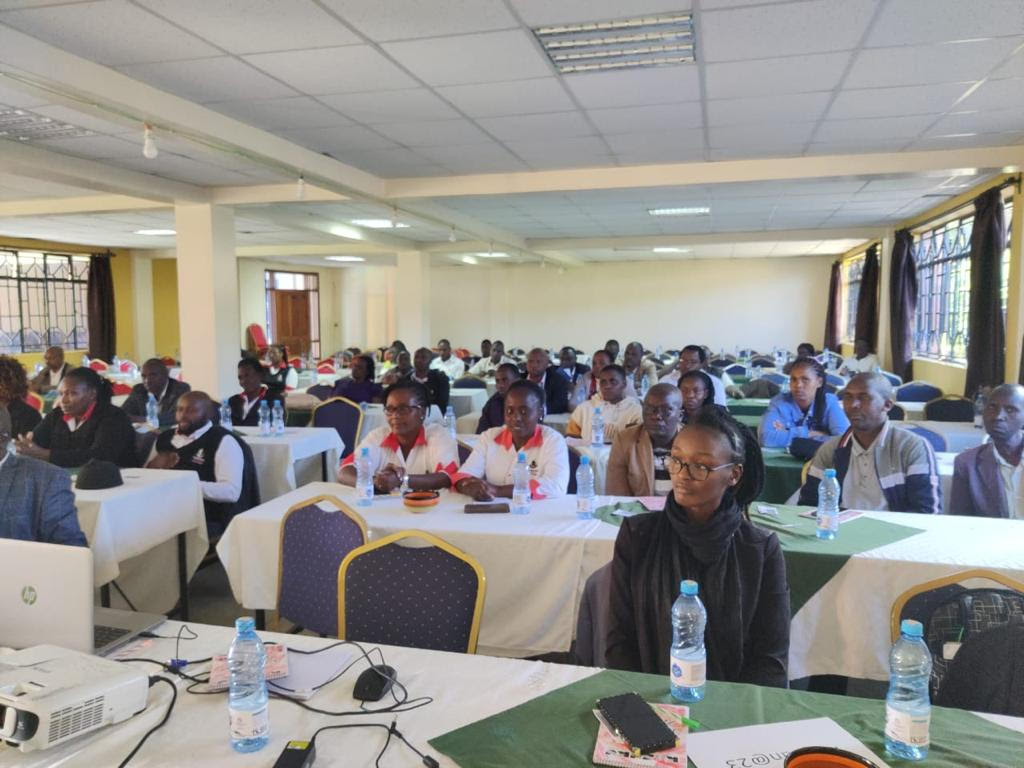
    She spoke during a Monitoring and Evaluation exercise for civil servants conducted in Kitengela, Kajiando County.

    NHIF in conjunction with the Ministry of Public Service, Gender and Affirmative Action, State Department for Public Service and the Union of Kenya Civil Servants, is conducting a countrywide Monitoring and Evaluation exercise to establish the effectiveness of the comprehensive medical insurance scheme for civil servants.

    The joint exercise, seeks to among other things, gather crucial information that will improve the management and administration of the scheme.

    It also seeks to gauge the know-how of civil servants regarding the scheme including their awareness level regarding the benefits they are entitled to, establish whether they know how to access the services, and any other challenges that they encounter in their day-to-day use of the scheme.

    During the Monitoring and Evaluation exercise conducted in Kitengela, civil servants were taken through a discussion on their wellbeing which centred on preventive care.

    They were especially encouraged to take up their annual full body checkup, which is part of the benefits they are entitled to under the scheme.

    Civil servants cited preauthorization approval timings and some accredited hospitals not having essential drugs as some of the challenges that need to be urgently addressed.

    The civil servants’ enhanced scheme is a negotiated comprehensive cover between the procuring entity which is State Department of Public Service and NHIF.

    The scheme, managed by NHIF, is a healthcare program that provides health insurance coverage to civil servants in the country.

    The scheme is enhanced through the individual statutory contributions paid monthly by various ministries after deductions and topped up.

    It has existed since January 2012 and covers all civil servants.

  • Governor Ndeti puts Cooperative Societies, rogue officials on notice

    Governor Ndeti puts Cooperative Societies, rogue officials on notice

    Cooperative Societies working in collusion with rogue officials to disposes members off their land in Machakos County will be dissolved and title deeds issued to genuine members.

    Machakos County Governor Wavinya Ndeti says most of the original land owners in some cooperatives had been kicked out of their land by rogue officials who use fake title deeds.

    Ndeti says her government in conjunction with the national government had agreed to dissolve such cooperatives as a way of resolving land disputes which were an impediment to the county’s development agenda.

    “We have agreed with the national government to dissolve the cooperatives and issue people with title deeds as a way of resolving the land disputes,”Governor Ndeti said.

    She made reference to Drumvale Farmers Cooperative Society in Kamulu, Kangundo, Katelembu Cooperative Society and Katheka-Kai Cooperative Society in Mavoko, among others.

    The Governor made the remarks outside her office after holding deliberations with the Senate Committee on Trade, Industrialization and Tourism led by its Chairman who is also Kajiado County Senator Seki Lenku.

    The Committee visited the County at the invitation of Senator Agnes Kavindu and Drumvale Farmers Cooperative Society.

    Among the issues on the table was Drumvale Farmers Cooperative Society which is faced with loss of their property following the actions of a liquidator.

    Lenku said there were people trying to grab the Drumvale land using their offices but assured that the land will be returned to its rightful owners.

    “Senate is looking at the matter and we are visiting the the Drumvale members today and later make directives.We assure that within a very short time, we are going to conclude this matter,” assured Senator Lenku.

    The Senate Committee will make a full report after a visit to members of the Society.

    “We appreciate what the Senate is doing to resolve the issues and warn anyone coming to displace our people that there is no free land in Machakos.
    We will not accept it,”warned Governor Ndeti.

    Members of the Drumvale  Farmers Cooperative Society had petitioned the Senate to intervene in what they termed as utter impunity and abuse of office by an official appointed as the liquidator.

    Drumvale Farmers Cooperative Society said a letter sent to the Commissioner of Societies seeking assistance to revamp the society to profitability had turned out to be their source of nightmare as the officials had since taken advantage of the society contrary to members’ expectations.

    The society which was established in the 1960s and had parcels of land totalling 12,000 acres operated well until the original founder members who hailed from Mwala, Matungulu, Kathiani and Kangundo started dying of old age and natural attrition.

  • Coffee farmers upbeat as Reforms Conference gets underway in Meru

    Coffee farmers upbeat as Reforms Conference gets underway in Meru

    Deputy President Rigathi Gachagua has officially opened a two-day Coffee Reforms Conference that is aimed at coming up with recommendations to address challenges faced by the coffee farmers in the country.

    The event, being held in Meru County,  brings together Governors from coffee growing counties, government officials, lawmakers and other stakeholders in the chain, among others.

    The coffee sector has been faced with challenges that have almost crippled the sector.

    The Kenya Kwanza manifesto has put weight on Agriculture as the backbone of the economy and has expressed willingness to do everything possible to bolster the sector.

    “For the next two days, we will establish structures for long-term reforms in the coffee sub-sector,” Gachagua told the well-attended gathering.

    “In the Executive Order Number 1 of 2023, President William Ruto tasked me with overseeing public reforms. Reforming the Coffee, Tea, and Dairy sub-sectors have formed part of my work as I engage stakeholders like yourselves, towards a turn-around to profitability.”

    The conference is the climax of wide consultations with farmers, various State and non-State agencies within and without the country on sustainable reforms.

    “For far too long, those who sweat most in producing the cash crop have benefited the least. This is why we are here today. We want to link the farmer to the consumer, directly,” noted the DP.

    Some of the challenges bedevilling the sector have been attributed to legal and policy gaps.

    The Deputy president has however brought on board Members of Parliament from the sector to brainstorm on possible policies that could be pushed in parliament that will aid strengthen the coffee sector.

    From the engagements, legal, policy and operational gaps in the production and marketing chain have been identified forming a key component of the output of the conference.

    The Kenya Kwanza administration is laying down strategies that will add value addition and identify high value markets for the commodity globally.

    “With the high cost of Kenyan coffee in the international market, the Kenyan farmer should thrive economically as was the case some years back. Our farmers must get maximum returns from coffee. This will also boost our foreign exchange,” remarked the DP.

    “We must rewrite the history of the Kenyan coffee, which dates back to 1894. This brand, was and still is known across the world by its superior and distinct aroma and flavour.”

    The conference is expected to come up with far-reaching reforms that will, among other things, ensure coffee becomes the leading foreign exchange earner for the country.