Author: Margaret Kalekye

  • It’s all systems go as Kenya hosts Africa Forward Summit

    It’s all systems go as Kenya hosts Africa Forward Summit

    It is all systems go as Kenya hosts the inaugural Africa Forward Summit 2026 in Nairobi on Monday, May 11th and 12th May 2026.

    More than 30 African Heads of State and Government, over 4,000 delegates, and approximately 2,500 global business leaders, investors, innovators, development partners, and policy actors from across Africa, France, and the wider international community are expected to attend the two-day conference.

    Co-chaired by President William Ruto and French President Emmanuel Macron, who is currently in the country, the summit will focus on economic development, financial reform, energy transition, green industrialisation, digital transformation, and youth innovation, with an emphasis on equal partnerships.

    The event builds on evolving Africa–France relations and highlights Kenya’s role as a continental hub for innovation and diplomacy.

    The President spent much of Sunday hosting several Heads of State at State House. A key highlight was a joint press conference with President Macron, centered on strengthening Kenya–France strategic cooperation for shared prosperity.

    Held under the theme “Africa Forward: Africa–France Partnerships for Innovation and Growth”, the Summit is expected to mark a significant turning point in Africa–France relations, anchored on a renewed framework of parity, innovation, co-investment, and practical implementation.

    Major roads closed

    Meanwhile, temporary traffic disruptions are expected during the summit, which will be held at the Kenyatta International Convention Centre (KICC).

    Major roads scheduled for closure starting midnight include City Hall Way, Parliament Road, Harambee Avenue, and Taifa Road.

    The closures are expected to affect traffic flow along Mombasa Road, Lang’ata Road, Thika Road, Limuru Road, Kiambu Road, and within the Nairobi Central Business District.

    The National Police Service said it is working with relevant agencies to ensure smooth traffic flow and the successful conduct of the event.

    “All motorists are urged to be patient, strictly adhere to traffic rules and regulations, and follow the guidance of officers stationed along the affected routes. Strict action will be taken against any person found violating traffic rules,” it stated.

  • Search to save workers trapped in collapsed Kajiado building continues

    Search to save workers trapped in collapsed Kajiado building continues

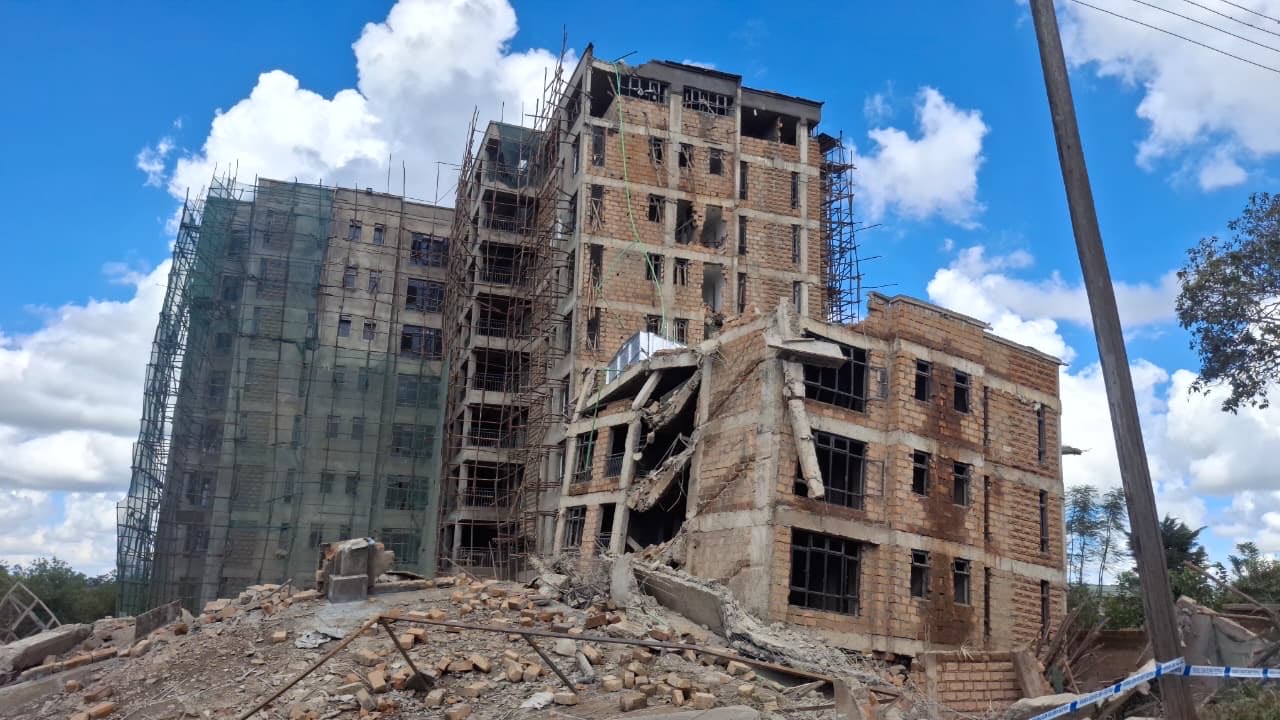
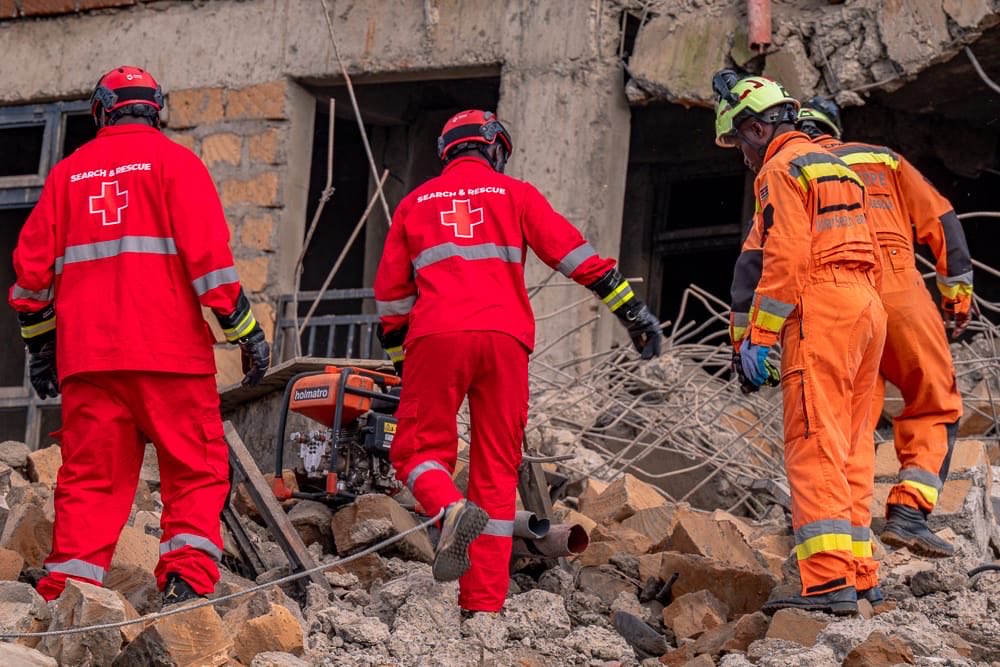
    Search and rescue operations are ongoing in Kajiado County, where four workers are feared trapped under the rubble of a building that collapsed on Saturday, May 9.

    The Kenya Red Cross Society said multi-agency teams, supported by sniffer dogs and heavy machinery, are on the ground as efforts continue.

    The eight-storey building under construction partially collapsed in the Ole Nairi area in Oloolua, Kajiado North.

    Authorities have warned that the remaining section of the building is at risk of further collapse, posing a major challenge to the ongoing rescue operation.

    Heavy rains being experienced in the area are also hampering the mission.

    Meanwhile, anxious residents have called for a faster response in the hope of saving those still trapped.

  • Let’s focus on other sources of Methane emissions not Africa’s indigenous livestock

    Let’s focus on other sources of Methane emissions not Africa’s indigenous livestock

    The Inter-Parliamentary Union (IPU), the global organisation of parliaments, is coming to Nairobi. The meeting set for 15th to 17th May 2026 will be launching a project on the need to deal with rising methane emissions that contribute to global warming, through the theme: “Enhancing Parliamentary Action on Climate Change: Strengthening the Role of Parliaments in Reducing Methane Emissions.”

    This meeting, supported by the Global Methane Hub, aims to equip parliaments with the tools, training, and networks they need to take effective action on methane emissions.

    According to the United Nations Environment Program (UNEP), methane is far more potent than carbon dioxide in trapping heat. Over a 20-year period, methane is 86 times more powerful than carbon dioxide. Methane is responsible for approximately 30% of global warming since the pre-industrial era, and although methane is a short-lived greenhouse gas, lasting about 12 years, increasing emissions significantly contribute to worsening global warming.

    In the build-up to the meeting, Parliament organised a media breakfast Dialogue on Methane Emissions in Kenya with the Theme: “Enhancing Public Understanding and Parliamentary Action on Methane Reduction in Kenya.”

    One presentation that stood out, is the one by Dr Claudia Arndt from the International Livestock Research Institute (ILRI) on Research, Innovation and Sector Experience in Methane Reduction.

    According to Dr. Arndt, most of the methane emission in Kenya is produced by livestock followed by solid waste, livestock manure and rice production.

    Research has shown that livestock, particularly ruminants-cattle, sheep, goats, generate significant methane through enteric fermentation. That roughly 37% of methane emissions from human activity arise from livestock farming. However, many reports on this subject carry a disclaimer, meaning there is a need for further research and analysis to determine if indeed livestock is the main culprit.

    In Nairobi City County, “We have methane in waste sites like Dandora, we have combustion gases from motor vehicles that builds other pollutants that are very bad for human health,” says Dr. Arndt and adds, “It’s not as much in the countryside because you don’t have as much combustion, the landfill will have a bigger point emission compared to cattle that roam around.” So, how livestock is a major contributor, while there is less pollution in the countryside where livestock roam freely is a matter that needs to be looked into.

    The crux of the matter is agriculture which is the mainstay of the economy is also the one where most of the methane is emitted, according to the research. Livestock produces methane due to enteric fermentaiton through burping, from its waste and waste from agricultural products or agricultural remains.

    In his presentation, Dr. John Mutunga, Tigania West MP, avers that according to scientists, agriculture is responsible for 40% of the methane emissions.

    The biggest worry is that research has shown that “the poorer the genetics of the animal or the poorer the breed, the more the methane they emit. Very interesting,” he says and adds, “The poorer the productivity of the animal, the more methane it produces.”

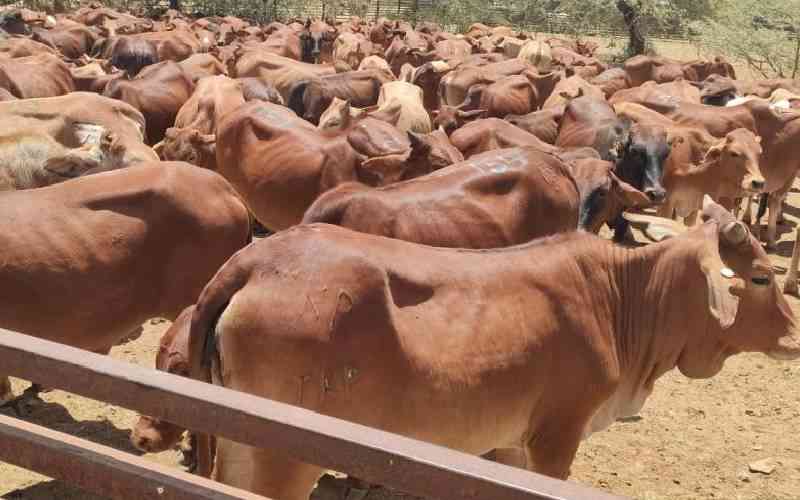
    But Mandera North Abdullahi Bashir Sheikh who is the Chairman of the Parliamentary Pastoralists Group, questioned the veracity of the research and the fact that it concentrated on cattle and not the other forms of livestock including the Camel which is mostly kept by pastoralist communities.

    According to the Mandera North Member of Parliament, speaking on the matter about methane and climate change, he called for the involvement of pastoralist communities when developing policies that affect them, noting that pastoralists are highly mobile individuals and a townhall meeting does not work for them.

    Bashir Sheikh urged researchers to be cognisant of the fact that 80 per cent of the country is Arid and Semi-Arid Lands (ASALs), and that is where pastoralist communities live and where over 90 per cent of the pastoralists keep camels.

    Yet according to him, the presentation by the International Livestock Research Institute (ILRI)  did not have data on the camels as being among the livestock, “sad that they have no research on camels, you have no research on camels and that is the core of the pastoralist person out there, the research that you have is the cows not camels” for Bashir Sheikh data that does not have the contributions of camel population in determining whether or not they contribute to methane emissions is incomplete. He says 14 of the 47 counties in the country have pastoralist communities that keep camels.

    Mutunga is of the view that countries, more so Kenya, need to have in place policies that work towards reducing methane emissions, but this will be a major challenge considering that most county governments are still struggling with solid waste management.

    Nairobi itself has Dandora dumpsite where most of the organic waste is dumped, most of it coming from domestic refuse, from eateries and hotels where much of the left-over food comes from, the anaerobic bacteria take over and, in the end, we have methane gas.

    Another noxious gas is Nitrous oxide, which is the third most significant anthropogenic greenhouse gas, accounting for about 10% of net global warming.

    Methane is high on the agenda of the IPU meeting, so far 150 countries have already signed up to the reduction of methane, by 30% by 2030, yet with just under four years to the end date, most are running behind schedule. There is therefore an urgent need for parliaments to develop appropriate legislation, regulations, and even policies towards the reduction in methane emissions.

    Perhaps one of the solutions should be how to tap methane gas and use it as a green energy instead of looking at it as a problem, let us look at the opportunities. Developing countries could look into how to come up with bankable proposals and tap into the resources available under the Green Climate Fund to reduce emissions by utilising methane as a source of energy.

    Legislation that looks at reducing emissions through improved livestock breeds and feeds should be a long-term measure, because changing pastoralist communities overnight will meet resistance, how to reduce the number of animals yet the strength and wealth of these communities lies in the number of animals will also meet resistance.

    If the burping and cow dung released by the livestock is the main source of methane then, the solution lies in tapping the biogas, let the potency of the methane emitted by the “poor breeds” be seen in the form of energy it produces.

    Methane is a powerful greenhouse gas and a major cause of global temperature rise. It is over 80 times more harmful than carbon dioxide in the short term but has a much shorter lifespan. This means that reductions in methane emissions can deliver quick climate benefits.

    However, methane is not only a climate issue. It also harms ground-level air quality which is bad for public health, crops and the environment. Reducing methane, therefore, can quickly improve air quality, protect health, and support food and environmental security.

    The writer is a KBC climate journalist 

     

  • Gang raped: Victim identifies four suspects as police hunt for two others

    Gang raped: Victim identifies four suspects as police hunt for two others

    Four suspects, previously intercepted with a homemade firearm and a cache of crude weapons, have been positively identified as the perpetrators behind a brutal carjacking and gang-rape incident.

    The quartet was identified by the victim during an identification parade at the Kisii Police, three days after the incident.

    The suspects are among six individuals who attacked a young man and his girlfriend on Mocheche Avenue. They forced their way into their vehicle and seized control.

    The victims were driven to a secluded thicket in Bobaracho where the thugs ransacked the car, pocketing Ksh34,000 in cash and other valuables before being stuffed in the boot of their car.

    After hours of aimless driving, the gang dumped the man in the Mabundu area of Nyamira County, leaving him stranded as they sped off with his helpless girlfriend, whom they later gang-raped before abandoning her.

    Peter Kuria, Moses Kariuki, Robert Omosa and Evans Makori are undergoing processing pending arraignment.

    Meanwhile, detectives are pursuing crucial leads to track and apprehend the two suspects still at large.


  • JKIA flight delays after two KQ planes diverted over bad weather

    JKIA flight delays after two KQ planes diverted over bad weather

    Kenya Airways is experiencing delays affecting regional routes following flight diversions due to bad weather at Jomo Kenyatta International Airport (JKIA) runway.

    In a statement, the national carrier confirmed that two flights could not land at JKIA  Sunday morning due to poor visibility owing to heavy fog.

    KQ flights 739 from Lilongwe and 709 from Harare were temporarily diverted to Kilimanjaro International Airport, Tanzania, as a safety precaution before later flying to Nairobi.

    “We confirm that earlier this morning, two of our flights were diverted due to fog affecting visibility on approach to the Jomo Kenyatta International Airport (JKIA) runway. Following improvement in weather conditions and visibility in Nairobi, both flights safely returned and landed at JKIA”, KQ said.

    The airline regretted that the diversions had resulted in delays affecting regional routes.

    “We are actively working to minimise disruption to our schedule and support affected guests through regular communication updates and alternative travel arrangements where applicable”, the statement read.

    The airline reiterated that the safety of its passengers and crew remains its top priority.

    “We sincerely apologise to our guests for the inconvenience caused and appreciate their patience and understanding as we work to restore normal operations”, it assured


  • Tales of suffering: Garissa, Tana River residents endure perennial floods

    Tales of suffering: Garissa, Tana River residents endure perennial floods

    For the majority of Kenyans, rainfall is often a source of celebration, signalling a new season for planting crops, growing pasture, and harvesting water for commercial, domestic, or livestock use.

    For many, the rains provide an opportunity to secure livelihoods through agricultural production while easing water scarcity.

    However, this is not the case for many residents of Garissa County and Tana River County, especially those living along the Tana River.

    To them, the rainy season often brings mass displacement caused by flooding, destruction of livelihoods as farms are swept away, and disruption of education for their children.

    During every season, residents in these counties closely follow flood alerts on the radio and television, preparing to move to higher ground before floods strike their villages.

    Sometimes, the flooding is not even as a result of rains in the region, it is when rains fall in the River Tana Upstream counties or the controlled release of water from the seven folk dams ( Masinga, Kaburu, Gitaru, Kindaruma and Kiambere) which causes the swelling and breaking of the River banks leaving behind a trail of destruction.

    The situation remains the same this March–May rainy season. According to the Garissa County Steering Group, as of May 6, at least 1,000 households in Garissa Township had been displaced by floods, while more than 60,000 others across the county remained at risk of displacement.

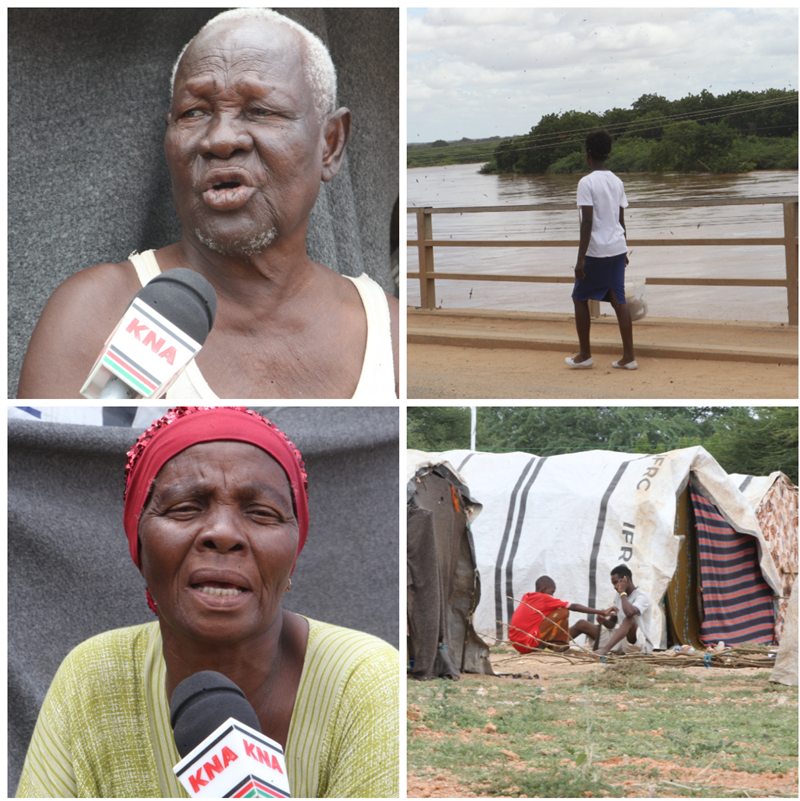
    Those affected are mainly from Bulla Punda, Bulla Kamor, Bulla Sheikh, Bakuyu, and Ziwani villages and are camping at the Farmer Training Centre (FTC), Hyuga and Police Training Centre internal displacement camps.

    It is around 9 am. At the FTC camp, we meet Mzee Issa Malio with his wife and grandchildren in a ragged, makeshift tent that hosts six members of his family.

    He has been here for the last week since floods hit his Ziwani village, which is barely 2 kilometres from the camp.

    Malio tells us that their source of livelihood has been destroyed. Their farms in the village have been swept off by the floods, and now they are left with nothing. Not even the clothes.

    “We have a big problem here in Ziwani because it is also where we have a lot of benefits for our livelihood. We have had farms along the river and our people burn charcoal from the Mathenge trees, which brings in some income,” Malio narrates.

    “Sometimes flood waters reach our houses at night when you are sleeping and by the time you wake up, everything, including our clothes and kitchen items, has been swept off. We have been here since 28th last month, although waters have now subsided, we are still worried because we have that more dams in the Tana river upstream will be released,” he added.

    Sleeping in the tents has become a nightmare for many displaced families, especially because they are old and full of slits. When it rains, water flows directly into the tents, leaving residents exposed and their belongings soaked.

    “You cannot sleep here without a mosquito net, which we do not have. Our children are now sick, some it is diarrhea, others are vomiting every time while others it is fever. We hear that there is an outbreak of dengue fever,” Malio says.

    “We appeal to the government and well-wishers to come and help us with food, mosquito nets, blankets and even cooking utensils,” he adds.

    Asked why they have not moved to permanently higher grounds as advised by the county governments, Malio says that the areas they are asked to move to are unsafe due to inter-community conflicts, hence they cannot risk their lives without proper safety measures.

    Khadija Swale’s tent is just next to the Malio’s. We meet her washing her morning dishes and she paints a gloomy picture of life at the IDP camps.

    “Our lives have been about moving here and there. When there are floods, we come here and when the waters subside, we go back. Even our children are also affected because the schools also flood, disrupting their education,” Khadija relates.

    “Our children here are prone to diseases because we do not even have toilets. When our children have a long call, we do not have a place to dispose of the stool, and even us adults have no place to respond to the call of nature,” she says.

    Abubakar Mohamed Ali is the headman for Bakuyu village where he says at least 200 households have been affected by floods.

    Ali who is appealing for government’s intervention, reveals that food is their biggest challenge.

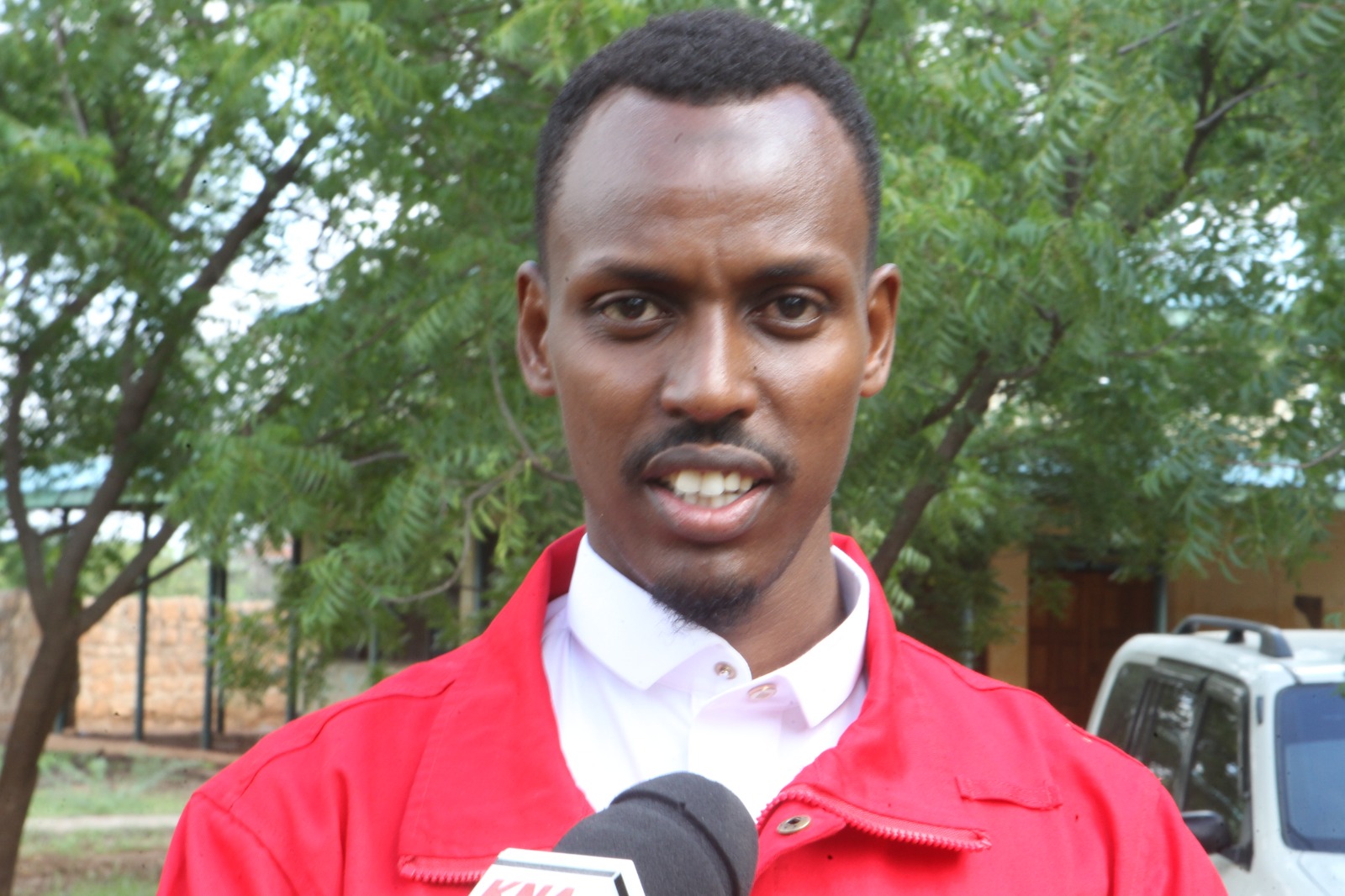
    Daud Ahmed, the county coordinator for the Kenya Red Cross in Garissa, says that they have been coordinating a multi-stakeholder assessment of the floods in the county to get the correct data for intervention measures.

    Daud Ahmed, the county coordinator for the Kenya Red Cross

    In the meantime, he is calling on other development partners to pool resources and support residents who have been negatively affected by the ongoing flooding in the region.

    “We will do a differentiated assistance for the most vulnerable households affected by the floods with non-food items, wash supplies, as well as food items, but currently we do not have food,” Ahmed said.

    “As KenyaRedcross, we are also doing evacuation services for the people who are marooned or have been surrounded by flood waters. We appeal to the farms doing farming along the river line to avoid those areas because it is not safe,” he added.

  • Mandera Attack: Police hunt militia behind killing of six people

    Mandera Attack: Police hunt militia behind killing of six people

    Police have intensified a manhunt for suspected militia who attacked a Nissan matatu in Mandera, killing six people and leaving several others injured.

    The National Police Service said a multi-agency security team, including specialised units, has been deployed to the area, where a comprehensive search and pursuit operation is underway to track down the perpetrators.

    “We are committed to bringing them to justice and ensuring they face the full force of the law”, said NPS.

    The service confirmed that the heinous attack was carried out by suspected militia on Saturday, May 9, along the Mandera–Arabia Road.

    A Nissan matatu, registration number KAQ 9145, which had been hired to transport family members to Arabia Town, came under indiscriminate fire shortly after passing the Omar Jillo Centre.

    “Upon receiving the distress call, a multi-agency security team responded swiftly. The team immediately facilitated the evacuation of the injured to Arabia Sub-County Level Four Hospital. Tragically, six victims were pronounced dead on arrival”, the service said in a statement.

    Three others sustained serious injuries and are admitted to Mandera County Referral Hospital, where they are receiving further specialised medical care.

    Police condemned the incident and urged anyone with information that could assist investigations to report to the authorities.

    “The National Police Service extends its deepest condolences to the families, friends and loved ones of the deceased. We pray for a full and speedy recovery for the injured, who remain under medical care”

  • Virus-hit cruise ship arrives in Tenerife as medics await passengers

    Virus-hit cruise ship arrives in Tenerife as medics await passengers

    Almost a month after the first passenger died of the hantavirus on board the MV Hondius cruise ship, it has finally reached Tenerife in the Canary Islands.

    Intensive preparations have been underway to receive the ship in the port of Granadilla and help more than 100 people onto shore to be repatriated.

    The Hondius arrived near the port before dawn, but even now it won’t be permitted to reach shore: a security perimeter of one nautical mile was enforced around the ship as it approached the island.

    The complex operation to prevent the rare Andes strain of this virus spreading is described by Spain’s health minister as “unprecedented”.

    Involving 23 countries, it has been meticulously planned for maximum safety and to answer the concerns of disgruntled locals. They include the president of the Canary Islands, who says he “won’t be calm” until all the passengers and crew have left.

    “The risk of contagion for the general population is low,” health minister Mónica García repeated on Saturday.

    “We believe that alarmism, misinformation and confusion are contrary to the basic principles of preserving public health.”

    Security measures in the port, an industrial facility in the south of Tenerife, increased notably on Saturday. Spain’s military police and disaster response teams have both set up large reception tents and access to the waterfront is restricted.

    Once the Hondius was manoeuvred into place, by around 07:00 (06:00 GMT) on Sunday, medical teams were expected to board to check everyone for signs of the virus. The latest reports say nobody else is showing symptoms.

    People will then be divided into groups by nationality and ferried to the coast in small boats. By then, charter planes should be on the tarmac at the local airport, ready to repatriate them.

    Earlier on Saturday, the interior minister said the UK, US and multiple EU member states were all sending planes. Medically-equipped aircraft are on standby, too, should anyone need to be taken into isolation.

    Otherwise, Spanish nationals will be flown to Madrid, where they face a mandatory quarantine in the Gomez Ulla military hospital. Complete isolation would be gruelling – the virus has an incubation period of up to nine weeks – and it is not clear how long people in Spain or elsewhere will be quarantined.

    The head of the World Health Organization (WHO) Tedros Adhanom Ghebreyesus, now in Tenerife to oversee the disembarking, has praised the authorities for their “solid and effective response” to this outbreak.

    It has been linked to a landfill site in the southernmost tip of Argentina, popular with birdwatchers. The virus is carried there by rodents, and it’s rare for it to pass between people, but three cruise passengers have died.

    So the WHO boss has urged nervous Spaniards to trust those in charge of the evacuation.

    “Your concern is legitimate, because of the experience of Covid: that trauma is still in our minds,” he acknowledged. But he added that the risk of wider contagion now was low “because of how the virus works, and because of how the Spanish government has prepared to avoid any problem”.

    Dozens of intensive care specialists are on stand-by at the Candelaria hospital in Tenerife in case anyone from the Hondius becomes seriously ill during the transfer. A strict isolation facility has one bed fully equipped to deal with infectious diseases, complete with testing kit and a ventilator.

    “We are absolutely ready,” chief intensive care doctor Mar Martin told me on the unit, where large numbers of protective suits, masks and gloves are already piled up for staff.

    “We’ve never seen [hantavirus] before – but it’s a virus, with some complications, just like we manage every day. We are fully trained for that.”


  • Sammy Kamau wins DCP nomination for Ol Kalou by-election

    Sammy Kamau wins DCP nomination for Ol Kalou by-election

    Sammy Kamau Ngotho has clinched the Democratic for the Citizens Party (DCP) ticket for the July 16 Ol Kalou parliamentary by-election

    Ngotho was declared the winner Saturday, May 9, following party primaries held across all five wards of Ol Kalou Constituency. He garnered 12,957 votes, defeating his closest challenger, Paul Waiganjo, who secured 4,978 votes.

    The former MCA was announced as the winner shortly after midnight, prompting jubilant celebrations among his supporters.

    Speaking after his victory, Ngotho thanked everyone who contributed to the successful conduct of the exercise and called on his rivals to unite behind him to ensure DCP secures victory in the July 16 by-election.

    DCP Deputy Party Leader Cleophas Malala expressed satisfaction with how the nominations were conducted. He urged candidates who lost to accept the results and encouraged anyone with grievances to follow the party’s internal dispute resolution mechanisms.

    Gabriel Gathure conceded defeat and pledged support for Ngotho in the interest of strengthening the DCP party.

    Engineer Peter Karanja, who finished third with 3,919 votes, also accepted the outcome and congratulated Ngotho through his official Facebook page.

    However, he raised concerns about the transparency of the nomination process, saying, “As the party says, the party has owners.”

  • NPS dismisses Kiganjo affairs claims, says recruits were already pregnant

    NPS dismisses Kiganjo affairs claims, says recruits were already pregnant

    The National Police Service (NPS) has dismissed claims that female recruits who were discontinued from the National Police College in Kiganjo became pregnant as a result of affairs within the institution.

    In a statement Saturday, the service set the record straight, saying the institution upholds the highest standards of discipline, security, and supervision, adding that no such incidents could have occurred as alleged.

    NPS further noted that the victims were expelled within the first month of joining the college, terming the online reports misleading.

    “In particular, false allegations have emerged suggesting that the pregnancies in question resulted from fraternisation within the College. We wish to state categorically, and for the record, that no female recruit conceived while at the National Police College. For the avoidance of doubt, the College upholds the highest standards of discipline, security, and supervision”, it said.

    “Security at the Main Campus is stringent and regimented. Female and male recruits interact strictly and only during official training periods, under the close observation of instructors. There is no unsupervised mingling or private interaction between recruits. Any suggestion of a lapse in this regard is not only false but also an insult to the integrity of our training protocols”, it added.

    According to the NPS, all female recruits undergo mandatory pregnancy tests upon arrival at Kiganjo. Those who test positive in the initial screening are subjected to a second confirmatory test at a government medical facility in Nyeri.

    “Given the known duration of human gestation, conception in these cases must have occurred before the recruits reported to the College—specifically, during the period immediately after receiving their recruitment letters and prior to reporting for training”, he said.

    “Only those who test positive on both occasions are discontinued. This is in strict adherence to the National Police Service Standing Orders and training regulations, which require that all recruits be medically and physically fit for the rigorous residential training programme”, NPS Spokesperson Muchiri Nyaga stated.

    The police service explained that the residential training programme involves physically demanding activities, including drills, obstacle courses, and firearms training, which could pose serious risks to pregnant recruits and their unborn children.

    NPS further clarified that discontinuation on medical grounds is not a punishment or dismissal for misconduct, but an administrative measure aimed at safeguarding the health of both the recruits and their unborn children.

    The service also urged the public to refrain from spreading false information that could damage the reputation of the training institution and its officers.

    The 18 recruits are among 54 terminated from the training programme for various reasons.