Author: Eric Biegon

  • Budget 2026: Kenyans demand relief from high cost of living

    Budget 2026: Kenyans demand relief from high cost of living

    Treasury Cabinet Secretary John Mbadi announced that the 2026/2027 Budget was shaped by the direct input and expectations of ordinary Kenyans, who want the government to alleviate the economic pressures currently burdening households and businesses.

    While presenting the national budget in Parliament on Thursday, Mbadi stated that feedback collected during public participation forums held across the country revealed widespread concern over the rising cost of living, high unemployment rates, and the critical need for responsible management of public funds.

    “The message from Kenyans across the country, from our rural villages to our bustling towns and cities, the ordinary mwananchi is clear and consistent in their message. They have genuine expectation from the government,” said Mbadi.

    The Treasury CS noted that Kenyans desire an economy that directly enhances their well-being through affordable living expenses, expanded employment opportunities, and inclusive economic growth.

    “Kenyans want an economy that works for them, where the cost of living is manageable, where opportunities for employment and businesses are expanding and where the benefits of economic growth are shared widely across society,” he said.

    Mbadi further informed Parliament that citizens expect a responsive and accountable government that addresses their concerns and implements policies promoting fairness and prosperity.

    “Kenyans want to see a government that listens to their concerns and responds with policies that promote opportunity, fairness and prosperity,” he stated.

    He added that many participants in the public engagement forums urged the government to safeguard livelihoods by supporting farmers, empowering youth and women, and strengthening businesses.

    “Kenyans want to see a government that protects their livelihoods, a government that supports farmers and businesses, empowers the youth and women, and ensures that public resources are used prudently and transparently,” said Mbadi.

    The Treasury CS also highlighted that taxpayers expect tangible returns from public spending and improved service delivery.

    “The people of Kenya want assurances that their hard-earned taxes will translate into tangible improvements in their daily lives,” he said.

    Mbadi confirmed that a primary concern raised during public consultations was the high cost of living and the tax burden on households.

    “The main feedback from Kenyans is that the government should reduce the overall cost of living by lowering the tax burden on essential commodities, tame wastage of public resources and decisively deal with corruption,” he stated.

    In a move likely to be welcomed by taxpayers, Treasury Cabinet Secretary Mbadi announced that the government would not introduce additional taxes in the 2026/2027 financial year.

    Mbadi stated, “In preparing these proposals, I have been guided by the overriding principle of placing the well-being of the common mwananchi first. In this regard, I have deliberately chosen not to introduce new taxes or increase tax rates that would further overburden hardworking Kenyans and their families.”

    This announcement is expected to provide relief to households and businesses that have been struggling with a high cost of living and the impact of previous tax measures implemented in recent years.

    Mbadi made the remarks even as he disclosed that the broad-based political arrangement between President William Ruto and the late former Prime Minister Raila Odinga had significantly influenced the budget’s policy direction.

    “The Rt. Hon. Raila Amolo Odinga was a key partner to President William Ruto in the broad-based arrangement. This budget captures the ideals of the two great leaders especially on the aspiration to transform our economy from its current status to a more developed nation status, a path to Canaan through Singapore,” Mbadi said.

  • China, Kenya, and UN leaders advocate for unity through civilizational dialogue

    China, Kenya, and UN leaders advocate for unity through civilizational dialogue

    At the United Nations Office at Nairobi (UNON), global and diplomatic leaders commemorated the International Day for Dialogue among Civilizations with a unified call for enhanced communication between nations, cultures, and faiths. They emphasized that such dialogue is crucial for achieving peace, fostering development, and ensuring global stability.

    The event, convened by the Chinese Mission to Kenya in partnership with UN agencies and Nairobi’s diplomatic community, drew representatives from the diplomatic corps, senior UN officials, and cultural delegations from China. Speakers warned that escalating conflicts, widening inequality, and rapid technological advancements are straining international solidarity and exacerbating global fragmentation.

    China’s Ambassador to Kenya, Guo Haiyan, used the occasion to underscore a message from Chinese Foreign Minister Wang Yi, who addressed the global observance via video. Wang Yi called for greater understanding and mutual trust through civilizational dialogue.

    Guo stated that dialogue among civilizations would provide “a solid cultural and people-to-people foundation for building a community with a shared future for mankind.” She added that in an era of increasing geopolitical uncertainty, the world needs stronger mechanisms for cooperation and mutual learning.

    Referencing Wang Yi’s message, Ambassador Guo outlined China’s four-pronged approach to strengthening civilizational dialogue, through promoting mutual respect and harmonious coexistence, prioritizing people-centered exchanges, balancing cultural heritage with innovation, and improving international dialogue mechanisms.

    Wang Yi, who is also a member of the Political Bureau of the Communist Party of China Central Committee, cautioned that unprecedented global challenges demand that countries strengthen consensus and unity rather than deepen divisions.

    He urged nations to “promote unity and seek consensus through exchanges” and continuously reinforce the cultural and social foundations necessary to build what China terms “a community with a shared future for humanity.”

    According to Wang, civilizations should engage through “equality, mutual learning, dialogue and inclusiveness,” with countries respecting each nation’s unique development path and social system.

    He further emphasized the importance of people-centered exchanges, asserting that civilizational dialogue should directly benefit ordinary citizens through deeper understanding and practical cooperation.

    “China is willing to enhance dialogue among civilizations with all countries and deepen exchanges of experience in state governance, in order to jointly solve the problems of the times and work together to broaden the path of world modernization,” Wang stated in his message.

    The Chinese foreign minister also advocated for greater integration of technology and culture, arguing that innovations like artificial intelligence and social media should be used to strengthen exchanges and preserve cultural heritage, not to deepen polarization.

    Guo echoed these remarks, noting that China’s Global Civilization Initiative, alongside its Global Development, Global Security, and Global Governance initiatives, aims to provide “stability and certainty into a volatile world.”

    She added that all countries, regardless of size or wealth, should participate equally in global decision-making and benefit fairly from development outcomes.

    UNON Director-General Zainab Hawa Bangura noted the world is currently facing overlapping crises, making dialogue a practical tool for conflict prevention, cooperation, and trust-building.

    “Conflicts are raging, inequalities are widening, and evolving technologies from AI to clean energies present us with critical choices about the future we want to create,” Bangura said.

    She cautioned that differences among nations and communities are increasingly being manipulated to undermine international solidarity.

    “But there is a path forward: dialogue. Dialogue between nations, between cultures, and between faith,” she asserted.

    Bangura emphasized that meaningful dialogue requires openness and sustained engagement, arguing that communication can transform global tensions into cooperation.

    “When we listen, talk, and connect, we replace confrontation with cooperation and tension with trust,” she said, citing the United Nations Alliance of Civilizations as an example of how diversity can be a source of strength, not division.

    “At a time when the international system is being tested, dialogue has the power to reunite us for a more just and more peaceful world,” she added.

    Kenya’s Permanent Representative to UNON and UNEP, Ambassador Ida Betty Odinga, also stressed the importance of interdependence among nations and civilizations, urging humanity to focus on shared interests and collective progress.

    “Human beings are interconnected,” Odinga said, noting that globalization should be anchored on appreciating how civilizations can enrich one another despite their differences.

    She argued that education is one of the most vital tools for strengthening understanding among people and communities.

    “Education opens minds of human beings and knowledge outside their immediate environment. This helps them to appreciate the value in diversity,” she explained.

    Odinga also highlighted cultural exchange as essential for promoting empathy and understanding between societies.

    “Seeking understanding of different cultures is akin to walking in another person’s shoes,” she remarked, adding that such exchanges help people appreciate shared values and goals despite differing perspectives.

    She further stressed that governments have a critical role in fostering cooperation and creating opportunities for social, political, and economic engagement among nations.

    Invoking a Kiswahili proverb — kidole kimoja hakivunji chawa, meaning “one finger does not kill lice” — she underscored that cooperation is not optional but essential.

    “In tackling especially the hardest issues, one cannot do it alone. The world together must resort to cooperation,” she said.

    The leaders reiterated that dialogue among civilizations was not merely as symbolic diplomacy, but as an urgent necessity for managing conflicts, rebuilding trust, and ensuring inclusive global development in an increasingly polarized world.

  • China’s Green Revolution: A model for sustainable development

    China’s Green Revolution: A model for sustainable development

    China is making significant strides in its pursuit of a greener future, with remarkable progress in clean transportation and large-scale tree planting initiatives. A visit to Beijing quickly reveals how deeply electric mobility has integrated into daily life.

    Unlike many countries, including Kenya, where petrol-powered motorcycles are prevalent, electric bikes and scooters dominate the streets of the Chinese capital. Residents rely on them for commuting, shopping, delivering goods, and running daily errands. “Rarely do you see people walking long distances to work or to shop,” notes Professor Hong Li from the Communication University of China. “Most people use electric bikes because they are convenient, affordable, and easy to charge.”

    The widespread adoption of electric bikes is a cornerstone of China’s broader strategy to reduce carbon emissions and enhance air quality. The government has actively promoted the use of e-bikes and electric motorcycles to curb pollution, decrease oil consumption, and bolster the nation’s burgeoning electric vehicle industry. These electric two-wheelers have also become indispensable to China’s delivery sector, providing millions of workers with an affordable and efficient mode of transport. Estimates suggest that between 200 million and 350 million electric bicycles and scooters are currently in use across China. With more than one in seven people relying on them for daily transport, China has emerged as the world’s largest market for two-wheeled electric vehicles, accounting for over 60 percent of global e-bike production.

    China’s commitment to cleaner transport extends beyond electric bikes. The country is now the world’s largest market for electric vehicles (EVs), with electric and plug-in hybrid vehicles representing nearly 63 percent of new vehicle retail sales – a record high that underscores the accelerating shift away from conventional petrol-powered vehicles.

    A noticeable feature on Chinese roads is the distinct color of vehicle registration plates: electric vehicles display green plates, while petrol-powered vehicles have blue ones. “Many new car buyers prefer electric vehicles because of the benefits that come with them,” explains Beijing resident Zhang Wei. In major cities such as Beijing, Shanghai, and Guangzhou, EV owners enjoy various incentives, including exemptions from certain traffic restrictions and access to preferential parking arrangements. These measures are integral to China’s plan to achieve carbon neutrality by 2060 and increase the adoption of clean energy vehicles.

    China’s environmental endeavors are equally visible outside its urban centers. Across the country, extensive tree planting programs are actively restoring areas once ravaged by desertification and soil erosion. Through ambitious projects like the Three-North Shelterbelt Programme and the Grain for Green Programme, China has added an estimated 40 million to 70 million hectares of new and regenerated forest over the past several decades. Forest cover now accounts for more than 25 percent of the country’s total land area.

    These massive tree planting campaigns aim to improve air quality, protect farmland, mitigate the effects of climate change, and restore degraded ecosystems. China’s efforts have also made a significant contribution to global greening. Studies estimate that the country is responsible for approximately one-quarter of the world’s net increase in leaf area since the early 2000s. Today, China increasingly leverages modern technology, including artificial intelligence systems, to monitor its forests and enhance environmental management.

    From the ubiquitous electric bikes on Beijing’s streets to the millions of trees planted nationwide, China’s green transition is becoming increasingly palpable. While challenges undoubtedly remain, the nation’s substantial investment in clean transportation and environmental restoration serves as a compelling example of how government policy, technological innovation, and public participation can converge to support sustainable development.

  • Africa funding priorities guided by local needs, shared development goals – Chinese Ambassador

    Africa funding priorities guided by local needs, shared development goals – Chinese Ambassador

    Chinese Ambassador to Kenya Guo Haiyan has affirmed China’s development cooperation model in Africa, stating that funding priorities are increasingly guided by locally identified needs, long-term capacity building, and partnerships aimed at delivering practical benefits to communities across the continent.

    Speaking in Nairobi during the launch of a Kenya-China-UNICEF maternal and newborn health initiative, Ambassador Guo explained that Beijing’s cooperation strategy in Africa differs from traditional donor models by emphasizing consultation, shared benefits, and demand-driven development.

    “China has joined hands with African countries to implement pragmatic cooperation under the mechanisms of extensive consultation, joint contribution, and shared benefits,” Ambassador Guo said.

    She noted that this approach has evolved over the past 26 years under the Forum on China-Africa Cooperation (FOCAC), which serves as the main platform guiding relations between China and African states.

    According to the ambassador, the current FOCAC Beijing Action Plan, covering 2025 to 2027, outlines ten core partnership initiatives focused on modernization and development cooperation between China and Africa.

    Guo added that China’s broader development engagement on the continent is increasingly linked to the Global Development Initiative (GDI), proposed by Chinese President Xi Jinping in 2021 during the United Nations General Assembly.

    The initiative, she explained, aligns with the United Nations 2030 Sustainable Development Goals and focuses on eight priority areas, including poverty reduction, food security, climate change, industrialization, and digital economy development.

    “This initiative comprehensively addresses such issues as why development is needed, for whom development is needed, whom development relies on, and how to develop,” she said.

    The ambassador revealed that China has mobilized over 23 billion US dollars under the GDI framework in the past five years and established a Global Development Project Pool supporting more than 1,800 projects across multiple sectors.

    She added that China has also expanded the Global Development and South-South Cooperation Fund to four billion US dollars, supporting over 200 livelihood projects in more than 60 countries through partnerships with international organizations.

    “These solid steps prove that GDI is no castle in the air. It is able to deliver real benefits and is an important driver to strengthen South-South cooperation,” Guo said.

    Her remarks were made during the launch of a new USD 3 million maternal and newborn health programme in Kenya, supported through the Global Development and South-South Cooperation Fund in partnership with UNICEF and Kenya’s Ministry of Health.

    The initiative will target Garissa, Wajir, and Mandera counties, where maternal and newborn mortality rates remain significantly higher than the national average due to limited access to quality healthcare services.

    Guo described the project as a clear example of China’s approach to development financing in Africa, which she said prioritizes “small and beautiful” livelihood projects designed to address urgent local needs while leveraging technical expertise from multilateral organizations.

    “By tapping into UN organizations’ professional expertise, we will make full use of Chinese resources and implement small and beautiful livelihood projects to deliver high-level technical assistance and support to areas that are most in need,” she said.

    She also disclosed that another China-backed project, aimed at supporting agro-industrial parks in Kenya through the United Nations Industrial Development Organization, is expected to be launched soon.

    The ambassador outlined three principles guiding China’s cooperation strategy in Kenya and across Africa.

    The first, she said, is “demand-oriented precision cooperation,” where projects are designed around the specific needs identified by local communities and governments.

    “We will dock with actual needs and deliver people-centered outcomes by formulating targeted and localized implementation plans,” Guo said.

    The second principle focuses on sustainability and long-term capacity building rather than short-term assistance alone.

    “Short-term assistance serves long-term development, and cultivating independent development capacity is the core goal of South-South cooperation,” she noted.

    Under the maternal health programme, China and its partners plan to support the training of 600 healthcare workers, including nurses, midwives, nutritionists, and clinical officers, while also improving water, sanitation, and hygiene standards in health facilities.

    The third principle, according to the ambassador, centers on professional implementation, accountability, and strict oversight of development financing.

    “Standardized implementation and strict quality control are key to successful delivery,” she said.

    “The Chinese side will strictly supervise the whole-process use of aid funds, while UN agencies take charge of the professionalism and standardization of project implementation.”

    Guo also linked the growing development partnership between Kenya and China to agreements reached during President William Ruto’s state visit to Beijing in April 2025, where both countries committed to building what they termed a China-Kenya Community with a Shared Future for the New Era.

    As China continues expanding its role as one of Africa’s major bilateral development partners, the ambassador said future cooperation would increasingly focus on practical, locally driven programs capable of delivering measurable social and economic impact.

  • China, Kenya and UNICEF unite to improve maternal health in high-risk counties

    China, Kenya and UNICEF unite to improve maternal health in high-risk counties

    Nairobi, Kenya – Kenya, China, and UNICEF have launched a new USD 3 million partnership aimed at reducing maternal and newborn deaths in Garissa, Wajir and Mandera counties, where access to quality healthcare services remains limited and mortality rates remain among the highest in the country.

    The initiative, dubbed Promotion of Health and Well-Being of Women and Children in Kenya,” is funded by the China Global Development and South-South Cooperation Fund, administered by the China International Development Cooperation Agency (CIDCA).

    The two-year program aims to bolster maternal and newborn healthcare systems by equipping hospitals and health centers, training frontline healthcare workers, improving water and sanitation infrastructure, and expanding community-based healthcare outreach.

    Speaking during the launch, Chinese Ambassador to Kenya, Guo Haiyan, highlighted that the program underscores China’s growing commitment to South-South cooperation and practical partnerships that directly improve lives.

    “Maternal and child health cooperation has always been a key priority of Global South cooperation as it serves to protect basic human rights and safeguard human dignity,” Ambassador Guo stated.

    She added that the project embodies China’s Global Development Initiative (GDI), proposed by President Xi Jinping, and demonstrates how development partnerships can deliver tangible benefits to vulnerable communities.

    “These solid steps prove that the Global Development Initiative is no castle in the air. It is able to deliver real benefits and is an important driver to strengthen South-South cooperation,” she said.

    Ambassador Guo noted that the initiative would support county and sub-county health facilities with essential medical equipment and supplies while strengthening primary healthcare networks in the three counties.

    “By equipping county and sub-county health facilities and designated health centers with necessary equipment and supplies, we will strengthen primary care networks in these areas, contributing to the reduction of maternal and newborn morbidity and mortality,” she affirmed.

    Kenya’s Health Cabinet Secretary, Aden Duale, whose speech was delivered by Director General for Health Dr. Patrick Amoth, emphasized the timely nature of the partnership as the government accelerates efforts to reduce preventable maternal and newborn deaths.

    “Every maternal death and every newborn death is a tragedy, particularly because the majority are preventable,” Duale’s statement read.

    He acknowledged that despite progress, Kenya still records 355 maternal deaths per 100,000 live births and 21 newborn deaths per 1,000 live births. The burden disproportionately affects underserved counties in the Arid and Semi-Arid Lands (ASAL) region.

    “These inequities are unacceptable and must be addressed deliberately and urgently,” he asserted.

    Duale linked the programme to the recently launched “Every Woman, Every Newborn Everywhere (EWENE) Acceleration Plan” and the “Maternal and Newborn Health Rapid Results Initiative,” both unveiled by President William Ruto in May.

    Through these initiatives, the government has committed Ksh 7.5 billion towards maternal and newborn survival interventions, including expanding the health workforce, improving family planning services, and ensuring essential medical commodities.

    “We must ensure that a mother in Mandera has the same opportunity to survive childbirth as a mother in Nairobi,” Duale stressed.

    “We must ensure that a newborn born in Wajir has the same chance of celebrating a first birthday as a newborn born anywhere else in the country. Equity must remain at the center of our health agenda.”

    The programme will support healthcare workers, including nurses, midwives, nutritionists, and clinical officers, while also strengthening community health systems through trained Community Health Promoters.

    UNICEF Representative to Kenya, Dr. Shaheen Nilofer, explained that the partnership is designed to close healthcare access gaps in counties that continue to lag behind national averages.

    “Most importantly, this is exactly what Kenya’s focus on Every Woman, Every Newborn, Everywhere means in practice: not only improving averages, but closing gaps,” she said.

    “Not only investing in services, but ensuring those services reach women and newborns in the counties that have been left furthest behind.”

    According to UNICEF, the program is expected to directly benefit over 652,000 people and indirectly support another 630,000 through stronger health systems and community outreach services.

    Nilofer also commended China’s ongoing support for child and maternal health programs across Africa through South-South cooperation frameworks.

    “Behind every statistic is a mother, a newborn and a family whose future hangs in the balance. This partnership is about changing those stories. We thank the Government of China for its support to address the issue of maternal and newborn mortality in Kenya. Together, we are supporting the government’s efforts to reach those who are most at risk and to give every child a safe and healthy start to life,” she said.

    Officials said the programme aligns with Kenya Vision 2030, the Sustainable Development Goals, and the country’s Universal Health Coverage agenda. And as implementation begins in Garissa, Mandera, and Wajir, the three partners expressed optimism that the initiative would significantly improve maternal and newborn survival rates while strengthening long-term healthcare resilience in northeastern Kenya.

  • China criticizes DPP for politicizing Cross-Straits red panda exchange

    China criticizes DPP for politicizing Cross-Straits red panda exchange

    The Taiwan Affairs Office of the State Council on Wednesday denounced “Taiwan independence” separatist forces for what it described as their routine attempts to discredit cross-Straits exchanges. The office called their effort to politicize an animal exchange program between the Shanghai and Taipei zoos “absurd and ridiculous.”

    As per the 2024 cooperation memorandum of the Shanghai-Taipei City Forum, the Shanghai Zoo and Taipei Zoo agreed to exchange two red pandas for black-footed penguins. A handover ceremony for the red pandas on June 5 at the Shanghai Zoo garnered significant attention and positive feedback from netizens on both sides of the Taiwan Straits.

    However, some Democratic Progressive Party (DPP) politicians alleged that the twin cities forum would become a “breach” for “infiltration.” In response, Taiwan Affairs Office spokesperson Zhang Han stated at Wednesday’s media briefing that the Shanghai-Taipei City Forum is a crucial institutionalized platform for exchanges between the two cities, playing a significant and positive role in fostering cooperation across various
    sectors.

    Zhang highlighted enthusiastic comments from netizens on both sides of the Straits, such as “Cute animals serve as a bridge across the sea, warmth rides the wind across the Taiwan Straits.” She emphasized that animal conservation exchanges bring warmth, not confrontation, and are highly beneficial, with more such activities being preferable. She added that increased interaction and exchanges reflect the shared aspirations of compatriots on both sides of the Taiwan Straits.

    “We will, as always, support exchanges and cooperation in various fields, including between cities across the Straits, to continuously enhance the well-being of people on both sides and promote deeper spiritual bonds between compatriots across the Taiwan Straits,” Zhang affirmed.

    Zhang reiterated that “Taiwan independence” separatist forces habitually discredit cross-Straits exchanges by portraying them as “breaches for infiltration.” She said their latest attempt to exploit the red pandas for political gain is particularly absurd and ridiculous.

  • Nairobi hosts China-Hunan Film Week to boost China-Africa cultural exchange

    Nairobi hosts China-Hunan Film Week to boost China-Africa cultural exchange

    Kenya and China have reaffirmed their commitment to deepening cultural cooperation and creative industry partnerships with the launch of the China-Hunan Film Week in Nairobi. Organizers describe the event as a crucial platform for strengthening people-to-people ties between Africa and China.

    The three-day film week, running from June 9 to 11, presents a curated selection of Chinese films to Kenyan audiences. This initiative is part of the activities marking the 2026 China-Africa Year of People-to-People Exchanges.

    Jointly organized by the Hunan Province Film Administration and other Chinese institutions with Kenyan stakeholders, the event aims to leverage cinema as a bridge for cultural dialogue, mutual learning, and industry collaboration.

    Speaking during the opening ceremony, Luo Zhengmao, Deputy Director of the Information Office of the People’s Government of Hunan Province, emphasized film’s growing importance in strengthening China-Africa friendship and promoting exchanges between civilizations.

    “Film serves as a vivid vehicle for deepening China-Africa friendship and promoting mutual learning among civilizations,” Luo stated.

    He noted that the latest initiative builds on the China-Africa Film Week held in Hunan Province last year during the Fourth China-Africa Economic and Trade Expo, where African films, including Dreaming of Nairobi, were screened in Changsha cinemas.

    “This year marks the 70th anniversary of the opening of diplomatic relations between China and African countries, as well as the China-Africa Year of People-to-People Exchanges,” Luo said. “Through these films, we hope to engage extensively with the Kenyan people, foster in-depth exchanges, and enhance mutual understanding, expand cooperation, and deepen friendship through stories on screen.”

    Luo also positioned Hunan as a strategic gateway for China-Africa engagement, highlighting the province as a center for economic cooperation, culture, and media innovation. He underscored Hunan’s rich cultural heritage, tourism attractions, and globally recognized media industry, which includes Hunan TV and Mango TV.

    Kenyan officials welcomed the initiative as an opportunity to strengthen collaboration in film production, talent development, and creative economy growth.

    Timothy Owase, CEO of the Kenya Film Commission, stated that the film week represents more than just a showcase of Chinese cinema.

    “This week is not just about screening brilliant cinematic works from Hunan. It is about building bridges,” Owase remarked.

    “It is about creating opportunities for Kenyan and Chinese filmmakers to collaborate, share technical expertise, and co-create stories that resonate globally.”

    Owase affirmed Kenya’s commitment to becoming a leading destination for international productions and creative partnerships.

    “Kenya’s creative economy is booming, and the Kenya Film Commission is fully committed to positioning our country as a premier filming destination and a hub for international co-productions,” he said.

    He added that partnerships like the China-Hunan Film Week will open “new doors for talent exchange, technological advancement, and economic growth within our respective creative sectors.”

    The State Department for Youth Affairs and Creative Economy also stressed the role of film in enhancing cultural understanding and supporting the next generation of storytellers.

    Speaking on behalf of Principal Secretary Fikirini Jacobs, Noah Otiede, Director of Film, Animation, and Gaming, described film as “one of the great gatekeepers of culture.”

    “Through film, we laugh, reflect, and appreciate the values and experiences that make each culture unique,” Otiede said.

    He noted that the film week extends beyond entertainment, creating opportunities for dialogue, education, and industry partnerships.

    “This Film Week therefore represents much more than a series of screenings. It represents an opportunity for dialogue, learning, and collaboration,” he reiterated.

    Otiede also emphasized the importance of partnerships linking education, technology, and creative industries, stating that such collaborations would help nurture storytellers capable of producing content for global audiences.

    Chinese Embassy in Kenya Minister Counsellor Zhang Zhizhong said the event reflects broader efforts by China and Africa to strengthen cultural exchanges under the Global Civilization Initiative proposed by Chinese President Xi Jinping.

    “We believe that no civilization is superior or inferior to another — they only differ in characters and origins,” Zhang stated.

    He linked the Chinese initiative to Africa’s philosophy of Ubuntu, noting that both promote dialogue, equality, and mutual respect among cultures.

    “We sincerely hope that through films, literature, music, dance, and many other forms of cultural exchanges, the peoples of China and Africa can come to know each other better,” he said.

    Zhang also highlighted the growing global influence of Chinese cinema, citing the success of the animated blockbuster Ne Zha 2, which grossed more than 2.2 billion US dollars globally in 2025.

    Beyond culture, speakers consistently linked the film week to broader China-Africa cooperation in trade, connectivity, and diplomacy. Hunan Province was presented as a key hub for China-Africa economic engagement, supported by the China-Africa Economic and Trade Expo and direct flights connecting Nairobi and Changsha.

    Both sides are hopeful the event will mark the beginning of deeper cinematic partnerships between Kenya and China, with expectations of future co-productions, stronger creative industry investment, and expanded cultural exchanges.

  • Iran and Israel say they will pause strikes but warn of retaliation if ceasefire breached again

    Iran and Israel say they will pause strikes but warn of retaliation if ceasefire breached again

    Iran and Israel say they have halted attacks on each other, after exchanging fire for the first time since April’s truce.

    Israel’s Prime Minister Benjamin Netanyahu said on Monday his country was holding fire “at the moment”. But he stressed that the struggle against Iran and the Iran-backed group Hezbollah in Lebanon was “not finished”.

    Iran’s military earlier said it had stopped operations following the delivery of a “painful response” to Israel. It pledged “more severe and crushing measures” if Israel carried out more strikes, including in Lebanon.

    Separately, President Donald Trump said the crew of a US army helicopter were “fine” after US media reported that a helicopter had crashed in the Strait of Hormuz.

    The New York Times said an Apache helicopter with two crew members went down in unclear circumstances and the crew were safely rescued.

    Trump gave no details about what caused the incident but said there was “nobody injured” and the White House would say more later.

    Tehran launched missiles at Israel on Sunday in retaliation for a strike on Beirut.

    Israel responded in the early hours of Monday morning by targeting what it said were military sites in the Islamic Republic.

    In a call with the BBC, Trump denied that Netanyahu had defied his wishes by launching strikes.

    “No, no. They had already gone. They had already gone. They were already on their way,” he said.

    The White House confirmed that Trump had called Netanyahu to discuss the crisis. An Israeli official said Israel had halted its strikes at his request.

    Asked how he had persuaded Netanyahu to stop attacking Iran, Trump responded: “All I did is say, ‘We have to use sense’. We’re very close to signing a very powerful deal, a very good deal.

    “No nuclear weapons, no nothing. You know, we have to use a lot of common sense. It was fine.”

    Trump also said of Netanyahu: “If I tell him to do something, he does it.”

    The president told US news outlet Axios he had told Israel’s prime minister he might find himself fighting alone if he went back to war with Iran.

    “I said, ‘Bibi, you better be careful, or you will be on your own very soon,’” Axios quoted him as saying.

    In his televised statement on Monday, Netanyahu said he had told Trump that “Israel has a full right to self-defence, and we are exercising it as required”.

    Sunday’s exchange of fire had continued on Monday morning, with Iran launching more missiles towards Jerusalem and central and southern Israel, according to Israeli authorities.

    The Israel Defence Forces (IDF) said a second wave of air strikes had targeted a petrochemical complex in the south-western Iranian city of Mahshahr, where an Israeli military official said chemicals used for ballistic missiles were produced.

    Iran’s Emergency Organisation chief, Jafar Miadfar, told Tasnim news agency that the strikes injured 14 people in Mahshahr and one in Tehran.

    Casualties were also reported in Lebanon, where the health ministry said five people had been killed and eight wounded in an Israeli strike on Tyre in southern Lebanon on Monday. The Red Cross said four of its rescuers were among the injured.

    Hezbollah, meanwhile, said it had fired a rocket barrage at a group of Israeli army vehicles and soldiers in southern Lebanon on Monday morning.

    Trump publicly told both countries to “immediately stop ‘shooting’” because they were jeopardising negotiations between Washington and Tehran on a deal to end the regional war.

    “Israel and Iran… are looking to do an immediate CEASEFIRE! Final negotiations on ‘Peace’ are proceeding, subject to ignorance or stupidity getting in its way,” he wrote on Truth Social.

    On Tuesday Trump told journalists: “We’re in the final throes of what will be a very, very good deal.”

    When asked whether it would be matter of days or weeks, he said it could take “two or three days” and the Strait of Hormuz would open immediately after.

    The war began on 28 February, when Israel and the US launched a joint attack on Iran, killing Supreme Leader Ayatollah Ali Khamenei and several other top officials.

    The hostilities spread quickly across the Middle East, as Iran retaliated by launching missiles and drones at Israel and Gulf Arab states hosting US military facilities. Iran also effectively blocked the crucial Strait of Hormuz waterway, causing a surge in the price of oil.

    Lebanon was drawn into the conflict on 2 March, when Hezbollah launched rockets into Israel in retaliation for Khamenei’s assassination. Israel responded with air strikes across Lebanon and a ground invasion of a significant part of the country’s south.

  • Report corrupt judicial officers, CJ Koome urges Kenyans

    Report corrupt judicial officers, CJ Koome urges Kenyans

    Chief Justice and President of the Supreme Court, Martha Koome, has urged Kenyans to report corrupt judicial officers and any form of misconduct they witness within the justice sector.

    In her appeal, the Chief Justice reiterated that public vigilance is essential for restoring confidence in the courts.

    Speaking after conducting an impromptu visit to Mavoko Law Courts on Monday, Koome affirmed the Judiciary’s commitment to accountability, transparency, and integrity in the delivery of justice.

    During the visit, the Chief Justice took time to interact with members of the public seeking various services, listening to their experiences, concerns, and suggestions for improving access to justice. She encouraged them and Kenyans in general to utilise official Judiciary hotlines and other reporting mechanisms to expose corruption, unethical behaviour, and abuse of office within the justice system.

    “Accountability, transparency, and integrity remain central to our commitment to delivering justice for all,” she stated.

    The Chief Justice warned that judicial officers found engaging in corrupt practices would face stringent disciplinary and legal action, underscoring the Judiciary’s zero-tolerance policy on corruption.

    Her remarks echoed sentiments from April this year, when she strongly condemned the alleged practice of some officers demanding “facilitation fees” for court services. Koome described this practice as corruption and maintained that no judicial officer should seek or receive facilitation in exchange for services.

    “I wish to reaffirm that the Judiciary is working closely with the Law Society of Kenya, the Judicial Service Commission, the National Council on the Administration of Justice, and other justice sector institutions to ensure that no form of corruption is condoned, whether within the Judiciary ranks or among the public,” she affirmed.

    She added that the Judiciary and its partners are strengthening accountability systems, enhancing transparency, and enforcing stricter anti-corruption measures to protect the integrity of the justice system.

    The Chief Justice maintained that corruption has no place in the Judiciary or society, adding that the courts remain committed to upholding the rule of law and ensuring justice is delivered fairly and without compromise to all Kenyans.

  • Slovak foreign minister arrives in Kenya with aid and investment agenda

    Slovak foreign minister arrives in Kenya with aid and investment agenda

    The Slovak Republic has reaffirmed its commitment to strengthening humanitarian, economic, and development cooperation with Kenya following the arrival of its Minister of Foreign and European Affairs, Juraj Blanár, in Nairobi for a three-day working visit.

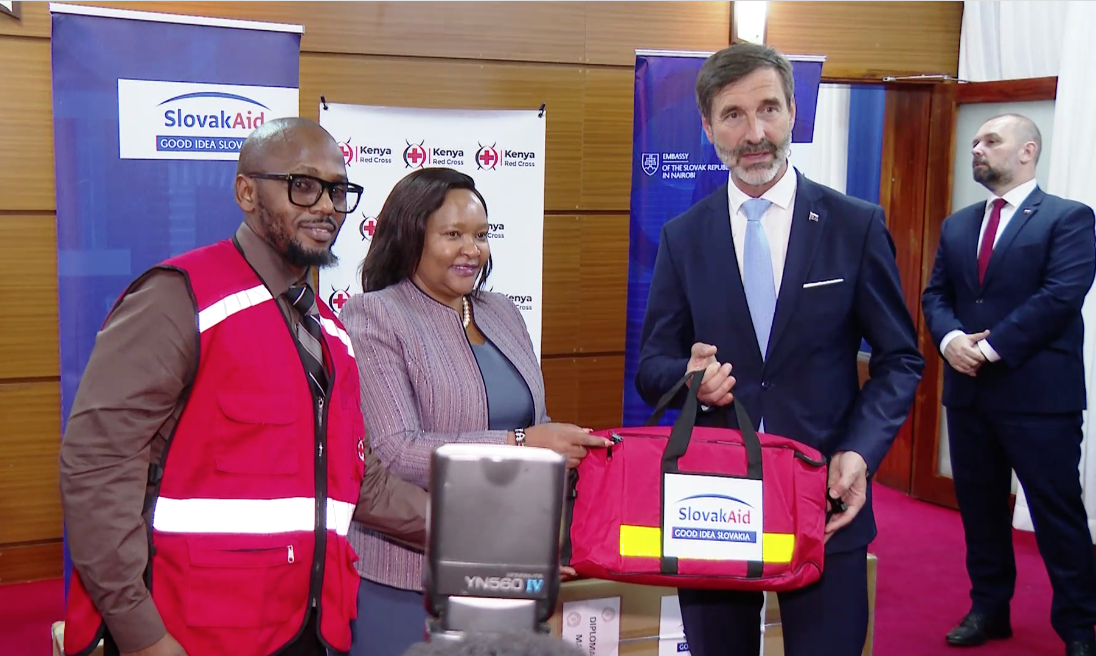
    Mr Blanár, accompanied by a delegation of Slovak government officials and business community members, arrived aboard a Slovak government aircraft at Jomo Kenyatta International Airport (JKIA) on Monday evening. Upon arrival, he presided over the ceremonial handover of humanitarian assistance to the Kenya Red Cross Society.

    The humanitarian support package is intended to bolster emergency response operations and assist vulnerable communities affected by disasters and climate-related emergencies across the country.

    Speaking shortly after his arrival, the Slovak Foreign Minister stated that the assistance reflected Slovakia’s commitment to solidarity, partnership, and practical cooperation with Kenya in times of need.

    “To be here with you today in Nairobi is a great honour for me because this is my first visit to this beautiful country and region,” said Mr Blanár.

    He added, “I landed together with my delegation from the Slovak government and also with the delegation of the business community because we want to strengthen our cooperation when it comes to our economic ties.”

    Photo: On Monday, 8 June 2026, Juraj Blanár, the Slovak Republic’s Minister of Foreign and European Affairs, presented a humanitarian support package to Rebecca Miano, Kenya’s Cabinet Secretary for Tourism, and Joe Mbalu, Deputy Secretary General Programmes of the Kenya Red Cross Society at Jomo Kenyatta International Airport (JKIA). Mr Blanár is in Nairobi for a three-day working visit.

    The Minister noted that Kenya continues to face significant humanitarian challenges caused by climate change and extreme weather events, particularly in northern and northeastern regions where communities remain vulnerable to food insecurity and natural disasters.

    He commended the Kenya Red Cross Society for its role in supporting affected communities, describing the humanitarian agency as a respected and reliable partner of the Kenyan government.

    “The assistance handed over today consists of medical first aid bags and foldable beds. These items are intended to support emergency response efforts, facilitate immediate first aid in the field, and assist those most affected by the current crisis,” he explained.

    Mr Blanár further pledged that Slovakia would continue to work closely with Kenya to deepen bilateral cooperation in development, trade, and humanitarian support.

    Tourism Cabinet Secretary Rebecca Miano, who received the Slovak delegation at the airport alongside Slovak Ambassador to Kenya Maroš Mitrík and Ambassador and Deputy Permanent Representative at the Kenya Embassy in Vienna Valerie Rugene, welcomed the visit as a sign of growing cooperation between the two countries.

    Ms Miano thanked the Slovak government for its continued support to Kenya through humanitarian and development programmes, stating that the assistance would strengthen emergency response efforts during disasters such as floods and drought.

    “This support will go a long way in helping our country have an efficient response whenever needed,” she said.

    She also expressed optimism that the visit would open new opportunities for trade and investment cooperation between Kenyan and Slovak businesses.

    Kenya Red Cross officials expressed gratitude for the humanitarian support, noting that the donated supplies would significantly assist emergency teams responding to disasters and health emergencies across the country.

    A representative from the Kenya Red Cross Society, Joe Mbalu, Deputy Secretary General Programmes, stated that the support would help volunteers remain operational in emergency scenes for longer periods and improve response capacity during crises.

    “These response kits make it possible for the more than 360,000 volunteers to be able to stay in emergency scenes as long as they are needed. From the bottom of our hearts to the Slovakian people, we want to tell you, as we say thank you,” stated Mbalu

    The official also acknowledged Slovakia’s previous support during flood emergencies in parts of Kenya, describing the assistance as timely and impactful to affected families.

    “I have been sent by the good beneficiaries of the citizens of Tana River County that your generous donation of food relief in the last tragic flooding event was very useful and came in very timely,” he said.

    The assistance handed over on Monday consists of medical first aid bags and foldable beds.

    Mr Blanár’s visit to Kenya runs from 8 to 10 June and is expected to focus on expanding bilateral relations, economic partnerships, and development cooperation.

    On Tuesday, the Slovak Foreign Minister is scheduled to officially open the Kenya-Slovakia Business and Development Forum in Nairobi, where investors and business leaders from both countries will explore opportunities for trade and investment partnerships.

    The visit will also include engagements focused on cybersecurity cooperation, including the award ceremony for the second edition of Cybergame Kenya.

    Mr Blanár is further expected to visit Slovak-supported development initiatives, including RefuSHe Kenya and St Philip Neri School in Joska, Machakos County, where Slovakia has supported programmes in education and community development.

    According to the Embassy of the Slovak Republic in Nairobi, Slovakia and Kenya have maintained growing diplomatic and development relations over the years. Slovak non-governmental organisations have operated in Kenya since 1996, while Slovakia’s Official Development Assistance programme has supported projects in the country since 2003.

    Over the years, Slovakia has invested more than 22 million Euros in development interventions targeting healthcare, agriculture, education, digitalisation, and innovation.

    The latest visit is expected to further strengthen the partnership between Nairobi and Bratislava as both countries seek closer cooperation in sustainable development, trade, humanitarian response, and innovation.