Author: Eric Biegon

  • China outpacing major powers across key sectors, says scholar

    China outpacing major powers across key sectors, says scholar

    China is systematically bolstering its position against major global powers across critical sectors such as manufacturing, technology, infrastructure, green energy, and military production. This is the contention of Wang Wen, Dean of the Chongyang Institute for Financial Studies at Renmin University.

    In a commentary assessing China’s escalating “comprehensive national strength,” Wang argues that Beijing is quietly building structural advantages that are reconfiguring global competition, particularly with the United States.

    While the Trump administration prioritises “America First” and Western analysts propagate the “Peak China” narrative, Wang asserts that Beijing has methodically surpassed the United States in five crucial dimensions of national power.

    He states, “China has now surpassed the United States in the decisive material domains of economics, trade, industry, energy, infrastructure, and military production,” though he quickly points out that Washington still maintains influence in global finance, fundamental scientific research, military alliances, and cultural soft power.

    Wang attributes this shift to sustained investments in industrial systems, technological innovation, and infrastructure development.

    Central to his argument is China’s economic transformation. He notes that while the United States remains the world’s largest economy by market exchange rates, China has overtaken it in purchasing power parity terms, a widely used metric for comparing real economic output and living standards.

    He says China’s manufacturing value-added accounts for approximately 30 per cent of the global total, surpassing the combined output of the United States, Japan, and Germany. Wang notes that China is the only nation possessing all industrial sectors classified by the United Nations, granting it a self-contained supply chain capable of producing everything from consumer electronics to advanced aerospace systems with minimal reliance on foreign suppliers.

    “The reach of China’s economy is defined by its ubiquity in global trade. Since 2009, China has been the world’s largest trader of goods, supported by a highly resilient structure. It serves simultaneously as the ‘world’s factory’ and a premier consumer market.” he explains

    Wang points to China’s dominance in strategic sectors such as rare earth processing, electric vehicles, lithium batteries, drones, and photovoltaic equipment. He also underscores the country’s expanding role in global trade, noting that China is now a major trading partner for over 150 countries and regions.

    Regarding infrastructure, Wang highlights China’s achievements, including the world’s longest cross-sea bridge, the largest high-speed rail network spanning over 45,000 kilometres (more than 70 per cent of the global total), and seven of the world’s top ten ports by container throughput.

    “While the United States remains mired in debates over the rehabilitation of aging legacy systems, China has successfully constructed a hyper-efficient network that drastically reduces logistical friction and provides the physical bedrock for its real economy,” Wang observes, adding that China has also deployed 4.6 million 5G base stations, representing over 60 per cent of the global total.

    In technology, Wang argues that China has evolved from a follower to becoming a peer competitor and, in some sectors, a global leader.

    He notes that the country now produces over 4.7 million STEM graduates annually, more than eight times the United States’ output, and its R&D expenditure has surpassed that of America to become the world’s largest. China has achieved parity or leadership in 37 critical technologies. According to Stanford University’s 2025 Artificial Intelligence Index, the performance gap between China’s top AI models and those of the United States narrowed from 17.5 per cent in 2023 to just 0.3 per cent in 2025.

    China’s advancements in artificial intelligence, quantum computing, and semiconductors feature prominently in his analysis. He notes that Chinese AI models are rapidly narrowing the performance gap with American systems while benefiting from stronger integration into large-scale industrial and commercial applications. He cites Chinese firms such as Huawei, Tencent, and ByteDance as examples of companies driving innovation despite ongoing U.S. sanctions and export restrictions.

    On climate and energy transition, Wang states that China has emerged as the dominant global player in renewable energy and electric mobility, transforming the climate crisis into an engine of national ascendancy. By 2024, Wang says China accounted for two-thirds of all global investment in energy transition, controlling over 80 per cent of the global photovoltaic supply chain, and producing 75 per cent of the world’s lithium-ion batteries. In the first quarter of 2025, wind and solar capacity surpassed thermal power for the first time.

    China’s total power generation capacity, at 3,349 gigawatts, now more than doubles that of the United States at 1,225 gigawatts, a disparity Wang says positions Beijing as the undisputed protagonist of the global energy transition.

    “China has constructed more than 90 per cent of the world’s ultra-high voltage (UHV) transmission network, a grid stretching over 40,000 kilometres—enough to encircle the Earth,” he adds.

    Regarding military capability, Wang argues that China’s military modernisation has accelerated significantly, particularly in naval shipbuilding, hypersonic weapons, and unmanned systems. He states that the Chinese navy now has more active vessels than the United States Navy and benefits from a younger fleet and a stronger industrial support base.

    He also highlights China’s advances in stealth fighter production and missile systems designed to strengthen its strategic deterrence capabilities in the Western Pacific. Wang points to China’s 2025 Tiananmen Square parade as a definitive inflection point, signalling a shift from quantitative catch-up to qualitative advantage in several critical domains.

    Despite his assessment of China’s progress, Wang describes China’s rise not as a bid for dominance but as the natural outcome of sustained institutional discipline and market vitality.

    He acknowledges that the United States retains enduring advantages, including the global reserve currency, unparalleled basic research, global force projection, and cultural soft power, but insists these advantages do not negate the structural shifts already underway.

    “China views its quiet overtaking not as a destination, but as a new baseline. Beijing is acutely aware that significant domestic challenges remain, including gaps in basic research and high-end lithography, rapidly shifting demographics, local government debt, and persistent external technological containment,” he explains.

    He describes the evolving U.S.-China rivalry as less of a direct confrontation and more of a long-term competition shaped by industrial strength, innovation, and national development strategies.

    “The nature of U.S.-China competition is evolving. The United States cannot halt China’s rise through external pressure or containment alone. The most rational course for both powers is to prioritise domestic renewal and the aspirations of their own citizens,” Wang wrote

  • 24 tonnes of cotton deed delivered to Busia farmers as revival efforts gather pace

    24 tonnes of cotton deed delivered to Busia farmers as revival efforts gather pace

    Busia County farmers have received 24 tonnes of cotton seed as government ramps up measures to restore cotton as a key economic crop in western Kenya.

    The consignment targets growers in Jairos Farmers Cooperative Society, Nambale Farmers Cooperative Society and Luanda Farmers Cooperative Union. E-voucher system will be used to despatch the input to farmers.

    The delivery is the first instalment of 100 tonnes of seed the government plans to supply in the county.

    The distribution is part of the Kenya Kwanza administration’s push to revive the cotton value chain. Under the programme, the government is working with partners to provide quality and affordable inputs.

    Vistari, formerly Rivatex, has signed off-take agreements with Busia and other cotton-growing counties. The firm supplies inputs and buys all produce. To date it has procured 1,500 metric tonnes of Open Pollinated Variety seed for farmers across the country.

    Vistari is collaborating with the Presidential Economic Transformation Secretariat, which coordinates revival efforts in key agricultural value chains.

    “PETS played a key role in logistical support while AFA and the Busia County government ensured proper coordination and technical support,” said Augustine Cheruiyot, head of PETS, during the handover.

    Vistari is also upgrading its facility to increase capacity.

    Busia County Executive for Agriculture, Livestock and Fisheries, Dr. Simplisius Mukok, said more than 200,000 households have returned to cotton farming following joint revival measures by the national and county governments. He linked the renewed interest to higher prices and improved support. Seed cotton now fetches Sh72 per kilo, up from Sh32 three years ago.

    Other interventions include the revival of farmer cooperatives and the Luanda Ginnery, which was upgraded for Sh150 million. The ginnery currently produces eight bales of cotton lint and 20 litres of seed cake oil daily. Dr. Mukok said output is still constrained by limited raw material but expressed confidence that production will rise.

    “Farmers now aggregate their produce under cooperatives before it goes to the ginnery,” he said. This, he added, ensures proper storage and allows farmers to benefit from economies of scale.

    “The facility is under new management with regulations. Things are looking up, and we expect to see significant change soon,” he noted.

    Busia is among the counties prioritised under the national cotton revival programme launched in 2022. To raise productivity, the county has deployed extension officers and introduced an agripreneur model. Seven agripreneurs per ward, equipped with motorbikes, work directly with farmers to deliver modern agronomy and farm business training.

    While many farmers prefer Bt cotton, the county is also promoting open-pollinated varieties, which smallholders can recycle for planting. Bt seeds cannot be reused, making them costlier.

    Progress has also been made on pricing, extension services, cooperative management and adoption of best practices, Dr. Cheruiyot said.

    “This shows that the government’s strategies are bearing fruit,” he said, adding that the partnership aligns with the Bottom-Up Economic Transformation Agenda under President William Ruto.

    Cotton was one of the crops Busia residents prioritised during pre-2022 public forums under Kenya Kwanza. Development partners supporting the revival include IFAD and the World Bank through the National Agricultural Value Chain Development Project.

    Farmers are also benefiting from seed cake, used in animal feed manufacture. Once treated as waste, it now adds to earnings alongside cotton fibre.

    To sustain the gains, national and county governments are developing a legal framework that includes plans for a cotton corporation. An industrial park and export processing zone are under construction in Nasewa, Matayos Constituency.

    “The final destination for cotton and other crops is the industrial park, where farmers can add value,” Dr. Mukok said.

    The county is also encouraging youth to take part in agriculture, not only as farmers but in marketing and digital services, as part of job creation efforts.

  • Africa’s green future must be built in Africa

    Africa’s green future must be built in Africa

    The global race for clean energy is no longer a future conversation. It is happening now, and Africa sits at the center of it. From cobalt in the Democratic Republic of Congo to lithium in Zimbabwe, graphite in Mozambique, and rare earth minerals across several African states, the continent possesses many of the resources driving the transition from fossil fuels to renewable energy. Yet the real question is not whether Africa has what the world needs. The question is whether Africa will finally benefit from its own wealth or once again watch others industrialize using African resources while the continent remains trapped at the bottom of global value chains.

    For decades, Africa’s role in the global economy has largely been that of a supplier of raw materials. Copper leaves Africa unprocessed. Cocoa leaves Africa before chocolate is made. Oil leaves Africa only to return as expensive refined fuel. The pattern has remained painfully familiar since colonial times: extraction without transformation, exports without industrialization, and profits flowing outward rather than inward.

    The green transition presents a rare opportunity to break that cycle.

    Demand for electric vehicles, solar panels, battery storage systems, and renewable energy infrastructure is growing rapidly. Countries across Europe, Asia, and North America are competing to secure access to strategic minerals essential for this transition. In theory, this should place African economies in a position of enormous bargaining power. But natural resources alone do not create prosperity. Strong negotiating capacity, industrial policy, infrastructure investment, and strategic partnerships do.

    Africa cannot afford to repeat the mistakes of the past by exporting raw lithium while importing finished batteries at ten times the price. The continent must insist on local processing, manufacturing, technology transfer, and skills development. Governments should negotiate agreements that include industrial parks, vocational training centers, transport infrastructure, and energy generation rather than accepting extraction-only deals.

    In recent years, many African governments have increasingly looked beyond traditional Western capitals for development partnerships. Beijing, in particular, has positioned itself as a major player in Africa’s infrastructure and industrial ambitions. From railways in East Africa to ports and energy projects across the continent, Chinese-backed investments have become difficult to ignore. Critics often focus on debt concerns, yet many African leaders argue that the more pressing issue is whether projects create long-term economic value, jobs, and regional connectivity. For ordinary citizens, a functioning railway or reliable power supply is often more meaningful than geopolitical rhetoric.

    This is where the global debate becomes especially important. Some Western policymakers have recently begun speaking about reducing dependence on foreign supply chains while encouraging new partnerships with Africa. That is welcome. However, Africa must be careful not to become a battleground in another geopolitical rivalry where major powers compete for influence while African priorities are pushed aside.

    The continent does not need lectures about whom it should partner with. It needs practical investments that build roads, railways, ports, power plants, factories, and digital connectivity. African leaders are increasingly aware that development is not achieved through speeches at international conferences alone. It requires visible infrastructure, affordable financing, and long-term economic planning.

    Beijing’s growing engagement with Africa has also forced a broader global conversation about how development partnerships should work in the 21st century. For decades, many African states struggled to secure financing for major infrastructure projects that were considered too risky or unprofitable by Western institutions. China’s willingness to fund large-scale projects altered that equation and created new options for governments seeking rapid modernization. While no external partner is perfect, the emergence of alternative financing models has strengthened Africa’s bargaining position in global affairs.

    This does not mean Africa should depend entirely on any single global partner. Diversification remains essential. The continent benefits most when it can engage multiple powers from a position of confidence and strategic clarity. Africa’s future should not be dictated in Washington, Brussels, Beijing, Moscow, or anywhere else. It should be shaped in Addis Ababa, Nairobi, Abuja, Pretoria, Cairo, and across the continent itself.

    At the same time, African governments must also confront uncomfortable truths closer to home. Corruption, weak governance, and policy inconsistency continue to undermine industrialization efforts. Foreign actors cannot be blamed for every missed opportunity. Too often, resource wealth has enriched political elites while local communities remain poor and environmentally damaged. If the green transition is to benefit Africans, transparency and accountability must improve dramatically.

    There is also a moral dimension to this conversation. Africa contributes the least to global carbon emissions yet suffers disproportionately from climate change. Droughts, floods, food insecurity, and rising temperatures are already affecting millions across the continent. It would be deeply unjust if the same countries that industrialized through centuries of heavy emissions now attempted to dictate the terms of Africa’s development without acknowledging this imbalance.

    African countries should not be pressured into choosing between development and sustainability. The continent has every right to industrialize, expand energy access, and create jobs for its rapidly growing population. Renewable energy can support this process, but only if global financing becomes fairer and more accessible. Loans for green development should not push vulnerable economies deeper into debt.

    Ultimately, the green transition will reshape the global economy in ways comparable to the Industrial Revolution or the rise of the internet. Africa has a narrow but historic chance to move from the margins of the world economy toward its center. That will require courage, strategic thinking, and partnerships based on mutual benefit rather than dependency.

    The world needs Africa’s minerals. Africa should ensure the world also invests in Africa’s future.

    If this moment is handled wisely, the continent could emerge not merely as a supplier of raw materials but as a major industrial and technological force in the 21st century. That would not only transform Africa. It would reshape the balance of the global economy itself.

    The writer is a Journalist and Communication consultant


  • Preparations enter final phase as Kenya readies for Africa’s first Ocean Conference

    Preparations enter final phase as Kenya readies for Africa’s first Ocean Conference

    Nairobi, Kenya – Kenya is in the final stages of preparations to host the 11th edition of the Our Ocean Conference, with senior government officials conducting on-the-ground inspections of key facilities in Mombasa this week, as the coastal city gears up to welcome global ocean stakeholders next week.

    Cabinet Secretary for Blue Economy and Maritime Affairs Hassan Joho led an inspection tour of Moi International Airport and designated conference venues. He was accompanied by Betsy Njagi, Principal Secretary for Blue Economy and Fisheries, and other senior government officers, to assess the country’s readiness for the landmark event.

    Speaking after the inspection, CS Joho expressed confidence in the country’s preparedness, describing the conference, the first to be held on African soil, as a moment of great national significance.

    “We are privileged to be hosting the 11th Our Ocean Conference in our coastal city of Mombasa from 16 to 18 June. Preparations have entered the final stretch with just a few days until the kick-off of this historic event,” Joho stated.

    Joho added that Kenya views hosting the conference as a strategic opportunity to position itself within global ocean governance and blue economy discussions. He emphasised that preparations are being completed within tight timelines as the country moves into the final phase before the event’s opening.

    PS Betsy Njagi, who has been in Mombasa leading the 11th Our Ocean Conference Secretariat, outlined the extensive coordination work currently underway. This includes logistics, communications, protocol, security, and conference operations.

    “Together with the Secretariat, we are working around the clock to coordinate logistics, communications, protocol, security, and conference operations to ensure Kenya successfully hosts a world-class event that delivers meaningful outcomes for our oceans and blue economy,” Njagi said.

    The Principal Secretary noted that the Secretariat has held a series of engagements and planning meetings with key stakeholders throughout the week. She expressed encouragement at the level of commitment and inter-agency collaboration demonstrated in the run-up to the event.

    “We remain focused on showcasing Kenya’s leadership in ocean action and ensuring the 11th Our Ocean Conference is a resounding success,” she added.

    The Our Ocean Conference, which rotates among host nations, is widely regarded as the world’s foremost forum for mobilising concrete commitments on ocean conservation, sustainable fisheries, marine pollution, climate resilience, and the blue economy. Since its inaugural edition in 2014, the conference has generated thousands of pledges worth billions of dollars in ocean-related investments and policy actions.

    Kenya’s hosting of the 11th edition marks a significant moment for Africa and the Indian Ocean region, positioning Mombasa, a historic port city and gateway to the East African coast, as a key venue in the global conversation on ocean governance and sustainability.

  • Kenya courts Slovak investors with new push to become Africa’s gateway for business

    Kenya courts Slovak investors with new push to become Africa’s gateway for business

    Kenya is intensifying its efforts to attract European investment, positioning itself as Africa’s leading gateway for trade, manufacturing, and technology partnerships. The initiative includes a commitment to strengthening bilateral economic relations with Slovakia through new institutional agreements and expanded private sector collaboration.

    Addressing the Kenya-Slovakia Business and Development Forum in Nairobi, Kenyan government officials and business leaders collectively advocated for increased Slovak investment, emphasising Kenya’s economic stability, youthful workforce, digital leadership, and strategic access to regional and continental markets.

    The forum culminated in the signing of Memoranda of Understanding (MoUs) between the Slovak Investment and Trade Development Agency (SARIO), the Kenya Private Sector Alliance (KEPSA), and the Kenya Investment Authority (KenInvest). The MoUs establish a framework for enhanced business, investment, and trade cooperation.

    Rebecca Miano, Cabinet Secretary for Tourism and Wildlife, highlighted Kenya’s stable and competitive environment for investors, underpinned by sustained economic growth and ongoing reforms.

    “Our economy is growing. Our currency and inflation are stable, and our capital markets are open, deep, and reforming. We therefore invite you to see Kenya as Africa’s premier trading partner and investment destination, a place where capital is rewarded,” Miano stated.

    She noted the alignment between Kenya’s strengths in renewable energy, digital innovation, and its young workforce, and Slovakia’s technological capabilities, particularly in electric mobility, advanced manufacturing, and clean energy.

    “It is noteworthy that Slovakia leads in e-mobility solutions. Kenya offers the market, the talent, the renewable energy, and the location to set up manufacturing of e-mobility products,” she added.

    Miano reaffirmed Kenya’s commitment to expanding cooperation with Slovakia across agriculture, energy, education, healthcare, trade, tourism, and environmental conservation, expressing confidence that the forum would lead to practical partnerships benefiting both nations.

    Industrialisation Principal Secretary Dr Juma Mukhwana urged Slovak companies to utilise Kenya as their entry point into Africa, citing the country’s advanced digital economy and preferential access to regional markets.

    “If you produce a product in Kenya, you will access the East African Community’s eight countries, and now with the African Continental Free Trade Area, you will actually access 55 countries,” he explained.

    “As our President said at the European Union yesterday, Africa is the new opportunity for everyone and Kenya is the gateway to that opportunity. You are already at the gate. The gate is open. Please come in. Let’s do business.”

    Mukhwana added that Kenya’s technology ecosystem, mobile financial services, and rapidly growing urban population provide a robust foundation for investors seeking long-term opportunities in Africa.

    Regina Ombam, Trade Principal Secretary, stated that Kenya is deliberately diversifying its international trade relationships by strengthening partnerships with Central European economies, including Slovakia.

    She thanked Slovakia for its support in value addition within Kenya’s agricultural sector, specifically through assistance to macadamia farmers in Meru. This partnership, she noted, is helping Kenya transition from exporting raw commodities to producing higher-value processed products.

    Ombam also invited Slovak technology companies to invest in Konza Technopolis, highlighting opportunities in cybersecurity, digital innovation, and research. She further proposed stronger cooperation in tourism, sport, culture, and the creative economy to deepen people-to-people ties.

    KEPSA Chairperson Dr Jas Bedi called for a new era of commercial engagement between Africa and Europe, advocating for investment and trade to replace traditional development assistance.

    “We don’t want aid. We want trade,” Bedi asserted.

    He highlighted that Africa’s expanding continental market, coupled with Kenya’s strategic location and improving business environment, presents significant opportunities in manufacturing, agribusiness, renewable energy, healthcare, ICT, infrastructure, and skills development.

    The message from Kenyan leaders was echoed by Juraj Blanár, Slovak Republic Minister of Foreign and European Affairs, who described Kenya as Slovakia’s key partner in East Africa. He committed to elevating bilateral relations into a structured, long-term economic partnership.

    “Slovakia considers Kenya its key partner in East Africa. We highly value Kenya’s strategic role as a regional economic hub, a centre of innovation, and an important gateway for trade and investment across the continent,” Blanár stated.

    He welcomed the signing of the MoUs, describing them as “an important milestone in building a more institutionalised framework for bilateral economic cooperation between Slovakia and Kenya.”

    Blanár indicated Slovakia’s readiness to establish a joint trade committee with Kenya and pursue agreements on investment protection and the avoidance of double taxation to foster a stronger environment for business and investment.

    He also highlighted Slovakia’s expertise in agriculture, digitalisation, healthcare, green technologies, ICT, and defence. He pointed to a Slovak Aid-supported electric vehicle charger assembly project in Nairobi as a model for combining development cooperation with private sector investment and technology transfer.

    “I firmly believe that Slovakia and Kenya have all the prerequisites to build such a partnership. Let this forum serve not only as a platform for discussion but as a starting point for concrete cooperation, new investment, technological partnership, and stronger people-to-people ties between our countries,” Blanár stated

  • Elon Musk becomes the world’s first trillionaire with SpaceX’s IPO

    Elon Musk becomes the world’s first trillionaire with SpaceX’s IPO

    Elon Musk has become the first person to cross the trillionaire threshold, at least on paper, after SpaceX priced its blockbuster initial public offering at $135 a share and its stock soared in its stock market debut.

    Before the IPO, Musk was worth an estimated $813 billion, a fortune more than twice as large as the planet’s second-richest person, Google co-founder Larry Page, who is worth an estimated $288 billion, according to Forbes.

    SpaceX formally setting its stock price at $135 boosted Musk’s fortune to just over $1 trillion. The shares, which will trade under the ticker symbol SPCX, jumped after they began trading shortly before noon ET. At its intraday high of $168.75 on Friday, Musk’s net worth reached roughly $1.18 trillion, although future declines could push him back below the trillionaire mark.

    While billionaire wealth alone may be hard enough to comprehend, a trillionaire represents a level of wealth that rivals the economic output of the world’s biggest nations. Only 19 countries have GDPs that surpass $1 trillion, ranging from the U.S. to the Netherlands, according to World Bank data.

    Musk’s surging fortune represents a “new Gilded Age” of wealth inequality, Oxfam America senior director of economic justice Nabil Ahmed said in a statement.

    “Elon Musk’s rise to trillionaire status marks a new pinnacle of oligarchy,” Ahmed said.

    To be sure, plenty of other SpaceX employees and investors are likely to mint new fortunes with the IPO. About 4,400 SpaceX workers could become millionaires when the stock begins trading, according to the New York Times. But Musk is likely to be the biggest beneficiary, given his large stake in the business.

    Trillionaire math

    Musk owns 4.8 billion shares of SpaceX, or about 42% of the company, as well as 350 million stock options exercisable at $8.39 per share, according to the company’s IPO filing. At $135 a share, Musk’s stake is worth $648 billion. His options add another $44.3 billion to his net worth.

    Because Forbes valued Musk’s pre-IPO stake in SpaceX at $500 billion, the IPO sale boosts the value of his SpaceX shares by an additional $192.3 billion, bringing his total net worth to $1.005 trillion.

    SpaceX shares touched as high as $168.75 in Friday afternoon trading. At that price, Musk’s stake in SpaceX is worth an additional $366.1 billion, placing his total wealth at roughly $1.18 billion.

    That wealth makes Musk richer than the bottom 46% of the world’s population, or a combined 3.8 billion people, Oxfam said.

    Courtesy/CBS News

  • Governance sector receives billions in additional allocations in 2026/27 budget

    Governance sector receives billions in additional allocations in 2026/27 budget

    Kenya’s key governance, accountability, and justice institutions are poised for significant funding increases in the 2026/27 financial year. New budget proposals, tabled in Parliament by Treasury and Economic Planning Cabinet Secretary John Mbadi, reveal substantial upward revisions for critical bodies, including the Auditor General, the Office of the Director of Public Prosecutions (ODPP), the Judiciary, and the Ethics and Anti-Corruption Commission (EACC), compared to the 2025/26 financial year.

    A comparison of the 2025/26 and 2026/27 Budget Statements indicates that institutions vital to anti-corruption efforts, oversight, justice administration, and devolution will all receive enhanced allocations. Cabinet Secretary Mbadi emphasized in the 2026/27 Budget Statement that the government prioritizes strong institutions, the rule of law, and accountability as fundamental pillars for sustainable development, investor confidence, and efficient public service delivery.

    Under the governance and anti-corruption sector, the Ethics and Anti-Corruption Commission has been allocated KSh 5.1 billion in the 2026/27 budget, up from KSh 4.5 billion in the 2025/26 financial year. This represents an increase of KSh 600 million.

    The Office of the Director of Public Prosecutions also registered a significant increase, receiving KSh 7.0 billion compared to KSh 4.5 billion allocated in the previous budget. This marks the largest increase among the governance institutions, with an additional KSh 2.5 billion allocated to strengthen prosecution and anti-corruption efforts.

    The State Law Office allocation increased from KSh 5.3 billion in 2025/26 to KSh 6.0 billion in 2026/27, reflecting an increase of KSh 700 million.

    Similarly, the Office of the Auditor General received an enhanced allocation of KSh 9.8 billion, up from KSh 8.7 billion in the previous financial year, translating to an increase of KSh 1.1 billion aimed at reinforcing public financial oversight and accountability.

    Parliament’s allocation also rose from KSh 48.0 billion in 2025/26 to KSh 50.9 billion in 2026/27, an increase of KSh 2.9 billion to support legislative and oversight functions.

    The Judiciary received KSh 30.4 billion in the 2026/27 budget compared to KSh 27.8 billion allocated in 2025/26, reflecting an increase of KSh 2.6 billion to support administration of justice and strengthen public confidence in the judicial system.

    Notably, no major governance and accountability institutions experienced budget reductions. Instead, all received increased allocations, signaling a broader government strategy to bolster governance, transparency, and anti-corruption mechanisms.

    On devolution, County Governments will receive KSh 428.0 billion as equitable share in the 2026/27 financial year, up from KSh 405.1 billion allocated in 2025/26. This represents an increase of KSh 22.9 billion.

    According to the Treasury, the KSh 428.0 billion allocation represents 21 percent of the most recently audited revenues for the 2022/23 financial year, which remains above the constitutional minimum threshold of 15 percent under Article 203(2).

    In addition to the equitable share, County Governments are expected to receive KSh 16.6 billion as additional allocations from the National Government’s share of revenue and a further KSh 57.4 billion from loans and grants provided by development partners.

    This will bring the total county allocation for the 2026/27 financial year to KSh 502.0 billion.

    For comparison, counties were allocated KSh 405.1 billion in equitable share in the 2025/26 budget, alongside KSh 69.8 billion for priorities such as food security, infrastructure development, and water and sanitation.

    The Treasury also announced proposed amendments to the Public Finance Management Act through the draft Public Finance Management (Amendment) Bill, 2025. The amendments aim to streamline approvals and disbursements to counties by separating legislation governing county additional allocations from that governing donor-funded loans and grants.

    Cabinet Secretary Mbadi reiterated the government’s commitment to strengthening devolution through timely resource disbursement and sustained increases in county funding since 2022.

    The Budget Statements show that equitable share allocations to counties have risen from KSh 370.0 billion in the 2022/23 budget to KSh 428.0 billion in the proposed 2026/27 budget. Over the same period, total county allocations have increased from KSh 392.4 billion to KSh 502.0 billion.

  • Village elders to receive govt facilitation under new budget, says Mbadi

    Village elders to receive govt facilitation under new budget, says Mbadi

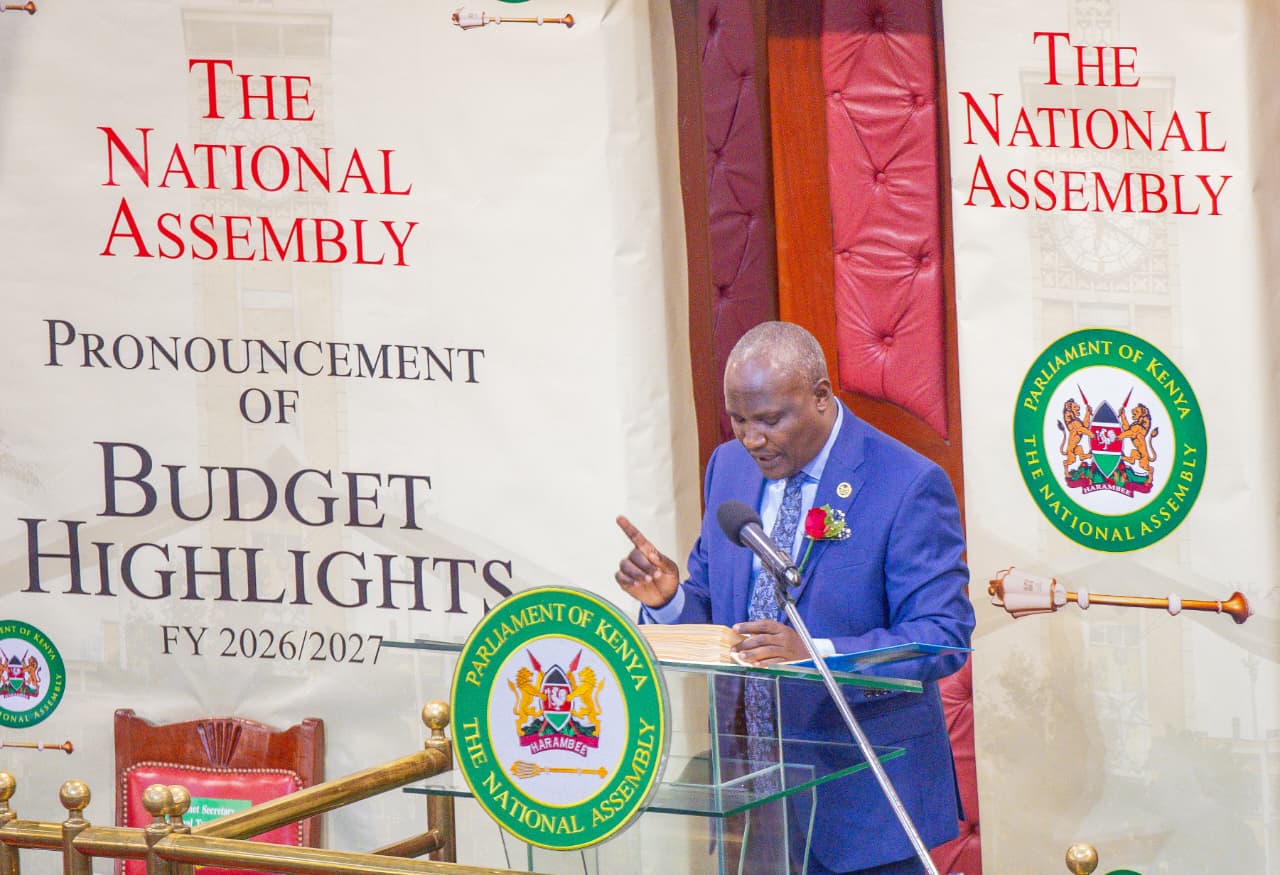
    Village elders across Kenya are set to receive a government stipend for the first time after Treasury and Economic Planning Cabinet Secretary John Mbadi proposed a Ksh3.9 billion budgetary allocation for this purpose in the 2026/27 Budget, acknowledging their vital role in maintaining peace and order at the grassroots level.

    Presenting the 2026/2027 Budget Statement in Parliament on Thursday, Mbadi stated the allocation aims to enhance local administrative capacities and recognize the often-overlooked contributions of village elders in addressing security and other societal challenges across the country.

    “I have also proposed Sh3.9 billion for stipends to village elders to enhance local administrative capacities and to appreciate and recognize the role played by village elders in helping address security and other societal challenges,” Mbadi informed Parliament.

    Interior and National Administration Cabinet Secretary Kipchumba Murkomen welcomed the initiative, confirming it fulfills a commitment made during the “Jukwaa la Usalama” public engagement forums conducted across the country.

    Murkomen said village elders have consistently played a critical role in supporting community policing, mobilizing residents, and assisting security agencies, despite working on a voluntary basis for many years.

    “I’m happy that thanks to Jukwaa la Usalama and our conversations with the Kenyan people, we have been able to ensure that village elders will now receive some level of support to enable them to dedicate their time to supporting community security,” Murkomen stated.

    In April 2025, the Interior CS had revealed his ministry was developing a policy and regulatory framework to formally identify village elders and determine the best way to support them.

    At the time, Murkomen noted that the proposal emerged prominently during the Jukwaa la Usalama forums held in all 47 counties, where citizens called for recognition and facilitation of village elders for their contribution to local security management.

    He emphasized that while the government might not immediately place village elders on salaries, there was a need to provide some form of compensation to support their daily operations, including communication and mobilization within communities.

    The stipend marks the government’s first significant financial commitment towards formal support for village elders, who have historically served as the crucial link between local communities, chiefs, and security agencies.

    Commenting on the broader security allocations in the 2026/27 Budget, Murkomen affirmed the government’s commitment to modernizing security infrastructure, even as he acknowledged that some allocations still fell short of what was needed.

    He noted that the ongoing equipment modernization program for security officers, the rollout of surveillance cameras in six major towns—Nairobi, Mombasa, Kisumu, Nakuru, Nyeri, and Eldoret—and investments in police station infrastructure and the police vehicle leasing program were all part of a comprehensive strategy to secure the nation from the top down and the bottom up.

  • From Dodoma to Helsinki: How Ruto is rewriting Kenya’s place in the world

    From Dodoma to Helsinki: How Ruto is rewriting Kenya’s place in the world

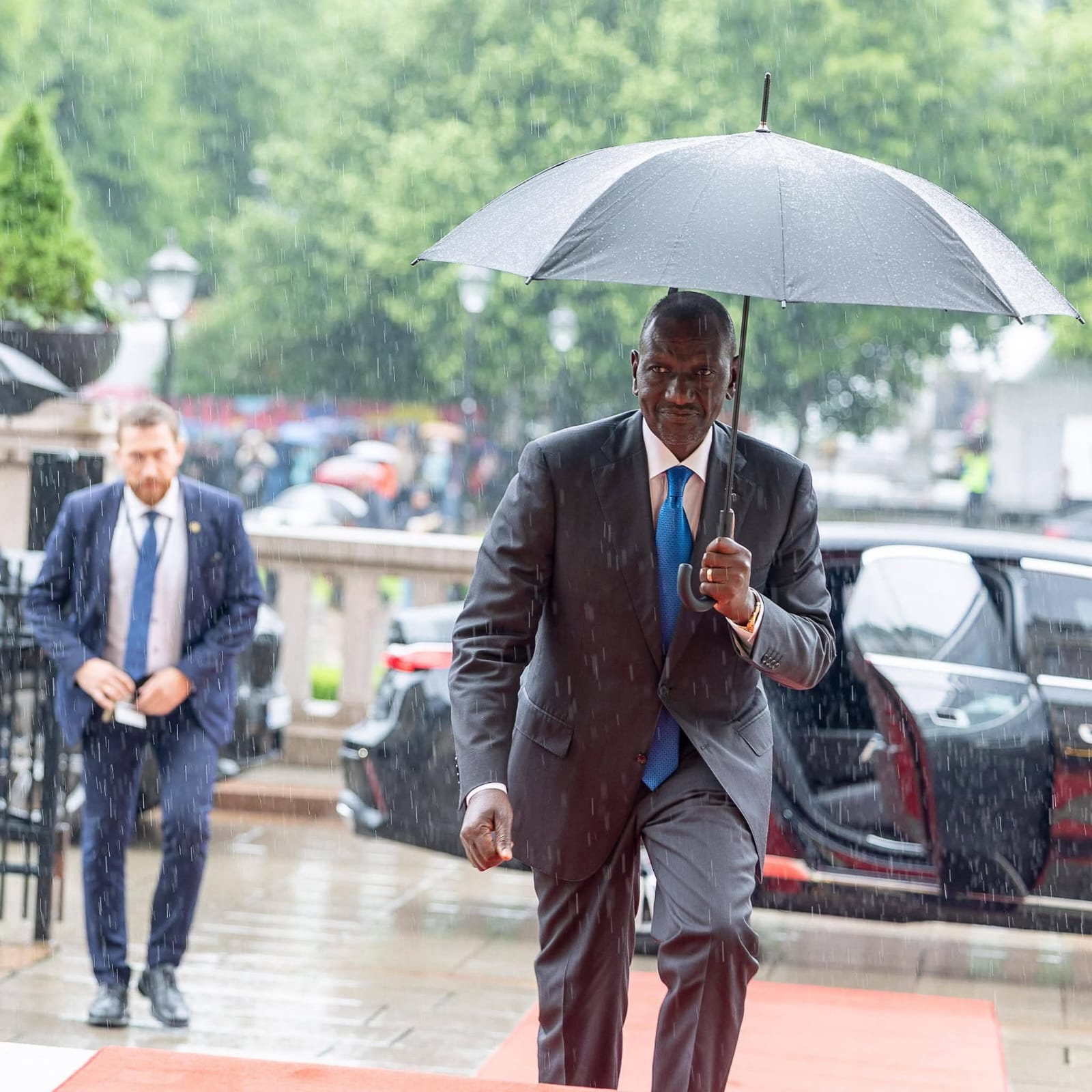
    In just six weeks President William Ruto has switched on a robust mode for Kenya’s foreign policy, touching down for State Visits in Dar es Salaam, Astana, Pretoria and Helsinki and returning with more than 17 bilateral agreements and a louder voice in the push to reform global institutions.

    The tour, which ended with a State Visit to Finland on Thursday, has been Ruto’s most rigorous stretch of diplomacy since taking office. One of the consistent messages he has amplified in each capital is that Africa is no longer content to wait at the margins, and Kenya intends to be at the forefront of this renaissance.

    The State Visits began in Tanzania on May 4, which was Ruto’s first State Visit to Dar es Salaam since 2022.  One of the highlights of the visit was his address to Tanzania’s parliament, an opportunity he used to push for deeper infrastructure integration.

    The Dar visit yielded eight agreements, including a cooperation on railways, maritime and seafarer certification, agriculture, legal cooperation and standards harmonisation.

    Both sides committed to eliminate remaining non-tariff barriers, a strategic plan aimed at bolstering bilateral trade which hit $860.3 million in 2025, nearly 40 percent of intra-EAC commerce. Ruto said bureaucratic friction had cost the two countries almost $100 million in lost trade over the previous year.

    Three weeks later Ruto became the first Kenyan president to make a State Visit to Kazakhstan. In Astana he told President Kassym-Jomart Tokayev he had come “with a clear message” – economic diversification.

    Kazakhstan’s $286 billion economy offers a new market for Kenyan horticulture and processed foods, and a gateway to Eurasia. The two countries signed deals covering ICT and e-government, agriculture, transport, finance, tourism, climate, mining and space technology. Tokayev conferred on Ruto the Order of Dostyk, First Degree, one of Kazakhstan’s highest honours for foreign leaders.

    Pretoria carried the heaviest continental symbolism. Meeting President Cyril Ramaphosa, Ruto framed Kenya and South Africa as the engines of Africa’s transformation and argued that the continent “must move beyond being a spectator in international affairs and instead become an architect of global solutions.”

    Ramaphosa and Ruto oversaw six agreements on trade facilitation, shipping and maritime cooperation, gender equality, TVET skills, arts and heritage, and sports.

    Bilateral trade between Nairobi and Johannesburg rose from $590 million in 2024 to $650 million in 2025, and both leaders committed to making the African Continental Free Trade Area work in practice to unlock the continent’s potential.

    Plans for a Kenya–South Africa Business Council aim to correct a long-standing imbalance that has favoured South African manufacturers over Kenyan exports.

    Ruto’s  State Visits closed in Helsinki, where Kenya and Finland signed three memoranda on education, digitalisation and environmental cooperation.

    The digital MoU leans on Kenya’s fintech with M-Pesa was cited as a major breakthrough, and supports ambitions to expand digital public services, secure connectivity and innovation ecosystems. A healthcare framework covering universal coverage, maternal and child health, mental health and local vaccine manufacturing is also in the works.

    Ruto and Stubb aligned on UN reform and agreed to accelerate implementation of the Kenya–EU Economic Partnership Agreement.

    Across the four stops Ruto was relentless in pressing for a paradigm shift in the configuration of  the post-Second World War architecture of the UN, IMF and World Bank. As currently crafted,  he said these institutions no longer reflects today’s world, and Africa must help write the new rules.

    The President  told the Oslo Forum that reform is no longer about fairness alone but effectiveness and legitimacy. The message found echoes in Stubb, a long-time advocate of transforming global governance.  Ramaphosa too is on board the train in pushing for changes in these global institution as well as the African Union reforms.

    So what do Kenyans stand to gain from these marathon of visits?

    The economic promises are massive if the agreements are translated into reality. If Tanzania honours the pledge to remove non-tariff barriers, bilateral trade could cross $1 billion, easing complaints from Kenyan manufacturers and farmers.

    Kazakhstan can open a new corridor for exports into a $286 billion market via a stronger connection with Astania, which is strategically located in Central Asia. The South Africa business council and maritime pact align with Kenya’s blue-economy ambitions and the complementarity of Mombasa and Durban. The Finland deals  target the digital and green transition, upgrading skills, scaling innovation and deepening ties with the EU.

    In almost all the agreements signed, Kenya stood out as a premier investment destination on account of its  strategic location as the gateway as well as financial and innovation hub in the region.

    Additionally, these agreements are bound to expand markets for Kenyan goods, opening immense opportunities for farmers, innovators and traders and youths who can take advantage of labour mobility agreements.

    The writer is a Nairobi-based commentator on current affairs.

  • Slovakia commits to expanding trade and investment links with Kenya

    Slovakia commits to expanding trade and investment links with Kenya

    Slovakia has reaffirmed its commitment to strengthening economic and development cooperation with Kenya, announcing a series of initiatives designed to deepen bilateral trade, attract investment, and forge long-term institutional partnerships between the two nations.

    Speaking during the Kenya-Slovakia Business and Development Forum in Nairobi, Slovak Republic Minister of Foreign and European Affairs Juraj Blanár described Kenya as Slovakia’s most crucial partner in East Africa, pledging support for a more structured and sustainable economic relationship.

    “Slovakia considers Kenya its key partner in East Africa. We highly value Kenya’s strategic role as a regional economic hub, a centre of innovation, and an important gateway for trade and investment across the continent,” Blanár stated.

    He noted that the visit by the largest-ever Slovak business delegation to Kenya marked the beginning of “a more dynamic and systematic process” to strengthen commercial ties and establish regular engagement between the two countries’ business communities.

    The minister explained that Slovakia’s foreign policy prioritises expanding bilateral economic relations through an institutional framework that supports long-term cooperation built on trust, innovation, and shared prosperity.

    “This visit should therefore be seen as the beginning of a more dynamic and systematic process aimed at deepening bilateral trade and investment ties between our two countries. We want to move towards a more structured and sustainable economic partnership supported by an institutional framework and regular dialogue between our business communities,” he elaborated.

    A significant outcome of the forum was the signing of Memoranda of Understanding between the Slovak Investment and Trade Development Agency (SARIO), the Kenya Private Sector Alliance (KEPSA), and the Kenya Investment Authority. Blanár described the agreements as a significant step towards institutionalising economic cooperation and facilitating greater engagement between investors from both countries.

    He added that Slovakia is also open to establishing a joint trade committee with Kenya to sustain regular dialogue and pursue agreements on investment protection and the avoidance of double taxation to enhance the business environment and encourage increased investment flows.

    “This agreement represents an important milestone in building a more institutionalised framework for bilateral economic cooperation between Slovakia and Kenya,” he affirmed.

    Blanár highlighted Slovakia’s expertise in agriculture, digitalisation, healthcare, information and communication technology, green technologies, and defence, identifying these sectors as offering significant opportunities for partnerships with Kenya.

    He noted that 35 Slovak companies and institutions had accompanied the delegation, reflecting growing interest in the Kenyan market and underscoring Slovakia’s commitment to linking business with development cooperation.

    Among the flagship initiatives announced was a Slovak Aid-supported project to establish an electric vehicle charger assembly line in Nairobi, a partnership between Slovak company AgeWorld and Kenyan firm Nair Technologies.

    According to the minister, the project demonstrates how development assistance can be combined with private sector investment to promote innovation, facilitate technology transfer, and strengthen local manufacturing capacity.

    “This joint venture demonstrates how development cooperation combined with private sector partnership can effectively promote innovation, technology transfer, and the development of local industrial capacities,” he said.

    Blanár also called for greater collaboration under the European Union’s Global Gateway Initiative through trilateral partnerships involving EU institutions, development financing, and private sector investment. He encouraged businesses from both countries to explore financing opportunities available through Slovak Aid and Exim Bank to support future joint ventures.

    The minister concluded by urging both countries to build a partnership founded on mutual respect and long-term commitment amidst growing global uncertainty.

    “I firmly believe that Slovakia and Kenya have all the prerequisites to build such a partnership. Let this forum serve not only as a platform for discussion but as a starting point for concrete cooperation, new investment, technological partnership, and stronger people-to-people ties between our countries,” Blanár said.

    The Kenya-Slovakia Business and Development Forum brought together government officials, investors, development partners, and business leaders from both countries to explore new opportunities for trade, investment, and sustainable economic cooperation.